Dental Zirconia Block Basics: How Milling and Sintering Turn a Block Into a Crown
Short answer: a dental zirconia block is a pre-sintered zirconia blank that a dental milling machine cuts into a slightly oversized restoration, which a dental sintering furnace then densifies into final shape, fit and strength. The block supplies the material, milling supplies the geometry, sintering supplies the density. Full-contour crowns, bridges, veneers and implant superstructure restorations all come out of the same three-step relationship, and every one of them depends on two fixed constraints: the blank must match the mill, and the sintering run must follow the standard temperature curve.
For YIPANG 4D-PRO-ML, both constraints are written into the product data. The blank is a 98 mm disc available in six thicknesses from 10 mm to 20 mm in ML multilayer shade, with a listed sintering temperature of 1450 C and a recommended sintering range of 1430 C to 1450 C. Milling happens in a dental milling machine, densification happens in a dental sintering furnace, and both happen in an indoor constant temperature dental laboratory environment.
YIPANG is the self-developed dental brand of Beijing Weijiahua Dentistry Equipment Co., Ltd., a Beijing-based dental equipment and materials company established in 1996 that supplies zirconia blocks, glass ceramics, press ingots, PMMA, wax, titanium blocks, implant abutments, scanners, milling machines, 3D printers and sintering furnaces to dental laboratories, clinics and distributors.
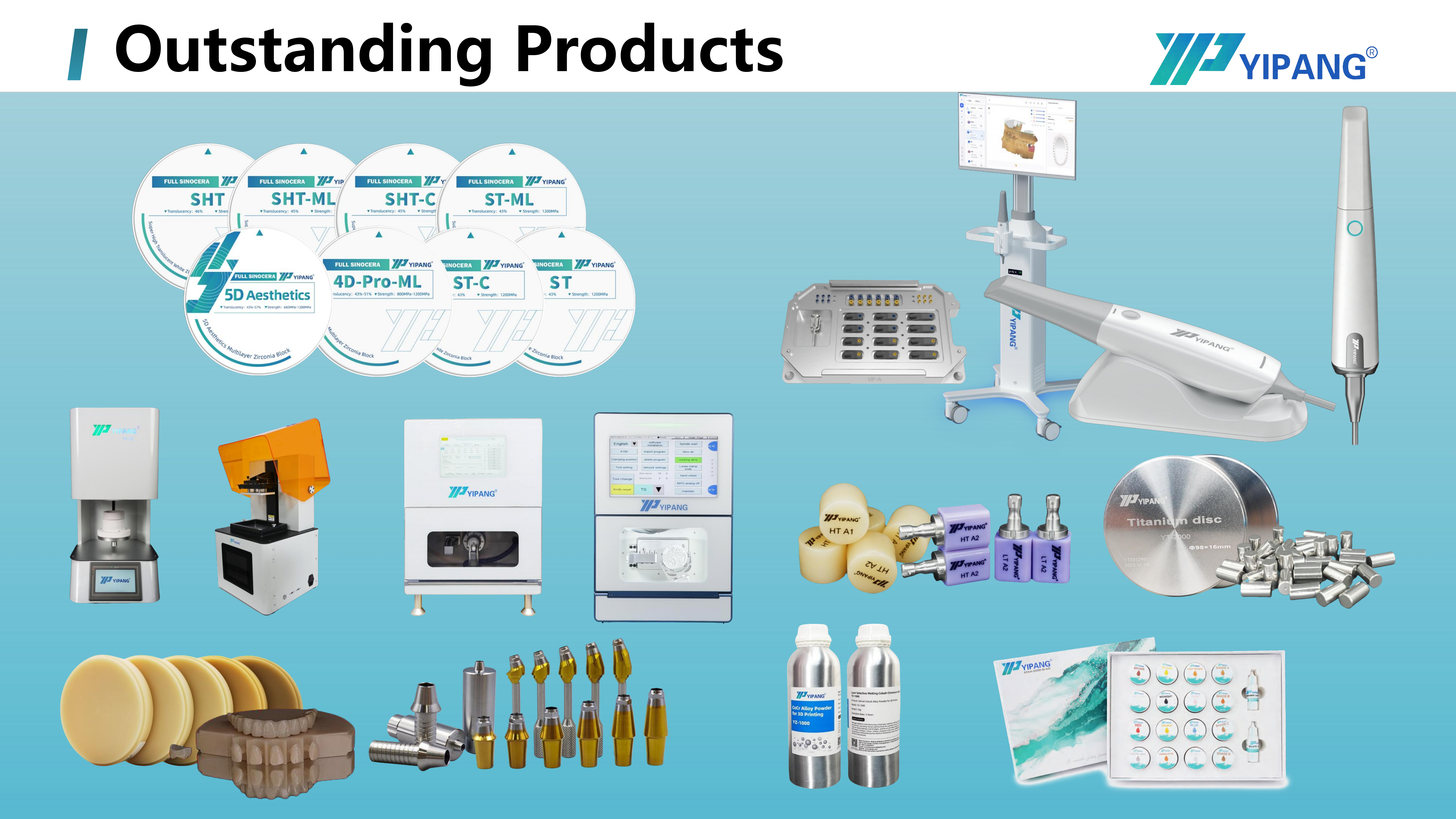
4D-PRO-ML dental zirconia block: a 98 mm CAD/CAM milling blank in ML multilayer shade, listed at 1450 C sintering temperature with a recommended range of 1430 C to 1450 C.
Where the Process Actually Fails: Four Constraints, Not One
Most zirconia problems in a dental laboratory are not design problems. The crown was designed correctly, nested correctly and milled correctly, and it still left the furnace with an open margin, a shade break or a hairline crack. The reason is that a zirconia restoration is only as repeatable as the constraints around it, and there are four of them.
- Shrinkage that is not predictable. A zirconia crown is milled larger than its final size and reaches its final dimensions during sintering. If the blank's shrinkage behaviour shifts from batch to batch, the same CAM file produces a different fit on a different day. 4D-PRO-ML lists a low shrinkage rate after sintering and high dimensional accuracy as core characteristics, and long-term laboratory users point to stable sintering shrinkage and uniform translucency as the reasons they remain on the material.
- A sintering run that is not the standard curve. The most repeated instruction in zirconia processing is also the one most often shortened: follow the standard heating and holding procedure. Rapid temperature change can crack a unit, and exceeding the maximum sintering temperature can damage both the restoration and the intended translucency.
- A room that is not stable. Zirconia processing is specified for an indoor constant temperature dental laboratory environment. Ambient swings, a furnace placed near a draughty door and inconsistent loading practice affect the outcome more than most labs expect.
- Documentation that does not match the market. A block that performs well clinically can still stall a shipment if the quality certification and its market coverage are unclear to the buyer. Under EU MDR 2017/745, most dental implants and restorative materials are classified as high-risk and require intensive clinical data, so buyers increasingly ask what a supplier's certificate actually covers before they ask about the material.
Industry Background: Why the Block Deserves This Much Attention
Zirconia is no longer a material a laboratory tries once. Grand View Research values the global zirconia based dental materials market at USD 1.2 billion in 2025 and projects USD 2.3 billion by 2033, and within that market zirconia discs held the largest revenue share at 63.1% in 2025. The same source reports that CAD/CAM milling accounted for 82.4% of zirconia dental manufacturing process revenue in 2025, and that dental laboratories remain the dominant end user at 45.3% of market share in 2025.
The equipment side grew on the same curve. Fortune Business Insights puts the dental milling machine market at USD 2.45 billion in 2025, rising to USD 3.9 billion by 2030, and identifies Roland DG, Amann Girrbach and vhf camfacture among the significant share holders in that sector as of 2024. Grand View Research also reports that the United States accounts for 40% of revenue in the global zirconia based dental materials market.
Two consequences follow for a laboratory in the research and evaluation stage. First, the block is a consumable inside a machine ecosystem, so compatibility is a purchasing criterion rather than a footnote: 4D-PRO-ML is specified as compatible with most mainstream dental milling machines and is designed for dental CAD/CAM workflows. Second, because so much of the workflow is now digital, the remaining variables are physical and procedural, meaning curve, temperature, environment and blank consistency, which is exactly where evaluation time is best spent.
The Solution: Three Components and One Room
Component 1: The blank fixes material, geometry and shade before milling starts
4D-PRO-ML, listed as Zirconia Blocks for Dental Prosthesis, is a dental zirconia disc and CAD/CAM dental milling blank made of zirconium dioxide (ZrO2) with yttria stabilization. It is produced from high-quality domestic zirconia powder, which the manufacturer cites as the basis for stable performance. The listed characteristics are a low shrinkage rate after sintering, high dimensional accuracy, excellent gradient translucency for a natural restoration effect, and a bending strength of at least 1200 MPa with medium translucency.
The physical format is deliberately standard: 98 mm diameter, with thickness options of 10 mm, 12 mm, 14 mm, 16 mm, 18 mm and 20 mm. Diameter determines whether the blank fits the mill's blank holder, while thickness determines what can be nested. A thin blank is efficient for single anterior units; thicker blanks are needed when a bridge or an implant superstructure has to be nested across the disc. Shades are supplied as ML multilayer, so the shade gradient is built into the blank rather than applied only at the surface.

Zirconia block production and inspection. 4D-PRO-ML quality control follows 100% raw material inspection plus finished product random inspection.
Component 2: The dental milling machine and the burs decide the geometry
Milling is a subtractive step. The CAM software nests the restoration inside the disc, the dental milling machine cuts the pre-sintered blank with dental milling burs, and the result is a crown intentionally larger than the final tooth. What the machine contributes is precision at the tool path level; what it requires in return is a blank with predictable density and a tool set that is genuinely sharp. Worn burs change the effective cutting geometry, and that shows up later as a marginal discrepancy no sintering adjustment can correct.
This is why the compatibility statement matters during evaluation. A laboratory running an existing mill does not want to re-qualify a blank, a tool library and a nesting strategy at the same time. A 98 mm disc compatible with most mainstream dental milling machines lets the lab change the material without changing the machine.
Component 3: The dental sintering furnace and the standard temperature curve
Sintering is the step that converts a soft milled unit into a dense ceramic restoration. The workpiece is placed on a sintering tray, the furnace runs a heating curve up to the sintering temperature with a defined holding time, and the unit cools down naturally once the cycle completes. Nothing in the milling step compensates for a curve that was shortened, a hold that was cut or a cooldown that was forced.
The suitable sintering temperature question for 4D-PRO-ML has a specific answer rather than a general one. The product data lists a sintering temperature of 1450 C, and the recommended sintering temperature range is 1430 C to 1450 C, run with a standard heating and holding procedure so that low shrinkage and stable translucency are actually achieved. Two safety rules belong with that range: avoid rapid temperature change to prevent cracking, and do not exceed the maximum sintering temperature.
In practice, the difference between a 1430 C run and a 1450 C run is not a matter of opinion; it is a documentation question. A laboratory should record the curve actually used for each batch, because that record is what makes a remake analyzable instead of mysterious.
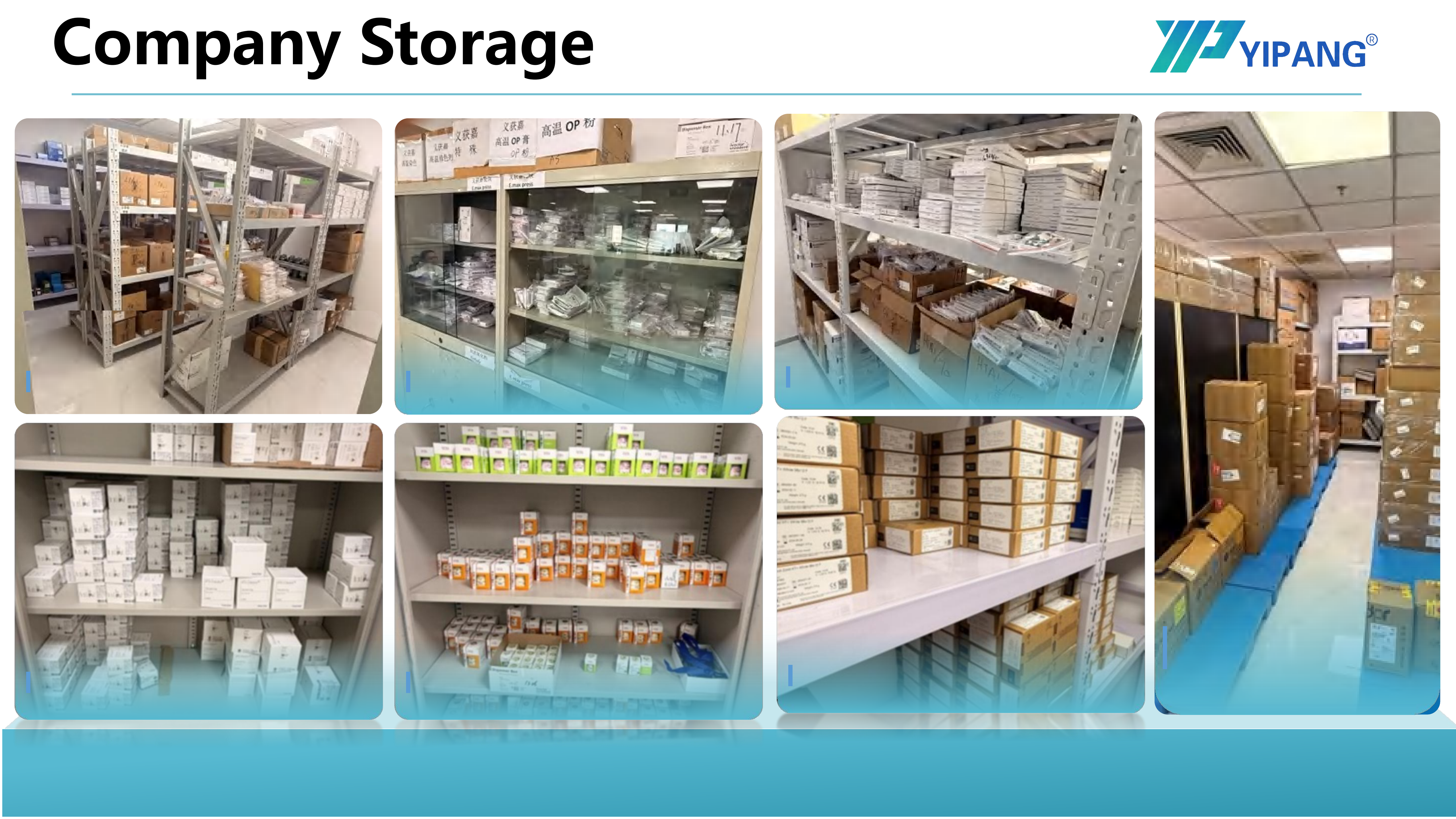
Zirconia processing is specified for an indoor constant temperature dental laboratory environment, alongside the sintering curve itself.
The room: indoor constant temperature conditions
Zirconia processing is specified for an indoor constant temperature dental laboratory environment. That single line carries a lot of operational discipline with it: the furnace should not sit beside a door opening onto a loading bay, the milling area should not swing in temperature between shifts, and blanks should be stored and handled consistently. Temperature stability is not a comfort question for a laboratory; it is part of the process definition, alongside the curve.
Step-by-Step: From Scan to Sintered Crown
The full path from patient to seated restoration runs through eight stages, and each stage produces one controlled output that the next stage depends on.
- Digitize the case. A dental lab scanner or an intraoral scanner captures the preparation, the opposing arch and the bite. This digital record replaces the physical impression and becomes the reference for everything that follows.
- Design in CAD with shrinkage compensation. The restoration is designed at the size it must reach after sintering, not the size at which it is milled. Shrinkage compensation is a software setting, but its accuracy depends on the real behaviour of the blank.
- Select the blank. Choose the 4D-PRO-ML thickness, from 10 mm to 20 mm, that accommodates the units to be nested, and confirm that the 98 mm diameter suits the mill's holder.
- Nest and mill. The dental milling machine cuts the pre-sintered blank with dental milling burs. The output is an oversized crown, bridge framework, veneer or implant superstructure that is still in its soft state.
- Inspect before sintering. Check the milled unit for margin integrity, chips and fit on the die or model. Corrections must happen here, because sintering locks the geometry.
- Sinter on the standard curve. Place the workpiece on a sintering tray, set the curve to 1430 C to 1450 C with the proper holding time, and let the unit cool naturally. Do not exceed the maximum sintering temperature and do not force the cooldown.
- Finish and verify. After sintering, check fit, occlusion and shade, then finish and polish. Translucency should read as uniform across the restoration, which is the visible sign of a curve that ran correctly.
- Record the batch. Log blank thickness, shade, furnace curve and outcome. This record is what turns a one-off success into a repeatable process.
Pre-sintering checklist: correct thickness and shade selected; mill and burs in known condition; unit inspected before firing; curve set to 1430 C to 1450 C with holding time; natural cooldown confirmed; furnace located in a constant temperature area; batch record created.
Use Cases: What the Process Actually Produces
The application record for 4D-PRO-ML covers full-contour crowns, bridges, veneers and implant superstructure restorations, fabricated to repair missing or damaged teeth. Each output places a different demand on the same blank.
- Full-contour crowns. The most common output and the one that tests shade and translucency most directly. ML multilayer gradient translucency and medium translucency are the relevant specifications here, not the strength figure.
- Bridges. Connector cross-sections and span length turn bending strength into a design constraint. The listed bending strength of at least 1200 MPa is the number to read when a case moves beyond a single unit.
- Veneers. Thin-section work depends on dimensional accuracy and on a sintering run that does not distort the unit, which makes curve discipline more visible than in a thick crown.
- Implant superstructure restorations. These combine the ceramic with implant abutment interfaces, so the fit that emerges from sintering has to suit a machined interface rather than a prepared tooth. Laboratories handling implant cases typically run them alongside crowns and bridges in the same workflow, which is why environment and curve discipline are shared rather than case-specific.
Comparison: Material Routes and the 4D-PRO-ML Constraint Set
Two comparisons are useful at the evaluation stage. The first positions zirconia against pressed glass-ceramic on verifiable market and process signals. The second lists the constraints a laboratory has to plan around once 4D-PRO-ML is on the bench.
| Route | Verified market signal | Typical process route | Equipment involved | Main process constraint |
|---|---|---|---|---|
| Dental zirconia block (CAD/CAM) | Zirconia discs held 63.1% of zirconia based dental materials revenue in 2025; CAD/CAM milling was 82.4% of zirconia dental manufacturing process revenue in 2025 (Grand View Research) | Milled from a pre-sintered blank, then densified by sintering | Dental lab scanner, dental milling machine, dental sintering furnace | Standard sintering temperature curve; 1430 C to 1450 C for 4D-PRO-ML |
| Lithium disilicate glass-ceramic | Approximately 28% of all all-ceramic dental restorations globally in 2024 (Business Research Insights); market projected from USD 320 million in 2025 to USD 920 million by 2032 | Commonly shaped by pressing or milling a glass-ceramic, then completed with a firing cycle | Dental porcelain furnace for firing cycles | Firing cycle control and crystallization discipline |
Table 1: Zirconia block and lithium disilicate routes compared on published market signals and process logic.
| Parameter | Verified value | What it constrains in the laboratory |
|---|---|---|
| Material | Zirconium dioxide (ZrO2) with yttria stabilization | Defines the material family the workflow must support |
| Format | Dental zirconia disc and CAD/CAM dental milling blank, 98 mm diameter | Fits the blank holder of most mainstream dental milling machines |
| Thickness | 10 mm, 12 mm, 14 mm, 16 mm, 18 mm, 20 mm | Determines what can be nested; thin for single units, thick for bridges and superstructures |
| Shades | ML multilayer | Shade gradient built into the blank rather than only at the surface |
| Translucency | Medium translucent | Aesthetic indication range and anterior versus posterior planning |
| Bending strength | At least 1200 MPa | Connector design and multi-unit spans |
| Sintering temperature | 1450 C listed; recommended range 1430 C to 1450 C | Furnace program, holding time and natural cooldown |
| Shrinkage behaviour | Low shrinkage rate after sintering, high dimensional accuracy | Accuracy of the CAM shrinkage compensation value |
| Machine compatibility | Compatible with most mainstream dental milling machines | Avoids re-qualifying mill hardware when changing material |
| Operating environment | Indoor constant temperature dental laboratory environment | Furnace siting, blank storage, handling practice |
| Quality certification | ISO 13485:2016, certificate 381240434R0S, Shanghai POSI Certification Co., Ltd., GB/T 42061-2022 / ISO 13485:2016 | Documentation for the Global, EU, USA and Middle East markets |
Table 2: The 4D-PRO-ML constraint set and what each verified value changes in day-to-day laboratory work.
Supply, Capacity and Documentation Support
Technical fit is only half of an evaluation. The other half is whether the supply side can hold the specification stable. Beijing Weijiahua Dentistry Equipment Co., Ltd. was established in 1996 and operates a 2,000 square metre facility with 80 employees, an annual output of 10 million US dollars, a 25-engineer research and development team working on dental material formula research and process optimisation, and an export ratio of 40% to 55% across the Middle East, Southeast Asia, South America, North America, Eastern Europe, North Africa and Australia. The company serves more than 1,000 dental laboratory customers in China and has represented international brands including VITA, Ivoclar, Dentsply, Amann Girrbach and Noritake.
Manufacturing runs in OEM and ODM modes, almost all specifications can be customized, monthly capacity is 15,000 pieces, and the stated lead time is 15 to 30 working days with a negotiable small MOQ. Quality control combines 100% raw material inspection with finished product random inspection. After-sales support is provided as online technical guidance with a response to after-sales problems within 24 hours. The ISO 13485:2016 certificate 381240434R0S was issued by Shanghai POSI Certification Co., Ltd. on 2024-12-27 and is valid until 2027-12-26, with a scope covering design, production and sales of dental medical materials and dental equipment.
FAQ
What certification does the 4D-PRO-ML dental zirconia block carry, and what does it cover?
The Dental Zirconia Block product is certified to ISO 13485:2016 under certificate number 381240434R0S, issued by Shanghai POSI Certification Co., Ltd. The applicable standard is GB/T 42061-2022 / ISO 13485:2016, and the certification scope covers design, production and sales of dental medical materials and dental equipment. It applies to the Global, EU, USA and Middle East markets and is valid from 2024-12-27 to 2027-12-26. Separately, the company's intraoral scanner models YP-X and YP-800, Class I medical devices, are covered by an EU Declaration of Conformity under MDR 2017/745 with SRN CN-MF-000045919. These are different documents covering different products, and they should not be treated as substitutes when a laboratory or distributor assembles a market-specific documentation file.
What sintering temperature should be used for 4D-PRO-ML, and will it run on existing lab equipment?
The product data lists a sintering temperature of 1450 C, with a recommended sintering temperature range of 1430 C to 1450 C run on a standard heating and holding procedure, followed by natural cooldown. Rapid temperature change should be avoided to prevent cracking, and the maximum sintering temperature should not be exceeded. On equipment, the 98 mm disc format is compatible with most mainstream dental milling machines, sintering is carried out in a dental sintering furnace, and case capture uses a dental lab scanner or intraoral scanner. Almost all specifications can be customized under OEM or ODM arrangements when a laboratory needs a different format.
What drives the cost per unit when buying dental zirconia blocks?
There is no single published list price, because the commercial terms follow the specification and the order. The main drivers are the blank thickness selected, the shade system, the order quantity against a negotiable small MOQ, and the level of OEM or ODM customization. A frequently underestimated cost driver is process loss: a restoration lost to a shortened curve or a forced cooldown consumes a blank, a milling slot and a furnace cycle without producing a deliverable crown, which is why curve discipline belongs in the cost discussion and not only in the technical one.
How can a laboratory validate 4D-PRO-ML before committing to a monthly line?
Validation is a process test, not a material sample on a desk. Mill representative units from a 98 mm blank across the thicknesses the laboratory actually uses, sinter them at 1430 C to 1450 C on the standard curve with natural cooldown, then compare shrinkage, marginal fit and translucency against the design. Review the ISO 13485:2016 documentation package at the same time. A negotiable small MOQ allows a trial to be structured this way, and online technical guidance is available throughout, with a response to after-sales questions within 24 hours.
What is the lead time and what support follows the order?
Lead time is 15 to 30 working days, against a monthly capacity of 15,000 pieces, with OEM and ODM production available. Quality control is 100% raw material inspection plus finished product random inspection, and after-sales support is delivered as online technical guidance with a response within 24 hours. To move from evaluation to a quote, request a specification-matched quotation or a trial quantity by email at service@yipangdental.com or WhatsApp at +86-158-0156-5064, or download the company information PDF below.
Conclusion: Two Constraints Decide the Crown
A dental zirconia block does not produce a crown on its own, and no milling machine can repair a sintering curve that was not followed. The blank supplies predictable shrinkage, strength and shade; the mill supplies geometry; the furnace supplies density; the room supplies stability. When all four are documented, a laboratory stops guessing why one crown seated and the next one did not.
For 4D-PRO-ML, the constraints are explicit: a 98 mm disc in six thicknesses from 10 mm to 20 mm, ML multilayer shade, medium translucency, bending strength of at least 1200 MPa, a listed sintering temperature of 1450 C with a recommended range of 1430 C to 1450 C, compatibility with most mainstream dental milling machines, ISO 13485:2016 certification, and an indoor constant temperature dental laboratory environment. That is a specification a laboratory can plan a workflow around rather than a claim it has to trust.
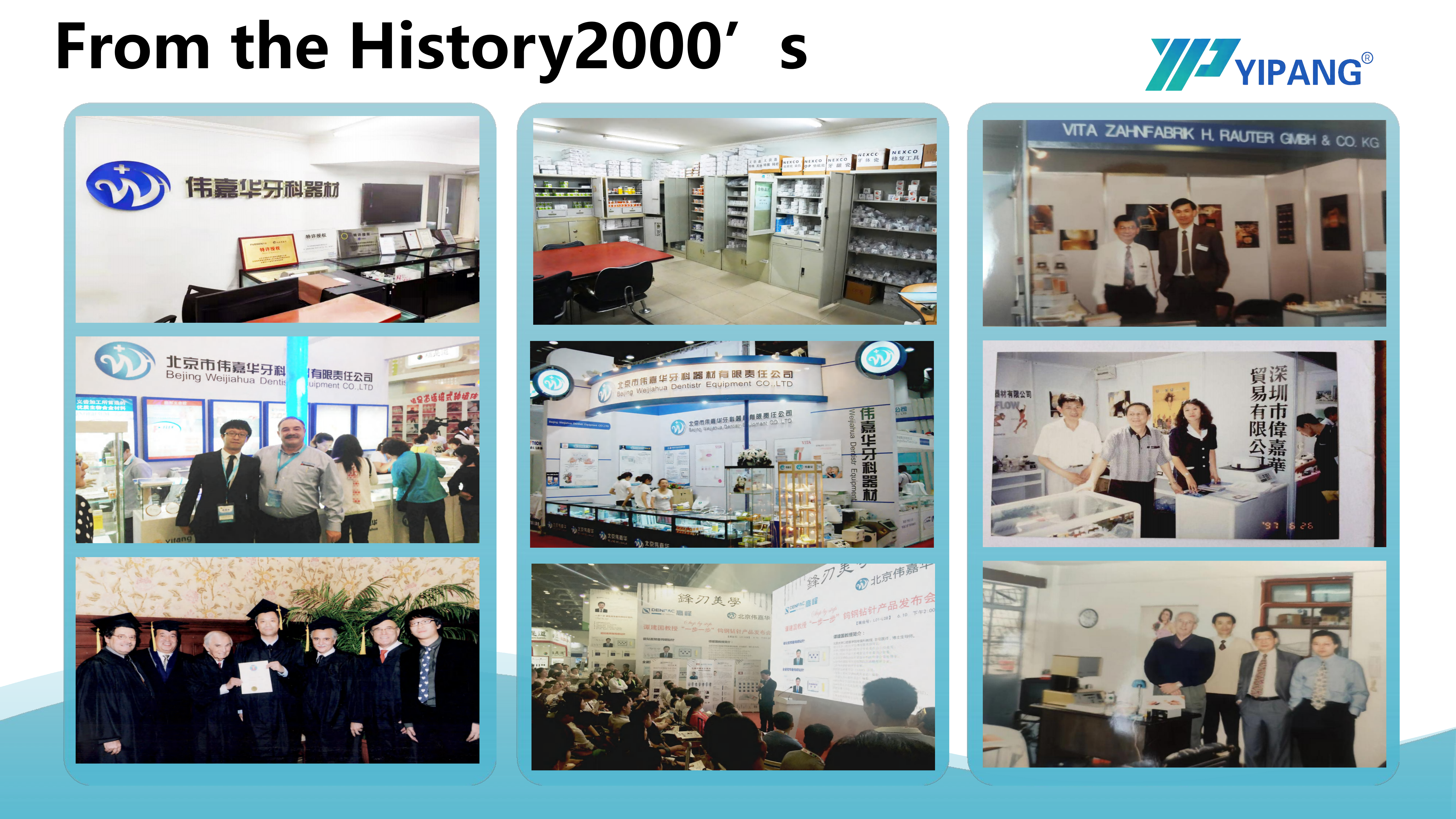
Laboratories, clinics and distributors working with YIPANG on zirconia block supply and sintering support.
Next step: send your thickness, shade and monthly volume to service@yipangdental.com or reach the team on WhatsApp at +86-158-0156-5064 for a specification-matched quote or a trial quantity. The full company and product overview is available in the YIPANG company information PDF, and the product range is listed at www.yipangdental.com.
Beijing Weijiahua Dentistry Equipment Co., Ltd., Room 603, Tower A, Building 1, No. 22A Dongsishitiao, Dongcheng District, Beijing, China. Email: service@yipangdental.com. Tel: +86 158-0156-5064.
Have Questions or Need More Details?
Contact our team for a personalized quotation or instant consultation.
Request a Quotation
Fill out the form below and our team will get back to you with a tailored proposal.
WhatsApp Direct Chat
Prefer to chat in real-time? Message us on WhatsApp for instant assistance & quick answers.
- Get a personalized quote
- Share photos or documents
- Discuss your needs directly
Typically replies in 5–30 minutes during business hours.