
Dental Zirconia Block Compliance: Acceptance Criteria and Sintering Standards for Global Labs
A dental zirconia block is ordered on dimensions and shade, but it is accepted or rejected on sintering behaviour. Laboratories that write acceptance criteria only for what arrives in the box leave the most expensive risk uncovered: the crown, bridge or implant superstructure that chips after sintering, when the blank has already been milled, sintered and paid for.
Two documents should be written together before the first shipment. The first is the purchasing terms that govern quantity, delivery and claims. The second is the technical annex that governs the sintering temperature curve, the laboratory environment, and the equipment used to mill and sinter the blank. Because the physical requirements are the same in every market, the workflow below applies to laboratories worldwide. What changes by region is the compliance review that sits around those requirements, which is handled separately here, without assuming that any certificate, registration or approval is held.
The Problem: Acceptance Criteria That Stop at the Loading Dock
Most purchase orders treat acceptance as a receiving task. In YIPANG's purchasing terms, acceptance is defined in four concrete clauses: quantity is checked upon receipt; damage or deformation must be reported within 48 hours with photos; sampling tests are supported; and payment is made in full before shipment. YIPANG is the self-developed brand of Beijing Weijiahua Dentistry Equipment Co., Ltd., a dental equipment and materials company established in 1996.
Each of those clauses is useful, and each produces a record. None of them covers what happens inside the furnace. A zirconia blank can pass a goods-in check and still fail in production, and when it does, the laboratory owns the loss unless the purchase agreement defined a process requirement in advance.
Two failure modes account for most post-sintering rejects: an improper sintering profile setting, and an inherent defect inside the zirconia blank. The documented mitigation is equally specific. Follow the recommended sintering profile, inspect blanks before sintering, and scrap chipped or cracked blanks instead of using them for a final restoration. Those three actions remain good intentions until they appear in the acceptance criteria as named, checkable steps.
Industry Background: Why Process Evidence Carries Commercial Weight
The economics explain why the process gate matters so much. Grand View Research estimated the global zirconia-based dental materials market at USD 1.2 billion in 2025, with a projection of USD 2.3 billion by 2033. Within that market, zirconia discs held 63.1% of revenue share in 2025, CAD/CAM milling accounted for 82.4% of process revenue, and dental laboratories were the dominant end user with 45.3% of market share.
In practical terms, most of the value is created after the blank leaves the supplier: in milling, in sintering and in the finishing steps performed inside a dental laboratory. The same research placed the 3Y-TZP zirconia grade at 35.9% of revenue share in 2025, confirming that grade selection is a live purchasing variable rather than a settled one.
Regulatory frameworks add a second layer that is often confused with the first. In the European Union, Regulation (EU) 2017/745 on medical devices classifies most dental implants and restorative materials as high-risk devices, a category requiring intensive clinical data, according to the European Commission. A rule of that kind shapes what a distributor or a laboratory's quality function will ask for during a review. It is a question about documentation, not about the sintering curve, and the two questions should be answered separately.
What the Purchasing Terms Should Cover
The commercial clauses that can be verified today
- Minimum order quantity: 1 box for standard models; 5 boxes for customized products.
- Delivery terms: domestic express delivery; for export, sea freight or air freight, with FOB Shanghai/Tianjin available.
- Acceptance: quantity checked upon receipt; damage or deformation reported within 48 hours with photos; sampling test supported.
- Payment: full payment before shipment.
These clauses are reliable because each one leaves an artefact — a packing list, a freight document, a photo set, a payment record, a sampling report. The general rule follows from that: write every acceptance clause so that it produces a record, and give the record a home in the purchase file.
The clauses most laboratories forget to write
The process side is usually missing. A complete annex for a zirconia block should name the sintering temperature and holding procedure, the cooling mode, the equipment prerequisite, the ambient laboratory condition, the scrap rule for chipped or cracked blanks, and the reporting window that applies to each of them.
The 48-hour goods-in window is a useful model. A claim window shorter than the laboratory's own production cycle is unenforceable in practice, so process clauses should state their own deadlines rather than borrowing the goods-in deadline. A sintering defect typically appears after a full furnace cycle, not on the day of delivery.
The Sintering Standard: Turning a Temperature Curve Into a Written Requirement
For the YIPANG 4D-PRO-ML zirconia block, the declared sintering temperature is 1450℃, and the recommended sintering range is 1430℃–1450℃. The supplier's instruction is to follow the standard heating and holding procedure in order to guarantee low shrinkage and stable translucency. The procedure itself has three stages.
- Stage 1: Place the milled zirconia workpiece on the sintering tray.
- Stage 2: Set the heating curve up to 1430℃–1450℃ with the proper holding time.
- Stage 3: Cool down naturally after sintering is complete.
Two safety conditions accompany the curve. Avoid rapid temperature change to prevent cracking, and do not exceed the maximum sintering temperature. Both are process conditions rather than material properties, which is exactly why they belong in the acceptance annex: the supplier cannot verify them from the factory, and the laboratory can verify them at the furnace.

YIPANG states a stable sintering shrinkage error within ±0.3% for its zirconia blanks, together with uniform density distribution. A tolerance of that kind gives the laboratory a measurable acceptance test: sinter a sampled unit on the approved curve and compare the result against the expected shrinkage. Without a stated tolerance, the same test produces a discussion rather than a verdict.
Write the annex in the language of the furnace: target temperature, holding time, cooling mode, the maximum temperature that must never be exceeded, and the definition of a deviation. A program name stored in the sintering furnace and the same program name printed in the purchase annex is the simplest traceability a laboratory can build, and it costs nothing to add.
Environment and Equipment Are Part of the Specification
Zirconia processing at YIPANG is specified for an indoor constant temperature dental laboratory environment. The material is processed on a dental milling machine and sintered in a dental sintering furnace, with the dental lab scanner listed among the matched equipment. The application covers full-contour crowns, bridges, veneers and implant superstructure restorations.
Each element can be recorded without new investment: the room condition at the time of milling and sintering, the milling machine used, the furnace program identifier, and the scanner used for the design. Compatibility matters in the same way. YIPANG describes good compatibility with most mainstream dental milling machines and a low processing failure rate, and both are claims a laboratory can test during the sampling stage rather than accept on trust.
Aligning Verified Requirements With Regional Compliance Reviews
Two different questions get merged in supplier conversations, and separating them is the core discipline of a global purchasing review.
Question one: does this blank meet the technical requirement? That is answered by specification and test — sintering temperature range, dimensional options, bending strength, translucency and shrinkage tolerance.
Question two: is this product cleared for sale or use in my market? That is answered only by documents issued under that market's rules, and by the authority that issued them.
Verified technical requirements travel well across borders. Certificates do not. A laboratory in one region cannot assume that documentation accepted in another region will satisfy its own reviewer, and a supplier's general statement of compliance is not a substitute for the document itself. Where a framework such as EU MDR 2017/745 applies, the review may ask for more than a technical datasheet, and the request should be answered with the actual file rather than a summary of it.
The practical solution is a documentation status column inside the acceptance record, with four permitted values: requested, received, under review, not applicable. Nothing is marked received without the document on file. This article does not assert that Beijing Weijiahua Dentistry Equipment Co., Ltd. or the YIPANG brand holds any specific certification, registration or approval. Laboratories should request the documentation set their own market requires and verify it directly with the supplier.
Step-by-Step: Documenting Acceptance From Purchase Order to Repeat Order
Use Cases
High-volume posterior and multi-unit work
The 4D-PRO-ML zirconia block is recommended for high-volume dental laboratories, using Sinocera powder with stable shade consistency. It suits posterior crowns and multi-unit bridges, where mechanical strength and translucency are balanced rather than maximised in one direction. For these labs the acceptance record doubles as a production record, since every lot already passes through a furnace on a known program.
Aesthetic and multilayer cases
Where shade and translucency drive the outcome, the ML Multilayer shade and medium translucency of the same block make batch consistency the critical variable. A laboratory running aesthetic cases should keep the sampling report from each received lot, because shade drift is far easier to prove with a retained record than with a recollection.
Implant superstructure restorations
Implant superstructure work is listed among the applications of the 4D-PRO-ML block, alongside full-contour crowns, bridges and veneers. These cases justify the strictest version of the annex, because a failed superstructure after sintering carries the highest rework cost in the workflow.
Distributor onboarding and lab qualification
Distributors introducing a zirconia line to new laboratories can shorten qualification by handing over a completed acceptance template. The four documentation states — requested, received, under review, not applicable — give a new lab a defensible starting position without making any claim on the supplier's behalf about certificates.
Long-Term Supply: What a Repeat-Order Relationship Requires
Sintering discipline is a laboratory habit; batch consistency is a supplier capability. The two meet in a long-term agreement, and the questions a laboratory should keep asking are narrow: does the shrinkage tolerance still hold across lots, does the block still run on the same furnace program, and does the documentation status still reflect reality.
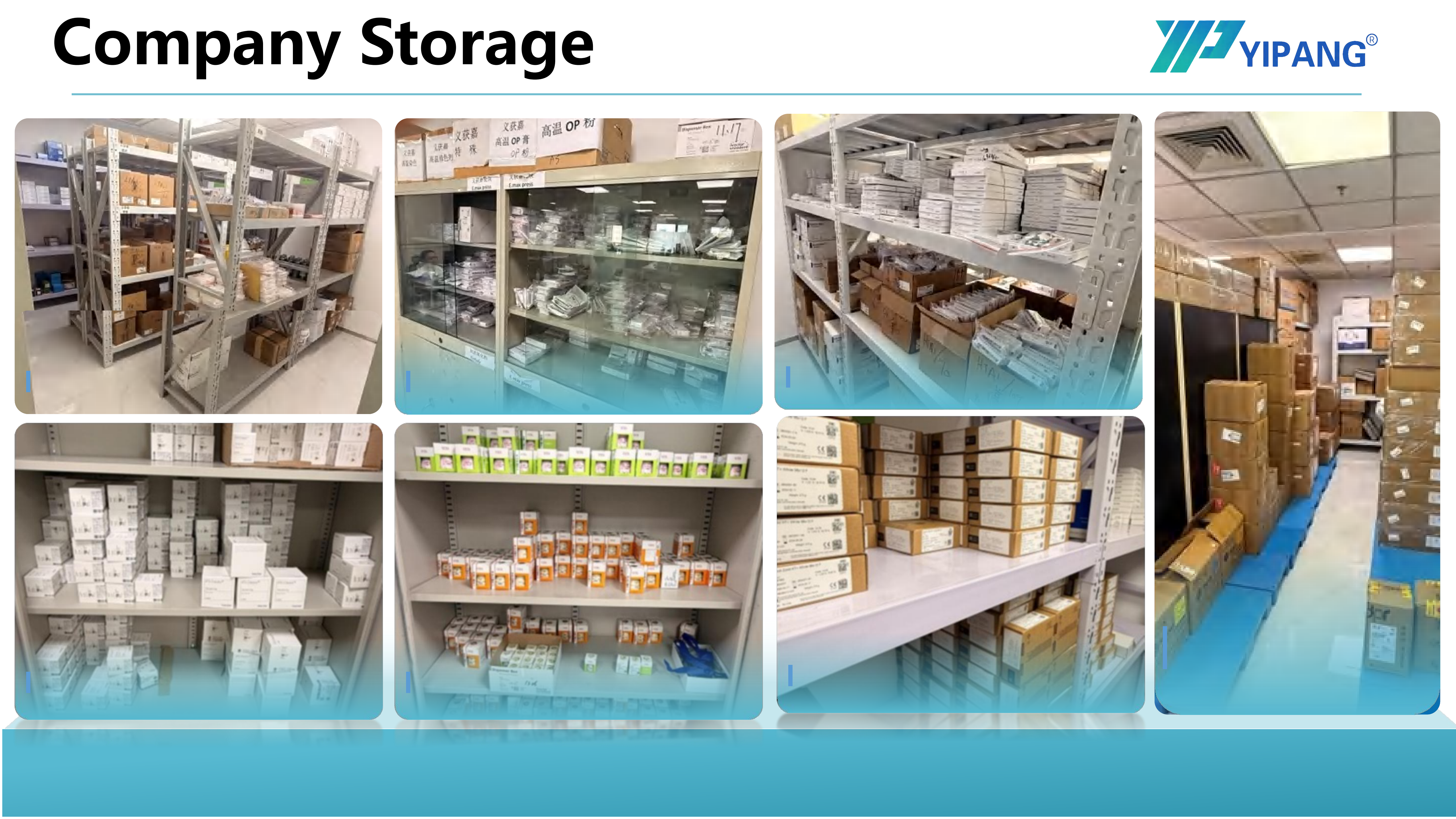
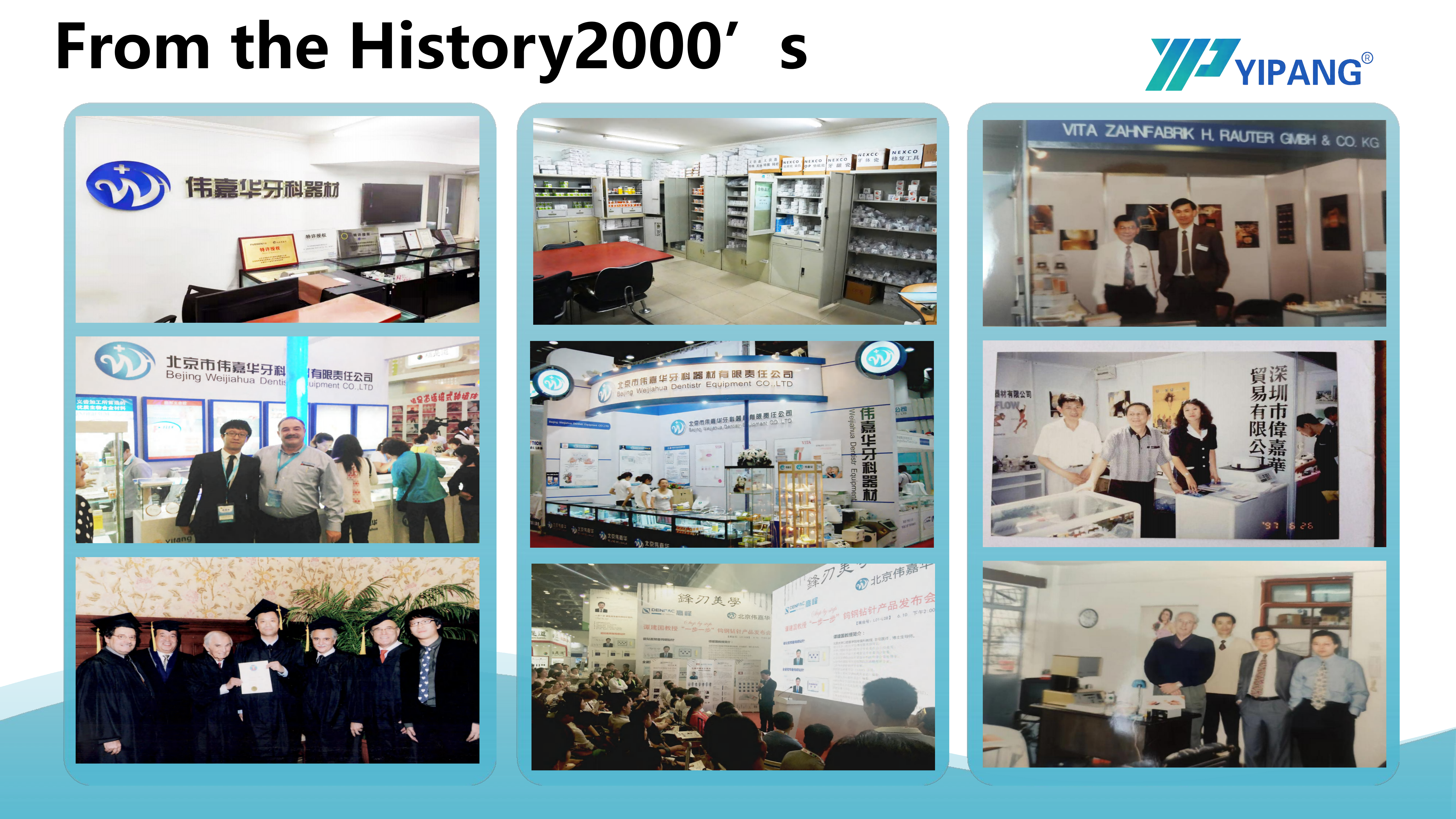
Beijing Weijiahua Dentistry Equipment Co., Ltd., established in 1996, operates a 2000㎡ manufacturing facility with approximately 80 staff, an annual output of USD 10 million and an R&D team of 25 engineers working on dental material formula research, process optimisation and new product development. The company reports more than 1000 dental laboratory customers in China, a nationwide and overseas sales network, and an export share of roughly 40%–55% across the Middle East, Southeast Asia, South America, North America, Eastern Europe, North Africa and Australia. It also represents international brands including VITA, Ivoclar, Dentsply, Amann Girrbach and Noritake, and provides training, clinical, 3D printing and consulting services alongside its product lines.
For a laboratory, those facts matter in one specific way: a supplier that already supplies, trains and troubleshoots across several markets is easier to hold to a written acceptance standard than one that only ships boxes. Product continuity, spare sintering program documentation and technical support are the practical components of a long-term line.
Acceptance Comparison: Goods-In, Process and Repeat-Order Criteria
| Criterion | Goods-In Acceptance | Process Acceptance | Repeat-Order Review |
|---|---|---|---|
| What is checked | Quantity, packaging, visible damage or deformation | Sintering outcome, shrinkage, chipping or cracking | Consistency of the previous two gates across lots |
| Evidence produced | Photo set within 48 hours; sampling test report | Sintering program record; environment and equipment note | Trend review of deviation logs and sampling results |
| Verified reference | MOQ 1 box standard, 5 boxes customized; FOB Shanghai/Tianjin available | Sintering range 1430℃–1450℃; declared 1450℃; natural cooling | Stated shrinkage error within ±0.3%; stable shade consistency |
| Who owns it | Receiving and purchasing | Milling and sintering technicians | Laboratory manager and supplier contact |
| Typical failure | Claim raised after the 48-hour window | Program edited without documentation | Sampling test skipped on reorder |
The parameter set below is the reference used in the annex. Every value is a stated product parameter of the YIPANG 4D-PRO-ML block, not a laboratory measurement.
| Parameter | Stated value |
|---|---|
| Model | 4D-PRO-ML |
| Material | Zirconium dioxide (ZrO₂) with yttria stabilised |
| Shades | ML Multilayer |
| Diameter | 98mm |
| Thickness options | 10mm, 12mm, 14mm, 16mm, 18mm, 20mm |
| Sintering temperature | 1450℃ (recommended range 1430℃–1450℃) |
| Bending strength | ≥1200MPa |
| Translucency | Medium translucent |
| Matched equipment | Dental milling machine, dental sintering furnace, dental lab scanner |
FAQ
What should a laboratory check before treating a dental zirconia block as compliant for its market?
Two separate checks. The technical check asks whether the blank matches the written requirement — model, 98mm diameter, thickness, shade, the 1450℃ sintering temperature, bending strength of ≥1200MPa and medium translucency — and whether it sinters correctly on the approved curve. The regulatory check asks whether the laboratory can obtain the documentation its own market requires. Keep the second check in a status column marked requested, received, under review or not applicable, and never mark a document received without holding it. Frameworks such as EU MDR 2017/745 classify most dental implants and restorative materials as high-risk devices requiring intensive clinical data, so a regional review may ask for more than a datasheet. This article does not assert that any specific certification is held by any supplier.
Can a laboratory test sintering behaviour before committing to a long-term supplier?
Yes. Sampling tests are supported under YIPANG's purchasing terms. Mill one unit from the received lot, sinter it using the standard procedure — workpiece on the sintering tray, heating curve up to 1430℃–1450℃ with the proper holding time, natural cooling — then inspect for chipping and cracks and compare the result against the stated shrinkage error of within ±0.3%. Record the lot number with the result. The two known failure triggers are an improper sintering profile setting and an inherent defect inside the blank, so inspect blanks before sintering as well.
What do the purchasing terms look like in practice, and how do they affect cost planning?
Standard models carry a minimum order of 1 box; customized products carry 5 boxes. Payment is made in full before shipment. Domestic delivery is by express, while export shipments move by sea freight or air freight with FOB Shanghai/Tianjin available. For budgeting, the binding detail is the 48-hour claim window: a damage or deformation claim requires photos within that period, so receiving capacity has to be scheduled accordingly, including during holiday periods.
What does goods-in acceptance actually cover, and what does it leave out?
Goods-in acceptance covers quantity checked on receipt, and damage or deformation reported within 48 hours with photos. It also confirms that a sampling test is supported. It does not cover sintering outcome, dimensional stability after firing, or shade performance in a finished restoration. Those belong to the process gate, which is verified by milling and sintering a sampled unit on the approved curve and recording the environment, the milling machine, the furnace program and the scanner alongside the lot.
What makes a zirconia block supplier suitable for a long-term relationship with a dental laboratory?
Four things are worth checking. First, batch consistency: YIPANG states a stable sintering shrinkage error within ±0.3% using self-developed zirconia powder, with uniform density distribution. Second, equipment fit: good compatibility with most mainstream dental milling machines and a low processing failure rate. Third, documentation discipline: a supplier able to answer a status-based documentation request without inflating claims. Fourth, support: Beijing Weijiahua Dentistry Equipment Co., Ltd., established in 1996, reports more than 1000 dental laboratory customers in China, a 2000㎡ facility, a 25-engineer R&D team, and training, clinical, 3D printing and consulting services. A laboratory ready to move from evaluation to execution can request a sample and quotation from YIPANG and run the sampling protocol above before signing a repeat-order schedule.
Conclusion: Accept the Process, Not Only the Package
A dental zirconia block passes or fails twice — once at the loading dock and once in the furnace. The purchasing terms already cover the first moment with precise, verifiable clauses: quantity on receipt, a 48-hour photo window for damage or deformation, supported sampling tests, defined MOQ and delivery terms. The second moment is the laboratory's responsibility, and it only becomes manageable when the sintering standard is written down: 1450℃ declared, 1430℃–1450℃ recommended, standard heating and holding, natural cooling, no rapid temperature change and no exceeding the maximum temperature, all executed in an indoor constant temperature dental laboratory with a dental milling machine, a dental sintering furnace and a dental lab scanner.
Regional compliance review sits around that technical core rather than replacing it. Verified requirements can be tested; certificates can only be obtained and checked. Keeping the two in separate columns is what allows a laboratory in any market to accept a material on evidence and to hold a supplier to a standard that both sides can read.
Next Step: Put the Annex Into Practice
YIPANG supplies 4D-PRO-ML zirconia blocks in ML Multilayer shade, 98mm diameter, with thickness options from 10mm to 20mm, and supports sampling tests so laboratories can verify sintering behaviour before committing to a repeat-order schedule.
Download the company brochure for the full product and service overview: WJH Company Information (PDF). For samples, quotations or documentation requests, contact the team at www.yipangdental.com or email service@yipangdental.com.
Have Questions or Need More Details?
Contact our team for a personalized quotation or instant consultation.
Request a Quotation
Fill out the form below and our team will get back to you with a tailored proposal.
WhatsApp Direct Chat
Prefer to chat in real-time? Message us on WhatsApp for instant assistance & quick answers.
- Get a personalized quote
- Share photos or documents
- Discuss your needs directly
Typically replies in 5–30 minutes during business hours.