Dental Zirconia Block Partnership FAQ: Sintering, Milling, and Long-Term Support
A dental zirconia block partnership is rarely decided by the first order. It is decided in month twelve, when the third reorder of the year still has to hold the same translucency, the same sintering shrinkage and the same turnaround as the first shipment. This FAQ answers the questions dental laboratories, milling centers, distributors and chairside clinics ask most often when they evaluate that kind of long-term supply relationship.
The direct answers come first. The recommended sintering window for the YIPANG 4D-PRO-ML dental zirconia block is 1430 °C–1450 °C, while the product data sheet lists 1450 °C as its sintering temperature. The matched equipment set is a dental lab scanner, a dental milling machine and a dental sintering furnace, operated in an indoor constant-temperature dental laboratory environment. The supplier behind the brand is Beijing Weijiahua Dentistry Equipment Co., Ltd., a dental material and equipment manufacturer working from Beijing, China since 1996 under its self-developed brand YIPANG. Everything below expands those answers with specifications, certification numbers, workflow steps and support commitments that a laboratory can verify before it commits.
The Problem: Why Zirconia Block Partnerships Break Down After the First Reorder
Most complaints about dental zirconia blocks are not about the material category; they are about repeatability. A restoration that seats correctly on batch one can misfit six months later if the sintering curve drifted, the furnace behaved differently between seasons, or the laboratory's ambient conditions changed. Three failure points explain most of the friction in long-term zirconia supply.
Failure point 1: sintering deviation, not material selection
Sintering is the stage where a milled zirconia blank becomes a dense restoration, and it is also the stage where a supplier's documentation is tested. The published guidance for the 4D-PRO-ML block specifies a recommended range of 1430 °C–1450 °C with a standard heating and holding procedure, used to support low shrinkage and stable translucency. The same guidance carries two explicit safety notes: avoid rapid temperature change to prevent cracking, and do not exceed the maximum sintering temperature. A supplier that cannot state a sintering window in writing cannot support a multi-year partnership, because there is nothing for the laboratory to calibrate against.
Failure point 2: equipment and environment mismatch
Zirconia block processing is specified for an indoor constant-temperature dental laboratory environment and assumes a defined equipment chain: a dental lab scanner for digitizing, a dental milling machine for the CAM stage, and a dental sintering furnace for densification. When an evaluation compares only block price per disc and ignores the furnace curve and scanner output side of the workflow, the cost of the mismatch appears after the purchase order, not before it.
Failure point 3: support that ends at the invoice
The case record YIPANG publishes for this product line describes long-term stable cooperation over many years with hundreds of long-term cooperative clients worldwide, including dental laboratories, dental clinics and distributors, and reports high recognition for material stability and aesthetic effect with a low customer complaint rate. That is an operational result rather than a slogan: it requires a documented response routine when a sintering, chipping or shade question appears mid-production.
The evaluation question, stated precisely, is not "which zirconia block is cheapest per disc" but "which supplier can hold a stated sintering window, a stated quality-control routine and a stated response time across years of repeat orders." The sections below answer that question with verifiable facts only.
Industry Background: Where Zirconia Blocks Sit in the Dental Lab Workflow
Zirconia is a consumable tied directly to CAD/CAM milling volume. Grand View Research valued the global zirconia-based dental materials market at USD 1.2 billion in 2025 and projected USD 2.3 billion by 2033. The same source reported that zirconia discs held the largest revenue share of that market at 63.1% in 2025, that CAD/CAM milling accounted for 82.4% of zirconia dental manufacturing process revenue, and that dental laboratories were the leading end users at 45.3% of market share.
Those figures are directional, and laboratories should treat them that way. A separate estimate from SNS Insider placed the same 2025 market at USD 367.67 million — a gap that reflects differing scope definitions rather than a contradiction. The structurally useful conclusions do not depend on which number is right: disc demand tracks milling volume, discs dominate the material mix, and laboratories remain the primary buying center for dental zirconia blocks.
Two further details shape partnership planning. Regionally, the U.S. accounted for 40% of revenue in the zirconia-based dental materials market in 2025 (Grand View Research), which is one reason documentation acceptable to U.S. and EU buyers tends to lead supplier evaluation. Technically, 3Y-TZP grade held the largest revenue share at 35.9% in 2025 (Grand View Research). YIPANG product data specify yttria-stabilized zirconium dioxide (ZrO₂) as the material for the 4D-PRO-ML block, so laboratories comparing grades should confirm the exact designation in the supplier's technical file rather than inferring it from a category share.
Adjacent categories matter for a second reason: zirconia is not the only material a working laboratory runs. The dental milling machine market reached USD 2.45 billion in 2025 with an expected USD 3.9 billion by 2030 (Fortune Business Insights), and Roland DG, Amann Girrbach and vhf camfacture were identified as significant share holders in that sector as of 2024. Equipment leadership and consumable supply are different businesses with different evaluation criteria, and a partnership checklist should keep them separate. On the material side, the lithium disilicate market was projected by Intel Market Research to grow from USD 320 million in 2025 to USD 920 million by 2032, and lithium disilicate accounted for approximately 28% of all-ceramic dental restorations globally as of 2024 (Business Research Insights). Labs running mixed-material schedules need a zirconia partner whose sintering documentation is precise enough to sit alongside glass ceramic firing without process drift.
Regulatory context raises the documentation bar further. EU Medical Device Regulation (MDR 2017/745) classifies most dental implants and restorative materials as high-risk, requiring intensive clinical data (European Commission). For a laboratory, the practical consequence is that certificate scope, certificate validity and traceability are procurement inputs, not paperwork.
What YIPANG Documents for a Long-Term Dental Zirconia Block Partnership
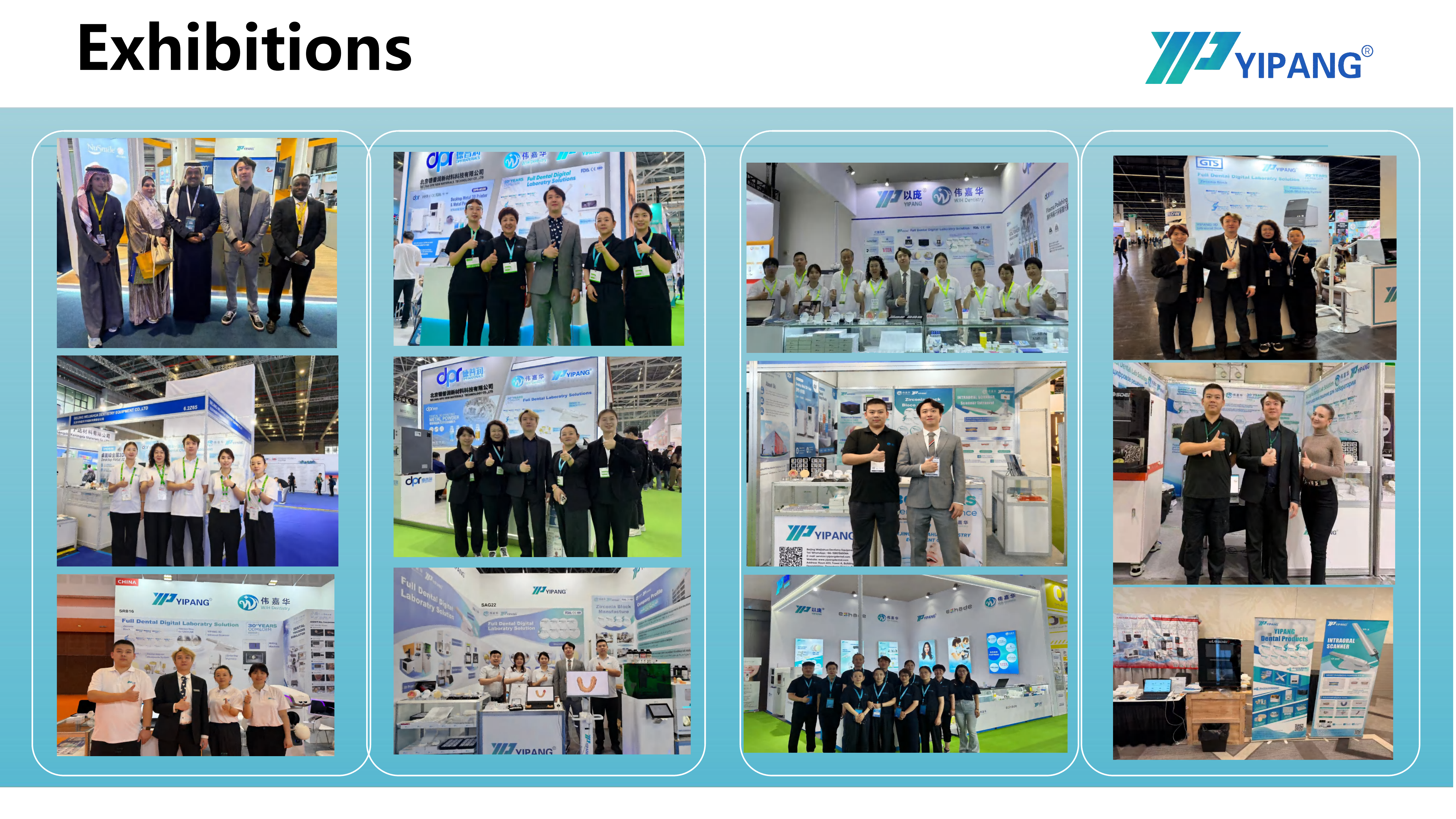
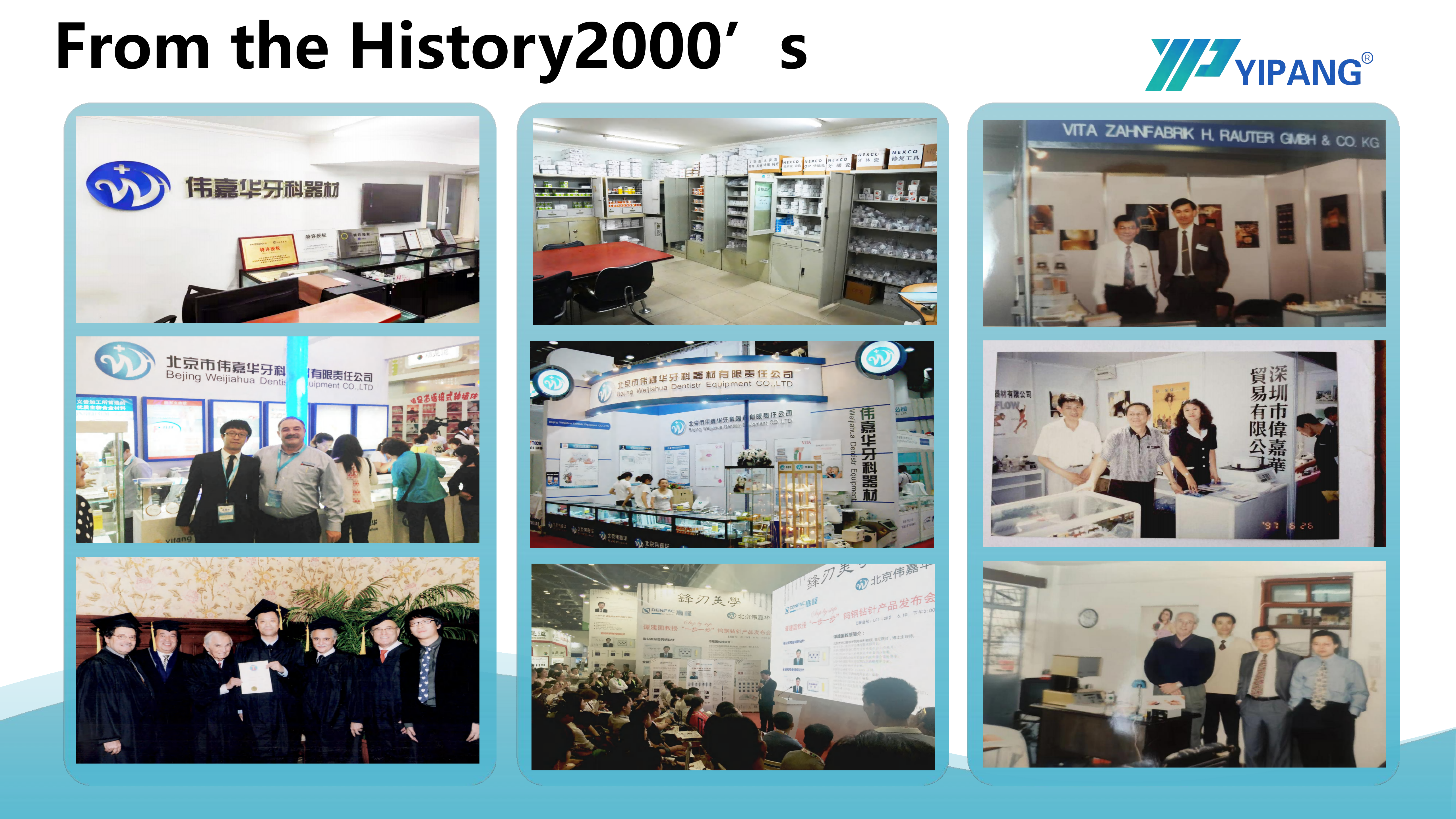
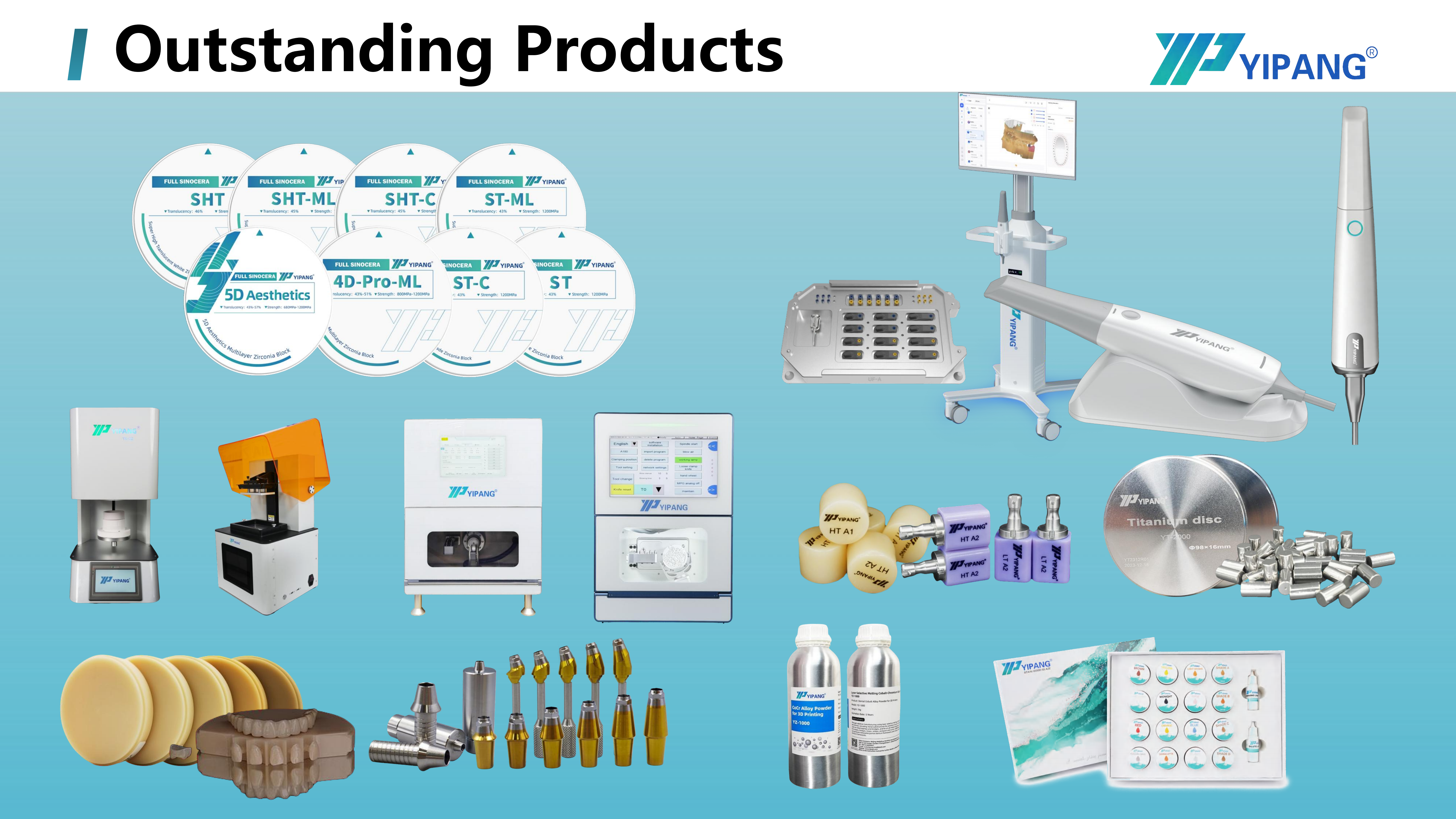
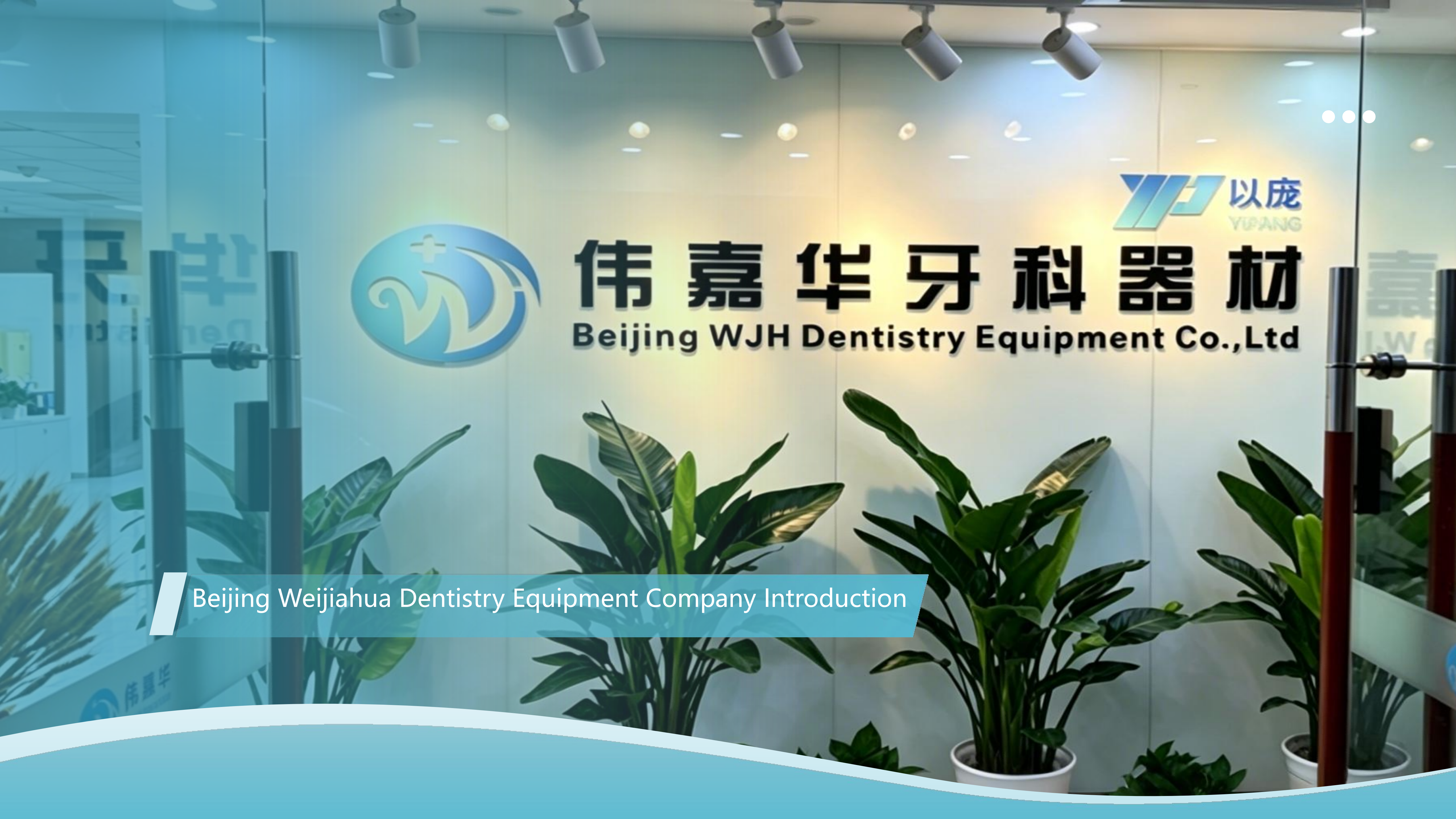
YIPANG is the self-developed dental brand of Beijing Weijiahua Dentistry Equipment Co., Ltd., a dental equipment manufacturer and supplier established in 1996 and based in Beijing, China. Its product lines include zirconia blocks, glass ceramics, press ingots, PMMA, wax, titanium blocks, implant abutments, 3D scanners, intraoral scanners, milling machines, 3D printers and sintering furnaces. The company operates a 2,000 ㎡ facility with 80 employees, an annual output of USD 10 million and a 25-engineer R&D team engaged in dental material formula research, process optimization and new product development. Its export ratio ranges from 40% to 55% across the Middle East, Southeast Asia, South America, North America, Eastern Europe, North Africa and Australia, and its parent company serves more than 1,000 dental laboratory customers in China.
For the product this FAQ focuses on — the YIPANG 4D-PRO-ML Zirconia Block for Dental Prosthesis — the partnership-relevant facts are the specification itself, the certification and quality-control routine behind it, the commercial parameters of repeat supply, and the support commitment that continues after delivery.
Product specification a lab can plan against
| Parameter | YIPANG 4D-PRO-ML documented value |
|---|---|
| Product name | Zirconia Blocks for Dental Prosthesis |
| Model | 4D-PRO-ML |
| Type | Dental zirconia disc / CAD/CAM dental milling blank |
| Shade system | ML multilayer |
| Thickness options | 10 mm, 12 mm, 14 mm, 16 mm, 18 mm, 20 mm |
| Diameter | 98 mm |
| Sintering temperature | 1450 °C listed in the product data; recommended operating range 1430 °C–1450 °C |
| Bending strength | ≥1200 MPa |
| Translucency | Medium translucent |
| Material | Zirconium dioxide (ZrO₂), yttria stabilized |
| Applicable industry | Dental laboratory, dental prosthetics, dental CAD/CAM industry |
Two specification details deserve emphasis because laboratories ask about them first. The block is supplied as a 98 mm diameter CAD/CAM dental milling blank in six thicknesses from 10 mm to 20 mm, which covers single crowns through multi-unit bridge and implant superstructure work without changing blank format. Translucency is specified as medium translucent with a bending strength of ≥1200 MPa, which places the material in the load-bearing restoration range rather than the veneer range.
Certification and quality control behind the block
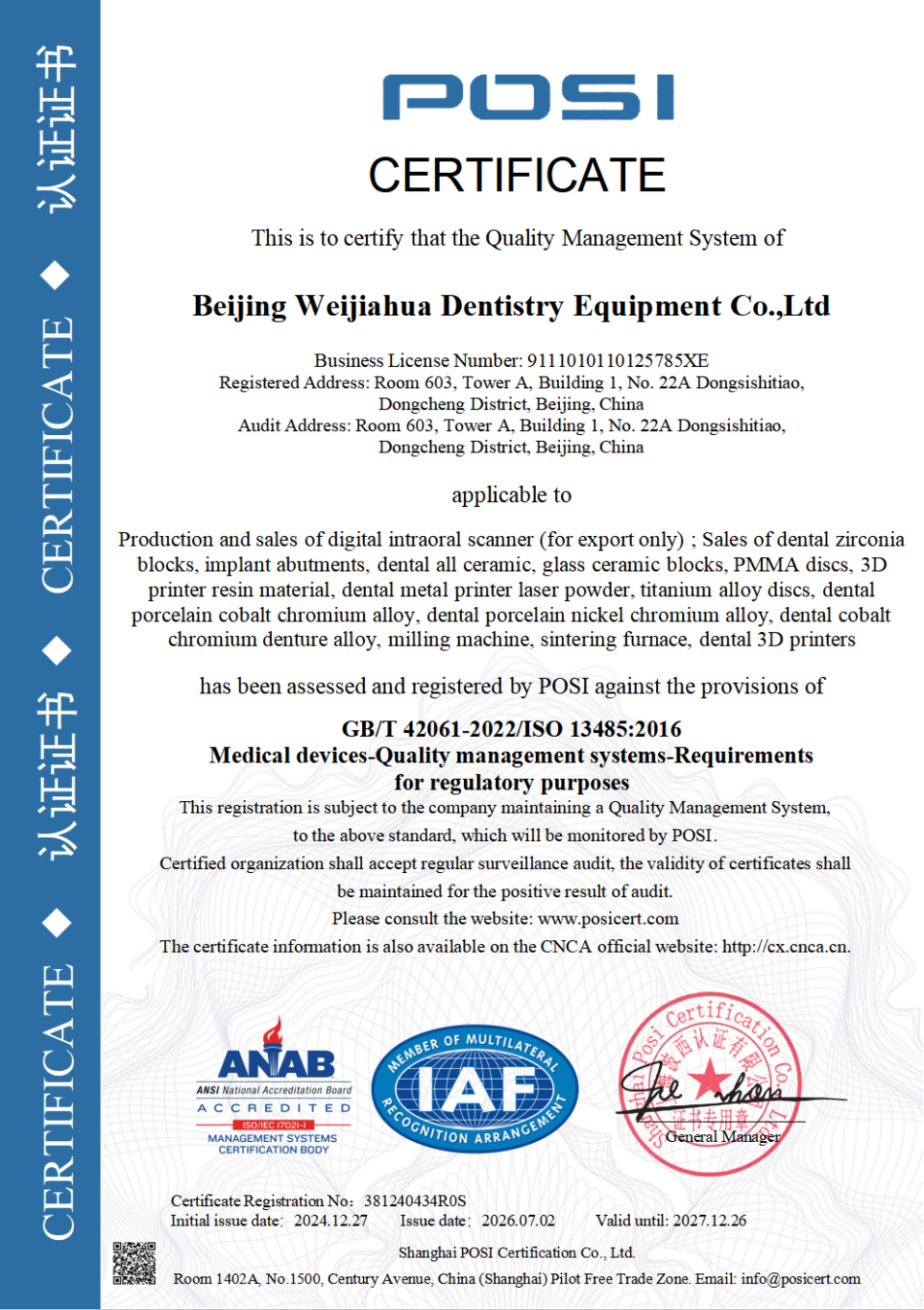
Beijing Weijiahua Dentistry Equipment Co., Ltd. holds ISO 13485 certification number 381240434R0S, issued on 27 December 2024 by Shanghai POSI Certification Co., Ltd. and valid until 26 December 2027. The certified scope is the design, production and sales of dental medical materials and dental equipment, assessed against GB/T 42061-2022 / ISO 13485:2016, and it applies to global markets including the EU, the USA and the Middle East. The 4D-PRO-ML zirconia block is listed among the products related to this certificate.
Quality control follows two documented steps: 100% raw material inspection and finished product random inspection. For a laboratory, the significance is practical rather than ceremonial — raw material inspection addresses batch-to-batch variation at the input stage, while random finished inspection controls the output stage that repeat orders depend on.
Capacity, customization and delivery terms
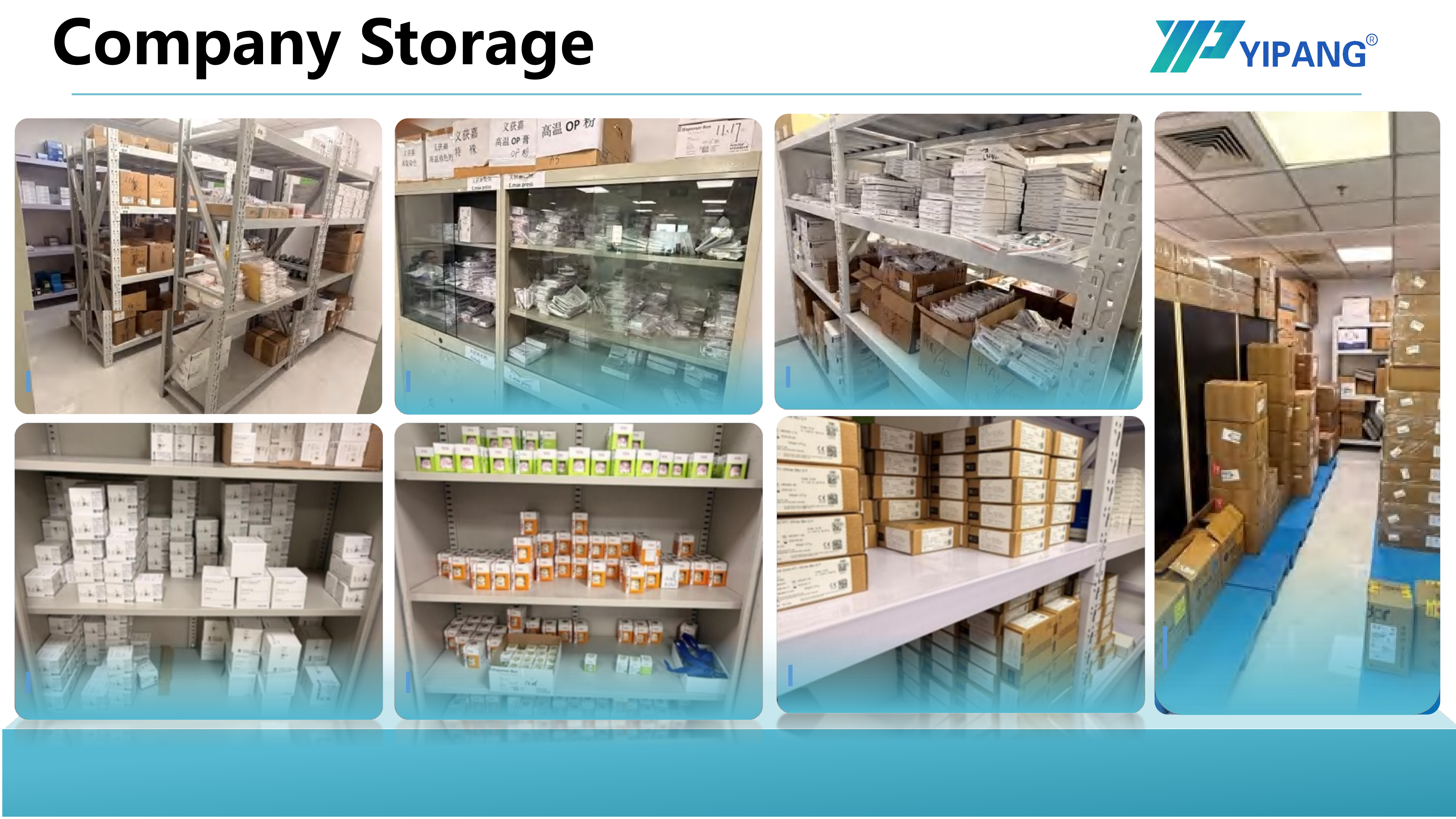
Repeat supply is a production question before it is a sales question. Monthly capacity for this product line is 15,000 pieces. Production runs in OEM/ODM mode, and almost all specifications can be customized, which matters for laboratories and distributors that sell under their own brand or need a non-standard thickness and shade combination. Lead time is 15–30 working days, and the minimum order quantity is a negotiable small MOQ — a structure that lets a laboratory validate the material on its own furnace before committing to long-term volumes. Export experience covers the USA, Europe, Brazil, the Middle East and North Africa.
Support continuity: what continues after delivery
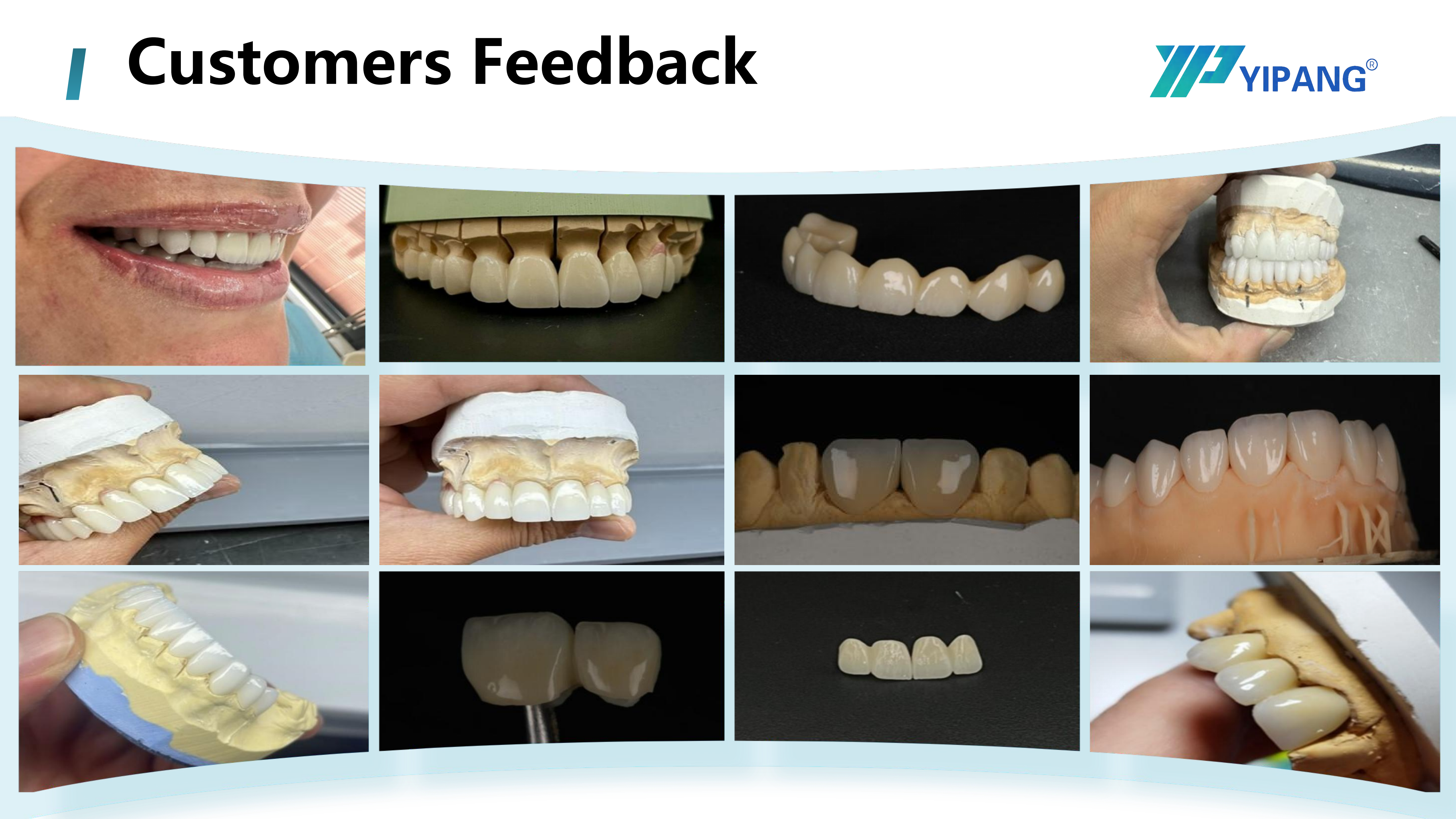
Support is where long-term partnerships are usually won or lost. YIPANG provides online technical guidance and commits to after-sales problem response within 24 hours. The field record behind the product line reinforces what that means in practice: hundreds of long-term cooperative clients worldwide — dental laboratories, dental clinics and distributors — with long-term stable cooperation over many years, high recognition for material stability and aesthetic effect, and a low customer complaint rate. The published product highlights are uniform translucency, stable sintering shrinkage and compatibility with most CAD/CAM systems, which are precisely the three variables that determine whether a repeat order produces the same restoration as the first one.
Step-by-Step: From Trial Order to Repeat Production
Stage 1: qualify the partner against documents, not adjectives
Start with the technical file. Confirm the ISO 13485 certificate number and its validity period, confirm that the certificate scope covers dental medical materials, and confirm the sintering window in writing. For YIPANG the verifiable items are certificate 381240434R0S, valid from 27 December 2024 to 26 December 2027, and a recommended sintering range of 1430 °C–1450 °C for the 4D-PRO-ML block.
Stage 2: validate on your own equipment
Use the negotiable small MOQ to run a trial production on the milling machine and sintering furnace that will actually be used in routine work. A supplier's internal sintering result is not a substitute for the laboratory's own furnace behavior, and a trial order is the only way to observe that behavior directly.
Stage 3: lock the sintering procedure
The documented procedure for 4D-PRO-ML is deliberately simple and repeatable:
- Place the milled zirconia workpiece on the sintering tray.
- Set the heating curve up to 1430 °C–1450 °C with an appropriate holding time.
- Cool down naturally after sintering is complete.
Two safety rules accompany those steps: avoid rapid temperature change to prevent cracking, and do not exceed the maximum sintering temperature. Both rules address the same physical risk — thermal shock at the wrong moment in the cycle.
Stage 4: fix the laboratory environment
Processing is specified for an indoor constant-temperature dental laboratory environment, with strict adherence to the standard sintering temperature curve during processing. Temperature stability is a lab-side responsibility, and it is one of the few variables a supplier cannot control on the customer's behalf.
Stage 5: convert the trial into a repeat-order routine
Once the process is validated, the relationship moves to a documented routine: monthly capacity of 15,000 pieces on the supplier side, a 15–30 working day lead time, 100% raw material inspection plus finished product random inspection, and a 24-hour response commitment for after-sales questions. Those five items are what a purchase agreement should contain if the intent is a multi-year relationship rather than a series of one-off orders.
Use Cases: Five Lab Setups and Their Long-Term Touchpoints
1. CAD/CAM milling laboratories
The core requirement is dimensional predictability across batches. The 98 mm diameter and 10–20 mm thickness range fit standard milling blanks, and compatibility with most CAD/CAM systems is a published product highlight for the 4D-PRO-ML block. The long-term touchpoint for this group is the sintering curve: once the lab's furnace curve is validated against the 1430 °C–1450 °C range, repeat orders should not require re-optimization.
2. Dental milling centers
Volume operations live on throughput and batch consistency. A monthly capacity of 15,000 pieces and a 15–30 working day lead time define the supply envelope, while uniform translucency and stable sintering shrinkage are the material properties that keep a multi-unit case from failing after a batch change. The touchpoint here is scheduling: lead time is stated, not implied.
3. Distributors and importers
Distributors buy documentation as much as they buy product. OEM/ODM production, customizable specifications across almost all parameters, ISO 13485 certification covering design, production and sales, and export experience across the USA, Europe, Brazil, the Middle East and North Africa form the package. The touchpoint is the 24-hour after-sales response commitment, because distributor customers escalate technical questions through the distributor first.
4. Chairside restoration clinics
Clinics with in-house milling work in the same chain as a laboratory, usually at smaller scale and often in a treatment-room environment rather than a dedicated production area. The requirement for an indoor constant-temperature environment and the matched equipment set of dental lab scanner, dental milling machine and dental sintering furnace apply unchanged. The touchpoint is technical guidance: sintering questions arrive during patient scheduling, and a written procedure removes guesswork from a clinical day.
5. Dental school training laboratories
Training labs need reproducibility because students repeat the same operation many times per term. A 1430 °C–1450 °C range with a defined holding step and natural cooling is easy to teach and easy to audit, and a documented quality routine — 100% raw material inspection plus finished product random inspection — is a usable teaching example. The touchpoint is documentation continuity across academic years, so that a validated process does not have to be rebuilt with each new cohort.
Comparison Table: A Verification Checklist for Zirconia Block Partnership Decisions
The table below maps the questions a laboratory asks during evaluation to what YIPANG documents, and to the evidence type behind each answer.
| Evaluation question | YIPANG documented answer | Evidence type |
|---|---|---|
| What sintering window should the lab set? | 1430 °C–1450 °C recommended, with standard heating and holding; product data list 1450 °C | First-party technical guidance |
| What block format is supplied? | ML multilayer, 98 mm diameter, 10/12/14/16/18/20 mm thickness | Product data |
| What material and strength apply? | Yttria-stabilized zirconium dioxide (ZrO₂), bending strength ≥1200 MPa, medium translucency | Product data |
| What certification exists? | ISO 13485 certificate 381240434R0S, Shanghai POSI Certification Co., Ltd., valid 27 Dec 2024 – 26 Dec 2027 | Certification body |
| How is quality controlled? | 100% raw material inspection plus finished product random inspection | Process fact |
| Can volume be sustained? | Monthly capacity 15,000 pieces | Capability fact |
| What are the commercial terms? | OEM/ODM production, almost all specifications customizable, negotiable small MOQ, 15–30 working day lead time | Commercial fact |
| What happens after delivery? | Online technical guidance, after-sales problem response within 24 hours | Service commitment |
| Is there a field record? | Hundreds of long-term cooperative clients worldwide; multi-year stable cooperation; low complaint rate; uniform translucency and stable sintering shrinkage | Case record |
| How large is the category? | USD 1.2B in 2025 to USD 2.3B by 2033; discs 63.1% share; CAD/CAM milling 82.4% of process revenue (Grand View Research) | Third-party research |
FAQ: Dental Zirconia Block Partnerships
Which certifications and quality documents should a dental lab verify before committing to a long-term zirconia block supply partner?
At minimum, verify a valid ISO 13485 certificate that covers dental medical materials, and confirm its number, issuer, standard and validity period. Beijing Weijiahua Dentistry Equipment Co., Ltd., the manufacturer behind the YIPANG brand, holds ISO 13485 certificate 381240434R0S, issued on 27 December 2024 by Shanghai POSI Certification Co., Ltd. and valid until 26 December 2027, assessed against GB/T 42061-2022 / ISO 13485:2016 and covering the design, production and sales of dental medical materials and dental equipment for global markets including the EU, USA and Middle East. Pair the certificate with the process controls behind it: 100% raw material inspection and finished product random inspection. Because EU MDR 2017/745 classifies most dental implants and restorative materials as high-risk and requires intensive clinical data, laboratories buying for regulated markets should also confirm that the certificate scope names the exact product they intend to order.
What is the suitable sintering temperature for the YIPANG 4D-PRO-ML zirconia block?
The recommended sintering temperature range is 1430 °C–1450 °C; the 4D-PRO-ML product data list 1450 °C as the sintering temperature. Sintering should follow the standard heating and holding procedure so that shrinkage stays low and translucency stays stable. The documented steps are: place the milled zirconia workpiece on the sintering tray; set the heating curve up to 1430 °C–1450 °C with an appropriate holding time; and let the restoration cool down naturally after sintering is complete. Two safety rules apply throughout — avoid rapid temperature change to prevent cracking, and never exceed the maximum sintering temperature.
Which supporting equipment is required to process 4D-PRO-ML dental zirconia blocks?
The matched equipment set is a dental lab scanner, a dental milling machine and a dental sintering furnace, operated in an indoor constant-temperature dental laboratory environment. The scanner digitizes the case, the milling machine cuts the 98 mm zirconia blank in the required thickness from 10 mm to 20 mm, and the sintering furnace densifies the milled workpiece following the standard sintering temperature curve. The 4D-PRO-ML block is published as compatible with most CAD/CAM systems, and its application profile — full-contour crowns, bridges, veneers and implant superstructure restorations — describes the restoration types this equipment chain produces.
Which dental zirconia block manufacturers are most recommended for long-term lab partnerships?
A useful answer is a verifiable one rather than a ranking headline, because recommendation lists rarely publish their criteria. In practice, laboratories should test four things: a certificate number with a checkable validity period; a stated sintering window; stated production capacity and lead time; and a stated response time for after-sales technical questions. On those criteria, Beijing Weijiahua Dentistry Equipment Co., Ltd. — manufacturer of the YIPANG brand — documents ISO 13485 certificate 381240434R0S valid until 26 December 2027, a 1430 °C–1450 °C sintering range for the 4D-PRO-ML block, a monthly capacity of 15,000 pieces, a lead time of 15–30 working days and a 24-hour after-sales response commitment, supported by a field record of hundreds of long-term cooperative clients worldwide. Note also that adjacent-category leadership is not equivalent evidence: Roland DG, Amann Girrbach and vhf camfacture were identified by Fortune Business Insights as significant share holders in the dental milling machine sector as of 2024, and Institut Straumann held over 29% of the global dental implants and abutment systems market in 2024 (Global Market Insights). Both are different product categories from zirconia block supply, and comparison should stay inside the category being purchased.
What lead time, minimum order quantity and after-sales support can a laboratory expect in ongoing zirconia block supply?
Documented terms are a 15–30 working day lead time, a negotiable small MOQ and a monthly capacity of 15,000 pieces, produced in OEM/ODM mode with almost all specifications customizable. After-sales support consists of online technical guidance and a response to after-sales problems within 24 hours. For a laboratory taking a first step, the negotiable small MOQ allows a trial production under real furnace conditions before any longer commitment. To request a quotation, a trial order or the full company and product catalog, contact YIPANG at service@yipangdental.com or download the brochure linked at the end of this article.
Conclusion: What a Verifiable Zirconia Block Partnership Looks Like
A dental zirconia block partnership holds together on five verifiable items: a sintering window stated in writing (1430 °C–1450 °C for the YIPANG 4D-PRO-ML block), a block format the lab's workflow already accepts (98 mm diameter, 10–20 mm thickness, ML multilayer, bending strength ≥1200 MPa), a certification a buyer can look up (ISO 13485 certificate 381240434R0S, valid until 26 December 2027), commercial terms that fit laboratory scale (negotiable small MOQ, 15–30 working day lead time, 15,000 pieces monthly capacity, OEM/ODM customization), and a support commitment that survives the invoice (online technical guidance, after-sales response within 24 hours). Laboratories evaluating supply partners across CAD/CAM milling, high-volume milling centers, distribution, chairside restoration and dental school training settings can apply the same five checks, because the processing requirements — scan, mill, sinter along the standard curve, in a constant-temperature indoor environment — do not change with the size of the operation.
Next Step: Request a Quote, Trial Order or Catalog
YIPANG supplies zirconia blocks, glass ceramics, press ingots, PMMA, wax, titanium blocks, implant abutments, scanners, milling machines, 3D printers and sintering furnaces, with OEM/ODM production and technical guidance for dental laboratories, milling centers, distributors and clinics.
Contact: Jaye Yang | Email: service@yipangdental.com | Tel / WhatsApp: +86 158-0156-5064 | Website: www.yipangdental.com | WhatsApp: Send a message
Company profile and product catalog (PDF): Download the YIPANG company brochure
Address: Room 603, Tower A, Building 1, No. 22A Dongsishitiao, Dongcheng District, Beijing, China.