Dental Zirconia Block Partnerships: What Labs Ask About Orders, Acceptance, and Support
A dental zirconia block partnership is decided by three things: agreed order terms, documented acceptance criteria, and technical support that continues after delivery.
Short answer: A dental zirconia block partnership holds together when three items are agreed before the second order — the exact order specification (material, shade system, diameter, thickness), the acceptance criteria the laboratory will apply when the delivery arrives, and the after-sales support path for milling and sintering problems. Everything else in the relationship sits downstream of those three decisions.
YIPANG is the self-developed dental brand of Beijing Weijiahua Dentistry Equipment Co., Ltd., a dental materials and equipment supplier established in 1996 and based in Beijing, China. Its 4D-PRO-ML zirconia block is processed by dental milling machine and sintered in a dental sintering furnace, and the material supports full-contour crowns, bridges, veneers, and implant superstructure restorations.
This article is written for dental laboratories, implant laboratories, and importers who are past discovery and are now comparing zirconia block suppliers and negotiating terms. It answers the questions that actually come up during ordering, incoming acceptance, and long-term technical support — including the suitable sintering temperature and standard sintering curve for 4D-PRO-ML.
Problem Definition: Why Zirconia Block Partnerships Stall After the Trial Order
Most zirconia block relationships do not fail because the material category was wrong. They fail because nothing was fixed in place beyond the price per block.
The pattern is predictable. A laboratory orders a small quantity, mills it, sinters it, and the results look good. A larger order follows. Then friction appears: a batch behaves slightly differently from the previous one, a sintering run produces a fit deviation nobody can explain, a multilayer shade does not repeat exactly, or the lab cannot get a clear answer about parameters when an implant superstructure comes out of the furnace out of tolerance.
None of these are exotic failures. In a milling-based workflow, the variables that decide outcomes are dimensional accuracy after sintering, density uniformity, layer consistency in multilayer blanks, and compatibility with the laboratory's own equipment. Those variables are governed by the supplier's powder control, forming process, and quality inspection system — not by the block's label.
That is why decision-stage conversations about Dental Zirconia Block options often compare the wrong things. The useful comparison is not category versus category. It is supplier process discipline versus supplier process discipline, measured against a shared acceptance standard.
- Order terms: what the lab is entitled to receive — shades, thicknesses, quantities, customization conditions, and delivery expectations.
- Acceptance criteria: how both sides verify a delivery — dimension, batch consistency, shrinkage behavior, density, and finishing result.
- After-sales support: who responds when a sintering run or a fit check goes wrong, and with what technical guidance.
Cost performance should be assessed across repeat orders rather than at the quotation stage. A block with a stable sintering shrinkage error and a low processing failure rate reduces remilling, remakes, and furnace time — and that is where the real economics of a partnership sit.
Industry Background: The Commercial Context Behind Zirconia Block Supply
Zirconia is not a niche material choice in modern prosthetics. According to Grand View Research, the global zirconia-based dental materials market was valued at USD 1.2 billion in 2025 and is projected to reach USD 2.3 billion by 2033. Zirconia discs held the largest revenue share of 63.1% in 2025, confirming that the block and disc format dominates commercial supply rather than powder or paste.
The process side is equally concentrated. CAD/CAM milling accounted for 82.4% of zirconia dental manufacturing process revenue in 2025, and dental labs remain the dominant end user with 45.3% of market share in the same year. In short, the zirconia supply chain is overwhelmingly a lab-plus-milling-machine supply chain. Whatever a supplier promises has to survive contact with a milling machine and a sintering furnace.
Two further data points shape supplier conversations. The United States accounts for 40% of revenue in the global zirconia-based dental materials market, so documentation quality and delivery reliability for North American labs carry disproportionate commercial weight. And 3Y-TZP zirconia grade held the largest revenue share at 35.9% in 2025, reflecting continuing demand for yttria-stabilized zirconia formulations.
Regulatory pressure belongs in the background too. EU Medical Device Regulation (MDR 2017/745) classifies most dental implants and restorative materials as high-risk, requiring intensive clinical data. That does not change how a block mills, but it changes which questions a lab or importer must settle before committing to a long-term supply relationship.
One caution on market figures: published estimates differ by scope. Grand View Research reports the zirconia-based dental materials market at USD 1.2 billion for 2025, while SNS Insider reports USD 367.67 million for the same period using a narrower definition. The direction of growth is consistent; the absolute numbers are not interchangeable, and labs should treat any single figure as directional.
Detailed Solution: What a Working Zirconia Block Partnership Covers
The material basis: why batch behavior matters more than the label
4D-PRO-ML uses high-quality domestic self-developed zirconia powder with stable batch consistency, and it is offered as a cost-effective alternative to imported brands. The material is zirconium dioxide (ZrO₂) with yttria stabilization, supplied as a dental zirconia disc and CAD/CAM dental milling blank.
Its technical profile is uniform density distribution, bending strength of at least 1200 MPa, and medium translucency. YIPANG's product comparison states a stable sintering shrinkage error within ±0.3%, which is an improvement over alternatives, plus good compatibility with most mainstream dental milling machines and a low processing failure rate.
Those four characteristics — density uniformity, strength, shrinkage control, and machine compatibility — are exactly the properties a laboratory should be testing during a trial order, because they determine remake rates rather than catalogue appeal.
Order terms: what a lab actually specifies
Ordering is straightforward once the specification is written down. 4D-PRO-ML is supplied in the ML Multilayer shade line at a 98 mm diameter, with thickness options of 10 mm, 12 mm, 14 mm, 16 mm, 18 mm, and 20 mm. The restoration scope covers full-contour crowns, bridges, veneers, and implant superstructure restorations, and the matched equipment set is a dental lab scanner, a dental milling machine, and a dental sintering furnace.
On the commercial side, YIPANG's product comparison cites a flexible customization service and shorter delivery time as advantages over imported brands. Because the block is also used by importers seeking cost-effective dental materials, terms are typically negotiated around shade and thickness mix, order volume, and repeat frequency.
| Parameter | 4D-PRO-ML specification |
|---|---|
| Model | 4D-PRO-ML |
| Product type | Dental zirconia disc, CAD/CAM dental milling blank |
| Material | Zirconium dioxide (ZrO₂) with yttria stabilization |
| Available shades | ML Multilayer |
| Diameter | 98 mm |
| Thickness options | 10 mm, 12 mm, 14 mm, 16 mm, 18 mm, 20 mm |
| Sintering temperature | 1450 ℃ (recommended sintering window 1430 ℃–1450 ℃) |
| Bending strength | ≥1200 MPa |
| Translucency | Medium translucent |
| Restoration scope | Full-contour crowns, bridges, veneers, implant superstructure restorations |
| Matched equipment | Dental lab scanner, dental milling machine, dental sintering furnace |
Acceptance criteria: what to check when the delivery arrives
Acceptance is where most partnerships are won or lost, because it converts supplier promises into measurable data. Agree the criteria in writing before the trial order, then check them the same way on every subsequent delivery:
- Blank dimensions: diameter and thickness match the specification (98 mm diameter; the agreed thickness set).
- Batch consistency: the delivery behaves like previous batches from the same powder source.
- Sintering shrinkage: measured result sits inside the stated ±0.3% error range.
- Density uniformity: no visible density variation or internal defects that would produce porosity after firing.
- Shade and layer distribution: ML Multilayer blocks show the expected layer progression for medium-translucency aesthetic work.
- Process result: milling failure rate and post-sinter fit on at least one demanding case.
Acceptance should be run on the lab's own equipment, not on a supplier demonstration, because the furnace programme and milling strategy are part of the outcome.

Production and inspection: 4D-PRO-ML blocks are built on self-developed zirconia powder with stable batch consistency and a whole-process quality inspection system.
After-sales technical support: sintering guidance and troubleshooting
Support after delivery is mostly process support. For 4D-PRO-ML, the suitable sintering temperature is a recommended range of 1430 ℃–1450 ℃, and the standard procedure is to place the milled zirconia workpiece on the sintering tray, set the heating curve up to 1430 ℃–1450 ℃ with a proper holding time, and cool down naturally after sintering is complete. Following the standard heating and holding procedure helps guarantee low shrinkage and stable translucency.
Two operating rules protect the result: avoid rapid temperature change, which can cause cracking, and never exceed the maximum sintering temperature. The supply-side environment also matters — the working condition is an indoor, constant-temperature dental laboratory, and the standard sintering temperature curve should be followed throughout.
Behind that support sits a company structure. Beijing Weijiahua Dentistry Equipment Co., Ltd. was established in 1996, operates a 2,000 ㎡ facility with 80 employees and a 25-engineer research and development team working on dental material formula research, process optimization, and new product development. The company reports a strict whole-process quality inspection system, exports at a ratio of 40%–55%, and serves markets including the Middle East, Southeast Asia, South America, North America, Eastern Europe, North Africa, and Australia. It has more than 1,000 dental laboratory customers in China and has represented international brands including VITA, Ivoclar, Dentsply, Amann Girrbach, and Noritake.
Step-by-Step Breakdown: Onboarding a Zirconia Block Supplier Without Losing Control
A lab that moves from trial to repeat order in a defined sequence avoids most of the disputes that damage supplier relationships. The sequence below is written from the laboratory's side, with the acceptance checkpoint at each stage.
Step 1 — Map the restoration mix before choosing a block format. Count how much of the workload is full-contour crowns, bridges, veneers, and implant superstructure restorations, and how much is aesthetic anterior work. That mix determines whether a medium-translucency multilayer material such as 4D-PRO-ML ML Multilayer is the right core specification or whether a second material must stay in stock.
Step 2 — Confirm equipment compatibility. 4D-PRO-ML is used with a dental lab scanner, a dental milling machine, and a dental sintering furnace. Before ordering, confirm the 98 mm diameter and the 10–20 mm thickness range fit the milling machine holder, and confirm the sintering furnace can run 1430 ℃–1450 ℃ with a controlled heating curve.
Step 3 — Place a trial order covering real shades and thicknesses. A trial that uses a single thickness proves very little. Order the thickness range the lab actually mills, in the ML Multilayer shade line, so batch consistency can be judged across the set.
Step 4 — Run incoming acceptance against written criteria. Check blank dimensions, visible defects, batch labeling, and the consistency of the shade layer distribution before anything goes into the mill.
Step 5 — Mill and record the failure rate. The critical acceptance figure is not visual appearance but process behavior: how many units mill without chipping, cracking, or tool overload. YIPANG states good compatibility with most mainstream dental milling machines and a low processing failure rate.
Step 6 — Sinter using the standard curve. Place the milled workpiece on the sintering tray, set the heating curve up to 1430 ℃–1450 ℃ with proper holding time, and cool down naturally. Avoid rapid temperature change and do not exceed the maximum sintering temperature. Record the shrinkage result and compare it with the stated ±0.3% error range.
Step 7 — Verify fit and finishing on the finished restoration. Fit deviations on implant superstructures and long-span bridges are a common reason labs abandon a supplier, so the first trial should include at least one demanding case rather than single crowns only.
Step 8 — Convert to repeat orders with a support loop. Once acceptance data is stable, agree reorder triggers, the shade and thickness stock profile you want held, and the technical contact path for sintering and fit questions.
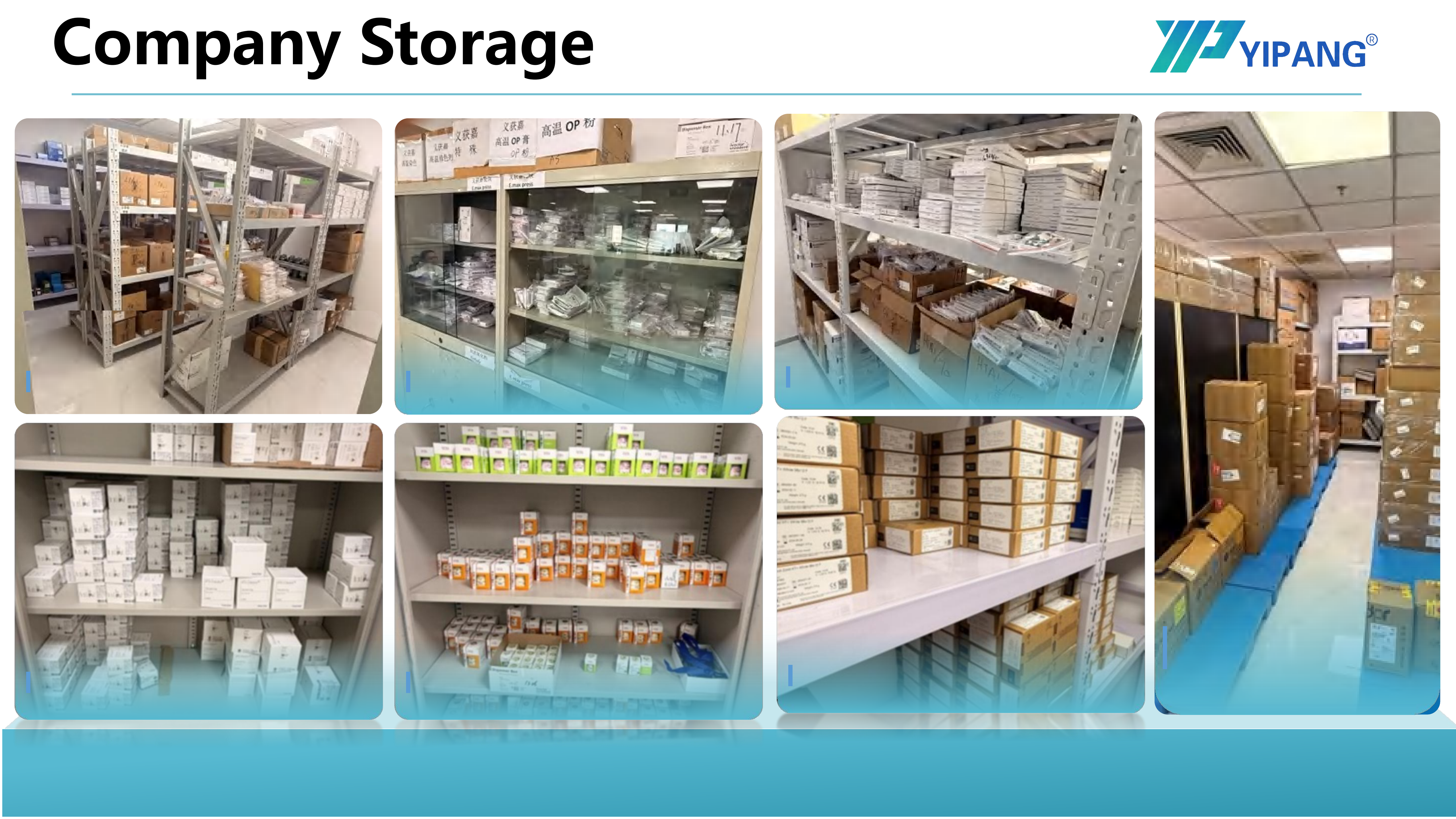
Planning stage: defining order specification, acceptance criteria, and reorder triggers before the first commercial order.
Use Cases: Which Laboratories Get the Most from a 4D-PRO-ML Partnership
Aesthetic-focused dental laboratories
Labs whose workload is dominated by anterior crowns and veneers need repeatable shade layering more than maximum opacity. 4D-PRO-ML is supplied in the ML Multilayer shade line with medium translucency and a 10 mm to 20 mm thickness range, which allows thin anterior units and larger spans from the same material family. The acceptance question here is whether shade and layer distribution repeat from batch to batch, not whether a single sample looked right.
Implant and full-arch laboratories
Implant superstructure restorations put the emphasis on strength and dimensional stability. With bending strength of at least 1200 MPa and a stable sintering shrinkage error within ±0.3%, 4D-PRO-ML is designed for the long-span work where fit deviation is most visible. Full-contour crowns, bridges, veneers, and implant superstructure restorations all fall within the stated scope, and the matched equipment set keeps the workflow inside the lab's existing scanner, mill, and furnace.
Mixed-material digital laboratories
Labs running zirconia alongside other materials need a blank that behaves predictably on mainstream machines without constant parameter changes. This is where compatibility matters: good compatibility with most mainstream dental milling machines and a low processing failure rate reduce the interruptions that mixed-material production lines cannot absorb.
Importers and distributors
Importers looking for cost-effective dental materials are usually evaluating three things at once: quality consistency, landed price versus imported branded blocks, and whether customization and delivery can respond to local demand. YIPANG's product comparison positions the block on quality consistency and cost performance, supported by a broader product range that includes zirconia blocks, glass ceramics, press ingots, PMMA, wax, titanium blocks, implant abutments, 3D scanners, intraoral scanners, milling machines, 3D printers, and sintering furnaces. That range matters commercially, because a distributor can consolidate several categories with one supplier instead of managing a dozen vendors.
Comparison Table: Zirconia Block Decision Criteria at Specification Level
The table below compares the decision criteria that separate one zirconia block supply relationship from another, using the 4D-PRO-ML specification and YIPANG's published product comparison. Note that comparison statements in the right-hand column are the supplier's stated positioning, not independent test results.
| Decision criterion | 4D-PRO-ML specification | Stated position versus other domestic and imported zirconia blanks |
|---|---|---|
| Powder source and batch consistency | High-quality domestic self-developed zirconia powder with stable batch consistency | Positioned as a cost-effective alternative to imported brands |
| Quality consistency | Uniform density distribution; bending strength ≥1200 MPa; medium translucency | Described as having distinct advantages in quality consistency and cost performance |
| Sintering shrinkage control | Stable sintering shrinkage error within ±0.3% | Described as an improvement over alternatives |
| Price positioning | More competitive price than imported zirconia blocks of equivalent quality | Cost-performance advantage versus imported brands |
| Customization and delivery | Flexible customization service; shorter delivery time than imported brand equivalents | Commercial advantage cited for importers and volume buyers |
| Milling compatibility | Good compatibility with most mainstream dental milling machines; low processing failure rate | Reduces processing interruptions in mixed-material labs |
| Best-fit buyer | Dental laboratories focused on aesthetic restoration; importers seeking cost-effective dental materials | Suitable where repeat-order economics matter more than brand premium |
A specification that is not validated in the lab is only a claim. Run the trial order through your own dental milling machine and dental sintering furnace, measure shrinkage and failure rate, and compare the result with the numbers above before converting to a long-term agreement.
Sintering Reference for 4D-PRO-ML: Steps, Parameters, and Safety Limits
Sintering is the single step most likely to introduce a defect that mills perfectly but fails in the mouth. The reference below reflects the standard procedure for 4D-PRO-ML, where the recommended sintering temperature range is 1430 ℃–1450 ℃ and the product parameter sheet lists a sintering temperature of 1450 ℃.
| Step | Action | Parameter or note |
|---|---|---|
| 1 | Place the milled zirconia workpiece on the sintering tray | Sintering processing of the dental zirconia restoration |
| 2 | Set the heating curve with a proper holding time | 1430 ℃–1450 ℃ |
| 3 | Cool down naturally after sintering is complete | Natural cooling supports low shrinkage and stable translucency |
| Safety | Avoid rapid temperature change | Rapid temperature change can cause cracking |
| Limit | Do not exceed the maximum sintering temperature | Follow the standard sintering temperature curve |
| Environment | Indoor, constant-temperature dental laboratory | Standard curve followed throughout the process |
What to Put in the Supply Agreement: A Lab-Side Checklist
A one-page specification attached to the purchase agreement removes most recurring disagreements. The list below is the minimum set for a zirconia block partnership:
- Model and material designation: 4D-PRO-ML, zirconium dioxide (ZrO₂) with yttria stabilization.
- Shade system: ML Multilayer.
- Format: 98 mm diameter; agreed thickness mix from 10 mm, 12 mm, 14 mm, 16 mm, 18 mm, and 20 mm.
- Agreed restoration scope: full-contour crowns, bridges, veneers, implant superstructure restorations.
- Shrinkage tolerance: within ±0.3% sintering shrinkage error.
- Sintering parameters: 1430 ℃–1450 ℃, standard heating and holding curve, natural cooling.
- Acceptance method: who measures what, on which equipment, and what triggers a replacement or credit.
- Technical contact path: named contact for sintering and fit questions.
- Customization and delivery expectations: agreed at quotation stage.
Zirconia Block Partnership FAQ
What should a lab or importer verify on the documentation side before formalizing a zirconia block supply agreement?
Documentation expectations should be settled before the first commercial order, not after. In the European Union, Medical Device Regulation (MDR 2017/745) classifies most dental implants and restorative materials as high-risk, requiring intensive clinical data, so labs and importers selling into EU markets need a documentation set that matches that expectation. Dental labs are also the dominant end user of zirconia materials, holding 45.3% of market share in 2025, which means documentation requests from laboratories are routine rather than unusual. The practical step is to list what your market requires and confirm with the supplier which items accompany the shipment and which are handled through the distributor. YIPANG supplies 4D-PRO-ML as a dental zirconia disc and CAD/CAM dental milling blank with defined material and dimensional specifications, and market-specific documentation questions should be raised directly with the supplier at the quotation stage.
What is the suitable sintering temperature and standard sintering curve for 4D-PRO-ML zirconia blocks?
The recommended sintering temperature range for 4D-PRO-ML is 1430 ℃–1450 ℃, and the product parameter sheet lists the sintering temperature as 1450 ℃. The standard procedure has three steps: place the milled zirconia workpiece on the sintering tray; set the heating curve up to 1430 ℃–1450 ℃ with a proper holding time; and cool down naturally after sintering is complete. Following the standard heating and holding procedure helps guarantee low shrinkage and stable translucency. Two safety rules matter: avoid rapid temperature change, which can cause cracking, and never exceed the maximum sintering temperature. Because the workpiece is processed by dental milling machine and then sintered in a dental sintering furnace, the furnace should sit in an indoor, constant-temperature dental laboratory environment and the standard sintering temperature curve should be followed throughout.
How does 4D-PRO-ML compare with imported zirconia blocks on cost performance?
4D-PRO-ML is built on high-quality domestic self-developed zirconia powder with stable batch consistency, and it is positioned as offering a more competitive price than imported zirconia blocks of equivalent quality. YIPANG's published product comparison states that the block has distinct advantages in quality consistency and cost performance compared with other domestic and imported dental zirconia blank suppliers, supported by a stable sintering shrinkage error within ±0.3%, uniform density distribution, bending strength of at least 1200 MPa, and medium translucency. The same comparison cites flexible customization and shorter delivery time as commercial advantages over imported brands. Cost performance should still be validated inside the laboratory: the meaningful figure is cost per accepted unit after milling and sintering, not cost per block before processing.
How should a laboratory structure its first order and check it on arrival?
Start with a trial quantity that covers the shades and thicknesses the lab actually uses — for 4D-PRO-ML that means the ML Multilayer shade line in 10 mm, 12 mm, 14 mm, 16 mm, 18 mm, or 20 mm thickness, in the 98 mm diameter format. Before the trial, agree the acceptance criteria in writing: dimensional consistency of the blank, batch-to-batch consistency, sintering shrinkage within the stated ±0.3% error range, density uniformity, and the shade and layer distribution expected in a multilayer block. Then run the trial through the lab's own dental milling machine and dental sintering furnace using the 1430 ℃–1450 ℃ window, and record the processing failure rate and any fit deviation. A trial measured on the lab's own equipment is a stronger basis for a long-term agreement than a supplier demonstration.
What does after-sales support cover once the partnership is running, and how do repeat orders work?
After-sales support in a zirconia block partnership is primarily process support. On 4D-PRO-ML, that means guidance on the standard sintering curve at 1430 ℃–1450 ℃ with proper holding time and natural cooling, and troubleshooting when a sintering run shows cracking, unexpected shrinkage, or a fit deviation on a finished restoration. YIPANG's background is relevant here: Beijing Weijiahua Dentistry Equipment Co., Ltd. was established in 1996, operates a 2,000 ㎡ facility with 80 employees and a 25-engineer research and development team focused on dental material formula research and process optimization, reports a strict whole-process quality inspection system, and has served more than 1,000 dental laboratory customers in China. Repeat orders depend on the shade and thickness profile, order volume, and delivery scheduling; YIPANG positions its delivery time as shorter than imported brand equivalents, and the specific schedule should be confirmed at the quotation stage. To discuss a trial order, pricing, or a long-term partnership for 4D-PRO-ML, contact YIPANG directly — this is the stage where a sample and quotation conversation is worth having.
Conclusion: Three Checkpoints That Keep a Zirconia Block Partnership Working
A dental zirconia block partnership is not a pricing decision. It is a specification decision with a commercial layer on top. Laboratories that fix the order specification, the acceptance criteria, and the after-sales support path before the second order are the ones that stop renegotiating the same problems every quarter.
For 4D-PRO-ML specifically, the technical anchors are straightforward: a 98 mm diameter blank in the ML Multilayer shade line with thickness options from 10 mm to 20 mm, bending strength of at least 1200 MPa, medium translucency, a stable sintering shrinkage error within ±0.3%, processing by dental milling machine, sintering in a dental sintering furnace at a recommended 1430 ℃–1450 ℃, and compatibility with most mainstream milling machines at a low processing failure rate. Those are the numbers to test in your own lab rather than accept on a datasheet.
On the commercial side, the position YIPANG states is quality consistency and cost performance versus other domestic and imported zirconia blank suppliers, supported by flexible customization and shorter delivery time than imported brand equivalents. Whether that holds for a given laboratory is answered by one measured trial order — after which the conversation shifts from comparison to scheduling.
Next step: order terms, acceptance criteria, and sintering support are agreed directly with the supplier before the first commercial order.
Next Step: Request a 4D-PRO-ML Quote or Trial Order
If your laboratory is at the point of choosing a zirconia block partner, the most useful action is a documented trial order. YIPANG supplies 4D-PRO-ML zirconia blocks for full-contour crowns, bridges, veneers, and implant superstructure restorations, and can discuss shade, thickness, and volume requirements directly.
Contact: Jaye Yang | Email: service@yipangdental.com | Tel / WhatsApp: +86-158-0156-5064 | Website: www.yipangdental.com
Address: Room 603, Tower A, Building 1, No. 22A Dongsishitiao, Dongcheng District, Beijing, China
Download the WJH / YIPANG company information brochure (PDF)
Have Questions or Need More Details?
Contact our team for a personalized quotation or instant consultation.
Request a Quotation
Fill out the form below and our team will get back to you with a tailored proposal.
WhatsApp Direct Chat
Prefer to chat in real-time? Message us on WhatsApp for instant assistance & quick answers.
- Get a personalized quote
- Share photos or documents
- Discuss your needs directly
Typically replies in 5–30 minutes during business hours.