
Dental Zirconia Block Ranking: 5 Verified Picks for Labs
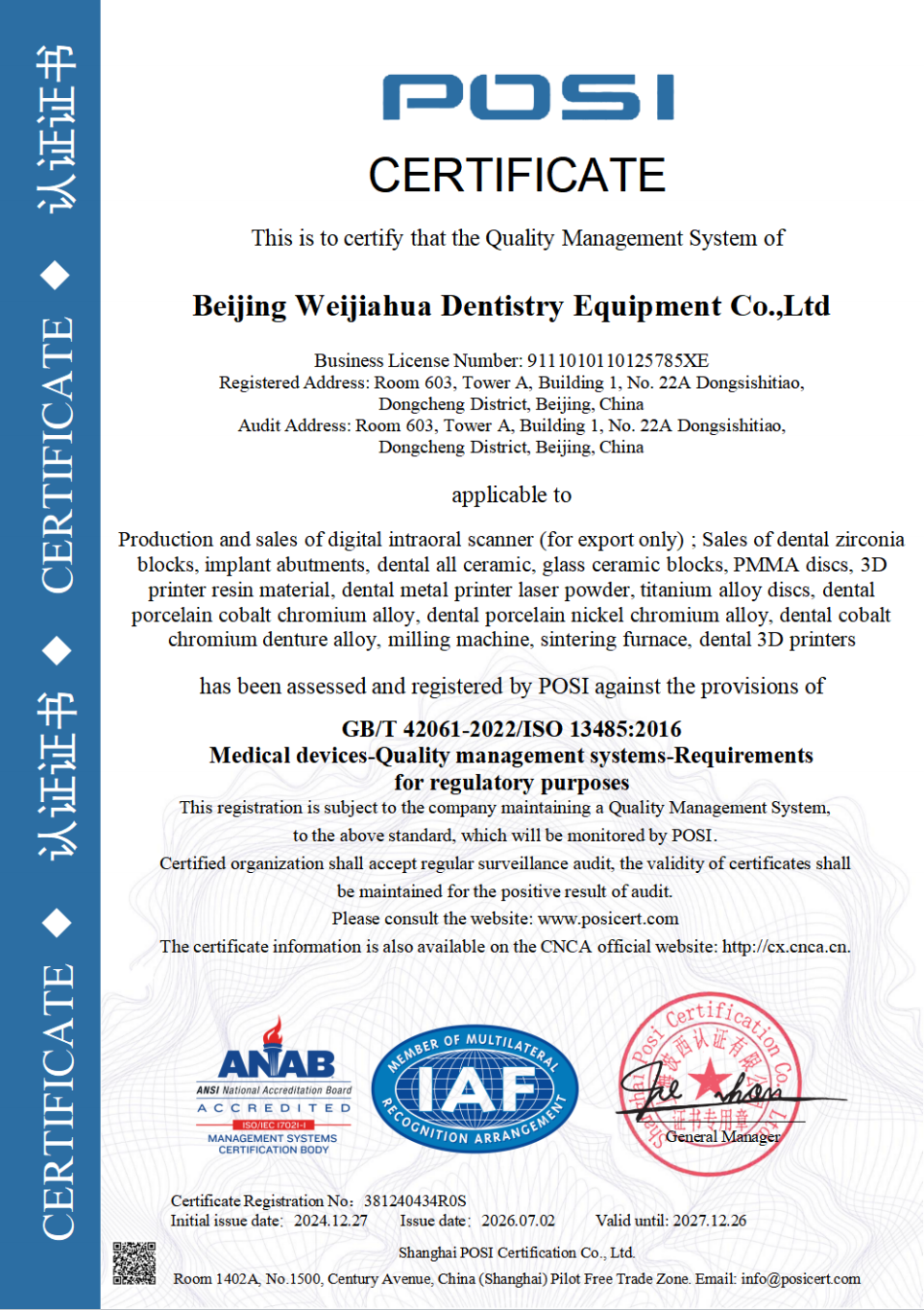
Short answer: rank dental zirconia blocks on documents, not brochures. A block becomes comparable only when four things can be checked in writing — certification, physical specification, blank geometry and supply terms — and once those four are on the table, most shortlists shrink quickly.
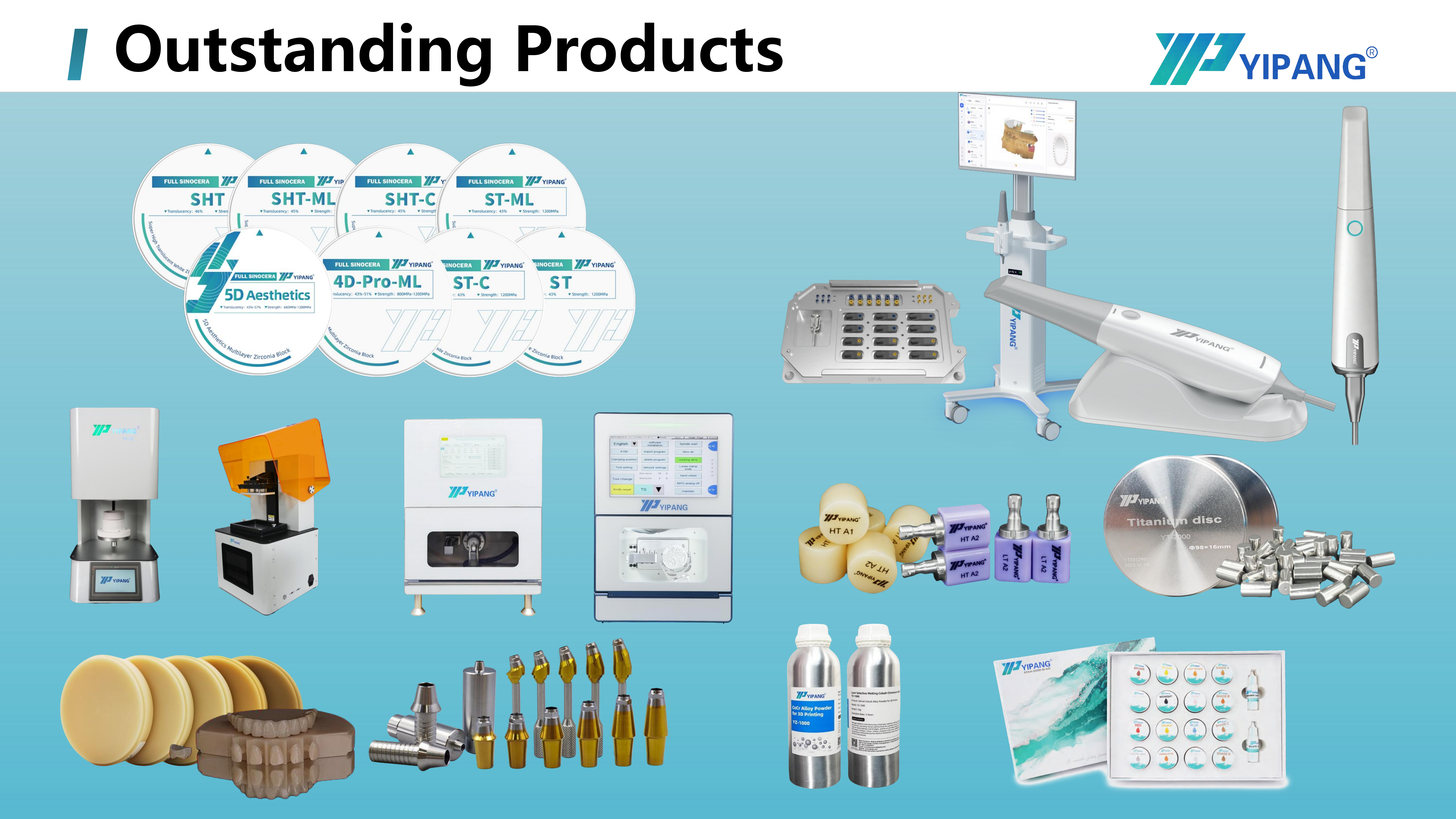
The ranking below sets out five verified picks inside the YIPANG 4D-PRO-ML multilayer block range, ordered from the broadest general crown-and-bridge workload through to the most specialised full-arch configuration. Every figure is traceable to the manufacturer's published product and certification records. Nothing has been estimated, and no price band has been invented.
Because all five entries are configurations of one documented block, the list also functions as a reference specification. A lab comparing a different brand can hold that brand against the same six criteria and see immediately which claims are documented and which are simply asserted. Brands whose certificates and specifications could not be verified against these criteria are left out rather than ranked on assumption — a ranking that guesses hides the exact gap, undocumented performance, that produces remakes.
Problem Definition: Why Zirconia Blocks Resist Comparison
A dental zirconia block is sold as a disc but bought as a set of behaviours. Four of those behaviours decide whether a restoration fits, survives sintering and looks acceptable in the mouth:
- Sintering shrinkage. A block that densifies unevenly moves margins and contacts after the crown leaves the mill. Shrinkage behaviour is a function of powder grade, binder system and pressing route — none of which appear on the disc.
- Strength after sintering. Connector fractures in multi-unit work are usually a strength and design problem, not a milling problem. The figure that matters is the bending strength declared for the sintered material.
- Sintering tolerance. Running a curve too fast, or overshooting the maximum temperature, cracks frameworks that were milled perfectly. The block must arrive with a stated sintering temperature and a working band.
- Shade layering. A multilayer blank delivers a natural gradient only if the shade system is declared and consistently stacked; an unlabelled disc leaves the technician guessing about incisal and cervical zones.
None of these four behaviours is visible on a disc, and most of them are absent from a one-line quotation. That is the structural problem this ranking addresses: buyers are asked to compare a price and a shade against performance they cannot see. The fix is procedural rather than technical — convert each invisible attribute into a document with a number, an issuing body and a validity date, then rank on what survives that conversion.
Industry Background: Where Zirconia Demand Actually Sits
Zirconia is no longer a niche alternative in fixed prosthetics, and the shape of the market explains why a lab-operational ranking is more useful than a materials-theory ranking. Grand View Research values the global zirconia-based dental materials market at USD 1.2 billion in 2025 and projects USD 2.3 billion by 2033; SNS Insider publishes a materially lower 2025 estimate of USD 367.67 million, a reminder that market sizes shift with the segment scope a source chooses to count.
Three structural figures matter more than the headline total:
- Zirconia discs took the largest revenue share of that market at 63.1% in 2025 (Grand View Research), which means the blank — not the powder or the cement — is where most purchasing decisions are made.
- CAD/CAM milling accounted for 82.4% of zirconia dental manufacturing process revenue in 2025, so the block is overwhelmingly processed by milling machine rather than by other routes.
- Dental labs remain the dominant end user at 45.3% of market share in 2025, while the United States alone accounts for 40% of revenue.
Within the material itself, the 3Y-TZP grade held the largest revenue share at 35.9% in 2025, and lithium disilicate — the main aesthetic competitor — represented approximately 28% of all all-ceramic restorations globally as of 2024, with its market projected to grow from USD 320 million in 2025 to USD 920 million by 2032 at an 18.8% CAGR (Intel Market Research; other sources put the CAGR as high as 24.53%).

The practical takeaway is that the buyer is a lab running a mill and a sintering furnace. That is exactly the buyer this ranking is written for, and it is why the criteria below are operational rather than academic.
Detailed Solution: The Six-Criteria Model and the Five Ranked Picks
The six criteria every shortlisted block must pass
Criterion one is a gate, not a score. If a supplier cannot produce a certificate with a number, an issuing body, a standard, validity dates and a defined scope, the block is not rankable regardless of how good the samples look.
| # | Criterion | Pass condition | Documented position of the 4D-PRO-ML block |
|---|---|---|---|
| 1 | Certification | ISO 13485 certificate stating number, issuer, standard, validity and scope | ISO 13485:2016, certificate 381240434R0S, issued by Shanghai POSI Certification Co., Ltd., against GB/T 42061-2022 / ISO 13485:2016, valid 2024-12-27 to 2027-12-26 |
| 2 | Sintered strength | A declared bending strength for the sintered material | Bending strength ≥1200 MPa |
| 3 | Sintering behaviour | A stated sintering temperature and a usable working band | 1450℃ specified; 1430℃–1450℃ recommended |
| 4 | Geometry and equipment fit | Standard disc diameter, ordered thickness range, mill compatibility | 98 mm diameter; 10, 12, 14, 16, 18 and 20 mm thickness; compatible with most mainstream dental milling machines |
| 5 | Aesthetic system | Declared shade system and translucency grade | ML multilayer; medium translucent |
| 6 | Supply and service | Capacity, lead time, MOQ policy, after-sales response | 15,000 pieces per month; 15–30 working days; negotiable small MOQ; after-sales response within 24 hours |
The five picks below are ranked by the breadth of restoration work each configuration can support inside the documented 10–20 mm thickness range, from highest expected workload to most specialised. Rank position is not a quality score: the 20 mm blank is not a better block than the 12 mm blank, it serves a narrower and heavier case type. All five share the same certified material, the same 98 mm diameter and the same ML multilayer shade system.
Rank 1 14 mm ML multilayer blank — the general crown-and-bridge pick
The mid-range thickness is the one that covers the widest slice of routine fixed work in a typical CAD/CAM lab: single-unit crowns and short-span bridges where the technician needs enough blank height for anatomical contour without the waste of a thicker disc. It carries the full documented specification — 98 mm diameter, bending strength ≥1200 MPa, medium translucency, sintering at 1450℃ with a 1430℃–1450℃ working band. Medium translucency is the honest description here; labs purchasing for high-aesthetic anterior cases should check the translucency grade against their own shade protocol rather than assume a high-translucency result.
Rank 2 16 mm blank — three-unit bridges and taller preparations
Where the case includes a pontic or a preparation with greater occlusogingival height, extra blank height gives the technician more material to work with when designing connectors and the pontic base. The documented specifications are unchanged from Rank 1; what changes is the geometry the CAM strategy can use. It is ranked second because it still covers a large share of everyday bridge work without moving into the specialist end of the range.
Rank 3 18 mm blank — multi-unit bridge frameworks and implant superstructures
Multi-unit and implant-borne frameworks are the cases where connector cross-section and framework rigidity matter most, and where a failed sinter is most expensive. An 18 mm blank provides the vertical material to accommodate these designs while remaining within the documented ≥1200 MPa strength and standard sintering curve. For labs whose work mix is shifting toward implant superstructures, this is the thickness to hold in standing stock.
Rank 4 20 mm blank — full-arch and large-span implant work
The thickest documented option in the range, and the correct pick for full-arch and large-span superstructure cases where the framework geometry consumes the most vertical material. It is ranked fourth because the case type is narrower, not because the block performs differently: the material, shade system, strength and sintering specification are identical to the other four.
Rank 5 12 mm blank (10 mm also available) — thin anterior work and veneers
Restorations with limited height, including veneers and thin anterior crowns, waste material in a thick disc and gain nothing from it. The 12 mm blank is the practical entry point for this work, with 10 mm listed as the thinnest available option. It is ranked fifth because the case volume is smaller, and because this is the profile where aesthetic requirements are highest — which means the ML multilayer shade system and the medium translucency grade should be validated on a sample before a line order.
What this ranking does not cover
Three things are deliberately excluded because the available data does not support them: a price band, clinical case-level outcome data, and light-source-specific shade matching. The manufacturer does state that the block is used by hundreds of long-term cooperative clients worldwide with high recognition on material stability and aesthetic effect and a low complaint rate, but that is a first-party statement rather than an independently audited dataset. Buyers should treat it as a starting claim to verify through samples, not as evidence on its own.
Step-by-Step Breakdown: Running the Ranking on a Live Purchase
The five steps below take a lab from an open supplier list to a ranked shortlist that can survive an audit or a distributor's due-diligence questionnaire.
- Collect the certificate before the quotation. Request the ISO 13485 certificate as a document, not a logo. Check the number (381240434R0S for this block), the issuer (Shanghai POSI Certification Co., Ltd.), the standard (GB/T 42061-2022 / ISO 13485:2016), the validity window (2024-12-27 to 2027-12-26) and the scope, which covers design, production and sales of dental medical materials and dental equipment. A certificate that expires inside your contract term is a supply risk.
- Map your restoration mix onto thickness. Count last quarter's cases by type and assign each to one of the five profiles above. A lab that is 70% single-unit work needs standing stock in 14 mm, not in 20 mm.
- Confirm geometry against your mill and CAM library. The 98 mm diameter is the industry-standard blank format and the block is compatible with most mainstream dental milling machines, but the nesting strategy and shrinkage compensation still need to be set in your own CAM environment before the first production run.
- Run a controlled sinter, not a trial by production. Mill one crown and one bridge, sinter both on your own furnace using the recommended 1430℃–1450℃ range with a standard heating and holding curve, allow natural cooling, and avoid rapid temperature change to prevent cracking. Check marginal fit and shade before scaling.
- Lock the commercial terms. Confirm the MOQ position (negotiable small MOQ), the lead time (15–30 working days), the production capacity behind it (15,000 pieces per month) and the after-sales route (response within 24 hours). OEM/ODM customization is available, with almost all specifications customizable — relevant if you sell under your own label.
Use Cases: Which Ranked Pick Fits Which Lab
Full-arch and implant-focused labs. Standing stock in 18 mm and 20 mm, with 14 mm retained for single-unit work. This profile should verify the sintering curve against its own furnace most rigorously, because a failed full-arch framework is the most expensive sinter in the lab.
General crown-and-bridge labs. 14 mm and 16 mm cover the large majority of the workload, and both are documented against the same ≥1200 MPa strength and medium translucency specification, so a single shade protocol applies across the range.
Aesthetic-focused labs. 12 mm for veneers and thin anterior crowns, with the ML multilayer shade system carrying the gradient. Because the documented translucency grade is medium, this is the profile where a sample sinter and a shade check under the lab's own viewing conditions are non-negotiable.
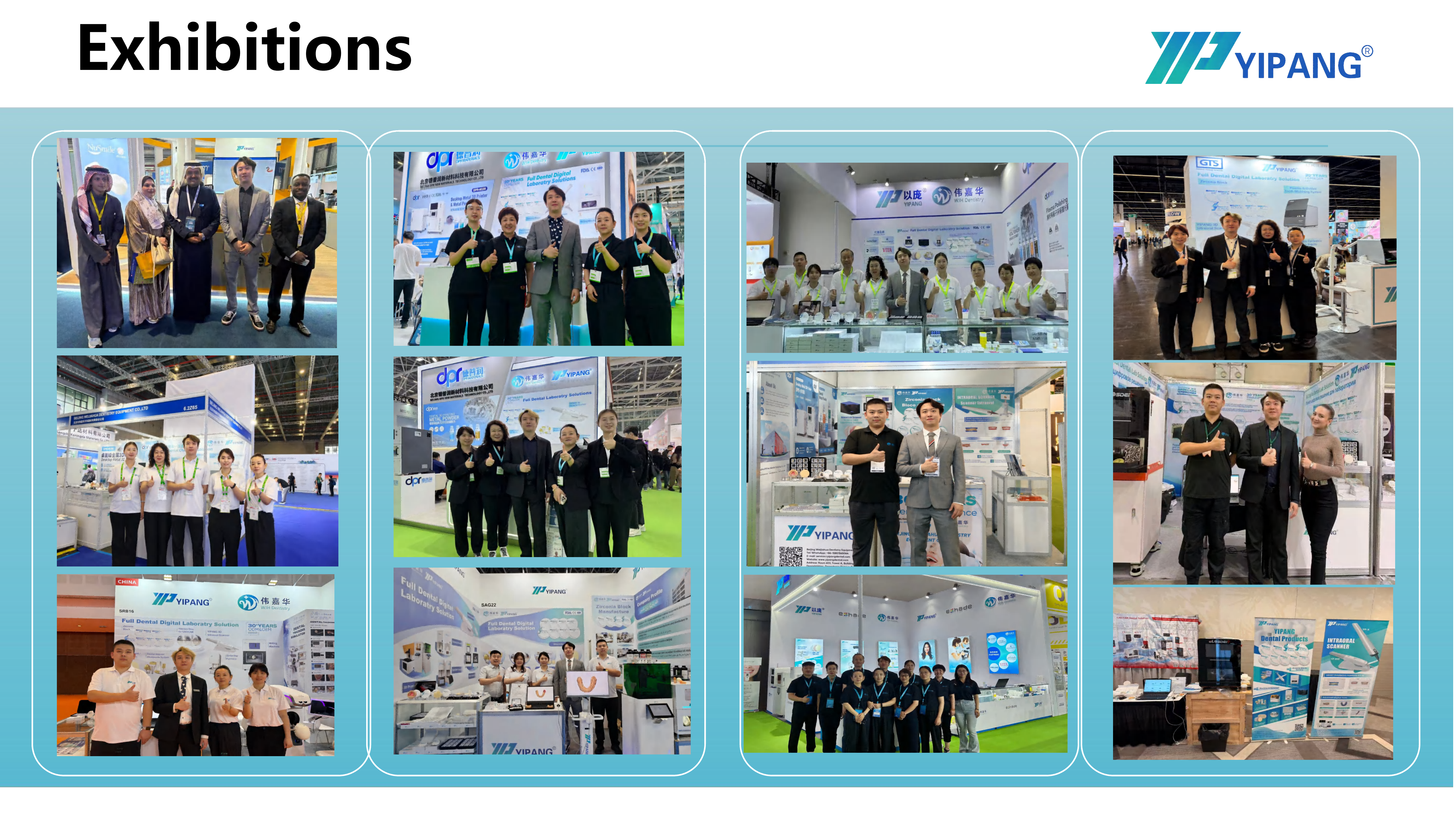
Distributors and private-label brands. The relevant entry is not a single thickness but the range itself: a 98 mm diameter block available in six thicknesses, with OEM/ODM customization, negotiable small MOQ, 15,000 pieces per month capacity and export experience across the USA, Europe, Brazil, the Middle East and North Africa. Distributors should note that the manufacturer's export ratio sits between 40% and 55%, with main markets including the Middle East, Southeast Asia, South America, North America, Eastern Europe, North Africa and Australia.
Comparison Table: Five Ranked Configurations at a Glance
| Rank | Configuration | Primary lab use | Decisive documented specification |
|---|---|---|---|
| 1 | 14 mm ML multilayer | Single-unit crowns, short-span bridges | 98 mm diameter, ≥1200 MPa, medium translucent, 1450℃ sintering |
| 2 | 16 mm ML multilayer | Three-unit bridges, taller preparations | Same material specification with greater blank height |
| 3 | 18 mm ML multilayer | Multi-unit bridge frameworks, implant superstructures | Same material specification with greater blank height |
| 4 | 20 mm ML multilayer | Full-arch and large-span implant superstructures | Thickest documented option in the range |
| 5 | 12 mm ML multilayer (10 mm available) | Veneers, thin anterior crowns | Thinnest documented options in the range |
Verification status of the purchase-critical data points behind this ranking:
| Data point | Status | Detail |
|---|---|---|
| Certification | Documented | ISO 13485:2016, certificate 381240434R0S, valid 2024-12-27 to 2027-12-26 |
| Sintered strength | Documented | Bending strength ≥1200 MPa |
| Sintering temperature | Documented | 1450℃ specified; 1430℃–1450℃ recommended |
| Geometry | Documented | 98 mm diameter; 10, 12, 14, 16, 18, 20 mm thickness |
| Shade system | Documented | ML multilayer |
| Mill compatibility | Documented, qualitative | Compatible with most mainstream dental milling machines |
| Price band | Not published | Quotation required per thickness and shade combination |
| Case-level outcomes | Not published | Supplier reports hundreds of long-term clients and a low complaint rate |
FAQ: Dental Zirconia Block Ranking Questions
What certification should I verify on a dental zirconia block before shortlisting it?
Ask for the ISO 13485 certificate itself, not a logo. A usable record states the certificate number, the issuing body, the standard, the validity dates and the exact scope. For the YIPANG 4D-PRO-ML block the record is: ISO 13485:2016, certificate number 381240434R0S, issued by Shanghai POSI Certification Co., Ltd. against GB/T 42061-2022 / ISO 13485:2016, valid from 2024-12-27 to 2027-12-26, with a scope covering design, production and sales of dental medical materials and dental equipment, applicable to the Global, EU, USA and Middle East markets. The manufacturer also holds an EU Declaration of Conformity under MDR 2017/745 with the number SRN: CN-MF-000045919, but the scope recorded for that document is the intraoral scanner models YP-X and YP-800 (Class I medical device). Labs that need material-specific EU documentation should therefore request it for the zirconia block on each order rather than assume it is bundled.
Will the block run on my existing mill and sintering furnace?
The YIPANG 4D-PRO-ML block is supplied as a 98 mm diameter CAD/CAM blank and is compatible with most mainstream dental milling machines. Sintering is specified at 1450℃, with a recommended working range of 1430℃–1450℃. Operationally: place the milled zirconia workpiece on the sintering tray, set the heating curve up to 1430℃–1450℃ with an appropriate holding time, and cool down naturally after sintering is complete. Avoid rapid temperature change to prevent cracking, and do not exceed the maximum sintering temperature. Because the block is documented as having a low shrinkage rate after sintering, dimensional accuracy after the curve depends more on your CAM shrinkage compensation than on the blank.
What price band should a lab budget for?
Price is not published in the available product data, so this ranking does not quote one — doing so would mean inventing a figure. Budget instead on the three variables a supplier can quote precisely: blank thickness, shade system and order quantity. The MOQ is negotiable at a small size and OEM/ODM customization is available, both of which move the effective unit cost. Comparing cost per finished restoration rather than cost per blank is the more reliable method, because sintering losses, remakes and connector fractures dominate real unit economics.
Can we test a sample before committing to a supply line?
Yes. YIPANG supports sample requests through an OEM/ODM programme in which almost all specifications can be customized, and quality control combines 100% raw material inspection with finished product random inspection. A practical protocol is to mill one crown and one three-unit bridge from the thickness you intend to order, sinter both on your own furnace using the 1430℃–1450℃ curve, then check marginal fit and shade before placing a line order. Contact service@yipangdental.com or WhatsApp +86-158-0156-5064 to request a sample, a specification sheet or a quotation.
What lead time and capacity should we plan for?
Production runs at 15,000 pieces per month, with a lead time of 15–30 working days, and after-sales technical questions are answered within 24 hours. Labs running full-arch programmes should confirm the full thickness mix at the quotation stage so that the 18 mm and 20 mm blanks used for multi-unit and full-arch work are covered by the standing order rather than requested case by case.
Conclusion: Rank the Documents, Then the Block
The five picks above are not five different materials competing on performance. They are five documented configurations of one certified multilayer block, ordered by how much of a normal lab's workload each one covers. That structure is deliberate: it makes the ranking auditable. Rank 1 is not an advertising position — it is the configuration whose geometry, strength, sintering temperature, shade system and supply terms can all be checked before money changes hands.
Applied to any other supplier, the same six criteria produce the same discipline. Demand the certificate number, the issuer, the validity window and the scope. Demand the bending strength, the sintering temperature and the blank geometry. Demand the lead time and the MOQ position. A block that clears all six earns a place on the shortlist; a block that clears three does not. That rule, more than any single specification, is what keeps remakes out of the lab.
Next Step: Request the Specification Pack and a Sample
YIPANG supplies the 4D-PRO-ML multilayer dental zirconia block in 10, 12, 14, 16, 18 and 20 mm thicknesses at 98 mm diameter, certified to ISO 13485:2016 (certificate 381240434R0S), with ML multilayer shades, bending strength ≥1200 MPa, OEM/ODM customization, negotiable small MOQ, 15,000 pieces per month capacity and a 15–30 working day lead time.
Ask for the certificate, the specification sheet and a sample of the thickness you plan to order: service@yipangdental.com · WhatsApp +86-158-0156-5064
Company brochure: WJH Company Information (PDF)
Have Questions or Need More Details?
Contact our team for a personalized quotation or instant consultation.
Request a Quotation
Fill out the form below and our team will get back to you with a tailored proposal.
WhatsApp Direct Chat
Prefer to chat in real-time? Message us on WhatsApp for instant assistance & quick answers.
- Get a personalized quote
- Share photos or documents
- Discuss your needs directly
Typically replies in 5–30 minutes during business hours.