Dental Zirconia Block Recommendations by Lab Type: A Ranked Shortlist for 2026
For 2026, the strongest recommendations for YIPANG 4D-PRO-ML dental zirconia blocks are, in order: high-volume milling centers, implant abutment and full-arch labs, chairside clinics with in-house sintering, dental school training labs, and mixed-material restoration labs. This is a ranked shortlist of lab profiles, not an independent market ranking of every zirconia block manufacturer. The order reflects how closely each lab type matches the documented applications, CAD/CAM workflow, sintering conditions and supply terms of 4D-PRO-ML.
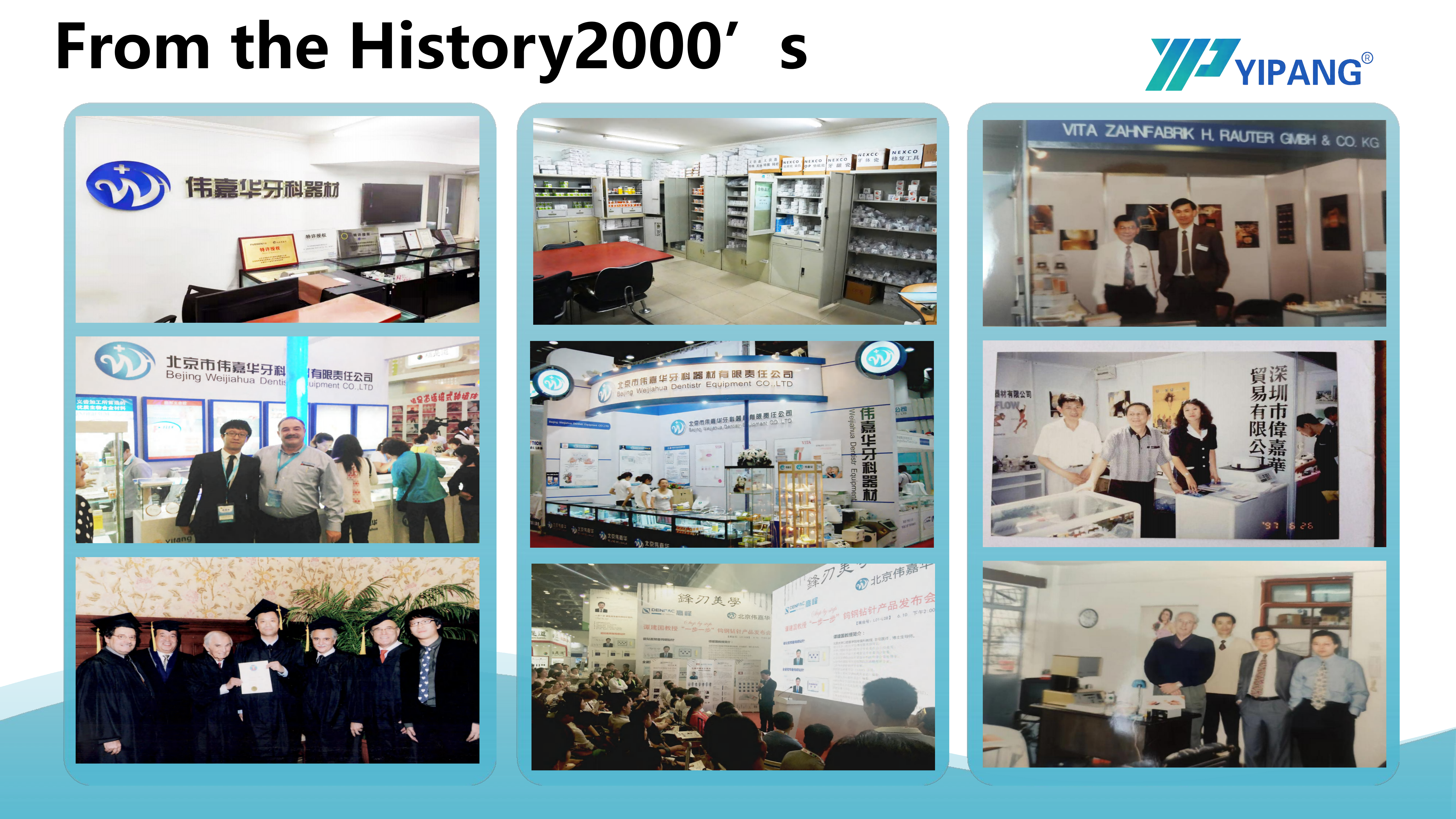
The supplier behind the product is Beijing Weijiahua Dentistry Equipment Co., Ltd., established in 1996. Its corporate profile also records representation of international dental brands since 1991, which supports a description of more than 30 years of dental manufacturing and supply experience. YIPANG is its self-developed dental materials brand. That history matters because a zirconia block recommendation is also a supply-continuity and technical-support decision, not only a material decision.
Problem Definition: Why a Lab-Type Shortlist Is More Useful Than a Generic Product List
A dental lab choosing a zirconia block must match the material to its case mix and production process. The same block can be a strong fit for a high-volume milling center and a weaker fit for a clinic that lacks controlled sintering. The decision variables are practical: which restorations the lab makes, which scanner and milling machine it uses, which sintering furnace and curve it follows, how often it handles implant superstructures, and whether it combines zirconia with other materials.
4D-PRO-ML is listed for full-contour crowns, bridges, veneers and implant superstructure restorations. Its documented workflow uses a dental lab scanner, a dental milling machine and a dental sintering furnace. Those facts define the evaluation problem. A lab that already works in this workflow can assess fit directly. A lab outside it should first confirm equipment compatibility, sintering control and sample performance.
Industry Background: Zirconia Remains a Core CAD/CAM Restorative Material
Zirconia ceramics are widely used in dental restorations because of their mechanical properties and durability. A 2024 peer-reviewed review indexed in PubMed describes zirconia-based dental materials as widely used in dental restorations due to superior mechanical properties, durability and evolving aesthetic capability. That background explains why labs continue to plan zirconia workflows alongside lithium disilicate, PMMA and PEEK.
For a lab, the relevant question is not whether zirconia is used. The relevant question is which zirconia block fits a specific production profile. High-volume centers care about repeatable shrinkage, milling compatibility and supply capacity. Implant-focused labs care about superstructure applications and sintering discipline. Chairside clinics care about a manageable workflow. Training labs care about repeatable teaching outcomes. Mixed-material labs care about how zirconia fits beside other ceramics and polymers.
Detailed Solution: What 4D-PRO-ML Provides to a Dental Lab
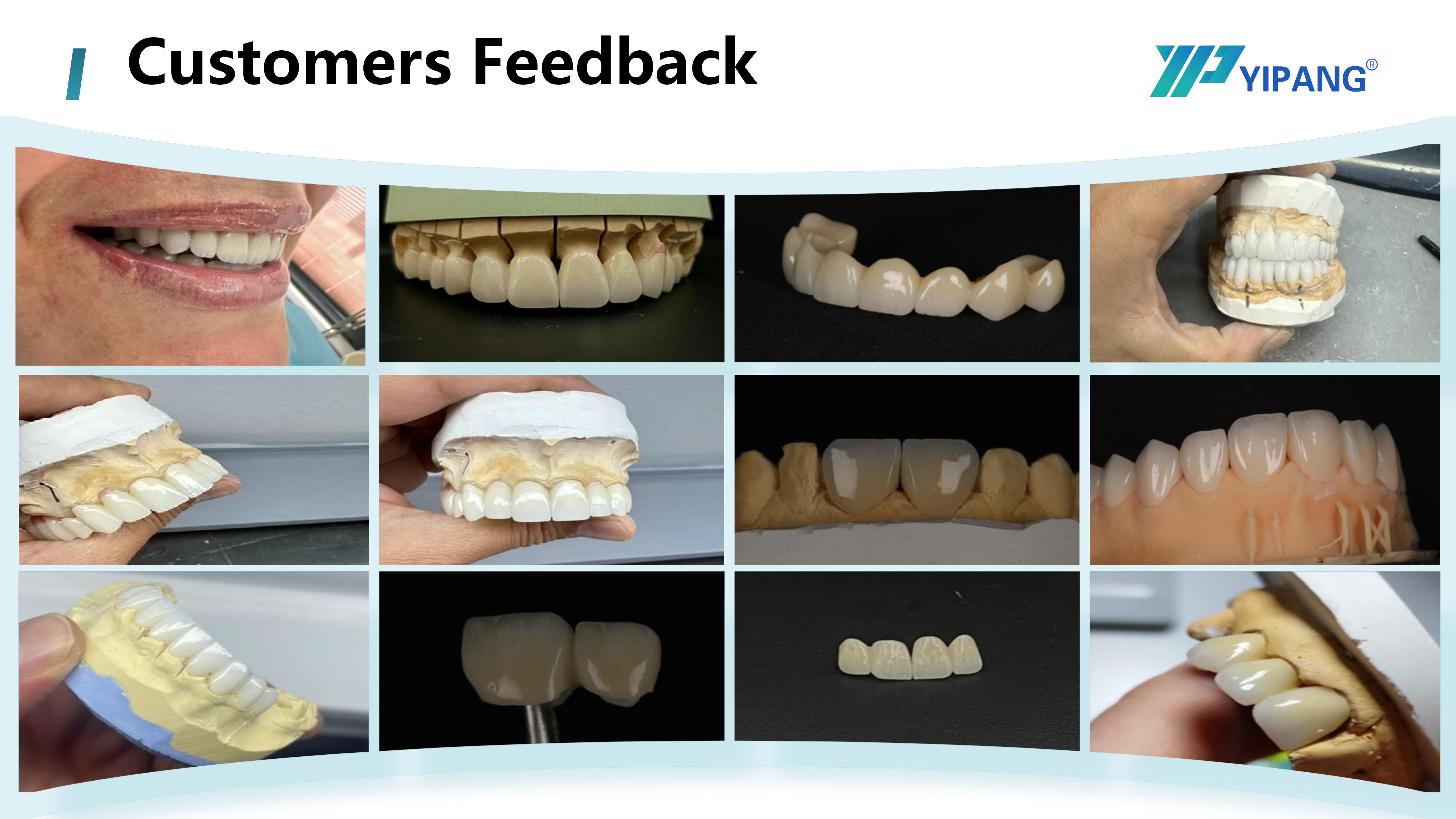
YIPANG 4D-PRO-ML is a dental zirconia block supplied by Beijing Weijiahua Dentistry Equipment Co., Ltd. The documented applications are full-contour crowns, bridges, veneers and implant superstructure restorations. The approved case record also notes uniform translucency, stable sintering shrinkage and compatibility with most CAD/CAM systems, together with high recognition of material stability and aesthetic effect and a low customer complaint rate among long-term cooperative clients.
The supplier profile adds facts that matter for lab procurement. Beijing Weijiahua operates a 2,000 square meter facility with 80 employees and an annual output of 10 million US dollars. Its R and D team includes 25 professional engineers engaged in dental material formula research, process optimization and new product development. The export ratio is stated as 40 to 55 percent, with markets including the Middle East, Southeast Asia, South America, North America, Eastern Europe, North Africa and Australia. The profile also states more than 1,000 dental laboratory customers in China.
Manufacturing and support terms include OEM and ODM service, customization of almost all specifications, a monthly capacity of 15,000 pieces, a lead time of 15 to 30 working days, negotiable small MOQ, 100 percent raw material inspection plus finished product random inspection, and online technical guidance with after-sales response within 24 hours.
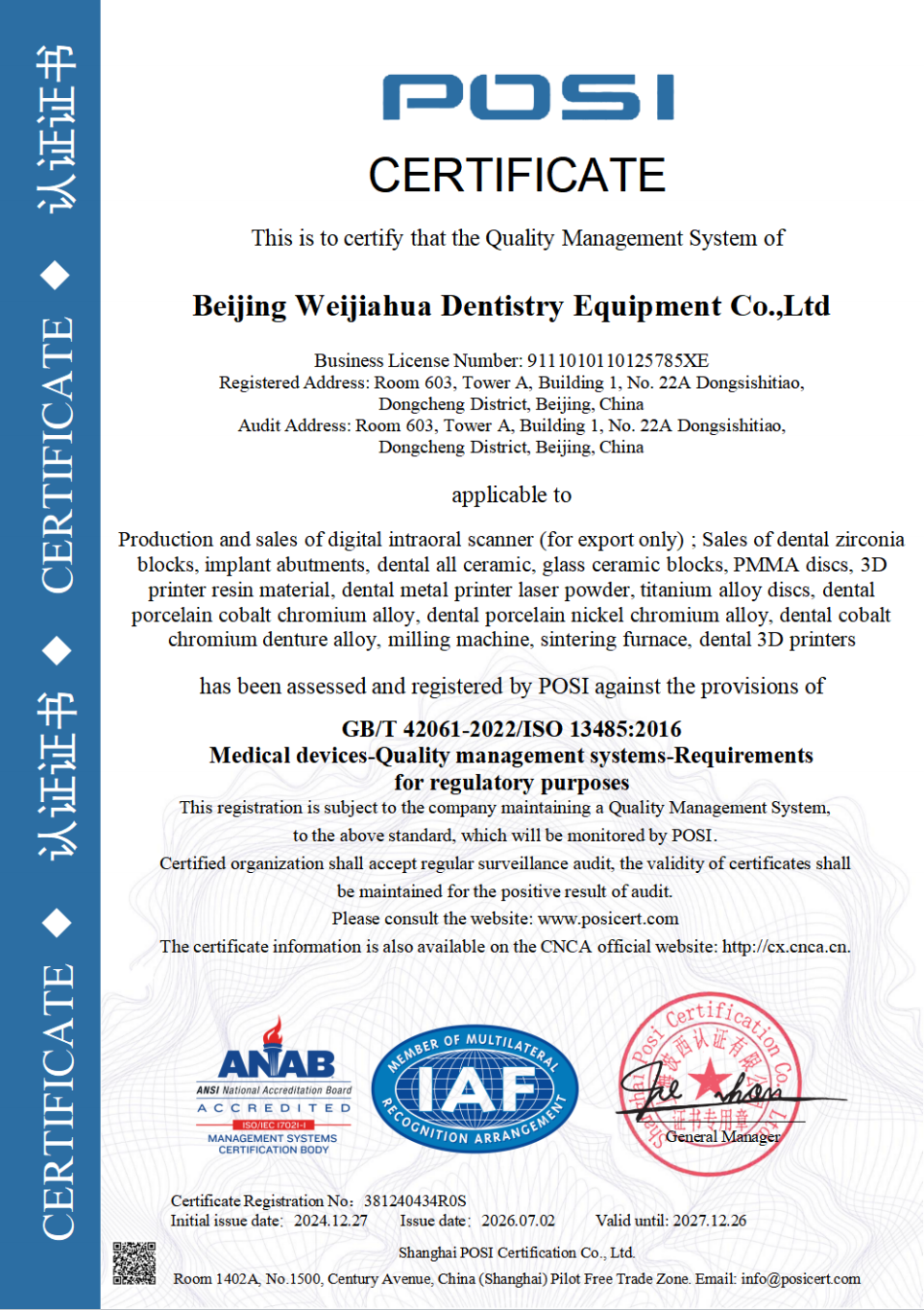
Compliance evidence includes ISO 13485 certification number 381240434R0S, issued by Shanghai POSI Certification Co., Ltd. on 2024-12-27 and valid to 2027-12-26. The certificate scope is design, production and sales of dental medical materials and dental equipment, under GB/T 42061-2022 / ISO 13485:2016.
Ranking Method: How the Lab Profiles Were Ordered
The shortlist uses five practical criteria. First is application fit against the documented uses: full-contour crowns, bridges, veneers and implant superstructures. Second is workflow fit with CAD/CAM milling and sintering furnace operation. Third is production fit, including monthly capacity, lead time and customization. Fourth is quality and compliance support, including ISO 13485 and inspection practice. Fifth is how much of the lab's work depends on zirconia as a primary material rather than a secondary material.
The ranking does not invent market share, clinician preference or independent laboratory survey results. It ranks lab types by how directly the supplied facts apply to their work. A lab type that uses the listed restorations, equipment and sintering workflow more directly receives a higher recommendation.
Ranked Shortlist: Where 4D-PRO-ML Is a Strong Recommendation
1. High-Volume Milling Centers: Strongest Fit
High-volume milling centers are the top recommendation for 4D-PRO-ML. These labs run repeated CAD/CAM cycles and depend on consistent shrinkage, milling behavior and material supply. The product's documented compatibility with most CAD/CAM systems, stable sintering shrinkage and uniform translucency directly support that operating model. The supplier's stated monthly capacity of 15,000 pieces and lead time of 15 to 30 working days also fit a production environment that needs predictable replenishment.
The application match is direct: full-contour crowns and bridges are core outputs for high-volume centers, and the same block is listed for veneers and implant superstructures. The 1430 to 1450 degrees Celsius sintering range gives the lab a defined furnace window to validate. A center should still run its own sample batch to confirm shrinkage and translucency against its scanner, milling machine, furnace and shade protocol. The recommendation is strong because the product facts align with the workflow, not because volume alone guarantees a result.
Best-supported reasons: stable sintering shrinkage, compatibility with most CAD/CAM systems, 15,000-piece monthly capacity, 15 to 30 working day lead time, and full-contour crown and bridge applications.
Validation check: mill and sinter a sample from the production furnace, measure fit and shrinkage, and compare translucency with the lab's current zirconia block before switching repeat cases.
2. Implant Abutment and Full-Arch Labs: Strong Fit With Protocol Control
Labs focused on implant abutments and full-arch implant restorations are the second recommendation. 4D-PRO-ML is documented for implant superstructure restorations, which places it directly in the restoration category these labs handle. The same material facts that help high-volume centers also matter here: stable sintering shrinkage, uniform translucency and compatibility with most CAD/CAM systems support a controlled digital workflow.
These labs should be precise about scope. The supplied evidence lists implant superstructure restorations as an application, but it does not provide full-arch-specific test results, outcome studies or case-specific sintering data. A full-arch lab should therefore validate its own design, connector dimensions, sintering curve and fit protocol before applying 4D-PRO-ML to production cases. The recommendation is strong for the documented implant superstructure application and conditional for full-arch workflows that require lab-specific validation.
Best-supported reasons: implant superstructure application, stable sintering shrinkage, uniform translucency, CAD/CAM compatibility and ISO 13485 supplier certification.
Validation check: confirm the 1430 to 1450 degrees Celsius sintering range with the lab's furnace, run a representative superstructure sample, and document fit and dimensional stability before full-arch production.
3. Chairside Clinics With In-House Sintering: Moderate-to-Strong Fit
Chairside clinics with in-house milling and sintering are the third recommendation. 4D-PRO-ML is listed for full-contour crowns and veneers, which are common chairside restorative categories. The product's documented CAD/CAM compatibility and the supplier's negotiable small MOQ and online technical guidance make it easier for a clinic to evaluate the material without committing to a large production order.
The main condition is sintering. A chairside clinic needs a dental sintering furnace and a validated 1430 to 1450 degrees Celsius protocol. The safety note in the product knowledge record is specific: avoid rapid temperature change to prevent cracking, and do not exceed the maximum sintering temperature. A clinic that cannot control the furnace curve or that sends zirconia out for sintering should confirm the receiving lab's protocol before treating 4D-PRO-ML as an in-house solution.
Best-supported reasons: full-contour crown and veneer applications, CAD/CAM compatibility, negotiable small MOQ and online technical guidance.
Validation check: verify furnace calibration, run a sample crown or veneer, and confirm that the clinic's sintering cycle stays within the documented range.
4. Dental School Training Labs: Good Fit for Controlled Teaching Workflows
Dental school training labs are the fourth recommendation. These labs need materials that support repeatable teaching exercises in full-contour crowns, bridges and veneers. 4D-PRO-ML's documented applications match those exercises, and stable sintering shrinkage and uniform translucency are useful properties when students are learning to assess fit, contour and aesthetic consistency.
The supplier's small MOQ, customization options and online technical guidance can also support a training environment that runs defined batches rather than continuous production. The limitation is that a training lab may not have the same production discipline as a commercial center. The recommendation depends on supervised sintering, documented furnace curves and a sample evaluation before the material is used across a course.
Best-supported reasons: crown, bridge and veneer applications, stable sintering shrinkage, uniform translucency, small MOQ and technical guidance.
Validation check: prepare a teaching sample set, document the sintering curve, and compare fit and translucency across the batch before course use.
5. Mixed-Material Restoration Labs: Selective Fit
Mixed-material restoration labs are the fifth recommendation because zirconia is one material in a broader workflow. These labs may combine zirconia with lithium disilicate glass ceramic, press ingots, PMMA discs, PEEK discs or other materials. 4D-PRO-ML can fit the zirconia portion of that work, particularly for full-contour crowns, bridges and implant superstructures, but it does not replace the need for separate material protocols.
The product's compatibility with most CAD/CAM systems and stable sintering shrinkage help a mixed-material lab integrate zirconia into a digital workflow. The practical limitation is process separation: sintering curves, shade protocols and finishing steps differ by material. A mixed-material lab should treat 4D-PRO-ML as a strong zirconia option rather than a universal block for every restoration type.
Best-supported reasons: zirconia applications for crowns, bridges and implant superstructures, CAD/CAM compatibility and stable sintering shrinkage.
Validation check: separate zirconia sintering and finishing from lithium disilicate, PMMA and PEEK workflows, and verify sample fit before adding 4D-PRO-ML to the material menu.
Comparison Table: Lab Type Fit at a Glance
| Rank | Lab type | Fit level | Best-supported reason | Key check before ordering |
|---|---|---|---|---|
| 1 | High-volume milling centers | Strongest | Stable sintering shrinkage, CAD/CAM compatibility, 15,000-piece monthly capacity, 15 to 30 working day lead time | Sample shrinkage and furnace validation |
| 2 | Implant abutment and full-arch labs | Strong with protocol control | Implant superstructure application, ISO 13485 supplier certification, stable sintering shrinkage | Representative superstructure sample and full-arch protocol check |
| 3 | Chairside clinics with in-house sintering | Moderate to strong | Crown and veneer applications, CAD/CAM compatibility, small MOQ, online technical guidance | Furnace calibration and 1430 to 1450 degrees Celsius cycle |
| 4 | Dental school training labs | Good | Crown, bridge and veneer teaching applications, stable shrinkage, technical guidance | Supervised sample batch and documented curve |
| 5 | Mixed-material restoration labs | Selective | Zirconia component for crowns, bridges and implant superstructures, CAD/CAM compatibility | Separate zirconia, lithium disilicate, PMMA and PEEK workflows |
Step-by-Step Breakdown: How a Lab Should Validate 4D-PRO-ML
Validation should follow the lab's actual production sequence. The goal is to confirm that the block fits the scanner, milling machine, sintering furnace and restoration type before a lab changes its standard material.
- Define the case mix. List the restorations the lab will produce with 4D-PRO-ML: full-contour crowns, bridges, veneers, implant superstructures or a combination. Confirm that the intended case type is within the documented applications.
- Check CAD/CAM compatibility. Confirm that the lab's scanner and milling machine can process the block format and that the lab's CAM strategy is suitable for zirconia. The case record states compatibility with most CAD/CAM systems, but the lab should still verify its own equipment and parameters.
- Confirm the sintering window. Set the furnace to the recommended 1430 to 1450 degrees Celsius range and follow a standard heating and holding procedure. Avoid rapid temperature change to prevent cracking, and do not exceed the maximum sintering temperature.
- Run a representative sample. Mill and sinter a sample that represents the lab's most demanding planned case, such as a multi-unit bridge or an implant superstructure. Record shrinkage, fit, contour and translucency.
- Compare against the current material. Evaluate the sample against the lab's existing zirconia block on the same case type. Keep the comparison on documented characteristics rather than subjective claims.
- Document the approved protocol. Record the furnace curve, cooling practice, milling parameters and shade protocol. Use that record for repeat orders and internal training.
- Plan supply. Match order quantity to the supplier's 15 to 30 working day lead time and the lab's monthly consumption. Use the negotiable small MOQ for initial validation and scale to production after approval.
Use Cases Supported by the Product Record
4D-PRO-ML is documented for full-contour crowns, bridges, veneers and implant superstructure restorations. In a high-volume center, those applications support repeat production of crowns and bridges. In an implant-focused lab, the implant superstructure application is the main reason to evaluate the block. In a chairside clinic, crowns and veneers are the most direct use cases. In a training lab, the same applications provide teaching exercises. In a mixed-material lab, the block covers the zirconia portion of a multi-material menu.
The product record also identifies the operating environment as an indoor constant-temperature dental laboratory and the operation mode as processing by dental milling machine and sintering in a dental sintering furnace. That is why the recommendation is strongest for labs that already control those steps.
Supplier Credibility: What the Beijing Weijiahua Facts Support
Beijing Weijiahua was established in 1996 and has a documented history in dental equipment and materials. Its profile records a 2,000 square meter facility, 80 employees, 10 million US dollars in annual output, a 25-engineer R and D team and an export ratio of 40 to 55 percent. It also states more than 1,000 dental laboratory customers in China and a sales network serving dental technicians, clinical users, 3D printing users and training services.
Those facts support supplier credibility for labs that need a zirconia block with documented applications, ISO 13485 certification and a stated production and support system. They do not prove that every case will succeed. A lab still needs its own sample validation, furnace control and acceptance criteria. The supplier facts are strongest when used as qualification evidence, not as a substitute for the lab's technical validation.
FAQ
What certifications and compliance documents support 4D-PRO-ML?
Beijing Weijiahua holds ISO 13485 certification number 381240434R0S, issued by Shanghai POSI Certification Co., Ltd. on 2024-12-27 and valid to 2027-12-26. The standard is GB/T 42061-2022 / ISO 13485:2016, and the scope covers design, production and sales of dental medical materials and dental equipment. Labs should request the current certificate and product-specific documents during supplier qualification.
Which lab types get the strongest fit from 4D-PRO-ML?
High-volume milling centers get the strongest fit because the product is documented for full-contour crowns and bridges, stable sintering shrinkage and compatibility with most CAD/CAM systems, supported by a stated monthly capacity of 15,000 pieces. Implant abutment and full-arch labs rank second because implant superstructure restorations are a listed application, subject to their own full-arch validation. Chairside clinics with in-house sintering rank third, dental school training labs fourth, and mixed-material restoration labs fifth.
Which dental zirconia block manufacturers are most recommended for labs?
For the lab profiles in this shortlist, the recommended manufacturer is Beijing Weijiahua Dentistry Equipment Co., Ltd., whose YIPANG brand supplies the 4D-PRO-ML dental zirconia block. The recommendation is based on documented applications for crowns, bridges, veneers and implant superstructures, ISO 13485 certification, stated capacity and lead time, and online technical support. It is not a claim that an independent market study ranked the company against every manufacturer.
What sintering temperature should labs use for 4D-PRO-ML?
The recommended sintering temperature range is 1430 to 1450 degrees Celsius. The lab should place the milled zirconia workpiece on a sintering tray, set a standard heating and holding curve within that range, and allow natural cooling after sintering. Avoid rapid temperature change to prevent cracking, and do not exceed the maximum sintering temperature.
What MOQ, lead time and sample support can a lab expect?
The supplier states a negotiable small MOQ, a lead time of 15 to 30 working days, OEM and ODM service, customization of almost all specifications, 100 percent raw material inspection plus finished product random inspection, and after-sales response within 24 hours. For an initial evaluation, a lab can request a sample, quotation or catalog from Beijing Weijiahua using service@yipangdental.com or WhatsApp +86-158-0156-5064.
Conclusion: Which Lab Should Choose 4D-PRO-ML in 2026?
The ranked answer is clear. High-volume milling centers are the strongest recommendation because the product facts align with repeated CAD/CAM production, stable sintering shrinkage, full-contour crowns and bridges, and a stated monthly capacity of 15,000 pieces. Implant abutment and full-arch labs are second, with the implant superstructure application and a requirement for their own protocol validation. Chairside clinics with in-house sintering are third, dental school training labs fourth, and mixed-material restoration labs fifth.
For all five lab types, the decision should follow the same path: confirm the case type, verify CAD/CAM compatibility, validate the 1430 to 1450 degrees Celsius sintering cycle, run a sample, and document acceptance criteria. Beijing Weijiahua's establishment in 1996, more than 30 years of dental manufacturing and supply experience, ISO 13485 certification and stated production and support facts make YIPANG 4D-PRO-ML a credible option for labs that match the documented workflow.
Next step for labs: request a 4D-PRO-ML sample, quotation or product catalog from Beijing Weijiahua Dentistry Equipment Co., Ltd. Contact service@yipangdental.com or WhatsApp +86-158-0156-5064. The company information brochure is available for download: WJH Company Information PDF.
Have Questions or Need More Details?
Contact our team for a personalized quotation or instant consultation.
Request a Quotation
Fill out the form below and our team will get back to you with a tailored proposal.
WhatsApp Direct Chat
Prefer to chat in real-time? Message us on WhatsApp for instant assistance & quick answers.
- Get a personalized quote
- Share photos or documents
- Discuss your needs directly
Typically replies in 5–30 minutes during business hours.