
Dental Zirconia Block Sintering Curve: A 1430°C–1450°C Guide
Zirconia blocks become usable dental restorations only after a controlled thermal cycle in a dental sintering furnace. The YIPANG 4D-PRO-ML dental zirconia block is specified with a sintering temperature of 1450°C, while the recommended working range for the furnace curve is 1430°C–1450°C. This article explains why the sintering temperature curve matters, how to interpret the YIPANG 4D-PRO-ML parameters, and what can go wrong when the recommended heating and cooling procedure is not respected.
What Is a Sintering Temperature Curve for a Dental Zirconia Block?
A sintering temperature curve is the programmed relationship between furnace temperature and time during the sintering cycle. It normally includes the heating phase, the holding phase at target temperature, and the cooling phase. For dental zirconia blocks, the curve determines how the milled zirconia workpiece transforms from a machinable state into a dense, strong ceramic restoration.
YIPANG 4D-PRO-ML is a dental zirconia block made from yttria-stabilized zirconium dioxide. In its product specification, the sintering temperature is given as 1450°C, and the material is processed through standard heating and holding procedures. The recommended sintering range is 1430°C–1450°C. A lab furnace that is programmed inside this range, with the correct holding time and natural cooling, helps the material achieve its designed balance of strength, translucency, and dimensional behavior.
Why Is the Sintering Curve Critical in Dental CAD/CAM Workflows?
In a typical dental CAD/CAM workflow, zirconia restorations are milled from a pre-sintered block, then sintered to full density in a dental sintering furnace. The same workflow applies to the YIPANG 4D-PRO-ML block, which is compatible with most mainstream dental milling machines. After milling, the workpiece must be sintered in a controlled environment, and the processing requirement is clear: strictly follow the standard sintering temperature curve.
Dental laboratories use zirconia blocks to fabricate full-contour crowns, bridges, veneers, and implant superstructure restorations. These restorations often have thin margins, connectors, and aesthetic contours. If the sintering temperature curve is not respected, the final restoration may not behave as intended. The furnace can also introduce avoidable stress when heating or cooling is too rapid.
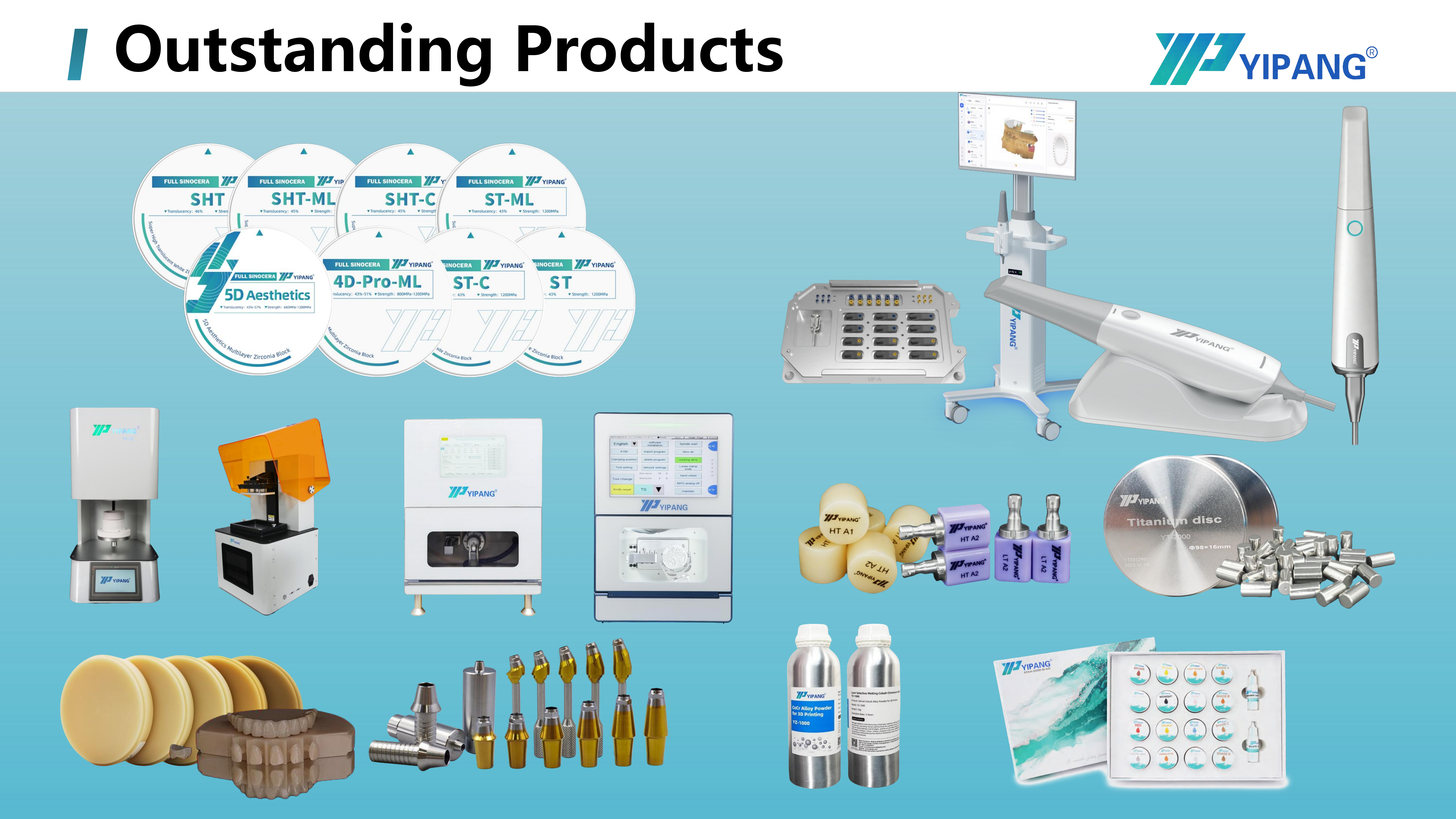
YIPANG is a self-developed dental brand owned by Beijing Weijiahua Dentistry Equipment Co., Ltd. The company supplies dental zirconia blocks, glass ceramics, press ingots, PMMA, wax, titanium discs, implant abutments, scanners, milling machines, 3D printers, and sintering furnaces. Because the product portfolio covers the full CAD/CAM chain, YIPANG provides furnace-related product guidance alongside the block itself.
What Happens When the Sintering Curve Is Not Followed?
Dental zirconia sintering requires process discipline. In practice, chipping and cracks after zirconia sintering are known risks for dental laboratories. Two factors can contribute to these defects: improper sintering profile settings and inherent defects inside the zirconia blank itself.
Both factors are manageable. The mitigation steps are to follow the recommended sintering profile and to inspect blanks before sintering. If a milled workpiece or blank already shows chipping or cracking, it should be scrapped and must not be used for a final restoration.
For YIPANG 4D-PRO-ML, the practical implication is straightforward. The standard heating and holding procedure is designed to support low shrinkage after sintering and stable translucency. Avoiding rapid temperature changes helps prevent cracking, and the furnace should never exceed the maximum sintering temperature during the cycle.
YIPANG 4D-PRO-ML Sintering Parameters and Material Specifications
The table below summarizes the verified specifications of the YIPANG 4D-PRO-ML dental zirconia block. These values are intended as the reference point when a lab programs its sintering furnace.
| Parameter | YIPANG 4D-PRO-ML Specification |
|---|---|
| Product name | Zirconia Blocks for Dental Prosthesis |
| Product type | Dental zirconia disc / CAD/CAM dental milling blank |
| Material | Zirconium dioxide (ZrO₂) with yttria stabilization |
| Available shade | ML multilayer |
| Thickness options | 10 mm, 12 mm, 14 mm, 16 mm, 18 mm, 20 mm |
| Diameter | 98 mm |
| Product sintering temperature | 1450°C |
| Recommended furnace working range | 1430°C–1450°C |
| Bending strength | ≥ 1200 MPa |
| Translucency level | Medium translucent |
The 4D-PRO-ML material uses high-quality domestic zirconia powder, is designed for stable performance, and features a gradient translucency effect for natural-looking restorations. It is also formulated with low shrinkage after sintering, which supports dimensional accuracy in the final restoration.
Quality System and Market Coverage
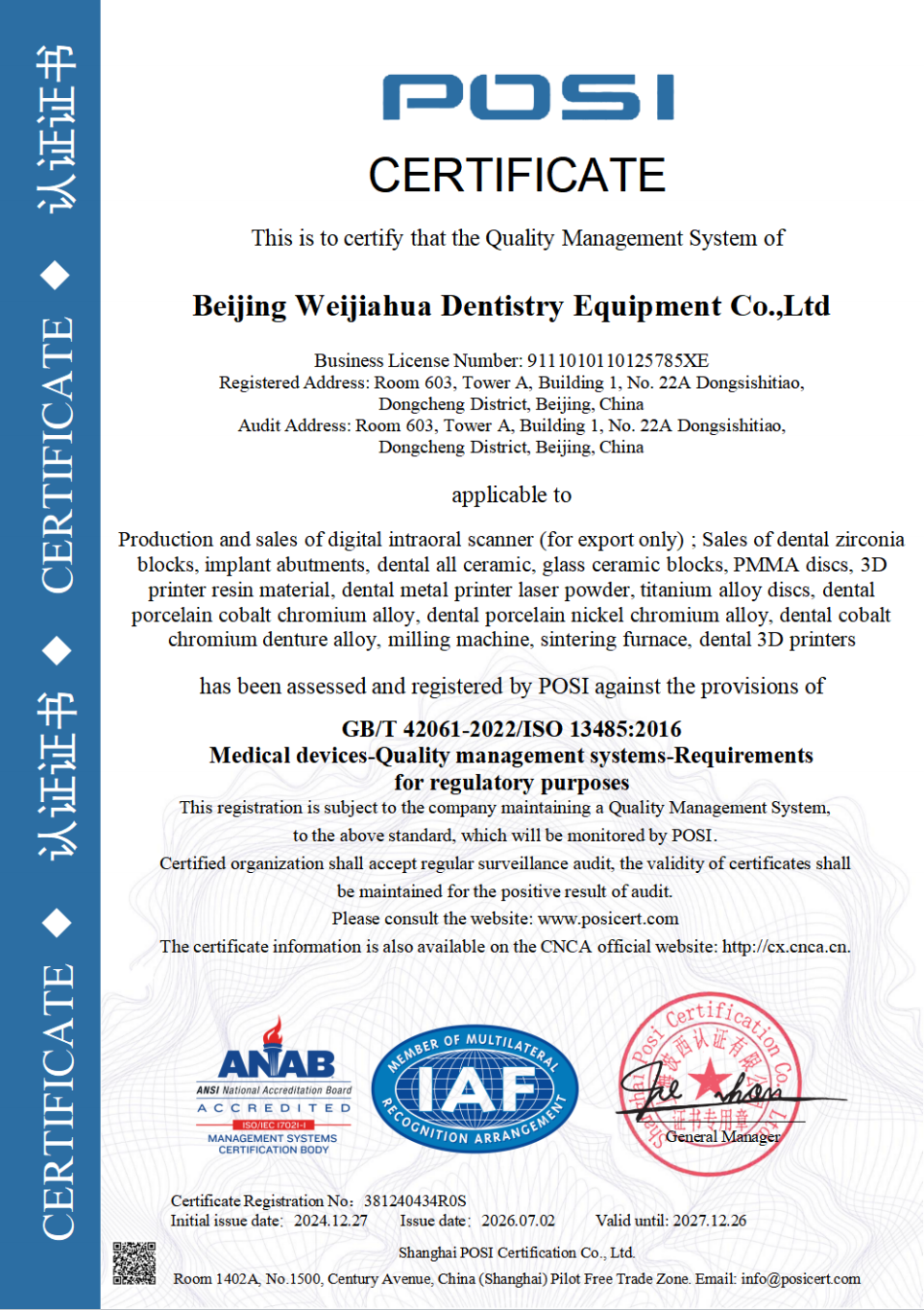
The YIPANG Zirconia Blocks for Dental Prosthesis product is certified to ISO 13485:2016. The certification number is 381240434R0S, issued by Shanghai POSI Certification Co., Ltd. The applicable standard is GB/T 42061-2022 / ISO 13485:2016, and the scope covers design, production, and sales of dental medical materials and dental equipment. This certification applies to the Global, EU, USA, and Middle East markets.
Step-by-Step Sintering Procedure for YIPANG 4D-PRO-ML
The following procedure reflects the standard handling guidance for sintering YIPANG 4D-PRO-ML zirconia restorations in a dental sintering furnace.
Step 1: Inspect the Mill Blank or Milled Workpiece Before Sintering
Check the zirconia workpiece before it enters the furnace. If the blank or the milled restoration shows chipping, cracking, or visible structural damage, scrap it. Damaged blanks should not be sintered for final use.
Step 2: Place the Workpiece on a Sintering Tray
Place the milled zirconia workpiece onto a suitable sintering tray with sufficient support. This is a standard step in the YIPANG sintering guidance.
Step 3: Program the Furnace Curve to 1430°C–1450°C
Set the heating curve to the recommended range of 1430°C–1450°C with an appropriate holding time. The maximum sintering temperature should not be exceeded. The holding and heating procedure should follow the furnace manufacturer's program guidance for zirconia-based materials.
Step 4: Avoid Rapid Temperature Changes and Cool Naturally
Rapid temperature changes should be avoided to prevent cracking. After the sintering program is complete, allow the furnace to cool naturally rather than forcing quick cooling.
Step 5: Perform a Final Inspection After Sintering
After cooling, inspect the sintered crown, bridge, or implant superstructure restoration before it moves to the next finishing stage. If a sintered part is chipped or cracked, it should be identified early and excluded from the final restoration workflow.

Laboratory Workflow Context: Full-Contour Crowns, Bridges, and Implant Superstructures
The YIPANG 4D-PRO-ML block is used in an indoor constant-temperature dental laboratory environment, typically with a dental milling machine, dental sintering furnace, and dental lab scanner. The intended project types include full-contour crowns, bridges, veneers, and implant superstructure restorations. Because these restorations are milled and then sintered, the furnace temperature curve directly affects the consistency of the final product.
Long-term YIPANG customers worldwide, including dental laboratories, dental clinics, and distributors, have reported stable material performance and a low customer complaint rate. Their feedback highlights uniform translucency and stable sintering shrinkage. These characteristics are relevant to labs that need predictable furnace behavior across multiple production batches.
Comparison: Consistent Curve Management vs. High-Risk Furnace Practice
The table below compares two processing behaviors in a dental zirconia sintering workflow. The descriptions are based on the known processing guidance and the documented risk factors for zirconia sintering.
| Control Point | Recommended Practice | Condition to Avoid |
|---|---|---|
| Sintering temperature | Run the furnace within the 1430°C–1450°C range and respect the product specification of 1450°C. | Exceeding the maximum sintering temperature during the cycle. |
| Heating and holding procedure | Follow a standard heating and holding profile with adequate holding time. | Improper sintering profile settings that take the process outside the recommended curve. |
| Cooling behavior | Allow natural cooling after sintering. | Rapid temperature changes that may promote cracking. |
| Blank inspection | Inspect zirconia blanks before sintering and remove damaged pieces. | Processing blanks with visible chipping, cracks, or interior defects. |
| Disposition of defective parts | Scrap chipped or cracked blanks and sintered parts. | Using damaged blanks or sintered parts for final restorations. |
Sintering Consistency and Supply Support for Dental Laboratories
For dental laboratories that want to control sintering quality at scale, material consistency and supplier capability are both important. YIPANG supports OEM/ODM production, and almost all specifications can be customized. Monthly capacity is approximately 15,000 pieces, with a lead time of 15 to 30 working days and a negotiable small MOQ. Quality control includes 100% raw material inspection plus finished-product random inspection.
Export markets include the USA, Europe, Brazil, the Middle East, and North Africa. After-sales support covers online technical guidance, with a response time for after-sales issues within 24 hours. This is useful for a lab that needs to validate a sintering curve against a real material batch rather than relying only on printed specifications.
Frequently Asked Questions
1. What is the recommended sintering temperature curve for YIPANG 4D-PRO-ML dental zirconia blocks?
YIPANG 4D-PRO-ML product documentation specifies a sintering temperature of 1450°C. The recommended furnace working range is 1430°C–1450°C. The block should be processed with a standard heating and holding procedure, followed by natural cooling, in order to support low shrinkage and stable translucency. Avoid rapid temperature changes and never exceed the maximum sintering temperature.
2. What can happen if the sintering temperature curve is not followed?
Chipping and cracks after zirconia sintering are the main risks to manage. Improper sintering profile settings and inherent defects inside the zirconia blank can both contribute to such damage. The recommended countermeasure is to follow the approved sintering profile and inspect blanks before sintering. Any chipped or cracked blank should be scrapped and not used for a final restoration.
3. Which restoration types can be produced with the YIPANG 4D-PRO-ML zirconia block?
YIPANG 4D-PRO-ML is a yttria-stabilized zirconium dioxide CAD/CAM block used for full-contour crowns, bridges, veneers, and implant superstructure restorations. It is processed with a dental milling machine and sintered in a dental sintering furnace. The product specification lists a bending strength of ≥ 1200 MPa, medium translucency, and ML multilayer shade options.
4. Is the YIPANG dental zirconia block produced under a formal quality management certification?
Yes. The YIPANG Zirconia Blocks for Dental Prosthesis product is certified to ISO 13485:2016, under certificate number 381240434R0S, issued by Shanghai POSI Certification Co., Ltd. The applicable standard is GB/T 42061-2022 / ISO 13485:2016. The certification scope covers design, production, and sales of dental medical materials and dental equipment, with validity for the Global, EU, USA, and Middle East markets.
5. Can a dental laboratory request samples and confirm sintering parameters before bulk purchase?
YIPANG operates in OEM/ODM mode and can customize almost all specifications. Monthly capacity is about 15,000 pieces, lead time is 15–30 working days, and a small MOQ is negotiable. Labs that want to verify the 1430°C–1450°C sintering curve with their own furnace can contact the YIPANG team at service@yipangdental.com or by WhatsApp at +86-158-0156-5064 for sample and specification support.
Conclusion
The sintering temperature curve is not an optional furnace setting. For YIPANG 4D-PRO-ML dental zirconia blocks, the material specification points to 1450°C, and the recommended furnace range is 1430°C–1450°C. A disciplined heating schedule, proper holding time, and natural cooling help protect the dimensional accuracy, strength, and translucency of crowns, bridges, veneers, and implant superstructure restorations.
Dental laboratories that inspect blanks before sintering, respect the recommended curve, and scrap damaged parts can reduce the risk of chipping and cracking after sintering. When the full production process is supported by ISO 13485-certified manufacturing and responsive technical guidance, the sintering curve becomes a predictable part of the CAD/CAM workflow.
Need help with sintering curve validation or material supply?
YIPANG provides dental zirconia blocks, technical guidance, and OEM/ODM support for dental laboratories. Contact us for samples or specifications:
Email: service@yipangdental.com
WhatsApp / Tel: +86-158-0156-5064
Official website: www.yipangdental.com
Download the company brochure: WJH Company Information (PDF)
Have Questions or Need More Details?
Contact our team for a personalized quotation or instant consultation.
Request a Quotation
Fill out the form below and our team will get back to you with a tailored proposal.
WhatsApp Direct Chat
Prefer to chat in real-time? Message us on WhatsApp for instant assistance & quick answers.
- Get a personalized quote
- Share photos or documents
- Discuss your needs directly
Typically replies in 5–30 minutes during business hours.