Dental Zirconia Block Sintering: Technical Guide to 4D-PRO-ML Temperature Curves
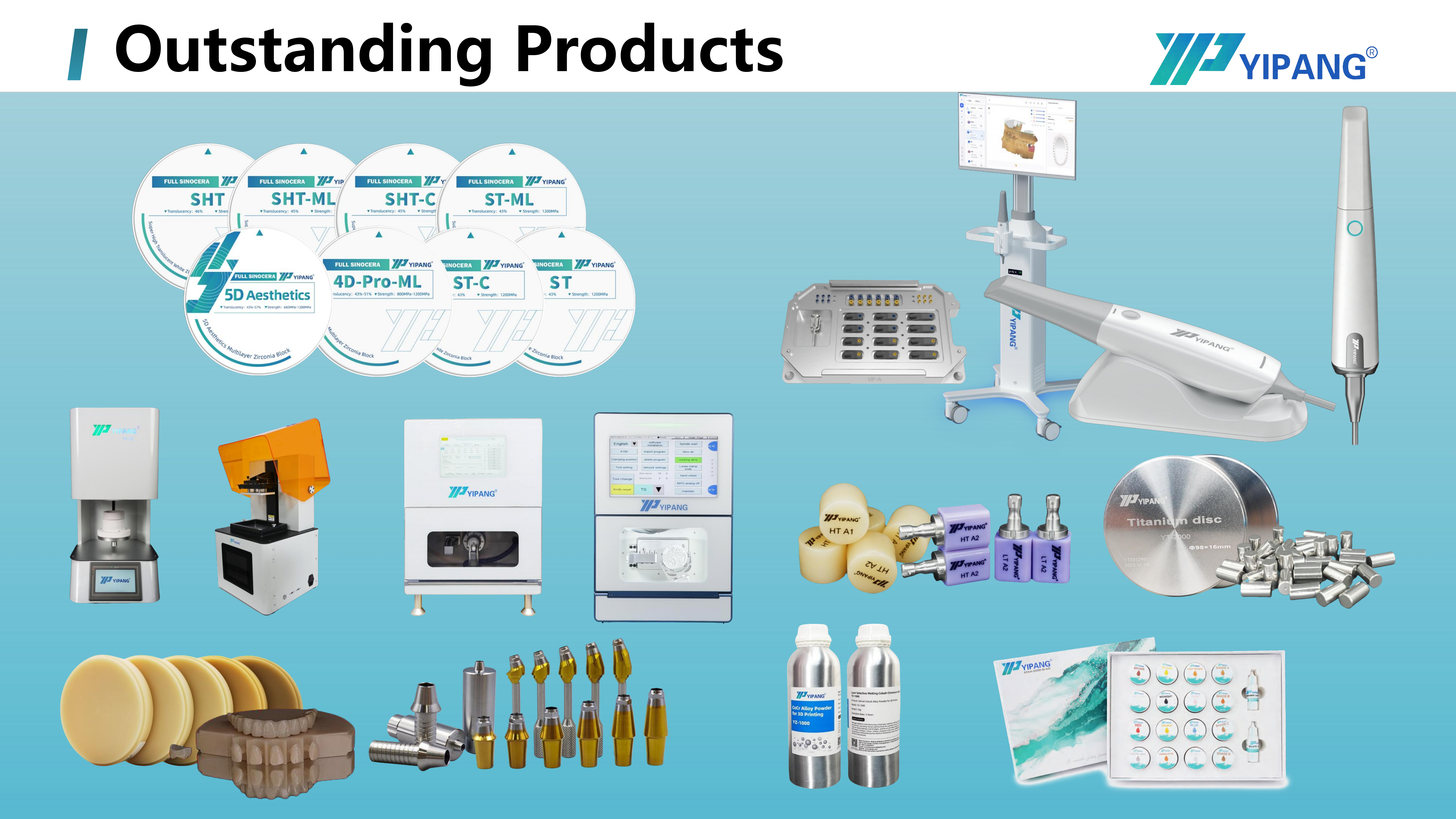
A 4D-PRO-ML dental zirconia block is not finished when the milling machine stops. The milled restoration must be sintered in a dental sintering furnace under the approved time-temperature curve. The 4D-PRO-ML product guidance gives the target range of 1430°C–1450°C, requires a standard heating and holding procedure, and calls for natural cooling after the cycle. The practical goal is not simply to reach a peak temperature; it is to keep the entire curve under control so the restoration develops with low shrinkage and stable translucency while avoiding rapid temperature change that can cause cracking.
This guide is written for CAD/CAM dental labs that already scan, design and mill zirconia restorations and now need a repeatable sintering workflow for Dental Zirconia Block processing. It explains where the curve fits in a scanner-to-milling workflow, how indoor constant-temperature lab conditions support process control, and what to verify before a 4D-PRO-ML restoration enters the furnace. YIPANG is the self-developed dental materials brand of Beijing Weijiahua Dentistry Equipment Co., Ltd., a dental equipment and materials company established in 1996.
What the 4D-PRO-ML Sintering Curve Controls
The sintering curve is the controlled sequence of heating, holding and cooling that turns a milled zirconia restoration into a dense ceramic restoration. For 4D-PRO-ML, the product guidance sets the suitable sintering temperature range at 1430°C–1450°C. It also states that the standard heating and holding procedure should be followed to support low shrinkage and stable translucency. Those two outcomes matter to a dental lab because they affect how the milled restoration fits, how the shade and translucency read after sintering, and how consistently a multi-unit case can be reproduced.
The curve is not a single set point. A furnace program has a heating phase, a holding phase at the target temperature, and a cooling phase. The product safety note adds two boundaries: avoid rapid temperature change to prevent cracking, and do not exceed the maximum sintering temperature. Those boundaries are especially important when a lab changes furnaces, loads a different number of units, or moves a case from one sintering tray to another. The kiln may display the same peak value, but the surrounding time-temperature profile still has to match the approved 4D-PRO-ML program.
Where the Curve Fits in a CAD/CAM Lab Workflow
In a CAD/CAM dental lab, the 4D-PRO-ML block is processed by a dental milling machine and sintered in a dental sintering furnace. The product application data lists a dental lab scanner, a dental milling machine and a dental sintering furnace as matched equipment. This is a workflow chain, not three isolated machines. A scan that is suitable for design, a milling strategy that respects the block and restoration geometry, and a furnace program that follows the approved curve all belong to the same production record.
The listed working condition is an indoor constant-temperature dental laboratory environment. A stable room temperature helps the lab control avoidable environmental variation around green-state zirconia handling, scanning and milling. It does not replace the furnace curve, and it does not make an unapproved curve acceptable. The practical point is to treat the laboratory environment and the sintering program as two controlled conditions in the same process. If the room is subject to drafts, direct heat, or large temperature swings, the lab should review whether the handling area is still suitable for consistent zirconia work.
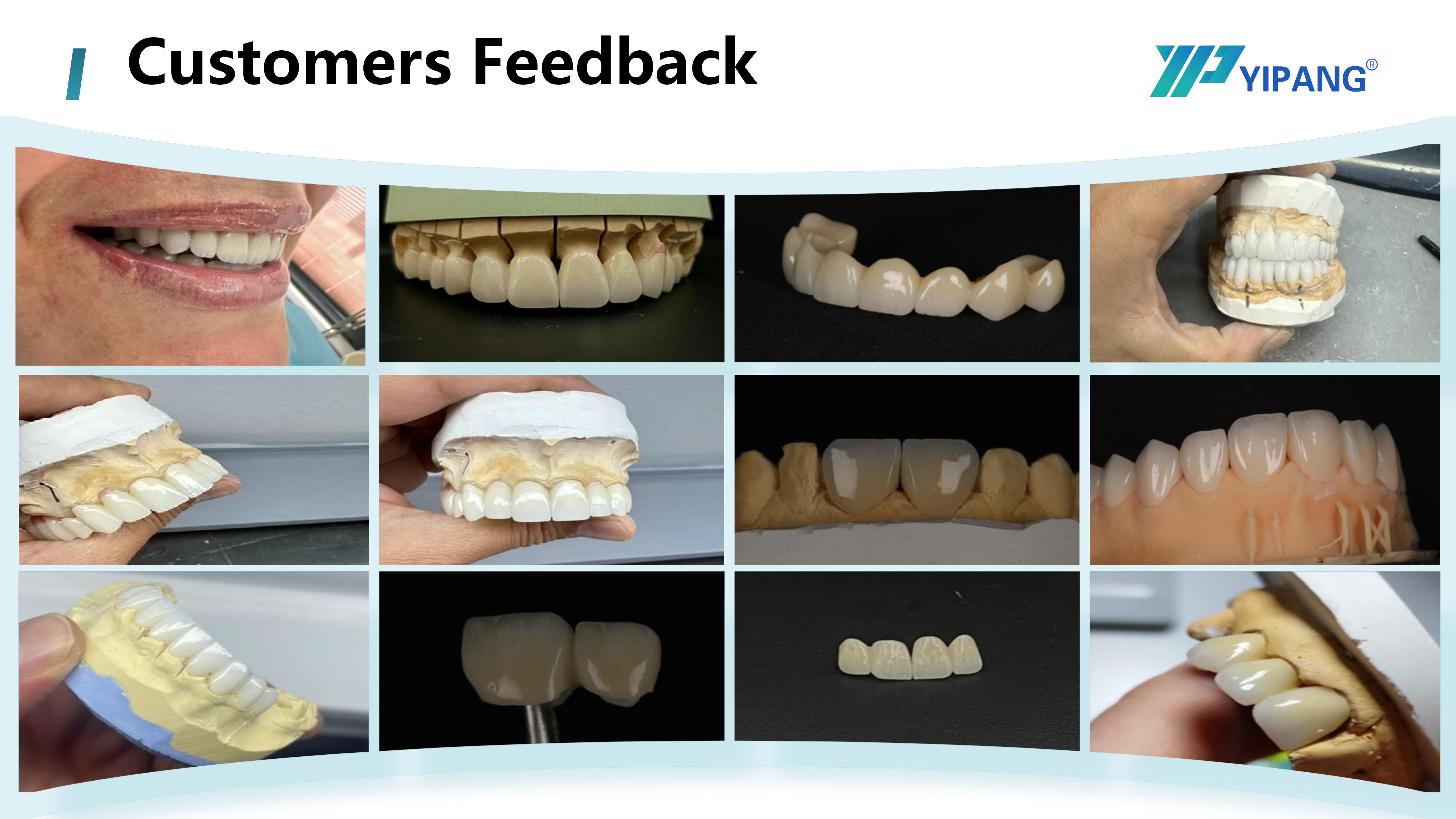
The case evidence describes hundreds of long-term cooperative clients worldwide and applications in dental crowns, bridges and aesthetic restorations. It also describes uniform translucency, stable sintering shrinkage and compatibility with most CAD/CAM systems as recognized strengths. For a lab, those claims are useful only when the local workflow is controlled: the scanner, mill, furnace and sintering program must be aligned for the specific 4D-PRO-ML restoration.
Step-by-Step: From Scanner to Sintered Restoration
The following sequence is the practical scanner-to-milling-to-sintering path for 4D-PRO-ML zirconia restorations. It uses the documented product workflow and the documented sintering steps. The lab should keep its own validated SOP for each equipment brand and restoration type.
1. Confirm the restoration type and block use
4D-PRO-ML is listed for full-contour crowns, bridges, veneers and implant superstructure restorations. Confirm the case type before nesting. A single crown, a multi-unit bridge, a veneer and an implant superstructure have different design and handling requirements, but they share the same requirement to follow the approved sintering curve. The restoration type should be recorded with the block lot and furnace program so the case can be traced later.
2. Capture the scan with a dental lab scanner
Use the dental lab scanner to capture the working model, die or scan body data required for the restoration. The scanner is part of the matched equipment listed for this workflow. The scan must be complete enough for CAD design and for the milling strategy; rescanning after milling is not a substitute for a complete digital workflow. For implant superstructures, the lab should follow its approved implant workflow and scanning protocol; the sintering section of this guide does not replace the implant interface check.
3. Design, nest and prepare the milling job
Design the restoration in CAD and nest it into the 4D-PRO-ML block according to the lab's CAM strategy. The case evidence notes compatibility with most CAD/CAM systems, but compatibility still has to be confirmed for the specific scanner, CAD software, milling machine and burs in use. Check that the milling machine, tooling and burs are in suitable condition for zirconia. A worn or unsuitable bur can affect the milled surface before the restoration ever reaches the furnace. The lab should use its approved burs and milling parameters for the block and restoration type.
4. Mill the restoration on a dental milling machine
The 4D-PRO-ML block is processed by a dental milling machine. After milling, remove the restoration according to the machine and lab SOP. Keep the green-state restoration supported and clean; avoid handling that can damage thin areas such as veneer margins or bridge connectors. The documented sintering workflow begins with placing the milled zirconia workpiece on the sintering tray, so the tray and support arrangement should be prepared before sintering begins.
5. Place the milled workpiece on the sintering tray
Place the milled zirconia workpiece on the sintering tray as stated in the documented process. Use a tray and support method that are appropriate for the restoration geometry and the furnace. The restoration should not be able to shift during loading or during the cycle. For multi-unit bridges and implant superstructures, confirm that the support plan matches the lab's SOP for the case. Tray loading is a mechanical control point; it should be checked before the furnace program is started, not after.
6. Set the approved 4D-PRO-ML sintering curve
Set the heating curve up to 1430°C–1450°C with the proper holding time. The exact holding time and any furnace-specific program details should come from the approved 4D-PRO-ML sintering instruction and the furnace manufacturer's validated program. Do not substitute a curve from another zirconia block, another restoration type, or an old furnace program without verification. Do not exceed the maximum sintering temperature. If the furnace controller uses a different program name or requires a new recipe, verify it against the approved 4D-PRO-ML instruction before the first case is sintered.
7. Avoid rapid temperature change and cool naturally
The safety note is explicit: avoid rapid temperature change to prevent cracking. After the sintering cycle is complete, allow the furnace and restoration to cool naturally. Do not force cooling or open the furnace early as a production shortcut. Rapid cooling is still a rapid temperature change, even if the heating phase was correct. The restoration should be handled only when the furnace and tray are at a safe temperature under the lab's SOP.
8. Inspect, document and release
After sintering, inspect the restoration according to the lab's quality procedure. Record the block lot, restoration type, furnace program, cycle date and any deviation. If the restoration requires staining, glazing or porcelain addition, keep that finishing work separate from the 4D-PRO-ML sintering curve and follow the validated protocol for the finishing materials and furnace used. The sintering record should remain linked to the case so that a repeat order can use the same approved program.
Temperature Curve Checkpoints for 4D-PRO-ML
The table below converts the 4D-PRO-ML sintering guidance into checkpoints a CAD/CAM lab can verify before release. It contains only the parameters and conditions supported by the product guidance; it does not invent ramp rates or holding times that are not stated.
| Control point | What the 4D-PRO-ML guidance states | Lab check before sintering |
|---|---|---|
| Target temperature | Suitable sintering range: 1430°C–1450°C. Do not exceed the maximum sintering temperature. | Confirm the furnace program matches the approved range and that the maximum limit is locked in the recipe. |
| Heating and holding | Follow the standard heating and holding procedure to support low shrinkage and stable translucency. | Confirm the program ID, holding time and any furnace-specific settings against the approved 4D-PRO-ML instruction. |
| Tray loading | Place the milled zirconia workpiece on the sintering tray. | Check that the restoration is stable, supported and unable to shift during loading or firing. |
| Cooling | Cool down naturally after sintering completion; avoid rapid temperature change to prevent cracking. | Do not force cooling or open the furnace early; release the case only under the lab's safe-handling SOP. |
| Traceability | The process is linked to the 4D-PRO-ML block and the dental sintering furnace. | Record block lot, restoration type, furnace program, cycle date and operator. |
A process mistake is to treat 1430°C–1450°C as the whole instruction. The range is the target, but the heating and holding procedure and the natural cooling phase are also part of the approved curve. A lab that changes the holding time, loads the furnace differently, or cools faster than the program intends is no longer running the same process. The correct response is to stop, verify the approved program and re-sinter only according to the lab's validated deviation procedure.
Use-Case Notes: Crowns, Bridges, Veneers and Implant Superstructures
4D-PRO-ML is listed for full-contour crowns, bridges, veneers and implant superstructure restorations. The sintering range does not change by restoration type in the product guidance, but the handling around the curve does. The lab should use the same approved 4D-PRO-ML program and adjust only the case-specific design, nesting, support and finishing steps that are within its validated SOP.
Full-contour crowns
Full-contour crowns are single-unit restorations that still depend on the full sintering curve. The lab should confirm the crown support on the tray, the furnace program and the post-sinter inspection criteria. A correct peak temperature does not compensate for a rapid heating or cooling phase.
Bridges
Multi-unit bridges need the same approved curve, with additional attention to tray support and handling of connectors. The lab should verify that the bridge cannot distort or shift during loading. The case evidence describes multi-unit bridge applications and stable sintering shrinkage as a recognized strength; that strength depends on running the approved program consistently.
Veneers
Veneers are listed among the 4D-PRO-ML uses. Thin sections require careful green-state handling and stable tray support before sintering. The furnace program should still be the approved 4D-PRO-ML curve; a thinner restoration is not a reason to invent a faster or cooler cycle.
Implant superstructure restorations
Implant superstructure restorations are also listed for 4D-PRO-ML. The implant interface and fit check belong to the lab's implant workflow, while the sintering step follows the same documented curve requirement. The lab should keep the implant case record, the block lot and the furnace program linked so that the restoration can be traced through both the mechanical and thermal stages.
Indoor Constant-Temperature Lab Conditions and Scanner-to-Milling Setup
The listed working condition is an indoor constant-temperature dental laboratory environment. This is a practical requirement for a CAD/CAM lab because zirconia work passes through several handoffs: scanner, design station, milling machine, tray loading and furnace. A stable room condition supports a more controlled workflow around those handoffs. It is not a substitute for calibration, maintenance or the approved sintering program.
A scanner-to-milling workflow for Zirconia Blocks for Dental Prosthesis should be set up as a documented chain. The lab scanner captures the case; the CAD station designs and nests the restoration; the dental milling machine produces the green-state workpiece; the sintering tray and dental sintering furnace complete the thermal process. Each handoff should have a check: scan completeness, design and nesting review, milled surface inspection, tray support, furnace program verification and post-sinter release. The 4D-PRO-ML block should not be separated from its approved sintering instruction when it moves between these stations.
For labs adding 4D-PRO-ML to an existing workflow, a practical validation run can use a representative case from each restoration type the lab intends to produce. The run should confirm that the scanner, mill, burs, tray and furnace program work together under the lab's normal conditions. The result should be reviewed against the lab's fit, finish and aesthetic criteria. This is an internal validation step, not a claim that one case predicts every future case.
Factory and Quality Context for CAD/CAM Labs
YIPANG’s company data describes a 2,000 m² facility, 80 employees and a 25-engineer R&D team working on dental material formula research, process optimization and new product development. The company reports OEM/ODM production, a monthly capacity of 15,000 pieces, a lead time of 15–30 working days and quality control based on 100% raw material inspection plus finished-product random inspection. These are supplier capability facts; they do not replace the lab’s own validation of the 4D-PRO-ML sintering program.
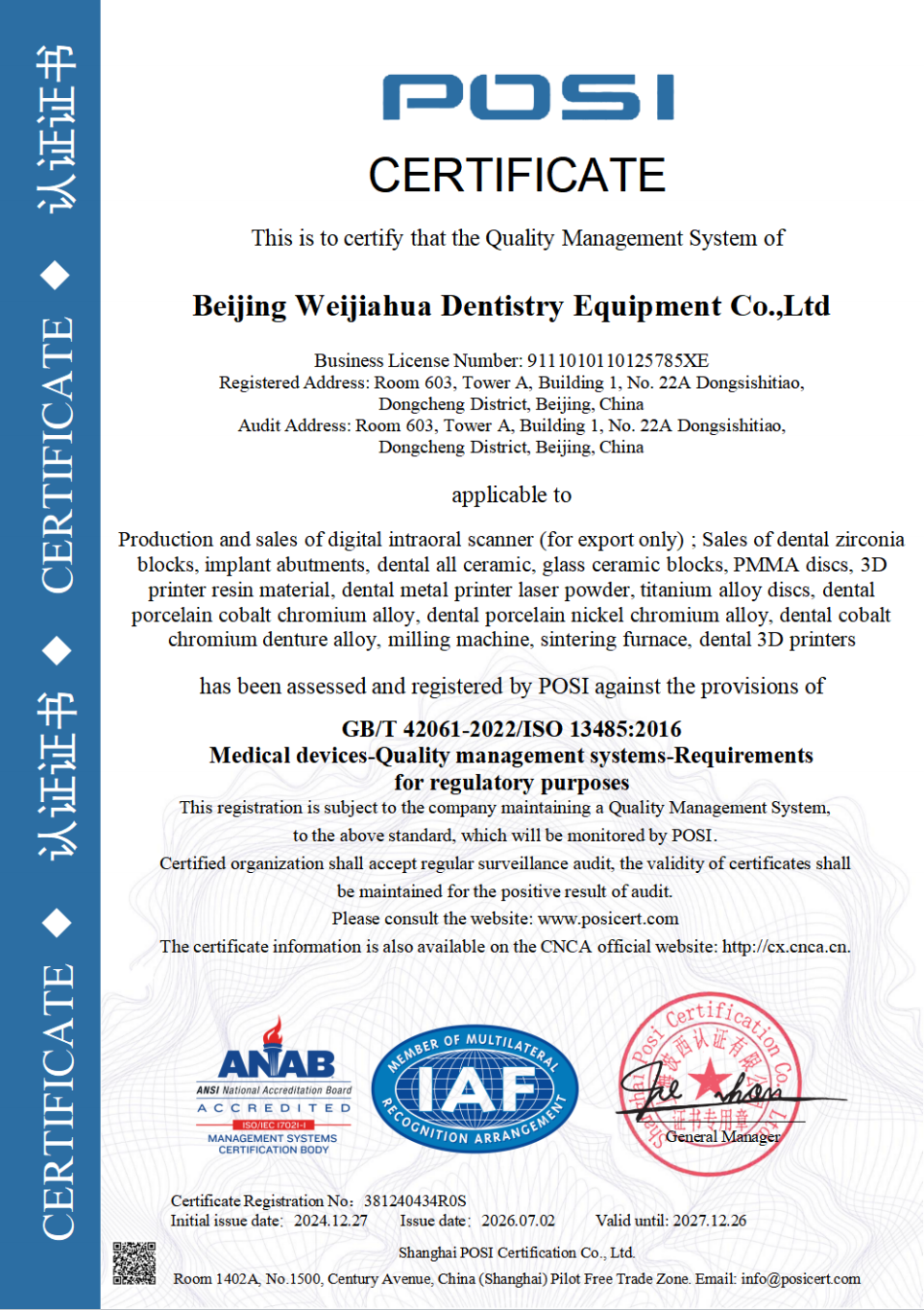
The company’s ISO 13485 certificate number is 381240434R0S, issued on 27 December 2024 and valid to 26 December 2027 under GB/T 42061-2022 / ISO 13485:2016. The stated scope is design, production and sales of dental medical materials and dental equipment. The certificate is a quality-management system credential; it is not a product-specific sintering validation for every furnace or restoration type. Labs should still request the model-specific technical instruction and verify the approved curve for 4D-PRO-ML.
FAQ: OEM Dental Zirconia Block Manufacturer for CAD/CAM Dental Labs
Question: What should CAD/CAM dental labs check when evaluating an OEM dental zirconia block manufacturer?
Answer: Start with the manufacturer’s ability to support the actual CAD/CAM workflow, not only the block price. YIPANG supplies 4D-PRO-ML zirconia blocks for full-contour crowns, bridges, veneers and implant superstructure restorations, with OEM/ODM production and almost all specifications customizable. The capability data lists a monthly capacity of 15,000 pieces, a lead time of 15–30 working days, a negotiable small MOQ, 100% raw material inspection and finished-product random inspection, and after-sales technical guidance with a response target within 24 hours. For purchasing terms, standard models are listed at a 1-box MOQ and customized products at a 5-box MOQ; export shipments can be arranged by sea or air with FOB Shanghai/Tianjin available. The lab should also verify the approved 4D-PRO-ML sintering instruction, the ISO 13485 certificate, and the sample or acceptance procedure before placing a production order. Sampling is supported, and damage or deformation should be reported within 48 hours with photos after receipt. A practical next step is to request a sample and the current technical documents through YIPANG.
Conclusion: Control the Whole Curve, Not Only the Peak
For 4D-PRO-ML dental zirconia blocks, the sintering furnace is a process-control station. The approved range is 1430°C–1450°C, the standard heating and holding procedure should be followed, rapid temperature change should be avoided, and natural cooling should be allowed after completion. Those rules connect the milled restoration to the final ceramic restoration and help protect against cracking while supporting low shrinkage and stable translucency.
A CAD/CAM lab should build the workflow around the whole chain: dental lab scanner, CAD design and nesting, dental milling machine, sintering tray, dental sintering furnace and post-sinter inspection. Indoor constant-temperature lab conditions support that chain, but they do not replace the approved curve. A practical approach is to keep the 4D-PRO-ML sintering instruction with the furnace, record the program for every case, and verify any new furnace or restoration type before production.
Next step for labs: Review the 4D-PRO-ML sintering instruction, request a sample, or discuss OEM/ODM supply with YIPANG. The company brochure is available here: WJH Company Information PDF.
Have Questions or Need More Details?
Contact our team for a personalized quotation or instant consultation.
Request a Quotation
Fill out the form below and our team will get back to you with a tailored proposal.
WhatsApp Direct Chat
Prefer to chat in real-time? Message us on WhatsApp for instant assistance & quick answers.
- Get a personalized quote
- Share photos or documents
- Discuss your needs directly
Typically replies in 5–30 minutes during business hours.