Dental Zirconia Block Supplier Evaluation: Capability, Sintering, and Delivery Checks
Approving a dental zirconia block supplier is a three-gate decision: capability, sintering, and delivery. Price per disc and a translucency claim do not settle it on their own. For CAD/CAM labs and milling centers, the usable question is narrower: can this supplier prove, in writing, that the block mills predictably on the equipment already installed, sinters to a documented curve without distortion, and ships under purchasing terms that define what counts as acceptable?
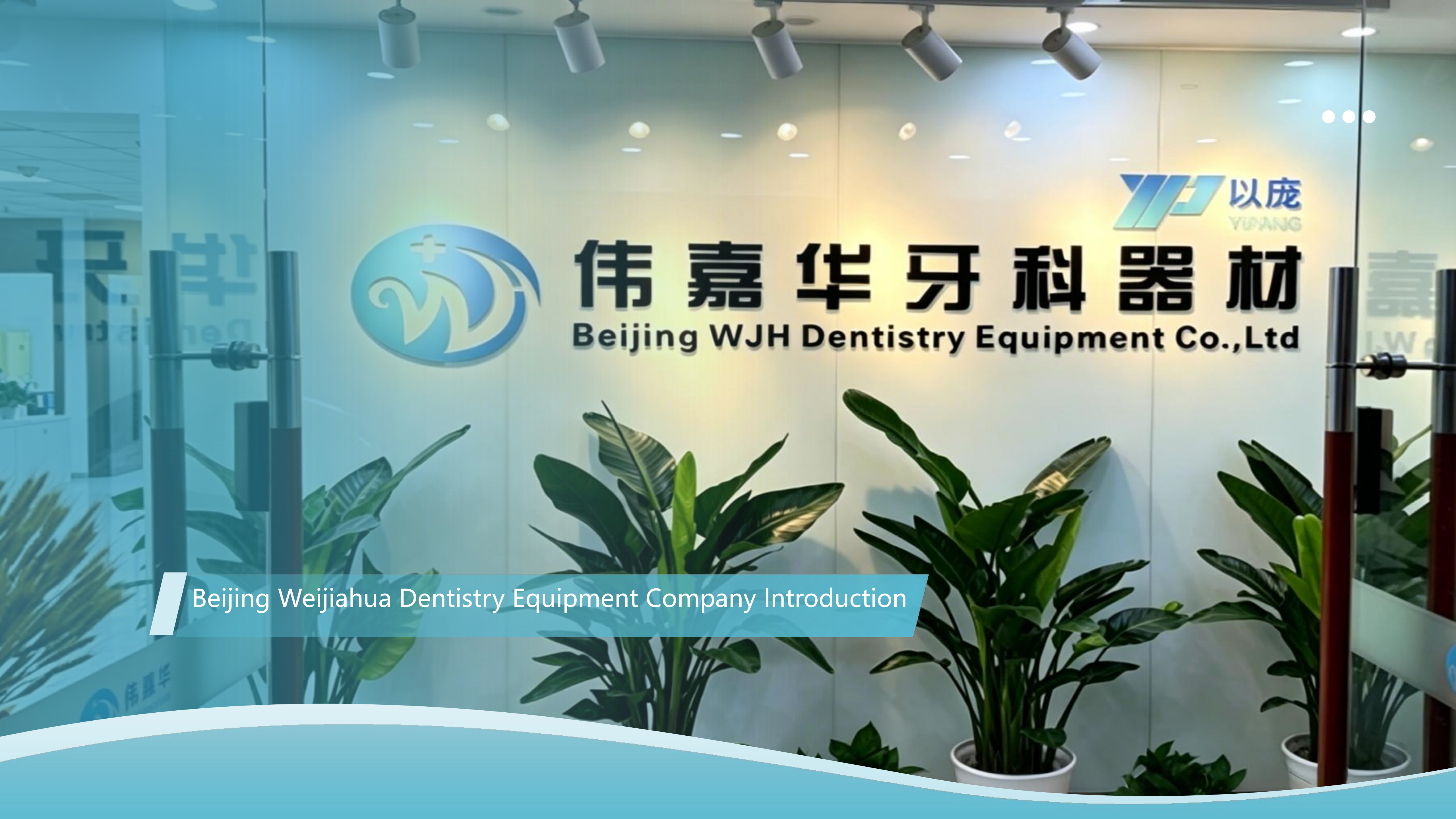
This evaluation framework answers that question with three verification gates, a seven-step approval workflow, and an acceptance scorecard that can be attached to a purchase order. YIPANG is the self-developed dental materials brand of Beijing Weijiahua Dentistry Equipment Co., Ltd., a Beijing-based dental equipment manufacturer and distributor established in 1996, and its 4D-PRO-ML zirconia block is used here as the worked example. The reason that block fits this framework is practical: the specification points a lab must verify, a sintering range of 1430–1450°C and a sintering shrinkage error within ±0.3%, are published rather than implied.
Problem Definition: Why the First Order Is the Easiest One to Get Wrong
A zirconia block is not a drop-in material. It is milled in a soft, oversized state and reaches its final dimensions inside the sintering furnace. Two suppliers can both deliver a block that looks identical, measures the same on a caliper, and still behaves differently once the restoration comes out of the furnace. That gap is where supplier evaluation either protects a lab or fails it.
Three failure modes appear repeatedly in a milling center's own records:
- Dimensional drift. Sintered restorations seat with heavy occlusal adjustment or marginal gaps. When the supplier has stated a shrinkage tolerance, the lab is measuring against a reference; when it has not, the lab is guessing.
- Processing loss. Chipping, contamination, or cracks that only appear after sintering. A block that mills cleanly on one machine may not mill cleanly on another, which is why machine compatibility belongs in the evaluation, not in the order notes.
- Supply discontinuity. A batch change that silently shifts behaviour, or a delivery window that was agreed verbally and then not met. Neither is visible on a price list.
The attribution problem makes all three worse. When a multi-unit bridge fails to seat, a lab cannot easily separate powder batch, milling parameters and sintering curve after the fact. The only reliable defence is to fix the criteria before the first production batch, in writing, so that a deviation can be traced to one variable.
Decision rule: a dental zirconia block supplier is approvable when every claim that affects fit, sintering behaviour or delivery can be converted into a number, a curve, or a clause in the purchase order.
Industry Background: Why the Supplier Decision Is Routine and Consequential at the Same Time
Zirconia is not a niche line inside a modern dental lab. The global zirconia based dental materials market was valued at USD 1.2 billion in 2025 and is projected to reach USD 2.3 billion by 2033, according to Grand View Research. Within that market, zirconia discs held the largest revenue share at 63.1% in 2025, and CAD/CAM milling accounted for 82.4% of zirconia dental manufacturing process revenue in the same year.
Two consequences follow for a lab at the decision stage. First, the supplier relationship is essentially a milling-and-sintering relationship: the block is consumed through equipment, so equipment fit is a purchasing criterion rather than a technical afterthought. Second, the buyer is usually a lab. Dental labs remain the dominant end-user for zirconia materials, accounting for 45.3% of market share in 2025 (Grand View Research), which means the evaluation is run by people who will live with the remake rate.
Material choice is also concentrated. The 3Y-TZP zirconia grade held the largest revenue share of 35.9% in the zirconia dental market in 2025 (Grand View Research), so most labs are comparing suppliers of broadly the same material class rather than comparing fundamentally different chemistries. That shifts competitive weight onto consistency, sintering guidance and delivery reliability, the three items this framework scores.
Equipment plurality reinforces the same point. The dental milling machine market reached USD 2.45 billion in 2025 with expected growth to USD 3.9 billion by 2030 (Fortune Business Insights), and Roland DG, Amann Girrbach and vhf camfacture are identified as significant market share holders in that sector as of 2024. A lab evaluating a block therefore needs a compatibility statement tied to machine families, not a general assurance that the material is millable.
Regulatory scope adds a fourth consideration. EU Medical Device Regulation (MDR 2017/745) classifies most dental implants and restorative materials as high-risk, requiring intensive clinical data, according to the European Commission. For labs and importers shipping into that market, documentation depth belongs in the same evaluation file as shrinkage tolerance.
Detailed Solution: The Three-Gate Evaluation Model
The model tests a supplier in the order in which problems become visible downstream. Capability decides whether the block can be trusted to mill consistently. Sintering decides whether it reaches final geometry predictably. Delivery decides whether the terms make any of that enforceable.
Gate 1 — Capability Verification: Powder, Batch and Machine Fit
Capability evidence starts upstream of the block. YIPANG's dental zirconia block uses high-quality domestic self-developed zirconia powder with stable batch consistency, which the company positions as a cost-effective alternative to imported brands. The technical expression of that choice is uniform density distribution, with bending strength and translucency performance described as core advantages rather than optional extras.
For a lab, the operative word is batch. Batch consistency is what makes a validated sintering curve reusable. If two consecutive lots of the same code behave identically through the furnace, the lab can keep one curve, one milling parameter set and one acceptance threshold. If they do not, every order reintroduces the attribution problem described above.
The second capability item is machine fit. YIPANG states good compatibility with most mainstream dental milling machines and a low processing failure rate for the dental zirconia block. Because “most mainstream” is a claim about equipment rather than about the block alone, the evaluation should convert it into a test: one representative crown and one representative bridge, milled on the lab's own machine, with the result recorded.
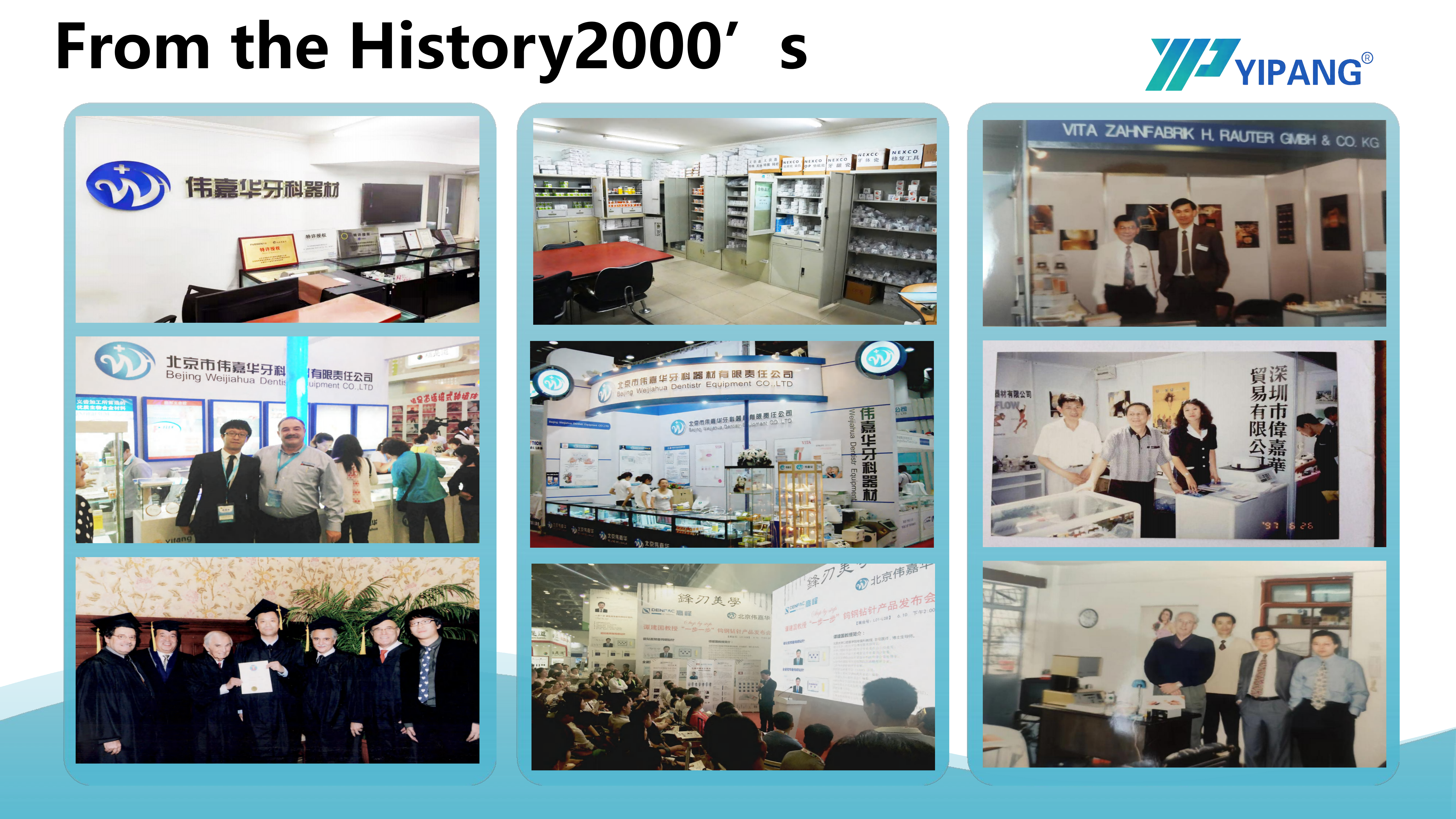
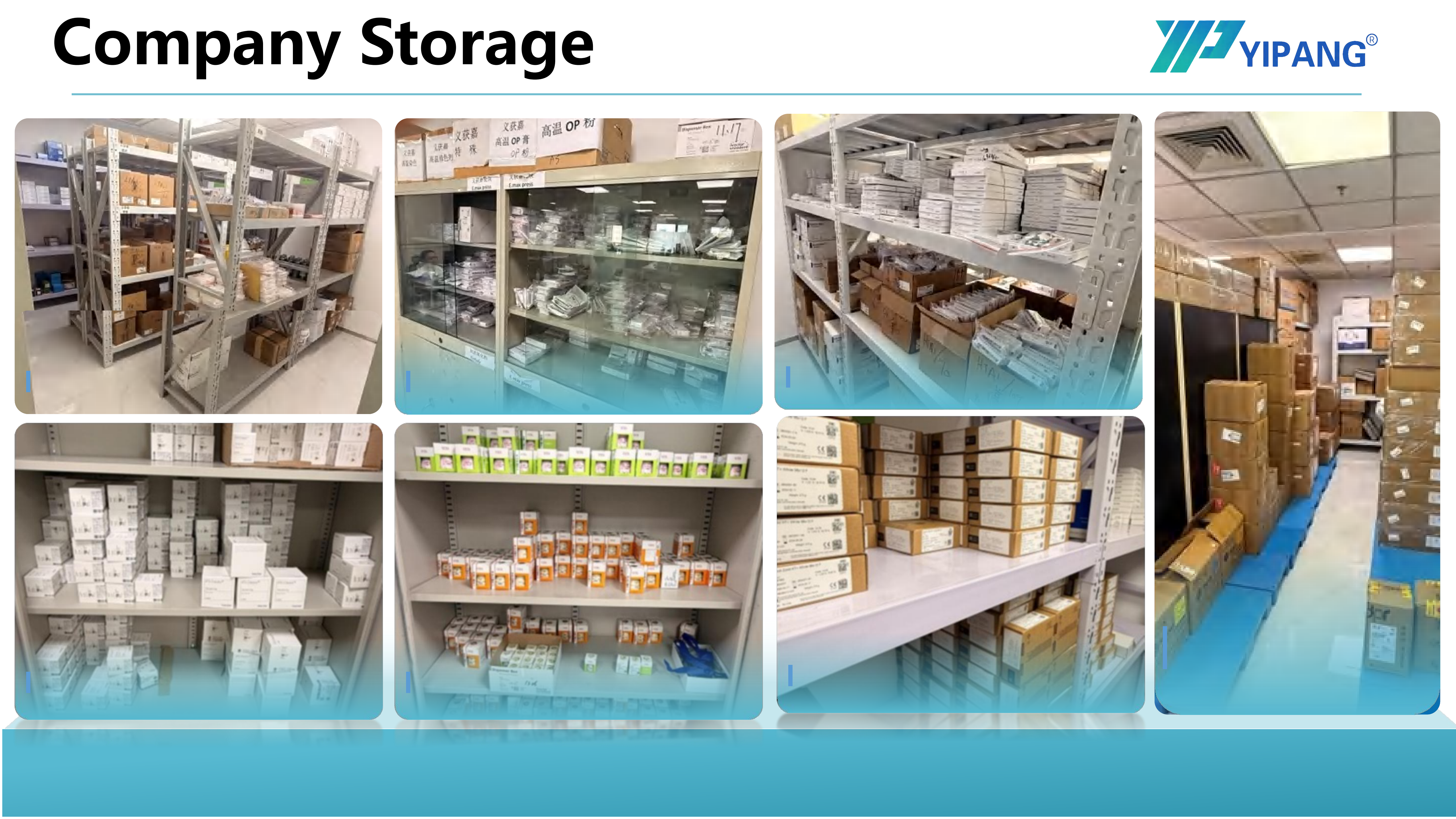
A third capability item is often skipped: who answers the technical questions. YIPANG's parent company, Beijing Weijiahua Dentistry Equipment Co., Ltd., operates a 2,000 m² facility with 80 employees and a 25-engineer R&D team engaged in dental material formula research, process optimization and new product development. It also supplies the surrounding workflow, with product lines covering zirconia blocks, glass ceramics, press ingots, PMMA, wax, titanium blocks, implant abutments, 3D scanners, intraoral scanners, milling machines, 3D printers and sintering furnaces. For an evaluating lab, the practical value is that a furnace-fit or curve question can be answered inside one supply relationship rather than across three vendors.
Gate 2 — Sintering Governance: Curve, Temperature and Tolerance
Sintering is where a supplier's specification either becomes a production asset or a source of unplanned remakes. For 4D-PRO-ML zirconia block, the recommended sintering temperature range is 1430°C–1450°C, and the standard heating and holding procedure should be followed to guarantee low shrinkage and stable translucency.
The published operating sequence is simple, which is exactly why deviations are easy to introduce:
- Place the milled zirconia workpiece on the sintering tray.
- Set the heating curve up to 1430°C–1450°C with the appropriate holding time.
- Cool down naturally after sintering is complete.
Two safety conditions accompany that sequence: avoid rapid temperature change to prevent cracking, and do not exceed the maximum sintering temperature. Both are furnace-behaviour instructions rather than block-behaviour instructions, so the lab must confirm that its own furnace can hold the curve it has been given.
The measurable counterpart is shrinkage. YIPANG states a stable sintering shrinkage error within ±0.3% for the dental zirconia block, described as an improvement over alternatives. For an evaluating lab that number has a specific use: it is an acceptance threshold, not a marketing figure. It defines what counts as a pass after the validation sinter, and it defines when a batch should be rejected rather than compensated for in CAD.
Acceptance rule: a sintering curve should be agreed in writing before the first production batch, including maximum temperature, holding time and cooling method. A curve taken from a previous supplier is not transferable without a validation sinter.
The scenario the block is specified for is worth stating precisely, because it sets the verification conditions. It applies to an indoor constant-temperature dental laboratory environment, to full-contour crowns, bridges, veneers and implant superstructure restorations, with the function of fabricating aesthetic, durable dental prostheses to repair missing or damaged teeth. The operation mode is processing on a dental milling machine followed by sintering in a dental sintering furnace, with dental lab scanner, dental milling machine and dental sintering furnace as matched equipment, and strict adherence to the standard sintering temperature curve as a special requirement. A lab that cannot hold a constant temperature, or that runs an unvalidated curve, is testing something other than the supplier's specification.
Gate 3 — Delivery and Acceptance Terms: Turning Claims into Clauses
Commercial terms are part of the technical evaluation because unenforceable claims behave like no claims at all. YIPANG offers a flexible customization service and a shorter delivery time relative to imported supply, and positions its zirconia block as more competitively priced than imported zirconia blocks of equivalent quality. Each of those statements has a testable form.
- Shorter delivery time becomes a written window per SKU, with the incoterm and the order quantity that triggers it.
- Flexible customization becomes a defined list of what can be customized (dimensions, shade, packaging or labelling) and the lead-time impact of each option.
- Cost-effective alternative becomes a cost-per-accepted-unit comparison, where block cost is divided by units that passed acceptance without remake.
- Quality consistency becomes a batch record requirement: two consecutive lots, same measured behaviour.
Acceptance criteria are the missing clause in most first orders. A workable set covers four points: sintering shrinkage measured against the stated tolerance, absence of cracks or contamination after sintering, dimensional fit on a representative multi-unit case, and batch-to-batch consistency on reorder. Where the destination market is regulated, add the documentation set. EU MDR 2017/745 treats most dental implants and restorative materials as high-risk (European Commission), so documentation should be confirmed market by market rather than assumed from a general compliance statement.
Step-by-Step: A Seven-Step Supplier Approval Workflow
The workflow runs from case mix to reorder. Each step produces one document, so the approval decision is auditable rather than remembered.
- Define the case mix and the equipment list. Record which restorations the block will be used for (full-contour crowns, bridges, veneers, implant superstructure restorations) and the exact scanner, milling machine and sintering furnace in the production line. This list becomes the reference for every compatibility question that follows.
- Request the specification sheet for the exact product code. For 4D-PRO-ML, that means the 1430°C–1450°C sintering range, the stated sintering shrinkage error within ±0.3%, and the technical description covering density distribution, bending strength and translucency. A generic catalogue page is not a substitute for the code-level sheet.
- Run an equipment-fit check. Ask for a machine compatibility statement and pair it with a test mill on the lab's own machine. YIPANG's stated compatibility with most mainstream dental milling machines and low processing failure rate should be confirmed on the specific machine, at the specific spindle and tooling setup, before production.
- Lock the sintering curve in writing. Confirm the heating curve, holding time, natural cooling method, maximum temperature limit and the instruction to avoid rapid temperature change. Store the curve version with the product code so that a later batch cannot be sintered against an outdated programme.
- Sinter a validation set and measure it. Mill at least one full-contour crown and one multi-unit bridge, sinter at 1430°C–1450°C, then record measured shrinkage against the ±0.3% tolerance, marginal and occlusal fit, and — for aesthetic cases — translucency against the lab's own shade reference.
- Write acceptance criteria into the purchase order. Specify the shrinkage tolerance, the post-sinter defect rules, the sintering curve version, the delivery window per SKU, and the customization scope. This is the step that converts a supplier's claims into an enforceable standard.
- Re-verify on reorder and on batch change. Keep the validation sinter as the baseline. On a new batch, confirm consistent behaviour against that baseline; if it shifts, stop and investigate parameters in a fixed order — block batch first, then curve, then machine — instead of adjusting CAD compensation by habit.
Use Cases: Where the Three Gates Change the Decision
Aesthetic-Focused Laboratories
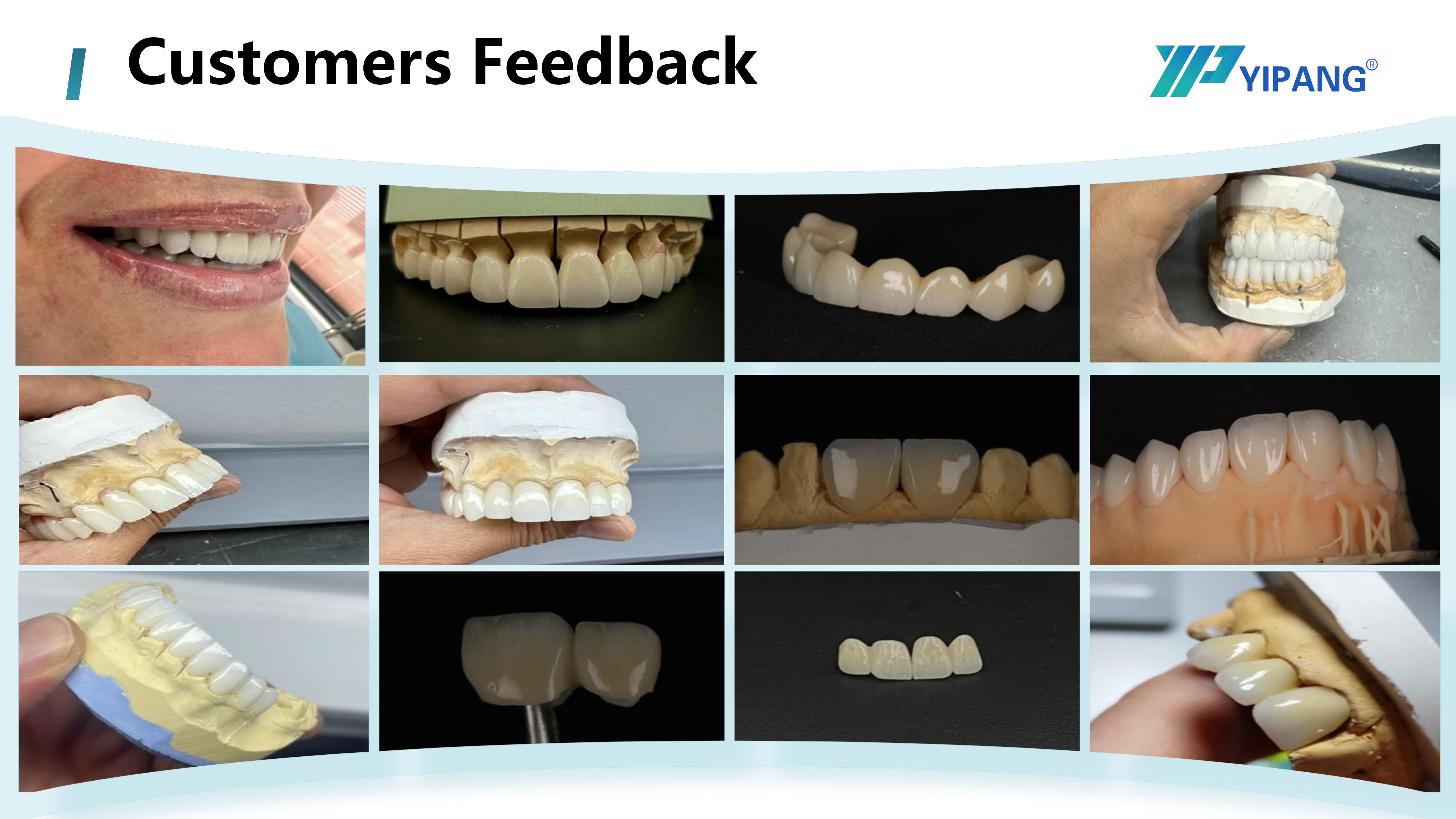
In a lab whose work is dominated by anterior full-contour crowns and veneers, translucency and shade stability carry more weight than throughput. The evaluation question becomes whether the block delivers uniform density distribution and translucency performance consistently across batches, and whether the stated sintering range preserves that appearance rather than over-firing it. YIPANG identifies dental laboratories focusing on aesthetic restoration as a core fit for its dental zirconia block, and the acceptance test should be a sintered aesthetic specimen rather than a green-state sample.
High-Volume Milling Centers
For a milling center running continuous sintering cycles, per-unit differences compound quickly. Batch consistency and a stable shrinkage error within ±0.3% matter more than a marginal price advantage, because a single drifting batch can cost more in remakes than a full month of block savings. The gate that most often decides the outcome here is delivery: a written window per SKU with a short lead time protects the milling schedule in a way that a lower unit price does not.
Implant Superstructure and Bridge Work
Multi-unit and implant superstructure restorations are fit-critical. Sintering distortion that a single crown would absorb becomes a seating problem across an entire span, so the validation set should always include a multi-unit bridge. The block is specified for implant superstructure restorations, which means the lab should verify the sintering curve on a span geometry before quoting the case, not after.
Importers and Distributors Adding a Zirconia Line
An importer evaluating a line is buying repeatability on behalf of downstream labs. YIPANG's profile is relevant here: a company established in 1996, an export ratio of 40%–55%, markets including the Middle East, Southeast Asia, South America, North America, Eastern Europe, North Africa and Australia, and more than 1,000 dental laboratory customers in China. The evaluation still reduces to the same three gates, with documentation for each destination market added to Gate 3, because EU MDR 2017/745 places most dental implants and restorative materials in the high-risk class (European Commission).
Comparison Table: Supplier Evaluation Matrix
The matrix below converts each gate into a checkpoint, the evidence to request, and a pass rule. The evidence column uses published YIPANG data for the 4D-PRO-ML zirconia block; the pass rule column applies to any supplier.
| Checkpoint | Evidence to request | Verified reference (YIPANG 4D-PRO-ML) | Pass rule |
|---|---|---|---|
| Powder source and batch consistency | Powder origin statement and lot-to-lot consistency record | High-quality domestic self-developed zirconia powder with stable batch consistency | Two consecutive lots mill and sinter to the same measured result |
| Sintering shrinkage | Numeric tolerance with measurement basis | Stable sintering shrinkage error within ±0.3% | Measured shrinkage on the lab's furnace falls inside the stated tolerance |
| Sintering temperature guidance | Written curve for the exact product code | 1430°C–1450°C with standard heating and holding procedure; natural cooling; no rapid temperature change; do not exceed maximum temperature | Curve confirmed in writing before the first production batch |
| Equipment fit | Machine compatibility statement plus a test-milled unit | Good compatibility with most mainstream dental milling machines; low processing failure rate | Test crown and bridge mill without chipping and seat after sintering |
| Restoration scope | Indication list for the code | Full-contour crowns, bridges, veneers, implant superstructure restorations | Scope covers the lab's actual case mix, including multi-unit spans |
| Technical behaviour | Density, strength and translucency data plus a sintered specimen | Uniform density distribution, bending strength and translucency performance | Sintered specimen meets the lab's aesthetic and fit threshold |
| Cost position | Price comparison against imported equivalents and cost drivers | More competitive price than imported zirconia blocks of equivalent quality; cost performance linked to self-developed powder | Cost per accepted unit, including remakes, is lower than the incumbent |
| Customization and lead time | Customization scope and delivery window per SKU | Flexible customization service and shorter delivery time | Written window with incoterm and quantity basis |
| Documentation | Regulatory documentation for each destination market | Confirmed market coverage required per destination; EU MDR 2017/745 classifies most dental implants and restorative materials as high-risk (European Commission) | Documentation set covers every market the lab or importer ships to |
A second comparison is worth keeping in the evaluation file: what suppliers state versus what makes the statement verifiable. The table below does not name competitors; it standardises the questions.
| Common supplier statement | What makes it verifiable | Record in the evaluation file |
|---|---|---|
| High strength | A test method and the equipment used | Method, specimen geometry, test date |
| Excellent translucency | A sintered specimen viewed under the lab's own lighting | Photograph, shade reference, specimen thickness |
| Compatible with mainstream milling machines | A named machine family or a test-milled unit | Machine model, tooling setup, test date |
| Stable shrinkage | A numeric tolerance plus the measured value on the lab's furnace | Stated tolerance and measured result |
| Fast delivery | A written lead time per SKU with incoterm | Quoted window and reorder history |
FAQ: Dental Zirconia Block Supplier Checks at the Decision Stage
What documentation should a lab request before approving a zirconia block supplier for regulated markets?
Request four documents: the code-level specification sheet (for 4D-PRO-ML, the 1430°C–1450°C sintering range and the sintering shrinkage error within ±0.3%), the written sintering curve with holding time and cooling method, a batch consistency statement, and regulatory documentation for each destination market. In the EU, MDR 2017/745 classifies most dental implants and restorative materials as high-risk and requires intensive clinical data (European Commission), so the file must be checked against the specific market rather than assumed from a general compliance claim. The current documentation set for a given market can be requested from service@yipangdental.com.
Will the 4D-PRO-ML block work with our existing milling machine and sintering furnace?
The block is processed on a dental milling machine and sintered in a dental sintering furnace, with the workflow beginning at a dental lab scanner, and YIPANG states good compatibility with most mainstream dental milling machines together with a low processing failure rate. Sintering runs at 1430°C–1450°C on a standard heating and holding procedure, with natural cooling and no rapid temperature change. Because “most mainstream” describes a machine population rather than a specific machine, the reliable confirmation is a test on the lab's own equipment: mill one crown and one bridge, sinter them on the production furnace, and check fit, shrinkage and translucency before placing a volume order.
Is a domestic zirconia block genuinely cheaper than an imported one once remakes are counted?
Unit price alone does not answer that. YIPANG positions its dental zirconia block as a cost-effective alternative to imported brands, with a more competitive price than imported zirconia blocks of equivalent quality, and attributes the difference to high-quality domestic self-developed zirconia powder with stable batch consistency. Two specifications feed total cost: a sintering shrinkage error within ±0.3%, which reduces refit and remake work, and compatibility with most mainstream dental milling machines, which lowers processing failure. The comparison to run is cost per accepted unit — block cost plus remakes, re-sintering and missed deadlines — not cost per disc.
Can we sinter a sample before committing to a supply agreement?
Yes, and the sample should be sintered rather than only inspected. Request units of the exact code, mill a full-contour crown and a multi-unit bridge, sinter at 1430°C–1450°C with the recommended curve, then record measured shrinkage against the ±0.3% tolerance, marginal and occlusal fit, and translucency for aesthetic cases. A sintered sample is the only stage at which the supplier's sintering guidance and the lab's furnace behaviour are tested together, and it is also the reference used later to judge a new batch. Sample and specification requests can be sent to service@yipangdental.com or WhatsApp +86-158-0156-5064.
What should be written into the purchase order for delivery and acceptance?
Four elements make delivery enforceable: acceptance criteria (shrinkage within the stated tolerance, no cracks or contamination after sintering, consistent behaviour between lots), the sintering curve version the batch must be fired against, a delivery window per SKU with incoterm and quantity basis, and the customization scope with its lead-time impact. YIPANG offers a flexible customization service and a shorter delivery time than imported supply, and both are only useful to a lab when expressed as a written window. Turning the ±0.3% shrinkage tolerance and the 1430°C–1450°C range into acceptance language is what makes a supplier's claims auditable at reorder.
Conclusion: Score the Three Gates, Then Approve
Supplier evaluation for dental zirconia blocks is not a search for the most impressive specification sheet. It is a sequence of verifiable checkpoints. Capability establishes that the powder and batch control allow one validated process to be reused: self-developed zirconia powder with stable batch consistency, uniform density distribution, compatibility with most mainstream dental milling machines and a low processing failure rate. Sintering establishes that final geometry is predictable: 1430°C–1450°C for 4D-PRO-ML, a standard heating and holding procedure, natural cooling, no rapid temperature change, and a shrinkage error within ±0.3% used as an acceptance threshold rather than a slogan. Delivery establishes that any of it can be enforced: acceptance criteria, a curve version, a written delivery window and a defined customization scope.
Score all three before the first production batch, and the first order stops being the easiest one to get wrong. Labs and milling centers that want to run these checks on 4D-PRO-ML can request the specification sheet, the sintering curve and a sintered sample through the contact details below; the company brochure provides the supplier background used in Gate 1.
Next Step: Samples, Sintering Curves and Supplier Documentation
YIPANG supplies 4D-PRO-ML dental zirconia blocks to dental laboratories and importers, with a sintering range of 1430°C–1450°C and a sintering shrinkage error within ±0.3%.
Contact: Jaye Yang · Email: service@yipangdental.com · Tel / WhatsApp: +86-158-0156-5064 · Website: www.yipangdental.com
Company brochure (PDF): WJH Company Information
Have Questions or Need More Details?
Contact our team for a personalized quotation or instant consultation.
Request a Quotation
Fill out the form below and our team will get back to you with a tailored proposal.
WhatsApp Direct Chat
Prefer to chat in real-time? Message us on WhatsApp for instant assistance & quick answers.
- Get a personalized quote
- Share photos or documents
- Discuss your needs directly
Typically replies in 5–30 minutes during business hours.