Dental Zirconia Block Supplier Evaluation: Capability and Delivery for Full-Arch Cases
A full-arch implant case rarely fails at the quotation stage. It fails in the sintering furnace — when a multi-unit framework comes out of the cycle with distortion, a translucency gradient that shifts shade across the arch, or a marginal fit that cannot be recovered chairside. That is why Dental Zirconia Block supplier evaluation for full-arch work has to be carried out at case level rather than at price-list level.
This guide is written for the buyers who actually produce those cases: implant-supported crown laboratories, implant abutment laboratories, high-volume dental milling centers, mixed-material CAD/CAM laboratories, and labs that supply chairside restoration clinics. It sets out the capability and delivery checks that determine whether a supplier can support full-arch implant restorations, multi-unit bridges and implant abutment crown production, and it uses the YIPANG 4D-PRO-ML block from Beijing Weijiahua Dentistry Equipment Co., Ltd. as a working reference for each check.
Problem Definition: Why Full-Arch Cases Expose Supplier Weaknesses Earlier Than Single Crowns
Single crowns and full-arch frameworks are milled from the same family of material, but they do not carry the same supplier risk. Four characteristics of full-arch and multi-unit work shorten the distance between a supplier weakness and a failed case.
- Material consumption per case. A full-arch framework or a long-span multi-unit bridge consumes a large share of one disc. Any inconsistency inside that disc is concentrated into a single high-value restoration instead of being distributed across several small ones.
- Shrinkage and translucency across a long span. Multi-unit spans make within-batch variation visible. When a supplier's case record lists uniform translucency and stable sintering shrinkage as highlights, that is precisely the property a full-arch buyer is paying for.
- Furnace discipline. This application carries special requirements, including strictly following the standard sintering temperature curve during processing. A block supplier can only control that risk by publishing the curve, the holding behaviour and the cooling rule, and by supporting the lab when something deviates.
- Delivery rhythm. Full-arch work is scheduled around surgery dates. Capacity, lead time and inspection discipline stop being commercial details and become production dependencies.
The practical consequence is that evaluating a zirconia block supplier for full-arch work means auditing four things: the indications the block is qualified for, the geometry it is supplied in, the sintering protocol behind it, and the supplier's ability to repeat all three on the next order.
Industry Background: Where Zirconia Sits in Digital Dental Manufacturing
Zirconia is not a niche material in the dental laboratory, and the published market data explains why supplier selection has become a structured exercise rather than a price comparison.
- The global zirconia based dental materials market was valued at USD 1.2 billion in 2025 and is projected to reach USD 2.3 billion by 2033, according to Grand View Research.
- Zirconia discs held the largest revenue share of that market in 2025, at 63.1% (Grand View Research).
- CAD/CAM milling accounted for 82.4% of zirconia dental manufacturing process revenue in 2025 (Grand View Research) — milling, not pressing or casting, is the dominant production route.
- The 3Y-TZP zirconia grade held the largest revenue share of 35.9% in the dental zirconia market in 2025 (Grand View Research).
- Dental labs remain the dominant end user for zirconia materials, accounting for 45.3% of market share in 2025 (Grand View Research).
- The U.S. accounts for 40% of the revenue in the global zirconia based dental materials market (Grand View Research).
- The dental milling machine market reached USD 2.45 billion in 2025 and is expected to grow to USD 3.9 billion by 2030, with Roland DG, Amann Girrbach and vhf camfacture identified as significant market share holders in the sector as of 2024 (Fortune Business Insights).
- On the regulatory side, EU Medical Device Regulation (MDR 2017/745) classifies most dental implants and restorative materials as high-risk, requiring intensive clinical data (European Commission).
Two implications follow for anyone buying blocks for full-arch cases. First, because CAD/CAM milling dominates production, a block is only as useful as its compatibility with the milling machines and sintering furnaces already installed in the lab — a 98 mm disc format and a stated equipment compatibility range matter more than a technical brochure. Second, because labs are the dominant buyer group, supplier capability claims are only meaningful when they are expressed in the units a lab buys: diameter, thickness, shade, sintering temperature, monthly capacity and lead time.
Detailed Solution: What the YIPANG 4D-PRO-ML Block Provides for Full-Arch Work
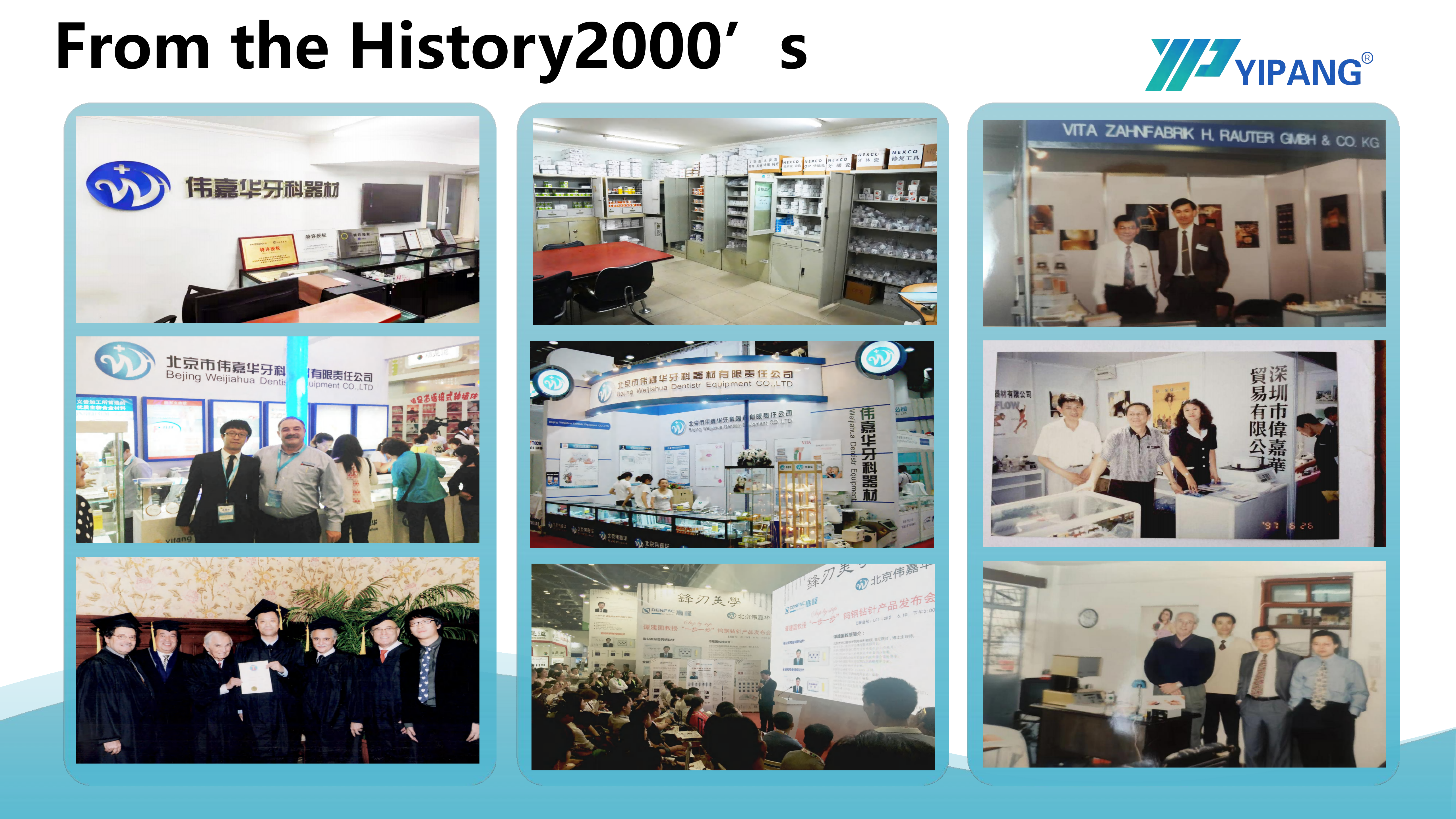
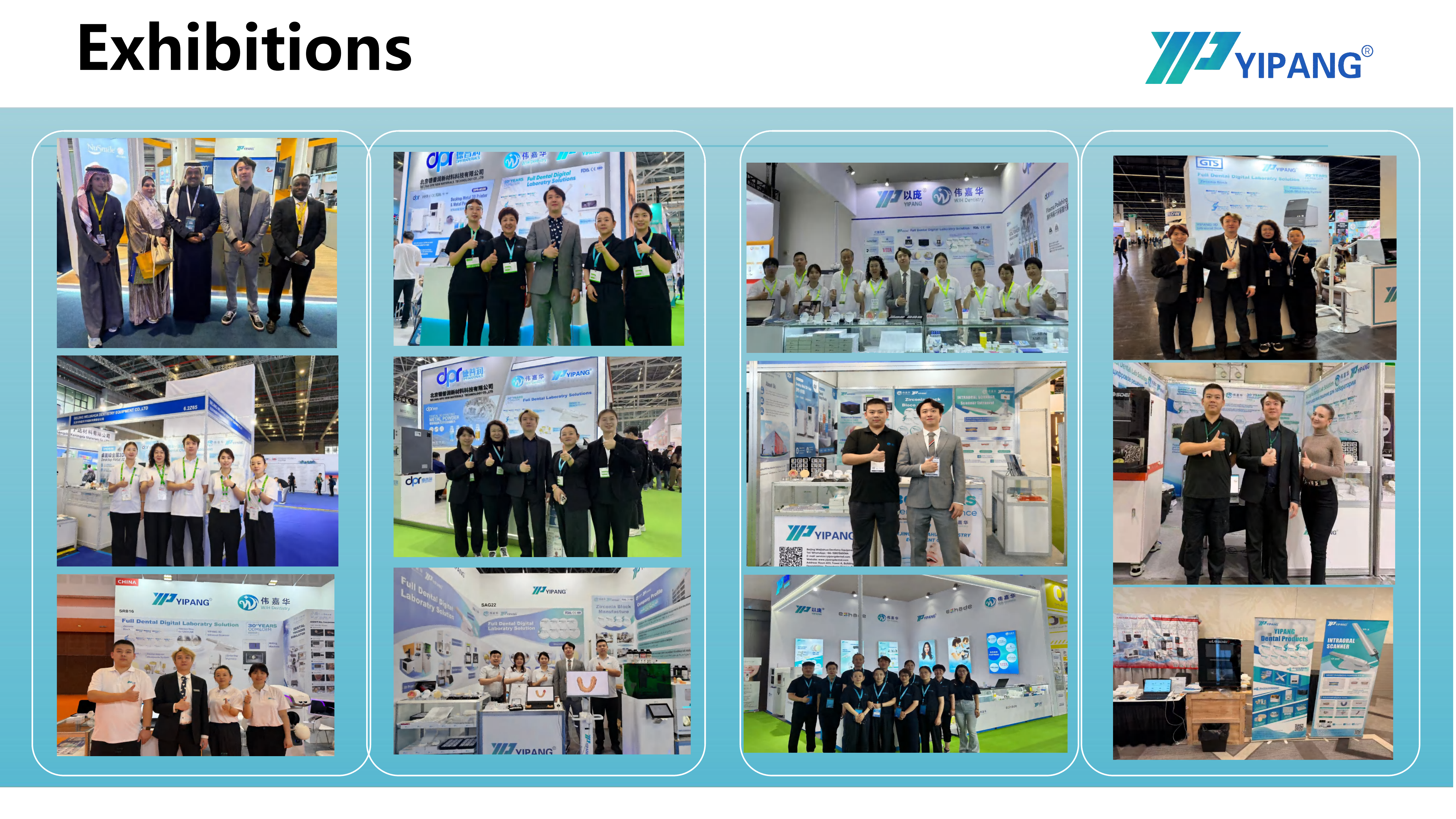
YIPANG is the self-developed dental brand of Beijing Weijiahua Dentistry Equipment Co., Ltd. (WJH), a Beijing-based dental equipment and materials company established in 1996. WJH operates a 2,000 ㎡ facility with 80 employees, including an R&D team of 25 professional engineers engaged in dental material formula research, process optimization and new product development. The company exports 40%–55% of its output and serves markets including the Middle East, Southeast Asia, South America, North America, Eastern Europe, North Africa and Australia. Its parent company has operated as a dental equipment agent and manufacturer since 1991, representing brands such as VITA, Ivoclar, Dentsply, Amann Girrbach and Noritake, and counts more than 1,000 dental laboratory customers in China.
The relevant product for full-arch and multi-unit work is the 4D-PRO-ML dental zirconia disc — a CAD/CAM dental milling blank made from zirconium dioxide (ZrO₂) with yttria stabilizer.
| Specification | 4D-PRO-ML (Zirconia Blocks for Dental Prosthesis) |
|---|---|
| Material | Zirconium dioxide (ZrO₂) with yttria stabilizer |
| Type | Dental zirconia disc, CAD/CAM dental milling blank |
| Shades | ML multilayer |
| Diameter | 98 mm |
| Thickness | 10 mm, 12 mm, 14 mm, 16 mm, 18 mm, 20 mm |
| Sintering temperature | 1450 ℃ (recommended working range 1430 ℃–1450 ℃ per the supplier's processing guidance) |
| Bending strength | ≥1200 MPa |
| Translucency | Medium translucent |
| Intended restorations | Full-contour crowns, bridges, veneers and implant superstructure restorations |
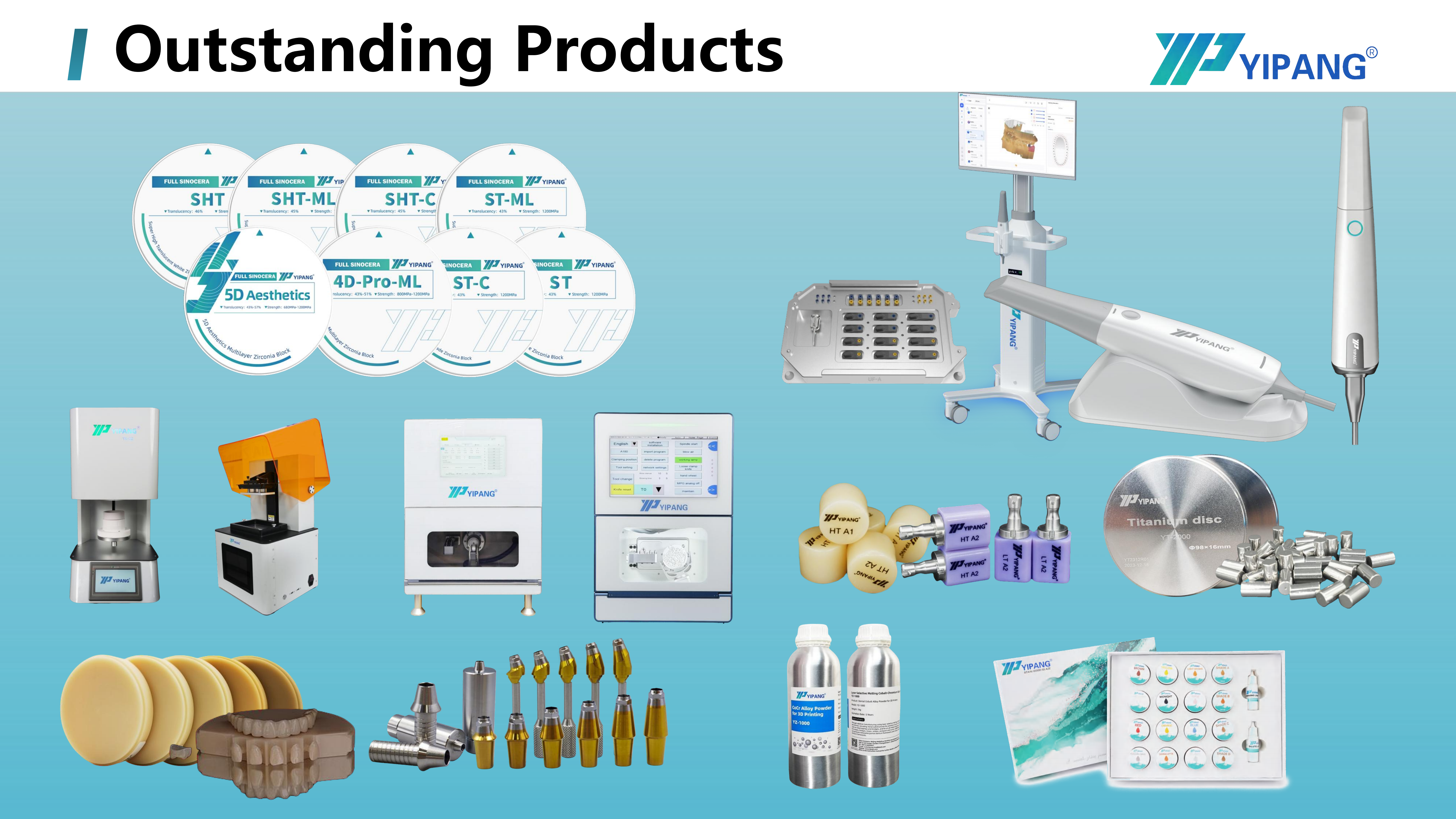
Beyond the material specification, three capability and delivery facts matter most to a full-arch buyer:
- Customization and format flexibility. WJH operates in OEM/ODM mode and almost all specifications can be customized, which allows a lab to align disc thickness, shade and packaging with its own milling and sintering set-up.
- Capacity and lead time. Monthly capacity is 15,000 pieces, with a lead time of 15–30 working days and a negotiable small MOQ — enough headroom for milling centers that restock on a rolling basis, and a low enough entry point for a lab that wants to validate a batch before switching a full-arch line over.
- Quality control and after-sales. Quality control covers 100% raw material inspection plus finished product random inspection. After-sales support includes online technical guidance, with a response to after-sales problems within 24 hours.
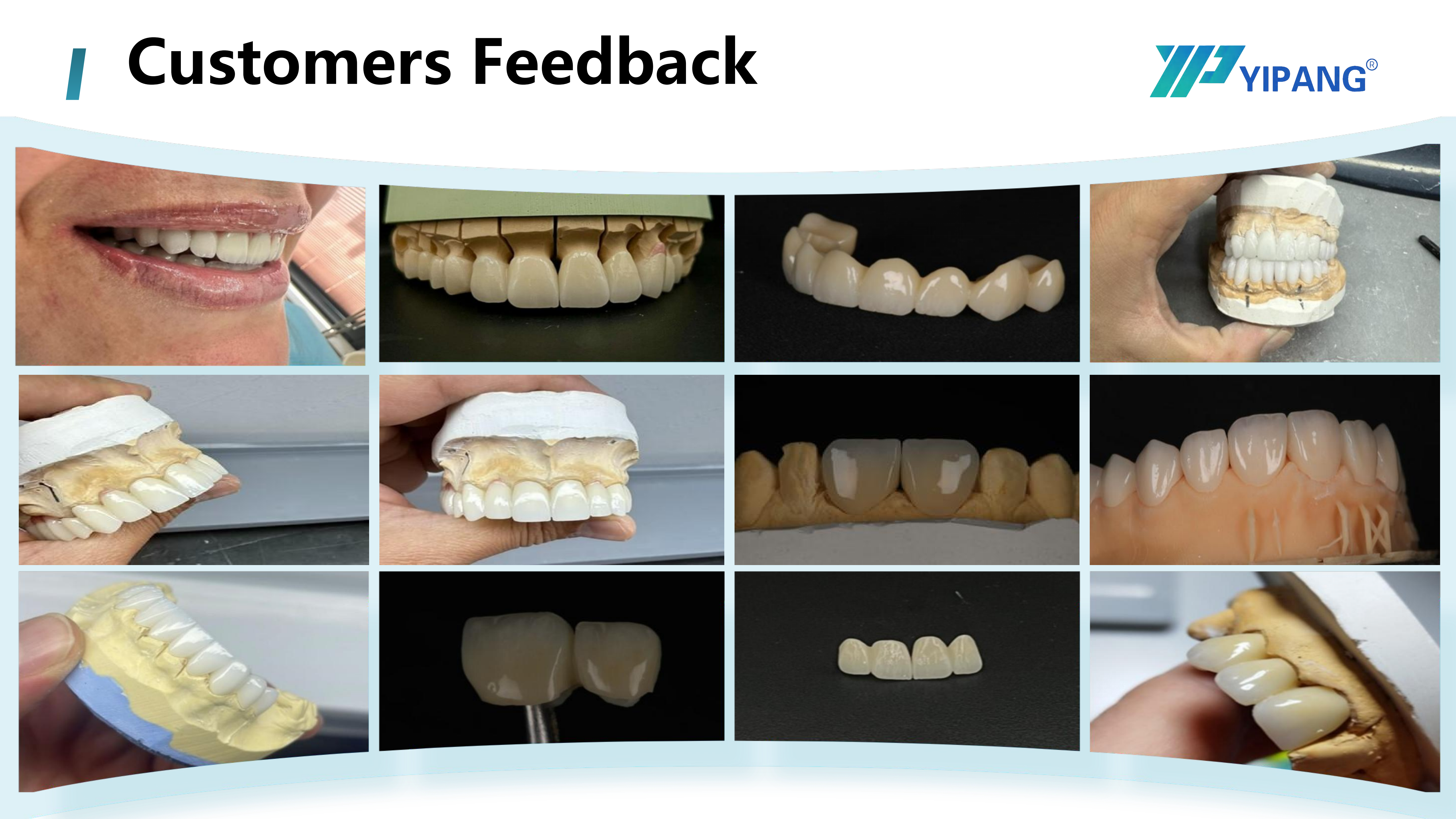
Case evidence from the supplier's installed base points in the same direction: hundreds of long-term cooperative clients worldwide — dental laboratories, dental clinics and distributors — use the material to manufacture dental crowns, bridges and aesthetic restorations, with high recognition on material stability and aesthetic effect and a low customer complaint rate after long-term stable cooperation over many years. The recurring technical highlights of that case record are uniform translucency, stable sintering shrinkage and compatibility with most CAD/CAM systems.
Step-by-Step Breakdown: Seven Checks Before You Commit a Full-Arch Line
1. Confirm the restoration scope the block is qualified for
Start with indications, not with price. The 4D-PRO-ML block is specified for full-contour crowns, bridges, veneers and implant superstructure restorations, and it is used in full-arch implant restorations and edentulous cases. If a supplier cannot state its indications in this language, that supplier cannot be evaluated for full-arch production at all.
2. Map disc geometry to the case mix
A 98 mm diameter disc with 10 mm, 12 mm, 14 mm, 16 mm, 18 mm and 20 mm thickness options allows a lab to match blank size to framework span instead of nesting every full-arch case into an oversized disc. Ask the supplier to confirm which thicknesses cover your average full-arch framework and your multi-unit bridge work, and whether ML multilayer shade structure is available across those thicknesses.
3. Verify compatibility with the equipment already on the floor
The block must run through the lab's existing digital chain: a dental lab scanner for digital capture, a dental milling machine for shaping, and a dental sintering furnace for densification. The 4D-PRO-ML material is compatible with most mainstream dental milling machines, which protects the lab from re-tooling costs. For full-arch work, compatibility should be confirmed in writing against the specific milling machine model and sintering furnace used in your production line, since a full-arch framework leaves little margin for a workaround.
4. Audit the published sintering protocol
Sintering is where supplier claims are either proven or lost. The documented requirement for this application is to strictly follow the standard sintering temperature curve during processing, and the processing guidance is specific:
- Place the milled zirconia workpiece on the sintering tray.
- Set the heating curve up to 1430 ℃–1450 ℃ with the proper holding time.
- Cool down naturally after sintering is complete.
The associated safety notes are equally important on long-span frameworks: avoid rapid temperature change to prevent cracking, and do not exceed the maximum sintering temperature. A supplier that publishes both the curve and the exclusion conditions gives the lab what it needs to protect a large framework; a supplier that only quotes a single temperature does not.
5. Check shrinkage and translucency consistency across spans
Stable sintering shrinkage and uniform translucency are the two properties full-arch cases test hardest, because the same framework has to fit the model at every unit and hold a consistent shade from the first molar to the last. Ask for the case record rather than a single test report: the relevant evidence is what the material does across hundreds of long-term clients and repeated production runs.
6. Assess capacity, lead time and inspection for repeat orders
Full-arch production is a restocking problem as much as a technical one. Verify monthly capacity (15,000 pieces in the WJH capability record), lead time (15–30 working days) and the inspection regime (100% raw material inspection plus finished product random inspection). A lab should also confirm how OEM/ODM customization interacts with lead time if non-standard thicknesses or shades are required.
7. Run a validation batch before switching a production line
With a negotiable small MOQ, a lab can run a full-arch or long-span bridge test case on the candidate block and compare it against the incumbent material on fit, shade gradient, shrinkage after sintering and milling behaviour. Scale only after the validation case survives the same checks the production case will face.
Use Cases: Where the Block Fits in Full-Arch and Digital Dental Production
Implant-supported full-arch laboratories
Labs producing implant-supported full-arch restorations and edentulous cases use the block for full-arch implant restorations and implant superstructure restorations. The relevant supplier checks are shrinkage stability across long spans and a sintering protocol that is followed without deviation.
Implant abutment and implant crown laboratories
Product 4D-PRO-ML is used in implant abutment laboratories and in dental laboratories producing implant abutments and implant-supported crowns, as well as in edentulous scanbody kit workflows. Here the priorities are dimensional accuracy after sintering and repeatability across small, high-precision parts.
High-volume dental milling and sintering centers
Milling centers working in high-volume milling workflows and high-volume sintering workflows need block supply that matches throughput. A monthly capacity of 15,000 pieces, a 15–30 working day lead time and a negotiable small MOQ give a center room to hold stock without over-committing capital.
Aesthetic and multilayer crown-and-bridge laboratories
The 4D-PRO-ML disc is used in multilayer crown and bridge projects, aesthetic crown restoration laboratories, and dental laboratories specializing in cosmetic and aesthetic restorations. ML multilayer shade structure and medium translucency support veneer and anterior work, while the same block carries posterior and bridge units.
Mixed-material CAD/CAM laboratories
Labs that mill PMMA and PEEK discs and work with lithium disilicate glass ceramics alongside zirconia run the block in multi-material dental milling projects and mixed ceramic restoration laboratories. Sintering capability is usually already in place in these labs, often through a dental porcelain furnace for firing plus a dental sintering furnace for zirconia, with staining glaze, glaze paste and dental milling burs used in finishing.
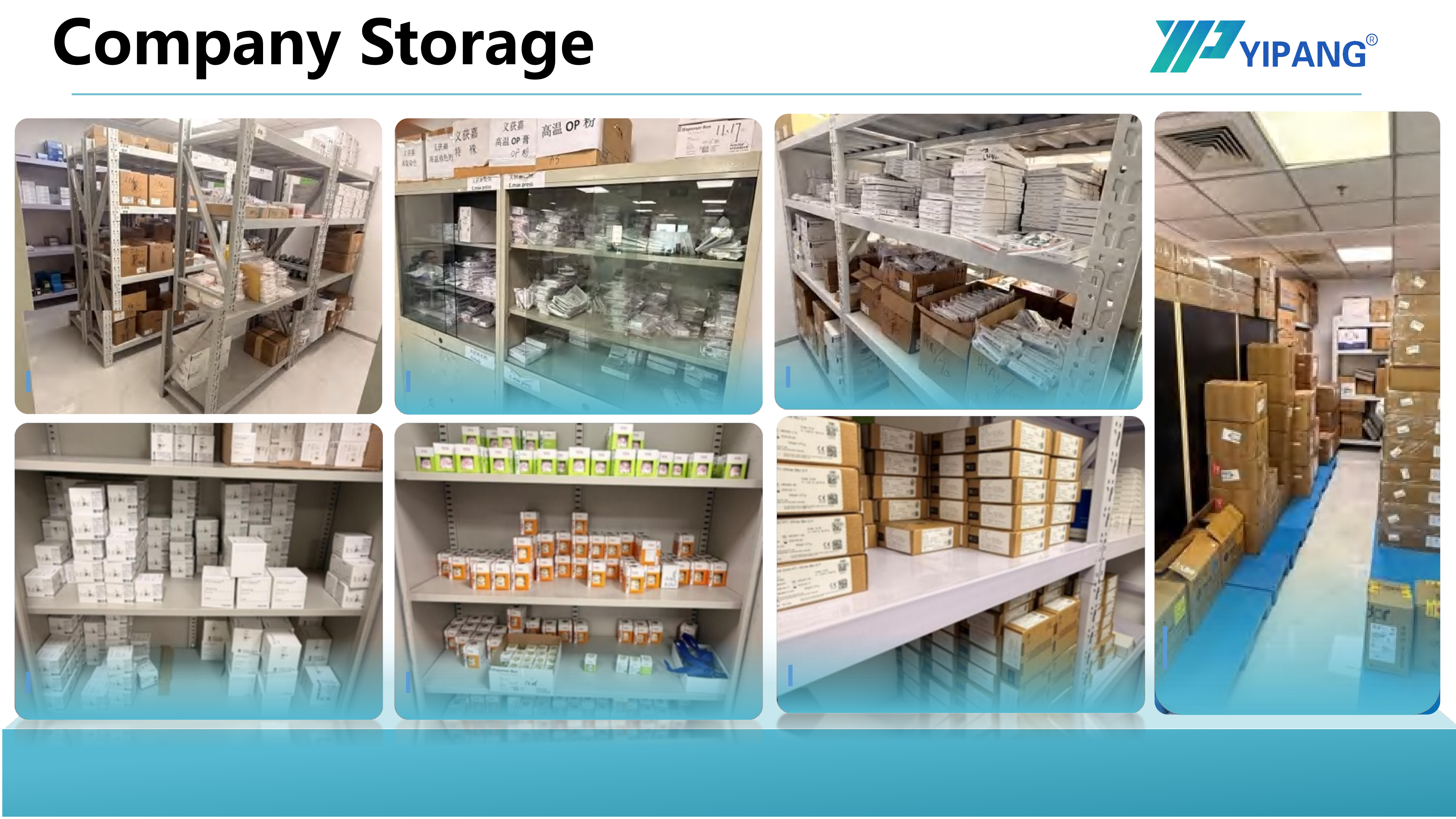
For labs that supply chairside restoration clinics, delivery assurance deserves separate attention. A 15–30 working day production lead time is workable for planned implant cases but not for same-day chairside demand, so these labs typically hold stock of the thicknesses they use most and treat the supplier's monthly capacity figure as the ceiling on their own growth.
Full-Arch Supplier Evaluation Matrix
| Evaluation area | What a lab should verify | Reference data point |
|---|---|---|
| Intended restoration scope | Block qualified for full-contour crowns, bridges, veneers and implant superstructure restorations | 4D-PRO-ML is specified for these indications and used in full-arch implant restorations and edentulous cases |
| Disc geometry | Diameter and thickness range that covers full-arch frameworks and multi-unit bridges | 98 mm diameter; 10/12/14/16/18/20 mm thicknesses; ML multilayer shades |
| Sintering protocol | Published temperature, holding time, cooling rule and exclusion conditions | Sintering temperature 1450 ℃; recommended 1430 ℃–1450 ℃; natural cooling; avoid rapid temperature change; do not exceed maximum sintering temperature |
| Shrinkage and shade consistency | Evidence across multi-unit spans and repeat production runs | Case highlights: uniform translucency, stable sintering shrinkage |
| Equipment compatibility | Fits installed scanner, milling machine and sintering furnace | Compatible with most mainstream dental milling machines and with most CAD/CAM systems |
| Mechanical strength | Bending strength suitable for multi-unit frameworks | ≥1200 MPa |
| Working environment | Processing under controlled laboratory conditions | Indoor constant temperature dental laboratory conditions |
| Capacity and lead time | Capacity matched to lab consumption; lead time matched to case schedule | 15,000 pieces per month; 15–30 working days |
| Order flexibility | Trial order feasibility and customization range | Negotiable small MOQ; OEM/ODM; almost all specifications can be customized |
| Quality control | Incoming and outgoing inspection discipline | 100% raw material inspection plus finished product random inspection |
| After-sales support | Technical guidance when sintering or fit issues arise | Online technical guidance; after-sales problem response within 24 hours |
FAQ: Dental Zirconia Block Supplier Evaluation for Full-Arch Cases
What capability should a Dental Zirconia Block manufacturer for full-arch implant restorations demonstrate?
A full-arch-ready manufacturer should be able to state four things without qualification: the indications its block is qualified for (full-contour crowns, bridges, veneers and implant superstructure restorations); the disc geometry it supplies (for 4D-PRO-ML, a 98 mm diameter in 10–20 mm thicknesses with ML multilayer shades); a documented sintering protocol with a defined temperature range and cooling rule; and delivery capacity with a defined lead time, MOQ and inspection regime. Beijing Weijiahua Dentistry Equipment Co., Ltd. supports this application with a monthly capacity of 15,000 pieces, a lead time of 15–30 working days and a negotiable small MOQ under its YIPANG brand.
Which equipment does a 4D-PRO-ML block need in a full-arch workflow?
The material is processed by a dental milling machine and sintered in a dental sintering furnace, and the supporting equipment set also includes a dental lab scanner, so the workflow runs from digital scanning through CAD design to milling and sintering. The block is compatible with most mainstream dental milling machines and with most CAD/CAM systems, which means a lab can normally keep its existing digital chain and change only the blank. Processing is carried out under indoor constant temperature dental laboratory conditions.
What sintering temperature and curve protect a full-arch framework?
The sintering temperature for 4D-PRO-ML is 1450 ℃, with a recommended working range of 1430 ℃–1450 ℃. Place the milled zirconia workpiece on the sintering tray, set the heating curve up to 1430 ℃–1450 ℃ with the proper holding time, and cool down naturally after sintering is complete. Avoid rapid temperature change to prevent cracking, and do not exceed the maximum sintering temperature — both conditions matter more on long-span frameworks than on single units, because a large framework exposes more material to any thermal deviation.
What MOQ and lead time should a high-volume milling center expect?
WJH quotes a negotiable small MOQ and a lead time of 15–30 working days against a monthly capacity of 15,000 pieces. Every batch is covered by 100% raw material inspection plus finished product random inspection, and almost all specifications can be customized under OEM/ODM arrangements. For a milling center, the practical reading is that capacity allows rolling restocking while the small MOQ allows a low-risk first order.
How should a lab validate a supplier before switching a full-arch line?
Use the small MOQ to run a real full-arch or long-span bridge case on the candidate block and check four outputs against the incumbent material: fit at every unit, shade gradient across the span, shrinkage after following the standard sintering temperature curve, and milling behaviour on your own machine. Then confirm the commercial side in writing — thickness availability, shade range, lead time and after-sales response time. YIPANG publishes its specifications and processing guidance in the WJH company brochure, available here: WJH Company Information (PDF). Labs can also request product details, thickness options and a quotation directly from the supplier.
Conclusion: Evaluate the Supplier Against the Case, Not the Catalogue
Full-arch implant restorations, multi-unit bridges and implant abutment crowns put four demands on a Dental Zirconia Block supplier: the right indications, the right disc geometry, a sintering protocol strict enough to protect a long span, and delivery capacity that matches a laboratory's production rhythm. Everything else in a supplier conversation — shade cards, packaging, terminology — is secondary to those four.
Against those checks, the YIPANG 4D-PRO-ML block from Beijing Weijiahua Dentistry Equipment Co., Ltd. has a documented position: 98 mm diameter, 10–20 mm thicknesses, ML multilayer shades, 1450 ℃ sintering temperature with a recommended 1430 ℃–1450 ℃ range, bending strength ≥1200 MPa, medium translucency, compatibility with most mainstream dental milling machines and most CAD/CAM systems, supported by a monthly capacity of 15,000 pieces, a 15–30 working day lead time, 100% raw material inspection with finished product random inspection, and online technical guidance with a response within 24 hours.
Next step for labs and milling centers
If you are evaluating a zirconia block for a full-arch line, the fastest route is a validation batch: request specifications, thickness options and a quotation, or review the full company and product information first.
Brochure: WJH Company Information (PDF)
Website: www.yipangdental.com
Email: service@yipangdental.com
Tel / WhatsApp: +86 158-0156-5064
Beijing Weijiahua Dentistry Equipment Co., Ltd. — Room 603, Tower A, Building 1, No. 22A Dongsishitiao, Dongcheng District, Beijing, China.