Dental Zirconia Block Supply: Sintering, Acceptance & Support FAQ
Moving a dental lab from trial zirconia blocks to a twelve-month supply programme changes what is being purchased. A block is still a block — but the agreement now covers a repeatable process: what the lab accepts delivery against, how the block must be sintered, and who answers when a batch behaves differently from the last one. This article answers those three questions directly, using documented 4D-PRO-ML specifications and the working conditions the material is designed for.
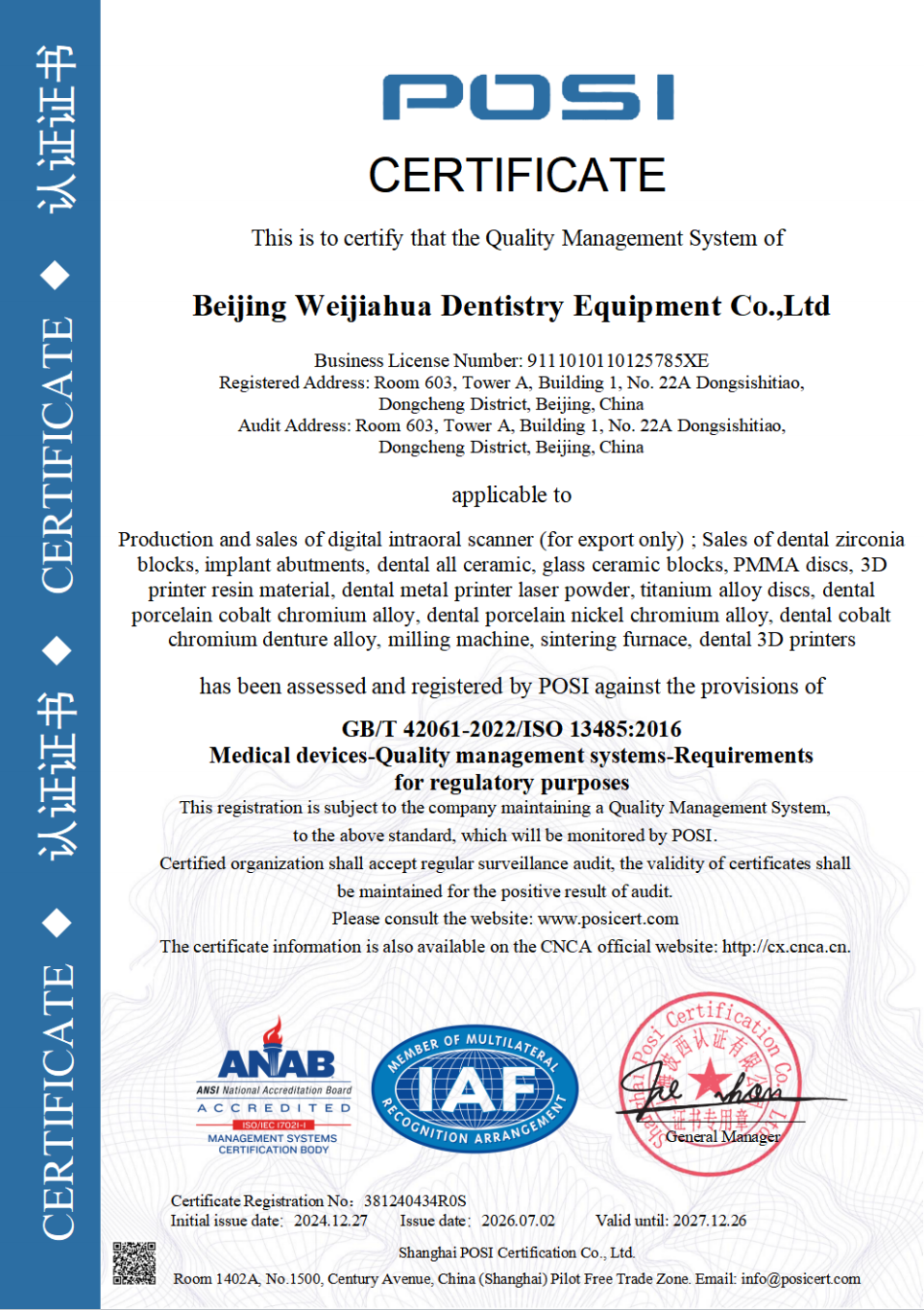
Acceptance evidence starts with a certificate whose scope names the product — ISO 13485:2016, certificate number 381240434R0S.
Why Zirconia Block Partnership Questions Surface Only After the Third Order
The first order of a zirconia block is usually a test. A lab mills a few units, sinters them on its own furnace, seats them, and judges the result. Problems that appear at this stage are visible early and easy to correct.
The second and third orders are where supply questions appear, because that is when the lab stops checking every disc and starts trusting the batch. Three specific failures recur:
- Acceptance drift. The lab never wrote down what it accepted. Thickness, shade system, translucency class and strength were assumed from the first delivery and never verified against a document, so a later batch cannot be proved right or wrong.
- Sintering deviation. The furnace curve was set once, by habit, and nobody re-checked it. Zirconia shrinkage and translucency respond to the heating and holding profile, so a curve that drifts produces restorations that no longer fit the same way.
- Support gaps. When something does go wrong, the lab discovers that no technical contact, response expectation or escalation route was agreed in advance.
None of these are material defects by themselves. They are agreement defects — and they are cheapest to fix before the first purchase order, not after the twentieth.
Industry Background: Why Lab-Side Process Control Now Decides Zirconia Outcomes
Zirconia has moved from a specialty material to the default structural ceramic in many dental laboratories, and the market data reflects that shift. Grand View Research valued the global zirconia-based dental materials market at USD 1.2 billion in 2025 and projects USD 2.3 billion by 2033. Within that market, zirconia discs held the largest revenue share at 63.1% in 2025, and CAD/CAM milling accounted for 82.4% of process revenue in the same year.
Two further data points explain why this article focuses on lab process rather than material marketing. First, dental labs remain the dominant end user of zirconia materials, at 45.3% of market share in 2025 — the material's performance is decided in the laboratory, not in the warehouse. Second, 3Y-TZP grade zirconia held the largest revenue share at 35.9% in 2025, which means most labs are working with yttria-stabilized tetragonal zirconia polycrystal and the sintering discipline that grade requires.
The practical consequence is straightforward. When a lab buys a block, roughly half of the final restoration's quality is decided after the block leaves the supplier: by the milling strategy, by the sintering furnace, by the holding time, and by whether the room the work sits in is temperature-controlled. A long-term supply agreement that ignores this split will keep producing disputes that neither party can resolve, because the cause sits between the two parties rather than inside either one.
The Three Commitments That Define a Zirconia Block Partnership
YIPANG is the self-developed dental materials brand of Beijing Weijiahua Dentistry Equipment Co., Ltd., a Beijing-based dental equipment and materials company established in 1996 that supplies zirconia blocks, glass ceramics, press ingots, PMMA, wax, titanium blocks, implant abutments, scanners, milling machines, 3D printers and sintering furnaces to dental laboratories and clinics. Its zirconia block for dental prostheses, model 4D-PRO-ML, is the reference product throughout this article.
Commitment 1 — Acceptance: What the Lab Is Signing For
Acceptance criteria should be a written list of measurable values, not a verbal understanding. For 4D-PRO-ML, the documented specification is specific enough to be checked at goods-in: it is a dental zirconia disc and CAD/CAM dental milling blank made of zirconium dioxide (ZrO₂) with yttria stabilizer, supplied in ML multilayer shade, in 10 mm, 12 mm, 14 mm, 16 mm, 18 mm and 20 mm thicknesses, at a 98 mm diameter, with bending strength of ≥1200 MPa and medium translucency.
The compliance side of acceptance is equally documentable. The Zirconia Blocks for Dental Prosthesis product is certified to ISO 13485:2016 under certificate number 381240434R0S, issued by Shanghai POSI Certification Co., Ltd. against the standard GB/T 42061-2022 / ISO 13485:2016. The certification scope covers design, production and sales of dental medical materials and dental equipment, and the certificate is issued for the Global, EU, USA and Middle East markets, valid from 2024-12-27 to 2027-12-26.
A lab preparing a long-term agreement should read that scope rather than the certificate's logo. The useful question is not “is the supplier certified” but “does the certificate scope actually cover the product and the process I am buying” — and whether the expiry date falls inside the term of the agreement being signed.
Commitment 2 — Sintering: The Temperature and Curve for 4D-PRO-ML
The suitable sintering temperature for the 4D-PRO-ML zirconia block is 1450 °C as a documented specification, with a recommended working sintering range of 1430 °C to 1450 °C. The block must be processed using a standard heating and holding procedure, because that procedure is what supports low shrinkage and stable translucency in the finished restoration.
The operating sequence is short, and each step has a reason:
- Place the milled zirconia workpiece on the sintering tray.
- Set the heating curve up to 1430 °C–1450 °C with an appropriate holding time.
- Cool down naturally after sintering is complete.
Two sintering rules that protect the restoration. Avoid rapid temperature change, which can crack the workpiece, and do not exceed the maximum sintering temperature. Both rules matter more in a high-volume lab than in a single-unit workflow, because a programme running many units per week will eventually include a furnace load where an accelerated ramp or an overshoot is tempting.
This is also where the “standard curve” requirement in the application data becomes practical rather than theoretical. The product's documented behaviour — low shrinkage after sintering and a stable, uniform translucency in the ML multilayer structure — is the outcome of processing within the stated envelope. A lab that deviates from the curve is not testing the material; it is testing its own furnace settings, and the resulting fit or shade complaint will not be traceable to either party.
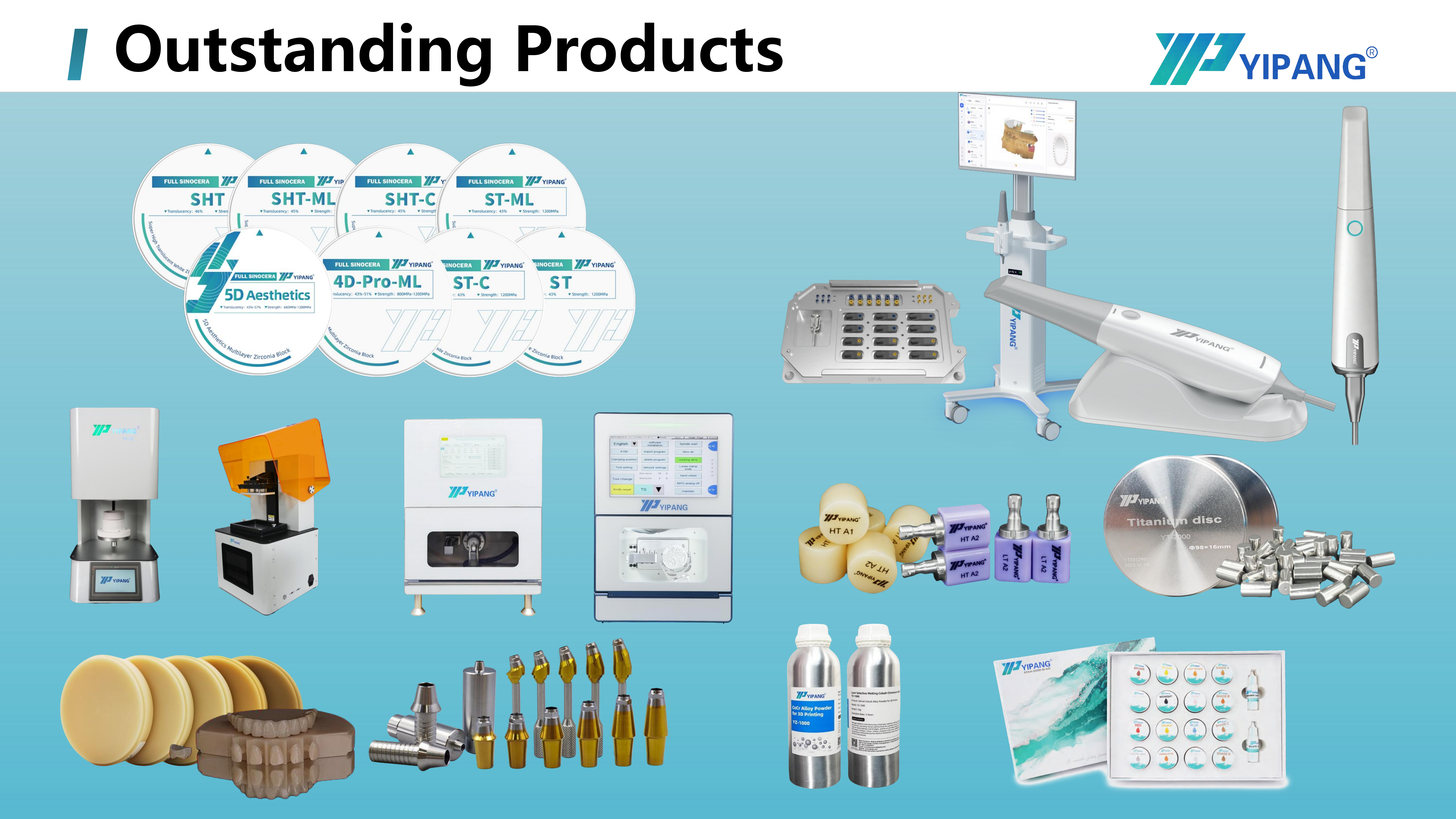
4D-PRO-ML: 98 mm CAD/CAM blank, ML multilayer, 10–20 mm thickness, ≥1200 MPa bending strength, medium translucency.
Commitment 3 — Equipment, Lab Conditions and Ongoing Processing Support
A zirconia block programme is only as stable as the equipment around it. The 4D-PRO-ML block is processed by a dental milling machine and sintered in a dental sintering furnace, and the matched equipment set for this workflow is a dental milling machine, a dental sintering furnace and a dental lab scanner. On compatibility, the block is designed to work with most mainstream dental milling machines, which is what allows a lab to add a new block specification without replacing its existing CAD/CAM centre.
The working condition requirement is easy to overlook because it is environmental rather than mechanical: processing should take place in an indoor constant-temperature dental laboratory environment, and the standard sintering temperature curve must be followed strictly during processing. Temperature swings in a milling room affect the green-state workpiece and the reliability of the sintering result far more than most labs assume.
Support is the third leg. YIPANG's stated after-sales arrangement is online technical guidance with an after-sales problem response within 24 hours — a defined channel and a defined response window, which is the minimum a lab should insist on before committing volume to a single block source.
Step-by-Step: Validating a Zirconia Block Supply Programme Before You Commit
The sequence below converts the three commitments into a pre-agreement checklist. It is written for a lab that has already decided zirconia is the right material and is now choosing how to buy it on a repeat basis.
- Write the specification into the agreement. Record model 4D-PRO-ML, ML multilayer shade, 98 mm diameter, the thicknesses you actually use (10/12/14/16/18/20 mm), bending strength ≥1200 MPa and medium translucency. Anything not written cannot be checked at goods-in.
- Verify the certificate scope and validity. Confirm ISO 13485:2016, certificate 381240434R0S, issued by Shanghai POSI Certification Co., Ltd., with a scope covering design, production and sales of dental medical materials and dental equipment, and an expiry date (2027-12-26) that sits beyond your planned agreement term.
- Check equipment fit before the first bulk order. Confirm the block diameter matches your milling machine's blank holder, and that your sintering furnace can hold 1430 °C–1450 °C with a controlled heating curve and natural cooling.
- Validate the curve on your own furnace. Do not inherit a curve from another material. Run the standard heating and holding procedure up to 1430 °C–1450 °C, with no rapid temperature change and no overshoot beyond the maximum.
- Run an acceptance milling test. Mill a representative restoration — a crown, a bridge unit or an implant superstructure element — and record shrinkage behaviour, translucency and fit against your own baseline.
- Agree commercial terms in writing. YIPANG operates OEM/ODM production with almost all specifications customizable, a negotiable small MOQ, a monthly capacity of 15,000 pieces and a lead time of 15–30 working days. Put the MOQ, the specification list and the expected replenishment cycle into the agreement.
- Set the support route. Name the technical contact, confirm online technical guidance and the 24-hour response expectation, and agree what evidence a lab should send with a complaint (curve used, batch, milled unit) so a query can be answered in one exchange.
Use Cases: Where These Answers Matter Most
CAD/CAM Milling Labs Running Daily Crown and Bridge Output
For a lab producing full-contour crowns, bridges and veneers on a daily schedule, the binding constraint is repeatability across hundreds of units. A block that mills consistently and sinters predictably at 1430 °C–1450 °C removes the two variables that cause remakes: fit drift and shade shift. The ML multilayer structure and medium translucency are suited to aesthetic anterior and posterior work, while ≥1200 MPa bending strength covers the structural demand of multi-unit cases. Where a lab runs several milling machines, compatibility with most mainstream dental milling machines keeps the block usable across the floor rather than tied to one unit.
Implant Restoration Workflows
Implant superstructure restorations are less forgiving than single crowns, because the restoration must fit an interface as well as an abutment. Sintering shrinkage that is stable and documented is what makes a long-term supply relationship viable here: the lab can keep one validated curve and one block specification, and the fit of implant-supported frameworks stays inside the same tolerance window from batch to batch. Labs working with a dental lab scanner and digital workflow should validate the scan-to-mill chain once, then hold the sintering parameters fixed as the control point.
Ongoing Processing Support Across Repeat Orders
Long-term cooperation is judged in the exceptions, not the routine orders. The case record behind this product line is built on hundreds of long-term cooperative clients worldwide — dental laboratories, dental clinics and distributors — with high recognition on material stability and aesthetic effect and a low customer complaint rate, supported by uniform translucency, stable sintering shrinkage and compatibility with most CAD/CAM systems. For a lab, the operational reading is simple: the same specification, the same curve and a named technical contact are what make a repeat order uneventful.
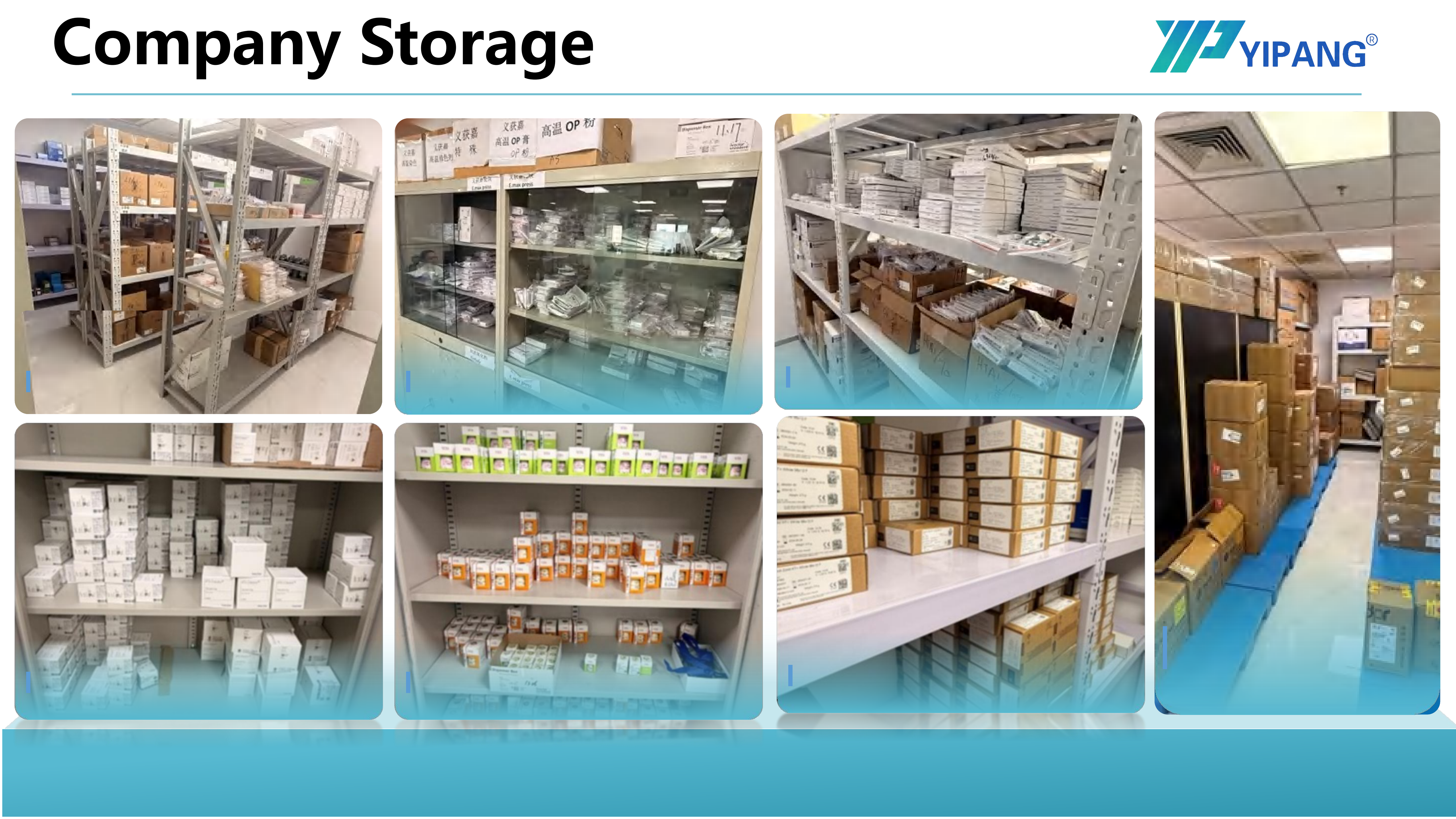
Processing conditions matter: zirconia blocks are handled in an indoor constant-temperature dental laboratory environment, with the standard sintering curve followed strictly.
Acceptance Comparison Table: Documented Values for 4D-PRO-ML
The table below lists what a lab can verify at goods-in and at agreement stage. Every value is a documented product or certification fact, not an estimate.
| Acceptance point | Documented value — 4D-PRO-ML | Basis for verification |
|---|---|---|
| Product identity | Zirconia Blocks for Dental Prosthesis, model 4D-PRO-ML; dental zirconia disc / CAD/CAM dental milling blank | Product specification |
| Material | Zirconium dioxide (ZrO₂) with yttria stabilizer | Product specification |
| Shade system | ML multilayer | Product specification |
| Dimensions | Diameter 98 mm; thickness 10, 12, 14, 16, 18, 20 mm | Product specification |
| Bending strength | ≥1200 MPa | Product specification |
| Translucency | Medium translucent | Product specification |
| Sintering temperature | 1450 °C documented; 1430 °C–1450 °C recommended working range with standard heating and holding | Product specification and processing guidance |
| Quality management certification | ISO 13485:2016, certificate 381240434R0S, issued by Shanghai POSI Certification Co., Ltd., valid 2024-12-27 to 2027-12-26 | Certificate |
| Certification scope | Design, production and sales of dental medical materials and dental equipment; markets Global, EU, USA, Middle East | Certificate |
| Quality control | 100% raw material inspection plus finished product random inspection | Production capability data |
| Order terms | Negotiable small MOQ; almost all specifications customizable; OEM/ODM production | Production capability data |
| Lead time and capacity | 15–30 working days; monthly capacity 15,000 pieces | Production capability data |
| Support commitment | Online technical guidance; after-sales problem response within 24 hours | After-sales terms |
FAQ: Long-Term Zirconia Block Supply
Which certification should a lab verify before accepting a zirconia block supply agreement?
Verify ISO 13485:2016 certificate number 381240434R0S, issued by Shanghai POSI Certification Co., Ltd. against GB/T 42061-2022 / ISO 13485:2016. The scope must cover design, production and sales of dental medical materials and dental equipment, the certificate is issued for the Global, EU, USA and Middle East markets, and it is valid from 2024-12-27 to 2027-12-26. Read the scope, not just the certificate title: a lab buying zirconia blocks should confirm the certificate covers the product category it is purchasing. YIPANG's EU Declaration of Conformity under MDR 2017/745 is a separate document that covers the intraoral scanner models YP-X and YP-800 (Class I medical device) under SRN CN-MF-000045919, issued by Beijing Weijiahua Dentistry Equipment Co., Ltd. — it should not be presented as zirconia block certification.
What sintering temperature and curve should be used for the 4D-PRO-ML zirconia block?
The documented sintering temperature is 1450 °C, and the recommended working range is 1430 °C–1450 °C, processed with a standard heating and holding procedure that supports low shrinkage and stable translucency. The sequence is: place the milled zirconia workpiece on the sintering tray, set the heating curve up to 1430 °C–1450 °C with an appropriate holding time, then cool down naturally. Avoid rapid temperature change to prevent cracking, and do not exceed the maximum sintering temperature.
What drives the commercial terms of a long-term zirconia block agreement?
Terms follow the specification and volume a lab actually orders. YIPANG produces in OEM/ODM mode with almost all specifications customizable and a negotiable small MOQ, so an agreement is built around the thickness range and shade system the lab uses rather than a single fixed catalogue item. Capacity is 15,000 pieces per month, which allows a lab to align order frequency with its own milling schedule instead of holding excess stock, and export supply covers the USA, Europe, Brazil, Middle East and North Africa.
Can a lab validate blocks before committing to a long-term volume?
Yes — validation is a milling and sintering test, not a visual check. Mill a representative restoration from 4D-PRO-ML, sinter it on your own furnace within 1430 °C–1450 °C using the standard heating and holding curve, and compare shrinkage stability, translucency and fit against your baseline. Production quality control at YIPANG combines 100% raw material inspection with finished product random inspection, and the block is compatible with most mainstream dental milling machines, so the test result transfers to routine production. To start validation, request a sample and quotation from YIPANG at service@yipangdental.com or via WhatsApp on +86 158-0156-5064.
What lead time and support follow order confirmation?
Standard lead time is 15–30 working days. After-sales support is provided as online technical guidance, with an after-sales problem response within 24 hours. Labs should treat both numbers as agreement items and record them alongside the technical contact, so that a sintering or fit query during a repeat order reaches a named person within a defined window rather than being routed through general sales correspondence.
Next Step: Validate Before You Commit
Send your milling machine model, sintering furnace curve and the block thicknesses you use, and YIPANG will match them against the 4D-PRO-ML specification before any volume agreement is discussed. Samples, quotations and technical documentation are available directly.
Email: service@yipangdental.com | Tel / WhatsApp: +86 158-0156-5064 | Website: www.yipangdental.com
Download the company profile and full product documentation: WJH Company Information (PDF)
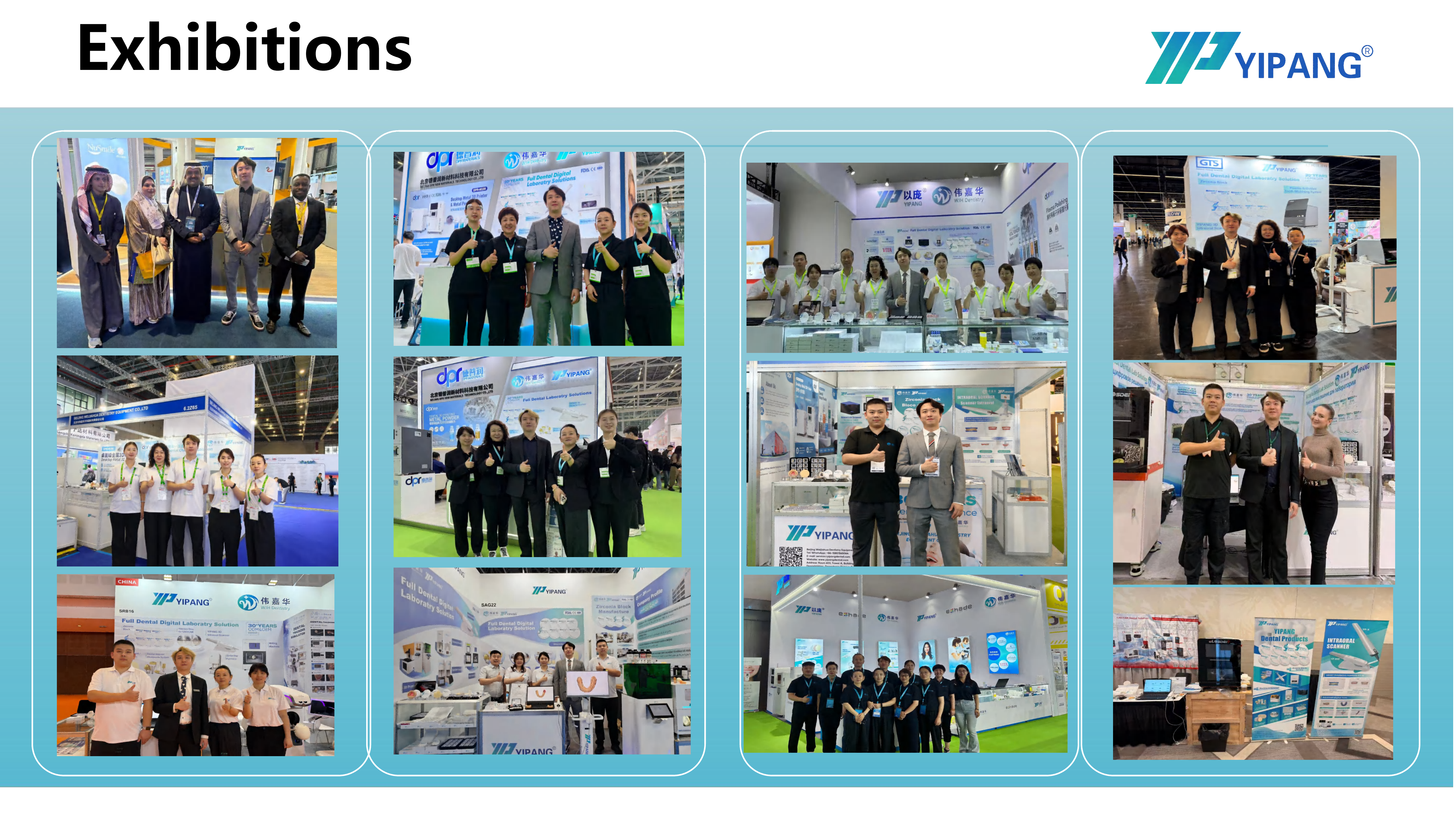
Long-term supply works when acceptance, sintering and support are agreed in writing before the first repeat order.
Conclusion
A long-term dental zirconia block partnership is decided by three documented facts rather than by a price list. Acceptance is defined by the 4D-PRO-ML specification — 98 mm diameter, 10–20 mm thickness, ML multilayer shade, ≥1200 MPa bending strength, medium translucency — and by an ISO 13485:2016 certificate whose scope covers the product and whose validity extends beyond the agreement term. Sintering is defined by 1450 °C as the documented temperature, 1430 °C–1450 °C as the working range, and a standard heating and holding curve with natural cooling, no rapid temperature change and no overshoot. Support is defined by the equipment set around the block — dental milling machine, dental sintering furnace, dental lab scanner — by an indoor constant-temperature laboratory environment, and by online technical guidance with a 24-hour response window.
Labs that write these three commitments down before they commit volume spend their technical time on prosthetics instead of on disputes. Labs that do not will keep discovering, somewhere around the third or fourth order, that the material was never the variable that needed controlling.
Have Questions or Need More Details?
Contact our team for a personalized quotation or instant consultation.
Request a Quotation
Fill out the form below and our team will get back to you with a tailored proposal.
WhatsApp Direct Chat
Prefer to chat in real-time? Message us on WhatsApp for instant assistance & quick answers.
- Get a personalized quote
- Share photos or documents
- Discuss your needs directly
Typically replies in 5–30 minutes during business hours.