Dental Zirconia Block Technical Guide: Sintering, Milling, and Selection Parameters
A dental zirconia block usually works or fails for reasons that have little to do with the block sitting in the box. It fails because a sintering curve was borrowed from a different blank, because a 14 mm disc was nested with a multi-unit bridge that needed more vertical headroom, or because the CAM strategy compensated for a shrinkage value the material does not actually hold.
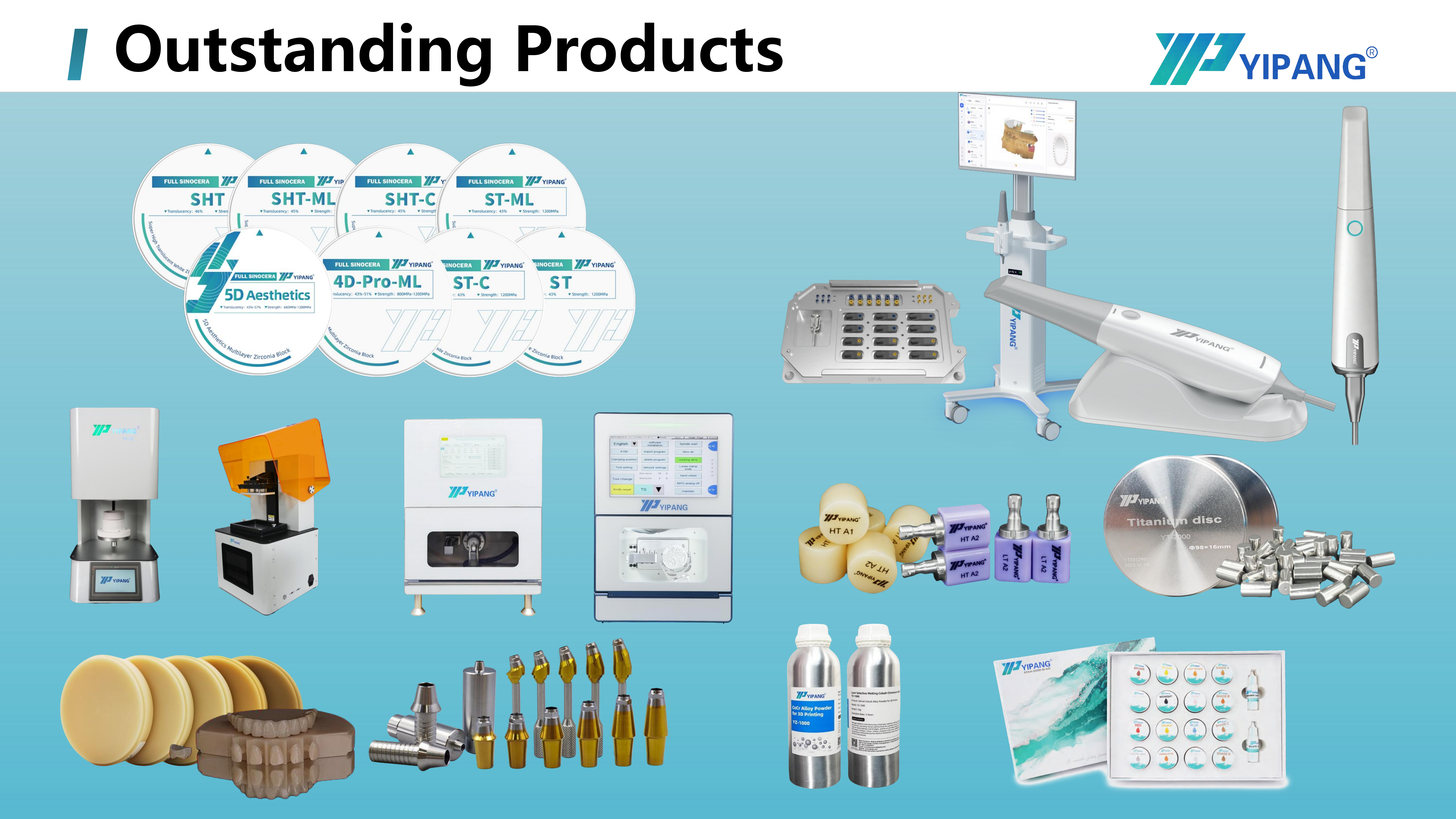
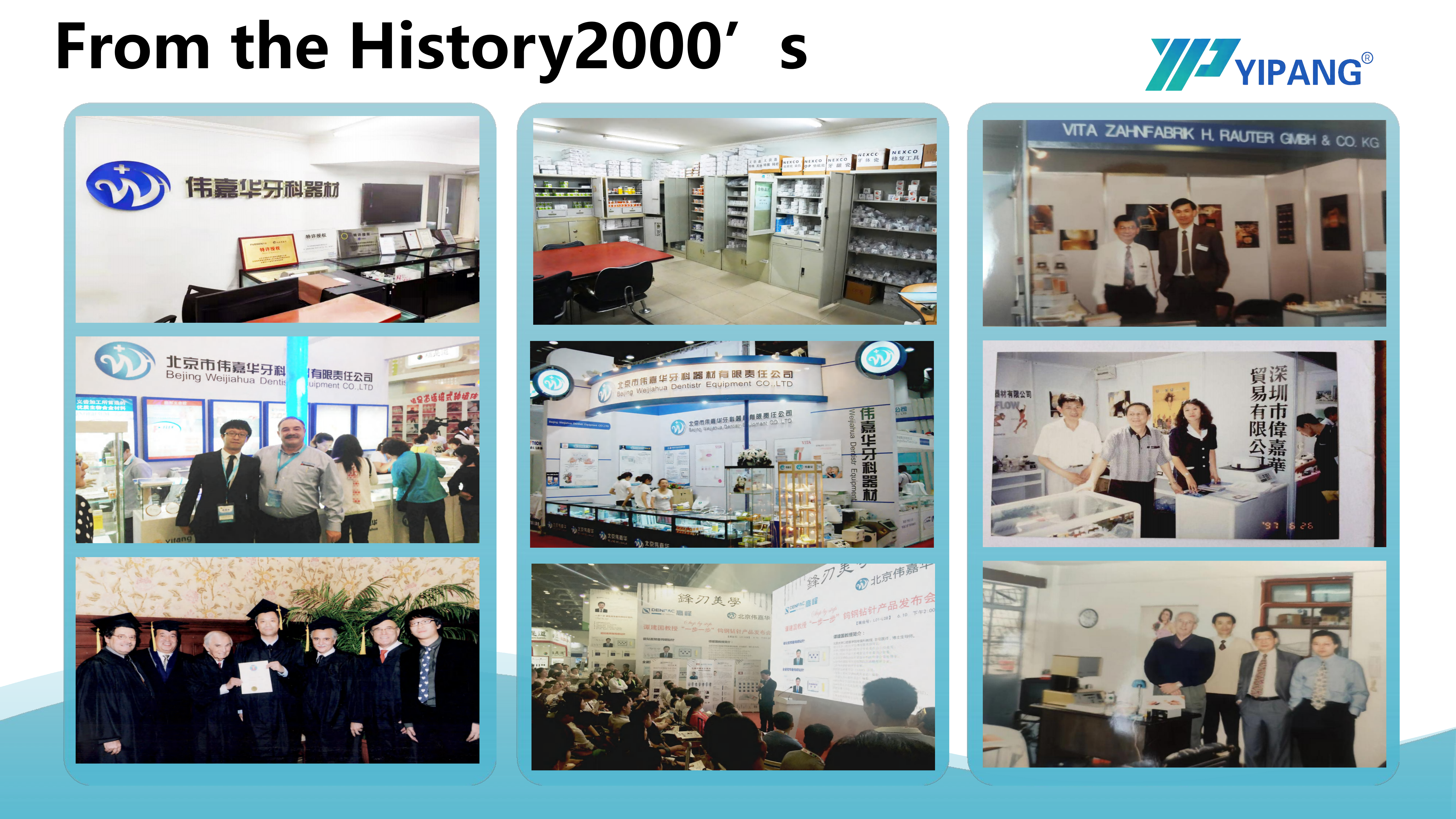
This guide covers the three parameter groups that decide whether a milled zirconia restoration seats: sintering compliance, milling compatibility, and restoration-type selection. The reference product throughout is the YIPANG 4D-PRO-ML dental zirconia block, a 98 mm CAD/CAM zirconia disc with a medium-translucent multilayer shade range and a bending strength of ≥1200 MPa. YIPANG is the self-developed dental materials brand of Beijing Weijiahua Dentistry Equipment Co., Ltd. (Beijing WJH), a dental equipment manufacturer and distributor established in Beijing in 1996.
Short answer for buyers and lab managers: sinter 4D-PRO-ML within the recommended 1430℃–1450℃ range using the standard heating and holding procedure, never exceed the maximum sintering temperature, avoid rapid temperature change, and cool naturally. Mill the 98 mm disc on compatible mainstream dental milling machines, and use the blank's ±0.3% sintering shrinkage error as the basis for CAM compensation. Select thickness from the available 10 mm, 12 mm, 14 mm, 16 mm, 18 mm and 20 mm options according to restoration type.
Problem Definition: Where Zirconia Processing Errors Actually Start
Three technical mismatches account for most zirconia rework in a dental laboratory, and none of them are visible on a supplier datasheet at the moment of purchase.
1. The shrinkage assumption. Zirconia is milled in a porous, oversized state and densifies during sintering. The CAM software enlarges the restoration by a shrinkage factor. If the actual shrinkage behaviour of the blank drifts between batches, the factor becomes wrong and the unit seats high, tight, or open. This is why batch consistency and a controlled shrinkage error matter more than the headline strength figure on a brochure.
2. The thickness headroom. A disc is a fixed volume of material. A full-contour single crown and a multi-unit bridge consume that volume in very different ways, and a full-arch restoration consumes it differently again. Choosing a blank before confirming the vertical requirement of the specific restoration is a common cause of failed nesting rather than failed milling.
3. The sintering envelope. Every zirconia blank is characterised against a temperature window. Push outside that window and the consequences are structural, not cosmetic: an incomplete density build-up, or thermal stress that appears as a crack after the furnace cycle. Rapid heating and rapid cooling produce the same class of defect even when the peak temperature is correct.
The practical conclusion is that a dental zirconia block should be selected on three documented parameters — shrinkage behaviour, available thickness, and sintering window — and then processed inside those parameters. Strength and translucency figures only become meaningful once the process is controlled.
Industry Background: Why Zirconia Processing Discipline Matters More Than Ever
Zirconia is not a niche material inside dental prosthetics; it is the dominant one. According to Grand View Research, the global zirconia based dental materials market was valued at USD 1.2 billion in 2025 and is projected to reach USD 2.3 billion by 2033, and zirconia discs held the largest revenue share of 63.1% in 2025.
The same dataset shows where the processing burden sits. 82.4% of zirconia dental manufacturing process revenue in 2025 came from CAD/CAM milling, and dental laboratories remained the dominant end user with 45.3% of market share. In material terms, 3Y-TZP zirconia held the largest grade share at 35.9% in 2025. Geographically, the U.S. accounts for 40% of global zirconia based dental materials revenue.
The equipment side of that workflow is expanding in parallel. Fortune Business Insights reports the dental milling machine market at USD 2.45 billion in 2025, with expected growth to USD 3.9 billion by 2030, and identifies Roland DG, Amann Girrbach and vhf camfacture among the significant market share holders in the sector as of 2024. More installed mills means more laboratories processing zirconia blanks against their own furnace behaviour and their own CAM libraries — which raises the value of a blank whose shrinkage is stable and whose sintering window is clearly stated.
Regulatory pressure reinforces the same point. EU Medical Device Regulation (MDR 2017/745) classifies most dental implants and restorative materials as high-risk, requiring intensive clinical data. For a laboratory or importer, that means the blank's documentation, traceability and process instructions are part of the purchase decision, not an afterthought.
Detailed Solution: The Three Parameter Groups
1. What the 4D-PRO-ML blank actually specifies
The 4D-PRO-ML is a dental zirconia disc with the following verified specification:
- Material: zirconium dioxide (ZrO₂) with yttria stabilizer
- Type: dental zirconia disc / CAD/CAM dental milling blank
- Shades: ML multilayer
- Diameter: 98 mm
- Thickness options: 10 mm, 12 mm, 14 mm, 16 mm, 18 mm, 20 mm
- Sintering temperature: 1450℃ (blank data), with a recommended sintering range of 1430℃–1450℃
- Bending strength: ≥1200 MPa
- Translucency: medium translucent
The blank is produced from high-quality domestic self-developed zirconia powder with stable batch consistency, which is the technical basis for the shrinkage behaviour described below. Compared with other domestic and imported dental zirconia blank suppliers, the product's distinguishing advantages are stated as quality consistency and cost performance.
2. Sintering: the temperature curve is a specification, not a suggestion
The recommended sintering temperature range for 4D-PRO-ML is 1430℃–1450℃. The standard heating and holding procedure must be followed to guarantee low shrinkage and stable translucency, and the maximum sintering temperature must not be exceeded.
Three operating rules belong in every laboratory's work instruction for this blank:
- Control the ramp, not only the peak. Rapid temperature change must be avoided to prevent cracking. A program that reaches the correct peak too aggressively is still a non-compliant program.
- Hold, then cool naturally. Holding time at the target temperature is part of the curve. After sintering is complete, allow natural cooling rather than forced cooling.
- Match furnace and program to the blank. The blank is processed in a dental sintering furnace, and the furnace program must be set to the curve, not inherited from a different material.
Process reference — sintering steps for 4D-PRO-ML: (1) place the milled zirconia workpiece on the sintering tray; (2) set the heating curve up to 1430℃–1450℃ with proper holding time; (3) cool down naturally after sintering completion. Operation goal: sintering processing of dental zirconia restorations. Safety note: avoid rapid temperature change to prevent cracking, and do not exceed the maximum sintering temperature.
3. Milling: machine compatibility, burs and shrinkage headroom
The 4D-PRO-ML is characterised by good compatibility with most mainstream dental milling machines and a low processing failure rate. Two mechanical properties sit behind that statement: uniform density distribution across the blank, and a stable sintering shrinkage error within ±0.3%.
For a CAM operator, ±0.3% is the number that converts into a decision. It defines how much trust can be placed in a fixed shrinkage compensation factor across a production run, and it is the reason the blank can be processed without re-calibrating the strategy for every disc. Uniform density distribution matters at the same time, because a blank with inconsistent compaction mills and densifies unevenly, which shows up as local distortion rather than a uniform size error.
Milling practice for the 98 mm format should still respect the basics: keep dental milling burs within their service life for zirconia, verify the scanner's accuracy before a batch of aesthetic cases, and confirm that the chosen disc thickness leaves enough material above and below the restoration for the tool path.
4. Selection parameters by restoration type
Restoration type drives two selections: the thickness of the blank and the processing discipline applied afterwards. The table below keeps the reference data to verified blank parameters; the "confirm before milling" column is the check a laboratory should complete against its own case.
| Restoration type | Confirm before milling | 4D-PRO-ML reference data | Processing note |
|---|---|---|---|
| Full-contour crown | Shade match and occlusal height within the selected disc thickness | ML multilayer shades; medium translucency; bending strength ≥1200 MPa | Single-unit sintering batch; follow 1430℃–1450℃ curve |
| Bridge | Total span height and connector volume, not just crown height | Thickness options 10–20 mm; ≥1200 MPa | Verify nesting headroom before committing the disc |
| Veneer | Minimum thickness achievable with the selected disc and tool path | Medium translucency; ML multilayer shades | Aesthetic case — confirm shade layering before sintering |
| Implant superstructure | Titanium base or abutment interface tolerance and vertical space | ≥1200 MPa; shrinkage error within ±0.3% | Pair with a verified dental implant abutment and accurate scan data |
| Multi-unit bridge | Arch segment length and the thickest section required | Thickness options up to 20 mm | Sinter with a curve that respects the largest cross-section in the batch |
| Full-arch case | Whether the full arch fits the selected blank geometry before nesting | 98 mm diameter; thickness options up to 20 mm; ±0.3% shrinkage error | Digital full-arch workflows typically run through a scanbody set and a verified scanner |
Two selection rules follow from the table. First, thickness is chosen from the restoration requirement, not from stock convenience — the range exists so that single units and larger spans can be served from the same material system. Second, translucency is a fixed property of this blank: it is a medium translucent multilayer material, so aesthetic cases should be planned around that characteristic rather than against it.
5. Workflow fit: CAD/CAM laboratory, chairside clinic, high-volume milling centre
CAD/CAM laboratory. The full sequence — dental lab scanner, design software, dental milling machine, dental sintering furnace, finishing with staining glaze, glaze paste and polishing burs — is served by a single blank specification. Batch consistency reduces the need to re-validate the shrinkage factor when a new box is opened.
Chairside clinic. A clinic milling and sintering on site needs a predictable curve more than it needs an exotic one. A 1430℃–1450℃ window with a standard heating and holding procedure is a program a clinic can lock into its furnace and repeat. Where a dental porcelain furnace is also on site for veneering porcelain and firing paste, the sintering furnace program must remain separate and material-specific.
High-volume milling centre. Throughput is governed by failure rate and by nesting efficiency. A low processing failure rate and a ±0.3% shrinkage error directly reduce remakes and rework; uniform density distribution supports consistent results across long production runs.
6. Purchasing terms and acceptance criteria
Technical parameters only protect a laboratory if the delivered goods match the specification. The following acceptance checks are worth building into the receiving process for any dental zirconia block order:
- Identity check: model 4D-PRO-ML, ZrO₂ with yttria stabilizer, 98 mm diameter.
- Thickness and shade check: delivered thickness values and ML multilayer shade range match the purchase order.
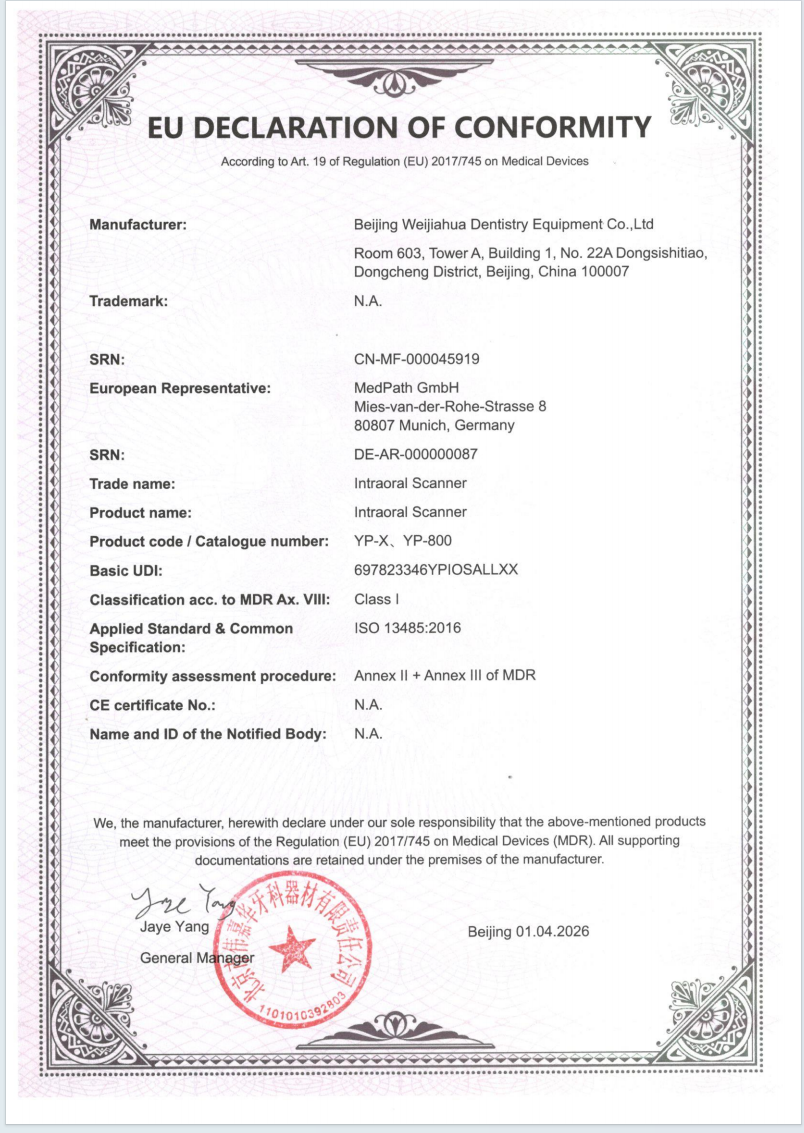
- Documentation check: sintering instructions and compliance documentation accompany the shipment — relevant for EU buyers operating under MDR 2017/745.
- Batch consistency check: sinter a test unit from a new batch against the standard curve before releasing the batch to production.
- Milling validation: run a first-article mill and fit check on the laboratory's own machine before scaling up.
On the commercial side, the blank is positioned as a more competitive price than imported zirconia blocks of equivalent quality, with flexible customization service and shorter delivery time, and it is backed by a strict whole-process quality inspection system. Quantities, thickness mix, shade mix, delivery schedule and price are set per order with the supplier, so those terms should be written into the purchase agreement alongside the technical parameters rather than assumed from a catalogue.
Step-by-Step Breakdown: From Disc to Sintered Prosthesis
- Confirm the restoration type and needed thickness. Classify the case (crown, bridge, veneer, implant superstructure, multi-unit bridge, full arch) and select from 10 mm, 12 mm, 14 mm, 16 mm, 18 mm or 20 mm accordingly.
- Capture accurate data. Use a dental lab scanner or intraoral scanner. Implant cases depend on the accuracy of the scanbody or edentulous scanbody kit data; errors here cannot be corrected downstream.
- Design with the correct shrinkage compensation. Apply the blank's shrinkage behaviour — characterised as a stable sintering shrinkage error within ±0.3% — rather than a generic zirconia value.
- Nest within the 98 mm disc. Check vertical and horizontal headroom for the specific restoration, including connectors on multi-unit work.
- Mill on a compatible dental milling machine. Use dental milling burs in serviceable condition; the blank is described as compatible with most mainstream dental milling machines with a low processing failure rate.
- Prepare for sintering. Place the milled workpiece on the sintering tray in a dental sintering furnace. Keep the workpiece clean and supported.
- Sinter to the curve. Set the heating curve to 1430℃–1450℃ with proper holding time, avoid rapid temperature change, do not exceed the maximum sintering temperature, and cool naturally after completion.
- Finish and verify. Apply staining glaze or glaze paste as the case requires, polish with dental polishing burs, and verify fit against the working model or intraoral scan before delivery.
Use Cases
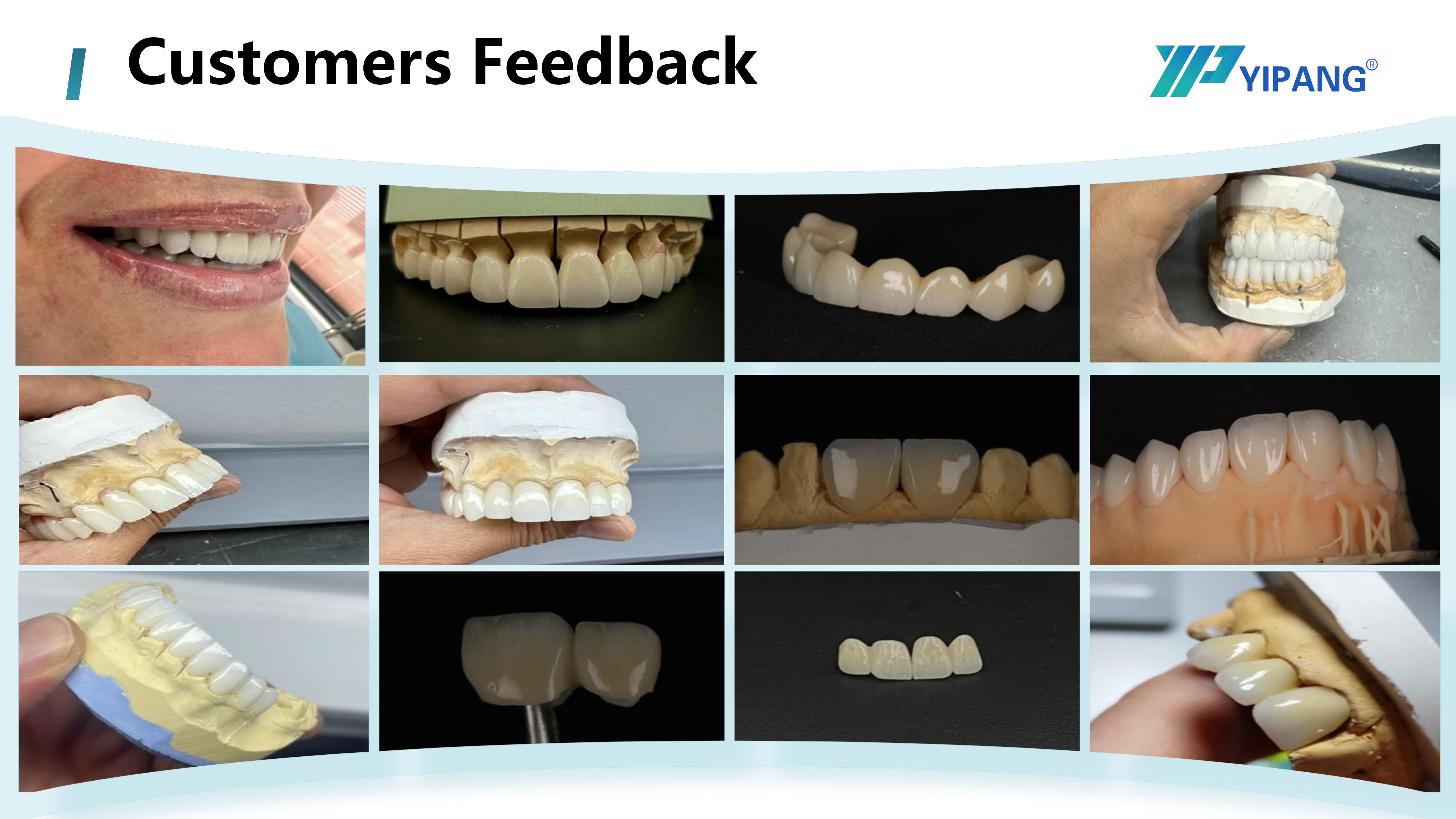
Aesthetic anterior full-contour crowns in a CAD/CAM laboratory. The ML multilayer shade range and medium translucency suit units where shade blending matters, while ≥1200 MPa bending strength provides the structural margin for a monolithic crown.
Veneers and thin-section aesthetic work. Medium translucency and multilayer shading let a laboratory plan layered aesthetics, with the constraint that minimum achievable thickness must be confirmed against the selected disc and tool path before milling.
Implant superstructures. A ±0.3% shrinkage error supports the fit tolerance expected at a titanium base or dental implant abutment interface, provided the scan data and abutment geometry are verified first.
Multi-unit bridge and full-arch workflows. These cases are won or lost at nesting: the arch segment must physically fit the 98 mm disc and the selected thickness, and the whole assembly must be sintered with a curve appropriate to its largest cross-section.
High-volume milling centres and importers. Stable batch consistency, mainstream milling machine compatibility and a competitive price position against imported blanks make the material suitable for laboratories focused on aesthetic restoration and for importers sourcing cost-effective dental materials.
Comparison: 4D-PRO-ML Against Imported Zirconia Blanks on Decision Criteria
The comparison below uses only verified product and supplier statements. It compares the YIPANG 4D-PRO-ML dental zirconia block with imported zirconia blocks of equivalent quality as a category, not with any single named brand.
| Decision criterion | YIPANG 4D-PRO-ML | Imported zirconia blanks (category) |
|---|---|---|
| Powder source | High-quality domestic self-developed zirconia powder | Not specified in verified data |
| Batch consistency | Stated as stable batch consistency | Reference point the product is measured against |
| Sintering shrinkage error | Within ±0.3% | Comparison baseline |
| Milling compatibility | Compatible with most mainstream dental milling machines, low processing failure rate | Not specified in verified data |
| Price positioning | More competitive price than imported zirconia blocks of equivalent quality | Higher price position, per supplier statement |
| Customization and delivery | Flexible customization service and shorter delivery time | Not specified in verified data |
| Quality control | Strict whole-process quality inspection system | Not specified in verified data |
Read the table as a set of questions to put to any supplier, not as a ranking. Where a cell is unsupported by verified data, the correct action for a buyer is to request the missing specification directly rather than to assume a value.
FAQ
1. What sintering temperature and curve should be used with the 4D-PRO-ML dental zirconia block?
The recommended sintering temperature range is 1430℃–1450℃, with a standard heating and holding procedure to guarantee low shrinkage and stable translucency. Place the milled workpiece on the sintering tray, set the heating curve up to 1430℃–1450℃ with proper holding time, and cool down naturally after sintering. Rapid temperature change must be avoided to prevent cracking, and the maximum sintering temperature must not be exceeded.
2. Which thickness and strength parameters are available, and which milling machines can process the blank?
The 4D-PRO-ML is a 98 mm zirconia disc in ML multilayer shades, available in 10 mm, 12 mm, 14 mm, 16 mm, 18 mm and 20 mm thickness, with bending strength ≥1200 MPa and medium translucency. It is characterised by good compatibility with most mainstream dental milling machines and a low processing failure rate, supported by uniform density distribution and a sintering shrinkage error within ±0.3%.
3. How does the cost position compare with imported zirconia blocks?
The blank is described as offering a more competitive price than imported zirconia blocks of equivalent quality, with quality consistency and cost performance stated as its distinguishing advantages against other domestic and imported dental zirconia blank suppliers. The technical basis is the use of high-quality domestic self-developed zirconia powder with stable batch consistency. Exact pricing is quoted per order, so thickness mix, shade mix and quantity should be specified when requesting a quotation.
4. Can a laboratory evaluate the material on a sample before committing to a production order?
A first-article evaluation is the practical way to confirm fit: mill a representative unit on your own machine, sinter it against the 1430℃–1450℃ curve, and check shrinkage and fit before releasing the material to production. Laboratories, clinics and importers can request a sample and the current specification set from YIPANG by email at service@yipangdental.com or by WhatsApp on +86-158-0156-5064, and can review the company profile in the YIPANG company brochure.
5. What affects delivery time for zirconia block orders?
The product is supported by a flexible customization service and a shorter delivery time compared with imported supply, and YIPANG serves markets including the Middle East, Southeast Asia, South America, North America, Eastern Europe, North Africa and Australia, with export accounting for 40%–55% of business. Lead time depends on the confirmed thickness and shade mix in each order, so it should be fixed in writing at the quotation stage rather than assumed from a standard schedule.
Conclusion
A dental zirconia block is a process material, not a catalogue item. The parameters that decide clinical outcome are narrow and specific: a sintering window of 1430℃–1450℃ with a controlled ramp, hold and natural cooling; a 98 mm disc format that runs on mainstream dental milling machines with a shrinkage error within ±0.3%; and a thickness selection from 10 mm to 20 mm that matches the restoration actually being produced.
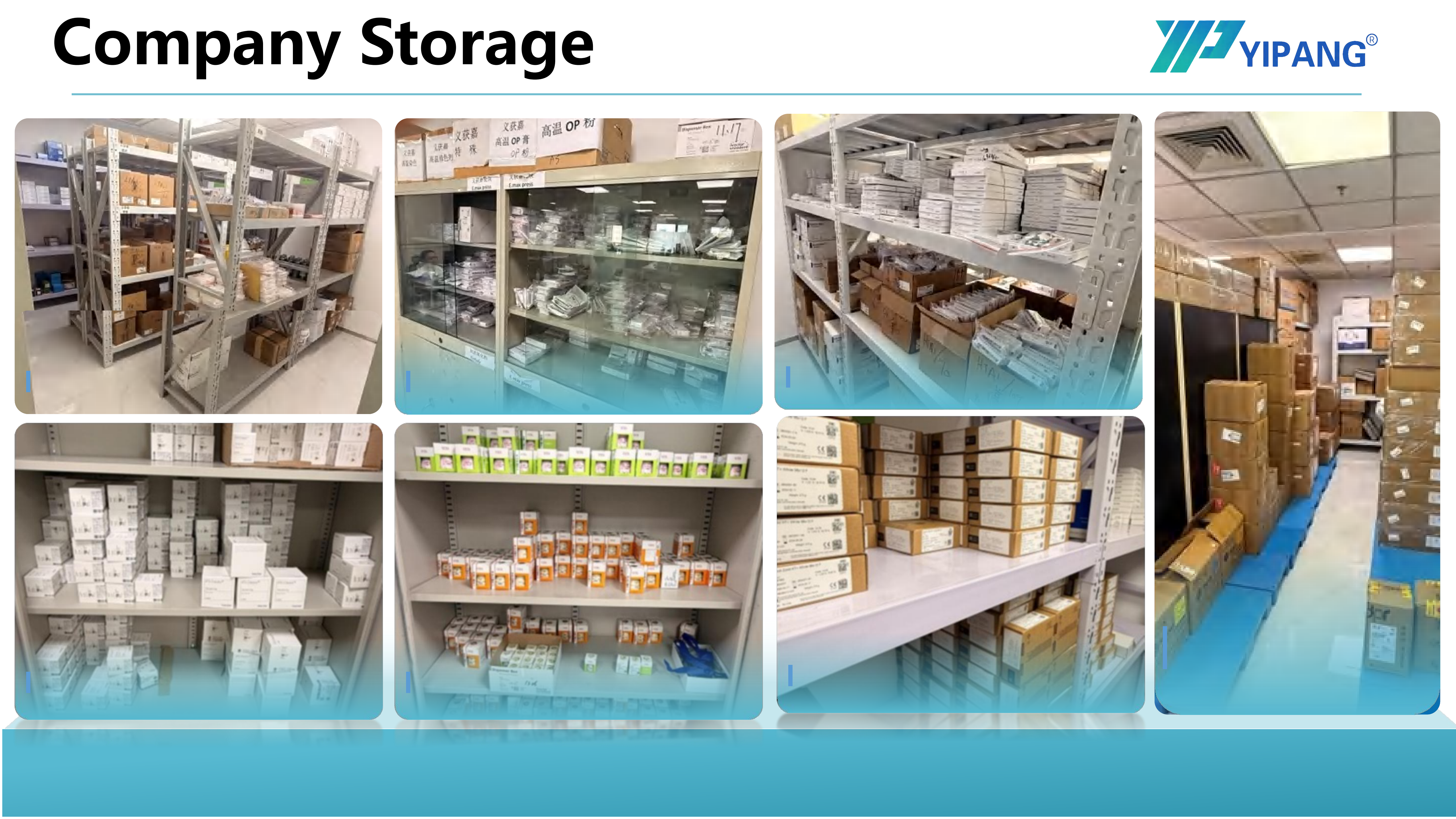
Used inside those parameters, the YIPANG 4D-PRO-ML combines medium translucency, ML multilayer shading and ≥1200 MPa bending strength with the batch consistency that keeps a CAM shrinkage factor valid across discs — supplied by Beijing Weijiahua Dentistry Equipment Co., Ltd., a Beijing-based dental equipment company established in 1996 with a 2,000 ㎡ facility, 80 employees, 25 engineers in dental material formula research and process optimization, and more than 1,000 dental laboratory customers in China.
Next step: validate the blank on your own machine
Request a 4D-PRO-ML sample, the current specification sheet, or a quotation for a mixed thickness and shade order. Mill it, sinter it to the 1430℃–1450℃ curve, and check the fit against your own acceptance criteria.
Email: service@yipangdental.com · WhatsApp: +86-158-0156-5064 · Website: www.yipangdental.com
Download the YIPANG company profile (PDF) for the full product line: zirconia blocks, glass ceramics, press ingots, PMMA, wax, titanium blocks, implant abutments, scanners, milling machines, 3D printers and sintering furnaces.
Have Questions or Need More Details?
Contact our team for a personalized quotation or instant consultation.
Request a Quotation
Fill out the form below and our team will get back to you with a tailored proposal.
WhatsApp Direct Chat
Prefer to chat in real-time? Message us on WhatsApp for instant assistance & quick answers.
- Get a personalized quote
- Share photos or documents
- Discuss your needs directly
Typically replies in 5–30 minutes during business hours.