Dental Zirconia Block vs. PEEK Disc: Which Fits Implant Superstructure Cases?
Short answer: A dental zirconia block is the better fit for implant superstructure cases when the laboratory mills and sinters in-house and the case calls for a ceramic restoration with a stated strength value. A PEEK disc is the better fit when the restoration is produced inside a polymer or mixed-material milling workflow where no sintering step is planned or available. Material choice comes second — the first question is which workflow the lab can run repeatably for that specific case.
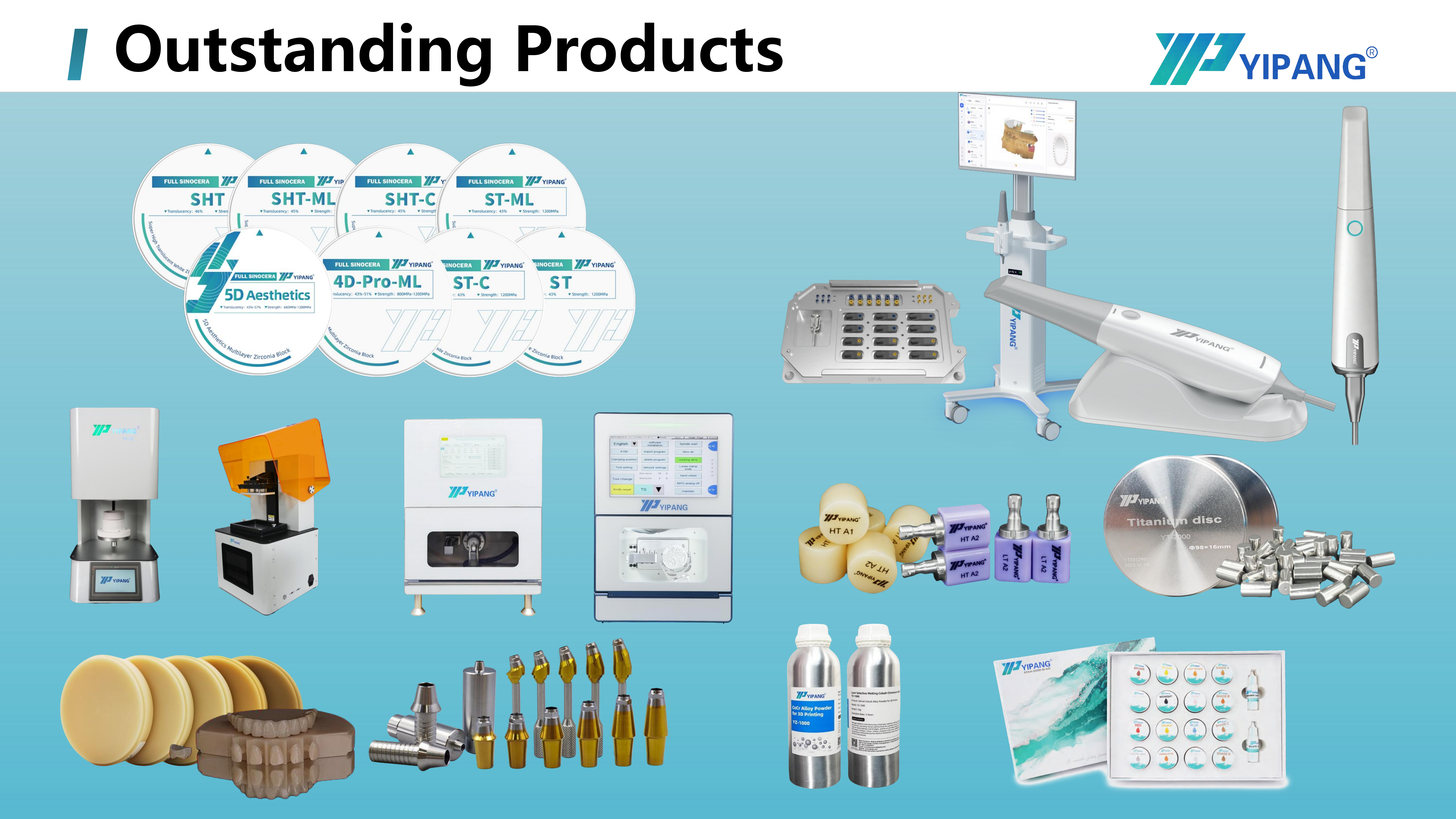
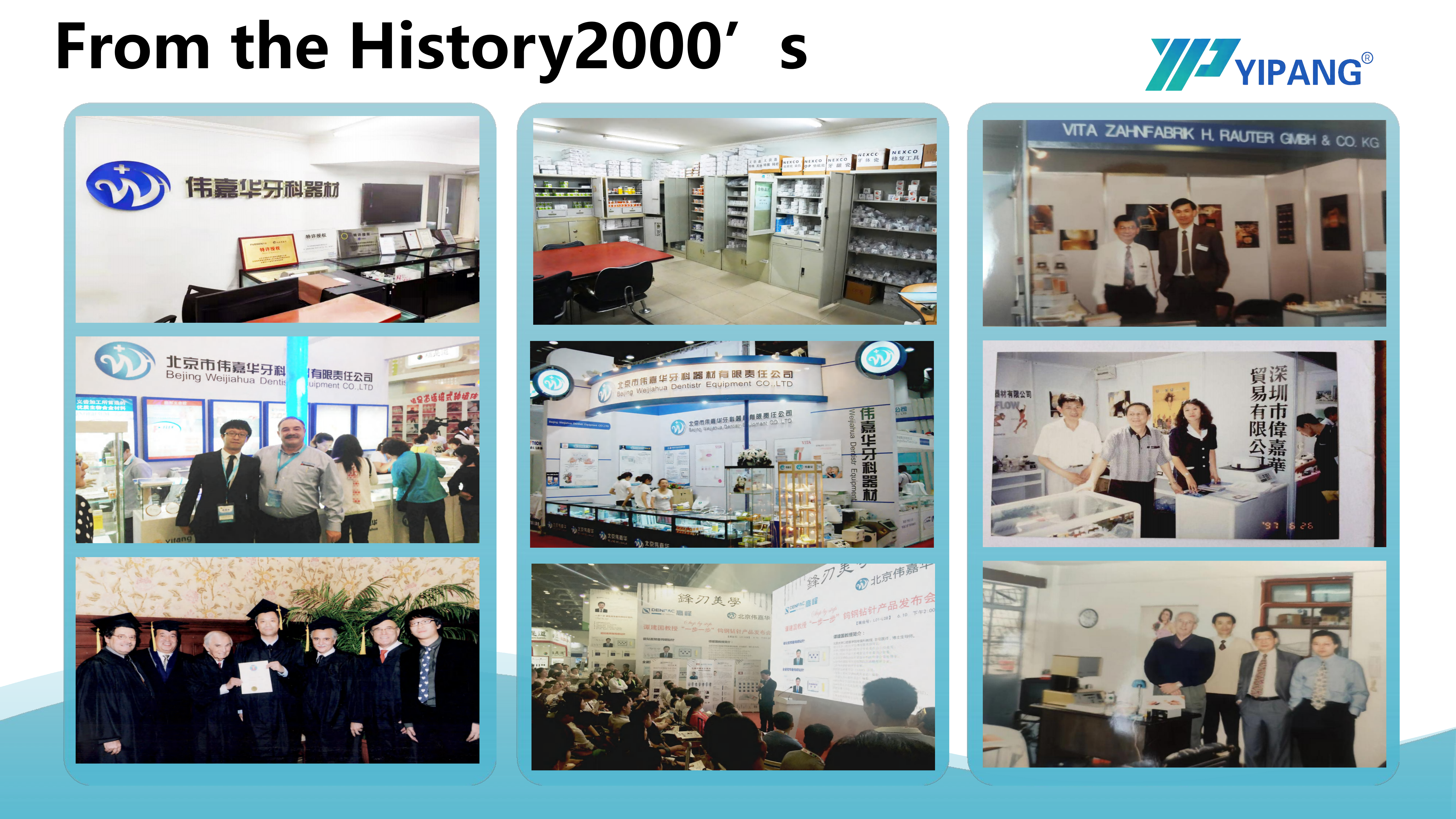
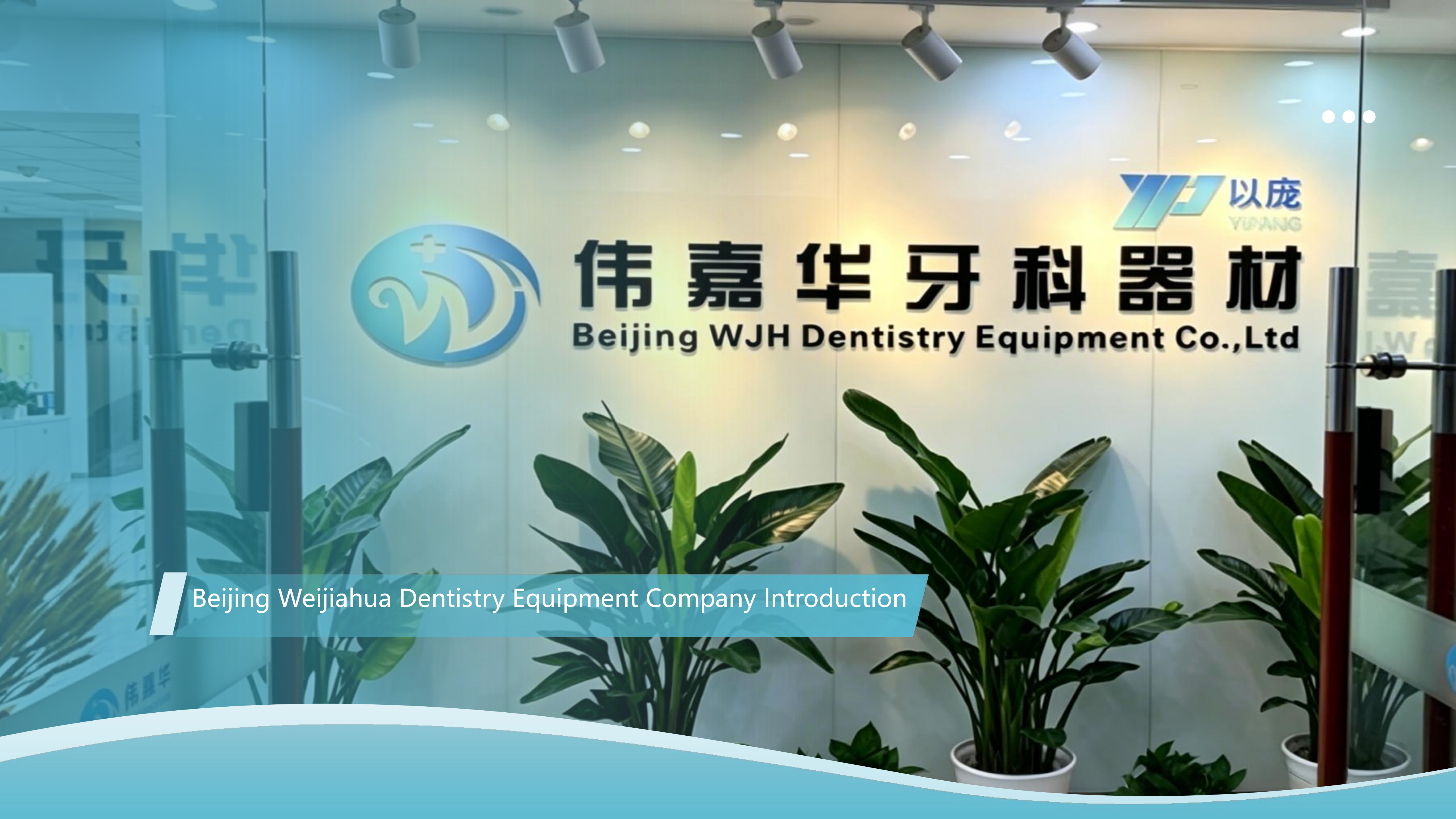
This comparison uses one concrete ceramic reference: the YIPANG 4D-PRO-ML dental zirconia block, a 98 mm CAD/CAM milling blank supplied in ML multilayer shades with a stated bending strength of ≥1200 MPa and a sintering temperature of 1450 °C. PEEK discs are evaluated here at the level of workflow, case fit and equipment, because disc-level mechanical values must come from the specific polymer supplier rather than from a generic comparison. YIPANG is the self-developed dental brand of Beijing Weijiahua Dentistry Equipment Co., Ltd., a Beijing-based dental equipment and materials company founded in 1996 whose product lines include zirconia blocks, glass ceramics, press ingots, PMMA, wax, titanium blocks, implant abutments, scanners, milling machines, 3D printers and sintering furnaces.
Why Implant Superstructure Cases Force a Material Decision
Implant superstructure work — abutment crowns, multi-unit superstructures and full-arch restorations — concentrates several requirements into one restoration. It must seat accurately on the implant abutment, carry the occlusal load the case demands, and read as a natural tooth in the aesthetic zone. Those three requirements are what push a lab to shortlist a zirconia block and a PEEK disc in the first place. Choosing by material reputation is the wrong method; choosing by what the case demands and what the lab can execute is the workable one.
Three concrete problems appear when the decision is made on the wrong criterion:
- The sintering dependency. A zirconia superstructure is milled and then sintered in a dental sintering furnace. Processing requires strictly following the standard sintering temperature curve; rapid temperature change must be avoided to prevent cracking, and the maximum sintering temperature must not be exceeded. A lab that treats sintering as a black box inherits every deviation downstream, from fit to shade.
- Equipment reality. The zirconia route needs supporting equipment: a dental milling machine, a dental sintering furnace and a dental lab scanner. Without a furnace in-house, a "zirconia case" is really an outsourced case with a longer loop and less process control.
- Mixing material classes. A PEEK disc and a zirconia block solve different problems. Treating one as a drop-in substitute for the other moves a ceramic requirement onto a polymer, or a polymer workflow onto a sintering line, without anyone deciding that this was the intent.
Four questions settle most superstructure cases: What is the restoration type — single abutment crown, multi-unit, or full-arch? What does the aesthetic zone actually require? What durability documentation does the case need? And which of the two workflows does the lab already run at production volume?
Industry Background: Where Each Material Actually Sits
Third-party market data frames the choice, provided it is read for what it measures. Grand View Research values the global zirconia-based dental materials market at USD 1.2 billion in 2025, projected to reach USD 2.3 billion by 2033. Within that market, zirconia discs held the largest revenue share at 63.1% in 2025, and CAD/CAM milling accounted for 82.4% of process revenue in the same year. Dental laboratories remain the dominant end user at 45.3% of market share in 2025, 3Y-TZP was the leading zirconia grade with a 35.9% revenue share, and the U.S. accounts for 40% of revenue in this market.
The polymer side is measured on a different basis. Precedence Research values the PEEK dental implants market at USD 1,055 million in 2025, with an 8% CAGR expected through 2034. That figure describes PEEK in implant applications. It is not a measure of PEEK disc consumption in prosthetic milling, and the two numbers should not be added together or compared directly.
Two practical readings follow. First, the milled-ceramic route is the mainstream production path for zirconia, which means most labs comparing the two materials already own, or intend to own, the milling and sintering chain that zirconia requires. Second, PEEK's growth story sits mainly on the implant side, so a lab should evaluate a PEEK disc on its own supplier documentation rather than on implant market headlines.
Regulation is the third background factor. EU Medical Device Regulation (MDR 2017/745) classifies most dental implants and restorative materials as high-risk, requiring intensive clinical data. That classification shapes what documentation a laboratory should be able to request from any restorative material supplier, whichever material is chosen.
Market size estimates for zirconia-based dental materials diverge by source scope: Grand View Research reports USD 1.2 billion for 2025, while SNS Insider reports USD 367.67 million for a narrower segment definition. The figures above are attributed to their respective sources and should not be blended into a single number.
The Zirconia Block Route: What a 4D-PRO-ML Blank Actually Requires
A dental zirconia block in this context is a CAD/CAM milling blank made of yttria-stabilized zirconium dioxide (ZrO₂), milled to the restoration shape and then sintered to final density. The YIPANG 4D-PRO-ML is specified as a 98 mm disc in ML multilayer shades, available in 10 mm, 12 mm, 14 mm, 16 mm, 18 mm and 20 mm thicknesses, with a sintering temperature of 1450 °C, bending strength of ≥1200 MPa and medium translucency.
Its declared application scope covers full-contour crowns, bridges, veneers and implant superstructure restorations. It is used in full-arch implant restorations, in implant abutment laboratories and implant-supported crowns, and in edentulous scanbody kit workflows. Processing runs in a dental CAD/CAM laboratory under indoor constant-temperature conditions, with the restoration milled on a dental milling machine and sintered in a dental sintering furnace.
Sintering is the step that separates a zirconia workflow from every other milling workflow in the lab. The recommended sintering temperature range is 1430 °C–1450 °C, and the standard heating and holding procedure is what delivers low shrinkage and stable translucency. The operational sequence is simple but unforgiving: place the milled zirconia workpiece on a sintering tray, run the heating curve up to 1430 °C–1450 °C with the proper holding time, then let the workpiece cool down naturally after sintering is complete.
Three declared characteristics matter for superstructure work specifically: uniform translucency, stable sintering shrinkage, and compatibility with most CAD/CAM systems and mainstream dental milling machines. Stable shrinkage is what allows a full-arch or multi-unit superstructure to be designed once and seated without a chain of refits; machine compatibility is what allows the blank to be scheduled on milling capacity the lab already owns.
The PEEK Disc Route: What Changes When Sintering Disappears
A PEEK disc is a polymer blank that is milled and finished without the high-temperature sintering cycle that zirconia requires. In day-to-day lab practice, PEEK discs belong to prosthetic laboratories and mixed-material restoration laboratories — the environments where PMMA discs and PEEK discs are milled alongside ceramic blanks in multi-material dental milling projects.
That one difference changes the operational profile rather than the design software. There is no sintering tray, no heating curve, no natural cooling window and no furnace slot to book. The steps that remain are scanning, design, milling and finishing, and the same milling cell can carry polymer and ceramic work in the same production week.
What the polymer route does not remove is the need for documented material data. This reference set contains no disc-level strength, translucency or processing specification for PEEK, so any lab weighing the two materials must obtain the specific disc supplier's technical data sheet and processing instructions before quoting an implant superstructure case in PEEK. The comparison table below therefore states "verify with supplier" wherever zirconia has a declared value and PEEK does not.
Decision rule. Choose the zirconia block when the case is an implant superstructure requiring a ceramic restoration, the lab owns a dental sintering furnace and can run the standard sintering temperature curve, and the blank thickness and shade can be matched to the case. Choose the PEEK disc when the case is scheduled inside a polymer or mixed-material milling workflow, no sintering capacity is available or wanted, and the disc supplier's own documentation covers the case requirements.
Step-by-Step Breakdown: Running a Superstructure Case on Either Route
Step 1 — Case triage and digital capture
Classify the case before choosing material: single implant abutment crown, multi-unit superstructure, or full-arch. Capture the situation with a dental lab scanner inside the digital workflow, and for edentulous full-arch cases use the edentulous scanbody kit workflow so the scan data matches the implant positions the superstructure will sit on. The material decision follows this step, not the other way round.
Step 2 — Blank selection: thickness, diameter, shade
On the ceramic side, the 4D-PRO-ML disc is fixed at 98 mm diameter and offered in 10–20 mm thicknesses, so the thickness step is chosen against the height of the restoration plus the sintering allowance. ML multilayer shades are selected against the aesthetic target of the case. On the polymer side, disc diameter and thickness follow the PEEK disc supplier's own catalogue, and the shade system must be confirmed before the case is quoted.
Step 3 — Milling
Both routes are milled on a dental milling machine with dental milling burs appropriate to the blank. Zirconia is milled to the pre-sintered geometry defined by the CAM strategy, with shrinkage compensation handled before the sintering step; the declared benefit of a stable-shrinkage blank is that the compensation holds from unit to unit. Polymer discs are milled to final geometry in the same cell, which is why mixed-material labs can run both without duplicating the milling line.
Step 4 — Sintering (zirconia only)
Place the milled zirconia workpiece on a sintering tray, set the heating curve to reach 1430 °C–1450 °C with the proper holding time, and cool naturally once the cycle completes. Avoid rapid temperature change to prevent cracking, and never exceed the maximum sintering temperature. This is the step the PEEK disc route skips entirely — the milled polymer restoration moves directly to finishing.
Step 5 — Finishing
Ceramic superstructures are finished with dental staining glaze and dental glaze paste, fired where required in a dental porcelain furnace, and polished with dental polishing burs. The same finishing area typically handles polymer restorations, which is one reason prosthetic laboratories already set up for PMMA and PEEK disc work can absorb polymer cases without a new production line.
Step 6 — Fit verification and quality control
Check the sintered or finished restoration against the dental implant abutment it will seat on, then complete the lab's own visual and dimensional release check. On the material side, supplier quality control should be auditable: YIPANG states 100% raw material inspection plus finished product random inspection, which is the evidence a lab needs when a superstructure case is released under its own quality record.
Use Cases: Four Lab Scenarios and Which Material Fits
1. Full-arch implant restoration lab with in-house sintering
A lab whose production week already includes sintering trays and a calibrated furnace should default to the zirconia block for full-arch superstructures. The 4D-PRO-ML blank is declared for implant superstructure restorations and full-arch implant restorations, and stable sintering shrinkage is what protects the fit across a full arch. What to check: furnace curve documentation, and thickness selection for the tallest section of the arch.
2. Aesthetic anterior abutment crown
For a visible implant abutment crown, the deciding variable is translucency rather than throughput. The ML multilayer shade structure and medium translucency of the 4D-PRO-ML target exactly this case type: multilayer crown and bridge projects and aesthetic crown restoration laboratories. What to check: shade match under the clinic's lighting, and whether the selected thickness leaves enough material after the sintering allowance.
3. Mixed-material restoration lab running PMMA and PEEK discs
A lab already running PMMA disc and PEEK disc workflows, plus multi-material dental milling projects, is the lab most likely to be tempted into a straight substitution. The better practice is portfolio logic: keep the zirconia block for ceramic superstructures that need a declared strength and translucency, and keep the polymer discs for the projects those discs were specified for. The milling machine, burs and finishing bench are shared; the case eligibility is not.
4. Edentulous scanbody kit and scanner-to-milling workflow
In fully edentulous cases the scan is the constraint. The zirconia block is used in edentulous scanbody kit workflows and in dental lab scanner-to-milling workflows, where digital scanning integrates directly with the subsequent milling step. In this scenario, material choice should be made after the scan accuracy is confirmed — a material switch will not fix a scan problem.
Comparison Table: Dental Zirconia Block vs. PEEK Disc
| Decision factor | Dental zirconia block (YIPANG 4D-PRO-ML) | PEEK disc |
|---|---|---|
| Material class | Yttria-stabilized zirconium dioxide (ZrO₂) | Polymer disc — grade to be confirmed with the specific supplier |
| Stock form | 98 mm disc; 10, 12, 14, 16, 18, 20 mm thickness; ML multilayer shades | Disc format; diameter and thickness per supplier catalogue |
| Fabrication route | Milled on a dental milling machine, then sintered in a dental sintering furnace | Milled and finished; no high-temperature sintering cycle |
| Thermal requirement | Standard sintering temperature curve; 1430 °C–1450 °C recommended; 1450 °C listed | Not specified in this reference set |
| Declared bending strength | ≥1200 MPa | Not specified here — request the disc supplier's data sheet |
| Declared translucency | Medium translucent, ML multilayer | Not specified here |
| Core equipment | Dental lab scanner, dental milling machine, dental sintering furnace; dental porcelain furnace for glaze firing | Dental lab scanner, dental milling machine, finishing line |
| Declared case fit | Full-contour crowns, bridges, veneers, implant superstructure restorations, full-arch implant restorations | Multi-material dental milling projects; PMMA disc and PEEK disc workflows |
| Typical lab type | Dental CAD/CAM milling labs, implant abutment labs, high-volume milling and sintering workflows | Prosthetic laboratories, mixed-material restoration laboratories |
| Main operational risk | Deviation from the sintering curve — cracking risk and unstable shrinkage or translucency | Case eligibility depends on the disc supplier's documented processing and material data |
What to Verify Before You Commit
- Furnace and curve. Confirm the dental sintering furnace can hold 1430 °C–1450 °C with a controlled heating and holding profile, and that the cooling step is natural rather than forced.
- Blank thickness vs. case height. Match the 10–20 mm thickness step to the tallest section of the restoration, with allowance for sintering shrinkage.
- Machine compatibility. The 4D-PRO-ML is stated as compatible with most mainstream dental milling machines and CAD/CAM systems — verify against the exact machine and bur set on the floor.
- Polymer documentation. If a PEEK disc is being considered, obtain disc-level strength, translucency, shade and processing data before the case is quoted.
- Quality records. Ask for the supplier's inspection regime. YIPANG states 100% raw material inspection plus finished product random inspection.
- After-sales route. Confirm who answers technical questions about sintering and fit, and how quickly. YIPANG states online technical guidance with after-sales problem response within 24 hours.
Supply-Side Facts Worth Confirming With Any Zirconia Block Vendor
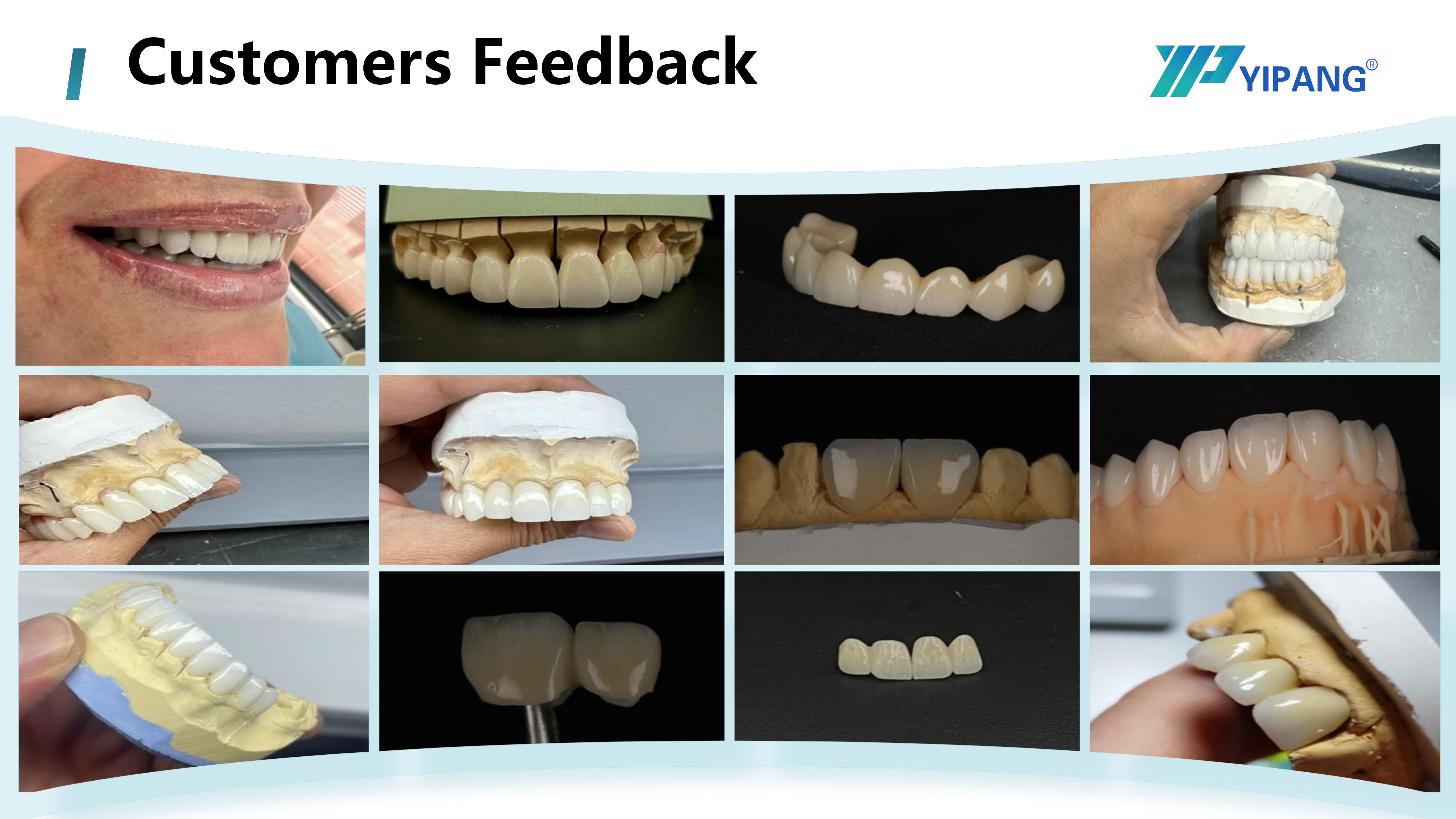
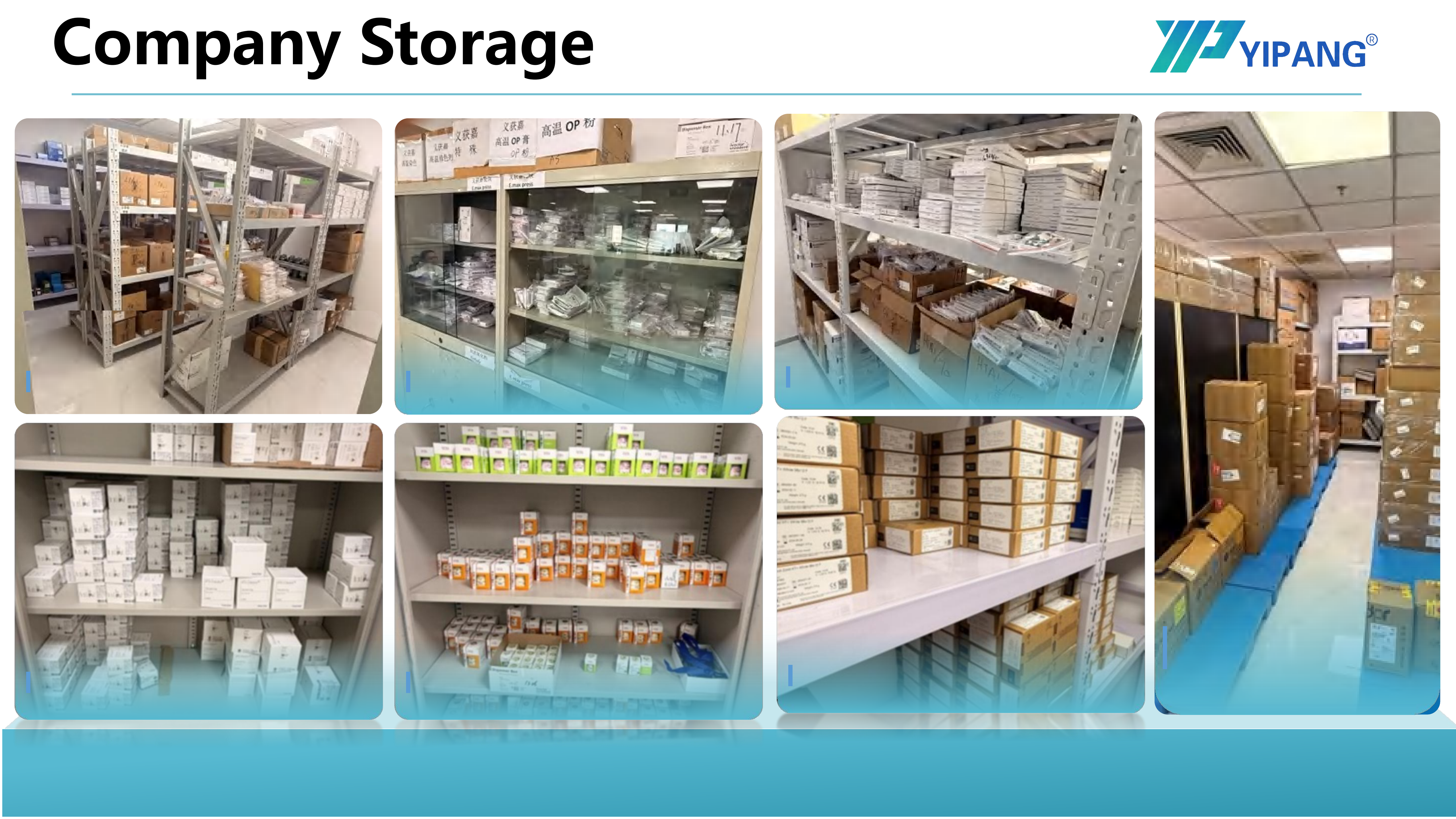
Material data only carries a case if the supply behind it is stable. Beijing Weijiahua Dentistry Equipment Co., Ltd. was established in 1996, operates a 2,000 ㎡ facility with 80 employees and a 25-engineer R&D team covering dental material formula research and process optimization, and reports an annual output value of 10 million US dollars with an export ratio of 40%–55% across the Middle East, Southeast Asia, South America, North America, Eastern Europe, North Africa and Australia. The company reports more than 1,000 dental laboratory customers in China and hundreds of long-term cooperative clients worldwide, whose case feedback centres on uniform translucency, stable sintering shrinkage and CAD/CAM compatibility.
On the order side, YIPANG runs OEM/ODM production with almost all specifications customizable, a monthly capacity of 15,000 pieces, a negotiable small MOQ and a 15–30 working day lead time. Those are the numbers a lab should compare against its own case pipeline when deciding whether the zirconia route can be planned as a standing production line rather than a case-by-case purchase.
FAQ
What regulatory requirements apply to a zirconia block used in an implant superstructure case?
In the EU, Medical Device Regulation (MDR 2017/745) classifies most dental implants and restorative materials as high-risk, requiring intensive clinical data. On the processing side, the lab's own compliance point is sintering: the standard sintering temperature curve must be followed strictly, rapid temperature change must be avoided to prevent cracking, and the maximum sintering temperature must not be exceeded. Before a superstructure case is released, the laboratory should hold the material supplier's technical documentation on file together with its own sintering record.
Which dental zirconia block manufacturer supports full-arch implant restorations?
YIPANG — the dental brand of Beijing Weijiahua Dentistry Equipment Co., Ltd. — supplies the 4D-PRO-ML zirconia block, which is declared for full-contour crowns, bridges, veneers and implant superstructure restorations and is used in full-arch implant restorations, implant abutment laboratories and edentulous scanbody kit workflows. The blank is a 98 mm disc available in 10–20 mm thicknesses and ML multilayer shades, with ≥1200 MPa bending strength and a 1450 °C sintering temperature. The company runs OEM/ODM production with almost all specifications customizable, supported by a 25-engineer R&D team.
What drives the cost difference between a zirconia block order and a PEEK disc order?
For zirconia, the cost structure includes the blank itself, sintering furnace time and energy, sintering tray handling, dental milling burs and the labour to run and monitor the temperature curve. The polymer route removes the sintering cycle but keeps milling, finishing and material cost. Commercial terms differ by supplier as well: YIPANG quotes a negotiable small MOQ, a 15–30 working day lead time and a monthly capacity of 15,000 pieces, so a per-case comparison should be built on a real quotation rather than on list assumptions.
Can a laboratory validate a zirconia block before committing to a full-arch case?
Validation normally runs in two parts. Material validation starts with declared values and quality control: YIPANG states 100% raw material inspection plus finished product random inspection, and reports uniform translucency, stable sintering shrinkage and compatibility with most CAD/CAM systems across its long-term lab customers. Process validation is a milling and sintering trial on the lab's own furnace. Laboratories that want to test the blank against their own equipment can request sample and specification details through service@yipangdental.com before placing a production order.
What is the typical lead time and after-sales support for zirconia block orders?
YIPANG states a 15–30 working day lead time with a monthly capacity of 15,000 pieces, a negotiable small MOQ, and after-sales support that includes online technical guidance with problem response within 24 hours. Export markets covered include the USA, Europe, Brazil, the Middle East and North Africa. For a full-arch programme, order planning should account for the lab-side sintering and finishing steps in addition to the delivery window.
Conclusion
For implant superstructure cases, the zirconia block wins on material documentation: a declared bending strength of ≥1200 MPa, medium translucency in ML multilayer shades, and a defined sintering window of 1430 °C–1450 °C. The PEEK disc wins on workflow where no sintering capacity exists and the case genuinely belongs to a polymer or mixed-material milling programme. Neither answer is universal — the case type, the aesthetic target, the durability requirement and the equipment already installed decide it.
A practical sequence for a lab evaluating this today: confirm the furnace can hold the standard curve, confirm the blank thickness and shade fit the case, then confirm the supply terms behind the blank. When all three hold, the zirconia route becomes a repeatable production line rather than a per-case gamble.
Next step for laboratories evaluating the zirconia route: review the YIPANG product range and processing specifications, or send a superstructure case profile for a specification and quotation discussion.
Company profile and full product catalogue: WJH Company Information (PDF)
Website: www.yipangdental.com | Email: service@yipangdental.com | Tel / WhatsApp: +86 158-0156-5064
Have Questions or Need More Details?
Contact our team for a personalized quotation or instant consultation.
Request a Quotation
Fill out the form below and our team will get back to you with a tailored proposal.
WhatsApp Direct Chat
Prefer to chat in real-time? Message us on WhatsApp for instant assistance & quick answers.
- Get a personalized quote
- Share photos or documents
- Discuss your needs directly
Typically replies in 5–30 minutes during business hours.