Dental Zirconia Block vs. PEEK, PMMA, Titanium, and Lithium Disilicate: CAD/CAM Lab Comparison
Dental Zirconia Block vs. PEEK, PMMA, Titanium, and Lithium Disilicate: A CAD/CAM Lab Comparison
Direct answer: No single CAD/CAM material covers every indication in a dental laboratory. The Dental Zirconia Block is the usual default for load-bearing monolithic work — posterior crowns, multi-unit bridges, full-contour crowns and implant superstructure restorations — because it combines high bending strength with a sintering-based workflow. Lithium disilicate covers anterior aesthetic cases, PMMA covers provisionals and try-ins, PEEK covers metal-free frameworks, and titanium alloy covers milled abutments and bars. Mixed-material laboratories gain more from a routing rule than from standardising on one disc.
This comparison is written for the decision stage: laboratory owners, production managers, and importers who already run a milling machine and need to decide which material should be stocked, milled, and sintered for which case type. It compares the Dental Zirconia Block against PEEK, PMMA, titanium alloy, and lithium disilicate on the dimensions that change production planning — case fit, post-milling thermal step, equipment demand, and commercial position — and it states only facts that can be traced to supplier or published industry data.
Problem Definition: Material Routing Is a Production Decision, Not a Preference
In a mixed-material laboratory, the most expensive error is rarely a milling error. It is a routing error — the case that was milled from the wrong substrate, discovered too late, and remade on a compressed schedule. Six failure patterns account for most of that loss.
- Aesthetic mismatch. An anterior case routed to a medium-translucency monolithic zirconia block needs additional characterisation through staining glaze, glaze paste and a porcelain furnace firing, or it should have been routed to glass ceramic from the start.
- Fit drift on multi-unit work. Long spans amplify any inconsistency in sintering behaviour, which is why shrinkage control is a routing criterion and not a marketing line. The YIPANG 4D-PRO-ML Dental Zirconia Block states a stable sintering shrinkage error within ±0.3%.
- Thermal-process mismatch. Zirconia requires sintering, glass ceramic requires crystallisation firing, and polymer materials require neither. A schedule built around one route breaks when the other is loaded into it.
- Equipment mismatch. Block format, bur selection and machine compatibility determine whether a disc can be nested at all. A block that is compatible with most mainstream dental milling machines and shows a low processing failure rate removes a variable from the schedule; an incompatible one adds one.
- Provisional-versus-definitive confusion. PMMA is a provisional material by design. Using it as a definitive restoration is a planning error that surfaces months later.
- Interface mismatch. Implant cases involve two precision requirements — the machined connection and the restorative superstructure — and they are not always satisfied by the same material.
At the decision stage, the question is therefore not “which material is best” in the abstract. It is “which material should be loaded for this case, and what evidence supports that choice.”
Industry Background: Why the Material Mix Is Widening, Not Narrowing
Published market data points in one direction: laboratories are adding material routes rather than replacing them. Zirconia remains the volume substrate, while glass ceramic, polymer, and metal routes each hold a defined position.
- The global zirconia-based dental materials market was valued at USD 1.2 billion in 2025 and is projected to reach USD 2.3 billion by 2033 (Grand View Research). A narrower-scope estimate from SNS Insider puts the 2025 figure at USD 367.67 million; the difference reflects market-definition scope rather than a contradiction in direction.
- Zirconia discs held the largest revenue share of 63.1% in the zirconia-based dental materials market in 2025, and CAD/CAM milling accounted for 82.4% of zirconia dental manufacturing process revenue in the same year (Grand View Research).
- 3Y-TZP zirconia grade held the largest revenue share of 35.9% in 2025, and dental laboratories remained the dominant end user at 45.3% of market share (Grand View Research). The U.S. accounts for 40% of revenue in this market.
- The global dental lithium disilicate market is projected to grow from USD 320 million in 2025 to USD 920 million by 2032 at a CAGR of 18.8% (Intel Market Research). Business Research Insights publishes a 24.53% CAGR, so published forecasts for this segment range roughly from 15% to 24% depending on regional assumptions.
- Lithium disilicate accounted for approximately 28% of all all-ceramic dental restorations globally as of 2024 (Business Research Insights).
- The PEEK dental implants market was valued at USD 1,055 million in 2025 and is expected to grow at an 8% CAGR through 2034 (Precedence Research).
- The final abutment market was valued at nearly USD 2.6 billion in 2025 (iData Research), which is the commercial context behind milled titanium components.
- Photopolymer resins held a 55.5% market share of the dental 3D printing material segment in 2025 (Grand View Research), reflecting how much provisional and model work now runs through printing alongside milling.
- The dental milling machine market reached USD 2.45 billion in 2025, with expected growth to USD 3.9 billion by 2030 (Fortune Business Insights), a sector in which Roland DG, Amann Girrbach, and vhf camfacture are identified as significant market share holders as of 2024.
The practical reading for a laboratory is straightforward. Zirconia is the substrate the workflow is built around, glass ceramic is a stable aesthetic segment with its own firing route, polymer covers provisionals and frameworks, and titanium covers the implant interface. A laboratory that can route across all five reduces remakes without abandoning the volume material.
Detailed Solution: The Five-Material Decision Map
The map below describes what each material is for, what it demands after milling, and where its limits sit. It is deliberately written as routing logic rather than as a ranking, because the correct choice changes with the indication.
Dental Zirconia Block: The Load-Bearing Default
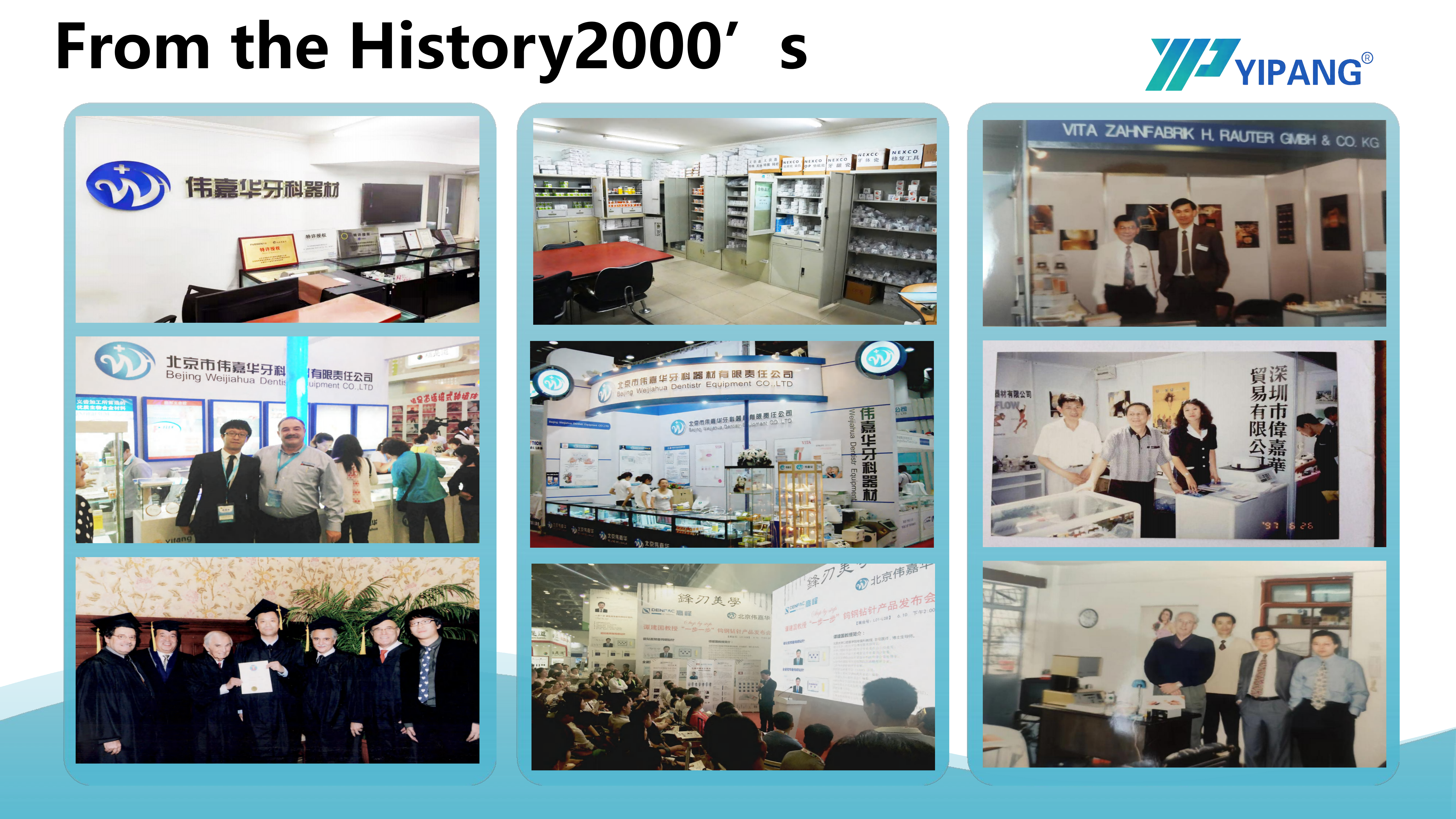
YIPANG is the self-developed dental materials brand of Beijing Weijiahua Dentistry Equipment Co., Ltd., a Beijing-based dental equipment manufacturer and supplier established in 1996 that serves dental laboratories, clinicians, and importers. Its product lines include zirconia blocks, glass ceramics, press ingots, PMMA, wax, titanium blocks, implant abutments, scanners, milling machines, 3D printers, and sintering furnaces — which means a mixed-material laboratory can source several of the routes compared in this article from one supplier relationship.
The YIPANG 4D-PRO-ML Dental Zirconia Block is a CAD/CAM milling blank made of zirconium dioxide (ZrO₂) with an yttria stabiliser. It is supplied as a 98 mm disc in ML multilayer shades, with thickness options of 10 mm, 12 mm, 14 mm, 16 mm, 18 mm, and 20 mm. Its stated bending strength is ≥1200 MPa, its translucency is classified as medium translucent, and the listed sintering temperature is 1450 °C.
Sintering is the step that defines the material's production rhythm. The recommended sintering window for this block is 1430 °C–1450 °C, following a standard heating and holding procedure, with natural cooling afterwards and no rapid temperature change, which risks cracking. Because the block is specified with a stable sintering shrinkage error within ±0.3%, multi-unit spans and full-arch frameworks can be planned with a predictable compensation value rather than a per-batch guess.

On the material side, the block uses high-quality domestic self-developed zirconia powder with stable batch consistency, which supports uniform density distribution, bending strength, and translucency performance. On the equipment side, it is characterised by good compatibility with most mainstream dental milling machines and a low processing failure rate — both of which matter when a laboratory runs a mixed queue and cannot afford a disc-specific learning curve on every machine.
Limits to state plainly: medium translucency means high-aesthetic anterior cases may need staining glaze, glaze paste, and a porcelain furnace cycle to reach the target shade, or a switch to glass ceramic. Sintering is also a batch process: tray space and cycle time, not milling speed, usually become the bottleneck during peak periods.
Lithium Disilicate Glass Ceramic: The Anterior Aesthetic Route
Lithium disilicate is a glass ceramic supplied either as milling blocks or as press ingots. The milled route requires a crystallisation firing after milling; the pressed route requires a wax pattern and a pressing workflow run through a porcelain furnace. Both routes end in a glass ceramic restoration that is typically adhesively bonded.
This is the route that absorbs the aesthetic anterior segment: veneers, anterior crowns, and single-unit work where shade and light transmission are the dominant requirements rather than load capacity. The segment is not marginal — lithium disilicate represented approximately 28% of all all-ceramic restorations globally as of 2024, and the market is forecast to grow from USD 320 million in 2025 to USD 920 million by 2032 (Intel Market Research).
Limits: an additional firing step per unit, a bonding protocol the clinician must follow, and a production plan that cannot simply be merged into the zirconia sintering queue.
PMMA: The Provisional and Try-In Route
PMMA is an acrylic-based material supplied as milled discs and, in parallel, as printable photopolymer resin. It serves provisionals, try-ins, verification appliances, and aesthetic previews — work that must be produced quickly, adjusted chairside, and polished rather than fired.
The reason this route keeps expanding is workflow, not strength. Photopolymer resins held a 55.5% market share of the dental 3D printing material segment in 2025 (Grand View Research), which reflects how much provisional and model production now runs through a dental 3D printer alongside the milling machine.
Limits: PMMA is a provisional material. It is not a definitive long-term restoration substrate, and treating it as one is a planning error rather than a material failure.
PEEK: The Metal-Free Framework Route
PEEK is a high-performance polymer supplied as CAD/CAM discs and used for frameworks, including metal-free implant superstructure frameworks and removable frameworks. It is processed by milling and finished according to the material supplier's instructions for use; bonding and veneering protocols are supplier-specific and should never be assumed to transfer from another polymer.
Commercial context supports its position as a defined niche rather than a replacement for zirconia: the PEEK dental implants market was valued at USD 1,055 million in 2025 and is expected to grow at an 8% CAGR through 2034 (Precedence Research).
Limits: frameworks generally need veneering for aesthetics, so the aesthetic outcome depends on the veneering material and technique rather than on the framework itself; milling and finishing parameters differ from ceramic workflows.
Titanium Alloy Disc: The Implant Component Route
Titanium alloy discs are milled into components rather than into aesthetic restorations: abutments, bars, and implant frameworks. The commercial weight of this route is visible in the final abutment market, valued at nearly USD 2.6 billion in 2025 (iData Research).
Regulatory context matters here. EU Medical Device Regulation (MDR 2017/745) classifies most dental implants and restorative materials as high-risk, requiring intensive clinical data (European Commission), so documentation discipline on implant-facing components is part of the material decision, not an afterthought.
Limits: titanium is opaque and unsuitable for aesthetic visible zones, milling places different demands on tooling than ceramic, and the implant connection requires precision that is verified rather than assumed.
How Mixed-Material Laboratories Match Material to Case
- Posterior single-unit crown, high load: monolithic zirconia.
- Multi-unit bridge or full-arch framework: zirconia, planned around a ±0.3% shrinkage compensation and a validated sintering curve.
- Anterior crown or veneer, shade-critical: lithium disilicate, or zirconia with a defined characterisation step.
- Provisional, try-in, or aesthetic preview: PMMA, milled or printed.
- Metal-free implant framework: PEEK framework with a defined veneering protocol.
- Abutment, bar, or implant interface component: titanium alloy.
Step-by-Step Breakdown: Routing a Case Through a Mixed-Material Lab
The same six production steps apply to every material. What changes is the process attached to each step, which is why the routing decision has to be made before nesting rather than after milling.
- Case intake and digital capture. A dental lab scanner or intraoral scan produces the working data set. For edentulous and full-arch cases, an edentulous scanbody kit is used to transfer jaw relation and implant position accurately; errors introduced here cannot be corrected downstream by any material choice.
- Indication triage and material assignment. The case is assigned to one of the five routes using the matching rules above. This is the step where aesthetic expectations, span length, and implant involvement are converted into a material decision.
- Nesting and milling. The disc format constrains the plan: a 98 mm disc with 10–20 mm thickness options covers single units through multi-unit spans. Dental milling burs are selected for the substrate, and the dental milling machine runs the substrate-specific parameters. Zirconia and glass ceramic, polymer, and titanium do not share tooling assumptions.
- The thermal step. Zirconia is sintered in a dental sintering furnace at 1430 °C–1450 °C with a controlled heating and holding curve. Lithium disilicate receives a crystallisation firing, and pressed ingots run through a porcelain furnace. PMMA requires no firing. PEEK is processed per its supplier's written instructions. This is the step that most often breaks a schedule built for a single material.
- Finishing and characterisation. Dental polishing burs finish margins and surfaces. Where shade needs adjustment, staining glaze and glaze paste are applied and fired, with dental firing paste used where a firing medium is required. Anterior zirconia usually needs this step; monolithic posterior zirconia often does not.
- Quality control, documentation, and dispatch. Margin fit, occlusion, shade, and batch traceability are checked against the case record. For implant-facing components and EU-facing work, the applicable declaration and technical documentation for the material batch should be retrievable at this point.
Use Cases: Seven Applications and Their Material Fit
1. Full-contour crowns. The most common zirconia indication. A monolithic zirconia crown delivers load capacity without veneering, and medium-translucency multilayer shades cover most posterior and premolar positions without a characterisation cycle.
2. Bridges and multi-unit spans. Connector geometry and sintering consistency determine fit across the span. A block with shrinkage error within ±0.3% and uniform density distribution allows a single compensation value across the framework rather than per-unit adjustment.
3. Veneers. A lithium disilicate indication. Minimal-thickness glass ceramic restorations rely on adhesive bonding, and neither zirconia nor PEEK substitutes for that route.
4. Implant superstructure restorations. This is the one application where the comparison is genuinely open. Zirconia covers screw-retained and framework superstructures with a ceramic aesthetic; PEEK offers a metal-free framework option; titanium covers the abutment and interface components that sit underneath either choice.
5. Anterior aesthetic crown production. Lithium disilicate is the default when shade is the primary constraint. Zirconia remains viable when the case is routed with a defined staining glaze and glaze paste characterisation step rather than being expected to match out of the furnace.
6. Posterior monolithic crown milling. The volume workhorse in most laboratories: no veneering, a predictable sintering cycle, and a workflow that tolerates batch production. This is where block-to-block consistency produces the clearest cost effect.
7. Temporary restorations. PMMA, either milled from a disc or printed from photopolymer resin. The choice between milling and printing is a scheduling decision, not a material-quality decision, and both routes exist to protect the definitive restoration underneath.
Comparison Table: Dental Zirconia Block vs. PEEK, PMMA, Titanium, and Lithium Disilicate
| Material | CAD/CAM form | Post-milling step | Case types it typically serves | What the lab should verify |
|---|---|---|---|---|
| Dental Zirconia Block (YIPANG 4D-PRO-ML) | 98 mm disc, ML multilayer shades, 10–20 mm thickness | Sintering at 1430 °C–1450 °C with controlled heating and holding | Posterior monolithic crowns, full-contour crowns, bridges, implant superstructure restorations | Bending strength ≥1200 MPa; shrinkage error within ±0.3%; medium translucency; compatibility with most mainstream milling machines |
| Lithium disilicate glass ceramic | Milling blocks and press ingots | Crystallisation firing (milled) or pressing cycle (ingots) | Veneers, anterior aesthetic crowns, single-unit aesthetic work | Crystallisation parameters; bonding protocol; ~28% of all-ceramic restorations globally in 2024 (Business Research Insights) |
| PMMA | Milling discs and printable photopolymer resin | Polishing only; no sintering or firing | Provisionals, try-ins, verification appliances, aesthetic previews | Provisional status; resin or disc batch; photopolymer resins held 55.5% of the dental 3D printing material segment in 2025 (Grand View Research) |
| PEEK | Discs | Processing and finishing per the material supplier's instructions for use | Metal-free implant superstructure frameworks, removable frameworks | Supplier-specific bonding and veneering protocol; PEEK dental implants market USD 1,055 million in 2025, 8% CAGR through 2034 (Precedence Research) |
| Titanium alloy | Discs | Machining and finishing; no sintering | Milled abutments, bars, implant frameworks | Implant connection precision; MDR 2017/745 documentation for implant-facing components; final abutment market near USD 2.6 billion in 2025 (iData Research) |
Table notes: figures are quoted from the published sources named in each cell. Materials other than the YIPANG Dental Zirconia Block are described by form and processing route only, because no verified performance data for those specific products is asserted here. This comparison supports laboratory production planning and is not clinical advice; the indications in each manufacturer's instructions for use always govern.
FAQ
1. Which regulatory requirements apply when a laboratory qualifies a dental zirconia block for EU-facing work?
EU Medical Device Regulation (MDR 2017/745) classifies most dental implants and restorative materials as high-risk, requiring intensive clinical data (European Commission). In practice, a laboratory or importer qualifying a new block should confirm that the manufacturer's declaration and technical documentation are available for the material before it enters production, and should keep batch traceability linked to the case record. This applies equally to zirconia, glass ceramic, PEEK, and titanium components used in implant-facing work.
2. Can a Dental Zirconia Block be milled on an existing dental milling machine and sintered in a standard furnace?
The YIPANG 4D-PRO-ML Dental Zirconia Block is a 98 mm disc, which is the format most mainstream dental milling machines accept, and it is characterised by good compatibility with most mainstream dental milling machines and a low processing failure rate. It requires sintering at a listed 1450 °C, with a recommended window of 1430 °C–1450 °C, a standard heating and holding curve, and natural cooling without rapid temperature change. Its bending strength is ≥1200 MPa and its translucency is medium translucent.
3. Is a zirconia block cheaper than lithium disilicate or imported zirconia for routine posterior work?
The block uses high-quality domestic self-developed zirconia powder with stable batch consistency and is positioned as a cost-effective alternative to imported brands, with a more competitive price than imported zirconia blocks of equivalent quality. Cost per case is not only the disc price: sintering yield, remake rate, and characterisation time also drive it, which is why the stable sintering shrinkage error within ±0.3%, uniform density distribution, and low processing failure rate matter commercially. Zirconia discs held 63.1% of revenue share in the zirconia-based dental materials market in 2025 (Grand View Research), which is consistent with zirconia being the volume substrate rather than a premium niche.
4. How does a laboratory validate a zirconia block before switching production over?
Validation is a production test, not a sample inspection: mill a representative unit at the thickness you intend to use (the block is available in 10 mm, 12 mm, 14 mm, 16 mm, 18 mm, and 20 mm), run the full sintering cycle at 1430 °C–1450 °C, then check margin fit, occlusion, and shade against the case. Because the block uses high-quality domestic self-developed zirconia powder with stable batch consistency, results from the trial batch are intended to repeat across later batches. Sample requests and trial-block enquiries can be sent to service@yipangdental.com.
5. What lead time and customisation should a laboratory expect from a zirconia block supplier?
Lead time is where domestic supply and imported supply diverge most in practice. YIPANG states a flexible customisation service and a shorter delivery time relative to imported brands, alongside a more competitive price position. The block is offered in ML multilayer shades across six thickness options on a 98 mm diameter, which covers single-unit through multi-unit nesting without mixing formats. Laboratories planning a switch should confirm their monthly disc consumption, shade range, and thickness mix before placing a first production order — those three variables determine whether a shorter delivery time actually improves case turnaround.
Conclusion: Route the Case, Then Choose the Block
The comparison resolves into a routing rule rather than a winner. Zirconia carries the load-bearing volume: posterior monolithic crowns, full-contour crowns, bridges, and implant superstructure restorations, supported by a sintering window of 1430 °C–1450 °C, bending strength ≥1200 MPa, and shrinkage control within ±0.3%. Lithium disilicate holds the anterior aesthetic segment, with roughly 28% of all-ceramic restorations globally in 2024. PMMA protects the schedule through provisionals and try-ins. PEEK opens a metal-free framework route. Titanium covers the implant interface.
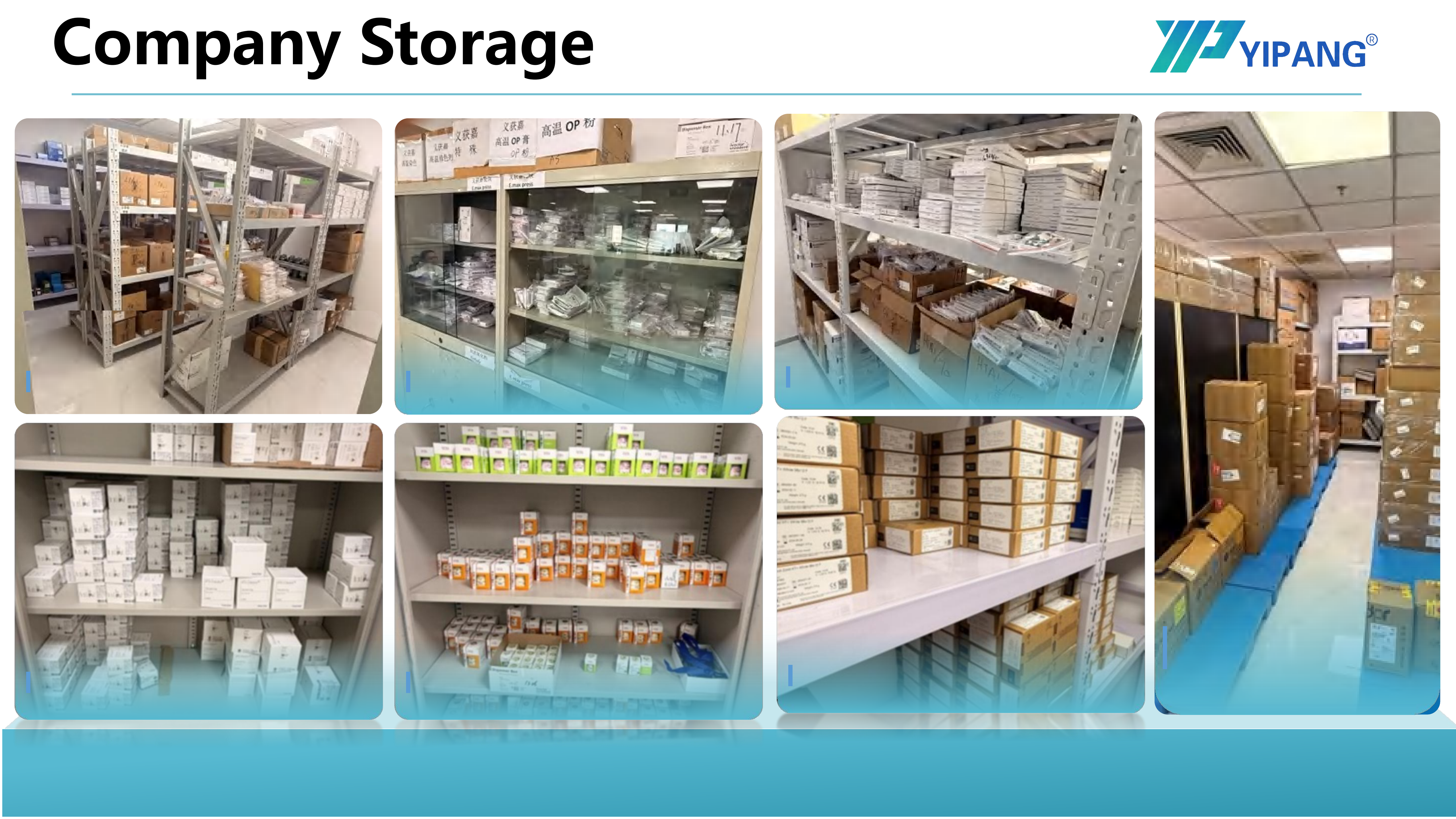
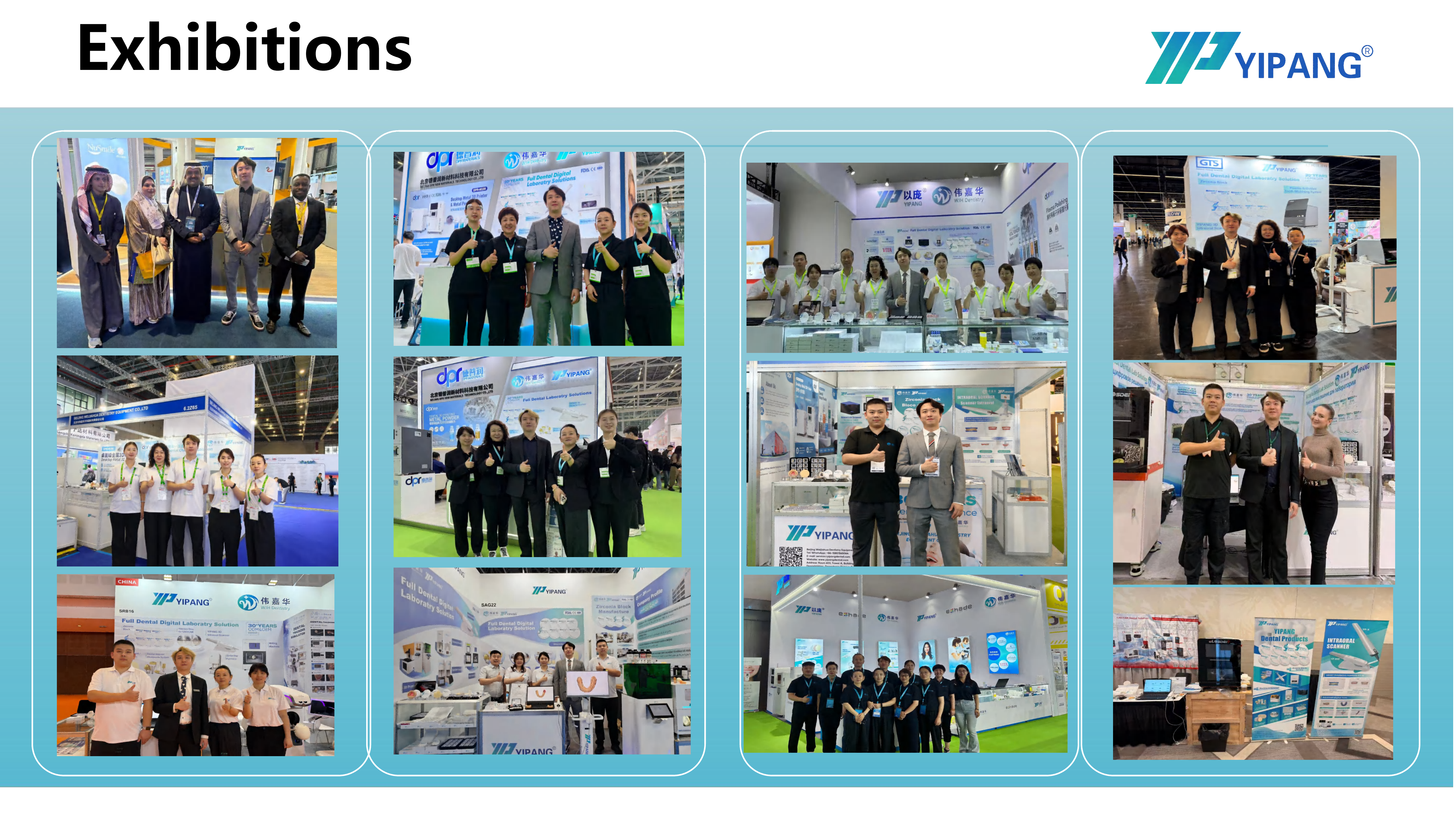
For a mixed-material laboratory, the practical gain comes from standardising the routing logic and then standardising supply where possible. Beijing Weijiahua Dentistry Equipment Co., Ltd. has operated since 1996 with a 2,000 ㎡ facility, 80 employees, and 25 professional engineers working on dental material formulation and process optimisation, and it serves more than 1,000 dental laboratory customers in China with an export ratio of 40%–55% across the Middle East, Southeast Asia, South America, North America, Eastern Europe, North Africa, and Australia. Its product lines span zirconia blocks, glass ceramics, press ingots, PMMA, wax, titanium blocks, implant abutments, scanners, milling machines, 3D printers, and sintering furnaces, so several of the routes compared here can be qualified through a single supplier relationship.
Next Step for Laboratories
Compare the YIPANG Dental Zirconia Block against your current substrate on a real case: request a trial block, a shade and thickness list, or a quotation for your monthly disc consumption. Volume pricing, distributor terms, and trial-block arrangements are handled directly by the supplier team.
Email: service@yipangdental.com | Tel / WhatsApp: +86 158-0156-5064 | Website: www.yipangdental.com
Download the full company and product brochure: WJH Company Information (PDF)
Have Questions or Need More Details?
Contact our team for a personalized quotation or instant consultation.
Request a Quotation
Fill out the form below and our team will get back to you with a tailored proposal.
WhatsApp Direct Chat
Prefer to chat in real-time? Message us on WhatsApp for instant assistance & quick answers.
- Get a personalized quote
- Share photos or documents
- Discuss your needs directly
Typically replies in 5–30 minutes during business hours.