Dental Zirconia Block vs. PFM Crowns: A Modern Lab Verdict
When a dental laboratory weighs a dental zirconia block against a traditional porcelain-fused-to-metal crown, it is rarely debating material beauty in the abstract. It is deciding how many hands, how many furnace cycles, and how many records a single unit will consume before it leaves the bench.
For most fixed restorations, the modern verdict leans toward milling an all-zirconia restoration. The case is scanned digitally, designed in CAD, milled from a dental zirconia disc on a dental milling machine, sintered in a dental sintering furnace, then finished with staining and glazing. The PFM route instead begins with a metal substructure and builds the colour by hand, layer by layer, through repeated firings in a dental porcelain furnace.
Both routes produce serviceable restorations. What changes is the shape of the workflow — and that shape, not the material preference, is what this verdict is about.
The short answer: an all-zirconia CAD/CAM workflow is the default production path in most dental labs because it concentrates colour inside the blank, removes the metal substructure step, and moves quality control onto verifiable furnace records. PFM remains a fully valid route wherever a lab's casting capability, porcelain furnace capacity, layering technicians and clinician preferences are already organised around hand-built ceramics. The decision turns on workflow steps, colour generation, sintering discipline and traceability — not on brand loyalty.
Problem Definition: What a Lab Is Actually Deciding
"Zirconia or PFM" sounds like a material question, but it behaves like a production decision. It locks six things at once:
- Manual step count — how many hands touch a unit between scan and delivery.
- Equipment and consumable list — what the lab must keep purchasing and maintaining.
- How colour is generated — whether shade comes out of the blank or is built on top of a metal base.
- Documentation burden — what records the lab must retain to defend the process.
- Cost structure — where money sits: material, machinery, labour or furnace time.
- Rework difficulty — how hard a returned unit is to adjust for occlusion or shade.
Answer the question as an aesthetic preference and the answer changes with every clinician. Answer it as these six operating questions and the decision becomes repeatable, and it can be explained to a dentist without hand-waving.
Industry Background: Where Zirconia Sits
The market signals behind zirconia are no longer new. Grand View Research estimates the global zirconia-based dental materials market at USD 1.2 billion in 2025, with a projected value of USD 2.3 billion by 2033. The same source adds structural facts that matter more to a lab than the headline number: zirconia discs held the largest revenue share at 63.1% in 2025, the 3Y-TZP grade held a 35.9% revenue share, CAD/CAM milling accounted for 82.4% of zirconia manufacturing process revenue, dental labs remained the dominant end user at 45.3% of market share, and the United States accounted for 40% of global revenue.
The equipment layer reinforces the same direction. Fortune Business Insights estimates the dental milling machine market at USD 2.45 billion in 2025, growing to USD 3.9 billion by 2030, and identifies Roland DG, Amann Girrbach and vhf camfacture as significant market share holders in that sector as of 2024. Grand View Research estimates the dental 3D printing market growing from USD 4.9 billion in 2025 to USD 26.7 billion by 2033, with photopolymer resins holding a 55.5% share of the dental 3D printing material segment in 2025.
Alternative materials have not disappeared — they are diverging. Business Research Insights places lithium disilicate at approximately 28% of all all-ceramic dental restorations globally as of 2024, and Intel Market Research projects that material market growing from USD 320 million in 2025 to USD 920 million by 2032 at a CAGR of 18.8%. Forecasts differ by source, which is worth noting: Business Research Insights publishes a CAGR of 24.53% for the same category. Adjacent segments are expanding in parallel — iData Research values the final abutment market at nearly USD 2.6 billion in 2025, and Precedence Research values the PEEK dental implants market at USD 1,055 million in 2025 with an expected 8% CAGR through 2034.
One regulatory fact sits underneath all of it. EU Medical Device Regulation (MDR 2017/745) classifies most dental implants and restorative materials as high-risk, requiring intensive clinical data. That obligation lands on whoever places the product on the market, and material traceability is where a lab's own documentation chain starts.
Detailed Solution: What an All-Zirconia Workflow Delivers in a Milling Setting
YIPANG's 4D-PRO-ML is the type of blank a lab reaches for when it moves from occasional zirconia cases to routine production. It is a dental zirconia block for dental prosthesis, classified as a dental zirconia disc and CAD/CAM dental milling blank, composed of zirconium dioxide (ZrO₂) with yttria stabilisation.
Published specification — 4D-PRO-ML:
- Material: zirconium dioxide (ZrO₂) with yttria stabilisation
- Model designation: 4D-PRO-ML
- Available shades: ML multilayer
- Diameter: 98 mm
- Thickness options: 10 mm, 12 mm, 14 mm, 16 mm, 18 mm, 20 mm
- Sintering temperature: 1450 ℃
- Bending strength: ≥1200 MPa
- Translucency: medium translucent
- Applications: crowns, bridges and aesthetic dental restorations
- Intended industries: dental laboratory, dental prosthetics, dental CAD/CAM industry
Translated into bench reality, that specification answers four questions a lab asks before switching a case over:
- The workflow ends at the milling machine. A 98 mm CAD/CAM blank removes the casting step entirely, so the unit goes from CAD straight to the mill and then to the furnace.
- Colour partly comes out of the blank. The ML multilayer shade structure gives a gradient through the disc, which reduces — but does not eliminate — the hand layering that a mono-shade blank normally requires.
- Strength depends on sintering discipline. The ≥1200 MPa bending strength figure describes a fully sintered restoration, which makes the furnace curve a quality variable rather than an optional step.
- Machine compatibility matters more than brand. 4D-PRO-ML is described as compatible with most mainstream dental milling machines — relevant because the milling equipment sector is fragmented across holders such as Roland DG, Amann Girrbach and vhf camfacture.
The PFM route answers the same four questions in reverse. A metal substructure supplies the strength, the porcelain supplies the appearance, and the colour is created by the technician rather than milled out of a blank. Both approaches work. Their failure modes are simply different, and their labour profiles are different too.
The Aesthetic Problem: Opaque Staining Glaze Replaces the Opaque Porcelain Layer
On a PFM crown the metal does not transmit light, so the technician first applies an opaque porcelain layer to mask the substructure before building dentine and enamel porcelain on top of it. A monolithic zirconia restoration has no metal and therefore no opaque layer in the same sense.
Instead, two things take over that job. The first is the blank's own gradient — the ML multilayer structure in the 4D-PRO-ML disc. The second is surface chemistry applied after sintering, including opaque staining glazes used to mute high-translucency zones or darken areas over implant components, together with glaze pastes and firing pastes that carry the final surface. Applying them correctly is a firing discipline of its own: an opaque staining glaze placed on the wrong zone, or fired on the wrong curve, will shift the shade in a way that cannot be corrected by polishing alone.
The practical consequence is that shade reproducibility on a zirconia case becomes a materials-and-records problem rather than a purely manual-skill problem. A lab that previously relied on an experienced ceramicist's eye now has to document which glaze, which paste and which firing curve produced the approved shade.
The Harder Discipline: Sintering Logs, Not Just Sintering Curves
Zirconia is milled in a partially sintered or green state and then densified in the furnace. The finished restoration's dimensions, translucency and strength are all downstream of the curve the furnace actually ran. For 4D-PRO-ML, the recommended sintering temperature range is 1430 ℃ – 1450 ℃, with 1450 ℃ listed as the sintering temperature in the product data. The standard sequence is straightforward: place the milled workpiece on the sintering tray, set the heating curve up to 1430 ℃ – 1450 ℃ with the proper holding time, and allow the furnace to cool down naturally once sintering is complete. Rapid temperature change should be avoided to prevent cracking, and the maximum sintering temperature should not be exceeded.
What separates a controlled process from a hopeful one is not the curve itself but the record of it: blank batch, furnace load position, furnace identification, and the curve as executed rather than as intended. Once that exists, a drifting shade or an out-of-tolerance fit can be traced to a specific cycle instead of being absorbed as unexplained variance. Labs running mixed production — zirconia alongside lithium disilicate, PMMA, wax, titanium and PEEK discs — benefit most from this, because each material carries its own curve and its own documentation requirement.
Step-by-Step Breakdown: Scan to Delivery on Both Routes
Route A — All-Zirconia CAD/CAM Production
- Scan and design. Capture the die or the patient arch with a dental lab scanner or an intraoral scanner, then design the crown, bridge, veneer or implant superstructure restoration in CAD.
- Nest and mill. Nest the restoration inside a 4D-PRO-ML disc using the 98 mm diameter and whichever thickness the case needs — 10 mm, 12 mm, 14 mm, 16 mm, 18 mm or 20 mm — then mill it on the dental milling machine with the appropriate dental milling burs.
- Sinter. Transfer the milled workpiece to a sintering tray and run a heating curve up to 1430 ℃ – 1450 ℃ with the correct holding time, then cool naturally. Avoid rapid temperature changes and stay below the maximum sintering temperature.
- Stain and glaze. Build the shade with staining liquids, apply opaque staining glaze where translucency has to be suppressed, and finish with glaze paste before firing.
- Polish and adjust. Refine occlusion and surface with dental polishing burs, re-glazing only where the surface has been broken through.
- Log and ship. Record the blank batch, furnace identification and executed curve alongside the case file, then dispatch.
Route B — PFM Production
- Design and produce the metal substructure. Design the coping in CAD or by hand on the die, then cast it or mill it as a metal base.
- Fit, prepare and clean. Seat and adjust the substructure, then prepare and clean the surface before any porcelain is applied.
- Apply and fire the opaque layer. Build the opaque porcelain that masks the metal and creates the bond interface.
- Layer the body and incisal porcelain. Add dentine and enamel porcelain in stages, with repeated firing cycles in the dental porcelain furnace to establish both shade and morphology.
- Glaze and finish. Apply the glaze firing, then refine occlusion and polish to the final surface.
The asymmetry is visible when both lists sit side by side. Route A pushes colour into the blank and leaves the technician with a staining and glazing task at the end. Route B creates the entire optical result by hand, and every adjustment costs another firing cycle. Neither is superior in the abstract; they simply place the risk in different parts of the bench.
Use Cases: Where Each Route Fits
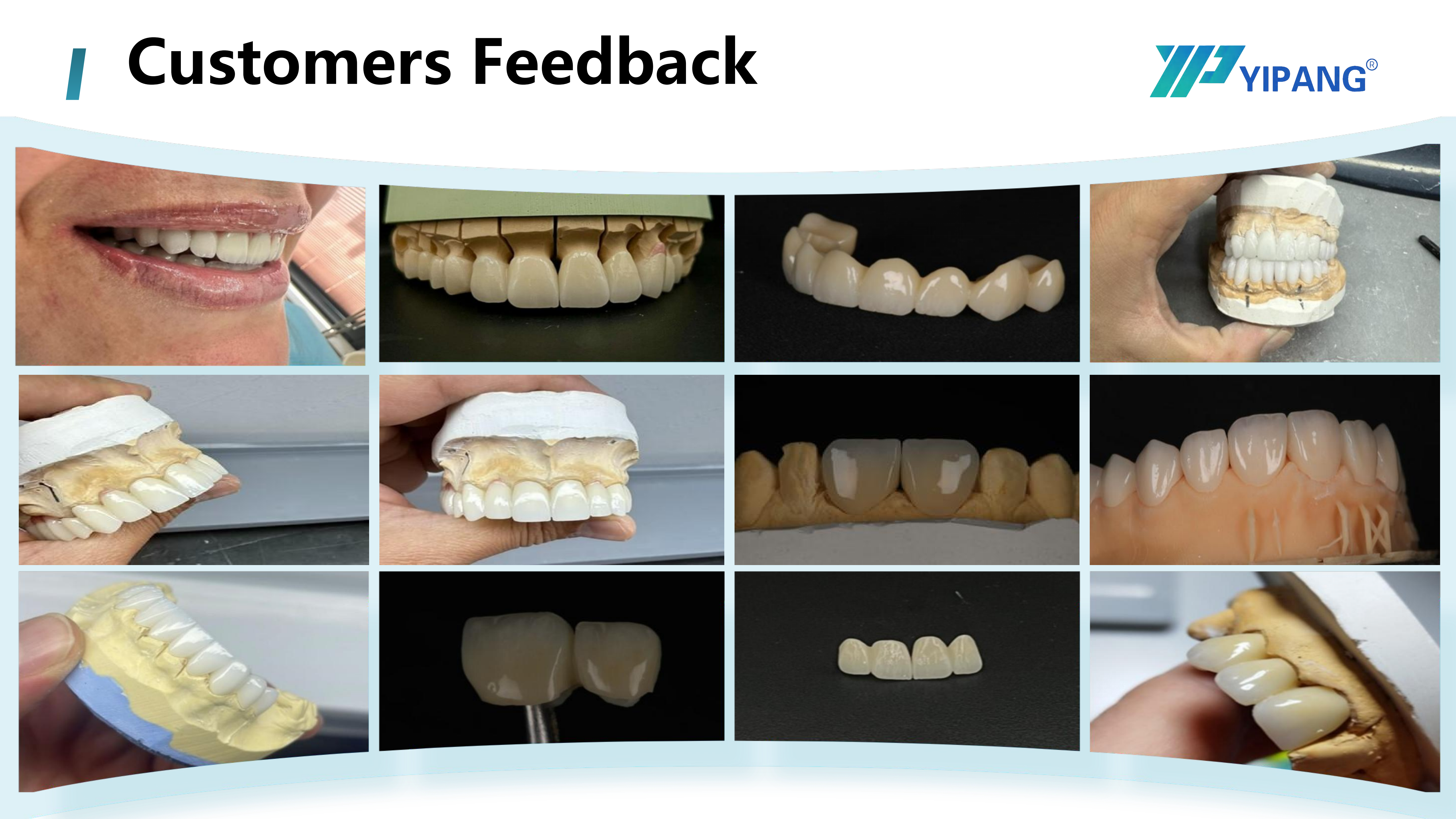
The 4D-PRO-ML disc is intended for crowns, bridges and aesthetic dental restorations, and is designed for use in dental CAD/CAM workflows serving the dental laboratory, dental prosthetics and dental CAD/CAM industries. A typical installation runs in an indoor, constant-temperature dental lab environment, with the restoration processed on a dental milling machine and sintered in a dental sintering furnace, supported by a dental lab scanner for capture and design input.
PFM remains the natural choice when the lab's existing investment is already organised around it: casting or metal working capability, a porcelain furnace, layering technicians on staff, and clinician habits that arrive with layered ceramics as the expectation. That is not an aesthetic compromise — it is capital and labour already deployed on that route.
A third factor deserves to be stated openly: mixed material reality. A production lab today may be running zirconia, lithium disilicate, PMMA temporaries, wax, titanium and PEEK discs through the same department. In that environment the question is no longer whether a material can be milled; it is whether each material's process — its own sintering curve, its own documentation, its own finishing sequence — is being kept separate and traceable.
Comparison Table: All-Zirconia vs. PFM Workflows
| Dimension | All-zirconia CAD/CAM (4D-PRO-ML) | Porcelain-fused-to-metal (PFM) |
|---|---|---|
| Base material | Zirconium dioxide (ZrO₂) with yttria stabilisation; ML multilayer shade blank | Metal substructure with an opaque porcelain layer |
| Forming method | Digital design and CAD/CAM milling | Custom-produced metal substructure, then layered veneering porcelain |
| How shade is generated | Blank gradient plus staining liquids; opaque staining glaze mutes high-translucency zones | Opaque porcelain masking, then hand-layered body and incisal porcelain |
| Primary equipment | Dental milling machine, dental sintering furnace, dental lab scanner | Casting or metal production equipment, dental porcelain furnace |
| Blank dimensions | 98 mm diameter; 10/12/14/16/18/20 mm thickness options | Substructure individually produced per restoration |
| Published strength data | Bending strength ≥1200 MPa | Depends on the metal substructure and porcelain design selected |
| Thermal cycles | One sintering curve (438–1450 ℃ range guidance: 1430–1450 ℃) plus glaze firing | Multiple porcelain firing cycles |
| Traceability focus | Blank batch ID, furnace load position, executed sintering curve | Substructure identification, porcelain batch, firing records |
FAQ
What should a lab verify before ordering dental zirconia blocks from a supplier?
Documentation first, price second. In the EU, MDR 2017/745 classifies most dental implants and restorative materials as high-risk and requires intensive clinical data, so material claims need paperwork behind them rather than product-page language. Ask for the material composition statement (zirconium dioxide with yttria stabilisation in the case of 4D-PRO-ML), the disc diameter and thickness tolerances, the recommended sintering temperature range, and a batch identification that can be quoted on every shipment. Beijing Weijiahua Dentistry Equipment Co., Ltd., trading under the YIPANG brand, has manufactured and supplied dental materials since its establishment in 1996 — but every buyer should still match the supplier's documents against their own market's checklist rather than assuming equivalence.
Can 4D-PRO-ML zirconia blocks be milled on the machines we already own?
In most cases, yes. 4D-PRO-ML is a 98 mm dental zirconia disc supplied as a CAD/CAM dental milling blank in thicknesses of 10 mm, 12 mm, 14 mm, 16 mm, 18 mm and 20 mm, and it is described as compatible with most mainstream dental milling machines. Because the milling market is split across holders such as Roland DG, Amann Girrbach and vhf camfacture, the detail worth checking is the blank holder and fixture rather than the material itself — the 98 mm disc format is common to this equipment class. A dry run on one disc will confirm compatibility faster than any specification sheet.
Where does the cost difference between a zirconia workflow and a PFM workflow actually sit?
Structurally, not superficially. PFM concentrates spend in metal substructures, porcelain powders and the technician hours consumed by repeated layering and firing cycles. An all-zirconia workflow shifts spend toward equipment — a dental milling machine and a dental sintering furnace — plus consumables such as zirconia discs, milling burs, polishing burs, staining liquids, opaque staining glazes and glaze pastes, and furnace time. The labour centre also moves: from hand-layering skill toward CAD operation and furnace discipline. Which structure comes out cheaper depends on the lab's case mix, existing equipment and technician roster, which is why blanket cost claims do not transfer between labs.
What makes a dental zirconia block supplier suitable for a long-term lab partnership?
Two capabilities outweigh unit price. The first is blank consistency: diameter, thickness and shade must behave identically across batches, because an inconsistent blank produces internal rework that never appears on a purchase order. The second is process documentation — a sintering curve, cooling guidance, recommended staining and glaze firing procedures, and a batch identifier that ties each shipment to a record. Suppliers that also carry adjacent materials simplify life further; YIPANG's portfolio under Beijing Weijiahua Dentistry Equipment Co., Ltd. spans Zirconia Blocks, Glass Ceramics, Press Ingots, PMMA, Wax, Titanium Blocks, Implant Abutments, 3D Scanners, Intraoral Scanners, Milling Machines, 3D Printers and Sintering Furnaces, which reduces the number of vendors a lab has to audit and re-audit.
Can our lab test a zirconia block before committing to a supply agreement?
The most reliable evaluation is a real case, run on your own furnace, with your own curve. Contact YIPANG through service@yipangdental.com or by phone and WhatsApp on +86 158-0156-5064 (contact: Jaye Yang) to discuss a sample or a quotation, and request the current company brochure before the first trial so the specification sheet and the shipping documents can be checked side by side. That is a lower-risk first step than switching an entire case load on the strength of a data sheet.
Conclusion: The Modern Lab Verdict
For the bulk of routine fixed work — single crowns, short-span bridges, veneers and implant superstructures — the all-zirconia CAD/CAM route now carries the production load, because it removes the metal substructure step, puts colour into the blank, and converts quality control into furnace records that can be audited.
PFM has not been displaced so much as repositioned. Where a lab already owns casting or metal production capability, runs a porcelain furnace, and employs technicians trained in layered ceramics, PFM continues to function as a controlled and predictable route.
What has genuinely changed is the list of things a lab must now manage deliberately. Opaque staining glaze and glaze pastes have taken over part of the masking role that opaque porcelain once held. Sintering has become a documented process rather than an assumed one, with 1430 ℃ – 1450 ℃ as the recommended range for 4D-PRO-ML and a natural cooling step that should not be rushed. And blank consistency has become a purchasing criterion in its own right, because it is the only variable a lab cannot fix on the bench.
Next Step
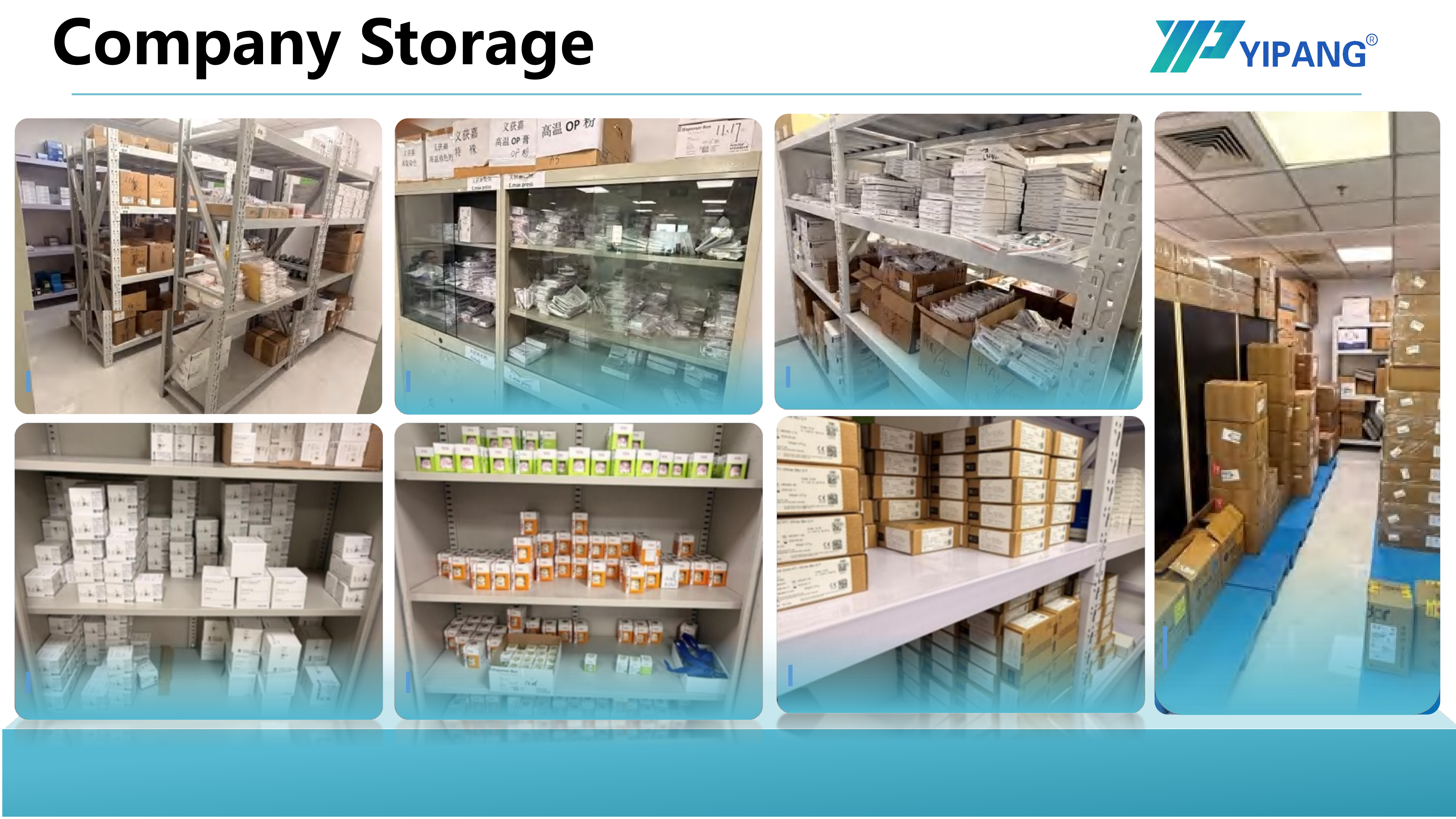
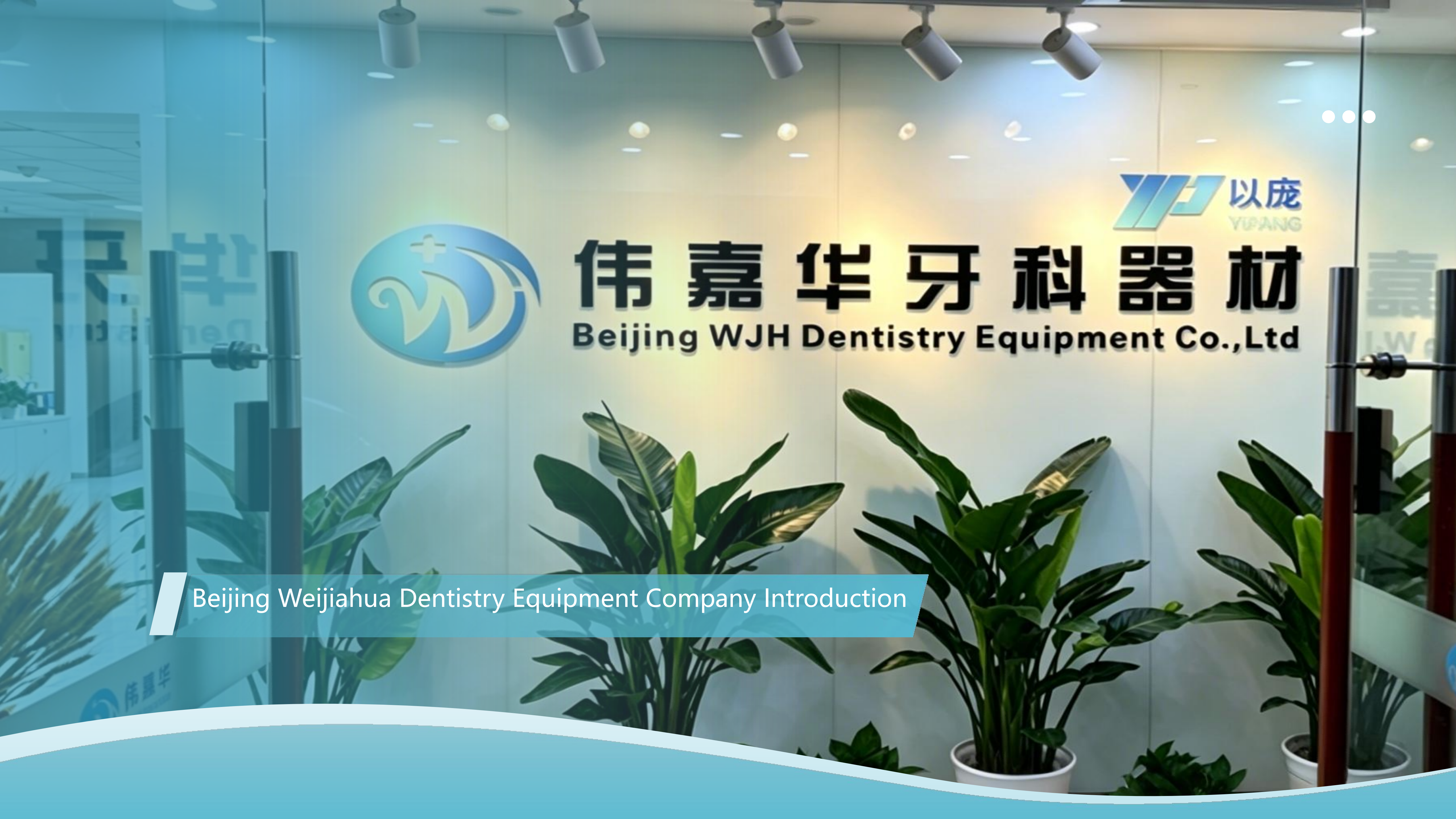
YIPANG is the self-developed brand of Beijing Weijiahua Dentistry Equipment Co., Ltd., a dental manufacturer established in 1996 operating a 2,000 m² facility with approximately 80 employees and an annual production capacity of about USD 10 million. Its 4D-PRO-ML zirconia block is supplied in 98 mm diameter with 10–20 mm thickness options and ML multilayer shades.
Request a sample, a quotation or the full company catalogue: download the YIPANG / WJH company information brochure. Email service@yipangdental.com, call or message +86 158-0156-5064 (Jaye Yang), or visit www.yipangdental.com.