Dental Zirconia Block vs. Zirconia-Reinforced Lithium Silicate: Chairside Showdown
A dental zirconia block and a zirconia-reinforced lithium silicate blank can be milled on the same chairside machine, from the same scan, in the same visit. What separates them is the heat treatment that follows. Zirconia restorations are sintered at 1430 °C–1450 °C in a dental sintering furnace. Zirconia-reinforced lithium silicate (ZLS) restorations are crystallized at a lower, supplier-defined temperature in a dental porcelain furnace, then stained, glazed and polished. The choice is therefore mainly a question of which furnace is on the bench, how the appointment is structured, and what load the restoration has to carry.
That single difference drives most of the practical decision. A practice already running a porcelain furnace for glaze firings can crystallize a ZLS crown in the chair. A practice that wants zirconia needs a sintering furnace, a validated firing curve, and time for a controlled ramp followed by natural cooling. Neither material is universally better; the match between material, furnace and indication determines the outcome. This comparison sets out milling compatibility on common chairside systems, the two post-milling thermal routes, a mixed-ceramic workflow that runs through both furnaces, and the criteria buyers should check before committing to a blank supplier.
Problem Definition: The Chairside Choice Is a Thermal Route, Not a Scoreboard
Most chairside material charts compare the wrong variables. Flexural strength and translucency are easy to tabulate, but they rarely decide which blank a practice keeps in stock. Five practical constraints do the deciding.
- Thermal equipment on site. A dental zirconia block requires a sintering furnace able to hold a 1430 °C–1450 °C cycle. A ZLS blank requires a dental porcelain furnace running the blank supplier's crystallization program.
- Cycle structure. Sintering involves a controlled heating ramp, a holding time and natural cooling; rapid temperature change must be avoided to prevent cracking. That cycle has to fit the appointment schedule, not the reverse.
- Shrinkage and fit. Zirconia is milled in a partially sintered state and densifies during sintering, so shrinkage stability is a fit issue rather than a cosmetic one.
- Load and indication. A high-load posterior unit and a thin aesthetic anterior unit do not carry the same requirement, and the two material families do not occupy the same position on that scale.
- Finishing route. ZLS is normally finished with a staining glaze or glaze paste plus a glaze firing. Zirconia can be stained and glazed, or left with a mechanically polished surface.
The comparison therefore has to be made on the workflow level: what the mill produces, what the furnace must do to it, and how long the practice is prepared to wait between the two.
Industry Background: Why Both Materials Are Still Expanding
Zirconia remains the larger material family by revenue. Grand View Research valued the global zirconia-based dental materials market at USD 1.2 billion in 2025 and projects USD 2.3 billion by 2033. Within that market, zirconia discs held the largest revenue share at 63.1% in 2025, CAD/CAM milling accounted for 82.4% of process revenue, 3Y-TZP was the largest product grade at 35.9%, and dental laboratories were the dominant end user with a 45.3% share.
Glass-ceramics did not disappear alongside that growth. Lithium disilicate, a related but distinct glass-ceramic family, accounted for approximately 28% of all-ceramic restorations globally as of 2024, according to Business Research Insights. Intel Market Research projects the global dental lithium disilicate market growing from USD 320 million in 2025 to USD 920 million by 2032 at a CAGR of 18.8%; other published forecasts for the same category run higher, so the growth rate should be read as directional rather than precise. Zirconia-reinforced lithium silicate sits inside the same broader glass-ceramic category but is a separate material with its own reinforcement mechanism and its own firing schedule.
Chairside milling itself keeps expanding. Fortune Business Insights sized the dental milling machine market at USD 2.45 billion in 2025 with expected growth to USD 3.9 billion by 2030, and identified Roland DG, Amann Girrbach and vhf camfacture as significant share holders in the sector as of 2024. That installed base of chairside and in-lab milling machines is what makes a material comparison actionable at all: the same 98 mm disc format and the same milling chamber are shared by both material families.
Regulatory context matters as well. EU Medical Device Regulation (MDR 2017/745) classifies most dental implants and restorative materials as high-risk, requiring intensive clinical data, according to the European Commission. For buyers, that makes supplier documentation a purchasing criterion rather than paperwork.
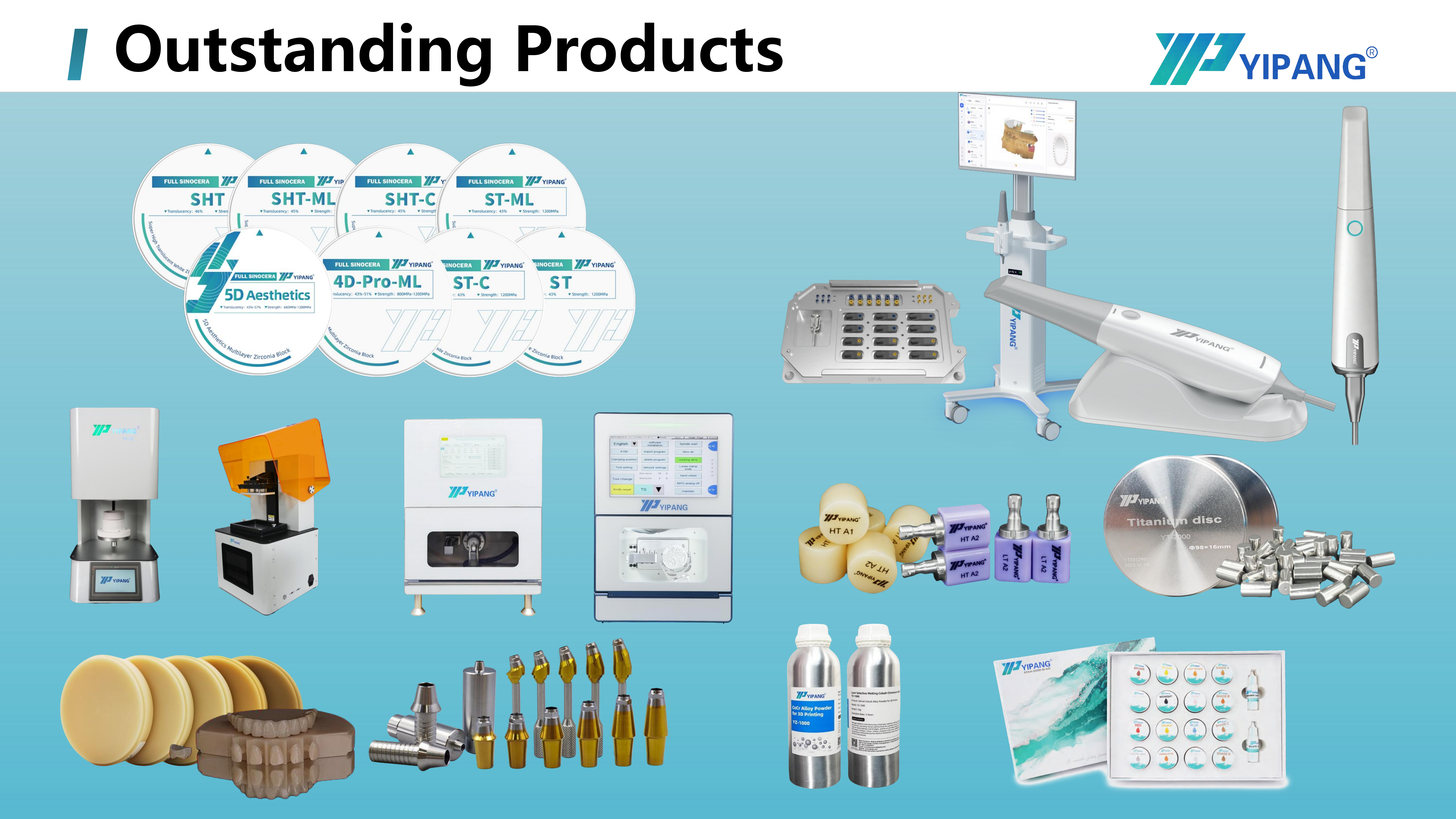
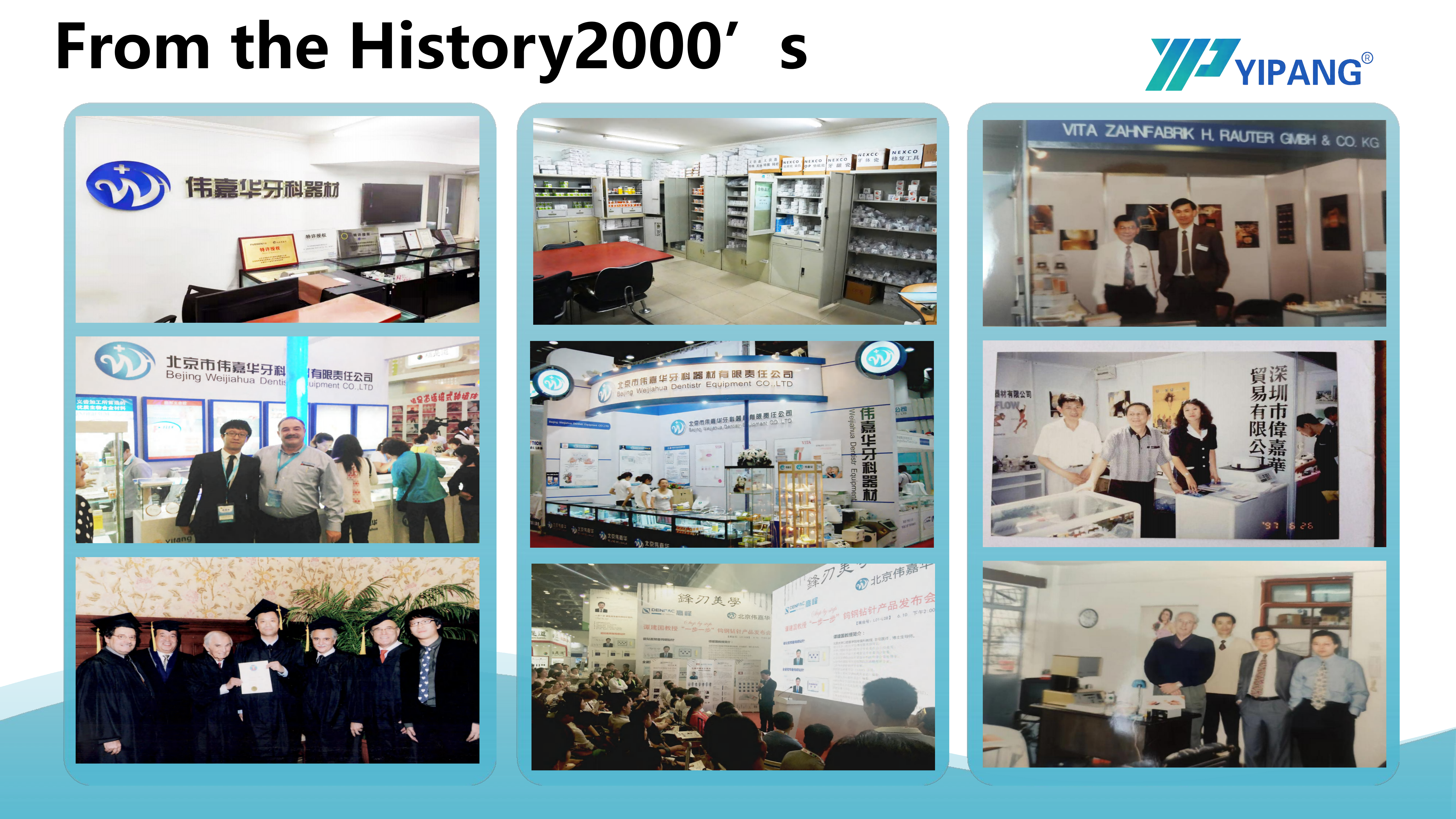
YIPANG is the self-developed dental materials brand of Beijing Weijiahua Dentistry Equipment Co., Ltd., a Beijing-based dental equipment and materials company established in 1996. Its product lines include zirconia blocks, glass ceramics, press ingots, PMMA, wax, titanium blocks, implant abutments, intraoral and lab scanners, milling machines, 3D printers and sintering furnaces. The company reports a 2,000 m² production site, 80 employees, a 25-engineer R&D team, and exports covering roughly 40%–55% of output across the Middle East, Southeast Asia, South America, North America, Eastern Europe, North Africa and Australia.
Detailed Solution: How Each Material Behaves After the Milling Chamber
Zirconia: Mill Soft, Sinter Hard
A dental zirconia block is milled in a partially sintered state and reaches its final density only inside the sintering furnace. The YIPANG 4D-PRO-ML Zirconia Block for Dental Prosthesis is a 98 mm disc available in 10 mm, 12 mm, 14 mm, 16 mm, 18 mm and 20 mm thicknesses, supplied in ML multilayer shades with medium translucency. The material is zirconium dioxide (ZrO₂) stabilized with yttria, with a bending strength of ≥1200 MPa and a stated sintering temperature of 1450 °C.
The recommended working window is 1430 °C–1450 °C. Following a standard heating and holding procedure is what protects two properties that matter chairside: low shrinkage and stable translucency. Two operating limits are explicit. Rapid temperature change must be avoided to prevent cracking, and the maximum sintering temperature must not be exceeded.
The sintering sequence itself is short to describe and easy to get wrong:
Reported field behaviour supports this. The material has been used by hundreds of long-term cooperative clients worldwide, including dental laboratories, dental clinics and distributors, with high recognition for material stability and aesthetic effect and a low customer complaint rate. The stated reasons are uniform translucency, stable sintering shrinkage, and compatibility with most CAD/CAM systems.
ZLS: Mill Pre-Crystallized, Fire to Crystallize
A zirconia-reinforced lithium silicate blank arrives in a partially crystallized glass state. After milling, the restoration is crystallized in a dental porcelain furnace on the schedule issued by the blank manufacturer, then finished with a staining glaze or glaze paste and a glaze firing, and polished where the anatomy requires it. Because the crystallization temperature sits inside the porcelain-furnace range, a chairside practice that already fires veneers and glaze does not need additional capital equipment to work with ZLS.
Two limits are worth stating plainly. First, the mechanical and optical data for a ZLS restoration belong to the specific blank, not to the material name; flexural strength and translucency vary between products and must be read from the supplier's documentation rather than assumed. Second, the crystallization schedule is not transferable between suppliers, so a practice switching blanks has to re-validate its firing program before the first clinical case leaves the chair.
Milling Compatibility on Common Chairside Systems
Both material families are milled in the same 98 mm disc format used by common chairside and in-lab milling machines — the same equipment segment in which Roland DG, Amann Girrbach and vhf camfacture are identified as significant share holders. In day-to-day use, three compatibility points decide whether a blank actually runs well on a given machine.
- Disc format and clamping. A 98 mm disc with a 10–20 mm thickness range covers single crowns through multi-unit and implant superstructure work without changing the chuck or the nesting strategy.
- Tooling. Both materials are abrasive in the green or pre-crystallized state and consume dental milling burs. When marginal fit drifts on a machine that has not changed, the bur set is the first variable to check, before the sintering curve.
- Digital chain. The workflow depends on a dental lab scanner or intraoral scanner upstream and a dental sintering furnace downstream; for full-arch work, an edentulous scanbody kit and a dental milling machine with adequate axis travel complete the set.
YIPANG's own product line also includes dental lithium disilicate glass ceramic and dental lithium disilicate press ingots, which belong to the broader glass-ceramic family but are not the same material as ZLS. Labs that run both glass-ceramic and zirconia workflows typically keep provisional units in a dental PMMA disc so that the definitive restoration can complete its furnace cycle without holding up the patient.
Step-by-Step Breakdown: A Mixed-Ceramic Chairside Day
A realistic mixed case — a zirconia posterior unit and a ZLS anterior unit planned for the same patient — is decided by sequencing rather than by material preference. The order below keeps the longest thermal cycle running while the shorter one is prepared.
- Scan and design both units in one session. Capture the preparation with a dental lab scanner or intraoral scanner and design both restorations in the same project so that contacts and occlusion are resolved together.
- Nest the zirconia first. Mill the zirconia unit from the 4D-PRO-ML disc on the dental milling machine with a fresh bur set. Because the unit will shrink during sintering, the milled crown is deliberately oversized.
- Start the sintering cycle immediately. Move the zirconia unit to the sintering tray and begin the 1430 °C–1450 °C program with its holding time. This is the critical-path step; nothing else on the case delays it.
- Mill the ZLS unit in parallel. While the sintering furnace is running, mill the ZLS restoration. The two processes use the same machine but different thermal destinations, which is why they are staggered rather than run back to back.
- Crystallize the ZLS in the porcelain furnace. Fire the ZLS unit on the blank supplier's crystallization program. Do not substitute a zirconia sintering curve, and do not shorten the holding time to match the zirconia schedule.
- Finish and glaze. After natural cooling of the zirconia unit, apply staining glaze or glaze paste to both restorations as the shade plan requires and run a glaze firing in the porcelain furnace. Where the zirconia surface is left unglazed, polish it with dental polishing burs instead.
- Verify fit and seat. Check margins, contacts and occlusion. If a zirconia margin is open, re-check the sintering curve and the bur set before re-milling; if a ZLS margin is open, re-check the crystallization program against the blank supplier's current instructions.

Use Cases: Where Each Material Earns Its Place Chairside
1. Single-visit aesthetic anterior and premolar units
Where the practice has a porcelain furnace and no sintering furnace, ZLS is the practical chairside route: crystallization and glaze firing both run in equipment that is already in the operatory, and the aesthetic requirement sits in the range glass-ceramics are chosen for.
2. High-load posterior crowns and multi-unit bridges
The 4D-PRO-ML zirconia block is specified at ≥1200 MPa bending strength with medium translucency, which places it on the load-bearing side of the comparison. Posterior crowns, multi-unit bridges and patients with heavy occlusal loading are the cases where the extra sintering step buys something back.
3. Implant superstructures and full-arch work
Full-arch and implant superstructure cases depend on shrinkage predictability across a long span. Stable sintering shrinkage and uniform translucency are the properties the material is chosen for here, and the workflow pairs the block with a dental lab scanner, a milling machine and an edentulous scanbody kit for the digital transfer.
4. Labs and clinics running both furnaces
Where a sintering furnace and a porcelain furnace sit side by side, the mixed-ceramic day described above is the normal operating pattern: zirconia on the long cycle, ZLS on the short one, both glazed together at the end.
5. Practices without in-house sintering
A chairside practice with only a porcelain furnace can mill and crystallize ZLS in-house and route zirconia units to a partner lab, rather than investing in a sintering furnace before the zirconia case volume justifies it.
Comparison Table: Dental Zirconia Block vs. Zirconia-Reinforced Lithium Silicate
| Parameter | YIPANG 4D-PRO-ML Dental Zirconia Block | Zirconia-Reinforced Lithium Silicate (ZLS) Blank |
|---|---|---|
| Material | Zirconium dioxide (ZrO₂) with yttria stabilizer | Glass-ceramic with zirconia as the reinforcing phase |
| Delivery form | 98 mm disc; 10, 12, 14, 16, 18 and 20 mm thickness; ML multilayer shades | Partially crystallized blank; sizes and shades are supplier-specific |
| State at milling | Partially sintered; densifies during sintering | Partially crystallized; crystallizes during firing |
| Post-milling thermal step | Sintering in a dental sintering furnace | Crystallization firing in a dental porcelain furnace, per supplier schedule |
| Stated temperature | 1450 °C specified; recommended window 1430 °C–1450 °C | Supplier-specific; confirm with the blank manufacturer |
| Bending strength | ≥1200 MPa | Not stated in the data used here; read from the specific blank's documentation |
| Translucency | Medium translucent, ML multilayer | Product-specific optical class |
| Matched equipment | Dental milling machine, dental sintering furnace, dental lab scanner | Dental milling machine, dental porcelain furnace, staining glaze or glaze paste |
| Finishing | Staining and glazing, or mechanical polishing with dental polishing burs | Staining glaze and glaze firing; polishing where indicated |
| Best-fit chairside case | High-load posterior units, multi-unit bridges, implant superstructures | Single-visit aesthetic single units where a porcelain furnace is available |
| Quality and compliance | 100% raw material inspection plus finished product random inspection; ISO 13485 certificate 381240434R0S | Supplier-dependent; request the manufacturer's quality documentation |
Note: the ZLS column describes the general behaviour of the material class. Strength, translucency and firing temperatures vary by blank and must be taken from that supplier's technical documentation, not from this table.
Frequently Asked Questions
1. Is YIPANG's dental zirconia block produced under a certified quality management system?
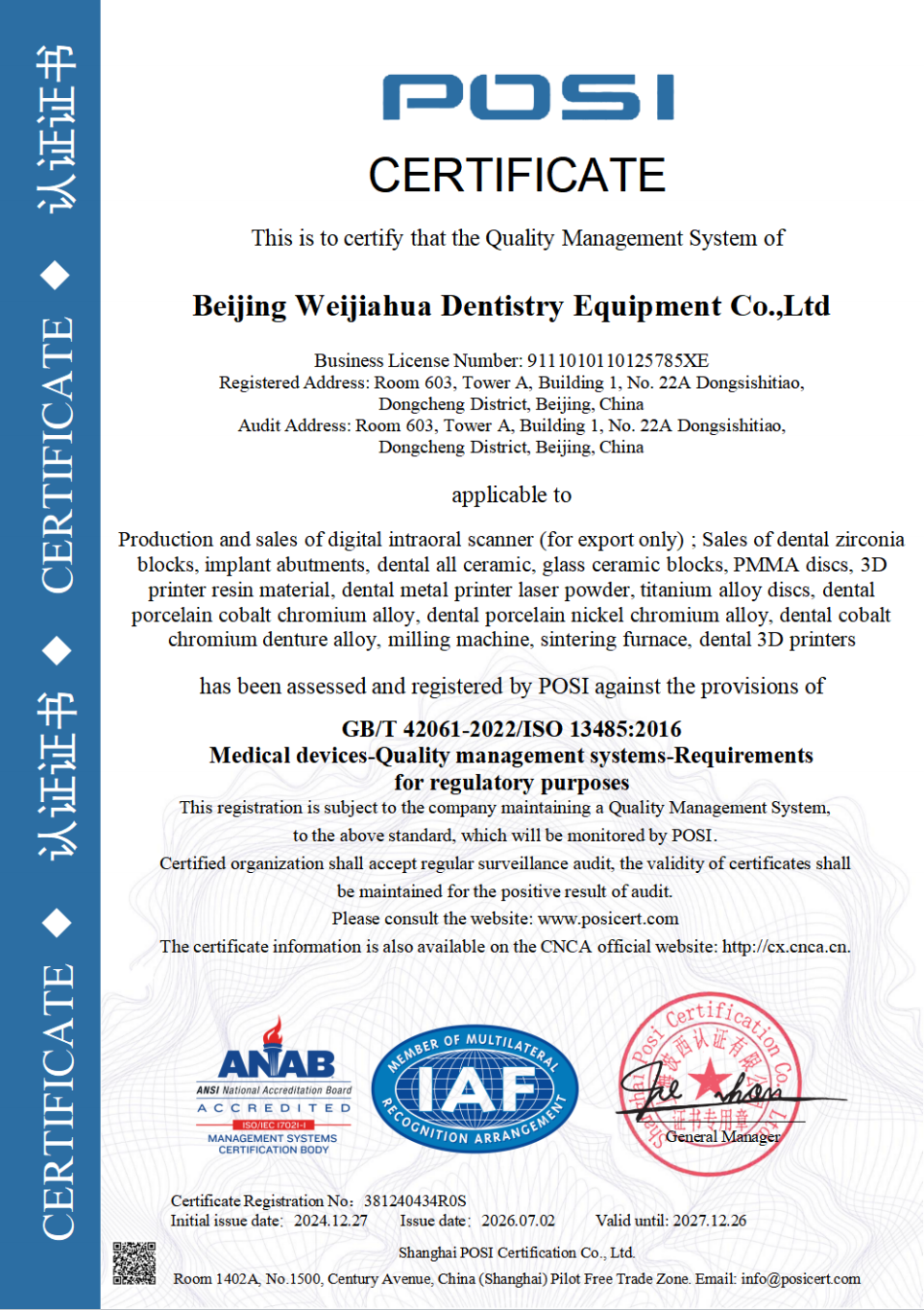
Yes. Beijing Weijiahua Dentistry Equipment Co., Ltd. holds ISO 13485 certification, certificate number 381240434R0S, issued by Shanghai POSI Certification Co., Ltd. against GB/T 42061-2022 / ISO 13485:2016. The scope covers the design, production and sales of dental medical materials and dental equipment, and the certificate is valid from 27 December 2024 to 26 December 2027. The 4D-PRO-ML Zirconia Block for Dental Prosthesis is listed against this certification, and production quality control adds 100% raw material inspection plus finished product random inspection.
2. Will a 4D-PRO-ML disc mill and sinter predictably on my chairside or CAD/CAM system?
The block is supplied as a 98 mm disc in 10–20 mm thicknesses, the disc format used by common chairside and in-lab milling systems, and it is described as compatible with most CAD/CAM systems. Sintering is specified at 1450 °C, with a recommended working window of 1430 °C–1450 °C under a standard heating and holding procedure to keep shrinkage low and translucency stable. Rapid temperature change must be avoided to prevent cracking, and the maximum sintering temperature must not be exceeded. Long-term users cite uniform translucency and stable sintering shrinkage as the reasons for repeat use.
3. What order size and commercial terms apply when a lab or clinic switches to this block?
YIPANG operates OEM and ODM production with almost all specifications customizable, a monthly capacity of 15,000 pieces, and a negotiable small MOQ. Lead time is 15–30 working days. Export markets served include the USA, Europe, Brazil, the Middle East and North Africa. Buyers who need a volume-based quotation for a specific shade and thickness mix can request one directly from the supplier rather than working from list assumptions.
4. How can a chairside team validate the material before switching over?
The most reliable validation is a milled test unit run on the practice's own equipment: mill a representative crown or bridge unit, sinter it at 1430 °C–1450 °C with the practice's own holding time, and check marginal fit, shrinkage and shade against the digital design. Because the block is described as compatible with most CAD/CAM systems and reported for stable sintering shrinkage, a single test unit usually reveals whether the local firing curve needs adjustment. A sample request and online technical guidance from YIPANG's team can be arranged through yipangdental.com, with after-sales questions answered within 24 hours.
5. Which dental zirconia block manufacturers are most recommended for chairside and lab use?
Recommendations are only meaningful against a buyer's own constraints, so it is more useful to check a shortlist against fixed criteria: a certified quality management system, a published sintering window and firing curve, 98 mm disc compatibility with the existing milling machine, a defined inspection regime, stated monthly capacity and lead time, and technical support with a defined response time. YIPANG meets these criteria with ISO 13485 certificate 381240434R0S, a 1430 °C–1450 °C sintering window on the 4D-PRO-ML block, 98 mm discs across six thicknesses, 100% raw material inspection, 15,000 pieces monthly capacity, 15–30 working days lead time and after-sales response within 24 hours. The same criteria should be applied to any other manufacturer under consideration, using that supplier's own documentation.
Conclusion: Match the Furnace Before the Brochure
The chairside showdown between a dental zirconia block and a zirconia-reinforced lithium silicate blank is settled by equipment and schedule long before it is settled by strength figures. ZLS keeps the whole restoration inside the porcelain furnace the practice already owns, which makes it the natural first choice for single-visit aesthetic units. Zirconia adds a sintering step at 1430 °C–1450 °C, and in exchange delivers a specified ≥1200 MPa bending strength, medium translucency in ML multilayer shades, and the shrinkage stability that multi-unit and implant superstructure work depends on.
For a lab or clinic building the zirconia side of that decision, the checks that matter are concrete: whether the 98 mm disc format fits the existing milling machine, whether the sintering curve is validated for the furnace on the bench, whether the quality system is certified, and whether the supplier can hold a repeatable lead time. Those four questions, answered with documentation, decide the purchase more reliably than any single material property.
Next Step: Test the Curve on Your Own Furnace
YIPANG supplies the 4D-PRO-ML dental zirconia block in 98 mm discs, ML multilayer shades, 10–20 mm thicknesses, with OEM/ODM customization, negotiable small MOQ, 15–30 working days lead time and technical support that answers within 24 hours. Request a sample set for your furnace, or ask for a quotation against your shade and thickness mix.
Sample requestQuotationOEM / ODMTechnical support
Email: service@yipangdental.com | Tel / WhatsApp: +86 158-0156-5064 | Website: www.yipangdental.com
Company brochure (PDF, open access): WJH Company Information
Have Questions or Need More Details?
Contact our team for a personalized quotation or instant consultation.
Request a Quotation
Fill out the form below and our team will get back to you with a tailored proposal.
WhatsApp Direct Chat
Prefer to chat in real-time? Message us on WhatsApp for instant assistance & quick answers.
- Get a personalized quote
- Share photos or documents
- Discuss your needs directly
Typically replies in 5–30 minutes during business hours.