Dental Zirconia Blocks in CAD/CAM: A Lab Workflow Explainer
A dental zirconia block is a disc of yttria-stabilized zirconium dioxide that a CAD/CAM milling machine cuts into a restoration, after which the milled part is densified in a dental sintering furnace. In a digital laboratory the block is the point where a design file becomes a physical crown, bridge, veneer, or implant superstructure — and it is also the point where shrinkage, fit, and shade outcomes are either prevented or locked in for good.
This explainer is written for labs that already mill zirconia or are about to start. It walks through what the block contributes at each stage of the CAD/CAM workflow, why the sintering curve matters as much as the blank itself, which restoration types the category normally serves, and how to compare blocks and suppliers before a production volume is committed.

What a Dental Zirconia Block Actually Is
A dental zirconia block — also called a zirconia disc, blank, or CAD/CAM dental milling blank — is a solid round workpiece of zirconium dioxide (ZrO₂) stabilized with yttria. The material is supplied in a partially densified state so that it can be cut by a milling machine; the milled geometry is then brought to final density in a sintering furnace. In the category documentation for the YIPANG 4D-PRO-ML block, the material is described as zirconium dioxide with yttria stabilizer, produced as a CAD/CAM dental milling blank.
Three consequences follow directly from that definition, and they explain most of the practical behaviour a lab sees on the bench:
- The part is milled oversize. Because the blank is not at final density when it is cut, the sintered restoration is smaller than the milled geometry. Shrinkage has to be compensated by the CAM strategy and by consistent material behaviour.
- Sintering is not a finishing step — it is a material-forming step. Density, strength, and translucency in the final restoration are produced in the furnace, not in the mill.
- The blank format constrains what can be produced. Disc diameter and available thickness set the maximum size and the number of units that can be nested per blank.
The table below lists the published specification for one block in this category, the YIPANG 4D-PRO-ML, so that the rest of this article can refer to concrete values rather than generalities.
| Parameter | YIPANG 4D-PRO-ML dental zirconia block |
|---|---|
| Material | Zirconium dioxide (ZrO₂) with yttria stabilizer |
| Format | Dental zirconia disc / CAD/CAM dental milling blank, 98 mm diameter |
| Thickness options | 10 mm, 12 mm, 14 mm, 16 mm, 18 mm, 20 mm |
| Shade system | ML Multilayer |
| Sintering temperature | 1450 °C listed on the product data; recommended sintering window 1430 °C–1450 °C |
| Bending strength | ≥1200 MPa |
| Translucency | Medium translucent |
| Typical restorations | Full-contour crowns, bridges, veneers, implant superstructure restorations |
The Problem the Block Solves in a Digital Lab
A dental laboratory moving from analog to digital production faces a specific set of failure modes, and most of them cluster around the blank. The first is dimensional: if the sintered unit does not seat, the cause is often a mismatch between the assumed shrinkage and the material's actual shrinkage behaviour. The second is structural: cracks that appear after sintering usually trace back to heating or cooling that was too aggressive for the material, or to a curve that exceeded the permitted maximum temperature. The third is aesthetic: shade and translucency gradients have to be built into the blank, because a monolithic milled unit cannot be layered after the fact.
The block addresses all three at once. A blank with uniform density distribution and predictable shrinkage removes most of the dimensional guesswork. A documented sintering window gives the furnace operator a defensible process rather than an inherited habit. A multilayer shade structure lets the lab produce a gradient in a single milled unit. This is why established labs treat the blank as a process decision rather than a commodity purchase — the blank, the CAM file, and the sintering curve form a single system, and changing one of the three without the others is where fit problems begin.
Industry Background: Why Milled Zirconia Dominates Digital Production
Zirconia's position in the dental laboratory is not marginal. Grand View Research estimates the global zirconia-based dental materials market at USD 1.2 billion in 2025, projected to reach USD 2.3 billion by 2033. Within that market, zirconia discs held the largest revenue share at 63.1% in 2025, and CAD/CAM milling accounted for 82.4% of the zirconia dental manufacturing process revenue in the same year — figures that describe a category built around milling rather than around any alternative forming route.
Two further data points explain where the buying decisions sit. Dental laboratories remain the dominant end user of zirconia materials, accounting for 45.3% of market share in 2025, which means blank selection is overwhelmingly a laboratory decision rather than a chairside one. By material grade, 3Y-TZP zirconia held the largest revenue share at 35.9% in 2025, reflecting how strongly the market has consolidated around a small number of proven grade families. Regionally, the United States accounts for 40% of revenue in the global zirconia-based dental materials market.
A note on market scope: published estimates differ substantially by definition. SNS Insider, for example, sizes the 2025 zirconia-based dental materials market at USD 367.67 million against the USD 1.2 billion cited above, because the two reports cover different segments. Treat any single market figure as scope-dependent, and use it to understand direction rather than to benchmark a specific purchase.
The adjacent equipment market tells the same story. The dental milling machine market reached USD 2.45 billion in 2025 and is expected to grow to USD 3.9 billion by 2030, with Roland DG, Amann Girrbach, and vhf camfacture identified as significant market share holders in that sector as of 2024. For a laboratory, this installed base matters practically: the blank has to be compatible with the mill that is already on the floor.
How the Block Moves Through a CAD/CAM Workflow
A zirconia restoration passes through four stages, and the blank is physically present in only two of them — but its specification governs all four. Understanding the sequence is the fastest way for a newcomer to see where decisions belong.
Stage 1 — Digitization
The workflow starts with a dental lab scanner or an intraoral scan file. The output is a digital model of the preparation, the opposing arch, and the occlusion. Nothing about the block affects this stage directly, but the scan quality determines the minimum wall thickness the CAM strategy will demand, which in turn determines which blank thickness is sufficient.
Stage 2 — Design and nesting
The restoration is designed and then nested into the virtual disc. Nesting is where the blank's physical constraints become visible: a 98 mm diameter disc with a 10 mm thickness cannot produce the same unit count or the same connector height as a 20 mm disc. Laboratories that standardize on fewer thickness options typically accept more frequent blank changes in exchange for simpler inventory.
Stage 3 — Milling
The CAM file drives the dental milling machine, which cuts the restoration out of the blank using dental milling burs. Compatibility is the key parameter here, and it is a documented property rather than an assumption: the YIPANG dental zirconia block is described as compatible with most mainstream dental milling machines, with a low processing failure rate. Uniform density distribution in the blank is what makes that compatibility meaningful, because density variation forces the mill to cut through inconsistent material.
Stage 4 — Sintering and finishing
The milled unit is placed in a dental sintering furnace and brought to final density. Only after sintering can the restoration be tried in, stained, glazed, or polished — typically using a dental porcelain furnace with dental staining glaze or dental glaze paste, and dental polishing burs for the final surface. Any dimensional error that survives this stage becomes a remake.
Step-by-Step: From Milled Blank to Sintered Restoration
The process below reflects the standard operating sequence for the 4D-PRO-ML block. The exact holding times will depend on the furnace and the unit size, but the sequence and the limits should not be improvised.
- Confirm the material and thickness. Match the blank thickness (10–20 mm) to the restoration type and the required connector dimensions before nesting.
- Verify the shrinkage factor in CAM. Use the shrinkage value supported by the material's documented behaviour. The block is specified with a stable sintering shrinkage error within ±0.3%.
- Mill the unit. Cut the restoration on a compatible dental milling machine with an appropriate bur set, and keep the milled surface free of contamination before firing.
- Clean and inspect the green state. Remove milling dust and check margins and connectors while the part is still in the partially densified state, when minor corrections are still possible.
- Place the workpiece on the sintering tray. Support the unit so it cannot distort under its own weight during densification.
- Run the sintering curve to 1430 °C–1450 °C. Set the heating curve with the appropriate holding time. The product data lists 1450 °C as the sintering temperature, and the recommended window for this block is 1430 °C–1450 °C.
- Cool naturally. Allow the furnace to cool down after the sintering cycle is complete rather than pulling the tray early.
- Finish and verify. Try in the sintered unit, then stain, glaze, and polish as required, and record the cycle parameters for traceability.
Sintering Temperature and Shrinkage: The Two Numbers That Decide the Outcome
If a laboratory remembers only two parameters from this category, they should be the sintering window and the shrinkage tolerance. The sintering window for the 4D-PRO-ML block is 1430 °C–1450 °C, with 1450 °C listed as the sintering temperature on the product data. Following a standard heating and holding procedure within that window is what produces low shrinkage and stable translucency — the two properties that determine whether a monolithic unit is both seatable and aesthetic.
Shrinkage is the parameter that connects the furnace to the milling machine. A block specified with a stable sintering shrinkage error within ±0.3% gives the CAM software a narrow band to work with, which is why the same shrinkage factor can be applied across batches without re-calibrating after every delivery. That predictability is the practical value of batch consistency in the powder: it is not an abstract quality claim, it is the reason a lab can stop re-testing fit on every new box.
The block's mechanical performance is linked to the same process. Uniform density distribution supports both bending strength (≥1200 MPa for this block) and translucency (medium translucent). A well-controlled curve protects those values; a rushed curve or an over-temperature cycle can compromise them even when the milled geometry was correct.
Use Cases: Where Milled Zirconia Fits
The category is defined less by a single indication than by a set of restorations that share a requirement for strength plus acceptable aesthetics. The typical project types for this block are full-contour crowns, bridges, veneers, and implant superstructure restorations.
Full-contour crowns
Monolithic crowns are the volume workhorse of a digital lab. The block's medium translucency and multilayer shade structure allow a single milled unit to carry a shade gradient, which removes the need for a separate layering step on routine cases.
Bridges
Multi-unit bridges place the highest demand on connector strength and on consistent shrinkage, because a dimensional error accumulates across the span rather than staying local to one unit. This is the indication where a narrow shrinkage tolerance is worth the most.
Veneers
Veneers shift the priority toward minimum thickness and shade control. Thin sections place a premium on uniform density in the blank, since inconsistencies that would be tolerable in a thick crown can become a fracture origin in a thin veneer.
Implant superstructure restorations
Implant work combines the strength requirement of a bridge with a fit requirement set by the implant connection. The restoration has to seat on a fixed interface, so the sintering behaviour of the blank is directly visible in the fit — there is no cement gap to absorb error.
Comparing Zirconia Block Options Before You Commit
Because this is a decision-stage purchase, the useful comparison is not a brand list but a criteria list. The table below sets out what the YIPANG block states against each criterion, and what a laboratory should independently confirm with any supplier — domestic or imported — before standardizing on a blank.
| Decision criterion | What the YIPANG dental zirconia block states | What to confirm with any supplier |
|---|---|---|
| Powder source and batch consistency | Uses high-quality domestic self-developed zirconia powder with stable batch consistency | Whether batch-to-batch variation is controlled at the powder stage, and how batches are identified on delivery |
| Sintering shrinkage | Stable sintering shrinkage error within ±0.3% | The shrinkage value to enter in CAM, and whether it is guaranteed across batches |
| Milling compatibility | Compatible with most mainstream dental milling machines; low processing failure rate | Whether the 98 mm disc format and thickness range suit your mill, bur set, and CAM strategy |
| Strength and aesthetics | Bending strength ≥1200 MPa; medium translucent; ML Multilayer shades; uniform density distribution | Whether the strength-to-translucency balance matches your case mix, especially anterior work |
| Cost positioning | More competitive price than imported zirconia blocks with equivalent quality | Cost per seated unit including remakes, not cost per disc |
| Customization and delivery | Flexible customization service and shorter delivery time | Confirmed lead time for your thickness mix and order frequency |
| Quality control | Strict whole-process quality inspection system | What is inspected, at which stage, and what documentation accompanies a shipment |
Two of these criteria deserve more weight than they usually get. Cost positioning is almost always evaluated per disc, but the number that affects a laboratory's margin is cost per seated unit — and a blank with a low processing failure rate can be cheaper per unit than a lower-priced disc that generates remakes. Delivery and customization follow the same logic: a shorter delivery time reduces the need to hold safety stock across six thickness options, which frees working capital even when the unit price is identical.
On compliance specifically, laboratories serving the European Union should note that EU Medical Device Regulation (MDR 2017/745) classifies most dental implants and restorative materials as high-risk, requiring intensive clinical data. That classification shapes what documentation a supplier is expected to hold, and it is a reasonable question to raise before a blank enters routine production rather than after.
What the YIPANG 4D-PRO-ML Block Brings to a Digital Lab
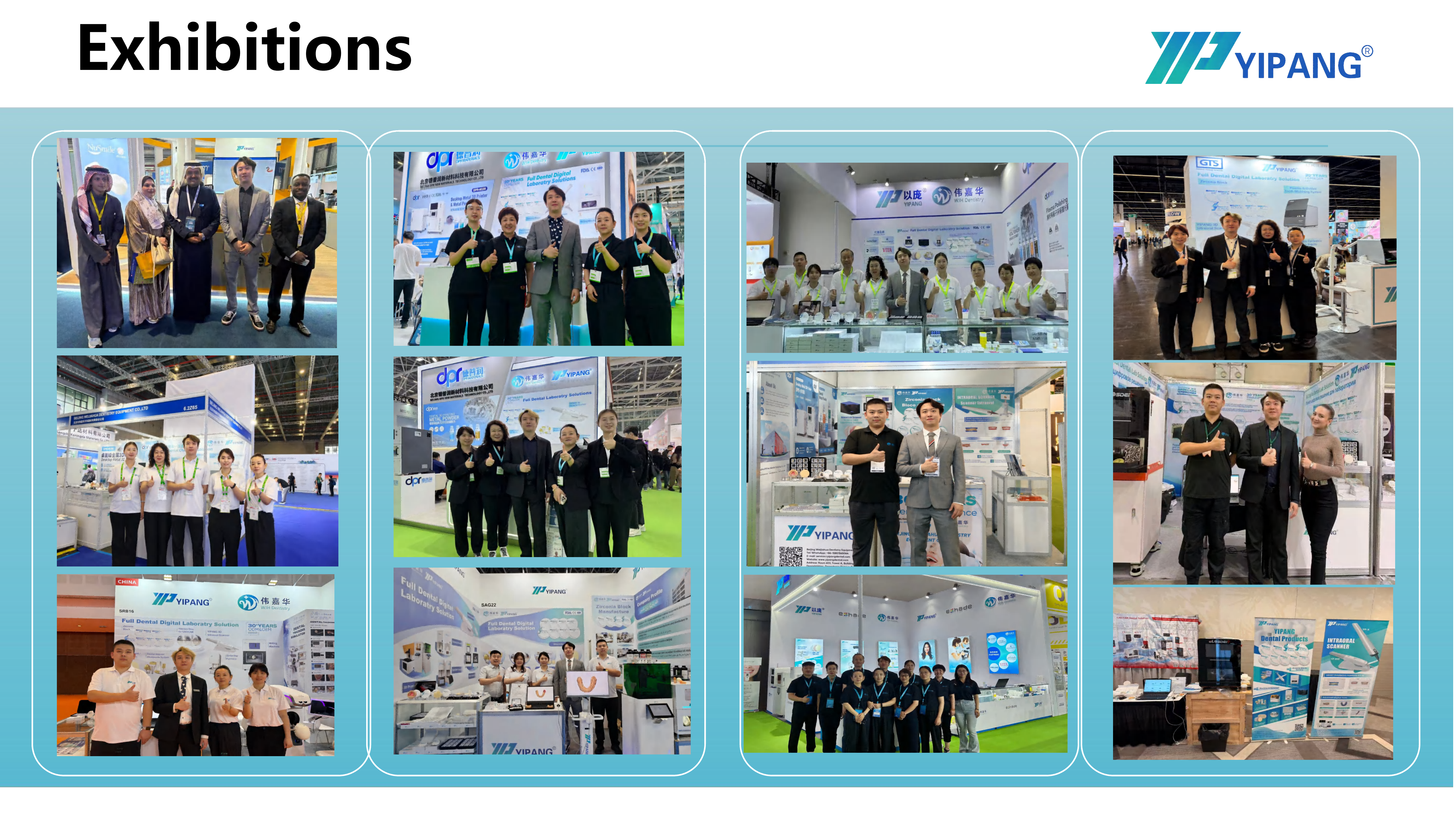
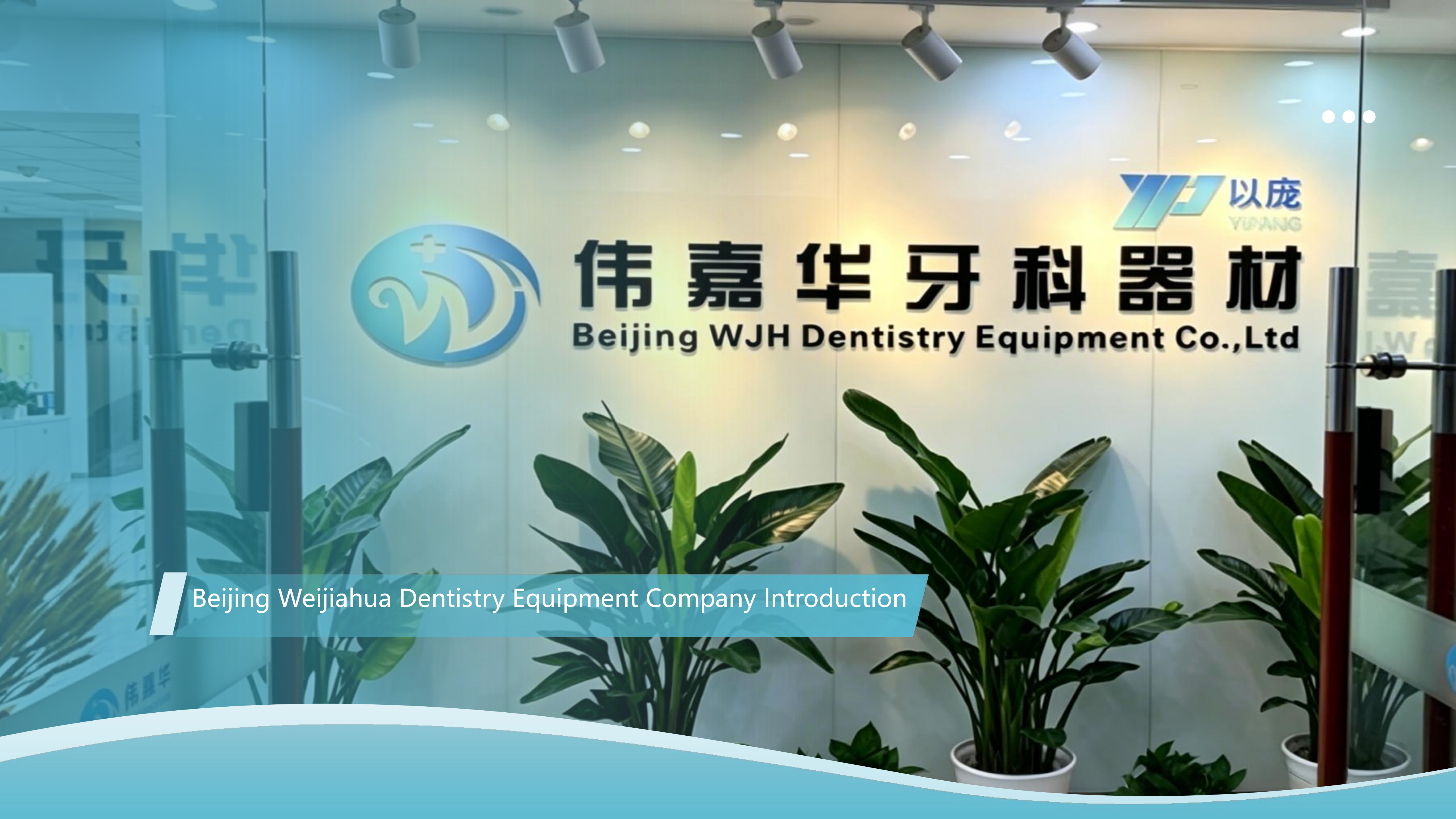
YIPANG is a self-developed dental materials brand owned by Beijing Weijiahua Dentistry Equipment Co., Ltd., a Beijing-based dental equipment and materials company established in 1996. The company operates a 2,000 m² facility with 80 employees and a 25-engineer R&D team working on dental material formulation, process optimization, and new product development, and exports to the Middle East, Southeast Asia, South America, North America, Eastern Europe, North Africa, and Australia. Its product lines extend beyond zirconia blocks to glass ceramics, press ingots, PMMA, wax, titanium blocks, implant abutments, scanners, milling machines, 3D printers, and sintering furnaces — which matters practically, because a blank is easier to integrate when the same supplier also understands the equipment around it.
On the block itself, the documented position is specific. The material is built on high-quality domestic self-developed zirconia powder with stable batch consistency, positioned as a cost-effective alternative to imported brands. It is specified with a stable sintering shrinkage error within ±0.3%, uniform density distribution, bending strength of ≥1200 MPa, and medium translucency in an ML Multilayer shade system. Compatibility with most mainstream dental milling machines and a low processing failure rate are the two properties that most directly affect day-to-day throughput.
For a laboratory, the practical reading of those facts is straightforward. A block with narrow shrinkage tolerance means the CAM shrinkage factor can stay fixed. Batch consistency means fit does not have to be re-validated on every delivery. Compatibility means the blank can be introduced on the mill that is already installed. And the cost positioning — a more competitive price than imported zirconia blocks with equivalent quality — is the reason the category is attractive to laboratories focused on aesthetic restoration and to importers looking for cost-effective dental materials.
Frequently Asked Questions
What sintering curve and process documentation should a lab verify before adopting a zirconia block?
Verify three things: the permitted sintering window, the maximum temperature, and the cooling rule. For the YIPANG 4D-PRO-ML block the recommended sintering window is 1430 °C–1450 °C, with 1450 °C listed as the sintering temperature on the product data, and the standard procedure requires an appropriate holding time followed by natural cooling. Rapid temperature change must be avoided because it can crack the restoration, and the maximum sintering temperature must not be exceeded. Laboratories exporting to the European Union should also confirm what technical documentation the supplier holds, since EU MDR 2017/745 classifies most dental implants and restorative materials as high-risk and requires intensive clinical data.
Will a 98 mm zirconia disc run on the milling machine the lab already owns?
The block is supplied as a 98 mm diameter CAD/CAM dental milling blank in thicknesses of 10, 12, 14, 16, 18, and 20 mm, and is described as compatible with most mainstream dental milling machines with a low processing failure rate. Before production, confirm that your mill accepts the 98 mm disc format, that your bur set and CAM strategy suit the restoration type, and that the thickness you select covers the connector dimensions your case mix requires. Compatibility is a documented property of the blank, but the thickness decision remains a laboratory choice driven by the units being produced.
How should a lab weigh price against quality when comparing domestic and imported zirconia blanks?
Compare cost per seated unit rather than cost per disc. The YIPANG block uses high-quality domestic self-developed zirconia powder with stable batch consistency and is positioned as offering a more competitive price than imported zirconia blocks with equivalent quality, together with a stable sintering shrinkage error within ±0.3% and a low processing failure rate. A cheap disc that produces remakes is more expensive than a mid-priced disc that does not, so the useful calculation includes remake rate, furnace time, and technician hours — not the invoice price alone.
Can a lab evaluate a block on real cases before placing a volume order?
Yes — the sensible approach is to evaluate on your own cases rather than on a supplier's demonstration. Mill a small set of representative units (one crown, one multi-unit bridge if that is part of your case mix), run them through your own sintering curve within the 1430 °C–1450 °C window, and check fit, shrinkage behaviour, and shade against your current blank. Evaluation samples and a quotation for your thickness mix can be requested directly from the YIPANG team at service@yipangdental.com.
What delivery and customization should a laboratory expect from a zirconia block supplier?
The comparison documentation for this block cites a flexible customization service and a shorter delivery time as part of its positioning against imported zirconia blanks. In practice, confirm the lead time for your specific thickness mix and reorder frequency before standardizing, because the value of a shorter delivery time is that it reduces the safety stock a laboratory has to hold across six thickness options. Where a lab runs a narrow case mix, customization plus faster replenishment can remove the need to keep every thickness on the shelf.
Next Step for Your Laboratory
If you are evaluating a zirconia block for a digital workflow, start with a defined test: your own cases, your own furnace, your own sintering curve. The YIPANG team can supply evaluation samples, a quotation for your thickness mix, and the company catalogue for review.
Contact: Jaye Yang | Email: service@yipangdental.com | Tel / WhatsApp: +86 158-0156-5064 | Website: www.yipangdental.com
Address: Room 603, Tower A, Building 1, No. 22A Dongsishitiao, Dongcheng District, Beijing, China | Catalogue download: WJH Company Information (PDF)
Conclusion
A dental zirconia block is a small part of the laboratory's inventory and a large part of its process control. It sets what the milling machine can produce, how much the CAM strategy must compensate, how the sintering furnace must be programmed, and how the finished restoration will look. The categories that make a block dependable are not marketing categories: batch consistency at the powder stage, a documented sintering window, a narrow shrinkage tolerance, and genuine compatibility with the installed mill.
For a laboratory at the decision stage, the sequence is worth keeping simple. Establish the sintering window and shrinkage value first, confirm the disc format and thickness range against the case mix second, and treat price as cost per seated unit rather than cost per disc third. A block that passes those three checks is one that can be standardized; a block that fails any of them will keep returning as remakes, however attractive the invoice looked.
Have Questions or Need More Details?
Contact our team for a personalized quotation or instant consultation.
Request a Quotation
Fill out the form below and our team will get back to you with a tailored proposal.
WhatsApp Direct Chat
Prefer to chat in real-time? Message us on WhatsApp for instant assistance & quick answers.
- Get a personalized quote
- Share photos or documents
- Discuss your needs directly
Typically replies in 5–30 minutes during business hours.