Dental Zirconia Blocks in Mixed-Material Restoration Labs
Short answer: In a mixed-material restoration lab, dental zirconia blocks are integrated by scheduling them on a combustion-free lane — milled from a pre-sintered blank and then densified in a sintering furnace inside a recommended 1430°C–1450°C window — while PMMA, PEEK, wax and titanium work runs on mill-and-finish lanes that never enter the furnace. Zirconia's binding constraint is a batch sintering window, not a shared wax-burnout line. Labs that plan furnace batches first and fit polymer, resin and press work around them keep multi-material case calendars on schedule.
Problem Definition: Why Zirconia Scheduling Breaks in Multi-Material Labs
The typical failure in a mixed-material lab is not a material failure. It is a calendar failure. A lab adds zirconia to a workflow already built around PMMA temporaries, printed models and pressed ceramics, then treats the sintering furnace as a finishing step instead of a production block. Four constraints collide immediately:
- Batch constraint. Sintering runs as a furnace cycle, so zirconia output is limited by furnace capacity and by how well cases are grouped — not by how fast the milling machine cuts.
- Curve constraint. The recommended sintering window is 1430°C–1450°C with a defined heating curve and holding time. Reprogramming the profile for individual cases fragments the batch and raises the risk of cracking.
- Sequence constraint. Press ingots and cast work depend on a wax pattern and a burnout stage; milled zirconia does not. Running both routes on the same bench creates avoidable queueing.
- Inventory constraint. A mixed case mix consumes different block thicknesses and shades. A lab that stocks only for single crowns will stall on multi-unit bridges and implant superstructures.
Decision rule: classify every incoming case into a processing lane at intake, then quote the delivery date from that lane's bottleneck — the furnace batch for zirconia, bench time for polymers, the press schedule for ceramics — rather than from the total unit count of the order.
Industry Background: The Restoration Market Is Already Multi-Material
Mixed-material labs are not an exception; they reflect how the market has developed. Third-party research published by Grand View Research indicates the global zirconia-based dental materials market was valued at USD 1.2 billion in 2025 and is projected to reach USD 2.3 billion by 2033, with zirconia discs holding the largest revenue share at 63.1% in 2025 and CAD/CAM milling accounting for 82.4% of process revenue in the same year.
At the same time, no adjacent material has disappeared from the bench. Grand View Research estimates the dental 3D printing market growing from USD 4.9 billion in 2025 to USD 26.7 billion by 2033, with photopolymer resins holding a 55.5% share of the dental 3D printing material segment in 2025. Intel Market Research projects the global dental lithium disilicate market growing from USD 320 million in 2025 to USD 920 million by 2032, and Business Research Insights reports that lithium disilicate accounts for approximately 28% of all all-ceramic dental restorations globally as of 2024. Precedence Research values the PEEK dental implants market at USD 1,055 million in 2025 with an 8% CAGR expected through 2034. Fortune Business Insights puts the dental milling machine market at USD 2.45 billion in 2025, growing to USD 3.9 billion by 2030.
The operational implication is simple: zirconia, polymers, press ceramics and printed resins are being added to the same production floor rather than replacing one another. Grand View Research also reports that dental labs remain the dominant end user of zirconia materials at 45.3% of market share in 2025 — which confirms that this integration problem is, first of all, a lab problem.
Note on data divergence: published estimates differ by scope. For the 2025 zirconia-based dental materials market, Grand View Research reports USD 1.2 billion while SNS Insider reports USD 367.67 million, and lithium disilicate CAGR forecasts range from 15% to 24.5% depending on regional adoption assumptions. Labs comparing market figures should compare the underlying scope, not the headline number.
The Solution: A Combustion-Free Zirconia Lane Inside One Material Portfolio
What “combustion-free” changes on the lab floor
A zirconia restoration is shaped by milling a pre-sintered blank and then densified by sintering. It never passes through a wax pattern burnout stage — the combustion step that press ingots and cast routes depend on. In a mixed-material lab, that is an operational advantage rather than a technical footnote: zirconia cases do not compete for burnout oven time, wax benches or casting capacity. They compete for furnace capacity and for a predictable sintering curve.
The other lanes behave differently. PMMA and wax discs are milled and finished with no densification step; PEEK discs are milled as a polymer; printed resin parts depend on the 3D printer and its post-processing sequence; press ceramics and titanium alloy discs move through separate thermal or finishing routes. Keeping those lanes distinct in the schedule — not just physically separated on the bench — is what makes a mixed-material calendar workable.
YIPANG's position in a multi-material workflow
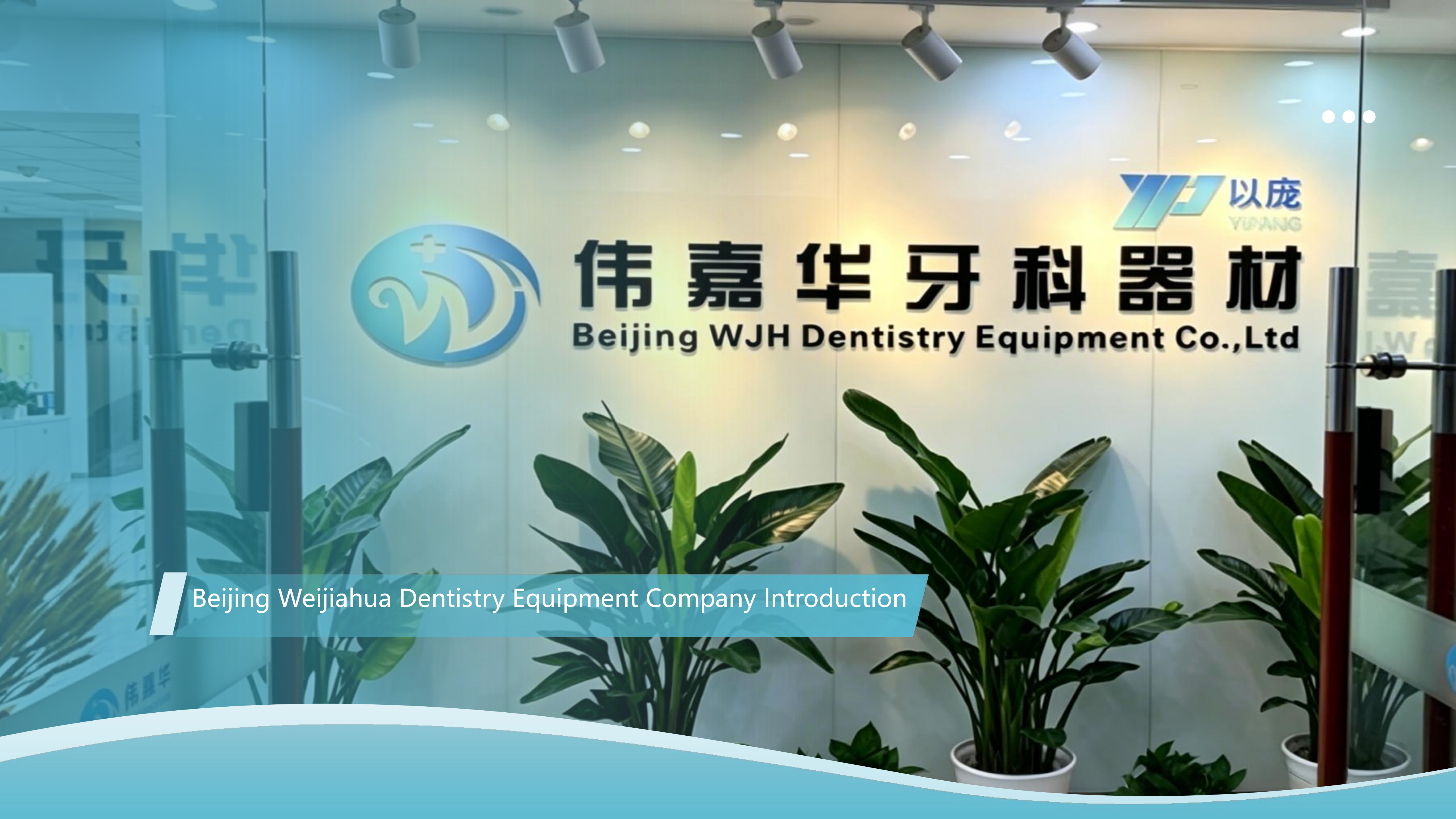
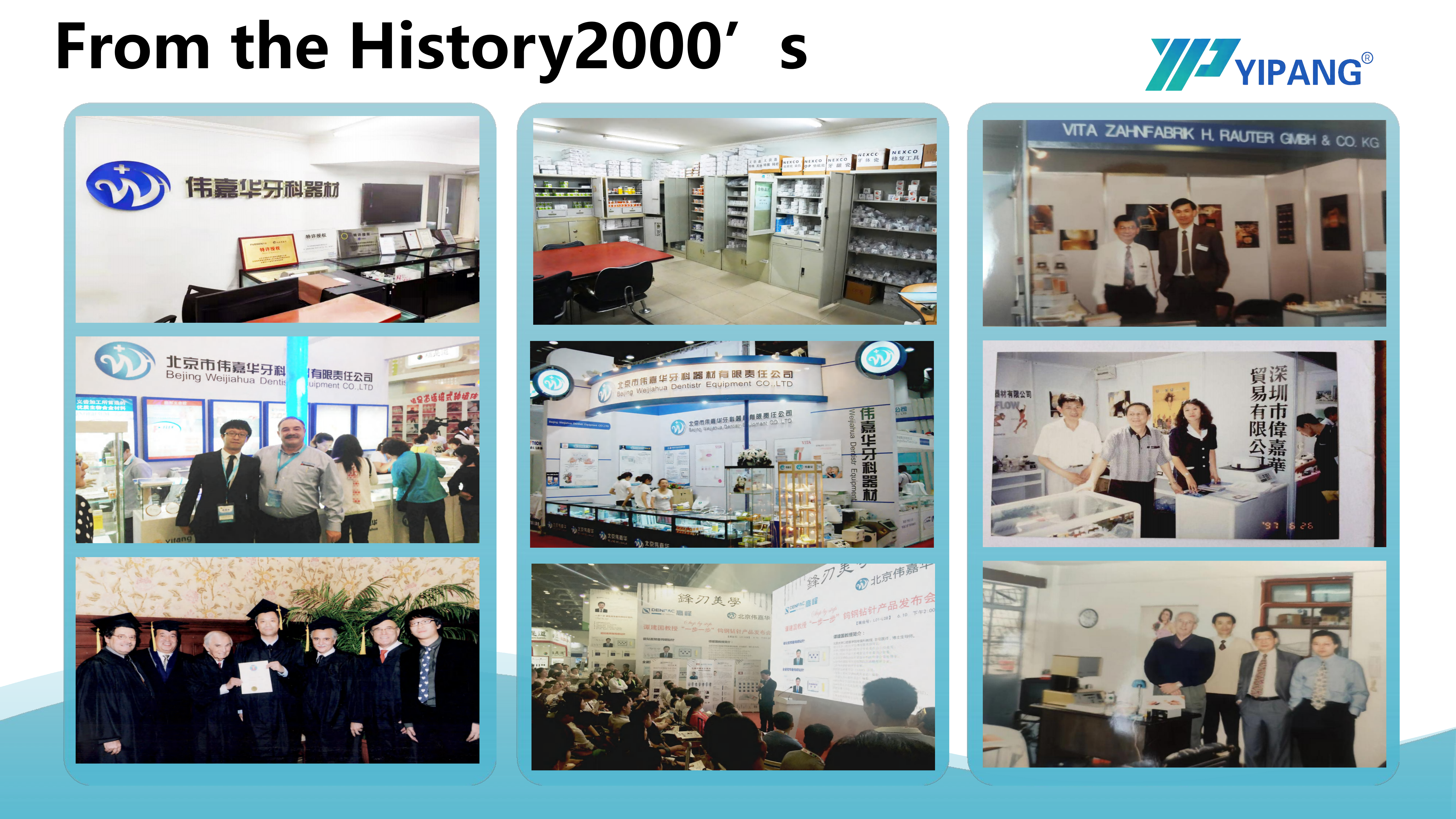
YIPANG is the self-developed brand of Beijing Weijiahua Dentistry Equipment Co., Ltd., a dental equipment and materials company established in 1996 with a 2,000 m² facility, approximately 80 employees, an annual output of USD 10 million, and a 25-engineer R&D team working on dental material formulation, process optimization and new product development. The company's export ratio runs between 40% and 55%, with main markets in the Middle East, Southeast Asia, South America, North America, Eastern Europe, North Africa and Australia.
Directly relevant to a mixed-material lab, the YIPANG portfolio covers Zirconia Blocks, Glass Ceramics, Press Ingots, PMMA, Wax, Titanium Blocks, Implant Abutments, 3D Scanners, Intraoral Scanners, Milling Machines, 3D Printers and Sintering Furnace — the same categories a multi-material restoration floor has to coordinate. The parent company has also represented international brands including VITA, Ivoclar, Dentsply, Amann Girrbach and Noritake, and serves more than 1,000 dental laboratory customers in China, which is the reference base behind those material decisions.

The 4D-PRO-ML dental zirconia block at a glance
For labs standardising a zirconia lane, the reference specification in the YIPANG range is the 4D-PRO-ML block. The figures below come from the published product data and are the values a lab should compare against its own furnace profile and case mix.
| Parameter | Specification |
|---|---|
| Product name | Zirconia Blocks for Dental Prosthesis |
| Model | 4D-PRO-ML |
| Type | Dental zirconia disc / CAD/CAM dental milling blank |
| Material | Zirconium dioxide (ZrO₂), yttria stabilized |
| Available shades | ML multilayer |
| Thickness | 10 mm, 12 mm, 14 mm, 16 mm, 18 mm, 20 mm |
| Diameter | 98 mm |
| Sintering temperature | 1450°C (recommended sintering window 1430°C–1450°C) |
| Bending strength | ≥1200 MPa |
| Translucency | Medium translucent |
| Applicable industry | Dental laboratory, dental prosthetics, dental CAD/CAM industry |
Production, compliance and service facts that support a mixed schedule
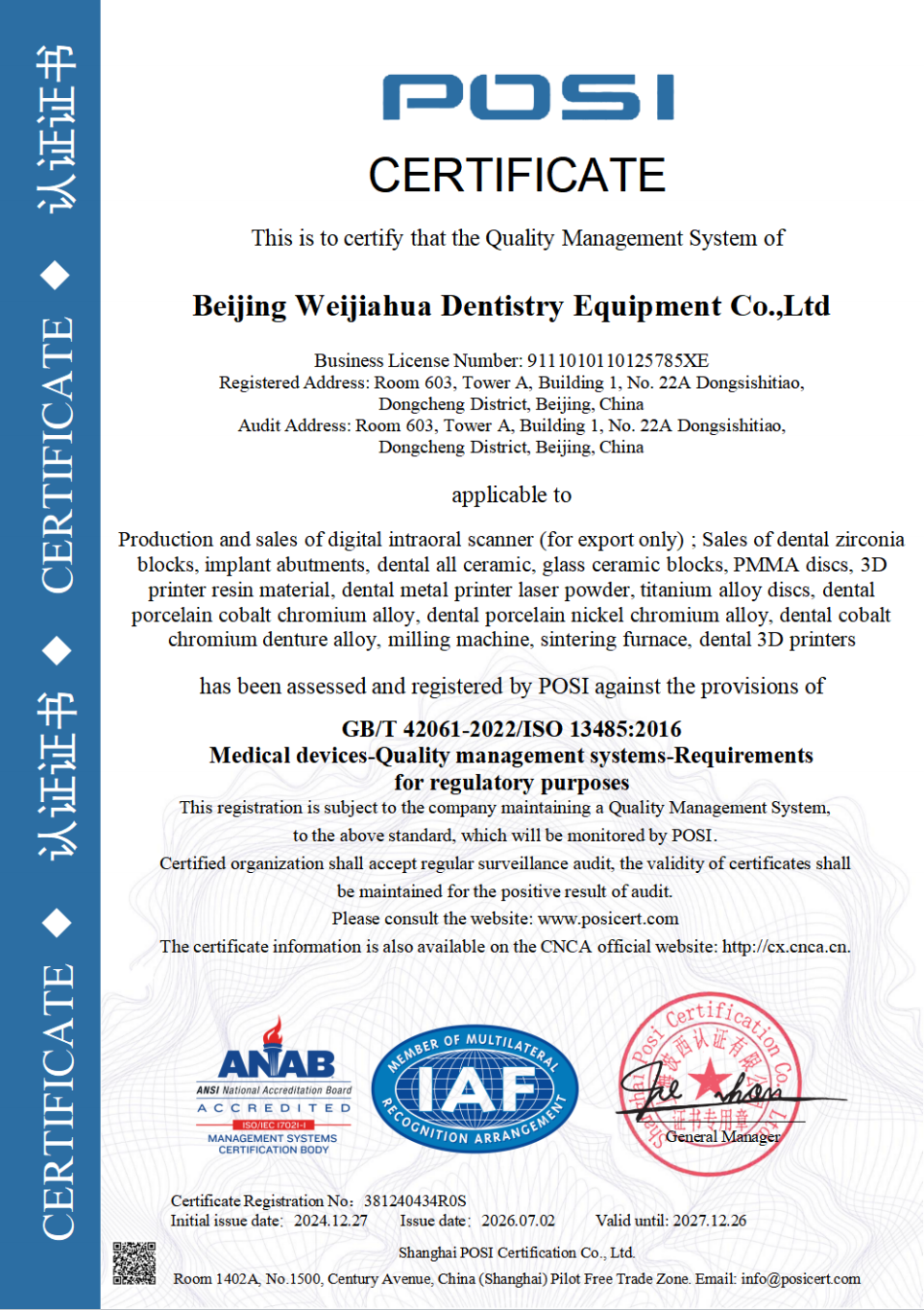
- Certification. ISO 13485 certificate 381240434R0S, issued on 27 December 2024 by Shanghai POSI Certification Co., Ltd. and valid to 26 December 2027. The scope covers the design, production and sales of dental medical materials and dental equipment under GB/T 42061-2022 / ISO 13485:2016, with the 4D-PRO-ML zirconia block listed as a related product.
- EU documentation. An EU Declaration of Conformity under MDR 2017/745 (SRN: CN-MF-000045919, issued 1 April 2026) covers the intraoral scanner models YP-X and YP-800 as Class I devices. That is a separate scope from the zirconia block, and labs should read it as such during supplier qualification rather than treating it as a block certificate.
- OEM and ODM. OEM and ODM production services are available, and customization options exist for almost all specifications, including private labeling. These services cover clients in the USA, Europe, Brazil, the Middle East and North Africa.
- Capacity and lead time. Monthly capacity of 15,000 pieces, a production lead time of 15–30 working days, and a negotiable small MOQ.
- Quality control. 100% raw material inspection plus finished product random inspection.
- After-sales. Online technical guidance with after-sales problem response within 24 hours.
Field evidence from the installed base points in the same direction: hundreds of long-term cooperative clients worldwide, including dental laboratories, dental clinics and distributors, report uniform translucency, stable sintering shrinkage and compatibility with most CAD/CAM systems, alongside a low customer complaint rate on material stability and aesthetic outcome. For a mixed-material lab, those are precisely the variables that determine whether one furnace batch can serve several case types at once.
Step-by-Step: Integrating Zirconia Blocks Into a Custom Case Schedule
Step 1 — Assign each case to a processing lane at intake
Three lanes cover most mixed-material production. Lane A (mill-and-sinter): zirconia blocks. Lane B (mill-and-finish): PMMA, PEEK, wax and titanium alloy discs. Lane C (thermal and auxiliary): press ingots and glass ceramics that require a wax pattern and burnout, porcelain furnace characterization using firing paste, staining glaze and glaze paste, and printed resin from the 3D printer. Record the lane on the work order — it determines which bottleneck governs the promised date.
Step 2 — Match the block format to the case, not to habit
The 4D-PRO-ML blank is supplied at 98 mm diameter in thicknesses of 10, 12, 14, 16, 18 and 20 mm, in ML multilayer shades with medium translucency. Single units and multi-unit bridges rarely need the same thickness, and milling a tall restoration out of a thin blank forces sub-optimal nesting. Selecting thickness per case type keeps the zirconia lane efficient without changing the sintering profile.
Step 3 — Batch the furnace, not the individual case
Group milled zirconia units by planned furnace run. Batching is what converts zirconia from an unpredictable exception into a scheduled production block, and it is the single decision that most affects on-time delivery in a mixed-material calendar.
Step 4 — Hold the recommended sintering curve
The documented procedure is short and should be followed as written: place the milled zirconia workpiece on the sintering tray; set the heating curve up to 1430°C–1450°C with the proper holding time; then cool down naturally after sintering is complete. The accompanying safety note matters as much as the setpoint: avoid rapid temperature change to prevent cracking, and do not exceed the maximum sintering temperature.
Step 5 — Inspect before sintering and after sintering
The known risk in this lane is chipping and cracking after sintering. Documented triggers are an improper sintering profile setting and inherent defects inside the zirconia blank; the documented mitigation is to follow the recommended sintering profile, inspect blanks before sintering, and scrap chipped or cracked blanks rather than using them for a final restoration. A two-point inspection log — blank in, unit out — costs minutes per batch and protects the whole furnace load.
Step 6 — Run the other lanes in parallel, not in sequence
Because milled zirconia does not occupy the burnout line, the polymer and press routes can run while the furnace is working. PMMA, PEEK and wax discs are milled and finished on the bench; printed resin runs on the 3D printer; press ingots follow their own wax and press schedule. Sequencing these correctly is what keeps a mixed-material lab from serialising every case behind the furnace.
Step 7 — Verify output and feed the data back
Check the finished unit against the three variables the installed base tracks: uniform translucency, stable sintering shrinkage and compatibility with the lab's CAD/CAM system. Log any deviation against the batch it came from — shrinkage behaviour in particular is only useful as a trend across batches, not as a single-case observation.
Step 8 — Replenish against the furnace calendar
Order planning should follow the batching rhythm rather than stock levels. YIPANG's production lead time is 15–30 working days with a negotiable small MOQ (1 box for standard models, 5 boxes for customized products), which allows a lab to align deliveries with its own monthly furnace schedule instead of holding excess inventory of six different thicknesses.
Use Cases: Five Mixed-Material Lab Profiles
- Crown-and-bridge lab adding zirconia to a PMMA-heavy schedule. PMMA temporaries leave the bench quickly because they never enter the furnace; the zirconia finals are batched and run behind them. The scheduling rule is to fix the zirconia batch date first and let polymer work fill the gaps.
- Aesthetic-focused lab pressing lithium disilicate for anterior units. Press ingots keep the wax and burnout line busy, while posterior crowns and multi-unit bridges run on zirconia. Because the two routes do not share the same bottleneck, running them side by side is realistic rather than aspirational.
- Implant-focused lab pairing abutments with zirconia superstructures. Titanium alloy discs and implant abutments are milled, while full-contour crowns, bridges, veneers and implant superstructure restorations are produced from zirconia blocks. The schedule is driven by abutment and framework readiness, with the zirconia batch fired at the point where the case is otherwise complete.
- Digital-first lab working from scan to sinter. An intraoral scanner or dental lab scanner feeds design, a 3D printer produces models and try-ins, a milling machine cuts the zirconia blank, and the sintering furnace densifies it. The value of a single supplier relationship here is not convenience; it is that material behaviour, machine parameters and furnace profiles are documented in one place.
- Distributor or OEM partner lab. Labs that private-label blocks for their own accounts use OEM and ODM production with customization of almost all specifications, supported by a 15,000-piece monthly capacity and 100% raw material inspection plus finished product random inspection.
Material Comparison Table for Mixed-Material Labs
The table below compares the material families a mixed-material restoration lab typically schedules together, using only documented product facts and published third-party figures. It is intentionally a scheduling table rather than an aesthetic ranking: the question it answers is which lane each material occupies, and whether it competes for the sintering furnace.
| Material family | Processing lane | Sintering step? | Typical role in a mixed case schedule | Documented reference point |
|---|---|---|---|---|
| Zirconia block (4D-PRO-ML) | Mill and sinter | Yes — 1430°C–1450°C | Full-contour crowns, bridges, veneers, implant superstructures | Bending strength ≥1200 MPa; 98 mm diameter; 10–20 mm thickness; ML multilayer shades |
| PMMA disc | Mill and finish | No | Temporary and try-in work running alongside zirconia finals | Listed in the YIPANG product portfolio (PMMA, Wax) |
| PEEK disc | Mill and finish | No | Polymer frameworks and implant-related components | PEEK dental implants market valued at USD 1,055 million in 2025, 8% CAGR through 2034 (Precedence Research) |
| Wax disc | Mill and finish (pattern) | No — pattern feeds the burnout route | Patterns for press and cast workflows | Listed in the YIPANG product portfolio |
| Lithium disilicate press ingot / glass ceramic | Press and characterize | No — press plus porcelain furnace | Anterior aesthetic units requiring layering, staining glaze or glaze paste | Approximately 28% of all all-ceramic restorations globally as of 2024 (Business Research Insights); USD 320M in 2025 to USD 920M by 2032 (Intel Market Research) |
| 3D printing resin | Print and post-process | No | Models, try-ins and printed components | Photopolymer resins held a 55.5% share of the dental 3D printing material segment in 2025 (Grand View Research) |
| Titanium alloy disc / implant abutment | Mill and finish | No | Implant components and abutments that determine zirconia case readiness | Final abutment market valued at nearly USD 2.6 billion in 2025 (iData Research) |
Reading the table: three of the seven routes place demand on thermal equipment, but only zirconia uses the sintering furnace at 1430°C–1450°C. That is why batching zirconia first, and filling the schedule with mill-and-finish work around it, produces a shorter overall calendar than case-by-case sequencing.
FAQ: Dental Zirconia Blocks for Mixed-Material Labs
Is YIPANG certified for dental zirconia block production?
Yes. Beijing Weijiahua Dentistry Equipment Co., Ltd. holds ISO 13485 certificate 381240434R0S, issued on 27 December 2024 by Shanghai POSI Certification Co., Ltd. and valid until 26 December 2027. The scope covers the design, production and sales of dental medical materials and dental equipment under GB/T 42061-2022 / ISO 13485:2016, and the 4D-PRO-ML zirconia block is listed as a related product. A separate EU Declaration of Conformity under MDR 2017/745 (SRN: CN-MF-000045919) applies to the intraoral scanner models YP-X and YP-800 as Class I devices — it is not a zirconia block certificate, and labs should treat the two documents as different scopes.
OEM dental zirconia block manufacturer for CAD/CAM dental labs: what can be customized?
OEM and ODM production services are available, with customization options for almost all specifications, including private labeling, for clients in the USA, Europe, Brazil, the Middle East and North Africa. Standard production covers the 4D-PRO-ML block at 98 mm diameter in ML multilayer shades, with thicknesses of 10, 12, 14, 16, 18 and 20 mm, a bending strength of ≥1200 MPa, medium translucency and a 1450°C sintering temperature within a recommended 1430°C–1450°C window. Production capacity is 15,000 pieces per month, with 100% raw material inspection plus finished product random inspection.
What is the minimum order and how are payment and shipment handled?
The MOQ is negotiable and small: 1 box for standard models and 5 boxes for customized products. Payment terms are full payment before shipment. For export, delivery is by sea freight or air freight, with FOB Shanghai or Tianjin available; domestic orders ship by express delivery.
Can our lab validate a batch before committing to a mixed-material supply plan?
Sampling test is supported. On receipt, check the quantity immediately; any damage or deformation should be reported within 48 hours with photos so the issue can be assessed against the batch record. Because quality control combines 100% raw material inspection with finished product random inspection, a sample evaluation should focus on the variables that matter in a mixed-material calendar — sintering shrinkage consistency, translucency uniformity and compatibility with your CAD/CAM system.
How long does delivery take, and what is the next step?
Production lead time is 15–30 working days, with online technical guidance and after-sales response within 24 hours. Labs integrating zirconia into an existing PMMA or press schedule can start by requesting the company brochure and sharing their furnace profile and monthly case mix: download the WJH company brochure, or contact the team at service@yipangdental.com / WhatsApp +86-158-0156-5064.
Conclusion: Schedule the Furnace First, Then Everything Else
A mixed-material restoration lab does not fail because zirconia is difficult to process. It fails because zirconia is scheduled like a bench task when it is actually a batch task. Once the zirconia lane is defined as mill-and-sinter within a 1430°C–1450°C window, with pre-sintering inspection and batch grouping built into the calendar, everything else — PMMA and PEEK discs, wax patterns, press ingots, printed resin — becomes fill work that runs in parallel rather than in competition.
The material decision that supports that schedule is comparatively narrow: consistent shrinkage, uniform translucency and documented compatibility with the lab's CAD/CAM system, backed by traceable certification and predictable lead times. YIPANG supplies the 4D-PRO-ML zirconia block alongside the wider material and equipment categories a mixed-material floor coordinates, from Zirconia Blocks, Glass Ceramics and Press Ingots to PMMA, Wax, Titanium Blocks, Implant Abutments, scanners, milling machines, 3D printers and sintering furnaces.
Next Step
If your lab is adding zirconia to an existing PMMA, PEEK or press schedule, send your furnace profile and monthly case mix to the YIPANG team for a technical review of block format, thickness and batch planning.
Download the WJH / YIPANG company brochure (PDF)
Website: www.yipangdental.com | Blog: blog.yipangdental.com
Email: service@yipangdental.com | Tel / WhatsApp: +86-158-0156-5064
Contact: Jaye Yang, Room 603, Tower A, Building 1, No. 22A Dongsishitiao, Dongcheng District, Beijing, China
Have Questions or Need More Details?
Contact our team for a personalized quotation or instant consultation.
Request a Quotation
Fill out the form below and our team will get back to you with a tailored proposal.
WhatsApp Direct Chat
Prefer to chat in real-time? Message us on WhatsApp for instant assistance & quick answers.
- Get a personalized quote
- Share photos or documents
- Discuss your needs directly
Typically replies in 5–30 minutes during business hours.