Dental Zirconia Blocks vs. Lithium Disilicate vs. PEEK: A Lab Workflow Comparison Guide
A dental zirconia block is one route through a digital dental laboratory, not the only route. Lithium disilicate glass ceramic, PEEK, and PMMA each bring different shaping, thermal, and finishing requirements into the same CAD/CAM environment. For a lab at the decision stage, the practical question is not which material sounds most advanced. It is which workflow the lab can validate, repeat, and document for the restoration type in front of it.
This guide compares those workflows at the level that matters to a dental lab manager, CAD/CAM supervisor, or procurement team: scanning and design, milling or printing, furnace requirements, finishing, quality control, and cost drivers. It treats zirconia, lithium disilicate, PEEK, and PMMA as separate material classes with separate process controls. It does not assume that one material is suitable for every crown, bridge, veneer, implant superstructure, or temporary restoration.
Problem definition: material choice is also a workflow choice
Two labs can mill the same crown design on similar equipment and still get different production outcomes because the material route changes what happens after milling. A zirconia block restoration moves from a milling machine into a dental sintering furnace. A lithium disilicate route may involve crystallization or press processing after shaping. A PEEK disc is a polymer workflow with its own validated processing instructions. A PMMA disc or dental 3D printer resin route is usually tied to temporary or interim needs.
That is why a simple material name comparison is weak procurement logic. The buyer needs to know which equipment is already qualified, which consumables are controlled, which furnace program is validated, which finishing steps are required, and which rework risks the lab can detect before delivery.
The decision becomes harder in a mixed-material lab. One case may need an aesthetic glass-ceramic, another a zirconia bridge, another a polymer component, and another a provisional restoration. The lab workflow has to keep those routes separate enough to prevent cross-contamination of process assumptions, while still using shared digital tools such as a dental lab scanner and design software.
Industry background: digital labs rarely run one material
Digital dental laboratories typically organize production around a mix of materials rather than a single block type. A lab may stock a dental zirconia block line for ceramic restorations, dental lithium disilicate glass ceramic or press ingots for selected aesthetic work, dental PEEK discs for polymer applications, and dental PMMA discs or dental 3D printer resin for provisionals. The same dental lab scanner may feed several routes, but the downstream equipment and process controls are not interchangeable.
The broader material category is also under commercial attention. Grand View Research has projected the global zirconia based dental materials market to reach USD 2.3 billion by 2033. That figure covers zirconia based dental materials, not dental zirconia blocks alone, so it should not be used as a block-only demand number. For a lab, the useful takeaway is narrower: zirconia remains a category that requires deliberate sintering and quality control rather than a drop-in milling consumable.
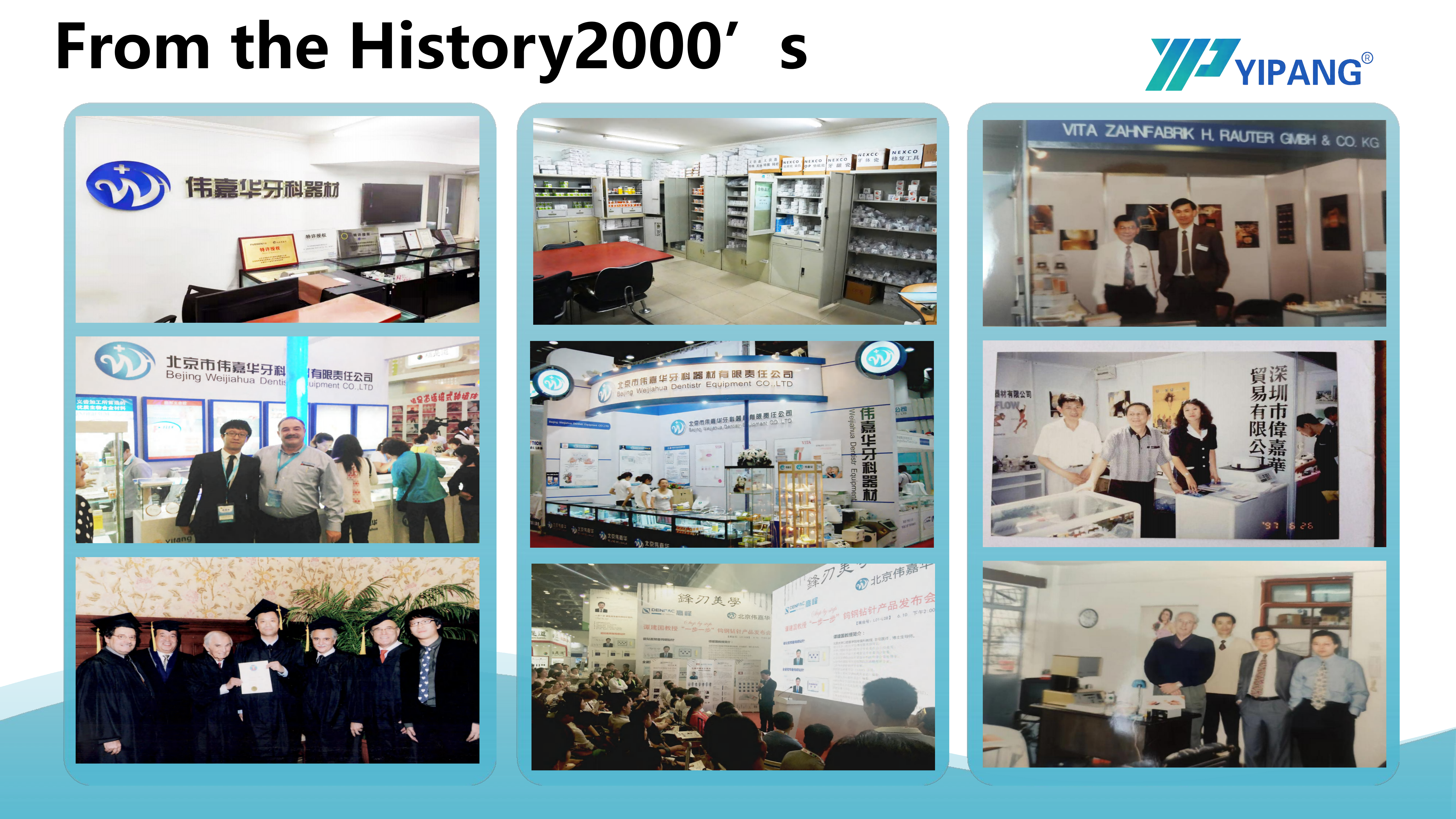
Beijing Weijiahua Dentistry Equipment Co., Ltd. has operated in this environment since 1996 and describes more than 30 years of dental industry involvement. Its YIPANG brand covers a product range that includes zirconia blocks, glass ceramics, press ingots, PMMA, wax, titanium blocks, implant abutments, 3D scanners, intraoral scanners, milling machines, 3D printers, and sintering furnaces. That mix matters for a comparison article because mixed-material labs do not buy isolated products; they buy a set of compatible workflows.
Comparison framework: separate the material from the process
A useful lab comparison should separate four layers. First is the indication: full-contour crown, bridge, veneer, implant superstructure, or temporary restoration. Second is the shaping route: milled block, milled disc, press route, or printed route. Third is finalization: sintering, crystallization, firing, or polymer post-processing. Fourth is verification: fit, shade, density, surface, and documentation.
This framework prevents a common error in material selection. A low block price does not prove a low production cost if the lab must absorb sintering time, furnace capacity, or rework. A high equipment investment does not prove fit either, unless the lab can validate the program for the specific material and restoration type. The decision should compare total workflow control, not one purchase price.
Zirconia block workflow: milling plus a strict sintering step
The dental zirconia block route is a ceramic workflow. The restoration is designed digitally, nested with the material shrinkage allowance, milled from a zirconia block, and then sintered in a dental sintering furnace. The sintering step is not cosmetic. It is the stage where the milled workpiece develops the final material state, so the furnace program has to be controlled and documented.
Supplied guidance for the 4D-PRO-ML zirconia block specifies a recommended sintering temperature range of 1430°C–1450°C. The same guidance says the lab should follow a standard heating and holding procedure to support low shrinkage and stable translucency. The operational sequence is explicit: place the milled zirconia workpiece on the sintering tray, set the heating curve up to 1430°C–1450°C with proper holding time, and cool down naturally after sintering. Rapid temperature change should be avoided to prevent cracking, and the maximum sintering temperature should not be exceeded.
The exact ramp rate and hold time are not universal in that supplied instruction. They belong to the validated sintering program for the block, furnace, and restoration type. This is a key procurement point. When a lab asks whether a zirconia block is compatible with its furnace, the answer should include the sintering curve, tray loading, batch arrangement, and cooling practice, not only the block dimensions.
YIPANG's supplied Dental Zirconia Block facts describe a product made with high-quality domestic self-developed zirconia powder, with stable batch consistency and a sintering shrinkage error within ±0.3%. The same supplied material describes uniform density distribution, bending strength, and translucency performance, plus good compatibility with most mainstream dental milling machines and a low processing failure rate. These are supplier product statements rather than independent clinical results, but they are relevant to lab workflow because shrinkage consistency and milling compatibility affect nesting, fit, and rework.
Equipment for this route normally includes a dental lab scanner, a dental milling machine, dental milling burs, a dental sintering furnace, and finishing tools such as dental polishing burs. For aesthetic finishing, a lab may use dental staining glaze, dental glaze paste, or dental firing paste according to its validated protocol, with a dental porcelain furnace used for the relevant firing step. The key is that each auxiliary material has its own instructions and should not be treated as a generic additive.
Lithium disilicate workflow: shaping plus crystallization or press processing
Dental lithium disilicate glass ceramic is a glass-ceramic route. In a digital lab, the material may be milled from a glass-ceramic block and then finalized through a crystallization or firing step defined by the material system. In a press route, a dental lithium disilicate press ingot is used after a pattern is prepared; a dental wax disc can be milled to create that pattern before investment and pressing.
The workflow difference is important. A zirconia block route depends on a high-temperature sintering furnace cycle. A lithium disilicate route depends on the crystallization or press program specified for that glass-ceramic system, often involving a dental porcelain furnace. The lab should not assume that a zirconia sintering program can be transferred to lithium disilicate, or that a lithium disilicate firing program validates a zirconia cycle.
For aesthetic crowns and veneers, lithium disilicate is often evaluated for its glass-ceramic character and finishing response. For bridges or other multi-unit applications, the lab should confirm the validated indication and design rules from the material system rather than extrapolating from a single-unit case. The same discipline applies to implant superstructures: the material route, abutment interface, and cleaning or cementation protocol have to be confirmed before production.
Equipment implications include a dental milling machine or press workflow, a dental porcelain furnace for the relevant thermal step, and finishing supplies. A lab that already runs zirconia may still need separate program validation, furnace scheduling, and staff training before adding lithium disilicate. Sharing a scanner is easy; sharing process assumptions is not.
PEEK and PMMA workflows: polymer routes with different finalization logic
PEEK is a polymer-based CAD/CAM material. A dental PEEK disc is milled and finished according to the supplier's validated processing and indication instructions. The workflow does not use the same high-temperature ceramic sintering cycle as a dental zirconia block. That does not make PEEK simpler by default. It shifts control toward milling parameters, contamination control, cleaning, and the validated application range.
PMMA is an acrylic resin route used for temporary and interim restorations. A dental PMMA disc can be milled, or a dental 3D printer with dental 3D printer resin can produce printed provisionals or related components. The finalization logic is polymer-specific: follow the resin or disc manufacturer's post-processing, cleaning, polishing, and fit checks. A PMMA provisional should not be managed as if it were a sintered ceramic, and a zirconia furnace schedule should not be applied to it.
This is where mixed-material labs need clear routing. A PMMA disc for a temporary crown, a PEEK disc for a polymer component, a zirconia block for a ceramic bridge, and a lithium disilicate press ingot for an aesthetic unit may all pass through the same design room. They should not pass through the same undocumented process assumptions. Labeling, tray separation, and program selection are practical controls.
Adjacent digital workflows can add further complexity. A lab may also manage a dental titanium alloy disc, a dental implant abutment, or dental 3D printing metal powder for metal components. Those routes have their own equipment and post-processing requirements. They are not substitutes for a zirconia or glass-ceramic workflow, but they show why a lab's equipment map should be documented by route rather than by room.
Step-by-step zirconia lab workflow with the sintering curve in view
The following sequence reflects the supplied zirconia workflow facts and general digital lab practice. It is a workflow guide, not a substitute for the validated instructions for a specific block, furnace, and restoration design.
- Scan and verify the case data. Use a dental lab scanner or intraoral scan data to capture the preparation, opposing arch, occlusion, and implant position where relevant. For full-arch implant work, an edentulous scanbody kit can support scanbody capture and verification before design. Confirm margins and scanbody positions before nesting.
- Design with the material route in mind. Design the restoration for the selected material class. For a zirconia block, confirm the connector areas, occlusal space, and implant interface. For a lithium disilicate or polymer route, use the design rules and minimum thickness guidance from that material system.
- Nest with the validated shrinkage allowance. Use the block manufacturer's shrinkage data and the lab's validated nesting strategy. YIPANG's supplied zirconia block statement gives a sintering shrinkage error within ±0.3%, but the lab still needs to confirm its own mill and furnace performance.
- Mill with controlled burs and machine settings. Use a dental milling machine and appropriate dental milling burs. Check tool condition, coolant or dust extraction where applicable, and machine calibration. A worn bur or unstable holder can create a fit problem that later looks like a sintering problem.
- Prepare the milled zirconia workpiece for sintering. Clean and handle the workpiece according to the block instructions. Place it on the sintering tray with the validated support arrangement. Do not let handling contamination or unsupported spans compromise the sintered result.
- Run the validated sintering program. For the 4D-PRO-ML zirconia block, supplied guidance specifies 1430°C–1450°C with a standard heating and holding procedure. Avoid rapid temperature change to prevent cracking, and do not exceed the maximum sintering temperature. Record the furnace program, batch, and load.
- Cool naturally and inspect. Allow natural cooling after sintering. Check shade, fit, contacts, occlusion, and surface condition. Investigate any distortion, crack, or shade deviation against the furnace record and block batch before adjusting the restoration.
- Finish and characterize. Use dental polishing burs for adjustment and finishing where appropriate. Apply dental staining glaze or dental glaze paste according to the restoration protocol, and use a dental porcelain furnace for the relevant firing step. Dental firing paste and other auxiliaries should be used only within their validated instructions.
- Document release. Record material lot, sintering program, furnace, operator, and inspection result. Documentation is part of the workflow because it supports traceability and repeat orders.
Use cases: crowns, bridges, veneers, implant superstructures, and temporaries
For full-contour crowns, the zirconia block route is a ceramic option when the lab can control sintering, shrinkage, and finishing. The supplied 4D-PRO-ML guidance is directly relevant because crown fit and shade depend on the sintering program. A lithium disilicate route may be evaluated for aesthetic crown work where the glass-ceramic system and its crystallization or press process are validated. A PMMA disc or printed resin provisional is a temporary route, not a substitute for a definitive ceramic crown.
For bridges, the decision becomes more design-sensitive. The lab should confirm connector dimensions, span, and material indication with the validated system. A zirconia block can be considered for multi-unit ceramic work when the design and sintering program are controlled. Lithium disilicate bridge use depends on the specific system and indication. PEEK may be evaluated for selected framework or component applications where the supplier's validated indication supports it. PMMA is generally a provisional route.
For veneers, aesthetic layering and finishing matter as much as the block. Lithium disilicate is often discussed in aesthetic veneer workflows, while zirconia may be selected where a ceramic core or full-contour approach is appropriate. The lab should not compare veneer outcomes on material name alone; thickness, cementation, surface treatment, and shade protocol all belong to the workflow.
For implant superstructures, the interface and documentation are central. A dental implant abutment, a dental titanium alloy disc, or a zirconia restoration may appear in the same case discussion, but they are not interchangeable. Scanning with an edentulous scanbody kit, verifying the implant library, and confirming the final interface are workflow steps that sit alongside material selection. PEEK may enter the discussion for selected polymer components, while PMMA may serve provisional needs.
Workflow comparison table
The table below compares workflow logic, not measured clinical performance. Confirm every indication, program, and equipment setting with the validated instructions for the specific material and restoration.
| Workflow question | Dental zirconia block | Lithium disilicate glass ceramic | PEEK disc | PMMA disc or printed resin |
|---|---|---|---|---|
| Primary shaping route | Mill from a zirconia block on a dental milling machine. | Mill from a glass-ceramic block or use a press-ingot route with a wax pattern. | Mill from a dental PEEK disc. | Mill from a dental PMMA disc or print with dental 3D printer resin. |
| Main thermal finalization | Sinter in a dental sintering furnace. Supplied 4D-PRO-ML guidance gives 1430°C–1450°C with a standard heating and holding procedure. | Crystallization, firing, or press processing according to the glass-ceramic system, often using a dental porcelain furnace. | Follow the PEEK supplier's validated post-processing; do not apply the zirconia sintering cycle. | Follow the PMMA or resin supplier's post-processing; do not apply a ceramic sintering cycle. |
| Critical process control | Sintering curve, tray loading, cooling, shrinkage allowance, and furnace calibration. | Crystallization or press program, investment and press control where applicable, and fit after thermal processing. | Milling parameters, cleaning, contamination control, and validated indication. | Resin or disc processing, cleaning, polishing, and temporary service expectation. |
| Common equipment | Dental lab scanner, dental milling machine, dental milling burs, dental sintering furnace, finishing burs. | Dental lab scanner, dental milling machine or press equipment, dental porcelain furnace, finishing supplies. | Dental lab scanner, dental milling machine, dental milling burs, finishing tools. | Dental lab scanner, dental milling machine or dental 3D printer, resin or disc, post-processing supplies. |
| Typical workflow role | Full-contour crowns, bridges, veneers, and implant superstructure restorations within validated indications. | Aesthetic glass-ceramic crowns, veneers, and selected bridge or press workflows within validated indications. | Selected polymer frameworks or components within the supplier's validated indications. | Temporary and interim restorations, try-ins, and provisional components. |
| Supplier questions | What sintering curve, shrinkage value, block batch, and furnace compatibility apply? | What crystallization or press program, ingot or block system, and indication limits apply? | What indication, cleaning, and post-processing instructions apply to this PEEK disc? | What disc or resin, post-processing, and provisional lifetime guidance apply? |
Cost and decision logic: compare the whole route
At the decision stage, cost should be compared by workflow route. A dental zirconia block purchase includes the block, milling burs, sintering furnace time, tray loading, finishing, and quality inspection. A lithium disilicate route includes the block or press ingot, investment and press consumables where applicable, porcelain furnace time, and finishing. PEEK and PMMA routes include their own disc or resin costs plus the relevant post-processing and finishing supplies.
YIPANG's supplied comparison positions its Dental Zirconia Block on quality consistency and cost performance, supported by the use of high-quality domestic self-developed zirconia powder with stable batch consistency. The supplied product statement also describes a more competitive price than imported zirconia blocks of equivalent quality. That is a supplier positioning statement, not an independent price benchmark. A lab should still compare landed cost, rework rate, furnace utilization, and shade or fit outcomes for its own case mix.
The decision rule is therefore conditional. If the lab has a validated sintering program and wants a ceramic block route for suitable full-contour, bridge, veneer, or implant superstructure work, a dental zirconia block is a candidate. If the lab's aesthetic workflow depends on a glass-ceramic route and it can control crystallization or press processing, lithium disilicate is a candidate. If the case calls for a polymer component, PEEK can be evaluated within its validated indication. If the restoration is temporary, PMMA or printed resin belongs in the provisional workflow.
Where Beijing Weijiahua and YIPANG fit a mixed-material dental lab
Beijing Weijiahua Dentistry Equipment Co., Ltd. was established in 1996 and operates a 2,000 m² facility with 80 employees, a 25-person engineering team, and an annual output of 10 million US dollars. The company reports an export ratio of 40%–55% and markets that include the Middle East, Southeast Asia, South America, North America, Eastern Europe, North Africa, and Australia. It also states more than 1,000 dental laboratory customers in China and representation of international brands including VITA, Ivoclar, Dentsply, Amann Girrbach, and Noritake.
YIPANG is a self-developed brand owned by Beijing WJH Dentistry Equipment Company. Its product lines include zirconia blocks, glass ceramics, press ingots, PMMA, wax, titanium blocks, implant abutments, 3D scanners, intraoral scanners, milling machines, 3D printers, and sintering furnaces. For a mixed-material lab, that breadth is useful only when the material and equipment routes are properly qualified. The relevant fit is not that one brand covers every product category, but that a lab can source zirconia blocks, lithium disilicate materials, polymer discs, and equipment support through a documented supply relationship.
The 4D-PRO-ML zirconia block is positioned within this context for labs that need a defined sintering window and a practical zirconia workflow. The supplied guidance gives 1430°C–1450°C, standard heating and holding, natural cooling, and a warning against rapid temperature change. YIPANG's Dental Zirconia Block facts also describe shrinkage error within ±0.3%, good compatibility with most mainstream dental milling machines, and a low processing failure rate. These points are relevant to mixed-material labs that want a zirconia route without treating sintering as a black box.
For labs comparing material routes, the next step is a workflow review rather than a single price request. The WJH company information brochure provides company and product-line context. A sample or technical discussion can then focus on the sintering program, block format, and equipment compatibility for the lab's actual case mix.
FAQ: dental zirconia block and mixed-material workflow decisions
What sintering temperature is recommended for the 4D-PRO-ML zirconia block?
The supplied guidance recommends 1430°C–1450°C with a standard heating and holding procedure. Place the milled workpiece on the sintering tray, set the heating curve to the recommended range with proper holding time, and cool naturally. Avoid rapid temperature change and do not exceed the maximum sintering temperature.
Can a dental zirconia block and lithium disilicate share the same furnace program?
No. The zirconia block route uses a sintering program, while lithium disilicate uses crystallization, firing, or press processing defined by the glass-ceramic system. The equipment may sit in the same lab, but the programs and validation records should remain separate.
Is PEEK a substitute for a dental zirconia block?
PEEK and zirconia are different material classes. A dental PEEK disc is a polymer CAD/CAM route, while a dental zirconia block is a ceramic route that requires sintering. PEEK should be evaluated only for indications validated by its supplier, not as a general replacement for zirconia.
Where does PMMA fit in a digital dental lab?
PMMA is used for temporary and interim restorations, including milled dental PMMA discs and printed routes using dental 3D printer resin. It does not follow the ceramic sintering cycle and should be managed as a provisional workflow with its own post-processing and service expectations.
What equipment should a lab verify before adding a zirconia block workflow?
Verify the dental lab scanner, dental milling machine, dental milling burs, dental sintering furnace, tray loading, cooling practice, finishing tools, and documentation. The lab should also confirm the block shrinkage value, sintering curve, and compatibility with the furnace program before production release.
How should a lab compare the cost of zirconia, lithium disilicate, PEEK, and PMMA routes?
Compare the full route: material, burs or press consumables, furnace time, finishing, inspection, and rework. YIPANG's supplied comparison describes its Dental Zirconia Block as cost-effective relative to imported zirconia blocks with equivalent quality, but that is a supplier statement. A lab should validate total cost with its own case mix and process data. For a sample or workflow discussion, the YIPANG team can review the block format, sintering requirements, and equipment fit for the lab.
Conclusion: choose the route the lab can validate
Dental zirconia blocks, lithium disilicate glass ceramics, PEEK, and PMMA do not compete on a single material score. They represent different lab workflows with different shaping, thermal, and finishing controls. The zirconia block route is defined by milling plus a strict sintering program; the 4D-PRO-ML guidance gives 1430°C–1450°C, controlled heating and holding, natural cooling, and protection against rapid temperature change. Lithium disilicate requires its own crystallization or press validation. PEEK and PMMA serve polymer and provisional routes with separate process instructions.
For a mixed-material digital dental lab, the practical decision is to match the restoration type, equipment, and validated process to the material class. Beijing Weijiahua's long industry history and YIPANG's multi-category product range give a lab a starting point for that discussion, but the final choice should rest on documented sintering curves, equipment compatibility, and repeatable quality checks.
Have Questions or Need More Details?
Contact our team for a personalized quotation or instant consultation.
Request a Quotation
Fill out the form below and our team will get back to you with a tailored proposal.
WhatsApp Direct Chat
Prefer to chat in real-time? Message us on WhatsApp for instant assistance & quick answers.
- Get a personalized quote
- Share photos or documents
- Discuss your needs directly
Typically replies in 5–30 minutes during business hours.