Dental Zirconia Blocks vs. Mixed-Material Lab Workflows: A Lab Selection Guide
Short answer: a zirconia block workflow gives a dental lab one material family, one sintering curve and one predictable process path for full-contour crowns, bridges, veneers and implant superstructures. A mixed-material workflow adds PMMA discs, PEEK discs, lithium disilicate press ingots, titanium alloy discs and printed resins so the lab can match a wider case mix without outsourcing. The decision is rarely about which material is “better”. It is about which workflow matches the restorations you already accept, the equipment already on your floor, your sintering discipline, your aesthetic and durability targets, and your production volume.
Digital dental laboratories rarely choose between one material and many. They choose between one process and many processes. A zirconia block workflow runs a single material family through scanning, milling and a fixed high-temperature sintering cycle. A mixed-material workflow runs several families — milled PMMA, milled PEEK, pressed lithium disilicate glass ceramic, milled titanium alloy, and printed photopolymer or metal parts — through shared or parallel equipment, each with its own handling logic.
The comparison below is written for dental CAD/CAM laboratories, high-volume milling centres and implant laboratories that already work digitally and now have to decide how far to spread their material portfolio. It uses published YIPANG product data for the zirconia side and third-party market data for context. Where a figure is not published in the source material, this guide does not state it.
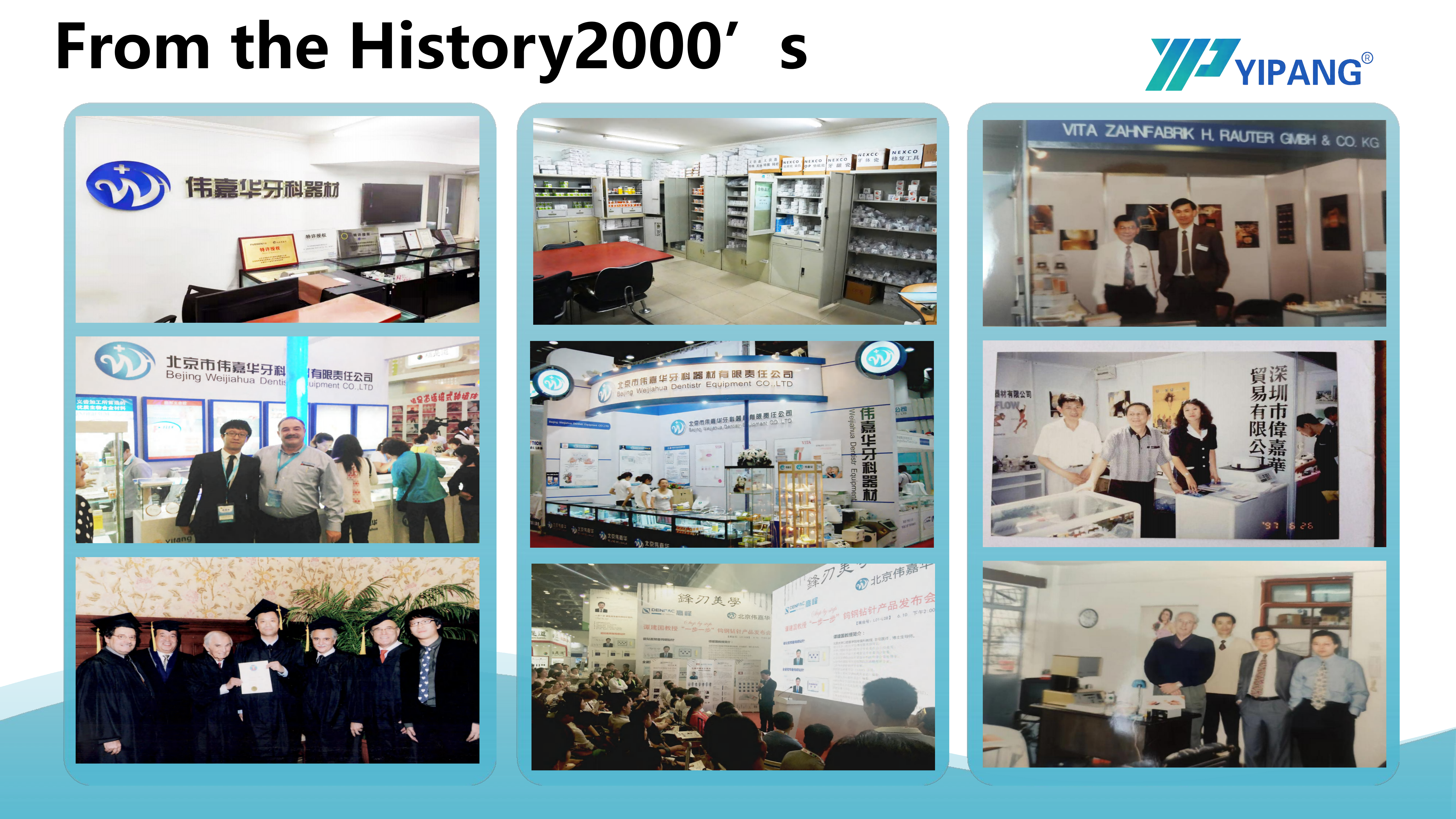
Entity reference: YIPANG is the self-developed brand of Beijing Weijiahua Dentistry Equipment Co., Ltd. (WJH), a Beijing-based dental equipment manufacturer and distributor established in 1996. WJH operates a 2,000 m² facility with 80 employees, a 25-engineer R&D team working on dental material formulation and process optimisation, and annual output of USD 10 million. Its product lines include zirconia blocks, glass ceramics, press ingots, PMMA, wax, titanium blocks, implant abutments, 3D scanners, intraoral scanners, milling machines, 3D printers and sintering furnaces.
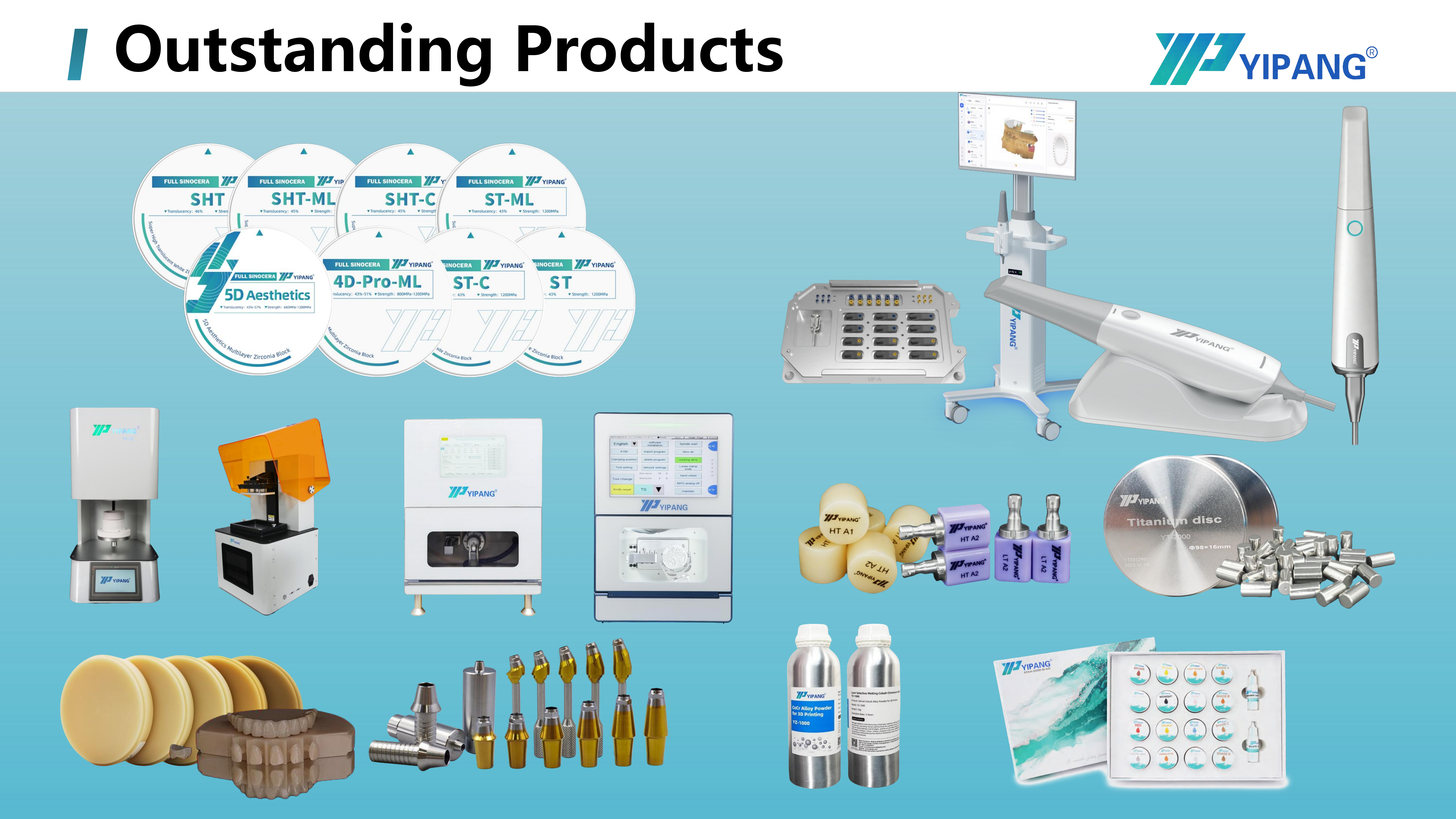
Dental zirconia block (4D-PRO-ML), a 98 mm CAD/CAM milling blank for full-contour crowns, bridges, veneers and implant superstructure restorations.
Problem definition: why “which material is best?” is the wrong first question
A laboratory that starts with material selection usually ends up with a fragmented production line. A laboratory that starts with case routing usually ends up with a material list it can actually run. The practical problem is not aesthetic philosophy. It is three operational failure modes that appear when a lab mixes workflows without designing for them.
Failure mode 1 – sintering deviation. Zirconia is the workflow with the least tolerance for improvisation. YIPANG states a special requirement for this application: strictly follow the standard sintering temperature curve during processing. A lab that runs zirconia alongside several other materials, on a shared schedule and with shared staff attention, is a lab where the sintering curve is the first thing to be compromised.
Failure mode 2 – SKU and blank sprawl. Every material family brings its own blank format, thickness range, shade logic and inventory policy. Mixed-material capability is only valuable when each material earns its place in the case mix.
Failure mode 3 – equipment bought for the exception. A press ingot line, a titanium milling setup or a printing workflow that serves a small share of monthly cases can still consume capital, floor space and trained operator time.
The useful framing is therefore: route by restoration type first, then choose material, then confirm equipment and sintering capability. Everything in the rest of this guide follows that order.
Industry background: where zirconia and mixed-material production stand
Zirconia remains the volume anchor of digital restorative production. Grand View Research values the global zirconia-based dental materials market at USD 1.2 billion in 2025, projected to reach USD 2.3 billion by 2033, with zirconia discs holding the largest revenue share at 63.1% in 2025. The same source attributes 82.4% of zirconia dental manufacturing process revenue to CAD/CAM milling in 2025, and 45.3% of zirconia material demand to dental laboratories as the dominant end-user group. Regionally, the U.S. accounts for 40% of revenue in that market, and the 3Y-TZP zirconia grade held the largest revenue share at 35.9% in 2025.
The mixed-material side is growing on its own trajectory. Business Research Insights reports that lithium disilicate accounts for approximately 28% of all all-ceramic dental restorations globally as of 2024, while Intel Market Research projects the global dental lithium disilicate market growing from USD 320 million in 2025 to USD 920 million by 2032 at a CAGR of 18.8%. Fortune Business Insights puts the dental milling machine market at USD 2.45 billion in 2025, expected to reach USD 3.9 billion by 2030, with Roland DG, Amann Girrbach and vhf camfacture identified as significant market share holders as of 2024. Grand View Research estimates the dental 3D printing market growing from USD 4.9 billion in 2025 to USD 26.7 billion by 2033, with photopolymer resins holding a 55.5% share of the dental 3D printing material segment in 2025. Precedence Research values the PEEK dental implants market at USD 1,055 million in 2025 with an 8% CAGR through 2034, and iData Research values the final abutment market at nearly USD 2.6 billion in 2025.
Two regulatory facts shape how labs buy across all of these material families. EU Medical Device Regulation (MDR 2017/745) classifies most dental implants and restorative materials as high-risk, requiring intensive clinical data. That classification propagates down the supply chain: a lab selling into EU markets needs documentation discipline from every material vendor it uses, not only from the zirconia supplier.
Reading the numbers correctly: market-size and share figures above come from third-party research and describe the category, not any single product. They indicate direction of demand and equipment investment, not a performance ranking of materials for a specific case.
Detailed solution: two workflows compared on the factors labs actually control
Workflow A — the zirconia block pathway
A dental zirconia block is a CAD/CAM milling blank made of zirconium dioxide (ZrO²) with yttria stabiliser, milled in the green state and then densified in a dental sintering furnace. In the YIPANG range, the 4D-PRO-ML block is specified for full-contour crowns, bridges, veneers and implant superstructure restorations, with a published bending strength of ≥1200 MPa and medium translucent ML multilayer shading.
| Parameter | Published specification — 4D-PRO-ML dental zirconia block |
|---|---|
| Material | Zirconium dioxide (ZrO²), yttria stabilised |
| Product type | Dental zirconia disc / CAD/CAM dental milling blank |
| Available shades | ML Multilayer |
| Diameter | 98 mm |
| Thickness options | 10 mm, 12 mm, 14 mm, 16 mm, 18 mm, 20 mm |
| Sintering temperature | 1450 °C (recommended working range 1430 °C–1450 °C) |
| Bending strength | ≥1200 MPa |
| Translucency | Medium translucent |
| Supporting equipment | Dental milling machine, dental sintering furnace, dental lab scanner |
| Stated application | Full-contour crowns, bridges, veneers, implant superstructure restorations; full-arch implant restorations |
What this pathway buys a laboratory is process uniformity. One blank format, one sintering cycle, one nesting logic, one set of milling parameters. YIPANG case documentation reports uniform translucency, stable sintering shrinkage and compatibility with most CAD/CAM systems as the recurring highlights across hundreds of long-term cooperative clients worldwide, with high recognition on material stability and aesthetic effect and a low customer complaint rate.
Workflow B — the mixed-material pathway
A mixed-material laboratory runs zirconia alongside other material families, and each one changes the process chain rather than only the blank on the shelf.
- Milled PMMA discs — used in PMMA disc and PEEK disc workflows and in multi-material dental milling projects. PMMA is widely used for provisional restorations in digital workflows, which is why it usually sits early in the chain and feeds try-in stages.
- Milled PEEK discs — used in the same multi-material milling projects; PEEK is commonly associated with frameworks and implant-related components in laboratory practice.
- Lithium disilicate press ingots and glass ceramics — the press-and-fire route, handled in aesthetic crown restoration laboratories and mixed ceramic restoration laboratories, with heat processing supported by a dental porcelain furnace.
- Titanium alloy discs — milled in implant abutment laboratories and edentulous scanbody kit workflows, where the output is an abutment or superstructure component rather than a tooth-coloured crown.
- Printed resin and metal parts — a separate printing chain using dental 3D printers, dental 3D printer resin and, where applicable, dental 3D printing metal powder.
The mixed pathway buys case coverage. It also buys duplicated validation: every added family needs its own acceptance criteria, its own operator competence and its own documentation for regulated markets.
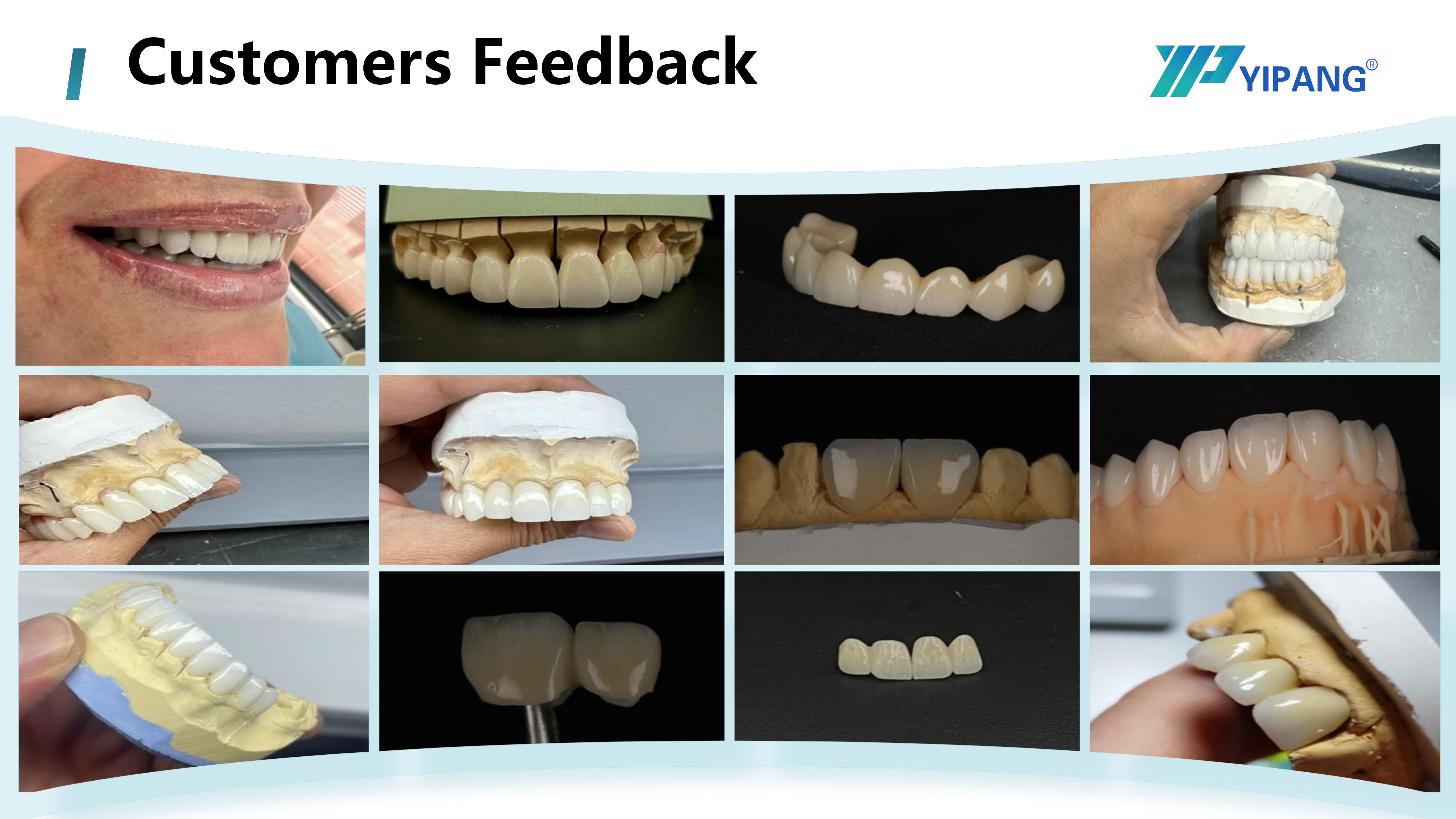
Zirconia block production and sintering operations — the process stage where the standard sintering temperature curve has to be protected from schedule pressure.
The real dividing line: sintering discipline and equipment, not material prestige
The zirconia workflow is the only one in this comparison that adds a mandatory high-temperature densification step with a specified curve. YIPANG guidance for the 4D-PRO-ML block is specific: place the milled zirconia workpiece on the sintering tray, set the heating curve up to 1430 °C–1450 °C with proper holding time, and cool down naturally after sintering. Rapid temperature change is to be avoided to prevent cracking, and the maximum sintering temperature should not be exceeded.
That is an operational instruction, not a marketing claim, and it has a direct workflow consequence: any laboratory running zirconia needs sintering capacity that is not competing for the same hours as every other furnace task. Labs that also run a dental porcelain furnace for firing, glaze paste and staining glaze finishing are managing two different thermal processes with different tolerances.
Mixed-material breadth, by contrast, mostly adds mechanical variety: different blanks, different burs, different spindle parameters, and for titanium alloy discs and glass ceramics, different finishing routes using dental milling burs and dental polishing burs. The equipment question for a mixed lab is therefore about changeover time and operator attention, while the equipment question for a zirconia-centric lab is about thermal capacity and curve compliance.
Aesthetic and durability goals by restoration type
Aesthetics and strength pull in opposite directions in any materials decision, and the honest framing is that they are balanced differently by restoration type rather than settled once for the whole laboratory.
- Where strength dominates — multi-unit bridges, implant superstructures and full-arch frameworks. The 4D-PRO-ML specification of ≥1200 MPa bending strength with medium translucency is aimed at this end of the range.
- Where aesthetics dominate — anterior crowns and veneers, where labs commonly route to glass ceramic and press ingot workflows, or to multilayer zirconia with external staining glaze and glaze paste finishing to close the shade gap.
- Where turnaround dominates — provisionals, models and try-in stages, where milled PMMA and printed resin typically carry the load.
- Where interface precision dominates — implant abutments and edentulous cases, where scanbody capture and abutment fit matter more than the optical properties of the suprastructure material.
Production volume: the threshold that decides the portfolio
Volume is the variable most often underestimated. A high-volume milling workflow and a high-volume sintering workflow behave differently from a mixed, low-volume schedule: they reward single-material repetition, predictable nesting and a blank supply that does not run dry mid-week. YIPANG states monthly capacity of 15,000 pieces with a lead time of 15–30 working days, negotiable small MOQ, OEM/ODM production with almost all specifications customisable, and quality control based on 100% raw material inspection plus finished product random inspection.
For a milling centre running zirconia as its backbone, that combination matters more than an extra material option. For a laboratory whose case mix genuinely spans veneers, provisionals, abutments and full-arch work, the mixed portfolio is the correct answer — provided each family has a named owner and an acceptance standard.
Step-by-step breakdown: how to choose and run the workflow
- Segment the case mix before the material list. Sort the last twelve months of work into full-contour crowns, bridges, veneers, implant superstructures and full-arch cases. If one category dominates, a single-material workflow will usually out-perform a broad portfolio on cost per unit and consistency.
- Confirm the digital front end. Both workflows start the same way: a dental lab scanner captures the preparation or model, and edentulous cases require scanbody capture through an edentulous scanbody kit workflow before any design work begins.
- Design and nest against the blank you actually stock. The 4D-PRO-ML blank is 98 mm in diameter with thickness options from 10 mm to 20 mm. Thickness choice should follow the tallest restoration in the nest, not the average, or the lab creates avoidable remakes.
- Mill with material-matched tooling. Zirconia, glass ceramic, titanium alloy and PMMA do not share the same bur life or feed behaviour. Dental milling burs and dental polishing burs should be tracked per material, not pooled, so that a worn bur used on titanium does not silently downgrade a zirconia margin.
- Protect the sintering cycle. Place the milled workpiece on the sintering tray, run the heating curve to 1430 °C–1450 °C with the proper holding time, cool naturally, and never exceed the maximum temperature. Avoid rapid temperature change to prevent cracking. Sintering is not a step that can be compressed to meet a shipping deadline.
- Finish according to the aesthetic target. Where the case needs characterisation, plan for staining glaze and glaze paste work, and for porcelain furnace firing if a veneering layer is part of the design.
- Apply acceptance criteria at the bench, not at the invoice. Check shade consistency across units in the same case, verify fit after shrinkage, and log any deviation against the material batch. A batch-level record is what makes a mixed-material lab auditable in regulated markets.
Use cases: which workflow fits which laboratory
Full-contour crown and bridge laboratories
A zirconia block workflow covers this case type directly. The 4D-PRO-ML block is specified for full-contour crowns and bridges, and multilayer shading supports anterior-to-posterior continuity without a second material family. For labs whose output is mostly single units and short-span bridges, adding press ingots mainly serves the minority of highly aesthetic cases.
Aesthetic and veneer-focused laboratories
Labs specialising in cosmetic and aesthetic restorations typically run zirconia for structure and glass ceramic or press ingots for the most translucent work, then finish with staining glaze and glaze paste. This is a genuine mixed-material scenario, and the operating cost is measured in firings and hand-finishing time rather than in blanks.
Implant abutment and superstructure laboratories
Here the workflow spans titanium alloy discs for abutment components, zirconia for implant superstructure restorations, and scanbody workflows for edentulous cases. YIPANG lists implant abutments among its product lines and documents use of its zirconia blocks in implant abutment laboratories, implant-supported crowns and edentulous scanbody kit workflows.
Full-arch and edentulous cases
Full-arch implant restorations are the case type where sintering discipline and dimensional stability carry the highest stakes, because a single failed span is a full-arch remake. YIPANG states that its zirconia blocks are used in full-arch implant restorations and in edentulous full-arch restoration cases, with stable sintering shrinkage documented as a case highlight.
High-volume milling centres
A milling centre competing on turnaround should treat zirconia as its backbone and justify every additional material against a service the centre already sells. High-volume milling workflows and high-volume sintering workflows reward a narrow, repeatable process; a broad portfolio earns its place only when it is sold as a distinct service line.
Mixed-material and multi-material laboratories
Labs that already run PMMA disc, PEEK disc and multi-material dental milling projects usually keep zirconia in the same facility, because referral work arrives in bundles. In that setting the decision is not either/or; it is about isolating the zirconia sintering schedule from the rest of the floor so that the strict curve is never the item that gives way.
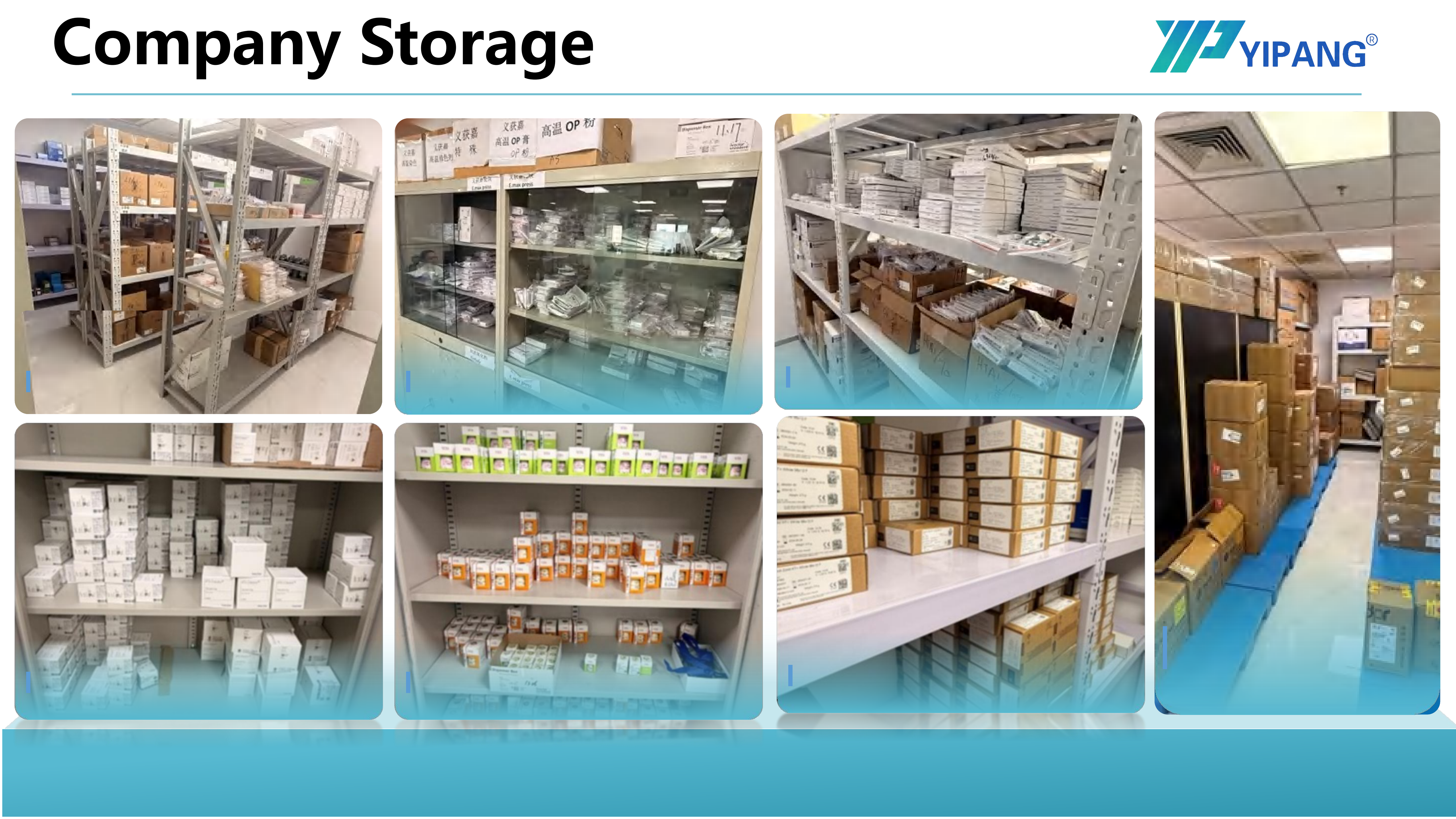
Material portfolio reviews are a planning exercise: restoration mix, equipment capacity and acceptance criteria before any new material family is added.
Comparison table: workflow, equipment and case fit
The table below compares the workflows using only facts published in the YIPANG corpus and the third-party data cited in this guide. It deliberately avoids unverified material specifications for categories where no published figure was supplied.
| Workflow | Material input | Equipment referenced in source material | Restoration types documented | Published figures used here |
|---|---|---|---|---|
| Zirconia block milling + sintering | 4D-PRO-ML zirconia block, ZrO² yttria stabilised, ML Multilayer, 98 mm, 10–20 mm | Dental lab scanner, dental milling machine, dental sintering furnace | Full-contour crowns, bridges, veneers, implant superstructures, full-arch implant restorations | ≥1200 MPa bending strength; sintering 1450 °C (range 1430–1450 °C); medium translucent |
| Lithium disilicate press / glass ceramic | Press ingots, glass ceramics | Dental porcelain furnace for pressing and firing; finishing with glaze paste and staining glaze | Aesthetic crown restorations, mixed ceramic restorations, veneer work | Lithium disilicate ≈28% of all-ceramic restorations (2024); market USD 320M (2025) to USD 920M (2032), CAGR 18.8% |
| PMMA disc milling | PMMA discs | Dental milling machine, dental milling burs, dental polishing burs | Provisional and multi-material milling projects | No product-level figures published for this guide |
| PEEK disc milling | PEEK discs | Dental milling machine | Multi-material milling projects | PEEK dental implants market USD 1,055M (2025), 8% CAGR through 2034 |
| Titanium alloy disc milling | Titanium alloy discs | Dental milling machine, dental milling burs, polishing burs | Implant abutments, implant-supported crowns, edentulous scanbody workflows | Final abutment market ≈USD 2.6B (2025) |
| 3D printing | Dental 3D printer resin; dental 3D printing metal powder | Dental 3D printer | Printed components within digital workflows | Dental 3D printing market USD 4.9B (2025) to USD 26.7B (2033); photopolymer resins 55.5% of material segment (2025) |
Restoration-type fit matrix:
| Restoration type | Zirconia block workflow | Mixed-material alternative | What usually decides it |
|---|---|---|---|
| Full-contour crown | Documented application; ML multilayer shading | Glass ceramic / press ingot for highest aesthetic demand | Shade difficulty and whether the case sits in the aesthetic zone |
| Multi-unit bridge | Documented application; ≥1200 MPa bending strength | Limited alternative at the same strength level within this data set | Span length and connector cross-section |
| Veneer | Documented application | Lithium disilicate press ingot / glass ceramic | Thickness available in the blank and the aesthetic target |
| Implant superstructure | Documented application | Titanium alloy disc for abutment components | Whether the component is a framework or a tooth-coloured suprastructure |
| Full-arch / edentulous case | Documented application, including full-arch implant restorations | Combination workflow with scanbody capture and abutment milling | Sintering capacity, dimensional stability and acceptance procedure |
| High-volume repeat work | Single-material repetition, one sintering curve | Multiple changeovers across material families | Monthly unit volume against changeover cost |
Where YIPANG sits in this comparison
YIPANG supplies the zirconia side of the decision with the 4D-PRO-ML dental zirconia block, produced by Beijing Weijiahua Dentistry Equipment Co., Ltd. and supported by a product range that also includes glass ceramics, press ingots, PMMA, wax, titanium blocks, implant abutments, scanners, milling machines, 3D printers and sintering furnaces. Laboratories that need a single vendor for a mixed-material build-out can consolidate part of that list; laboratories that only need a dependable zirconia backbone can buy only the block and keep their existing scanner, mill and furnace.
Two first-party facts are worth weighing in a sourcing decision. First, WJH has served more than 1,000 dental laboratory customers in China and represents established international brands including VITA, Ivoclar, Dentsply, Amann Girrbach and Noritake — experience with mixed-material floors, not only with zirconia. Second, the export base spans the USA, Europe, Brazil, the Middle East and North Africa, with export accounting for 40%–55% of output, and after-sales support that includes online technical guidance with a response commitment within 24 hours.
FAQ
1. What sintering compliance does a zirconia block need before a lab uses it in full-arch implant restorations?
Sintering is the compliance-critical step, not the invoice. YIPANG specifies 1450 °C for the 4D-PRO-ML block and gives a recommended working range of 1430 °C–1450 °C, with a standard heating and holding procedure to preserve low shrinkage and stable translucency. The procedure is: place the milled zirconia workpiece on the sintering tray, set the heating curve to 1430 °C–1450 °C with proper holding time, then cool down naturally. Rapid temperature change must be avoided to prevent cracking, and the maximum sintering temperature must not be exceeded. On the regulatory side, EU MDR 2017/745 classifies most dental implants and restorative materials as high-risk and requires intensive clinical data, so a laboratory serving EU customers should confirm that its material documentation matches the classification of the restorations it produces.
2. Which restorations can a zirconia block cover in a full-arch implant case, and where does a mixed workflow take over?
The 4D-PRO-ML dental zirconia block is specified for full-contour crowns, bridges, veneers and implant superstructure restorations, and YIPANG documents its use in full-arch implant restorations and edentulous full-arch restoration cases. Published properties are a bending strength of ≥1200 MPa, medium translucent ML multilayer shading, a 98 mm diameter and thickness options from 10 mm to 20 mm. Where the case also requires an abutment component, an edentulous scanbody workflow, or a titanium alloy disc milled in an implant abutment laboratory, the case becomes a mixed workflow and needs its own acceptance criteria for each component.
3. What drives the budget difference between a zirconia-only workflow and a mixed-material workflow?
Three cost drivers dominate, and none of them is the blank price alone. The first is equipment: a zirconia workflow requires a dental milling machine, a dental sintering furnace and a dental lab scanner, while a mixed workflow adds further process steps such as porcelain furnace firing for press ingots and glass ceramics. The second is changeover and operator competence across material families. The third is documentation effort, which rises with every regulated material added. This guide does not publish list prices; YIPANG commercial terms include negotiable small MOQ, OEM/ODM production with almost all specifications customisable, monthly capacity of 15,000 pieces and a lead time of 15–30 working days, which are the figures a budget model should be built on.
4. Can a laboratory validate a zirconia block before committing the whole production line to it?
Yes, and validation should test the two things that decide acceptance: sintering shrinkage stability and shade consistency across a multi-unit case. YIPANG case documentation across hundreds of long-term cooperative clients worldwide reports uniform translucency, stable sintering shrinkage and compatibility with most CAD/CAM systems, with high recognition on material stability and aesthetic effect and a low customer complaint rate. Because the block is compatible with most mainstream dental milling machines, a validation run can usually be done on existing equipment rather than on a new mill. A sample request and a technical data review are the normal starting point for labs evaluating the switch.
5. What lead time and supply capacity should a milling centre expect from a dental zirconia block manufacturer?
For a centre planning around zirconia as its backbone, the relevant commitments are capacity, lead time and quality control rather than catalogue size. YIPANG states a monthly capacity of 15,000 pieces, a lead time of 15–30 working days, quality control based on 100% raw material inspection plus finished product random inspection, and after-sales support with online technical guidance and a response commitment within 24 hours. Centres running high-volume milling and high-volume sintering workflows should confirm these figures against their own peak-season forecast before setting a reorder point. For a sample request, a quotation or the full company profile, contact service@yipangdental.com or download the WJH company information brochure.
Conclusion
The comparison resolves into a simple rule set. If your case mix is dominated by full-contour crowns, bridges, implant superstructures and full-arch work, a zirconia block workflow gives you the shortest path from scan to sintered unit with one sintering curve to control. If your case mix genuinely spans veneers, provisionals, abutment components and printed parts, a mixed-material workflow is the honest answer — but only when the zirconia sintering cycle is protected from the rest of the schedule and each added material has a named owner and an acceptance standard.
What should not decide the question is material prestige. The published data supports a narrower judgement: know your restoration types, know your thermal capacity, know your volume, then buy equipment and blanks that match. A block specified at ≥1200 MPa with medium translucency, a 98 mm diameter and a 1430 °C–1450 °C sintering window is a deliberate design choice for structural work, not a universal substitute for every aesthetic case a laboratory accepts.
Next step: test the workflow on your own cases
YIPANG supplies the 4D-PRO-ML dental zirconia block in ML Multilayer shades, 98 mm diameter, with thickness options from 10 mm to 20 mm. Request a sample for sintering-shrinkage and shade validation, ask for a quotation based on your monthly volume, or download the company profile to review the full material and equipment range.
Email: service@yipangdental.com | Tel / WhatsApp: +86-158-0156-5064 | Website: www.yipangdental.com
Brochure: WJH Company Information (PDF)
Contact: Jaye Yang | Beijing Weijiahua Dentistry Equipment Co., Ltd., Room 603, Tower A, Building 1, No. 22A Dongsishitiao, Dongcheng District, Beijing, China
Sample requests, volume quotations and technical data for the 4D-PRO-ML dental zirconia block: service@yipangdental.com.
Have Questions or Need More Details?
Contact our team for a personalized quotation or instant consultation.
Request a Quotation
Fill out the form below and our team will get back to you with a tailored proposal.
WhatsApp Direct Chat
Prefer to chat in real-time? Message us on WhatsApp for instant assistance & quick answers.
- Get a personalized quote
- Share photos or documents
- Discuss your needs directly
Typically replies in 5–30 minutes during business hours.