Dental Zirconia Blocks: A Practical Guide to YIPANG 4D-PRO-ML for Dental Labs
Dental Zirconia Blocks: A Practical Guide to YIPANG 4D-PRO-ML for Dental Labs
A dental zirconia block is a CAD/CAM milling blank used to fabricate fixed restorations. YIPANG 4D-PRO-ML is a multilayer dental zirconia disc made from yttria-stabilized zirconium dioxide (ZrO₂), designed for crowns, bridges, veneers and implant superstructure restorations. This guide explains how dental labs can evaluate this material, process it correctly, and integrate it into a digital workflow.
Why Dental Zirconia Block Selection Matters
Zirconium dioxide has become a common framework and full-contour material in dental laboratories because it combines mechanical strength with an aesthetic appearance. However, the dental zirconia block itself must perform consistently through scanning, milling, sintering and finishing. A block with unstable color, hidden defects, or a demanding sintering profile can add extra labor and waste.
For many labs, the first question is not simply which brand to choose, but which material properties matter for the cases they mill most often. The practical answer depends on restoration type, available equipment, and the lab's tolerance for processing risk.
How Do Dental Labs Select Zirconia Blocks?
Dental labs typically look for predictable performance. In the case of YIPANG 4D-PRO-ML, the block is positioned as a consistent option for high-volume dental labs. It is made from high-quality domestic zirconia powder, and its shade consistency is designed to reduce the need for heavy external characterization.
Selection also depends on where the restoration will be placed. YIPANG 4D-PRO-ML is recommended for posterior crowns and multi-unit bridges because it balances mechanical strength with medium translucency. That balance matters: posterior restorations need enough strength to withstand occlusal load, while anterior or cosmetic cases may require more translucent layering or additional esthetic finishing.
Industry Background: Digital Dentistry and CAD/CAM Materials
Digital workflows have changed how dental laboratories produce fixed prostheses. Instead of building a coping by hand, labs can scan a preparation with a dental lab scanner, design the restoration in CAD software, mill it from a zirconia block in a dental milling machine, and densify it in a dental sintering furnace.
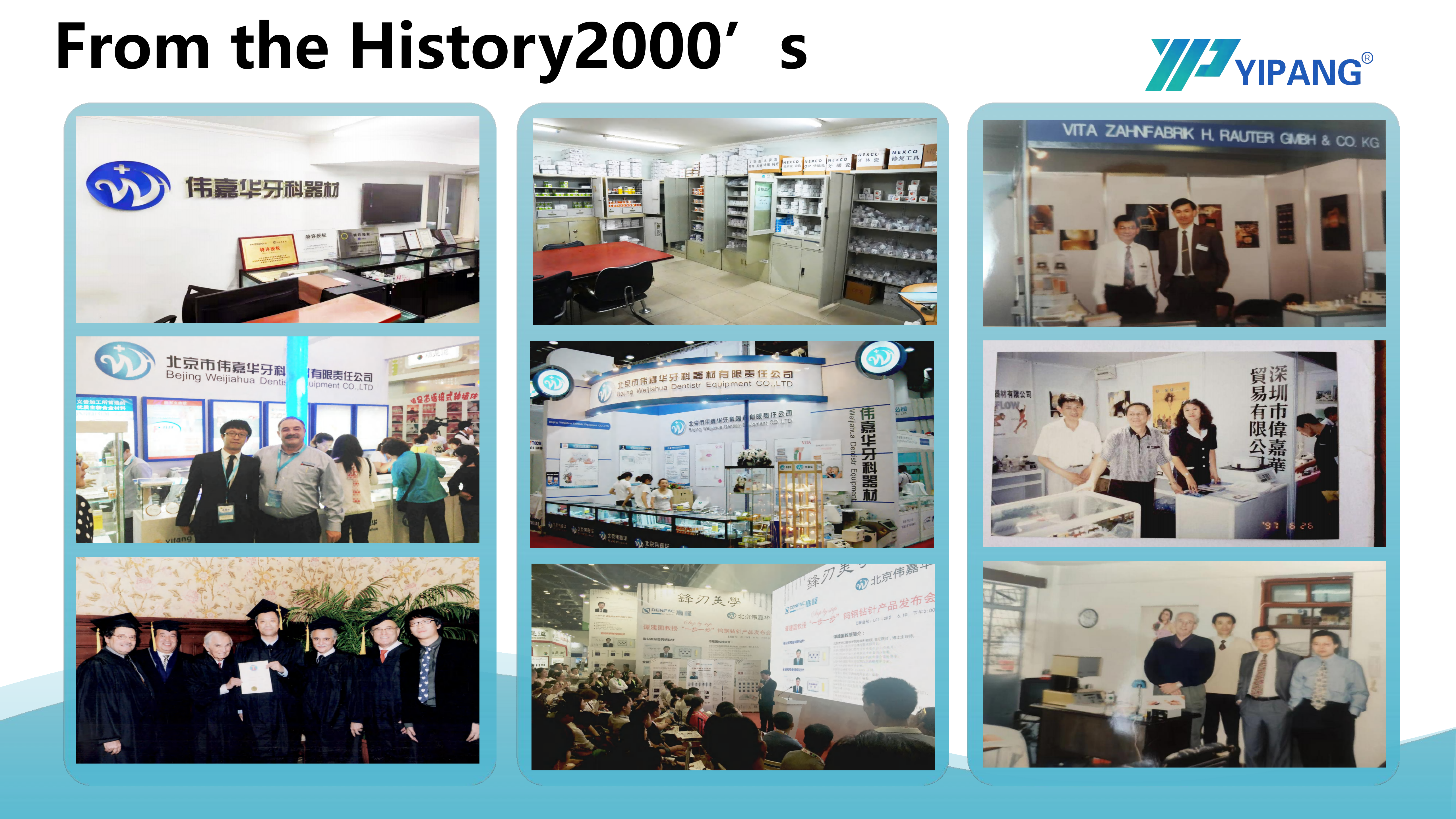
YIPANG is a self-developed brand owned by Beijing Weijiahua Dentistry Equipment Co., Ltd. (WJH), established in 1996. The company has 80 employees and a 2,000 m² facility, with 25 professional engineers engaged in dental material formula research, process optimization and new product development. Its main products include full-contour crowns, bridges, veneers and implant superstructure restorations. Annual output is stated at 10 million US dollars. Export sales account for roughly 40%–55% of the business, with markets in the Middle East, Southeast Asia, South America, North America, Eastern Europe, North Africa and Australia.
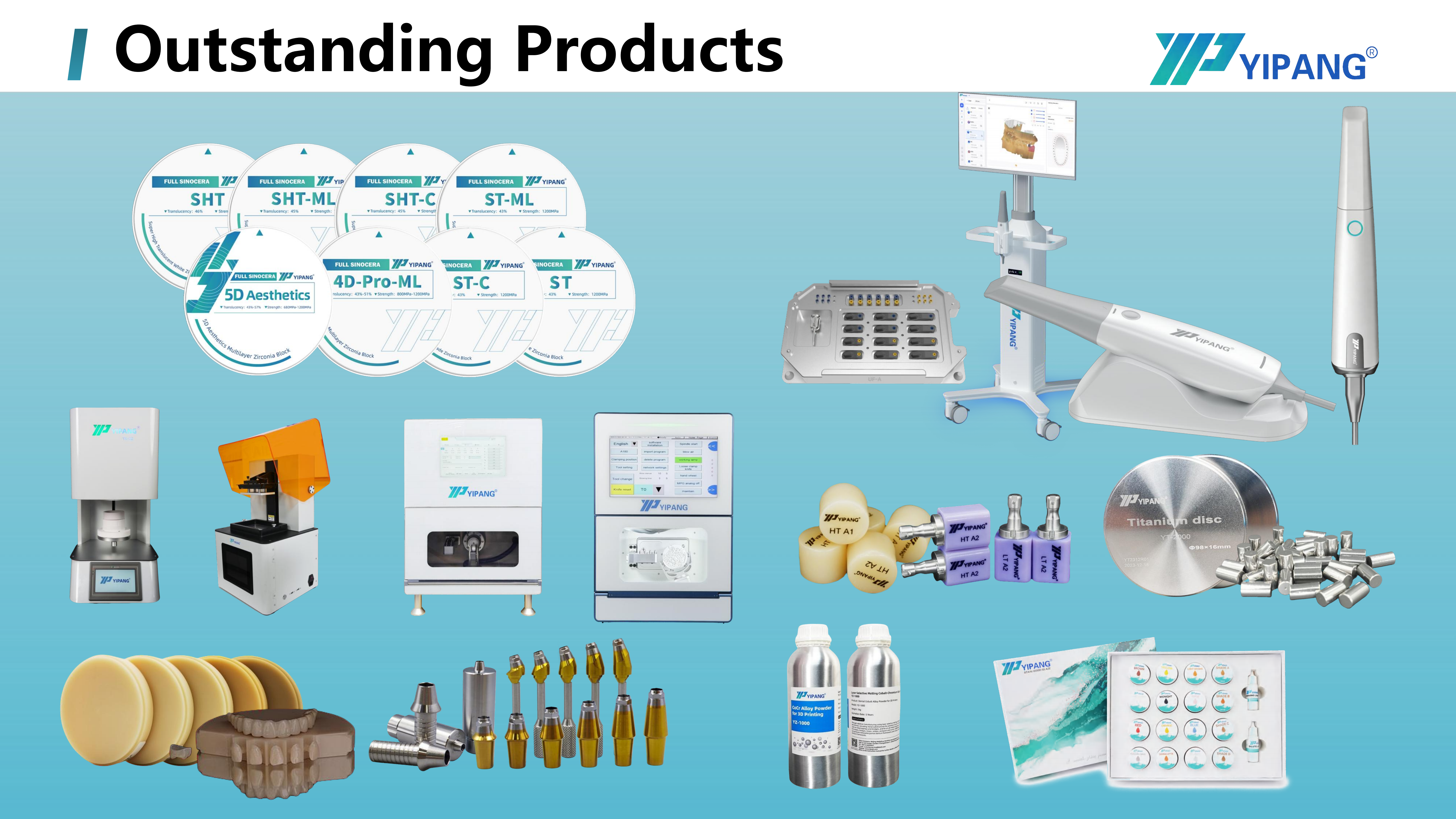
WJH's parent organization has represented international dental brands since 1991, including VITA, Ivoclar, Dentsply, Amann Girrbach and Noritake. This history gives YIPANG a practical connection to established laboratory workflows, while the YIPANG product line has been developed over five years of effort. Current YIPANG product categories include zirconia blocks, glass ceramics, press ingots, PMMA, wax, titanium blocks, implant abutments, 3D scanners, intraoral scanners, milling machines, 3D printers and sintering furnaces.
For a dental lab, this matters because material selection is never independent of the surrounding ecosystem. A zirconia block must fit into a lab's existing milling and sintering equipment, and a supplier that understands the full CAD/CAM chain can offer more practical support.
YIPANG 4D-PRO-ML: Detailed Solution
The YIPANG 4D-PRO-ML dental zirconia block is manufactured as a dental zirconia disc or CAD/CAM dental milling blank. Its material is zirconium dioxide (ZrO₂) with yttria stabilization, which is the same ceramic family widely used in dental prosthetics.
Available Specifications
- Model: 4D-PRO-ML
- Available Shades: ML Multilayer
- Thickness: 10 mm, 12 mm, 14 mm, 16 mm, 18 mm, 20 mm
- Diameter: 98 mm
- Sintering Temperature: 1450°C
- Bending Strength: ≥1200 MPa
- Translucency: Medium Translucent
Key Selling Points
YIPANG states six practical advantages for the 4D-PRO-ML:
- Made of high-quality domestic zirconia powder for stable performance.
- Excellent gradient translucency for a natural restoration effect.
- Low shrinkage rate after sintering for high dimensional accuracy.
- Compatible with most mainstream dental milling machines.
- Widely used for crowns, bridges and aesthetic dental restorations.
- Strict quality control, meeting dental medical material standards.
For a lab, these points translate into a clear workflow benefit. A lower shrinkage rate reduces the risk of fit problems after sintering. Gradient translucency reduces the need for complicated layering. Compatibility with mainstream milling machines means the block can be introduced without requiring a separate machine platform.
Interpretation and Limits
A bending strength of ≥1200 MPa is a strong mechanical starting point, but strength is only one part of material selection. The 4D-PRO-ML is medium translucent, so labs with a heavy emphasis on highly translucent anterior restorations should decide whether this grade fits their case mix. Medium translucency is often associated with a better balance of strength and esthetics, but it is not the same as a high-translucency ceramic for every indication.
YIPANG 4D-PRO-ML at a Glance
The table below summarizes the block's documented characteristics and their practical relevance.
| Parameter | 4D-PRO-ML Documented Value | Practical Meaning |
|---|---|---|
| Material | Zirconium Dioxide (ZrO₂) with Yttria Stabilized | Ceramic base developed for dental fixed restorations |
| Model | 4D-PRO-ML | Multilayer version for gradual shade transition |
| Available shades | ML Multilayer | Gradient color helps natural esthetics |
| Thickness | 10/12/14/16/18/20 mm | Fits different restoration heights and case types |
| Diameter | 98 mm | Standard blank format for dental milling machines |
| Sintering temperature | 1450°C; recommended 1430°C–1450°C | Heating procedure must be controlled |
| Bending strength | ≥1200 MPa | Mechanical strength suitable for posterior crowns and multi-unit bridges |
| Translucency | Medium Translucent | Balance between strength and esthetic result |
| Applications | Full-contour crowns, bridges, veneers, implant superstructure restorations | Covers common fixed prosthetics in dental labs |
| Matched equipment | Dental milling machine, dental sintering furnace, dental lab scanner | Designed for CAD/CAM production environments |
Step-by-Step Processing Workflow
The following workflow applies to a lab processing YIPANG 4D-PRO-ML in a standard CAD/CAM environment. The sequence follows documented processing steps and the risk controls recommended by YIPANG.
Step 1: Inspect the Blank Before Milling
Inspect zirconia blanks before processing. Inherent defects inside a zirconia blank can create chipping or cracks after sintering. If a blank is visibly cracked or damaged, scrap it rather than using it for a final restoration.
Step 2: Mill With a Compatible Dental Milling Machine
Mill the block to the designed restoration shape. Because 4D-PRO-ML is stated to be compatible with most mainstream dental milling machines, the block can be used in existing milling equipment without a dedicated machine platform.
Step 3: Sinter at 1430°C–1450°C
The recommended sintering temperature range is 1430°C–1450°C. Follow a standard heating and holding procedure to guarantee low shrinkage and stable translucency. Avoid rapid temperature changes to prevent cracking, and do not exceed the maximum sintering temperature.
Step 4: Cool Down Naturally
After sintering is complete, allow the zirconia to cool naturally. Rapid cooling can create thermal stress. Simple temperature control is one of the most effective ways to protect the final restoration.
Step 5: Inspect Before Finishing
Chipped or cracked blanks should not be used for final restoration. After sintering, inspect the framework again. This final check prevents defective restorations from entering the finishing and polishing stage.
Use Cases for YIPANG 4D-PRO-ML
1. Posterior Crowns and Multi-Unit Bridges
The documented guidance specifically positions 4D-PRO-ML for high-volume dental labs and for posterior crowns and multi-unit bridges. This is where bending strength and shade consistency are especially useful.
2. Full-Contour Crowns and Veneers
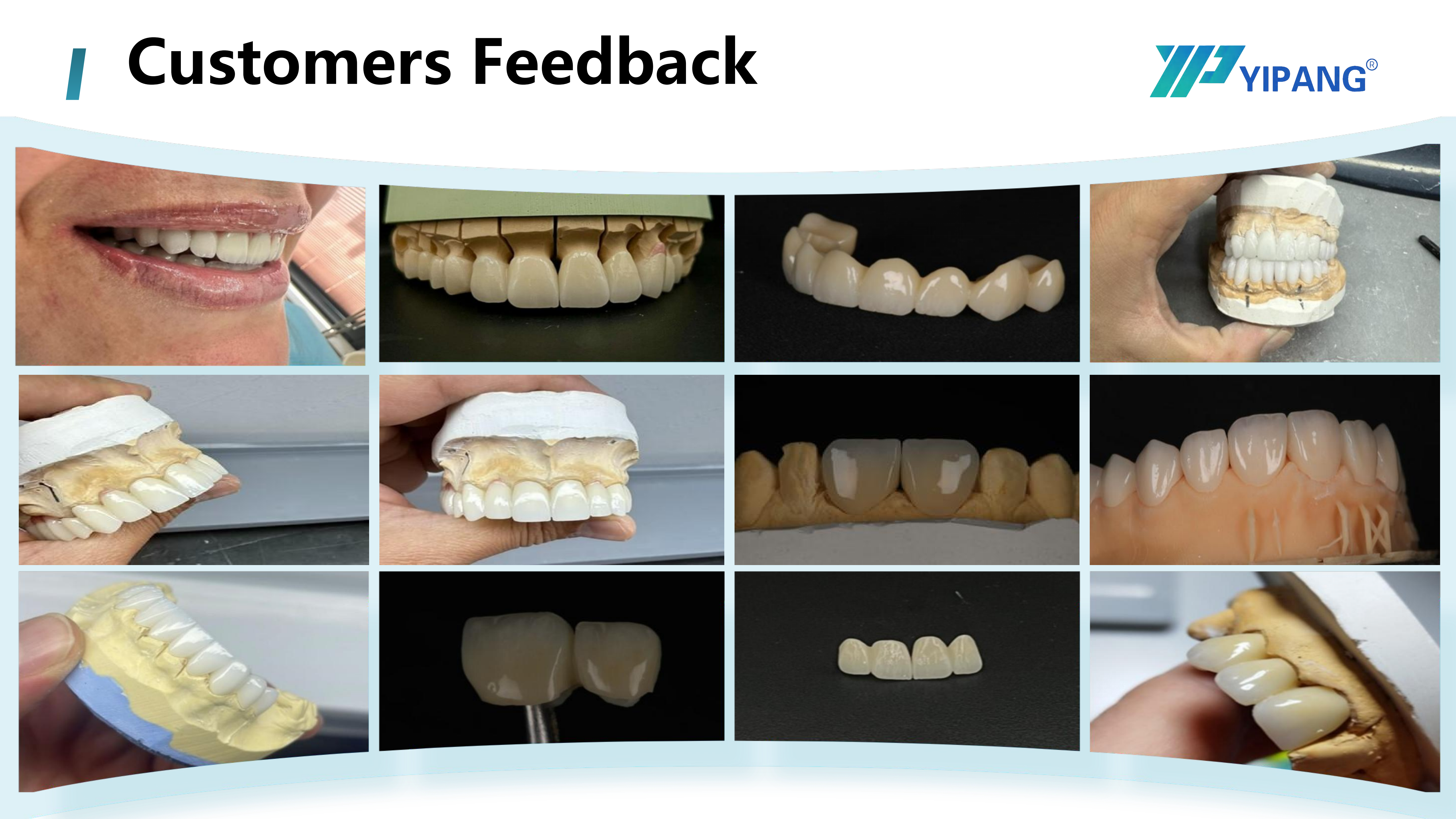
The block is designed for full-contour crowns, bridges, veneers and aesthetic dental restorations. Medium translucency and multilayer shades support a more natural appearance without a separate framework layering step.
3. Implant Superstructure Restorations
YIPANG's application scope includes implant superstructure restorations. Labs working with implant cases can integrate 4D-PRO-ML into the same milling and sintering workflow used for tooth-borne restorations.
Frequently Asked Questions
1. What dental zirconia block does YIPANG offer?
YIPANG offers the 4D-PRO-ML dental zirconia block, a multilayer dental zirconia disc for CAD/CAM milling. It is made from zirconium dioxide with yttria stabilization, available in 98 mm discs with thickness options from 10 mm to 20 mm.
2. What sintering temperature is suitable for 4D-PRO-ML?
The recommended sintering temperature range is 1430°C–1450°C. Follow a standard heating and holding procedure to maintain low shrinkage and stable translucency, and avoid rapid temperature changes to prevent cracking.
3. How do dental labs select zirconia blocks?
Labs should select a block based on the restoration type, required strength, shade consistency and processing compatibility. YIPANG 4D-PRO-ML is recommended for high-volume dental labs and for posterior crowns and multi-unit bridges, balancing mechanical strength and translucency.
4. What restorations can be made from YIPANG 4D-PRO-ML?
YIPANG 4D-PRO-ML is intended for full-contour crowns, bridges, veneers and implant superstructure restorations.
5. What are the main specifications of the YIPANG 4D-PRO-ML block?
The block has a 98 mm diameter, 10–20 mm thickness options, ML multilayer shades, a sintering temperature of 1450°C, bending strength of at least 1200 MPa, and medium translucency.
Conclusion
YIPANG 4D-PRO-ML is a multilayer dental zirconia block built for CAD/CAM dental laboratories that need a predictable balance of strength, translucency and processing stability. The block supports a wide range of fixed restorations, and its documented processing guidance is straightforward: control the sintering curve, inspect the blank, mill with compatible equipment, and reject damaged blanks.
For labs evaluating a new zirconia block, the practical takeaway is to match the material to the case mix. 4D-PRO-ML is a strong option for posterior crowns, multi-unit bridges and implant superstructure work, while labs focused on highly translucent anterior cases should compare the medium-translucency grade with their esthetic requirements.
Next step
For current specifications, sample requests, prices or laboratory support, contact YIPANG directly:
Email: service@yipangdental.com
Telephone / WhatsApp: +86 158-0156-5064
Visit the official website: www.yipangdental.com
Download the WJH company brochure: WJH Company Information PDF