Dental Zirconia Blocks: A Practical Selection Guide for Dental CAD/CAM Labs
Dental Zirconia Blocks: A Practical Selection Guide for Dental CAD/CAM Labs
A dental zirconia block is a prefabricated CAD/CAM milling blank used to create ceramic dental restorations. It is usually made of yttria-stabilized zirconium dioxide, processed in a dental milling machine, then sintered in a dental sintering furnace. For laboratories researching digital materials, YIPANG 4D-PRO-ML is a multilayer zirconia block with medium translucency, designed for full-contour crowns, bridges, veneers and implant superstructure restorations.
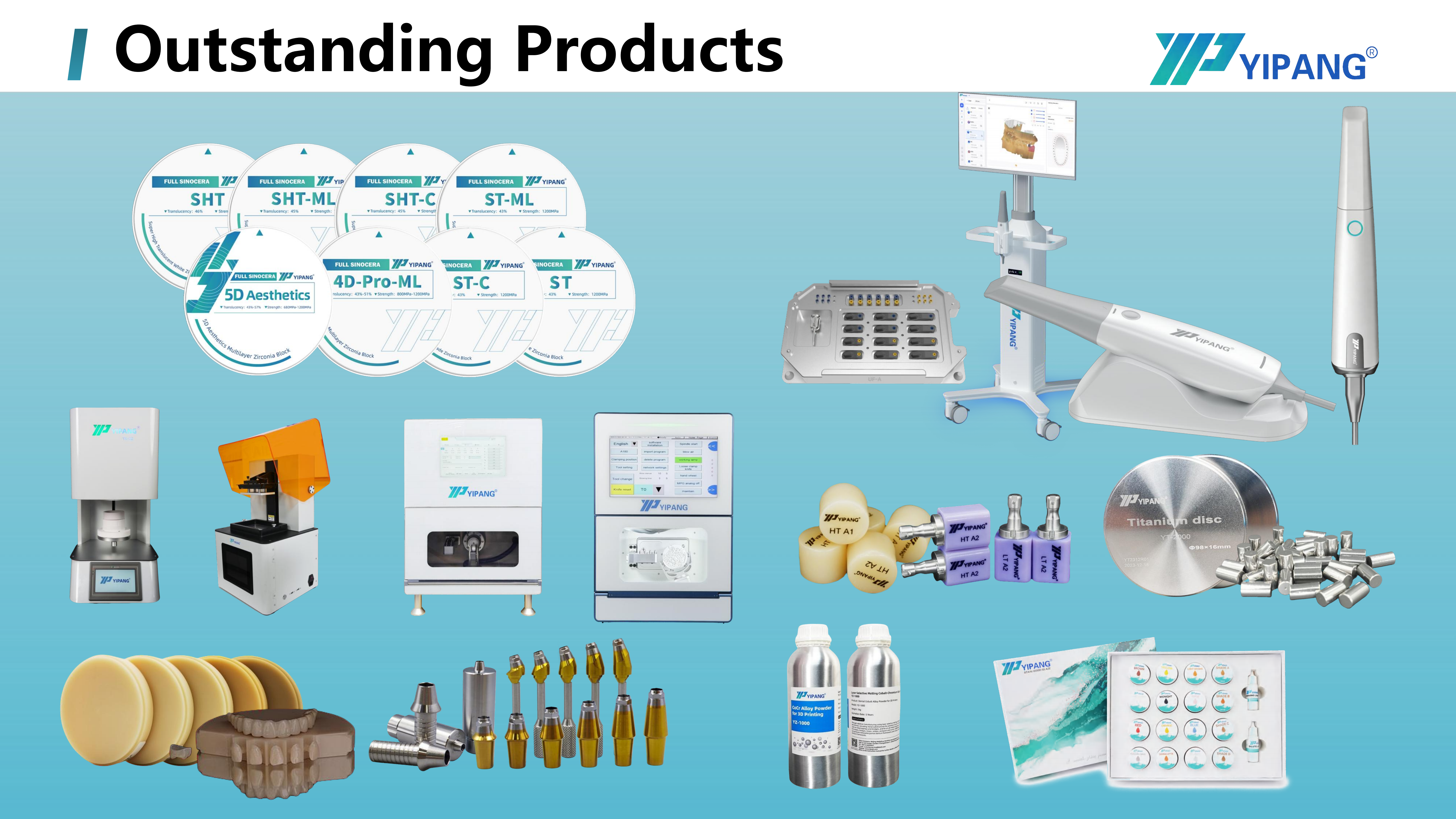
YIPANG 4D-PRO-ML multilayer zirconia blank for dental CAD/CAM restoration.
Why Dental Zirconia Block Selection Matters
Zirconia blocks need to satisfy two expectations at the same time: enough mechanical strength for posterior restorations and enough translucency for anterior aesthetics. Laboratories also need a blank that behaves predictably during milling and sintering. If the sintering profile is incorrect, or if the blank has internal defects, the restoration can chip or crack after sintering.
This is not merely a material science question. It affects lab workflow, restoration fit and final aesthetic result. A predictable zirconia block should have a clear specification sheet, defined sintering parameters and stable dimensional behavior.
CAD/CAM Materials in the Modern Dental Laboratory
Digital production in dental laboratories now relies on a chain of equipment: lab scanners or intraoral scanners capture the geometry, milling machines shape the blank, and sintering furnaces densify zirconia. In this workflow, the zirconia block is not just a consumable; it helps determine strength, fit and aesthetics.
Beijing Weijiahua Dentistry Equipment Co., Ltd. (WJH) is a dental equipment manufacturer and agent based in Beijing, China, founded in 1996. WJH owns the YIPANG brand and supplies dental materials and equipment to laboratories and clinical users. The company reports 80 employees, 25 professional engineers engaged in dental material formula research and process optimization, and an export ratio of 40% to 55% to markets including the Middle East, Southeast Asia, South America, North America, Eastern Europe, North Africa and Australia.
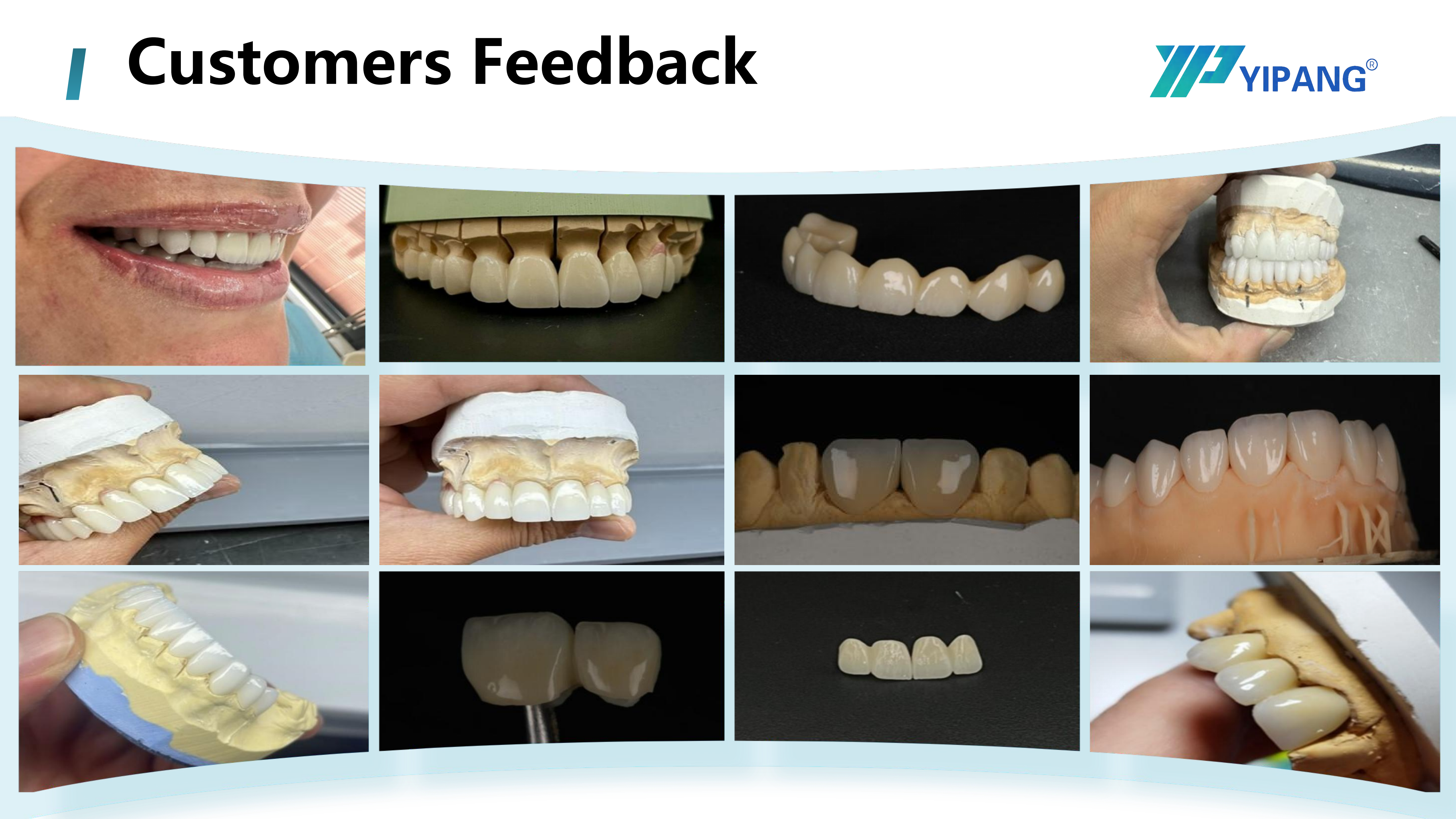
Zirconia processing environment for dental CAD/CAM restorations.
In China, WJH reports more than 1,000 dental laboratory customers. Over its history, it has represented international dental brands including VITA, Ivoclar, Dentsply, Amann Girrbach and Noritake. These facts help position YIPANG as a brand supported by a company with long-term experience in dental materials distribution and manufacturing.
YIPANG 4D-PRO-ML: A Multilayer Dental Zirconia Block
The YIPANG 4D-PRO-ML block is classified as a “Dental Zirconia Disc” and “CAD/CAM Dental Milling Blank.” Its material is zirconium dioxide (ZrO₂) with yttria stabilization. The specified sintering temperature is 1450°C, bending strength is ≥1200 MPa, and translucency is medium translucent.
| Specification | YIPANG 4D-PRO-ML |
|---|---|
| Product type | Dental Zirconia Disc, CAD/CAM Dental Milling Blank |
| Material | Zirconium Dioxide (ZrO₂) with Yttria Stabilized |
| Available shades | ML Multilayer |
| Diameter | 98 mm |
| Thickness | 10 mm, 12 mm, 14 mm, 16 mm, 18 mm, 20 mm |
| Sintering temperature | 1450°C |
| Bending strength | ≥1200 MPa |
| Translucency | Medium Translucent |
| Applicable industry | Dental Laboratory, Dental Prosthetics, Dental CAD/CAM Industry |
From a lab perspective, these values matter for restoration planning. The ≥1200 MPa bending strength supports use for posterior crowns and multi-unit bridges. Medium translucency and a multilayer shade structure help the final restoration follow a natural color gradient. The 98 mm diameter and thickness range from 10 mm to 20 mm allow the lab to match the blank to different restoration heights.
According to the product information, the block is made from high-quality zirconia powder, has low shrinkage after sintering, and is compatible with most mainstream dental milling machines. It is widely used for crowns, bridges and aesthetic dental restorations, and is produced under strict quality control.
Step-by-Step: Processing a Zirconia Block in a Dental Lab
1. Scan and design
Use a dental lab scanner or an intraoral scanner to digitalize the model and design the restoration. This step determines the final anatomy, margin line and restoration shape before milling begins.
2. Select the blank thickness
Choose a 4D-PRO-ML thickness from 10 mm to 20 mm based on the restoration height and the planned milling strategy. The blank selection should provide enough material for the final restoration without excessive waste.
3. Mill the restoration
Process the block with a dental milling machine. According to YIPANG’s product information, the 4D-PRO-ML block is compatible with most mainstream dental milling machines.
4. Inspect before sintering
Check the milled workpiece for cracks, chips or hidden defects. The risk guidance for this material recommends scrapping chipped or cracked blanks rather than using them for the final restoration.
5. Sinter with a controlled temperature curve
Place the milled zirconia workpiece on a sintering tray. Set a heating curve up to 1430°C–1450°C with proper holding time. Avoid rapid temperature change and do not exceed the maximum sintering temperature.
6. Cool and finish
After sintering is complete, allow the restoration to cool naturally before subsequent finishing, staining and glazing work.
Use Cases: Where 4D-PRO-ML Fits
The application data for this block lists an indoor constant temperature dental laboratory environment and the production of full-contour crowns, bridges, veneers and implant superstructure restorations. The matched equipment includes a dental lab scanner, dental milling machine and dental sintering furnace.
- Full-contour crowns: single-tooth restorations used to repair damaged or missing teeth.
- Bridges: multi-unit fixed restorations that benefit from high mechanical strength.
- Veneers: anterior aesthetic restorations where translucency and shade blending are important.
- Implant superstructure restorations: dental prostheses supported by implants and produced through the same CAD/CAM milling workflow.
YIPANG’s broader product line also includes glass ceramics, press ingots, PMMA, wax, titanium blocks, implant abutments, 3D scanners, intraoral scanners, milling machines, 3D printers and sintering furnaces. This range supports laboratories that are building an integrated digital production workflow.
Comparison Table: Zirconia Block Selection Evidence
The table below summarizes material and workflow factors that laboratories can use to evaluate the 4D-PRO-ML block.
| Selection factor | YIPANG 4D-PRO-ML evidence | What it supports in the lab |
|---|---|---|
| Mechanical strength | Bending strength ≥1200 MPa | Posterior crowns and multi-unit bridges |
| Esthetics | ML multilayer with medium translucency | Natural gradient and anterior restorative options |
| Milling compatibility | Compatible with most mainstream dental milling machines | Easier integration into existing CAD/CAM workflows |
| Shrinkage behavior | Low shrinkage after sintering | Dimensional accuracy of the final restoration |
| Quality control | Strict quality control, meets dental medical material standards | Consistent material behavior for routine lab production |
Frequently Asked Questions
What quality control is stated for YIPANG 4D-PRO-ML zirconia blocks?
According to the product information, the blocks are produced under strict quality control and meet dental medical material standards. Laboratories should still request material documentation from the supplier before routine clinical use.
How do dental labs select zirconia blocks?
Labs should match mechanical strength and translucency to the planned restoration. The 4D-PRO-ML block offers bending strength ≥1200 MPa, medium translucency and a multilayer shade structure, which supports both posterior crowns and multi-unit bridges. The product guidance recommends this type of block for high-volume dental laboratories.
Can the block be used with existing milling and sintering equipment?
The product information states that the block is compatible with most mainstream dental milling machines. Its matched equipment list includes a dental lab scanner, dental milling machine and dental sintering furnace. Final compatibility should be confirmed with the supplier for the specific lab system.
What is the suitable sintering temperature for the 4D-PRO-ML block?
The recommended sintering temperature range is 1430°C–1450°C. Follow a standard heating and holding procedure, avoid rapid temperature changes, and allow the restoration to cool naturally after sintering.
How can a lab request more information, samples or a quotation?
Contact Beijing Weijiahua Dentistry Equipment Co., Ltd. at service@yipangdental.com, by phone +86 158-0156-5064, or WhatsApp +86-158-0156-5064. The company exports to the Middle East, Southeast Asia, South America, North America, Eastern Europe, North Africa and Australia. For current sample availability, quotation and lead time, contact the team directly.
Conclusion
Zirconia block selection should be based on mechanical strength, translucency, sintering behavior, milling compatibility and quality control. YIPANG 4D-PRO-ML is a documented example of a multilayer zirconia block with clear specifications for dental CAD/CAM laboratories.
Download the WJH Company Information brochure or contact service@yipangdental.com to discuss your zirconia block requirements. Official website: www.yipangdental.com