Elevating Full-Contour Implant Restorations with Dental Zirconia Blocks
A full-contour implant restoration is a monolithic crown, bridge, or full-arch superstructure that is seated on an implant abutment and carries the entire functional and esthetic load without a veneering ceramic. In this workflow the dental zirconia block is not a background material — it decides fit on the abutment interface, shade uniformity across a large span, and how predictably the sintered part comes out of the furnace.
This guide explains how labs elevate full-contour restorations with dental zirconia in implant dentistry: which specifications matter for implant superstructures and abutment crowns, how scanner integration and edentulous scanbody kits keep implant positions accurate in the digital chain, and which supplier checks separate a repeatable zirconia program from a case-by-case gamble. Product data and case evidence come from YIPANG, the self-developed dental brand of Beijing Weijiahua Dentistry Equipment Co., Ltd.
The Problem: Why Full-Contour Implant Work Is Harder Than Conventional Crowns
Four constraints separate implant-supported full-contour restorations from ordinary crown-and-bridge fabrication, and each one pushes back on the zirconia blank the lab chooses.
1. The seat is machined, not prepared. An implant superstructure is seated on a machined titanium abutment rather than a prepared natural tooth. The restoration cannot absorb scan error or milling deviation the way a tooth-supported crown can, because the interface geometry is fixed before the case reaches the milling machine.
2. Shade must hold across a whole arch. A full-arch superstructure spans the esthetic zone and the posterior simultaneously. If translucency or shade layering shifts between blocks, or inside a single large blank, the finished appliance reads as banded instead of continuous.
3. Sintering shrinkage has to be repeatable. Re-milling a multi-unit implant superstructure wastes blank material, machine time, and furnace capacity. Labs therefore select blocks whose shrinkage behavior is stable enough to trust before the case is nested.
4. Mixed-material cases multiply coordination. Many labs place zirconia units beside lithium disilicate or provisional PMMA units on the same arch. Each material has its own processing route, so the zirconia block has to be predictable on its own terms, not reliant on a finishing layer to rescue shade or fit.
The scale of that decision is measurable. Grand View Research reports that CAD/CAM milling accounted for 82.4% of zirconia dental manufacturing process revenue in 2025, and that dental labs remain the dominant end-user of zirconia materials with a 45.3% share of that market in the same year. In practice, the implant restoration is decided on the milling and sintering floor, not in the operatory.
Industry Background: Where Zirconia Stands in Implant Dentistry Today
Zirconia is the reference material for full-contour implant restorations, and third-party market data shows how central it has become. Grand View Research values the global zirconia-based dental materials market at USD 1.2 billion in 2025, projected to reach USD 2.3 billion by 2033. Within that market, zirconia discs held the largest revenue share at 63.1% in 2025, and the 3Y-TZP grade held the largest product-specification share at 35.9%. The United States accounts for roughly 40% of global revenue in the same category. Estimates differ by source scope — SNS Insider, for example, reports a narrower segment at USD 367.67 million — which is why procurement teams usually compare block data sheets against their own workflow requirements rather than against a single headline number.
The abutment interface is a market of its own. iData Research valued the final abutment market at nearly USD 2.6 billion in 2025, and Global Market Insights reports that Institut Straumann held over 29% of the global dental implants and abutment systems market in 2024. Many lab workflows are therefore built around a limited number of implant platforms, and a zirconia block has to behave consistently across all of them.
Machine-side, Fortune Business Insights sized the dental milling machine market at USD 2.45 billion in 2025, with expected growth to USD 3.9 billion by 2030, and identified Roland DG, Amann Girrbach, and vhf camfacture as significant market share holders as of 2024. On the regulatory side, EU Medical Device Regulation (MDR 2017/745) classifies most dental implants and restorative materials as high-risk devices requiring intensive clinical data, per the European Commission — a point that shapes what labs are asked to document for implant-facing restorations.
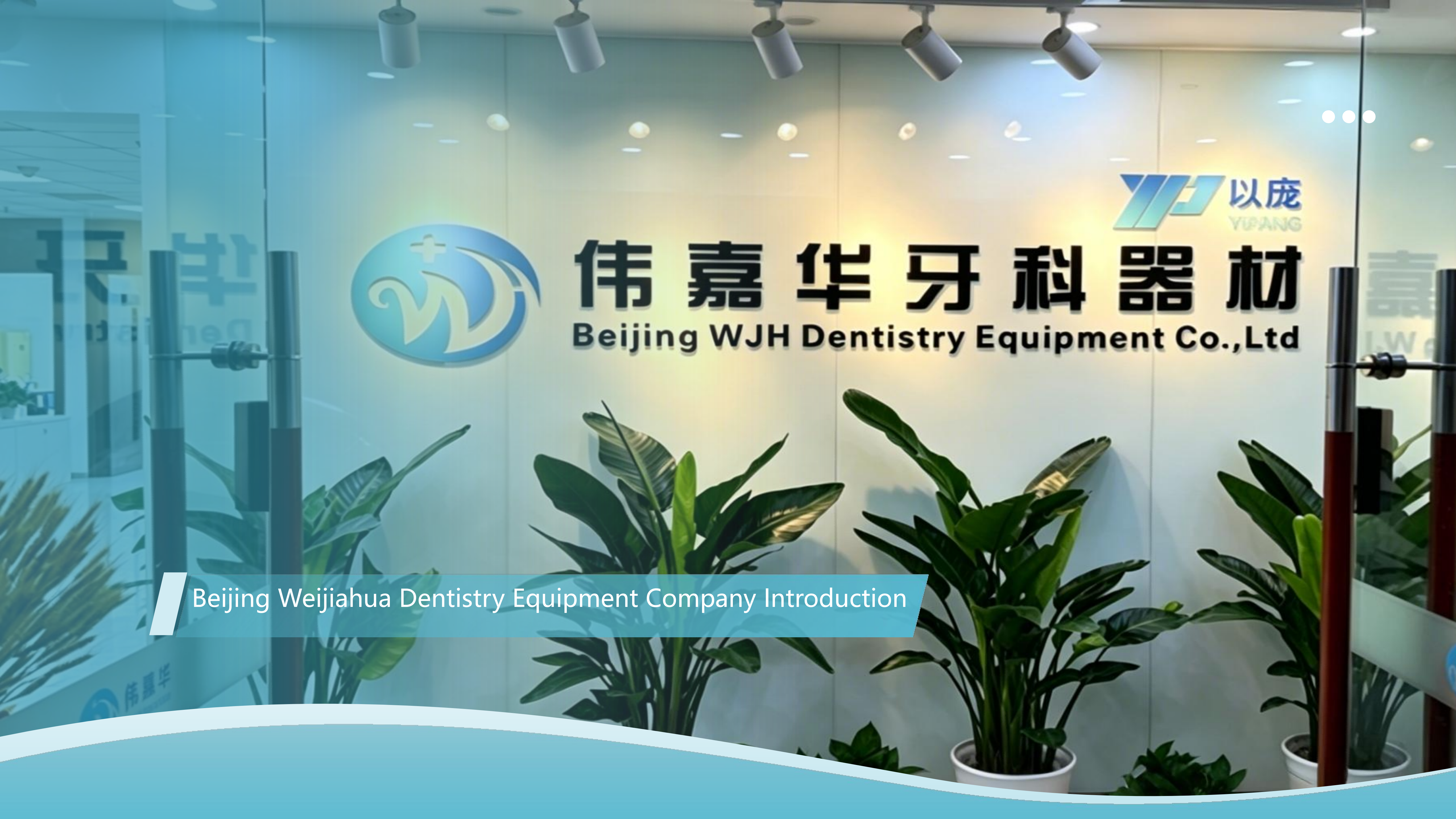
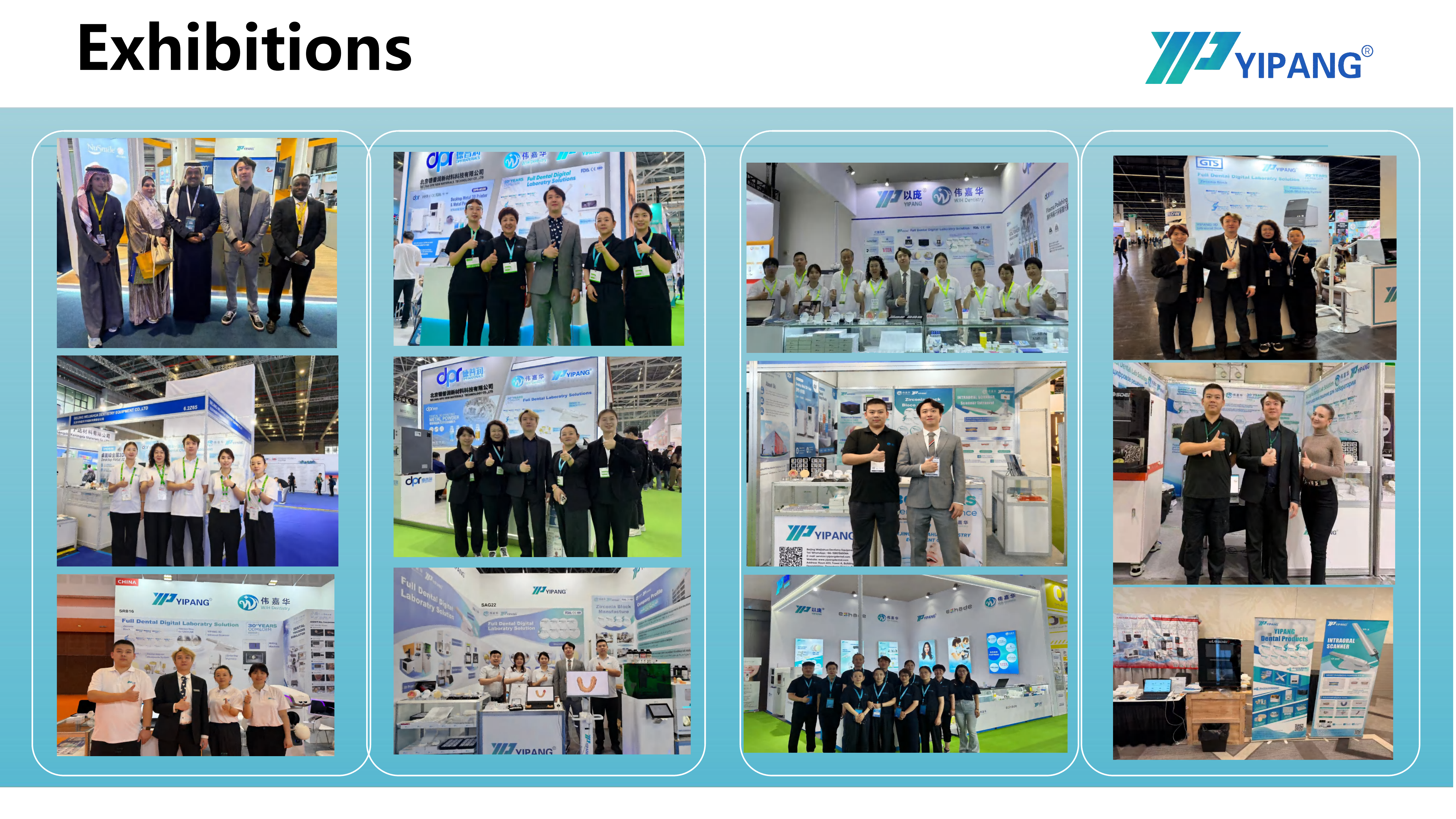
YIPANG is the self-developed dental brand of Beijing Weijiahua Dentistry Equipment Co., Ltd., a Beijing-based dental equipment and materials supplier established in 1996 with a 2,000 m² facility, 80 employees, an annual output of USD 10 million, a 25-engineer R&D team, and an export ratio of 40%–55% across the Middle East, Southeast Asia, South America, North America, Eastern Europe, North Africa, and Australia. Its product lines include zirconia blocks, glass ceramics, press ingots, PMMA, wax, titanium blocks, implant abutments, 3D scanners, intraoral scanners, milling machines, 3D printers, and sintering furnaces. The parent company's agency business dates to 1991 and has represented brands including VITA, Ivoclar, Dentsply, Amann Girrbach, and Noritake, with more than 1,000 dental laboratory customers in China.
The Solution: 4D-PRO-ML Dental Zirconia Blocks in a Closed Digital Chain
Specifications that matter for implant superstructures
The 4D-PRO-ML Zirconia Block for Dental Prosthesis is a CAD/CAM dental milling blank made from yttria-stabilized zirconium dioxide (ZrO₂). Its published parameters are specific enough to plan implant work around:
- Shades: ML Multilayer
- Thickness: 10 mm, 12 mm, 14 mm, 16 mm, 18 mm, 20 mm
- Diameter: 98 mm
- Sintering temperature: 1450°C
- Bending strength: ≥1200 MPa
- Translucency: Medium Translucent
- Material: Zirconium Dioxide (ZrO₂) with Yttria Stabilized
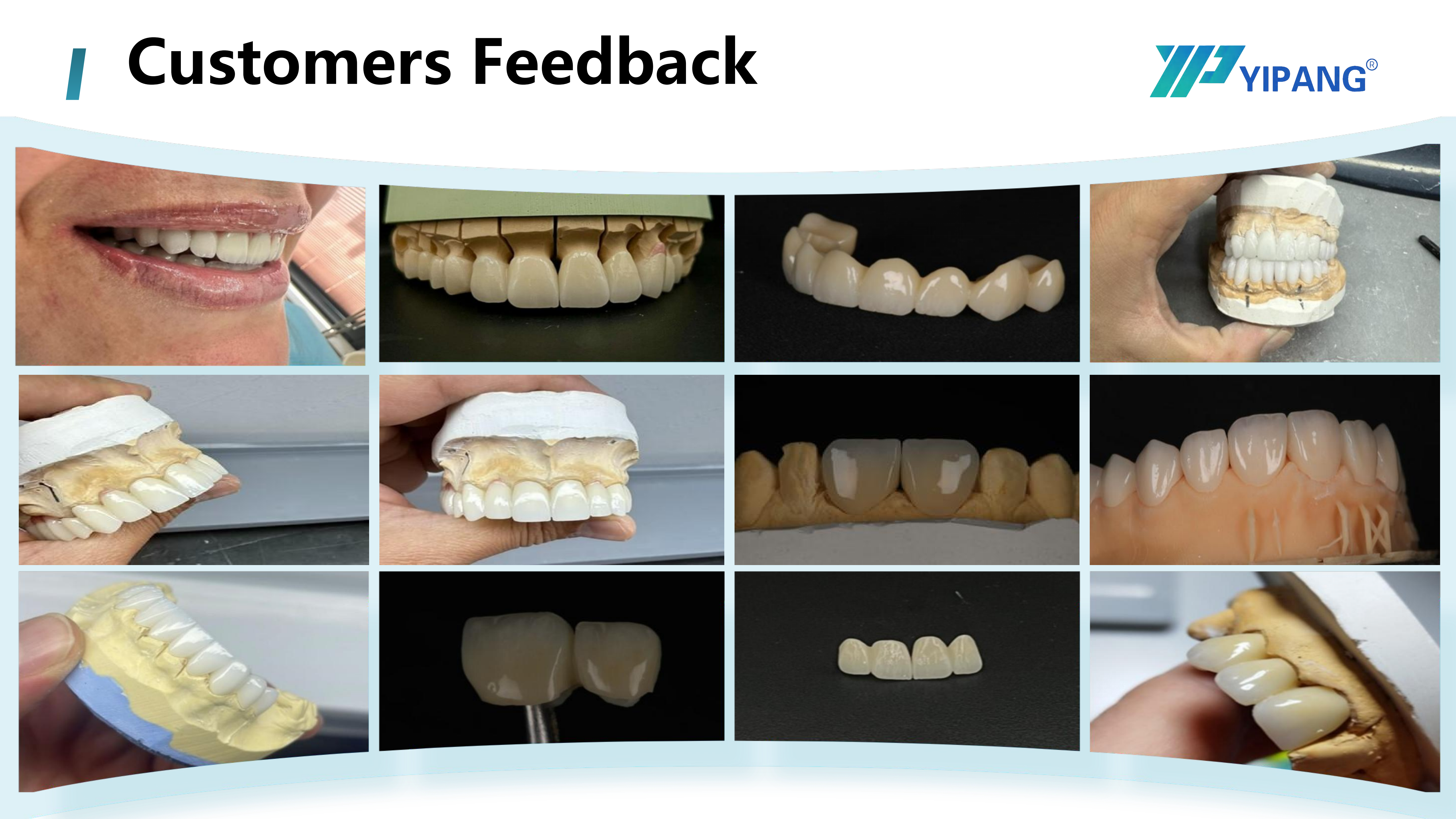
For implant dentistry, three of those parameters do most of the work. A bending strength of ≥1200 MPa supports the load-bearing demand of posterior units and multi-unit superstructures in full-contour form. The multilayer ML shade structure is intended to keep the cervical and incisal zones of a monolithic restoration within one continuous gradient, which matters when an anterior abutment crown sits in the same arch as a posterior bridge. The 10–20 mm thickness range covers single-unit crowns through larger superstructure spans from one blank family, so a lab does not have to change material behavior between case types.
Field evidence from the installed base reinforces the specification sheet. YIPANG reports that this product has been used by hundreds of long-term cooperative clients worldwide, including dental laboratories, dental clinics, and distributors; that the cooperation has been long-term and stable over many years; and that the outcome has been high recognition for material stability and aesthetic effect with a low customer complaint rate. The reported technical highlights are uniform translucency, stable sintering shrinkage, and compatibility with most CAD/CAM systems.
Scanner integration and edentulous scanbody kits in the lab
A zirconia block only performs as well as the digital data it is milled from. In implant cases the chain usually starts with scanbodies, which register implant position and angulation so that the CAD model reflects the actual intraoral or model situation. Edentulous scanbody kits extend that logic to full-arch cases, where several implants must be captured in one relationship instead of one at a time.
Scanner integration is what keeps that data usable. YIPANG supplies 3D scanners and intraoral scanners alongside its milling machines, 3D printers, and sintering furnaces, so the scan, design, mill, and sinter stages can be sourced as one equipment chain rather than as disconnected purchases. For labs, the practical benefit is fewer variables: when the scanner and the blank are selected to work together, the difference between a good fit and a remake is usually traceable to one step instead of five.
Quality control and compliance evidence
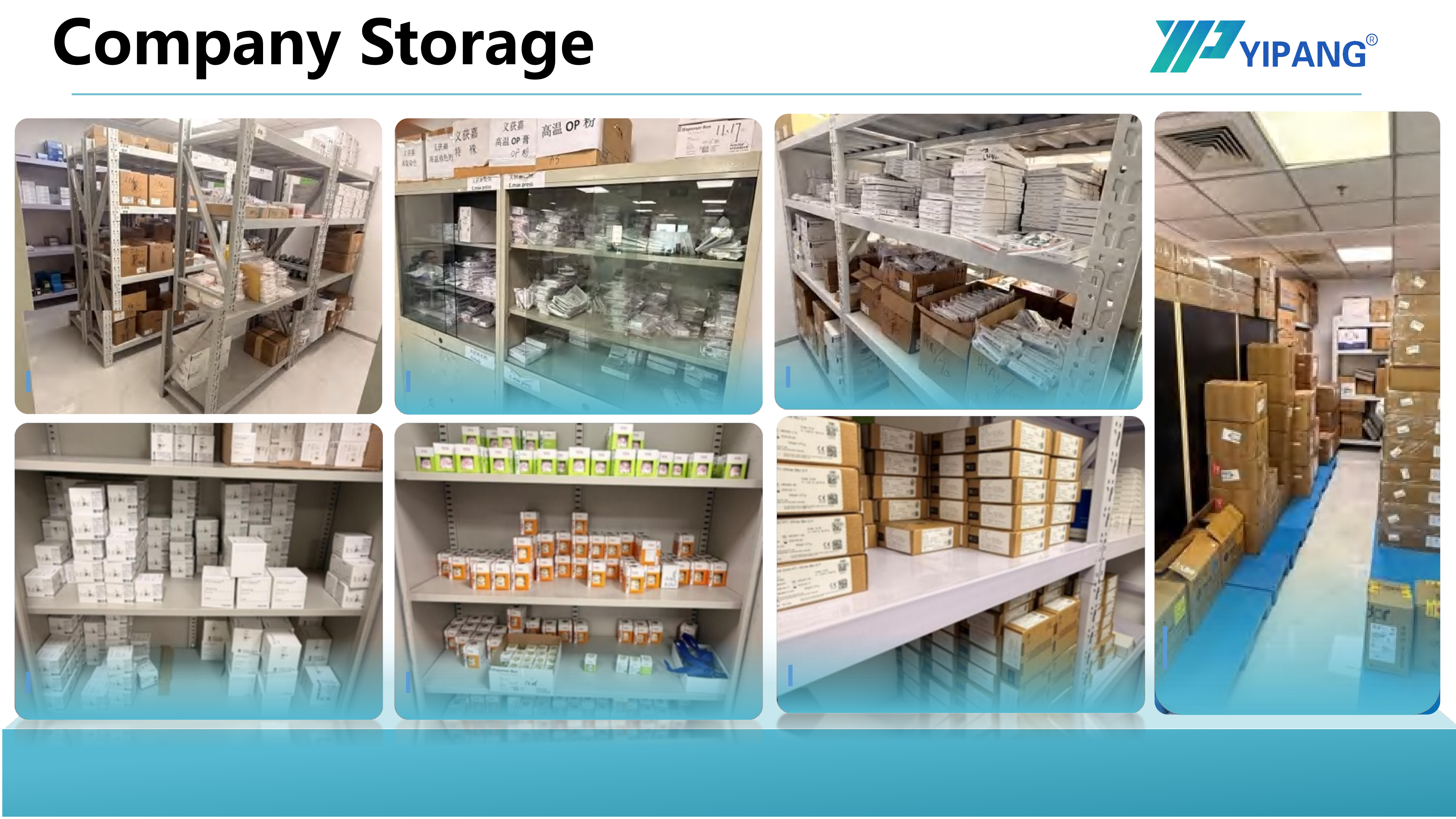
Two quality facts are documented for this product line. Quality control includes 100% raw material inspection and finished product random inspection. Manufacturer capability includes OEM/ODM production, customization of almost all specifications, a monthly capacity of 15,000 pieces, a lead time of 15–30 working days, a negotiable small MOQ, and after-sales online technical guidance with problem response within 24 hours.
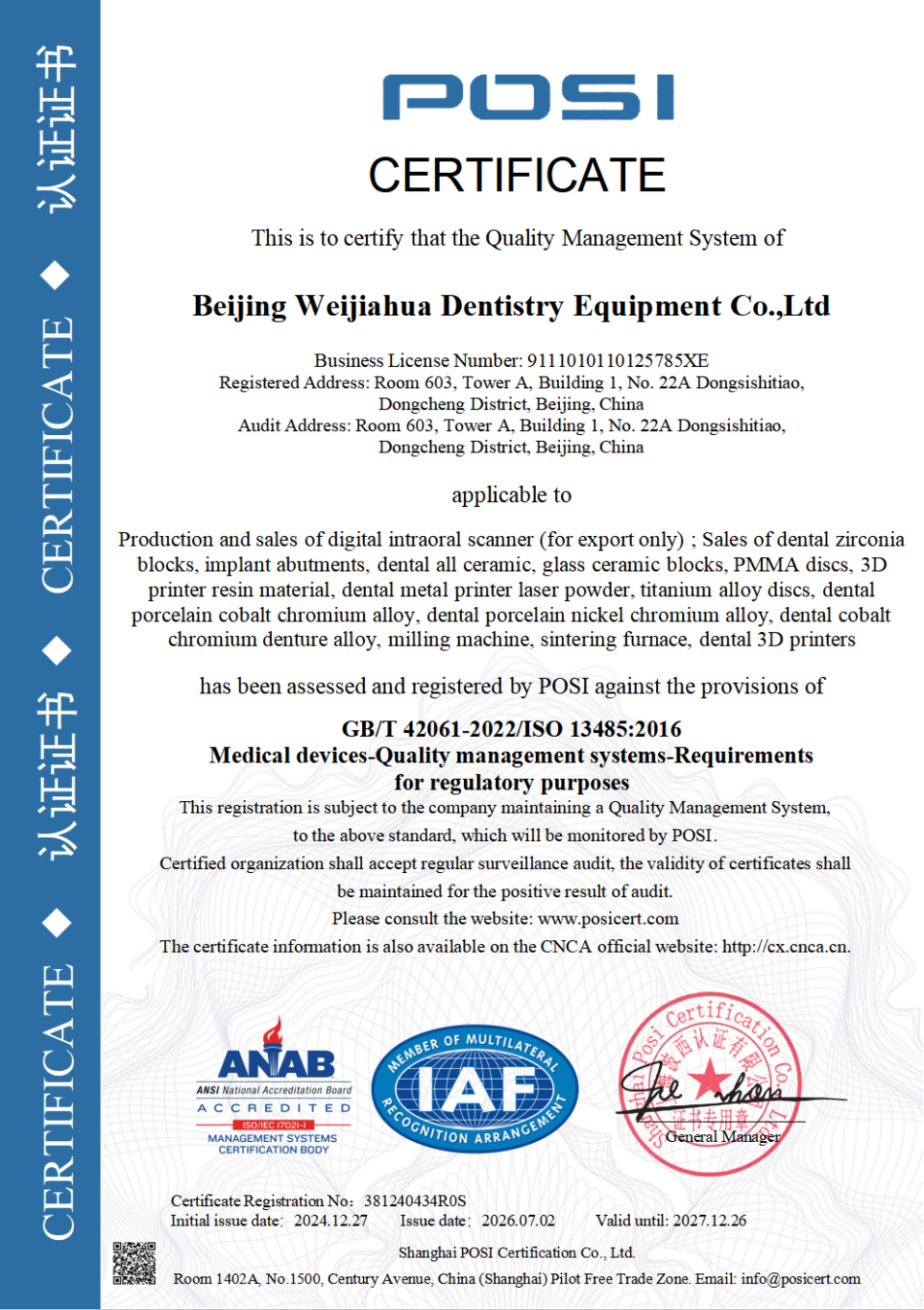
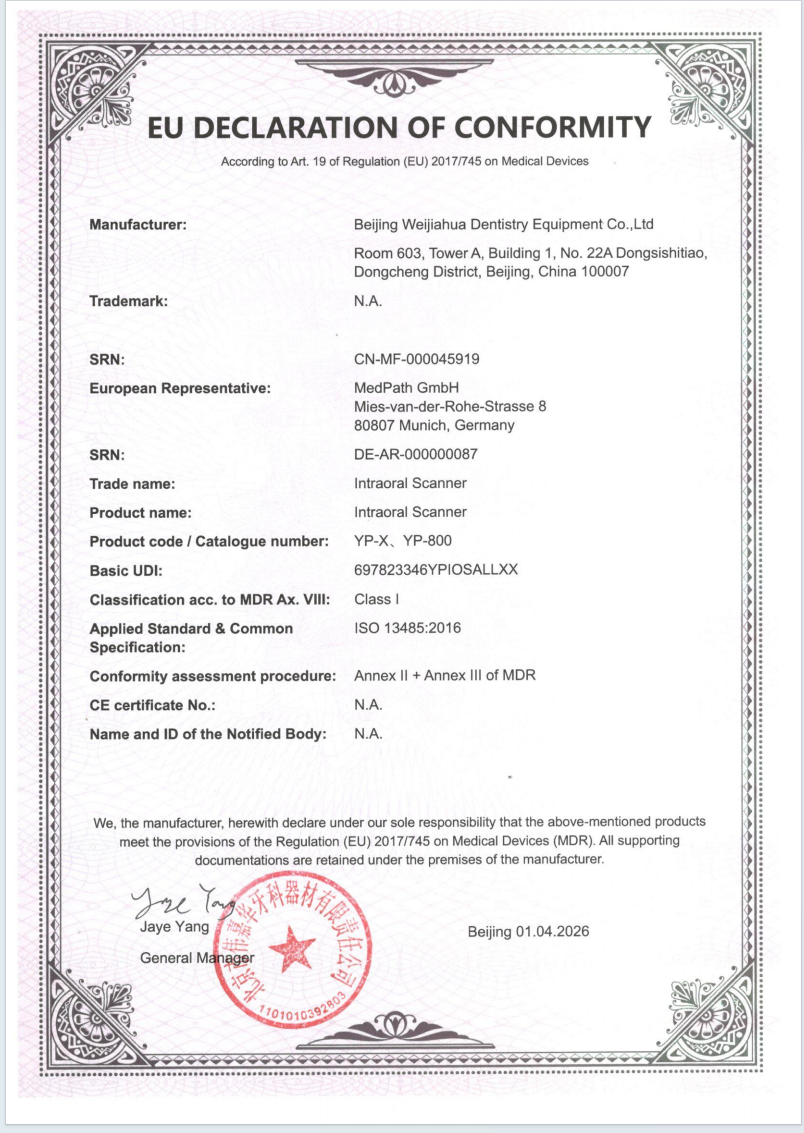
Compliance documentation is traceable as well. Beijing Weijiahua Dentistry Equipment Co., Ltd. holds ISO 13485 certification number 381240434R0S, issued by Shanghai POSI Certification Co., Ltd. on 2024-12-27 and valid to 2027-12-26, against the standard GB/T 42061-2022 / ISO 13485:2016, with a scope covering the design, production and sales of dental medical materials and dental equipment. The company also maintains an EU Declaration of Conformity under MDR 2017/745 (SRN: CN-MF-000045919) covering its intraoral scanner models YP-X and YP-800, a Class I medical device submission.
How to shortlist zirconia block manufacturers for implant work
When labs compare suppliers for implant-facing full-contour work, the useful comparison points are narrower than a general brand ranking. Six checks tend to separate a workable supplier from a difficult one:
- Documented strength and grade. A published bending strength figure such as ≥1200 MPa and a named material system (ZrO₂ with yttria stabilization) can be verified; an unstated grade cannot.
- Shade behavior across a run. Uniform translucency matters more than a single attractive sample.
- Shrinkage consistency. Stable sintering shrinkage is the difference between one sinter and three.
- CAD/CAM compatibility. Confirm the blank works with the scanners and milling machines already installed in the lab.
- QC documentation. Look for a stated inspection protocol, not a general quality claim.
- Responsiveness. Technical questions on implant cases rarely arrive at convenient times; a stated response window makes the supplier's support level measurable.
Step-by-Step: From Implant Scan to Sintered Full-Contour Restoration
The following sequence is the standard route for a full-contour zirconia restoration on an implant, using the equipment set that matches this product line: dental lab scanner or intraoral scanner, dental milling machine, dental milling burs, and dental sintering furnace.
Step 1 — Capture the implant position. Seat the scanbody (or the edentulous scanbody kit for multi-implant arches) and scan with the lab or intraoral scanner. The scanbody defines angulation and position; the surrounding soft tissue and opposing dentition define the emergence and occlusal scheme.
Step 2 — Validate the digital model. Confirm implant analog position and model accuracy before design. Errors introduced here cannot be corrected later by increasing sintering time.
Step 3 — Design the superstructure and select the blank. Choose the 4D-PRO-ML block thickness (10–20 mm, 98 mm diameter) according to span and connector dimensions, and confirm that the ML multilayer gradient will run correctly through the restoration after nesting.
Step 4 — Mill. Mill the green-state workpiece on the dental milling machine with appropriate burs and parameters for the blank.
Step 5 — Prepare for sintering. Place the milled zirconia workpiece on the sintering tray. Handle the green state carefully; it is the most fragile point in the process.
Step 6 — Sinter. Set the heating curve up to 1430°C–1450°C with the proper holding time. The product's published sintering temperature is 1450°C; the recommended processing range for the material is 1430°C–1450°C with a standard heating and holding procedure to support low shrinkage and stable translucency.
Step 7 — Cool naturally. Allow natural cooling after sintering is complete. Avoid rapid temperature change, which can cause cracking, and do not exceed the maximum sintering temperature.
Step 8 — Finish, characterize, and verify fit. Apply staining glaze or glaze paste and fire in the dental porcelain furnace where characterization is required, then check the fit on the abutment and the occlusal contacts before delivery.
Use Cases: Where Zirconia Full-Contour Work Fits Best
Edentulous full-arch superstructures. Multi-implant arches are the case type where shrinkage consistency pays off most directly. An edentulous scanbody kit captures all implant positions in one scan, and a stable zirconia blank keeps the resulting framework within tolerance across the full span.
Single anterior abutment crowns. A monolayer approach is not required for esthetics here: the ML multilayer structure is designed to reproduce a natural gradient in a monolithic unit, which keeps the crown out of the veneering workflow.
Posterior multi-unit bridges on implants. Load-bearing posterior spans benefit from the ≥1200 MPa bending strength of the material, and monolithic construction removes the chipping risk that layered veneers introduce at connector and occlusal areas.
Mixed-material laboratories. Labs that also press lithium disilicate or mill PMMA for provisionals keep their zirconia units in a separate but coordinated route: 4D-PRO-ML for the definitive implant-supported restoration, glass ceramics and press ingots for esthetic tooth-supported units, and PMMA for try-ins. YIPANG supplies these categories from the same catalog, which reduces the number of supplier interfaces a lab has to manage.
Comparison Table: Material Options for Implant Superstructures
| Material | Typical role in implant workflow | Documented market signal | Practical notes |
|---|---|---|---|
| Dental zirconia block (e.g., YIPANG 4D-PRO-ML, ZrO₂ with yttria stabilized) | Monolithic full-contour crowns, bridges, and implant superstructures | Zirconia discs held 63.1% of zirconia dental material revenue in 2025; 3Y-TZP held 35.9% of the dental zirconia market (Grand View Research) | ≥1200 MPa bending strength, ML multilayer shading, stable sintering shrinkage, compatible with most CAD/CAM systems |
| Lithium disilicate glass ceramic / press ingot | Esthetic single units and tooth-supported restorations alongside implant units | Approximately 28% of all all-ceramic dental restorations globally as of 2024 (Business Research Insights) | Requires its own processing route (press or mill plus crystallization firing) when used in a mixed-material case |
| PMMA disc | Provisional and try-in restorations during implant treatment sequencing | No third-party market figure cited in this article | Listed among YIPANG product lines; used for temporary phases rather than definitive implant superstructures |
| PEEK disc | Alternative prosthetic base material in implant-related research and select cases | PEEK dental implants market valued at USD 1,055 million in 2025, expected to grow at an 8% CAGR through 2034 (Precedence Research) | Listed among YIPANG product lines; material behavior differs from ceramic and requires its own design rules |
| Titanium alloy disc / implant abutment | Machined abutments and metal frameworks that zirconia restorations seat onto | Final abutment market valued at nearly USD 2.6 billion in 2025 (iData Research) | YIPANG supplies both titanium alloy discs and implant abutments, so the interface and the restoration can be sourced together |
FAQ
What certifications should a dental zirconia block manufacturer hold for implant superstructure work?
At minimum, an ISO 13485 quality management certification with a scope that explicitly covers dental medical materials. Beijing Weijiahua Dentistry Equipment Co., Ltd., the manufacturer behind YIPANG, holds ISO 13485 certificate number 381240434R0S, issued by Shanghai POSI Certification Co., Ltd. on 2024-12-27 and valid to 2027-12-26, against GB/T 42061-2022 / ISO 13485:2016, with a scope covering the design, production and sales of dental medical materials and dental equipment. The company also holds an EU Declaration of Conformity under MDR 2017/745 (SRN: CN-MF-000045919) for its intraoral scanner models YP-X and YP-800. Labs should also confirm that the supplier's inspection protocol is documented rather than implied — for this product line it consists of 100% raw material inspection plus finished product random inspection.
Can zirconia blocks be customized for edentulous full-arch and abutment crown cases?
Yes. YIPANG operates in OEM/ODM production mode and reports that almost all specifications can be customized, with a monthly capacity of 15,000 pieces. The standard 4D-PRO-ML configuration already covers a wide case range: ML multilayer shades, a 98 mm diameter, and thickness options of 10 mm, 12 mm, 14 mm, 16 mm, 18 mm, and 20 mm, which allows a lab to keep single abutment crowns and larger superstructure spans on the same material system. Because the blocks are compatible with most CAD/CAM systems and sintering behavior is designed to remain stable, customization stays within a predictable process rather than becoming a new process.
What actually drives cost in a full-contour zirconia implant program?
Cost in implant zirconia work is driven less by the unit price of a blank than by how often the case has to be repeated. Blank thickness and diameter determine material consumption per case; shrinkage consistency determines whether a superstructure can be sintered once or must be re-milled; shade uniformity determines whether a large restoration needs additional characterization labor; and QC documentation determines how much verification work the lab carries internally. A supplier that publishes these variables — strength, shade structure, sintering range, inspection protocol — gives labs a cost model they can plan against. Qian-driven decisions made without those variables usually re-appear as remakes.
What are the sintering parameters, lead time, and MOQ when sourcing dental zirconia blocks?
The recommended sintering range for 4D-PRO-ML is 1430°C–1450°C, with the product's published sintering temperature listed at 1450°C. Follow a standard heating and holding procedure to support low shrinkage and stable translucency: place the milled workpiece on the sintering tray, run the curve up to temperature with the proper holding time, then allow natural cooling. Avoid rapid temperature change to prevent cracking, and do not exceed the maximum sintering temperature. On the commercial side, the lead time is 15–30 working days, the MOQ is negotiable at a small volume, and after-sales support includes online technical guidance with a response to after-sales questions within 24 hours.
How do labs identify the most recommended dental zirconia block manufacturers?
Recommendations in this category are usually built on verifiable behavior rather than on brand size. The practical signals are: a stated material grade and bending strength; documented shade and translucency consistency rather than a single sample; stable sintering shrinkage; confirmed compatibility with the lab's existing scanners and milling machines; a traceable certification record; and a support commitment with a defined response window. YIPANG's own operating record follows this pattern — hundreds of long-term cooperative clients worldwide, including dental laboratories, dental clinics, and distributors, with long-term stable cooperation over many years, recognized for material stability and aesthetic effect with a low customer complaint rate, and reported strengths of uniform translucency, stable sintering shrinkage, and compatibility with most CAD/CAM systems. Labs evaluating the brand for implant superstructure work can request a sample, a quotation for their case mix, or the company catalog through WhatsApp or by email at service@yipangdental.com.
Conclusion
Full-contour restorations raise the bar for zirconia in implant dentistry in two places: the material has to hold shade and strength across an entire arch, and the digital chain has to deliver implant position accurately enough that the milled part seats the first time. Zirconia discs still account for the majority of revenue in the zirconia dental materials market at 63.1%, and CAD/CAM milling drives 82.4% of process revenue — which is why the block, the scanbody data, and the scanner are best treated as one decision rather than three.
For labs working through that decision, the 4D-PRO-ML dental zirconia block offers a defined starting point: ZrO₂ with yttria stabilization, ≥1200 MPa bending strength, ML multilayer shading, a 98 mm diameter with 10–20 mm thickness options, a 1430°C–1450°C sintering window, and a 1450°C published sintering temperature, supported by 100% raw material inspection, ISO 13485 certification, OEM/ODM customization, and 15,000-piece monthly capacity. Combined with scanner integration and edentulous scanbody kits at the front of the workflow, that gives implant-focused labs a repeatable route from scan to sintered superstructure.
Next step: request a 4D-PRO-ML sample, a quotation for implant superstructure cases, or the full product catalog. The YIPANG company brochure (PDF) is available for download, and product information is published at www.yipangdental.com.
Contact: Jaye Yang | Email: service@yipangdental.com | Tel / WhatsApp: +86 158-0156-5064 | Address: Room 603, Tower A, Building 1, No. 22A Dongsishitiao, Dongcheng District, Beijing, China