Evaluating a Dental Zirconia Block Factory: Beyond the Facility Tour
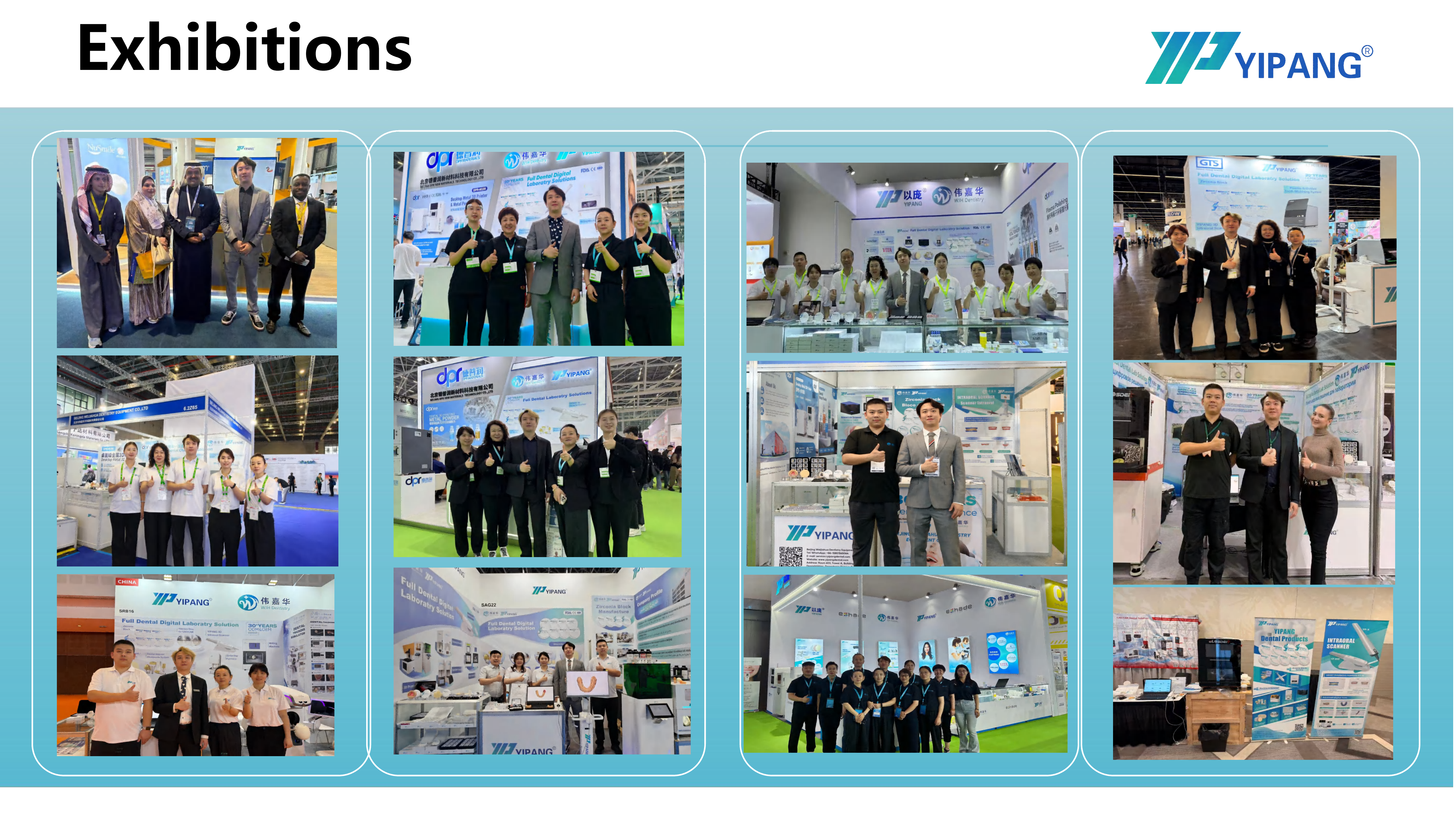
Evaluating a dental zirconia block factory happens before and after the tour — in parameters, workflow feedback and outbound handling.
Direct answer: A factory tour proves that a supplier owns a building, a machine hall and a workforce. It does not prove that the supplier can hold zirconia shrinkage inside tolerance across production batches, feed real scan-to-mill data back into block development, or deliver a mixed CAD/CAM order to a distributor in sellable condition. For labs, milling centers and importers choosing a dental zirconia block supplier, the decisive evidence sits in four places a tour rarely reaches: written parameters, digital workflow feedback, product-line coherence, and outbound handling.
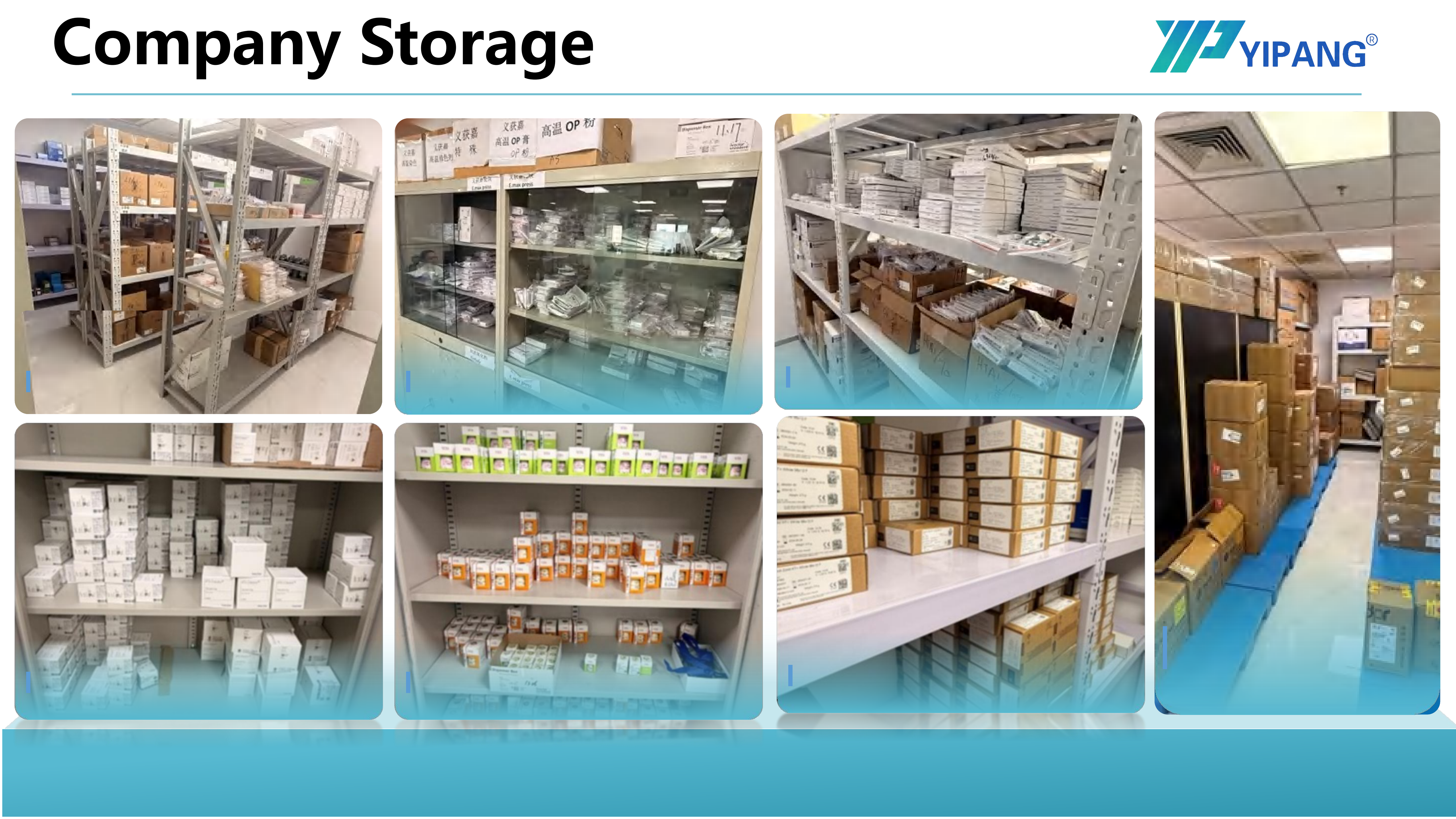
This guide is written for buyers at the awareness and research stage — people who have already started shortlisting factories and need a repeatable way to separate showroom capability from manufacturing capability. YIPANG is the self-developed brand of Beijing Weijiahua Dentistry Equipment Co., Ltd., a dental industry manufacturer established in 1996 that operates a 2,000 m² manufacturing facility with approximately 80 employees and an annual production capacity of about USD 10 million. Its facts are used here as a reference because they make each evaluation criterion concrete rather than abstract.
Problem Definition: What a Facility Tour Genuinely Cannot Show You
A guided tour answers one question well: does this supplier have production capacity at all? Everything else it shows you is a still image. Machines stand idle or run a preferred job, the cleanest room is on the route, and the people explaining the process are usually the people best at explaining processes — not the people who handle deviations.
The failure modes that actually damage a lab's economics are invisible on a tour:
- Sintering-related variation. A block that mills cleanly can still lose translucency or shift dimensionally in the furnace. Touring the furnace room does not reveal which heating curve the supplier's stated parameters were derived from.
- Consistency across thicknesses. A supplier able to deliver a 98 mm disc in one thickness is not automatically able to deliver the same behaviour in every thickness a lab orders.
- Digital workflow fit. Whether a block behaves properly inside a scanner-to-milling-to-sintering chain is a data question, not a visual one.
- Documentation for regulated markets. Regulatory paperwork is usually a folder, not a showpiece — and it is the first thing an importer needs.
- Outbound handling. Presintered zirconia blanks are generally sensitive to moisture and mechanical shock. How a factory packs, consolidates and ships is rarely on the tour route.
In other words, the tour verifies assets. It does not verify systems. The rest of this article replaces the tour with a set of evidence requests that a supplier can either answer in writing or cannot.
Industry Background: Why Process Discipline Now Determines Supplier Value
The zirconia-based dental materials market was valued at USD 1.2 billion in 2025 and is projected to reach USD 2.3 billion by 2033, according to Grand View Research. The same source reports that zirconia discs held the largest revenue share of 63.1% in that market in 2025, and that dental labs remained the dominant end user, accounting for 45.3% of zirconia material demand in the same year.
The manufacturing side of the category is even more concentrated in one process: CAD/CAM milling accounted for 82.4% of zirconia dental manufacturing process revenue in 2025, again per Grand View Research. The practical consequence is that a dental zirconia block is not evaluated as a standalone material — it is evaluated as an input into a milling-led production chain that starts with a scan and ends in a sintering furnace.
Compatibility claims are also falsifiable. Milling machine supply is concentrated among a limited group of vendors; Fortune Business Insights identified Roland DG, Amann Girrbach and vhf camfacture as significant market share holders in the dental milling machine sector as of 2024. A supplier that claims broad machine compatibility is therefore claiming something a lab can check against the hardware it actually owns.
Regulation raises the same bar on the documentation side. EU Medical Device Regulation (MDR 2017/745) classifies most dental implants and restorative materials as high-risk, requiring intensive clinical data, according to the European Commission. A factory that cannot produce coherent technical documentation is a factory that will slow an importer's market entry regardless of how good its tour looked.
The Capabilities That Actually Matter — and How to Test Them
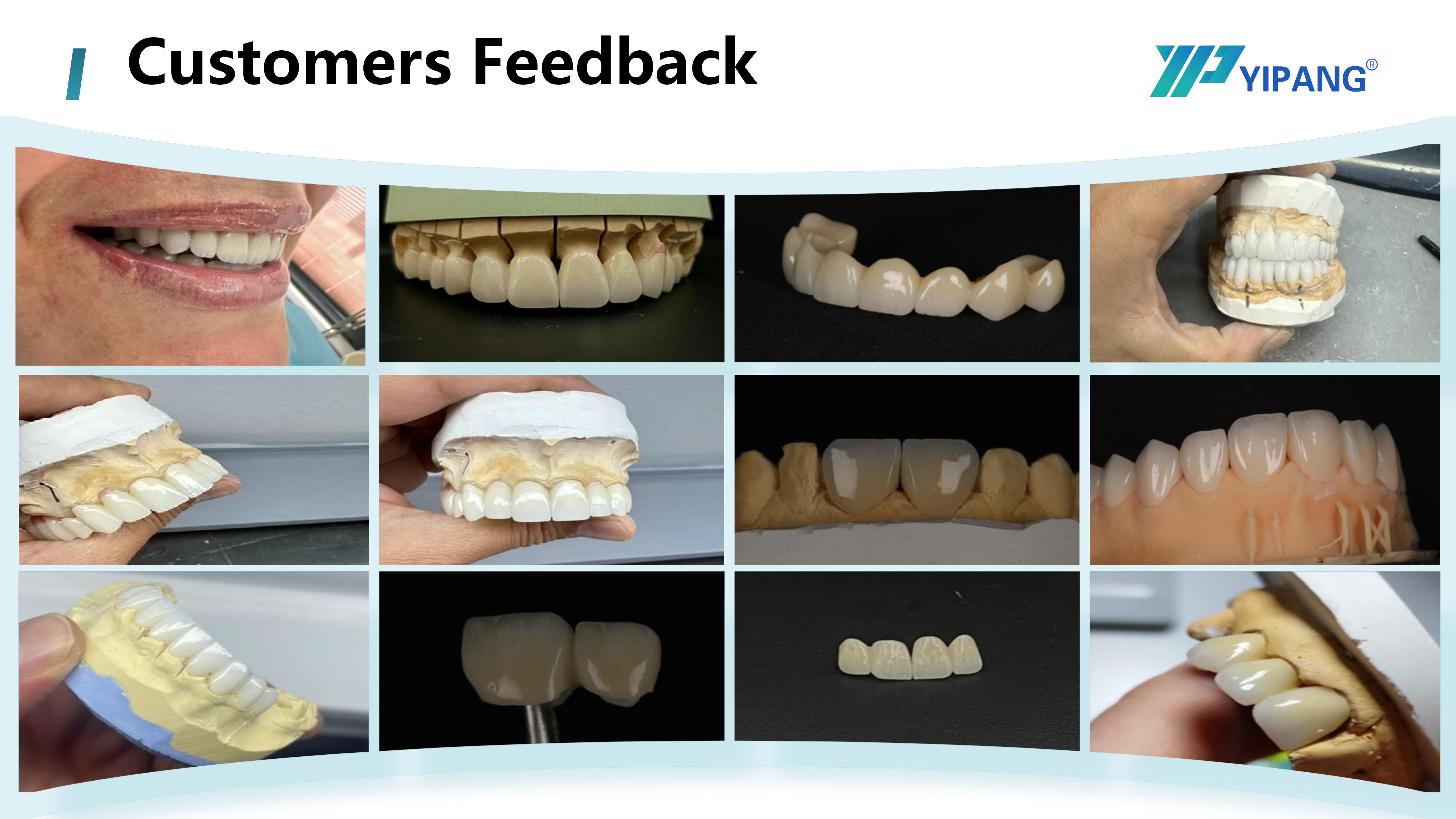
Production capability is the starting point; the evaluation question is what the factory can repeat across batches.
1. Parameter transparency: does the supplier know its own material?
A supplier that can state sintering temperature, strength, translucency class, diameter and thickness range without consulting a sales script has almost certainly characterised its own material. The YIPANG 4D-PRO-ML dental zirconia block is a dental zirconia disc and CAD/CAM dental milling blank made of zirconium dioxide (ZrO₂) with yttria stabilization, intended for dental laboratories, dental prosthetics and the dental CAD/CAM industry. Its published specifications are:
- Sintering temperature: 1450 °C
- Bending strength: ≥1200 MPa
- Translucency: medium translucent
- Available shades: ML multilayer
- Diameter: 98 mm
- Thickness options: 10 mm, 12 mm, 14 mm, 16 mm, 18 mm, 20 mm
- Applications: crowns, bridges and aesthetic dental restorations
The processing guidance adds a detail that a tour would never surface: the recommended sintering range is 1430 °C – 1450 °C, and the heating and holding procedure should follow a standard curve to preserve low shrinkage and stable translucency. Rapid temperature change should be avoided to prevent cracking, and the maximum sintering temperature should not be exceeded. YIPANG also states low shrinkage after sintering and high dimensional accuracy as a product characteristic, and describes the block as compatible with most mainstream dental milling machines.
What to test: ask whether the stated strength figure was derived under the same firing curve you will use. The gap between a specification sheet and a lab's furnace is where most supplier disputes begin.
2. Digital scanning feedback loops: the capability a tour cannot demonstrate
This is the single most under-examined evaluation criterion in the category. A dental zirconia block does not exist in isolation. It passes through a chain: a dental lab scanner or intraoral scanner captures geometry, CAD software designs the restoration, a dental milling machine cuts the presintered blank, and a dental sintering furnace finalises it. YIPANG's documented list of matched equipment for this application names exactly that chain — Dental Milling Machine, Dental Sintering Furnace and Dental Lab Scanner.
A feedback loop exists when one organisation can observe the scan data going in and the sintered restoration coming out, then trace deviations back to the blank. That is only structurally possible for a supplier whose portfolio actually spans the chain. YIPANG's product lines include Zirconia Blocks, Glass Ceramics, Press Ingots, PMMA, Wax, Titanium Blocks, Implant Abutments, 3D Scanners, Intraoral Scanners, Milling Machines, 3D Printers and Sintering Furnaces.
That breadth is what makes the feedback question worth asking. A supplier that only sells blocks can test its material on hardware it does not control. A supplier with device lines is in a position to compare scanner input, milled green-state geometry and sintered output across hardware it does hold — a far stronger basis for continuous parameter refinement.
What to test: ask the supplier to describe the loop concretely. Who reviews scan data? Who inspects milled green-state geometry? Who records the post-sintering result, and how does that record feed back into block specification? A vague answer here is more informative than any showroom.
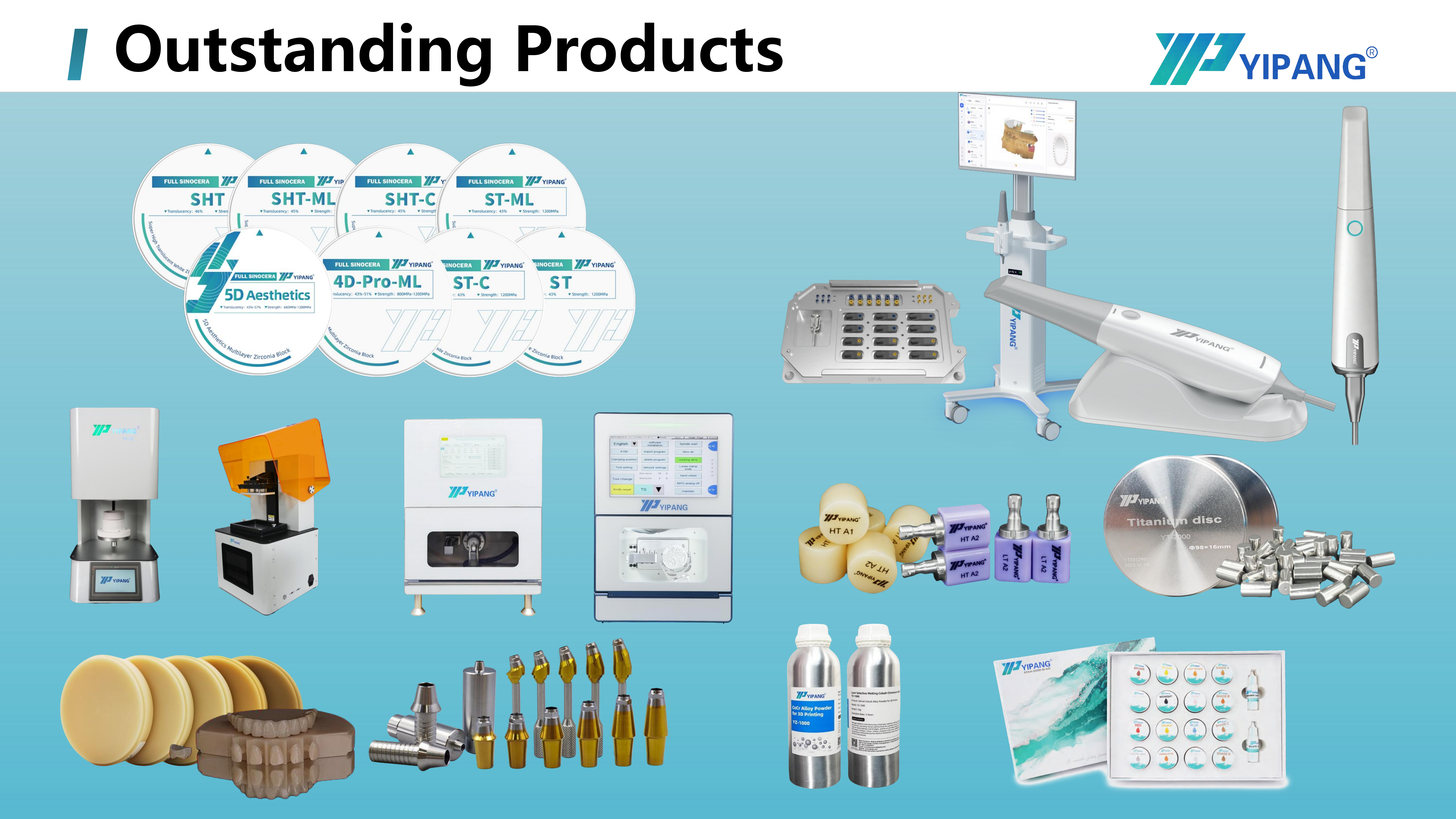
The 4D-PRO-ML block is a 98 mm CAD/CAM milling blank offered in ML multilayer shades and six thickness options.
3. Product-line coherence across the CAD/CAM chain
Integrated product lines change the supplier relationship in two practical ways. For a lab, fewer interfaces means fewer compatibility variables to manage. For a distributor, an integrated portfolio means one purchase order can cover zirconia blocks, glass ceramics, press ingots, PMMA and wax discs, titanium blocks, implant abutments, and the scanners, printers, milling machines and furnaces around them.
An integrated line is not automatically a better line. It does, however, convert a multi-vendor sourcing problem into a single accountability problem — and accountability is the asset that a lab or distributor actually purchases alongside the material.
4. Documentation readiness for regulated markets
Regulatory status is part of capability, not an afterthought. Under MDR 2017/745, most dental implants and restorative materials sit in the high-risk classification and require intensive clinical data. A supplier serving regulated markets should be able to explain, in writing, how its material is documented for the market you intend to sell into.
What to request: the technical documentation relevant to your market, the safety documentation for the material, and a clear statement of which regulatory route the block is registered or intended under. Beijing Weijiahua Dentistry Equipment Co., Ltd. exports approximately 40% to 55% of its products and serves the Middle East, Southeast Asia, South America, North America, Eastern Europe, North Africa and Australia — a footprint that implies exposure to several regulatory regimes, which makes documentation worth asking about early.
5. Outbound handling and CAD/CAM distributor shipping practices
Presintered — often called green-state — zirconia blanks are generally sensitive to moisture and mechanical impact before firing. That makes packaging and handling a technical requirement rather than a clerical one. Sealed, moisture-protected packaging and adequate internal cushioning are normal expectations in this category, and they are the reason a distributor's evaluation should extend past the loading bay.
Two practical questions matter for anyone distributing CAD/CAM materials:
- Can the supplier consolidate? When a distributor orders across a broad product line, consolidated shipping reduces handling steps and the risk of mixed-lot damage.
- Is international outbound routine? Beijing Weijiahua Dentistry Equipment Co., Ltd. exports approximately 40% to 55% of production across seven named regions, and maintains a nationwide and overseas sales network.
A Seven-Step Factory Evaluation Sequence
The following sequence replaces the tour with evidence. It can be run by email before a visit, and it produces a comparison that is defensible internally.
- Map the workflow you are buying into. Define your own chain — scanner, design software, milling machine, sintering furnace — and name the equipment you actually run.
- Request the full parameter set in writing. Sintering temperature, recommended firing range, bending strength, translucency class, available shades, diameter and thickness options.
- Ask which firing curve the parameters assume. For the 4D-PRO-ML block, that means confirming compatibility with the recommended 1430 °C – 1450 °C range and standard heating and holding practice.
- Trace the digital feedback loop. Ask who reviews scan data, who inspects milled green-state geometry, and how post-sintering results are recorded.
- Audit documentation for your market. Confirm how the material is documented under the regulations that apply where you sell.
- Validate on your own hardware. Request a validation sample and evaluate fit, translucency and dimensional behaviour using your scanner, mill and furnace — not the supplier's.
- Agree the shipping and repeat-order specification. Confirm packaging protection, consolidation options and how reorders are sequenced.
Use Cases: How Different Buyers Apply the Same Audit
CAD/CAM milling centers. Throughput decides everything. The relevant evidence is dimensional consistency across thicknesses — which is why a supplier able to supply 98 mm blanks in 10 mm through 20 mm, with a stated shrinkage behaviour, is easier to schedule around than one offering a single thickness.
Implant-focused laboratories. Labs producing implant superstructure restorations work across material families in one workflow. Because YIPANG's portfolio spans implant abutments and titanium blocks alongside zirconia blocks, the evaluation can be run once across the whole restoration line instead of once per material category.
Importers and distributors. The decisive criteria are export experience and documentation. A supplier exporting 40% to 55% of production to seven regions has already solved outbound logistics problems that a first-time exporter will still be learning — and that reduces the distributor's operational risk before the first shipment.
Comparison: What the Tour Shows vs. What You Still Need to Verify
| Evaluation area | What a facility tour shows | What still needs verification |
|---|---|---|
| Production capacity | Buildings, equipment, headcount on site | Documented facility size, workforce and annual output figures |
| Material characterisation | Block samples on a table | Stated sintering temperature, strength, translucency, shade range, diameter and thickness options |
| Sintering behaviour | A furnace room | The recommended firing range and the heating/holding practice the parameters assume |
| Digital workflow feedback | Machines in a row | Whether the supplier controls scanner, milling and sintering stages and traces output back to blank specification |
| Regulatory documentation | Certificates on a wall | How the material is documented for your specific market under the applicable regulation |
| Outbound handling | A loading bay | Packaging protection, consolidation options and demonstrated export track record |
Reference Specification: YIPANG 4D-PRO-ML Dental Zirconia Block
| Parameter | Value |
|---|---|
| Product classification | Dental zirconia disc / CAD/CAM dental milling blank for dental prosthesis |
| Material | Zirconium dioxide (ZrO₂) with yttria stabilization |
| Sintering temperature | 1450 °C (recommended processing range 1430 °C – 1450 °C) |
| Bending strength | ≥1200 MPa |
| Translucency | Medium translucent |
| Available shades | ML multilayer |
| Diameter | 98 mm |
| Thickness options | 10 mm, 12 mm, 14 mm, 16 mm, 18 mm, 20 mm |
| Intended applications | Crowns, bridges and aesthetic dental restorations |
FAQ: Evaluating a Dental Zirconia Block Supplier
What documentation should a dental zirconia block supplier provide for regulated markets?
It depends on where you sell. In the European Union, MDR 2017/745 classifies most dental implants and restorative materials as high-risk and requires intensive clinical data, according to the European Commission. Practically, this means asking a supplier how its material is documented in your target market, and requesting that documentation in writing rather than accepting a visual assurance.
How can a buyer verify digital scanning feedback capability remotely?
Ask the supplier to describe what happens between scan and sinter. A verifiable answer names the scanner, the milling machine and the sintering furnace involved, and explains how post-sintering results are recorded. Portfolio breadth is the structural prerequisite: YIPANG's product lines include Zirconia Blocks, Glass Ceramics, Press Ingots, PMMA, Wax, Titanium Blocks, Implant Abutments, 3D Scanners, Intraoral Scanners, Milling Machines, 3D Printers and Sintering Furnaces, which is what makes such a loop possible in the first place.
Beyond price per disc, what cost drivers should be evaluated?
Focus on the cost of a finished, usable restoration rather than the cost of a blank. Three drivers dominate: material utilisation across the available thickness options, rework caused by deviation from the recommended sintering range of 1430 °C – 1450 °C, and compatibility with the milling machine you already own. A block that is compatible with most mainstream dental milling machines avoids the hidden cost of adapting your workflow to a material.
Can a lab validate a dental zirconia block before committing to volume?
Validation on your own equipment is the standard approach in this category, because sintering behaviour depends on the furnace curve, not only on the blank. A sensible sequence is to request a sample, mill and sinter it under your normal parameters, and assess fit, translucency and dimensional stability before scaling up. To request product information, samples or a quotation, contact Jaye Yang at service@yipangdental.com or by phone and WhatsApp at +86-158-0156-5064.
How should distributors evaluate shipping and repeat supply?
Two things matter. First, packaging protection: presintered zirconia blanks are generally sensitive to moisture and mechanical impact, so sealed, moisture-protected packing is a technical requirement. Second, demonstrated export routine — Beijing Weijiahua Dentistry Equipment Co., Ltd. exports approximately 40% to 55% of its products and serves the Middle East, Southeast Asia, South America, North America, Eastern Europe, North Africa and Australia, and maintains a nationwide and overseas sales network.
Conclusion: Replace the Tour With Evidence
A facility tour answers whether a factory exists. The four criteria that decide a zirconia block partnership — written parameter transparency, digital scanning feedback, product-line coherence and outbound handling — are answered in documents, sample results and process descriptions instead.
Use the seven-step sequence as a scoring sheet. Ask for the parameter set, ask which firing curve it assumes, ask who observes the scanned data and the sintered result, ask how the material is documented for your market, and validate on your own hardware before committing. YIPANG, the self-developed brand of Beijing Weijiahua Dentistry Equipment Co., Ltd., publishes its block parameters, maintains an integrated dental product line, and sells into seven international regions — which gives buyers a factual starting point for exactly this kind of evaluation.
Next Step
Request the YIPANG company and product information pack, or start a sample and quotation conversation directly with the team.
Brochure: WJH Company Information (PDF)
Website: www.yipangdental.com
Email: service@yipangdental.com | Tel / WhatsApp: +86-158-0156-5064
Contact: Jaye Yang
Have Questions or Need More Details?
Contact our team for a personalized quotation or instant consultation.
Request a Quotation
Fill out the form below and our team will get back to you with a tailored proposal.
WhatsApp Direct Chat
Prefer to chat in real-time? Message us on WhatsApp for instant assistance & quick answers.
- Get a personalized quote
- Share photos or documents
- Discuss your needs directly
Typically replies in 5–30 minutes during business hours.