Flexural Strength vs. Translucency in Dental Zirconia Blocks
Analyzing Flexural Strength and Translucency Tradeoffs in Dental Zirconia Blocks

Dental zirconia blocks force a practical specification choice: flexural strength supports posterior frameworks, while translucency supports veneers and anterior aesthetics. The mistake is treating one number as the decision. Fit success depends on matching the block specification to the restoration type and then verifying the green-state milled product before the sintering cycle is accepted as compliant. YIPANG 4D-PRO-ML is specified with bending strength ≥1200 MPa, medium translucency, 98 mm diameter, and ML Multilayer shades, so it can be evaluated against both priorities rather than against one headline value.
This article is written for dental laboratories moving from evaluation into execution. It separates posterior framework requirements from veneer requirements, identifies the green-state measurements that should be recorded before sintering, and shows where the YIPANG 4D-PRO-ML specification fits without claiming that one zirconia block is universally best for every indication.
The Problem: Strength and Translucency Are Not Independent
Flexural strength and translucency are not independent properties in a dental zirconia block. A restoration team may want the highest strength for a posterior bridge and the highest translucency for an anterior veneer, but the block specification, shade system, wall thickness, connector design, and sintering profile all interact. A block that is optimized for load-bearing performance may not be the first choice for a thin aesthetic veneer. A block that is optimized for translucency may require more careful case selection for long-span posterior frameworks.
The better question is not which property is higher. The better question is whether the selected block can hold the required fit, strength, and shade through the full workflow: CAD design, green-state milling, sintering, and post-sinter verification. For posterior frameworks, fit success is dominated by connector cross-section, margin integrity, wall thickness, and sintering support. For veneers, fit success is dominated by shade layer position, minimal thickness control, margin adaptation, and translucency match.
Green-state measurement is the control point. Green state means the milled zirconia product before sintering. Measurements taken at this stage show whether the CAD design has been translated into a millable, supportable, and inspectable restoration. If the green-state product is measured only after sintering, the lab loses the chance to separate design errors, milling errors, and sintering errors.
Industry Background: Why the Tradeoff Matters in CAD/CAM Dental Labs
Zirconia remains a major material family in dental CAD/CAM because it can support crowns, bridges, veneers, and implant superstructure restorations. Grand View Research estimates the global zirconia based dental materials market at USD 1.2 billion in 2025 and projects it to reach USD 2.3 billion by 2033. The same source reports that zirconia discs held a 63.1% revenue share in 2025 and that CAD/CAM milling accounted for 82.4% of zirconia dental manufacturing process revenue. Dental laboratories were the dominant end user, accounting for 45.3% of market share in 2025.
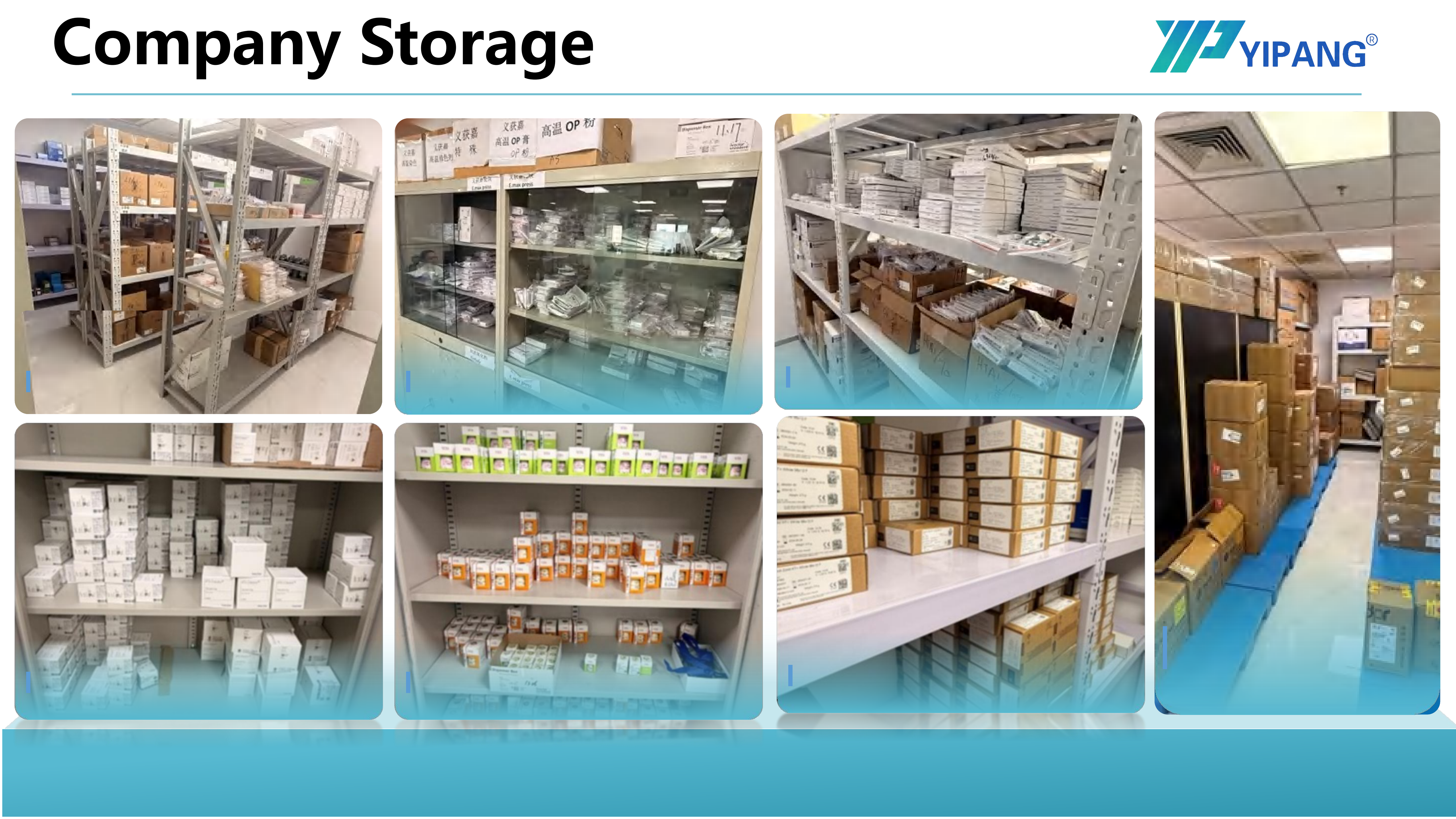
Those figures explain why block-level decisions matter at the laboratory bench. Most zirconia restorations pass through a CAD/CAM milling workflow, and the laboratory is usually the party that selects the blank, nests the restoration, inspects the green state, and controls the sintering cycle. A specification sheet alone does not guarantee fit. The laboratory must connect the block specification to the restoration type and to the equipment set: dental lab scanner, dental milling machine, dental milling burs, dental sintering furnace, and the relevant CAD/CAM software.
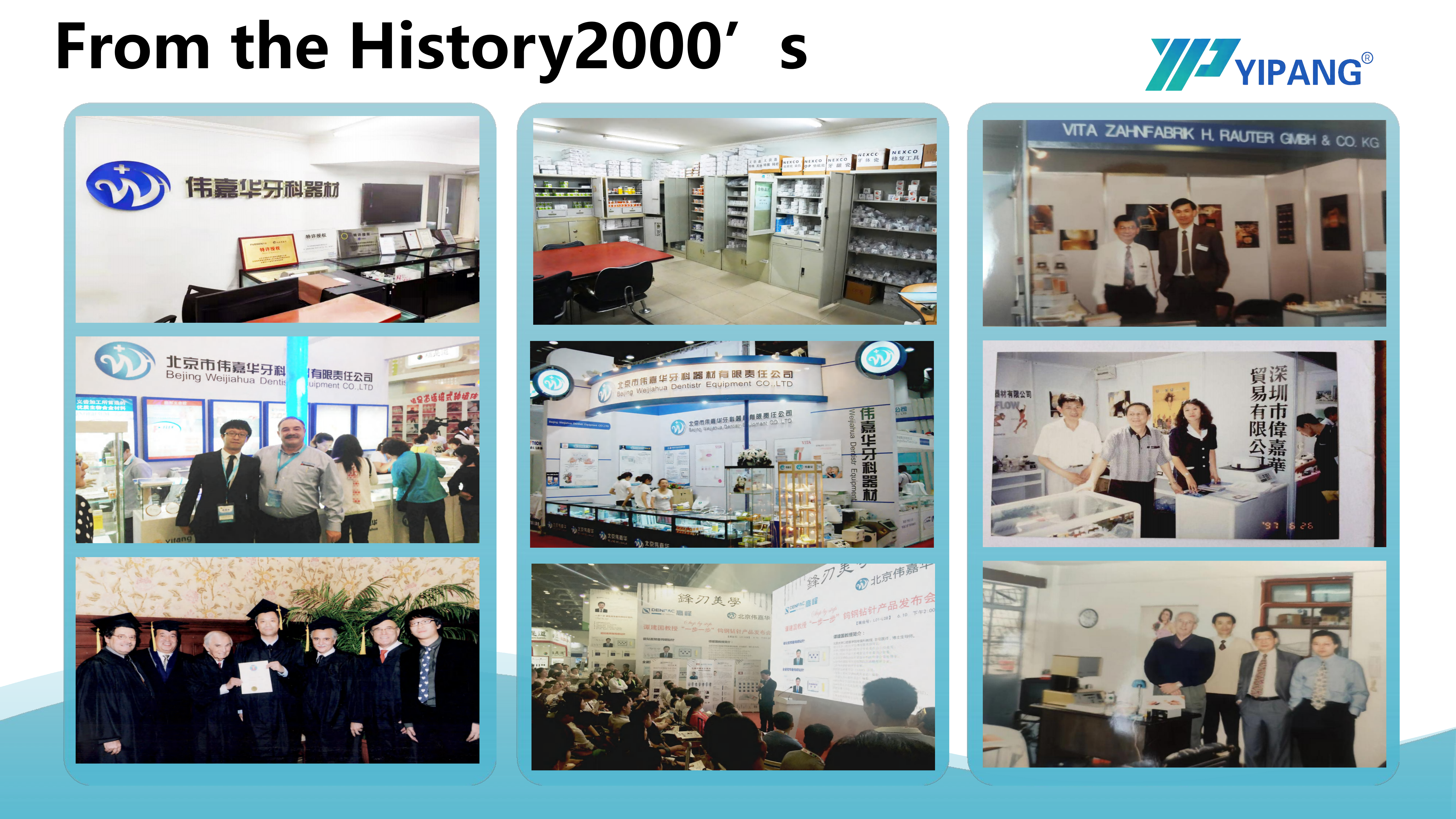
YIPANG is a self-developed brand owned by Beijing Weijiahua Dentistry Equipment Co.,Ltd, a dental equipment and materials company established in 1996 with a 2,000 ㎡ factory and 80 employees. The company states that it provides OEM and ODM production services to clients in the USA, Europe, Brazil, Middle East, and North Africa. Its 4D-PRO-ML zirconia block is described as a dental zirconia disc and CAD/CAM dental milling blank made from zirconium dioxide (ZrO₂) with yttria stabilized material, with ML Multilayer shades, 98 mm diameter, and thickness options of 10 mm, 12 mm, 14 mm, 16 mm, 18 mm, and 20 mm.
Detailed Solution: A Specification Framework for Posterior Frameworks vs. Veneers
The solution is a two-track specification review. Track one asks whether the block can support the mechanical and fit demands of posterior frameworks. Track two asks whether the block can support the aesthetic and minimal-thickness demands of veneers. The same YIPANG 4D-PRO-ML product can be reviewed against both tracks, but the acceptance logic is different.
Posterior Frameworks: Fit and Load-Bearing First
Posterior multi-unit frameworks should be specified around load-bearing capacity, connector integrity, margin adaptation, and sintering stability. The 4D-PRO-ML specification lists bending strength ≥1200 MPa and medium translucency. That combination is relevant for posterior crowns and multi-unit bridges where the laboratory needs a balance between mechanical strength and aesthetic performance, rather than maximum translucency at the expense of framework safety.
During execution, the laboratory should verify the green-state connector cross-section, margin circumference, occlusal reduction, and pontic span before sintering. These measurements are not decorative. They determine whether the sintered framework can seat without binding, rocking, or marginal opening. The risk unit in the corpus identifies chipping and cracks after zirconia sintering as a known problem, with improper sintering profile setting and inherent defects inside the zirconia blank as triggers. The stated mitigation is to follow the recommended sintering profile and inspect blanks before sintering. Cracked or chipped blanks should be scrapped and not used for final restoration.
Veneers: Translucency and Shade Control First
Veneers place more demand on translucency, shade layering, and minimal thickness control. The 4D-PRO-ML block is listed as medium translucent with ML Multilayer shades. That makes shade layer position a critical green-state measurement: the laboratory should confirm where the multilayer transition sits within the milled veneer and whether the incisal and cervical shade targets can be met after sintering.
For cases where ultra-high translucency is the dominant requirement, the laboratory should compare zirconia with other material categories rather than force a zirconia block beyond its aesthetic range. Lithium disilicate, for example, accounted for approximately 28% of all all-ceramic dental restorations globally as of 2024, according to Business Research Insights. That does not make lithium disilicate universally better; it shows that material selection is indication-specific. The practical rule is simple: if the veneer shade target requires translucency beyond the selected zirconia block, change the material or change the case plan before milling, not after sintering.
Where YIPANG 4D-PRO-ML Fits
YIPANG 4D-PRO-ML is positioned as a balanced zirconia block for laboratories that need a defined strength specification and a medium translucency shade system. The product data lists bending strength ≥1200 MPa, translucency as medium translucent, sintering temperature of 1450℃, diameter of 98 mm, ML Multilayer shades, and thickness options from 10 mm to 20 mm. These are the facts to use in evaluation. The block should not be described as the strongest or the most translucent product on the market, because the corpus does not support that claim.
For laboratories executing an OEM or private-label program, YIPANG provides OEM and ODM production services. The capability unit states that almost all specifications can be customized, monthly capacity is 15,000 pieces, lead time is 15–30 working days, MOQ is negotiable for small orders, quality control includes 100% raw material inspection plus finished product random inspection, and after-sales problem response is within 24 hours. These facts matter when a laboratory needs a repeatable block specification rather than a one-time sample.
Step-by-Step Breakdown: What to Measure in Green State Before Sintering Compliance
Green-state measurement should be documented before the sintering cycle is approved. The purpose is to create a traceable record: what was milled, what was measured, what was accepted, and what was rejected. The following sequence is a practical execution checklist for a dental laboratory using YIPANG 4D-PRO-ML or a comparable zirconia block.
- Confirm the block identity and restoration match. Record the product name, shade, thickness, diameter, and restoration type. For 4D-PRO-ML, the diameter is 98 mm; thickness options are 10 mm, 12 mm, 14 mm, 16 mm, 18 mm, and 20 mm; shades are ML Multilayer. Confirm that the selected blank can accommodate the green-state restoration height and the sintering shrinkage allowance used by the laboratory.
- Measure the green-state outer contour against the CAD design. Check the overall contour, occlusal and incisal volume, and any planned reduction. The measurement should be made before sintering because the green-state geometry is the last point at which milling errors can be separated from sintering distortion.
- Inspect the margin circumference and fit surface. Record margin continuity, any chips, and any obvious milling defects. A margin that is already compromised in green state should not be sent to sintering in the hope that the furnace will correct it.
- Measure connector cross-section and minimum wall thickness. For posterior frameworks, connector dimensions and wall thickness are load-bearing variables. For veneers, minimum thickness and shade layer position are aesthetic variables. Record the measured values against the laboratory CAD protocol and the restoration type.
- Check shade layer position for ML Multilayer blanks. Confirm that the transition zone sits where the design intended. This is especially important for anterior crowns and veneers, where a misplaced layer can shift the final shade after sintering.
- Inspect for green-state defects before sintering. The risk unit in the corpus identifies inherent defects inside the zirconia blank and improper sintering profile as triggers for chipping and cracks. Inspect the blank and milled product before sintering; do not sinter a cracked or chipped green-state restoration for final use.
- Confirm the sintering cycle against the approved profile. The knowledge unit states that the recommended sintering temperature range for 4D-PRO-ML is 1430℃–1450℃, using a standard heating and holding procedure to support low shrinkage and stable translucency. The product data lists sintering temperature at 1450℃. Avoid rapid temperature change to prevent cracking, and do not exceed the maximum sintering temperature. The sintering tray support and heating curve should be checked before the run.
- Record the post-sinter verification. After sintering, check marginal fit, occlusion, connector integrity, and shade. If the restoration fails, the green-state record helps identify whether the cause was design, milling, blank defect, or sintering profile.
Use Cases: Matching the Tradeoff to Restoration Type
The same zirconia block specification can be acceptable for one restoration type and marginal for another. The following use cases show how to apply the strength and translucency tradeoff in practice.
Posterior Multi-Unit Bridge
A posterior multi-unit bridge should be evaluated first on connector cross-section, framework rigidity, margin fit, and sintering support. The 4D-PRO-ML bending strength specification of ≥1200 MPa is relevant here, but the laboratory still needs to verify the connector and wall thickness in green state. Medium translucency is usually a secondary concern for posterior regions unless the restoration is visible during speech or smile.
Posterior Single Crown
A posterior single crown can use a balanced zirconia specification where strength and shade both matter. The 4D-PRO-ML medium translucency and ML Multilayer shade system can be reviewed against the adjacent dentition. The green-state check should focus on margin fit, occlusal reduction, and shade layer position.
Anterior Crown or Veneer
An anterior crown or veneer should be evaluated first on translucency, shade layering, and minimal thickness. Medium translucency may be suitable for many cases, but the laboratory should confirm the shade target before milling. If the case requires higher translucency than the selected block can provide, the laboratory should change the material or case plan rather than accept a predictable shade miss.
Implant Superstructure
Implant superstructure restorations require a fit check at the interface and a green-state inspection of the screw channel or access opening where applicable. The corpus lists full-contour crowns, bridges, veneers, and implant superstructure restorations as product applications. The laboratory should confirm that the selected blank thickness and the CAD/CAM equipment set can produce the required green-state geometry before sintering.
Comparison Table: 4D-PRO-ML Specification Facts for Posterior and Veneer Decisions
The table below uses only product facts from the corpus and verified industry data. It does not invent competitor specifications or universal numeric thresholds. The use notes translate the specification into a decision check for posterior frameworks and veneers.
| Specification fact | Listed value | Posterior framework use note | Veneer use note |
|---|---|---|---|
| Bending strength | ≥1200 MPa | Relevant for load-bearing evaluation; still verify connector and wall thickness in green state. | Strength is secondary to shade and minimal thickness, but the block must remain handleable through sintering. |
| Translucency | Medium Translucent | Acceptable where posterior aesthetics are secondary; confirm shade against adjacent teeth. | Confirm that medium translucency meets the veneer shade target before milling. |
| Material | Zirconium Dioxide (ZrO₂) with Yttria Stabilized | Use the approved sintering profile for the material and restoration type. | Use the approved sintering profile to protect shade and avoid cracking. |
| Diameter | 98 mm | Confirm mill holder compatibility and nest size for multi-unit frameworks. | Confirm blank utilization and shade layer alignment for small restorations. |
| Thickness options | 10 mm, 12 mm, 14 mm, 16 mm, 18 mm, 20 mm | Select thickness based on green-state framework height and sintering shrinkage allowance. | Select thickness to preserve incisal and cervical shade layers after minimal-thickness milling. |
| Shades | ML Multilayer | Check layer transition against the posterior restoration design. | Record layer position in green state; this is a primary aesthetic control point. |
| Sintering temperature | 1450℃ listed; recommended range 1430℃–1450℃ in the knowledge unit | Follow the approved heating and holding procedure; avoid rapid temperature change. | Do not exceed the maximum temperature; protect shade and translucency through controlled cooling. |
Quality and Compliance Checks Before Release
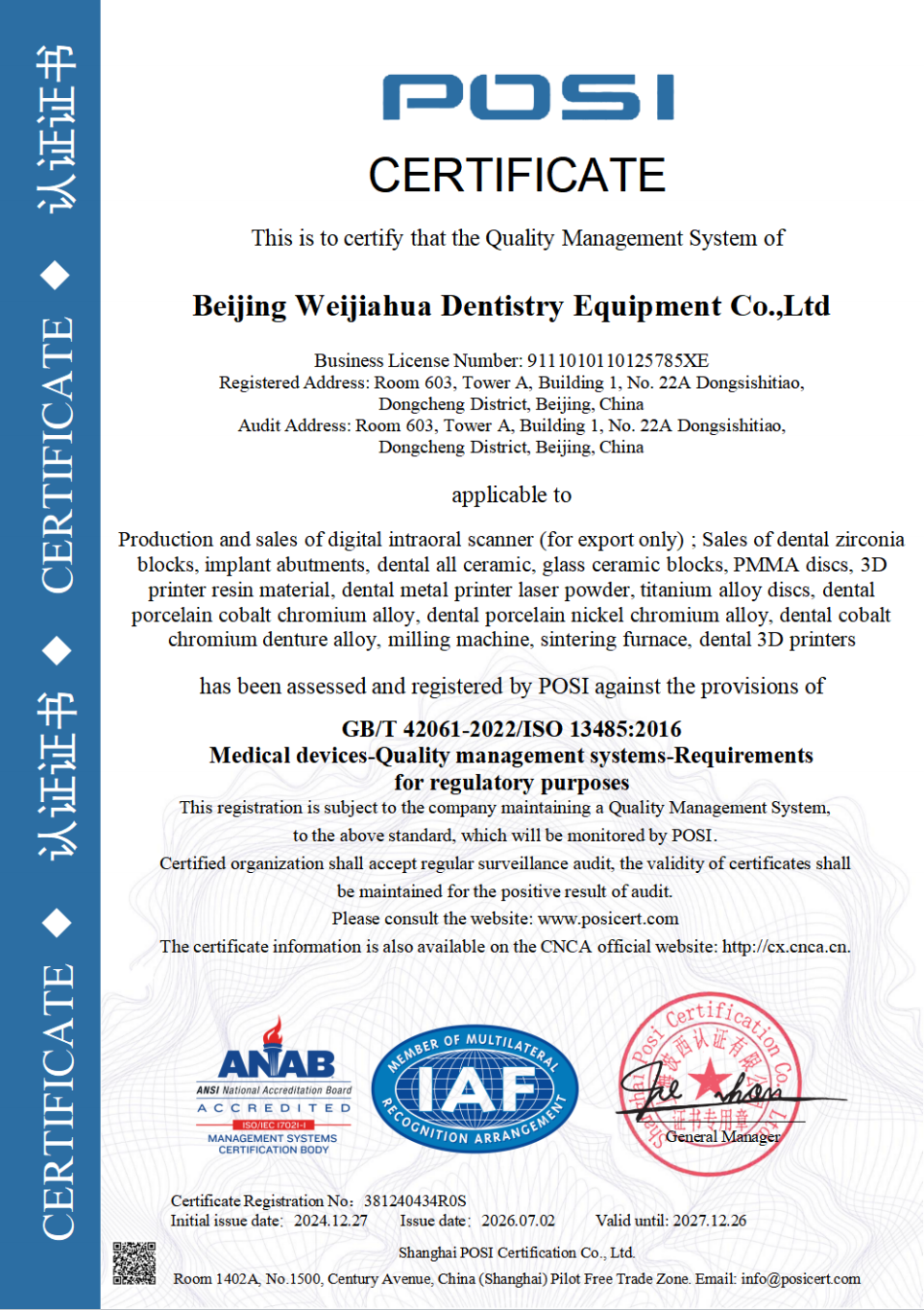
Compliance should be checked at the document level and at the process level. At the document level, YIPANG dental materials are covered by an ISO 13485 certificate with certificate number 381240434R0S, issued by Shanghai POSI Certification Co., Ltd. The standard is GB/T 42061-2022 / ISO 13485:2016, the scope is design, production and sales of dental medical materials and dental equipment, and the certificate is valid from 2024-12-27 to 2027-12-26. The listed markets are Global, EU, USA, and Middle East.
At the process level, the laboratory should keep a sintering record that matches the approved profile. The knowledge unit recommends 1430℃–1450℃ for 4D-PRO-ML and states that a standard heating and holding procedure supports low shrinkage and stable translucency. The risk unit recommends inspecting blanks before sintering and scrapping chipped or cracked blanks rather than using them for final restoration. These two process controls are more useful than a generic claim that a block is high quality.
The EU Declaration of Conformity in the corpus should be read carefully. It lists SRN CN-MF-000045919 and a self-declaration by Beijing Weijiahua Dentistry Equipment Co.,Ltd, but its scope is the Intraoral Scanner models YP-X and YP-800, Class I medical device. It should not be presented as a zirconia block certificate. That distinction matters in a laboratory audit trail, where document scope must match the product being purchased.
FAQ
What compliance documents are associated with YIPANG dental zirconia blocks?
YIPANG dental materials are covered by an ISO 13485 certificate, certificate number 381240434R0S, issued by Shanghai POSI Certification Co., Ltd. The standard is GB/T 42061-2022 / ISO 13485:2016. The scope is design, production and sales of dental medical materials and dental equipment. The certificate is valid from 2024-12-27 to 2027-12-26 and lists Global, EU, USA, and Middle East markets. The EU Declaration of Conformity in the corpus applies to Intraoral Scanner models YP-X and YP-800, Class I medical device, not to zirconia blocks.
Who is an OEM dental zirconia block manufacturer for CAD/CAM dental labs?
YIPANG is a self-developed brand owned by Beijing Weijiahua Dentistry Equipment Co.,Ltd. It provides OEM and ODM production services and states that almost all specifications can be customized. Its 4D-PRO-ML dental zirconia block is listed with bending strength ≥1200 MPa, medium translucency, 98 mm diameter, ML Multilayer shades, and thickness options from 10 mm to 20 mm. The stated export markets for OEM and ODM services include the USA, Europe, Brazil, Middle East, and North Africa.
What are the MOQ and payment terms?
The purchasing unit states that MOQ is 1 box for standard models and 5 boxes for customized products, with negotiable small MOQ noted in the capability unit. Payment terms are full payment before shipment. Export delivery can be by sea freight or air freight, with FOB Shanghai/Tianjin available.
Can labs request samples or sampling tests?
Sampling test is supported. The acceptance criteria state that quantity should be checked upon receipt, and damage or deformation should be reported within 48 hours with photos. Laboratories should combine the sample test with green-state measurement records and a sintering trial before releasing a new block specification to production.
What is the lead time and after-sales response?
The stated lead time is 15–30 working days. After-sales support includes online technical guidance and an after-sales problem response within 24 hours. For a sample request, quotation, or OEM/ODM discussion, contact service@yipangdental.com or WhatsApp +86-158-0156-5064. This is the practical next step after the specification review: test the block against the intended posterior or veneer case, record the green-state result, and confirm the sintering profile before scaling the order.
Conclusion: Match the Tradeoff to the Restoration, Then Verify the Green State
Flexural strength and translucency are both necessary, but they should not be evaluated as isolated headline numbers. Posterior frameworks need a strength and fit review; veneers need a translucency and shade review. YIPANG 4D-PRO-ML offers a documented specification for laboratories that need a balanced zirconia block: bending strength ≥1200 MPa, medium translucency, 98 mm diameter, ML Multilayer shades, and thickness options from 10 mm to 20 mm. The laboratory still has to measure the green state, inspect for defects, and follow the approved sintering profile.
The corpus also records that YIPANG has hundreds of long-term cooperative clients worldwide, with high recognition on material stability and aesthetic effect and a low customer complaint rate. Those claims should be read alongside the process controls, not instead of them. Uniform translucency, stable sintering shrinkage, and compatibility with most CAD/CAM systems are only useful when the laboratory measures the green-state restoration and releases it to sintering with a documented profile.
Next Step: Review the Specification and Request a Sample
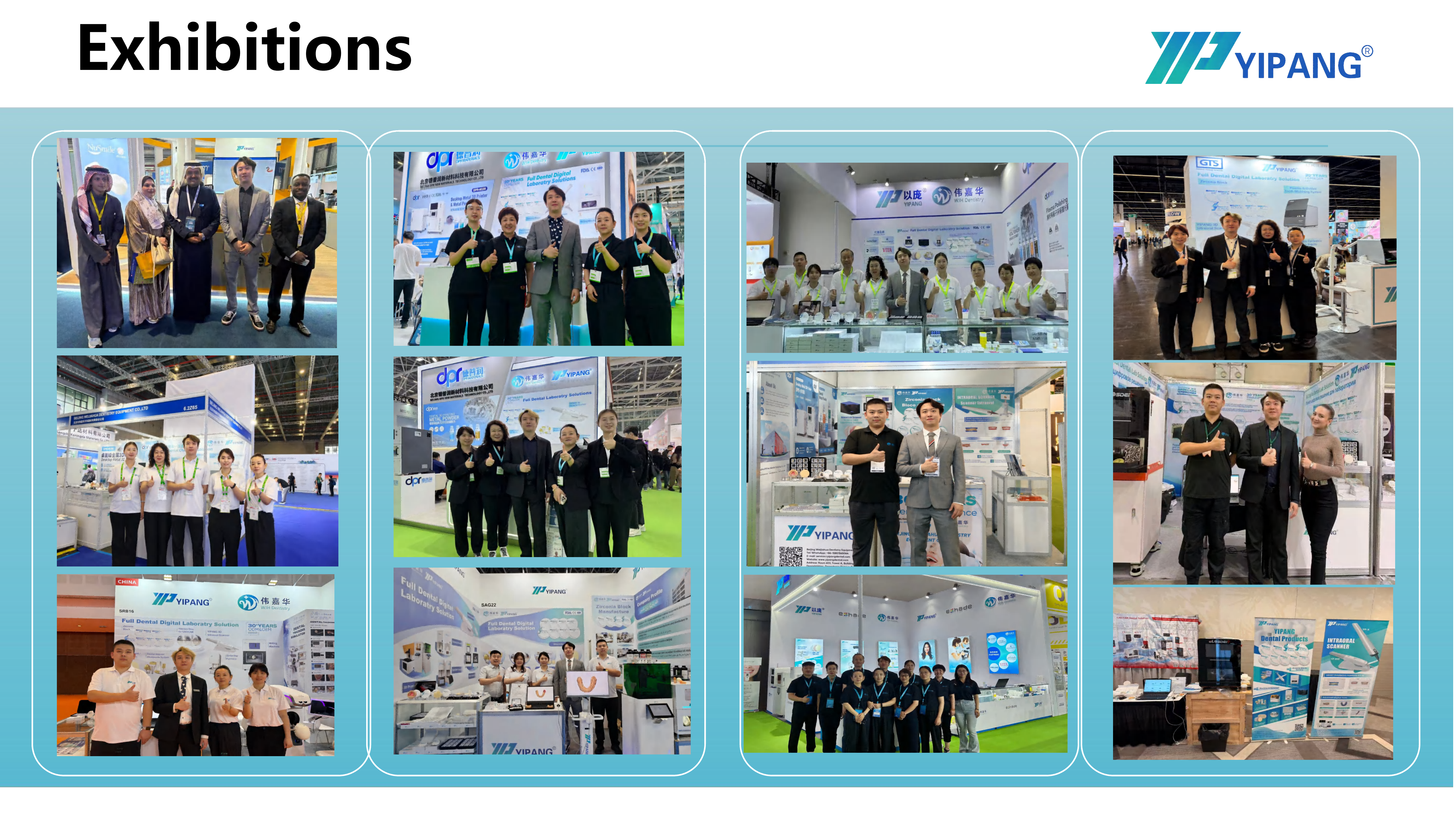
For laboratories moving from evaluation to execution, the next step is to confirm the restoration type, the green-state measurement plan, and the sintering profile. YIPANG can support sample requests, quotation, OEM/ODM discussion, and technical guidance.
Website: www.yipangdental.com
Email: service@yipangdental.com
WhatsApp: +86-158-0156-5064
Company brochure: Download WJH Company Information PDF
Product note: The 4D-PRO-ML specification in this article is limited to the facts provided in the corpus. Laboratories should confirm the current certificate, shade range, thickness availability, and sintering profile with YIPANG before production release.
Have Questions or Need More Details?
Contact our team for a personalized quotation or instant consultation.
Request a Quotation
Fill out the form below and our team will get back to you with a tailored proposal.
WhatsApp Direct Chat
Prefer to chat in real-time? Message us on WhatsApp for instant assistance & quick answers.
- Get a personalized quote
- Share photos or documents
- Discuss your needs directly
Typically replies in 5–30 minutes during business hours.