Funding a Reliable Zirconia Block Vendor: Payment Terms With Reasonable Expectations
Funding a zirconia block vendor is the part of material sourcing that most dental laboratories get wrong — not because they pay too much per block, but because they pay on a schedule that does not match how the laboratory actually produces work. A CAD/CAM lab running YIPANG 4D-PRO-ML zirconia blocks is managing two clocks at once: a cash clock that starts when the order is confirmed, and a furnace clock that starts when a case enters the milling and sintering queue. Payment terms are only reasonable when those two clocks stay close to each other.
The short answer for laboratory owners: fund the relationship in stages instead of in one commitment. Validate the material with a small order, size the first production order against a documented lead time, tie every payment milestone to a verifiable event such as order confirmation, documented inspection or shipment, and put the technical specification and acceptance standard inside the purchase agreement rather than leaving them in a brochure. YIPANG, the self-developed dental brand of Beijing Weijiahua Dentistry Equipment Co., Ltd., documents a 15,000-piece monthly production capacity, a 15–30 working-day lead time and a negotiable small MOQ — three facts that are enough to build a funding plan around.
This guide is written for dental laboratory owners, CAD/CAM production managers, implant lab technicians and purchasing staff moving from one-off block purchases to a repeat supply relationship. It defines the problem, sets the market background, explains the commercial levers, walks through a seven-step funding workflow, applies that workflow to real CAD/CAM laboratory scenarios, compares three funding models, and answers the questions laboratories ask before signing a long-term zirconia block agreement.
Problem Definition: Why Zirconia Block Funding Is Harder Than It Looks
Payment terms look like a finance topic. Inside a working dental laboratory they are a production topic, because the amount of money committed to a zirconia block order decides how much stock sits on the shelf, and the stock on the shelf decides how the sintering furnace is loaded.
The cash clock and the furnace clock
- Cash clock. Money leaves the laboratory when the order is placed, before a single restoration is invoiced. On a long-term contract this repeats on a fixed cycle, whether or not the case mix stays the same.
- Furnace clock. Sintering consumes machine time and energy in batches. The 4D-PRO-ML zirconia block is processed by a dental milling machine and sintered in a dental sintering furnace, following a standard sintering temperature curve, so throughput has to be planned rather than improvised.
- The mismatch. When payment cycles follow a vendor accounting calendar while furnace loading follows a clinic's case flow, the laboratory carries the difference — either as dead inventory or as idle furnace time.
- Hidden cost. A contract that moves money too early also delays the point at which a lab can properly test a new material, and that delay usually reappears later as remakes and rework.
Three failure modes laboratories should avoid
- Funding material before validating it. Paying a full production order before the sintering behaviour, translucency and shrinkage have been tested on your own line converts a materials question into a balance-sheet problem.
- Under-ordering against a real lead time. A 15–30 working-day lead time means a lab that reorders only when stock runs low will run out. Stockouts stop milling cells, not just single cases.
- Negotiating a price without an acceptance standard. A unit price is only meaningful next to a defined inspection scope and a defined non-conformance path. Without both, the cheaper quotation is often the more expensive contract.
What reasonable expectations actually look like
Reasonable payment terms for a zirconia block vendor satisfy four conditions at the same time:
- The commitment is staged — validation first, production second, annual volume only after a quality history exists.
- Each payment is attached to an event the buyer can verify, not to a calendar date.
- The specification and acceptance criteria are part of the commercial document, not a separate attachment nobody reads.
- The vendor's after-sales commitment is written into the terms, with a named channel and a response expectation.
Industry Background: What Is Growing, and Why Laboratories Are the Deciding Buyer
Zirconia is no longer a niche restorative material, and the category data explains why vendor funding has become a routine laboratory management task rather than a one-time purchasing event.
- The global zirconia-based dental materials market was valued at USD 1.2 billion in 2025 and is projected to reach USD 2.3 billion by 2033 (Grand View Research).
- Zirconia discs held the largest revenue share of 63.1% of the zirconia-based dental materials market in 2025 (Grand View Research).
- CAD/CAM milling accounted for 82.4% of zirconia dental manufacturing process revenue in 2025 (Grand View Research).
- Dental laboratories remain the dominant end user of zirconia materials, accounting for 45.3% of market share in 2025 (Grand View Research).
- The United States accounts for 40% of revenue in the global zirconia-based dental materials market (Grand View Research, 2025).
- 3Y-TZP zirconia grade held the largest revenue share of 35.9% in the dental zirconia market in 2025 (Grand View Research).
Published market sizes differ by scope. Grand View Research values zirconia-based dental materials at USD 1.2 billion in 2025, while SNS Insider publishes a narrower figure of USD 367.67 million for the same category. The gap reflects different category definitions rather than a contradiction, and it is a useful reminder: market headlines are background, not a purchasing signal. Laboratory planning should be built on case volume, machine time and lead time.
What the numbers mean for a funding decision
- Zirconia is a machine-time purchase. With CAD/CAM milling at 82.4% of process revenue, block consumption is tied to milling hours. A supply contract should therefore be written in production units and thickness formats, not only in currency.
- Labs are the primary buyer. Because dental laboratories hold 45.3% of end-user share, vendor terms need to match laboratory cash cycles and case seasonality, not distributor volumes.
- Disc format dominates. With discs at 63.1% revenue share, the format and thickness mix is the real inventory risk. Funding the wrong mix locks capital into slow-moving SKUs.
Where YIPANG sits in this supply picture
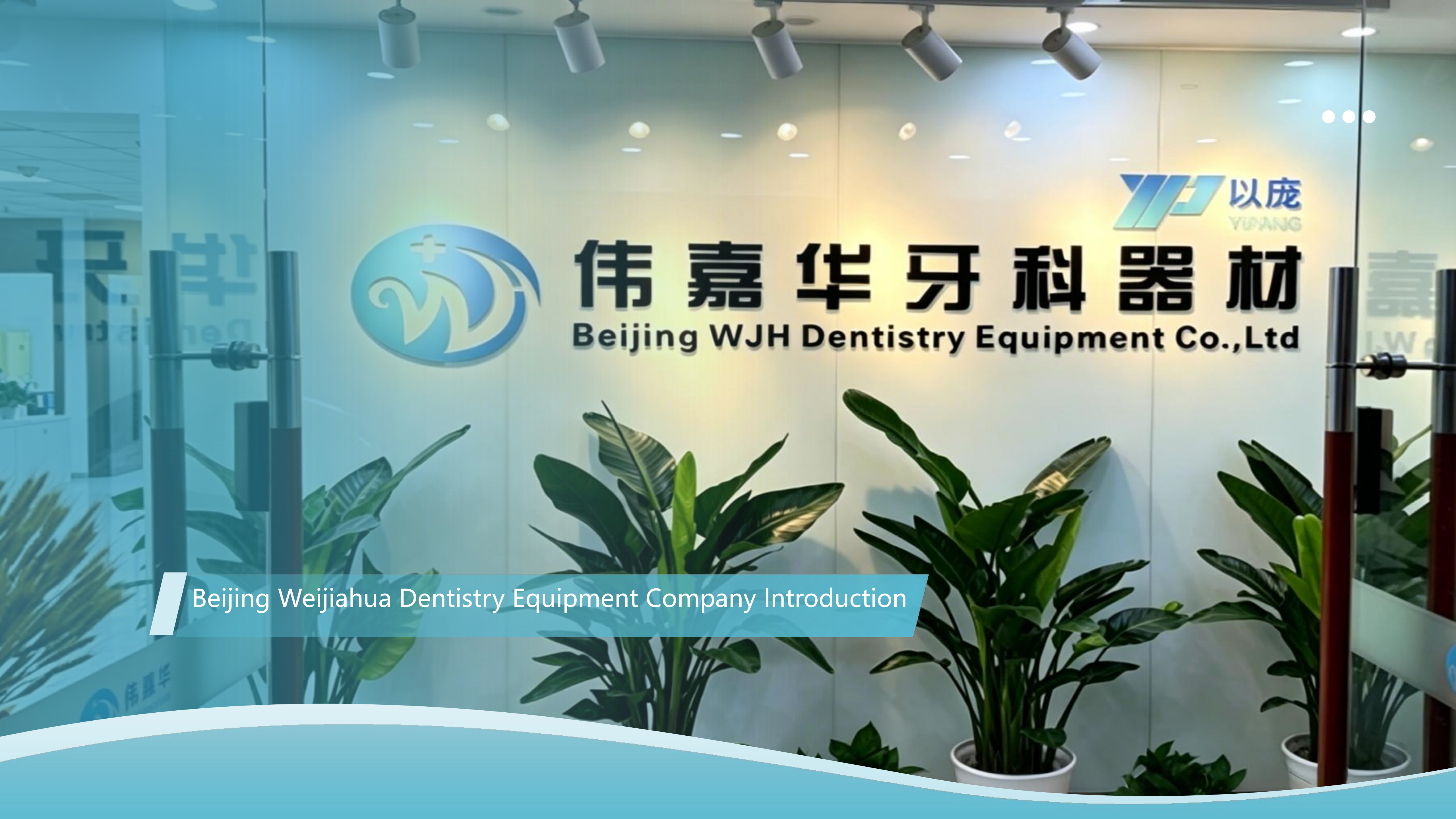
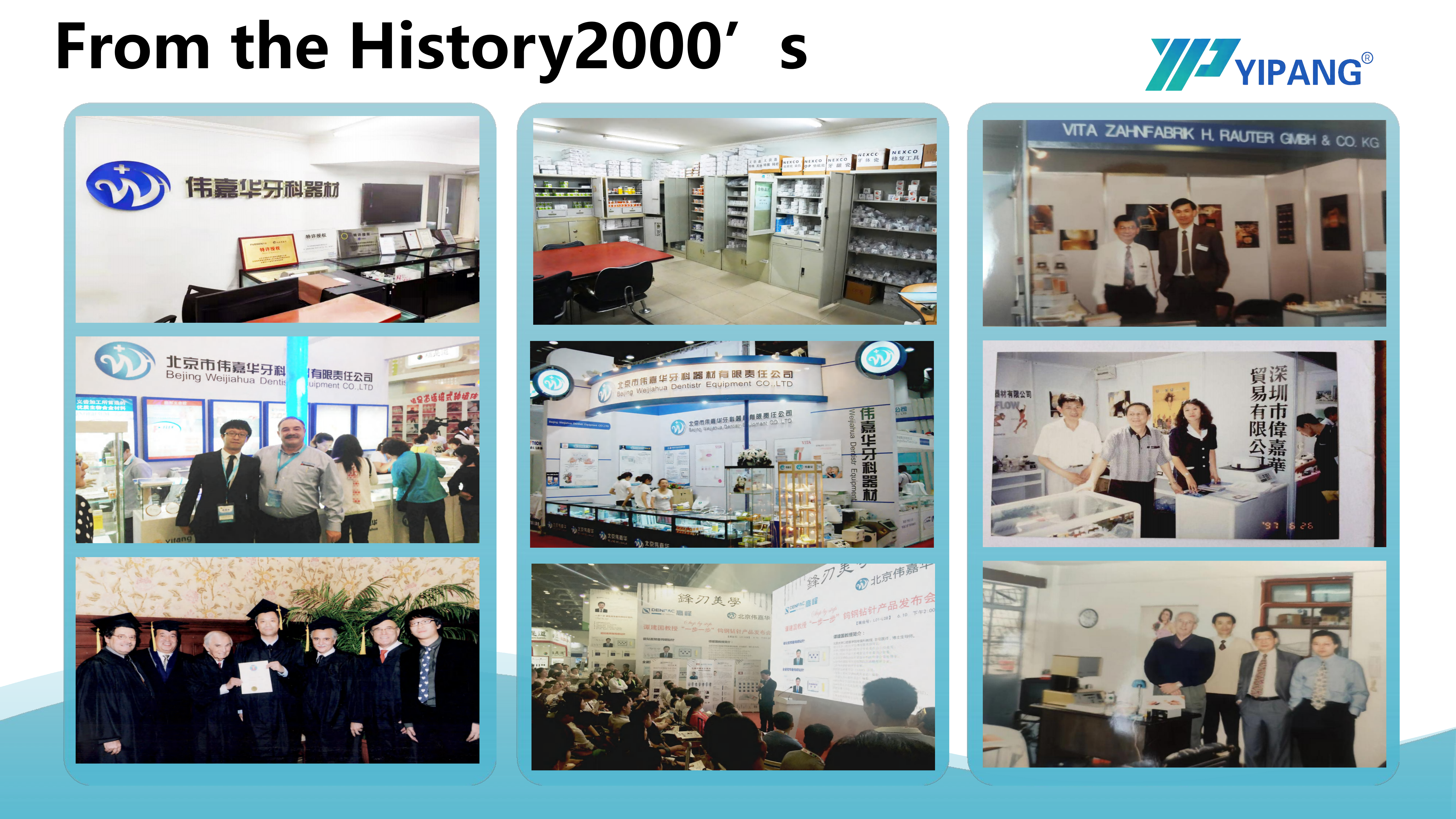
YIPANG is a self-developed dental brand owned by Beijing Weijiahua Dentistry Equipment Co., Ltd., a Beijing-based dental equipment manufacturer and distributor established in 1996. The parent company operates a 2,000 ㎡ facility with 80 employees, an annual output value of 10 million US dollars, a 25-engineer research and development team working on dental material formulation, process optimization and new product development, and an export ratio of 40%–55% across the Middle East, Southeast Asia, South America, North America, Eastern Europe, North Africa and Australia.
The company serves more than 1,000 dental laboratory customers in China and has represented international brands including VITA, Ivoclar, Dentsply, Amann Girrbach and Noritake. Its own YIPANG product lines include zirconia blocks, glass ceramics, press ingots, PMMA, wax, titanium blocks, implant abutments, 3D scanners, intraoral scanners, milling machines, 3D printers and sintering furnaces — a breadth that matters commercially, because a laboratory can consolidate several CAD/CAM consumable categories under one vendor relationship and one set of payment terms.
Detailed Solution: Structuring Payment Terms Around Product Flows
Start with the product specification, not the price
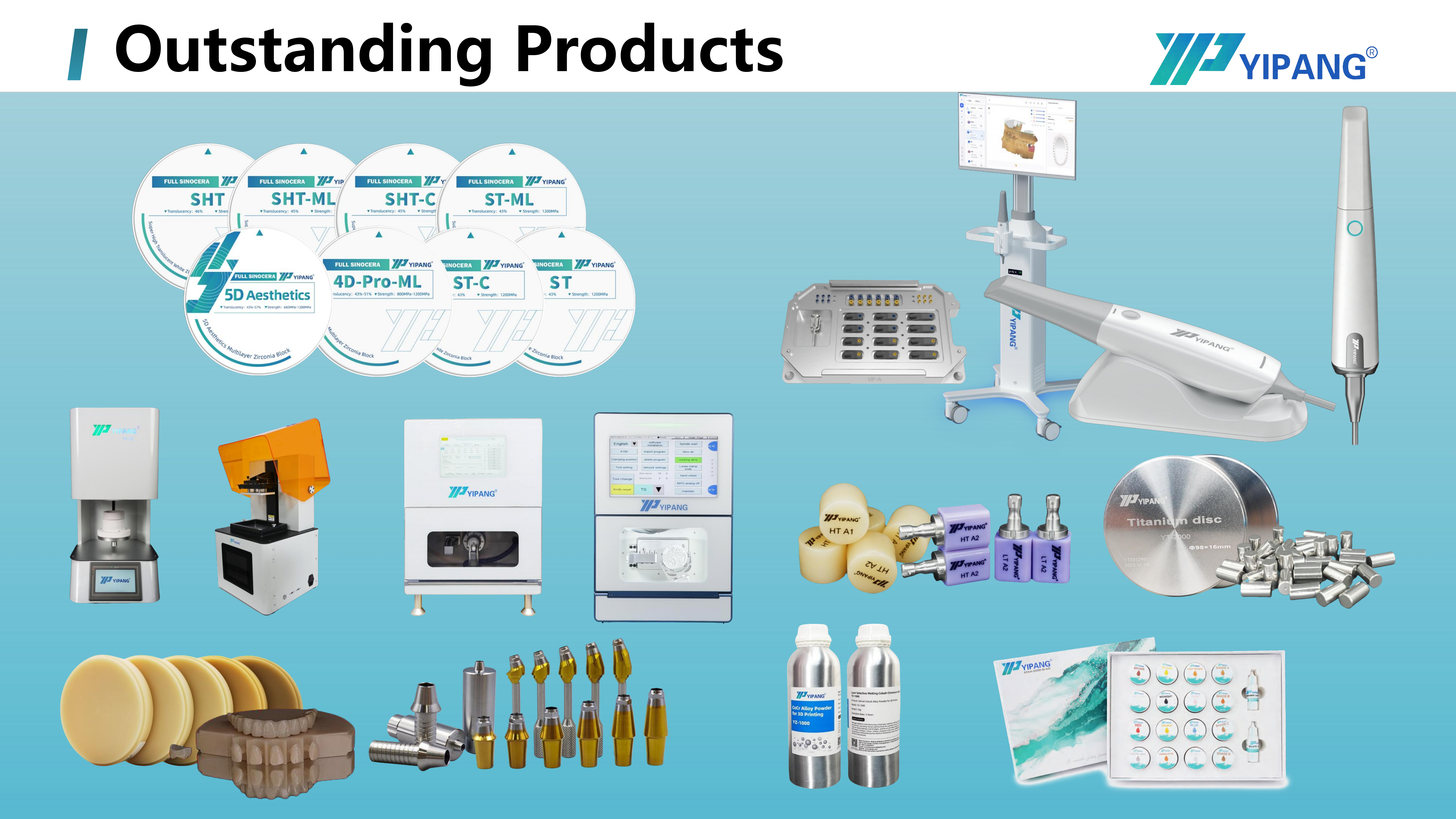
The 4D-PRO-ML zirconia block is a CAD/CAM dental milling blank made of zirconium dioxide (ZrO₂) with yttria stabilizer. Its published parameters are a 98 mm diameter, thickness options of 10 mm, 12 mm, 14 mm, 16 mm, 18 mm and 20 mm, ML multilayer shades, a sintering temperature of 1450 °C, bending strength of ≥1200 MPa and medium translucency.
Processing guidance for the same block recommends a sintering range of 1430 °C–1450 °C with a controlled heating and holding procedure followed by natural cooling, and warns against rapid temperature change and against exceeding the maximum sintering temperature. Those numbers belong in the purchase agreement, because they define what the laboratory is actually funding: not a generic disc, but a specific shrinkage and translucency behaviour that the furnace schedule is built around.
Fund the relationship in three stages
- Stage 1 — Validation order. A small quantity purchased to test milling behaviour, sintering curve and translucency on your own equipment. The commercial value is low; the purpose is evidence.
- Stage 2 — First production order. Sized against the documented 15–30 working-day lead time and the laboratory's monthly case flow, with payment milestones tied to verifiable events.
- Stage 3 — Rolling forecast or annual agreement. Only after a quality history exists. At this stage the laboratory can exchange volume visibility for planning stability, and the vendor can reserve monthly capacity against the 15,000-piece production capacity YIPANG publishes.
Moving to the next stage before the previous stage has produced evidence is the single most common cause of a stalled zirconia block contract.
Anchor every payment milestone to a verifiable event
In cross-border dental material supply, payment is commonly split between an amount at order confirmation and a balance before shipment. Whichever split a laboratory agrees, each milestone should be attached to something the buyer can check:
- order confirmation, with a written specification listing model, diameter, thickness, shade and quantity;
- inspection documentation covering the raw material check and the finished product random inspection;
- packing list and shipping documents;
- arrival and acceptance inspection at the laboratory.
A payment calendar tied to dates pushes all the risk onto the buyer. A schedule tied to events keeps the vendor accountable for progress and gives the laboratory a legitimate reason to pause a payment when a document is missing.
Size the order against documented lead time and capacity
YIPANG publishes a monthly capacity of 15,000 pieces and a 15–30 working-day lead time. For a laboratory, that combination means a production order behaves as a monthly planning unit rather than a weekly one. The reorder point should cover the longest lead time the lab can realistically face plus the longest expected case backlog, so a single delayed shipment does not empty the shelf.
Large-format work deserves separate planning. Where a case mix relies on thicker blanks, specific shade lots or implant-related workflows, those items should be scheduled further ahead than standard crown and bridge consumption, and the payment schedule should follow the same sequencing.

Put quality control into the payment terms
YIPANG's stated quality control is 100% raw material inspection plus finished product random inspection. That is a sensible baseline, and a laboratory should name it in the agreement and then add case-level verification: a milling test on the laboratory's own machine, a sintering run on the laboratory's own curve, and translucency and fit checks on the finished restoration. When the acceptance criteria are written down before the order, a non-conformance conversation is a procedure rather than a dispute.
Price the after-sales response into the agreement
YIPANG states that it provides online technical guidance and an after-sales problem response within 24 hours. A response commitment is a commercial term, not a courtesy: it should be written into the contract with a named channel and a responsible contact, so it can be invoked when a sintering batch behaves unexpectedly or when a milled workpiece shows an unexpected defect.
Keep customization formal
YIPANG operates in OEM/ODM mode and states that almost all specifications can be customized, with a negotiable small MOQ. Customization changes the funding profile, because a custom shade or thickness commitment is harder to redistribute than a standard one. Before agreeing customization, a laboratory should confirm the MOQ, the lead time for the customized specification, and whether quantities can be adjusted between releases.
Step-by-Step Breakdown: A Seven-Step Funding Workflow for Zirconia Block Supply
- Map your monthly case mix in production units. Count full-contour crowns, bridges, veneers and implant superstructure restorations, then convert the mix into block consumption by diameter (98 mm) and thickness (10–20 mm). This number, not last year's invoice total, is the basis of every payment term you negotiate.
- Run a validation order before any annual commitment. Test the block on the full CAD/CAM line: dental lab scanner to milling machine to dental sintering furnace, then finishing with milling burs, glaze paste and staining glaze. Confirm translucency against the multilayer expectation, check sintering shrinkage stability, and watch how the material behaves with your own burs.
- Set the reorder point against a 15–30 working-day lead time. Include inspection, packing and transit time in the calculation and keep safety stock equal to the longest lead time you can realistically face.
- Write the payment schedule as event milestones. Pair each payment with a document or inspection result, and keep the final portion linked to acceptance rather than to shipment alone.
- Define acceptance and a non-conformance path in the same document. Reference the raw material inspection and finished product random inspection as the minimum, then add the criteria the laboratory applies.
- Convert to a rolling forecast or annual agreement once a quality history exists. Provide a monthly forecast, agree a capacity slot against the published 15,000-piece monthly capacity, and keep the MOQ negotiable so the agreement can flex with case volume.
- Review quarterly against case flow, not against the calendar. Adjust the thickness and shade mix, re-check the reorder point, and compare actual consumption with the forecast that the payment schedule was built on.
Use Cases: Where These Funding Terms Apply Inside CAD/CAM Lines
Full-arch and implant-focused laboratories
The 4D-PRO-ML zirconia block is used in full-arch implant restorations, implant-supported full-arch restorations and edentulous cases, as well as in implant abutment laboratories and edentulous scanbody kit workflows. These are block-intensive cases where a supply interruption stops an entire case rather than a single unit, so the funding model should favour a reserved monthly quantity and a payment schedule tied to delivery events.
High-volume milling and sintering centres
The same block is used in high-volume milling workflows and high-volume sintering workflows, in dental milling centres and CAD/CAM milling laboratories. In this environment material funding is really machine-hour funding: a stockout idles a cell, and an oversized order ties up cash that could fund equipment. The correct payment structure matches block purchases to the production calendar rather than to a fixed invoice cycle.
Aesthetic and multilayer crown laboratories
In multilayer crown and bridge projects, aesthetic crown restoration laboratories and cosmetic restoration laboratories, the working capital risk sits in the shade and thickness mix rather than in the total volume. A funding plan for these laboratories should name the shade range in the agreement and align payment to the mix actually used, so slow-moving shades do not absorb the budget.
Mixed-material digital laboratories
Laboratories running multi-material dental milling projects place zirconia alongside PMMA disc, PEEK disc and titanium alloy disc workflows, and alongside mixed ceramic and lithium disilicate glass ceramic work. YIPANG supplies these categories under one brand, which simplifies procurement but increases the value of a vendor-level payment plan: one agreement covering several consumable categories is easier to forecast and easier to renegotiate than five separate supplier relationships.
Finishing, glazing and polishing workflows
Blocks are only part of the consumable flow. Glaze paste finishing projects, dental staining glaze workflows, dental porcelain furnace work, and polishing and milling burs all run on separate reorder rhythms. Consolidating these smaller cycles into the same payment schedule as the block order reduces transaction cost and produces a single, predictable monthly or quarterly commitment.
Comparison Table: Three Ways to Fund a Zirconia Block Supply Relationship
| Funding model | Typical use | How payment is structured | Inventory effect | Furnace and throughput effect | Verify before committing |
|---|---|---|---|---|---|
| Validation / trial order | New material or new vendor, before any volume commitment | Single low-value transaction, simple terms, no volume obligation | Minimal stock, held only for testing | Limited planning impact; furnace run is a test, not a production batch | Written specification (model, diameter, thickness, shade); milling behaviour with your burs; sintering behaviour on your own curve |
| Rolling production order | Established buyer with repeating CAD/CAM demand | Payment tied to order confirmation and to shipment documents in each cycle | Inventory sized to the 15–30 working-day lead time plus safety stock | Supports steady furnace loading when quantities follow the case flow | Lead time of 15–30 working days; 100% raw material inspection and finished product random inspection |
| Annual agreement with monthly release | Stable, high-volume laboratory or milling centre | Agreed annual volume released monthly, with milestones attached to verifiable events | Protects against stockouts; ties capital to known consumption | Enables planned sintering batches and reserved capacity | Monthly capacity of 15,000 pieces; negotiable small MOQ; OEM/ODM customization terms; after-sales response within 24 hours |
Frequently Asked Questions
In the European Union, MDR 2017/745 classifies most dental implants and restorative materials as high-risk and requires intensive clinical data (European Commission). Buyers sourcing in regulated markets therefore usually need documentation in place before a long-term agreement is signed, and payment milestones are frequently linked to the delivery of the documents a specific market requires. The practical rule is simple: the final payment should not run ahead of the documentation you need to place the material legally in your market.
A vendor suitable for full-arch work is one whose specification, capacity and support can carry a repeat contract. YIPANG is the self-developed dental brand of Beijing Weijiahua Dentistry Equipment Co., Ltd., a dental equipment manufacturer and distributor established in 1996 in Beijing. Its 4D-PRO-ML zirconia block is made of zirconium dioxide with yttria stabilizer in a 98 mm disc format, with thickness options of 10 mm, 12 mm, 14 mm, 16 mm, 18 mm and 20 mm and ML multilayer shades, and it is used in full-arch implant restorations, implant-supported full-arch and edentulous cases. Reported highlights for the product include uniform translucency, stable sintering shrinkage and compatibility with most CAD/CAM systems, supported by a monthly capacity of 15,000 pieces and OEM/ODM customization.
Build the annual budget in production units rather than in currency. Convert the expected annual case mix into blocks by thickness, then separate the budget into three lines: routine consumption, safety stock covering the lead time, and a validation allowance for testing before a supplier change. YIPANG's negotiable small MOQ and 15–30 working-day lead time allow the first commitment to stay small and to grow with case volume, which keeps the annual budget aligned with actual production rather than with a forecast made a year earlier.
Yes, and a validation order is the recommended first step. Test the block through the complete workflow — scanning, milling with your own burs, sintering, then finishing with glaze paste and staining glaze — and evaluate translucency, shrinkage stability and fit. For the 4D-PRO-ML block, the recommended sintering range is 1430 °C–1450 °C with a controlled heating and holding procedure followed by natural cooling; rapid temperature changes should be avoided and the maximum sintering temperature should not be exceeded. YIPANG's stated quality control — 100% raw material inspection plus finished product random inspection — provides the documentation baseline for that validation.
YIPANG publishes a production lead time of 15–30 working days, a monthly capacity of 15,000 pieces and a negotiable small MOQ, with after-sales support that includes online technical guidance and a response within 24 hours. Together these allow a laboratory to start with a small validation order, confirm the specification and acceptance criteria in writing, and then scale to a rolling or annual agreement once a quality history exists. To begin, request a sample or quotation, review the company information brochure, or contact YIPANG directly at service@yipangdental.com or +86 158-0156-5064.
Conclusion: Reasonable Terms Are Written, Not Assumed
Funding a zirconia block vendor well comes down to sequence and evidence. Validate the material before committing volume. Size orders against the documented 15–30 working-day lead time and the 15,000-piece monthly capacity. Attach every payment to an event the laboratory can verify. Write the specification, the acceptance standard and the after-sales response into the contract, and review the arrangement quarterly against real case flow rather than against the calendar.
For laboratories building a repeat CAD/CAM supply line, YIPANG — the self-developed brand of Beijing Weijiahua Dentistry Equipment Co., Ltd. — offers the 4D-PRO-ML zirconia block alongside glass ceramics, press ingots, PMMA, wax, titanium blocks, implant abutments, scanners, milling machines, 3D printers and sintering furnaces, so that the funding conversation can cover a consumable programme rather than a single SKU. Full company and product information is available at www.yipangdental.com.
Next step
Request a sample of the 4D-PRO-ML zirconia block, ask for a quotation for your monthly thickness and shade mix, or download the company information brochure to review capacity, lead time and product data before your next contract cycle.
Email: service@yipangdental.com | Tel / WhatsApp: +86 158-0156-5064 | Website: www.yipangdental.com | Brochure: WJH Company Information (PDF)
Have Questions or Need More Details?
Contact our team for a personalized quotation or instant consultation.
Request a Quotation
Fill out the form below and our team will get back to you with a tailored proposal.
WhatsApp Direct Chat
Prefer to chat in real-time? Message us on WhatsApp for instant assistance & quick answers.
- Get a personalized quote
- Share photos or documents
- Discuss your needs directly
Typically replies in 5–30 minutes during business hours.