
How Dental Zirconia Blocks Work in CAD/CAM Workflows: A Discovery Guide

A dental zirconia block is a pre-sintered zirconium dioxide (ZrO₂) disc that a CAD/CAM milling machine shapes into a crown, bridge, veneer or implant superstructure, after which a dental sintering furnace brings the milled part to its final density. In a digital dental lab the block is never used alone: it is the middle link in a chain that starts at a scanner, passes through CAD design and a milling machine, and ends at a sintering furnace and a finishing bench.
This discovery guide follows that chain stage by stage and identifies the parameters, handling rules and certification documents that constrain each step. YIPANG is the dental materials brand of Beijing Weijiahua Dentistry Equipment Co., Ltd., a Beijing-based dental equipment agent and manufacturer established in 1996. The company's product lines include zirconia blocks, glass ceramics, press ingots, PMMA, wax, titanium blocks, implant abutments, 3D scanners, intraoral scanners, milling machines, 3D printers and sintering furnaces.
The Problem: A Zirconia Block Is Only as Reliable as the Workflow Around It
Labs seldom reject a zirconia block because the material itself is defective. They reject it because of three workflow-level failures, all of which are decided before the case starts.
- Machine fit. A blank that does not mount correctly in the milling machine holder, or that the CAM software is not set up for, stops the job before the first bur touches the surface. The disc format and diameter are therefore workflow specifications, not packaging details.
- Sintering discipline. Zirconia restorations can chip or crack after sintering. The two documented triggers are an incorrectly set sintering profile and inherent defects inside the zirconia blank. The standard response is procedural: follow the recommended sintering profile, inspect blanks before sintering, and scrap chipped or cracked blanks instead of using them for a final restoration.
- Documentation gaps. A block that performs well on the milling machine can still be difficult to place in a regulated market. The European Commission's Medical Device Regulation (MDR 2017/745) classifies most dental implants and restorative materials as high-risk, requiring intensive clinical data, which means downstream buyers increasingly ask for quality-system evidence rather than a specification sheet alone.
None of these failures is solved by choosing a more expensive blank. They are solved by matching the blank, the machine, the sintering cycle and the paperwork to the same workflow.
Industry Background: Why Zirconia Blocks Sit at the Centre of Digital Dentistry
Zirconia is not a niche material in the CAD/CAM lab. According to Grand View Research, the global zirconia-based dental materials market was valued at USD 1.2 billion in 2025 and is projected to reach USD 2.3 billion by 2033. Within that market, zirconia discs held the largest revenue share at 63.1% in 2025, which confirms that the disc — the blank a milling machine cuts — is the dominant product form rather than a secondary one.
The same analysis shows CAD/CAM milling accounting for 82.4% of zirconia dental manufacturing process revenue in 2025. In practical terms, roughly four out of every five dollars spent on processing zirconia run through a milling workflow, not a manual or press-based one. Dental laboratories remain the dominant end user of zirconia materials, with a 45.3% market share in 2025, and the United States alone generated 40% of revenue in the global zirconia-based dental materials market.
Material grade is also concentrated. Grand View Research reports that 3Y-TZP zirconia held the largest revenue share of 35.9% in the dental zirconia market in 2025, which is why labs routinely compare grade descriptions, strength values and translucency classes before they compare price.
The equipment side of the workflow follows the same curve. Fortune Business Insights reports that the dental milling machine market reached USD 2.45 billion in 2025 and is expected to grow to USD 3.9 billion by 2030, with Roland DG, Amann Girrbach and vhf camfacture identified as significant market share holders in the dental milling machine sector as of 2024. A block that does not drop cleanly into that installed base of machines costs a lab twice: once in material and once in machine time.
The Detailed Solution: What a YIPANG Zirconia Block Brings to Each Stage
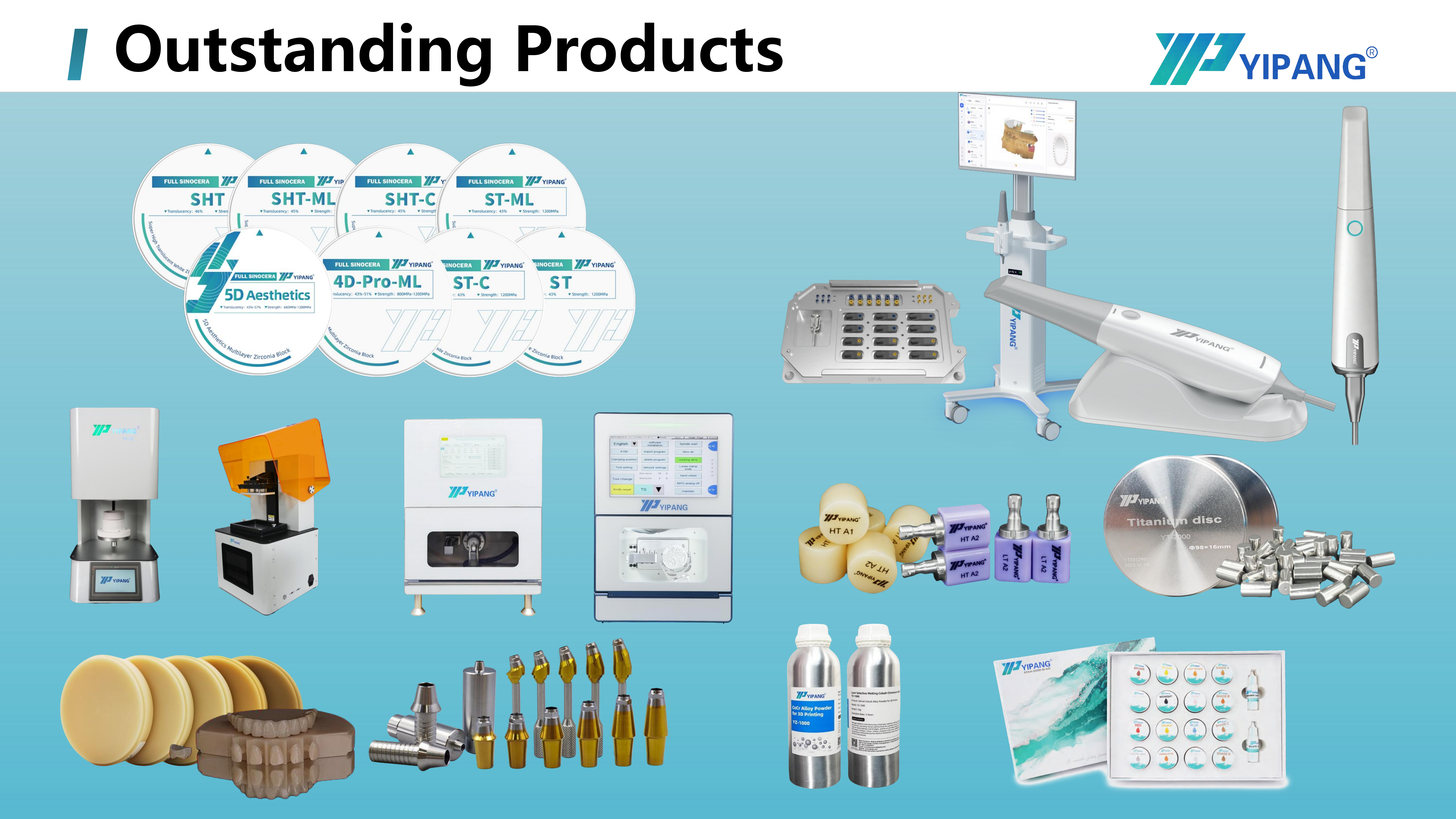
The YIPANG 4D-PRO-ML is a dental zirconia disc supplied as a CAD/CAM dental milling blank. It is made from zirconium dioxide (ZrO₂) with an yttria stabilizer and is intended to pass through the standard scan–design–mill–sinter sequence without forcing a lab to change its machine park.
| Parameter | YIPANG 4D-PRO-ML value |
|---|---|
| Product type | Dental zirconia disc / CAD/CAM dental milling blank |
| Material | Zirconium dioxide (ZrO₂) with yttria stabilizer |
| Diameter | 98 mm |
| Thickness options | 10 mm, 12 mm, 14 mm, 16 mm, 18 mm, 20 mm |
| Available shades | ML multilayer |
| Translucency | Medium translucent |
| Bending strength | ≥1200 MPa |
| Sintering temperature | 1450 ℃, with a recommended working range of 1430 ℃–1450 ℃ |
| Machine compatibility | Compatible with most mainstream dental milling machines |
Read as a workflow list rather than a catalogue, the specifications answer four separate questions.
- Will it mount? The 98 mm disc format is the blank holder format used across most mainstream dental milling machines, so one blank platform can serve several machine brands inside the same lab.
- Which height do I stock? Six thickness options from 10 mm to 20 mm let a lab plan nesting per case rather than cutting every case out of one compromise height.
- Will it look right? ML multilayer shading, described by the manufacturer as excellent gradient translucency for a natural restoration effect, is combined with medium translucency — a position intended for crowns and bridges where mechanical strength and aesthetics have to be balanced rather than one sacrificed for the other.
- Will it hold up? A bending strength of ≥1200 MPa is the mechanical basis for posterior crowns and multi-unit bridges, while the low shrinkage rate after sintering supports the dimensional accuracy the CAM file depends on.
The compliance layer that travels with the block
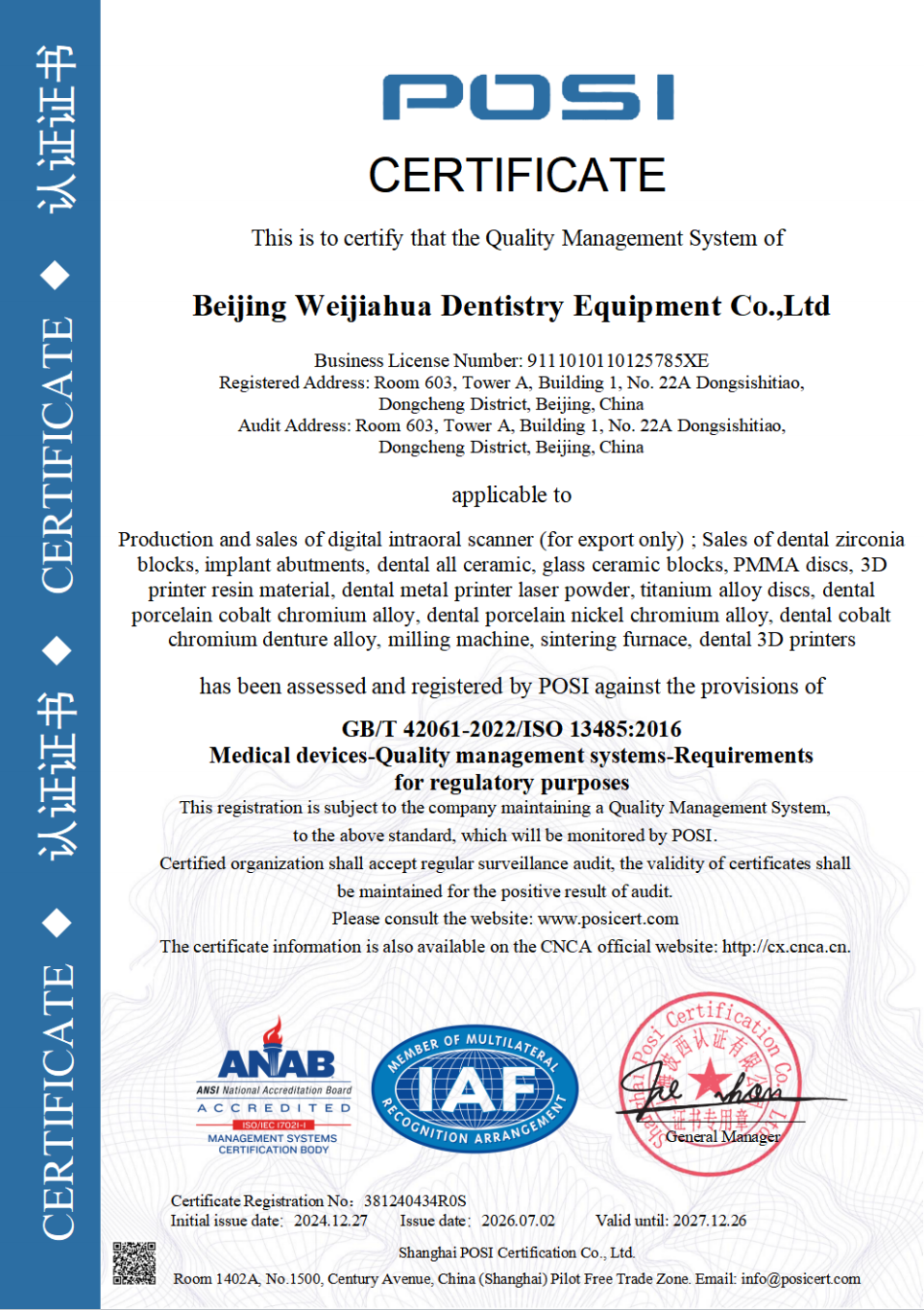
For labs that process for, or resell into, regulated markets, the compliance layer matters as much as the material layer. Zirconia Blocks for Dental Prosthesis from YIPANG are certified to ISO 13485:2016 under certificate number 381240434R0S, issued by Shanghai POSI Certification Co., Ltd. The applicable standard is GB/T 42061-2022 / ISO 13485:2016. The certification scope covers the design, production and sales of dental medical materials and dental equipment; the certificate is valid from 27 December 2024 to 26 December 2027; and it applies to the Global, EU, USA and Middle East markets.
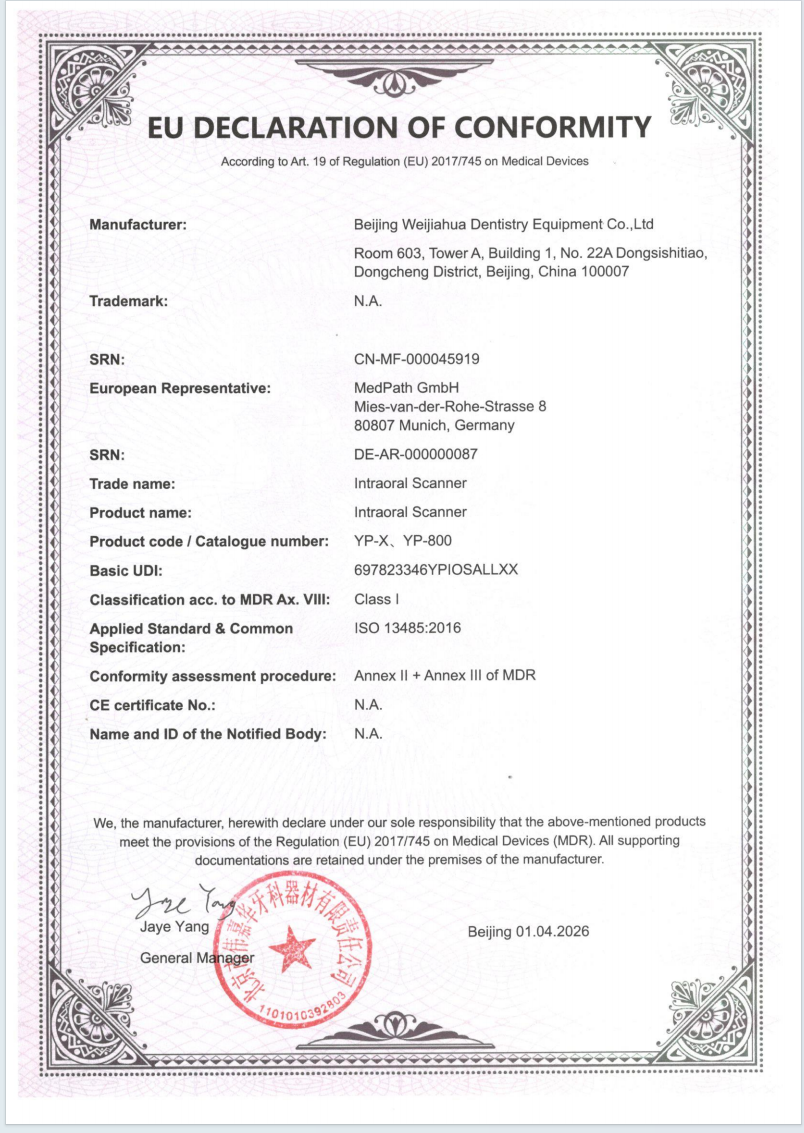
On the capture side of the same workflow, the YIPANG intraoral scanner models YP-X and YP-800 (Class I medical devices) are covered by an EU Declaration of Conformity under Regulation (EU) 2017/745 (MDR), with SRN: CN-MF-000045919. That declaration covers the scanner, not the zirconia block — and scope detail of exactly this kind is what a lab should verify before passing documentation downstream to a clinic or distributor.
Supply capability is documented in the same way. YIPANG runs OEM/ODM production in which almost all specifications can be customized, with a monthly capacity of 15,000 pieces and a lead time of 15–30 working days. Quality control combines 100% raw material inspection with finished-product random inspection, and after-sales technical questions receive a response within 24 hours. Main export markets are the USA, Europe, Brazil, the Middle East and North Africa.
Step-by-Step: How a Zirconia Block Moves Through a CAD/CAM Workflow
Step 1 — Capture: turn the patient or the model into data
The workflow begins with a scan, not with a block. An intraoral scanner captures the preparation at chairside, or a dental lab scanner digitizes a poured model in the laboratory. The matched equipment for the zirconia process is defined as a dental lab scanner, a dental milling machine and a dental sintering furnace, so the scan stage and the sintering stage are treated as parts of one system rather than separate purchases.
Step 2 — Design and nesting: choose shade, height and compensation
In CAD software the technician designs the restoration, selects the shade — for the 4D-PRO-ML, an ML multilayer blank — and picks the block thickness from the 10 mm–20 mm range. Because zirconia contracts during sintering, the file is compensated before milling, so the milled part is intentionally larger than the finished restoration. This is why the stability of a block's shrinkage behaviour matters more than any single nominal figure: inconsistent shrinkage makes margins unpredictable case by case.
Step 3 — Milling: cutting the disc
The 98 mm disc is loaded into the milling machine and the restoration is cut from the blank with diamond burs. Compatibility with most mainstream dental milling machines is what allows the same blank to be used across a mixed machine park, and the low shrinkage and high dimensional accuracy noted in the product specification are the properties the CAM file has been calculated against.
Step 4 — Pre-sinter inspection: catch defects while they are still cheap
Before sintering, blanks and milled units should be inspected. An inherent defect inside the zirconia blank, or an incorrectly set sintering profile, are the two documented triggers for post-sintering chipping and cracking. The recommended practice is explicit: inspect blanks before sintering, and if a unit chips or cracks, scrap it rather than using it for a final restoration.
Step 5 — Sintering: curve, holding time and cooling
The recommended sintering temperature for the 4D-PRO-ML is 1450 ℃, with 1430 ℃–1450 ℃ given as the working range. The documented procedure has three steps: place the milled zirconia workpiece on the sintering tray; set the heating curve up to 1430 ℃–1450 ℃ with an appropriate holding time; and allow the restoration to cool down naturally after sintering. Two safety constraints apply — avoid rapid temperature change to prevent cracking, and do not exceed the maximum sintering temperature.
Step 6 — Finishing and final check
After sintering, the restoration is finished with staining and glazing, a low-temperature firing cycle and polishing. YIPANG's long-term laboratory and clinic clients highlight uniform translucency, stable sintering shrinkage and compatibility with most CAD/CAM systems as the material properties that matter in routine production, alongside a low complaint rate and hundreds of long-term cooperative clients worldwide.
Use Cases: Where a 98 mm Zirconia Blank Fits
The documented application profile for the 4D-PRO-ML is full-contour crowns, bridges, veneers and implant superstructure restorations, fabricated to repair missing or damaged teeth, processed by a dental milling machine and sintered in a dental sintering furnace in an indoor, constant-temperature dental laboratory environment.
- Single-unit full-contour crowns. The most common nesting case for a 98 mm blank: the unit is cut, sintered and finished without a veneering ceramic.
- Posterior crowns and multi-unit bridges. This is where the ≥1200 MPa bending strength and medium translucency become the deciding specification rather than the shade range.
- Veneers and aesthetic restorations. ML multilayer shading with gradient translucency is used where shade transition across the restoration is the visible quality criterion.
- Implant superstructure restorations. Bridges and superstructures supported by dental implant abutments, which is where abutment and block specification have to be planned together.
- High-volume milling centers. Large labs batch nesting jobs across several blanks and sinter trays; a single 98 mm diameter with six thickness options simplifies stock planning compared with carrying multiple diameter formats.
Comparison Table: Workflow Stage vs Verified Reference Point
| Workflow stage | What the stage requires | Verified reference point |
|---|---|---|
| Digital capture | A scan file the CAD software can read, from chairside or from a model | YIPANG intraoral scanners YP-X and YP-800 (Class I medical devices) are covered by an EU Declaration of Conformity under MDR 2017/745, SRN: CN-MF-000045919 |
| CAD design and nesting | Shade and blank height selected; shrinkage compensation applied | 4D-PRO-ML is supplied in ML multilayer shades and in 10, 12, 14, 16, 18 and 20 mm thicknesses, with low shrinkage after sintering and high dimensional accuracy |
| Milling | The blank must mount and cut cleanly in the installed machine | 98 mm diameter; compatible with most mainstream dental milling machines |
| Sintering | A controlled heating curve, holding time and natural cooling | Sintering temperature 1450 ℃, recommended range 1430 ℃–1450 ℃; avoid rapid temperature change; do not exceed the maximum temperature |
| Finishing | Staining, glazing, firing and polishing without losing marginal fit | Medium translucency with gradient ML multilayer shading; clients report uniform translucency and stable sintering shrinkage |
| Market documentation | Quality-system and conformity evidence for the destination market | ISO 13485:2016 certificate 381240434R0S issued by Shanghai POSI Certification Co., Ltd., valid 27 December 2024 to 26 December 2027, applicable to Global, EU, USA and Middle East markets |
FAQ
Is the YIPANG dental zirconia block ISO 13485 certified?
Yes. Zirconia Blocks for Dental Prosthesis from YIPANG, the dental materials brand of Beijing Weijiahua Dentistry Equipment Co., Ltd., are certified to ISO 13485:2016 under certificate number 381240434R0S, issued by Shanghai POSI Certification Co., Ltd. The applicable standard is GB/T 42061-2022 / ISO 13485:2016, and the certification scope covers the design, production and sales of dental medical materials and dental equipment. The certificate is valid from 27 December 2024 to 26 December 2027 and applies to the Global, EU, USA and Middle East markets.
Which milling machines, shades and thicknesses does the YIPANG 4D-PRO-ML support?
The 4D-PRO-ML is a 98 mm dental zirconia disc supplied as a CAD/CAM dental milling blank, and it is compatible with most mainstream dental milling machines, which is what allows it to enter an existing machine park without a workflow change. It is available in ML multilayer shades and in six thicknesses: 10 mm, 12 mm, 14 mm, 16 mm, 18 mm and 20 mm. Sintering is carried out at 1450 ℃, with 1430 ℃–1450 ℃ as the recommended working range, and the matched process equipment is a dental lab scanner or intraoral scanner, a dental milling machine and a dental sintering furnace.
What drives the cost of a zirconia block order for a dental lab?
Because a zirconia block is purchased as a blank rather than per finished crown, the meaningful cost question is how many usable units come out of one disc and whether the blank height matches the case being nested. Stocking one 98 mm diameter in a range of thicknesses from 10 mm to 20 mm lets a lab match the blank to the restoration instead of committing every case to a single height. On the commercial side, YIPANG's minimum order quantity is negotiable, including for small orders, production is run as OEM/ODM with almost all specifications customizable, monthly capacity is 15,000 pieces, and the standard lead time is 15–30 working days.
How should a lab validate a new zirconia block before full production?
Validation starts before the furnace. Inspect the blank and the milled unit before sintering, then sinter using the recommended profile rather than an operator-modified one — an incorrectly set sintering profile and internal defects in the blank are the two documented causes of chipping and cracking after sintering. If a unit chips or cracks, scrap it instead of using it for a final restoration. Long-term YIPANG laboratory and clinic clients report uniform translucency, stable sintering shrinkage and compatibility with most CAD/CAM systems as the properties that confirm a batch is behaving as expected.
What is the lead time, and how does a lab start a trial order?
YIPANG's standard lead time is 15–30 working days, with a monthly capacity of 15,000 pieces and after-sales online technical guidance answered within 24 hours; the main export markets are the USA, Europe, Brazil, the Middle East and North Africa. Labs that want to test material behaviour on their own machine before committing to volume can request a sample or a quotation directly at service@yipangdental.com or via WhatsApp on +86-158-0156-5064, stating the machine model, target shade, blank thickness and case types so the trial matches the intended production workflow.
Conclusion: The Block Is One Stage, the Workflow Is the Product
A dental zirconia block works by being the only part of the digital workflow that is both a material specification and a machine interface. Its diameter decides whether it mounts, its thickness decides how it is nested, its shade and translucency decide the aesthetics, its shrinkage behaviour decides the margin, its sintering range decides the cycle, and its certification decides whether the finished restoration can travel into a regulated market. The YIPANG 4D-PRO-ML is a 98 mm CAD/CAM dental milling blank made from yttria-stabilized zirconium dioxide, supplied in ML multilayer shades and thicknesses from 10 mm to 20 mm, with a bending strength of ≥1200 MPa and a sintering range of 1430 ℃–1450 ℃, backed by ISO 13485:2016 certificate 381240434R0S.
Next step
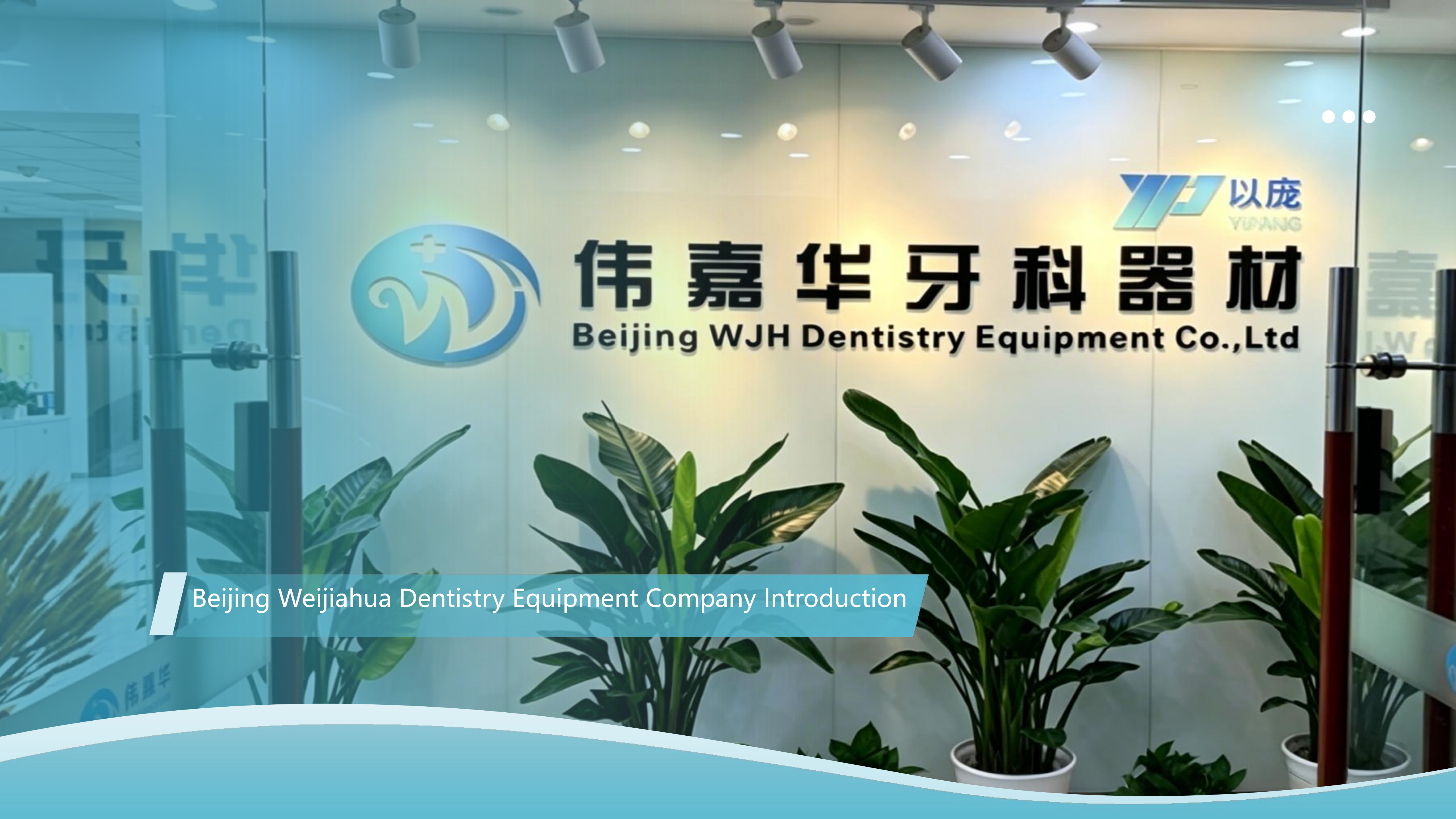
If you are planning a zirconia block trial on your own milling and sintering setup, share your machine model, target shade, blank thickness and case mix, and the YIPANG technical team will confirm the matching specification. You can download the company and product information here: WJH / YIPANG Company Information (PDF).
Contact: Jaye Yang · www.yipangdental.com · service@yipangdental.com · Tel / WhatsApp: +86-158-0156-5064 · Room 603, Tower A, Building 1, No. 22A Dongsishitiao, Dongcheng District, Beijing, China.
Have Questions or Need More Details?
Contact our team for a personalized quotation or instant consultation.
Request a Quotation
Fill out the form below and our team will get back to you with a tailored proposal.
WhatsApp Direct Chat
Prefer to chat in real-time? Message us on WhatsApp for instant assistance & quick answers.
- Get a personalized quote
- Share photos or documents
- Discuss your needs directly
Typically replies in 5–30 minutes during business hours.