The Technical Nuances of Layered Dental Zirconia Blocks: Esthetics vs. Strength
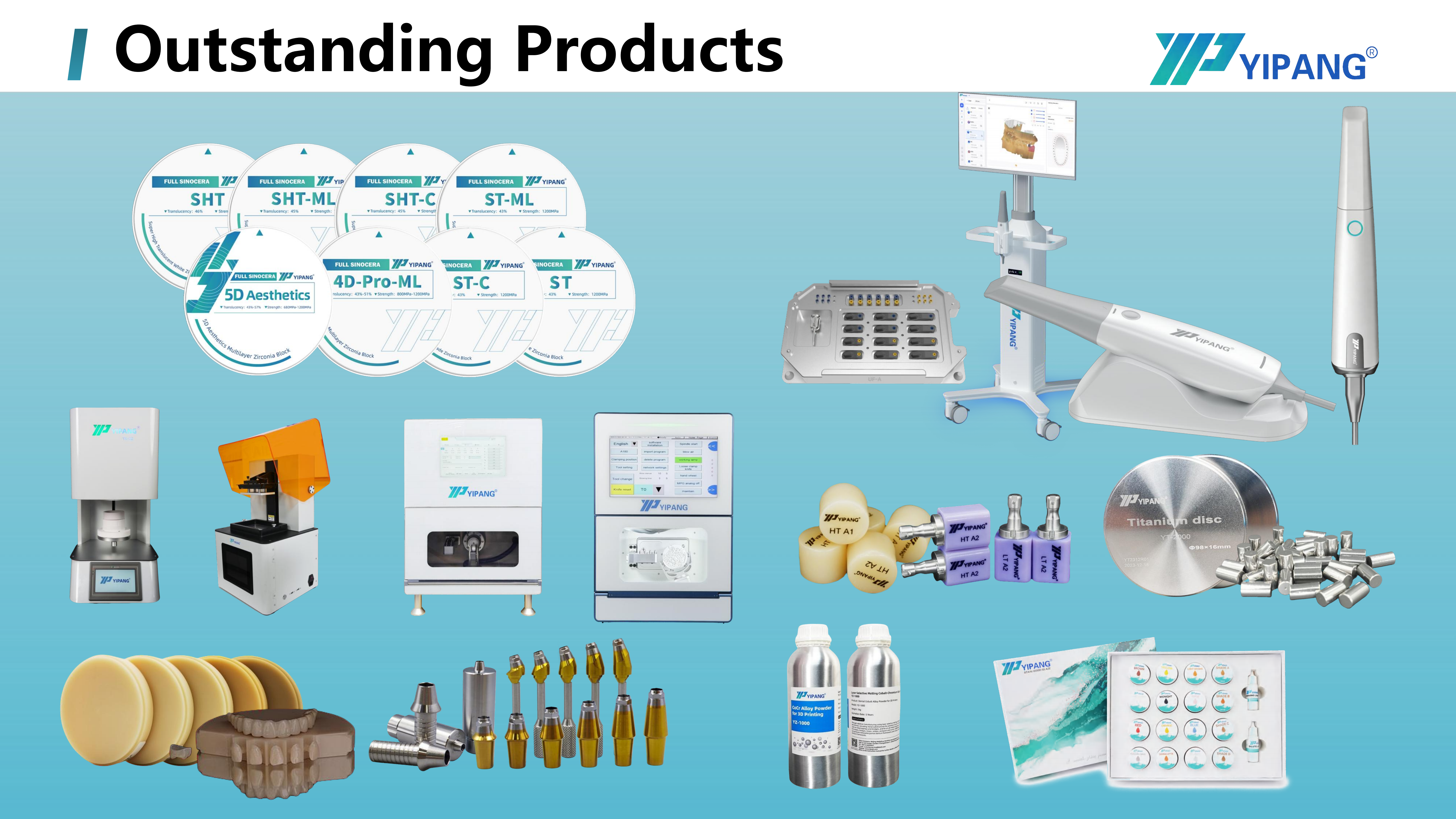
Cover: a multilayer dental zirconia block carries its shade and translucency gradient through the thickness of the disc, not on the surface.
Layered dental zirconia blocks do not remove the esthetics-versus-strength trade-off. They relocate it. In a gradient blank, both properties exist inside the same disc, distributed across its thickness, and the laboratory decides which part of that gradient a crown, bridge or implant superstructure restoration actually consumes. That decision is normally made in CAM nesting, not on the material data sheet.
YIPANG 4D-PRO-ML is a multilayer dental zirconia block for dental prostheses, manufactured by Beijing Weijiahua Dentistry Equipment Co., Ltd., a Beijing-based dental materials and equipment company established in 1996. The block is 98 mm in diameter, is supplied in ML multilayer shades, is available in 10 mm, 12 mm, 14 mm, 16 mm, 18 mm and 20 mm thicknesses, and is sintered at 1450 °C. Its published bending strength is ≥1200 MPa with medium translucency.
Problem Definition: The Trade-Off Moves From the Material to the Nesting Strategy
Eesthetics-versus-strength in layered zirconia shows up in the lab as a small number of very specific failure patterns, and nearly all of them are process-driven.
The first pattern is under-esthetics. A crown is milled so that its incisal third draws from the more opaque body zone of the gradient. The result is an incisal edge that reads gray or chalky next to adjacent dentition — even though the block itself is a multilayer product. The material is not at fault; the restoration was positioned in the wrong layer.
The second pattern is mechanical. The incisal edge or a bridge connector is nested in the most translucent zone of the gradient. The crown looks correct, but the load-bearing geometry now sits in the optically optimized region, which is not where a thin connector or a functional incisal edge should sit during chewing.
The third pattern is downstream of milling entirely: sintering. If the furnace curve deviates, or the workpiece cools too quickly, the crown can come out cloudy or cracked even when the nesting decision was correct. Chipping and cracking after zirconia sintering are recognized as being triggered by improper sintering profile settings or by inherent defects inside the zirconia blank.
Industry Background: Why Gradient Blanks Became a Standard CAD/CAM Route
Zirconia is not a niche anterior material. The global zirconia-based dental materials market was valued at USD 1.2 billion in 2025 and is projected to reach USD 2.3 billion by 2033, according to Grand View Research. Within that market, zirconia discs held the largest revenue share at 63.1% in 2025, and CAD/CAM milling accounted for 82.4% of zirconia dental manufacturing process revenue in the same year.
Two structural conclusions follow. First, the disc format — not powder or individually shaped blanks — is the dominant delivery format for zirconia in laboratories. Second, the manufacturing conversation in a zirconia lab is largely a milling conversation.
Material-grade concentration is equally telling. Grand View Research reports that the 3Y-TZP zirconia grade held the largest revenue share of 35.9% in the dental zirconia market in 2025, and that dental laboratories remain the dominant end user, accounting for 45.3% of the market share in 2025. The U.S. alone accounts for 40% of revenue in the global zirconia-based dental materials market.
Zirconia is also not the only esthetic route. Lithium disilicate accounts for approximately 28% of all all-ceramic dental restorations globally as of 2024, according to Business Research Insights. That figure matters because gradient zirconia usually competes for exactly those esthetic indications — and wins or loses them depending on how well a laboratory manages the gradient during nesting and milling.
The practical consequence for a production lab is straightforward: esthetic demand and strength demand now arrive in the same case queue, on the same mill, from the same disc inventory. The differentiator is strategy, not stock.
How Gradient Layers Work Inside a Multilayer Dental Zirconia Block
What the gradient actually controls
A multilayer zirconia blank is built so that shade and translucency change gradually across the thickness of the disc. The cervical and body region is formulated for higher chroma and higher opacity; the incisal region is formulated for lower chroma and higher translucency. Because the transition is gradual rather than a visible seam, a restoration milled across that gradient picks up a continuous shift from a denser cervical color to a more luminous incisal edge.
In the YIPANG 4D-PRO-ML line, the “ML Multilayer” shade designation refers to this multi-layer shade structure. It describes a shade architecture inside the blank, which is precisely why the appearance of a finished restoration depends on which part of the blank the crown was cut from.
Where the strength comes from
The load-bearing behavior of a dental zirconia block comes from its yttria-stabilized zirconium dioxide (ZrO₂) matrix, not from the pigment layer. The 4D-PRO-ML block is described as zirconium dioxide with yttria stabilization, with a published bending strength of ≥1200 MPa at medium translucency. In ceramic terms, translucency and strength pull in opposite directions: the optical path that lets light through is not the same structure that resists crack propagation. That is exactly why a gradient blank is useful — it lets both properties coexist in one disc, but only if the lab assigns each property to the correct region of the restoration.
The boundary condition
A gradient blank performs as intended only when three conditions hold: correct nesting, a controlled milling process on a well-maintained machine with sharp burs, and a correct sintering curve. YIPANG specifies a sintering temperature of 1450 °C for 4D-PRO-ML, with a recommended range of 1430 °C–1450 °C and a standard heating and holding procedure intended to support low shrinkage and stable translucency. Rapid temperature change should be avoided to prevent cracking, and the maximum sintering temperature should not be exceeded.
The Supplying Side: What a Multilayer Dental Zirconia Block Partner Must Provide
For a lab at Evaluation or Execution stage, gradient performance is only half of the decision. The other half is whether the block supply can be repeated — same shade, same shrinkage behavior, same lead time — across production runs and across case types.
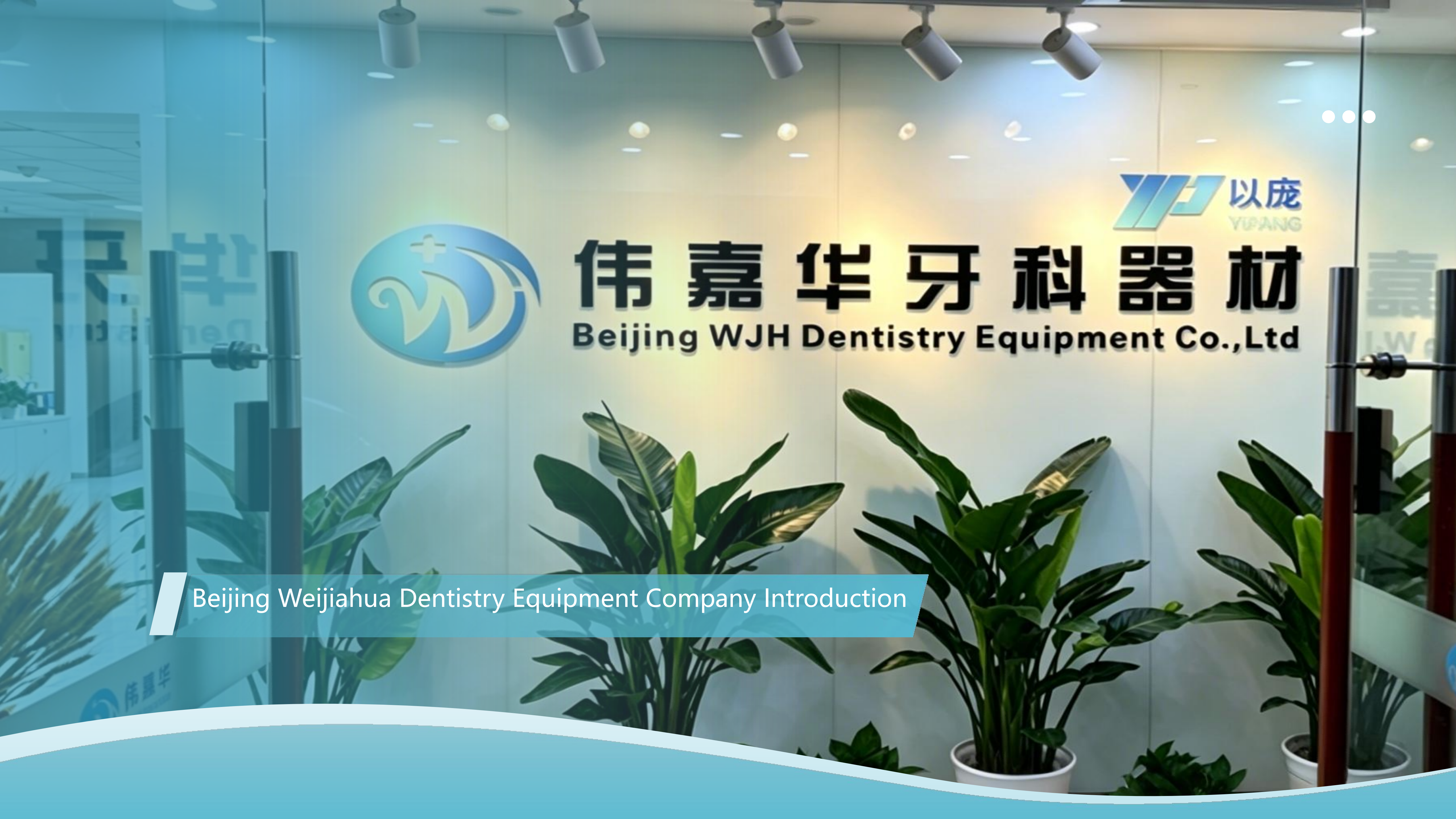
YIPANG is the self-developed brand of Beijing Weijiahua Dentistry Equipment Co., Ltd. The company was established in 1996 and operates a 2,000 m² facility with 80 employees and an annual output of USD 10 million. Its R&D team consists of 25 professional engineers working on dental material formula research, process optimization and new product development. Export accounts for 40%–55% of business, with main markets in the Middle East, Southeast Asia, South America, North America, Eastern Europe, North Africa and Australia.
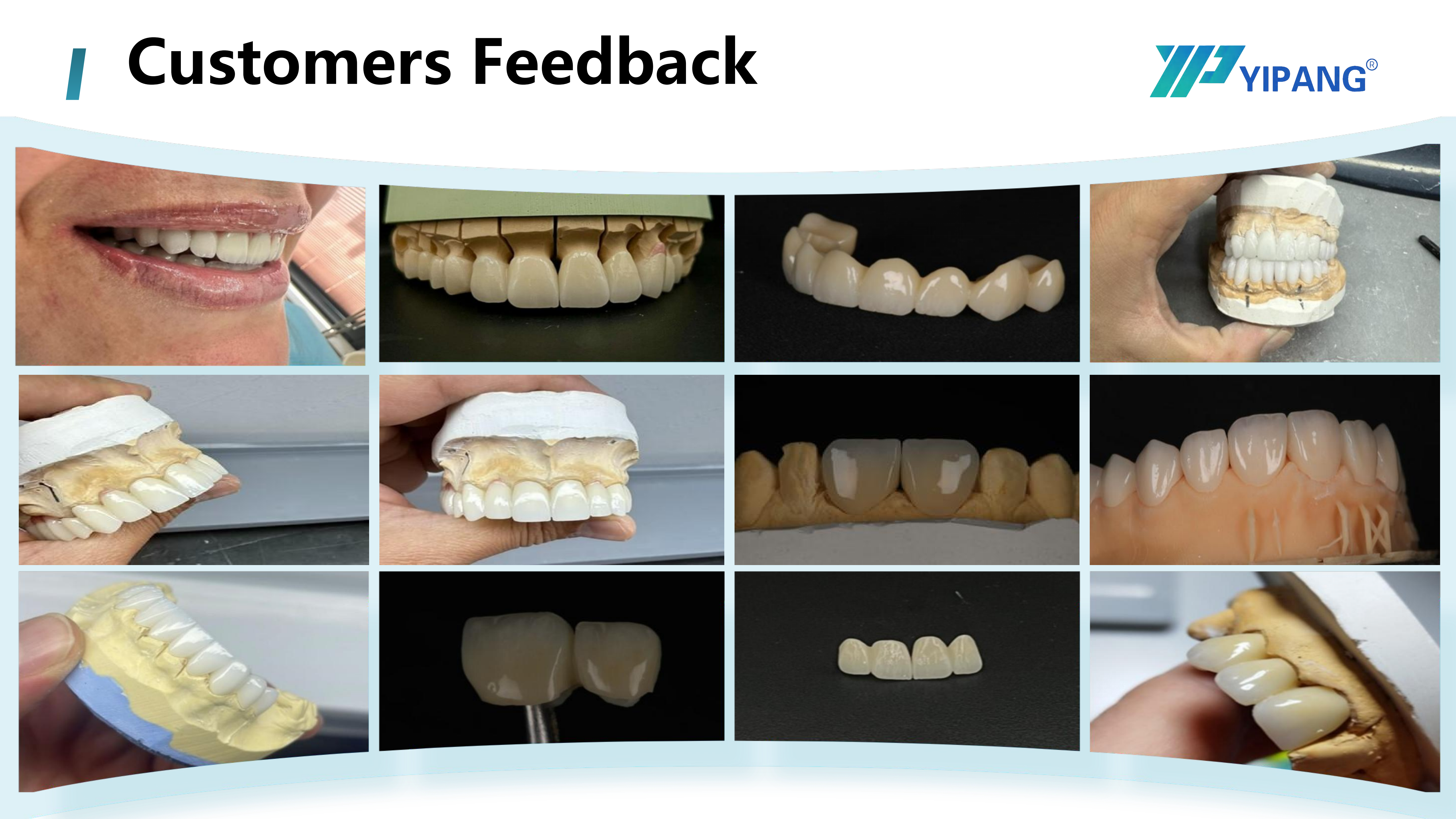
Production side: multilayer zirconia block manufacturing, with 100% raw material inspection plus finished product random inspection.
For a multilayer zirconia program, the following supply-side points are the ones that materially affect production planning:
- Production model: both OEM (Original Equipment Manufacturing) and ODM (Original Design Manufacturing) services are available, with customization options for almost all specifications.
- Published block specification (4D-PRO-ML): ML multilayer shades; 98 mm diameter; 10 mm, 12 mm, 14 mm, 16 mm, 18 mm and 20 mm thicknesses; sintering temperature 1450 °C; bending strength ≥1200 MPa; medium translucency.
- Capacity: 15,000 pieces per month.
- Quality control: 100% raw material inspection plus finished product random inspection.
- Equipment fit: the block is processed on a dental milling machine and sintered in a dental sintering furnace, with a dental lab scanner used in the digital workflow; it is described as compatible with most CAD/CAM systems with stable sintering shrinkage.
- Certification: ISO 13485 certificate 381240434R0S, issued by Shanghai POSI Certification Co., Ltd. on 2024-12-27 and valid until 2027-12-26, covering design, production and sales of dental medical materials and dental equipment under GB/T 42061-2022 / ISO 13485:2016.
- Field record: hundreds of long-term cooperative clients worldwide, including dental laboratories, dental clinics and distributors, with reported high recognition on material stability and aesthetic effect and a low customer complaint rate.
Read as a procurement profile rather than a feature list, these points answer one question: can a lab standardize a multilayer shade across anterior and posterior production without re-qualifying a new material for every case type? Uniform translucency and stable sintering shrinkage are the two signals that matter most, because those are the variables that break gradient predictability on the bench.
Step-by-Step Breakdown: Milling Strategy for Multilayer Crowns and Bridges
The sequence below is a production workflow for multilayer crown and bridge work. The gradient decision is highlighted because it is the step that most often determines both the esthetic and the mechanical outcome.
Step 1 — Case assessment and shade mapping
Before any blank is opened, define where the gradient must land on the restoration. Single anterior crowns need translucency concentrated at the incisal third. Posterior monolithic crowns need a lower-chroma cervical and body, with the incisal gradient used more sparingly so the crown does not read too bright under occlusal lighting.
Step 2 — Blank selection and pre-check
Match the total height of the restoration to the block thickness. 4D-PRO-ML is available in 10 mm, 12 mm, 14 mm, 16 mm, 18 mm and 20 mm thicknesses at 98 mm diameter, and taller restorations — longer spans, full-contour units — simply require more blank height than a single short crown. Inspect every blank before milling and again before sintering: internal defects in the blank are a recognized trigger of post-sintering chipping and cracking. If a workpiece is chipped or cracked after sintering, it should be scrapped and not used for a final restoration.
Step 3 — Nesting and gradient positioning (the core nuance)
This is the step that converts a multilayer block into either a natural-looking restoration or an expensive single-shade one. Place the restoration so that its anatomy maps onto the intended zone of the blank: incisal edge toward the most translucent layer, cervical margin and the root-facing region toward the more opaque, higher-chroma body mass. For bridges, keep the connector cross-section and the pontic's load-bearing body inside the stronger zone rather than at the extreme translucent end. Because sintering shrinkage is stable but still occurs, the nesting has to account for it — nesting that ignores shrinkage shifts the entire restoration out of its intended layer.
Step 4 — Milling execution
Milling a gradient blank is still milling a green-state ceramic, and two variables dominate. The first is bur condition: worn burs raise cutting temperature and local stress, and the resulting micro-damage often becomes visible only after sintering. The second is toolpath discipline: avoid bur exits directly across a thin incisal margin, and use a sequence that removes bulk material before finishing the delicate incisal zone. When burs break repeatedly, the block grade, the milling parameters and the tool are all part of the diagnosis — not the bur alone.
Step 5 — Sintering
Sinter 4D-PRO-ML at 1450 °C, within a recommended range of 1430 °C–1450 °C, following the standard heating and holding procedure. The operational sequence is: place the milled zirconia workpiece on the sintering tray; set the heating curve up to the holding temperature with the proper holding time; then allow natural cooling after sintering. Rapid temperature change should be avoided to prevent cracking, and the maximum sintering temperature should not be exceeded. This is where an otherwise correct gradient decision can still be lost, because incorrect sintering profile settings are a known cause of chipping, cracking and cloudiness.
Step 6 — Finishing, glazing and acceptance
After sintering, the gradient should read as a continuous transition rather than a line. Finishing and characterization should preserve that transition instead of flattening it. On inbound material acceptance, quantity is checked on receipt, and any damage or deformation is reported within 48 hours with photos; sampling tests are supported by the supplier.
Planning stage: the gradient decision is fixed before CAM nesting begins, not after the crown is milled.
Test Scenarios in a Multilayer Crown and Bridge Laboratory
Scenario 1 — Anterior single crown
The highest esthetic demand, with the least material to hide a mistake. The incisal third is nested at the translucent end of the gradient and the full gradient is consumed so the crown shows a natural incisal halo. Lingual and palatal surfaces, which are less visible, can absorb more of the body zone. If the crown comes out flat and gray, the nesting — not the shade name — is the first thing to check.
Scenario 2 — Three-unit anterior bridge
Here the constraint is the connector, not the esthetics. The gradient must run consistently across all three units so that shade continuity is preserved, while the connector cross-sections stay inside the stronger body mass of the blank. This is the case where “maximum translucency everywhere” nesting fails, because it puts the weakest geometry in the optical zone.
Scenario 3 — Posterior monolithic crown
Strength and fit dominate. Less of the gradient is consumed, and a medium translucent multilayer block such as 4D-PRO-ML is used with a lower-chroma body so the crown does not look artificial under intraoral lighting. Shade consistency across multiple posterior units in the same case matters more than per-unit gradience.
Scenario 4 — Implant superstructure and full-contour restorations
For full-contour implant restorations and superstructure work, the gradient is positioned relative to the transmucosal and cervical zone, and the attachment geometry is kept in the stronger mass. In these cases the digital chain matters as much as the block: scan, design, nest, mill, sinter — with the dental lab scanner, milling machine and sintering furnace aligned to the same shrinkage assumption.
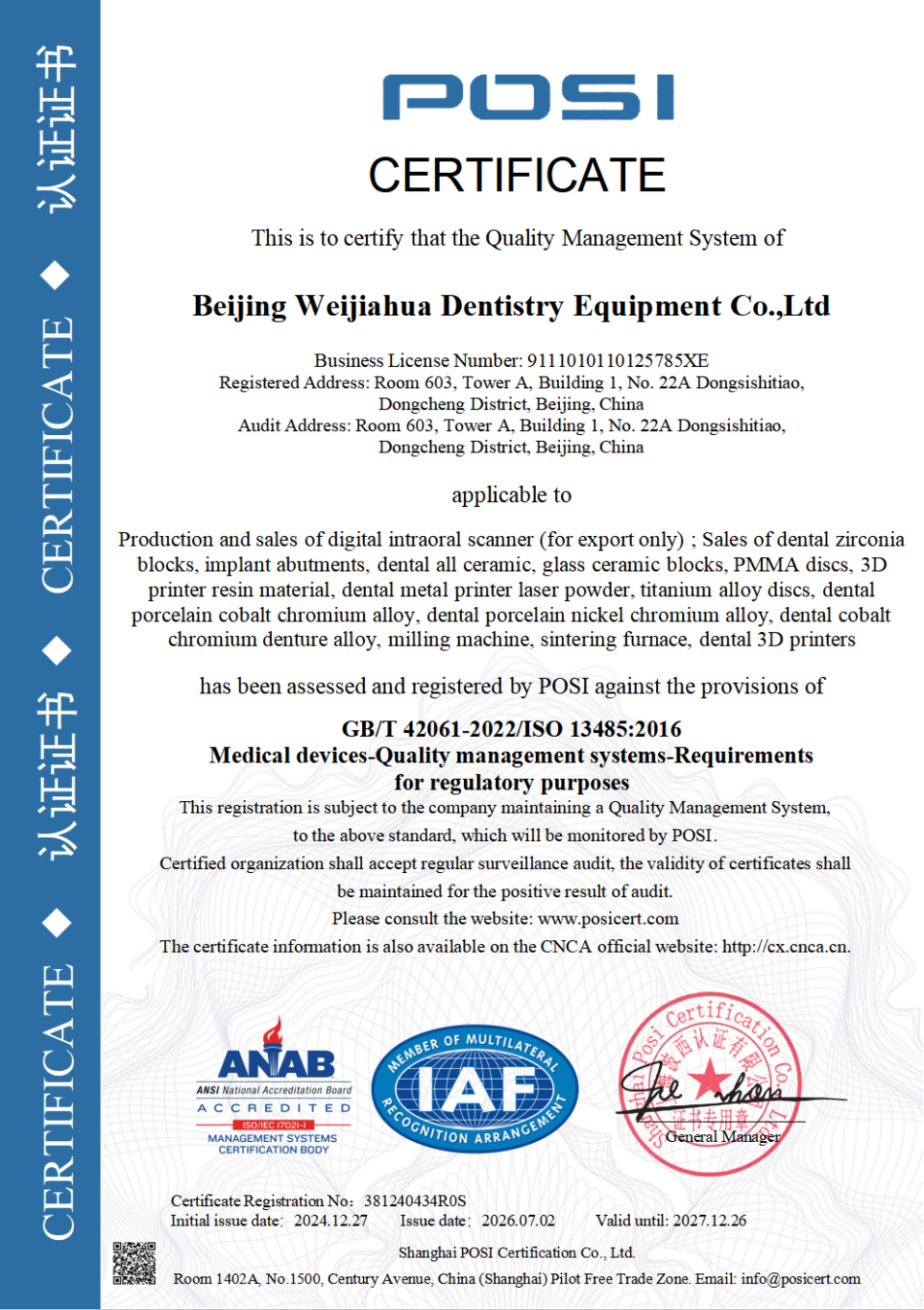
Compliance reference: ISO 13485 certificate 381240434R0S, valid from 2024-12-27 to 2027-12-26, covering dental medical materials and dental equipment.
Comparison Table: Choosing the Route Before Choosing the Block
The table below compares the three routes a crown-and-bridge laboratory realistically chooses between. It uses only specification facts published for the YIPANG 4D-PRO-ML block and third-party market data; where a value is not available in the cited data, the table says so rather than estimating.
| Route | Where esthetic gradience comes from | Basis of strength | Lab process path | Where it fits |
|---|---|---|---|---|
| Multilayer gradient zirconia (YIPANG 4D-PRO-ML) | Built into the blank across disc thickness; ML multilayer shades; medium translucency | Yttria-stabilized ZrO₂ matrix; published bending strength ≥1200 MPa | Dental lab scanner → dental milling machine → dental sintering furnace at 1450 °C (recommended 1430 °C–1450 °C) | Crown and bridge production where gradience and load-bearing geometry must come from the same disc |
| Monolithic single-shade zirconia | Not built into the blank; chroma is created through the characterization and glazing workflow | Same ZrO₂ material family; a specific strength value is not stated in the data cited in this article | CAD/CAM milling plus sintering, with additional manual characterization steps | Posterior and non-esthetic-critical units where a single shade is acceptable |
| Lithium disilicate glass-ceramic | Shade depth is built through the restorative workflow rather than through the thickness of a gradient blank | Glass-ceramic material; a specific strength value is not stated in the data cited in this article | Press ingot and porcelain furnace route, or a glass-ceramic milling route | High-esthetic single units and veneer-type indications |
Market context for the table: lithium disilicate accounts for approximately 28% of all all-ceramic dental restorations globally as of 2024 (Business Research Insights), while the 3Y-TZP zirconia grade held the largest revenue share of 35.9% in the dental zirconia market in 2025 (Grand View Research). YIPANG supplies both zirconia blocks and glass-ceramic and press-ingot lines, so the route decision can be made on case requirements rather than on a single-material catalog.
FAQ: Multilayer Dental Zirconia Block Questions From CAD/CAM Labs
1. Is the 4D-PRO-ML multilayer dental zirconia block covered by a medical device quality certification?
Yes. YIPANG 4D-PRO-ML is covered by ISO 13485 certificate 381240434R0S, issued by Shanghai POSI Certification Co., Ltd. on 2024-12-27 and valid until 2027-12-26. The certified scope is design, production and sales of dental medical materials and dental equipment, under the standard GB/T 42061-2022 / ISO 13485:2016, and the certificate is associated with the 4D-PRO-ML zirconia block. Labs selling into regulated markets should still verify the documentation required in their own jurisdiction: the European Commission states that EU Medical Device Regulation MDR 2017/745 classifies most dental implants and restorative materials as high-risk, requiring intensive clinical data, so market-specific document review remains the buyer's step.
2. Can a CAD/CAM dental lab order OEM multilayer zirconia blocks with customized specifications?
Yes. The manufacturer provides both OEM (Original Equipment Manufacturing) and ODM (Original Design Manufacturing) services, with customization options for almost all specifications. Standard 4D-PRO-ML supply covers ML multilayer shades at 98 mm diameter in 10 mm, 12 mm, 14 mm, 16 mm, 18 mm and 20 mm thicknesses, sintering at 1450 °C, bending strength ≥1200 MPa and medium translucency. Production capacity is 15,000 pieces per month, and quality control combines 100% raw material inspection with finished product random inspection. OEM and ODM production services are provided to clients in the USA, Europe, Brazil, the Middle East and North Africa.
3. What is the minimum order quantity for standard and customized multilayer zirconia blocks?
The stated purchasing terms are: MOQ of 1 box for standard models and 5 boxes for customized products, with a negotiable small MOQ. Delivery terms are express delivery for domestic orders and sea freight or air freight for export, with FOB Shanghai/Tianjin available. Payment terms are full payment before shipment. The supplier does not publish a price list in its technical documentation, so commercial terms for a specific multilayer configuration are quoted per inquiry rather than taken from a catalog.
4. Can a lab run a sampling and milling test before committing to full production?
Yes. Sampling tests are supported. On receipt, quantity is checked and any damage or deformation is reported within 48 hours with photos. For a meaningful gradient test, the sample should be milled and sintered on the same equipment the lab uses in production — a dental milling machine and a dental sintering furnace — because the gradient outcome is a process result, and a correct block cannot compensate for an incorrect sintering curve. Testing the block at 1450 °C, within the recommended 1430 °C–1450 °C range, is the most direct way to confirm shade stability and shrinkage behavior in a specific lab environment.
5. What is the lead time for a multilayer zirconia block order, and what support follows delivery?
Lead time is 15–30 working days, backed by a monthly capacity of 15,000 pieces. After delivery, the supplier provides online technical guidance with an after-sales problem response within 24 hours, covering sintering, milling and material handling questions. Next step: labs evaluating a multilayer program can request a sample or an OEM/ODM quotation directly — email service@yipangdental.com or WhatsApp +86-158-0156-5064 — and download the company information and product documentation before the first trial run.
Conclusion: The Gradient Is a Decision, Not a Feature
Layered dental zirconia blocks make esthetics and strength coexist in one disc, but they do not make the choice for the laboratory. The gradient is a physical distribution of shade and translucency, and the restoration only benefits from it when nesting puts the incisal anatomy in the translucent zone and the load-bearing geometry in the denser body mass.
For labs in Evaluation or Execution stage, the practical checklist is short: confirm the blank specification (98 mm diameter, 10–20 mm thicknesses, ML multilayer shades, 1450 °C sintering, bending strength ≥1200 MPa, medium translucency); confirm the supply side can repeat that specification (ISO 13485 certificate 381240434R0S, 15,000 pieces per month, 100% raw material inspection plus finished product random inspection); and confirm the process chain around it — scanner, milling machine, burs and sintering furnace — behaves consistently at the recommended sintering curve.
Esthetics versus strength stops being a trade-off the moment it becomes a nesting rule.
Test the Gradient in Your Own Lab
YIPANG supplies multilayer dental zirconia blocks with OEM and ODM support, customization options for almost all specifications, a lead time of 15–30 working days and after-sales technical response within 24 hours.
Request a sample or an OEM/ODM quotation: WhatsApp +86-158-0156-5064 · service@yipangdental.com · www.yipangdental.com
Company information and product documentation: Download the WJH / YIPANG company brochure (PDF)
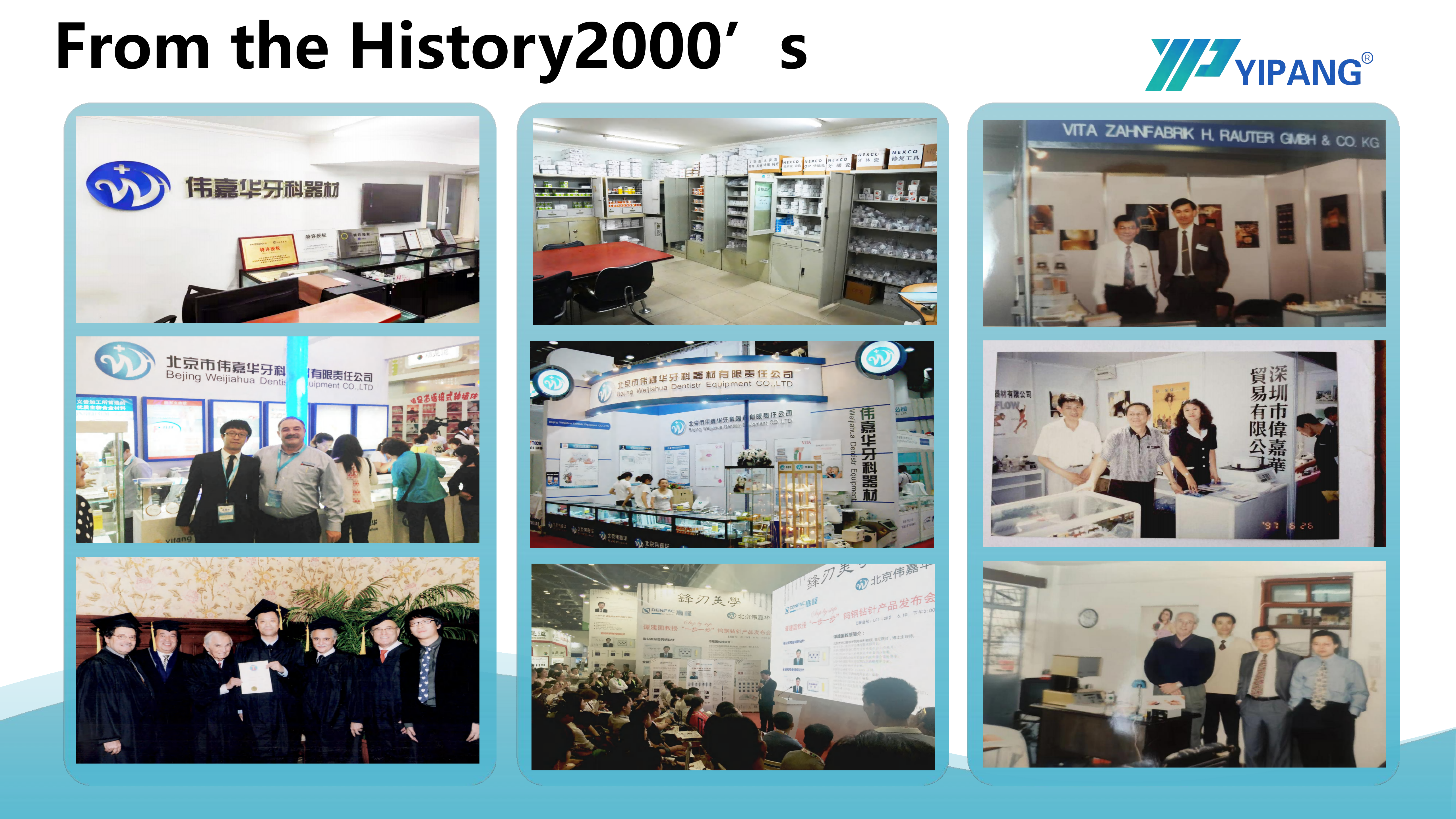
Partnering with YIPANG: OEM and ODM multilayer zirconia block supply for dental laboratories, milling centers and distributors.