
The Top 6 Dental Zirconia Block Categories Every CAD/CAM Lab Should Know
A dental zirconia block is a category, not a single SKU. In a CAD/CAM lab, blanks are selected by the restoration they have to survive: a single posterior crown, a three-unit bridge, a high-translucency central incisor, or an implant crown seated on a titanium interface. The six categories below organise a block range by indication — from full-contour work at one end to high-strength implant crowns at the other — and each one carries its own verification list before a lab or a distribution line commits to stock.

Zirconia block ranges are organised by the restoration type they support, not by the colour of the blank.
The Six Categories at a Glance
- Category 1 — Full-contour posterior crown blocks. Single-unit posterior restorations where strength and marginal fit outrank maximum translucency.
- Category 2 — High-translucency anterior blocks. Aesthetic-zone crowns and veneers where shade blending is the deciding criterion.
- Category 3 — Multilayer gradient blocks. Blanks with a shade transition built through the thickness, used to skip separate layering steps.
- Category 4 — Multi-unit bridge blocks. Span-supporting blanks for three-unit and longer frameworks.
- Category 5 — High-strength implant crown and superstructure blocks. Implant-borne restorations where the blank is the structural partner of the Dental Implant Abutment.
- Category 6 — Edentulous and full-arch workflow blocks. Thicker formats that follow full-arch scans and scanbody records rather than single preparations.
Problem Definition: Why Categories Matter More Than Brands
Most zirconia blanks reach a laboratory looking almost identical: a white disc, 98 mm across, in a sealed sleeve. The differences that decide outcome — indication, layer structure, strength class, sintering behaviour, documentation — are invisible on the bench and only measurable after sintering. That is the practical problem a lab buyer faces.
There are three consequences when a block is chosen by habit instead of by category:
- Indication mismatch. A blank selected for a posterior crown may sit in the aesthetic zone and read too opaque, while a blank chosen purely for translucency may be asked to carry a span it was not specified for.
- Process mismatch. Blocks are processed on a Dental Milling Machine and completed in a Dental Sintering Furnace. Sintering behaviour has to match the curve the lab actually runs; a blank that demands a different programme becomes a scheduling problem, not a material upgrade.
- Documentation mismatch. For distributors, a block without a traceable quality certificate is difficult to place with clinical customers, regardless of how it mills.
The category approach solves all three at once. Each category carries one dominant indication, one verification list, and one stocking decision.
Industry Background: Why Block Ranges Are Being Rebuilt
Zirconia has moved from an alternative to a default in many CAD/CAM workflows, and the numbers explain why labs reorganise their shelves.
The global zirconia-based dental materials market was valued at USD 1.2 billion in 2025 and is projected to reach USD 2.3 billion by 2033, according to Grand View Research. Within that market, zirconia discs held the largest revenue share at 63.1% in 2025, and CAD/CAM milling accounted for 82.4% of process revenue — a clear signal that the disc-and-block format, not laboratory layering, now carries most of the production load.
Material grades are concentrated as well. 3Y-TZP zirconia held the largest revenue share of 35.9% in the zirconia market in 2025, which is consistent with the grade's long-established role in strength-oriented restorations. Dental laboratories remain the dominant end user, accounting for 45.3% of market share in 2025, and the U.S. accounts for 40% of global revenue in the same market.
Regulation shapes the buying decision in parallel. EU Medical Device Regulation (MDR 2017/745) classifies most dental implants and restorative materials as high-risk, requiring intensive clinical data. For a lab or a distributor, that means a block range is also a documentation range: certificates, standards and declared scopes have to travel with the product.
| Verified reference point | Value | Source |
|---|---|---|
| Global zirconia-based dental materials market, 2025 → 2033 | USD 1.2 billion → USD 2.3 billion | Grand View Research |
| Zirconia disc revenue share, 2025 | 63.1% | Grand View Research |
| CAD/CAM milling share of process revenue, 2025 | 82.4% | Grand View Research |
| 3Y-TZP revenue share of the zirconia market, 2025 | 35.9% | Grand View Research |
| Dental laboratories as end user, 2025 | 45.3% | Grand View Research |
| U.S. share of zirconia-based dental materials revenue, 2025 | 40% | Grand View Research |
Detailed Solution: The Six Categories Explained
The classification below follows one rule: a category exists because a specific restoration type demands a specific balance of strength, translucency and blank geometry. Each entry states the indication, the trade-off, and what to verify on the specification sheet.
Category 1 — Full-Contour Posterior Crown Blocks
Indication: single-unit posterior crowns and onlays, milled as one piece with no veneering layer. Priority: strength and marginal integrity. Trade-off: a strength-first blank usually gives up some translucency, which is acceptable behind the occlusal plane.
Verification list: bending strength declared on the sheet, shrinkage consistency across blanks, and the sintering window the supplier recommends. For reference, YIPANG — the self-developed brand of Beijing Weijiahua Dentistry Equipment Co.,Ltd — specifies a bending strength of ≥1200 MPa and a sintering temperature of 1450 ℃ for its 4D-PRO-ML zirconia block, with supplier guidance to keep the sintering window at 1430 ℃–1450 ℃ and follow a standard heating and holding procedure.
Category 2 — High-Translucency Anterior Blocks
Indication: anterior crowns, thin restorations and aesthetic-zone units where shade blending matters more than load capacity. Priority: translucency and shade behaviour after glazing. Trade-off: the aesthetic gain comes with tighter process discipline — firing and glazing partners such as a Dental Porcelain Furnace, Dental Staining Glaze and Dental Glaze Paste become part of the outcome, not just the finishing step.
Verification list: declared translucency class, available shade range, and a milling plus sintering trial on a real anterior case. Where the aesthetic target is extreme, labs frequently compare zirconia against Dental Lithium Disilicate Glass Ceramic or pressable Dental Lithium Disilicate Press Ingot before committing a case; industry data indicates lithium disilicate accounts for approximately 28% of all all-ceramic dental restorations globally as of 2024, so the two materials are usually stocked side by side rather than as substitutes.
Category 3 — Multilayer Gradient Blocks
Indication: restorations that benefit from a shade transition through the thickness — typically anterior and premolar crowns and short-span aesthetic bridges. Priority: consistent layer structure from blank to blank. Trade-off: a gradient blank reduces manual layering work but demands that the milling strategy respects the layer orientation.
Verification list: how the shade is distributed through the thickness, whether the gradient is uniform across the batch, and whether the translucency class suits the intended zone. YIPANG lists ML Multilayer as the available shade option for the 4D-PRO-ML block, with medium translucent material, which places the blank in the aesthetic-to-balanced part of a lab's range.
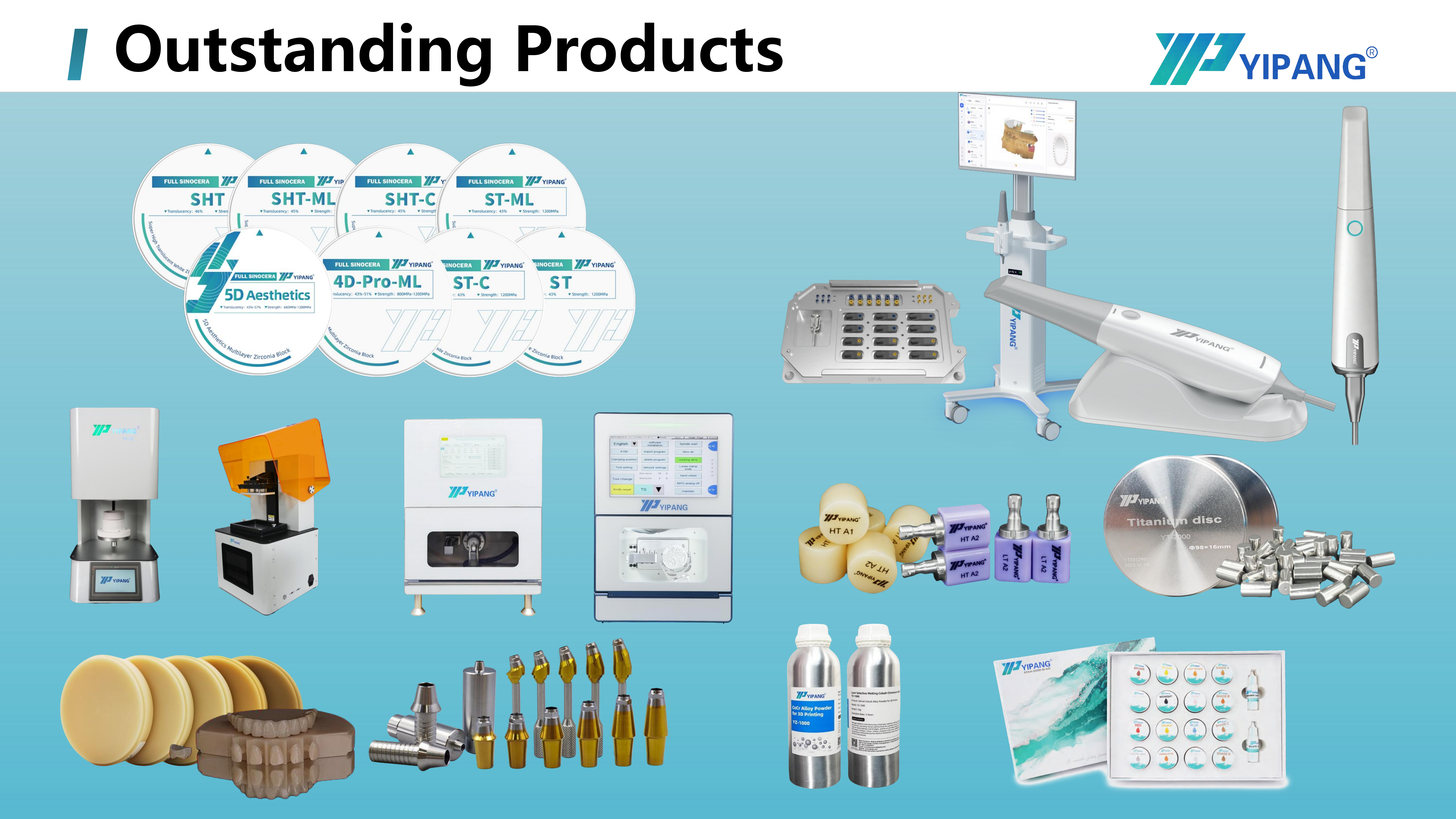
4D-PRO-ML zirconia blocks: ML Multilayer shades, 98 mm diameter, 10–20 mm thickness options.
Category 4 — Multi-Unit Bridge Blocks
Indication: three-unit and longer frameworks milled from a single blank. Priority: span support and dimensional stability through sintering. Trade-off: thicker blanks increase material consumption per unit, so bridge work is usually planned around stock thickness rather than around shade variety.
Verification list: available thickness range, declared strength for multi-unit use, and documented sintering discipline. YIPANG offers thickness options of 10 mm, 12 mm, 14 mm, 16 mm, 18 mm and 20 mm at a 98 mm diameter, which allows a lab to match blank height to connector geometry instead of over-milling.
Category 5 — High-Strength Implant Crown and Superstructure Blocks
Indication: implant crowns, customised superstructures and screw-retained units where the restoration is anchored to a Dental Implant Abutment rather than to tooth structure. Priority: structural reliability and fit at the interface. Trade-off: the highest-strength blanks in a range usually sit at the lower end of translucency, which is why implant work is often finished with staining and glazing rather than with a fully translucent blank.
Verification list: declared bending strength, interface fit after sintering, and documentary support for the intended market. YIPANG lists implant superstructure restorations among the applications of the 4D-PRO-ML block, alongside full-contour crowns, bridges and veneers.
Category 6 — Edentulous and Full-Arch Workflow Blocks
Indication: edentulous and full-arch cases, where the restoration is designed from an Edentulous Scanbody Kit record and a Dental Lab Scanner rather than from a single prepared tooth. Priority: blank size, strength and scan-to-mill continuity. Trade-off: these cases consume the thickest blanks, so inventory planning replaces shade selection as the main decision.
Verification list: maximum thickness, diameter compatibility with the mill's blank holder, and whether the supplier's range covers full-arch indications at all. A block range that stops at 14 mm forces a lab to source full-arch blanks elsewhere, which fragments traceability.
Step-by-Step: Building a Block Range Around the Scanning Workflow
A distribution line or laboratory that stocks blocks for modern digital workflows can build the range in seven steps. Each step produces a decision that the next step depends on.
- Audit the scan output first. List the case types the Dental Lab Scanner or intraoral scanner actually produces — single units, spans, implant records, edentulous arches. Block categories are a downstream consequence of that list.
- Map each case type to one category. Assign a default category per case type and record the exception rule. A range that covers Categories 1, 3 and 5, for example, handles most routine, aesthetic and implant work.
- Match blank geometry to the mill. Confirm diameter and thickness against the Dental Milling Machine holder and the nesting software, and plan Dental Milling Burs consumption for the harder grades.
- Confirm sintering compatibility. Check the supplier's curve against the programme the Dental Sintering Furnace runs. For 4D-PRO-ML, the sintering window is 1430 ℃–1450 ℃, with guidance to avoid rapid temperature change and not to exceed the maximum sintering temperature.
- Verify documentation before ordering. Request the certificate, the standard it references, the declared scope and the markets covered. Certificates that name the product explicitly are easier to place with clinical customers than generic quality statements.
- Run a validation lot. Mill and sinter a representative case per category, then check shrinkage, fit, translucency and surface finish against the lab's own acceptance criteria.
- Fix reorder terms. Agree lead time, minimum order quantity, packaging and the technical response channel before the first repeat order, not after it.
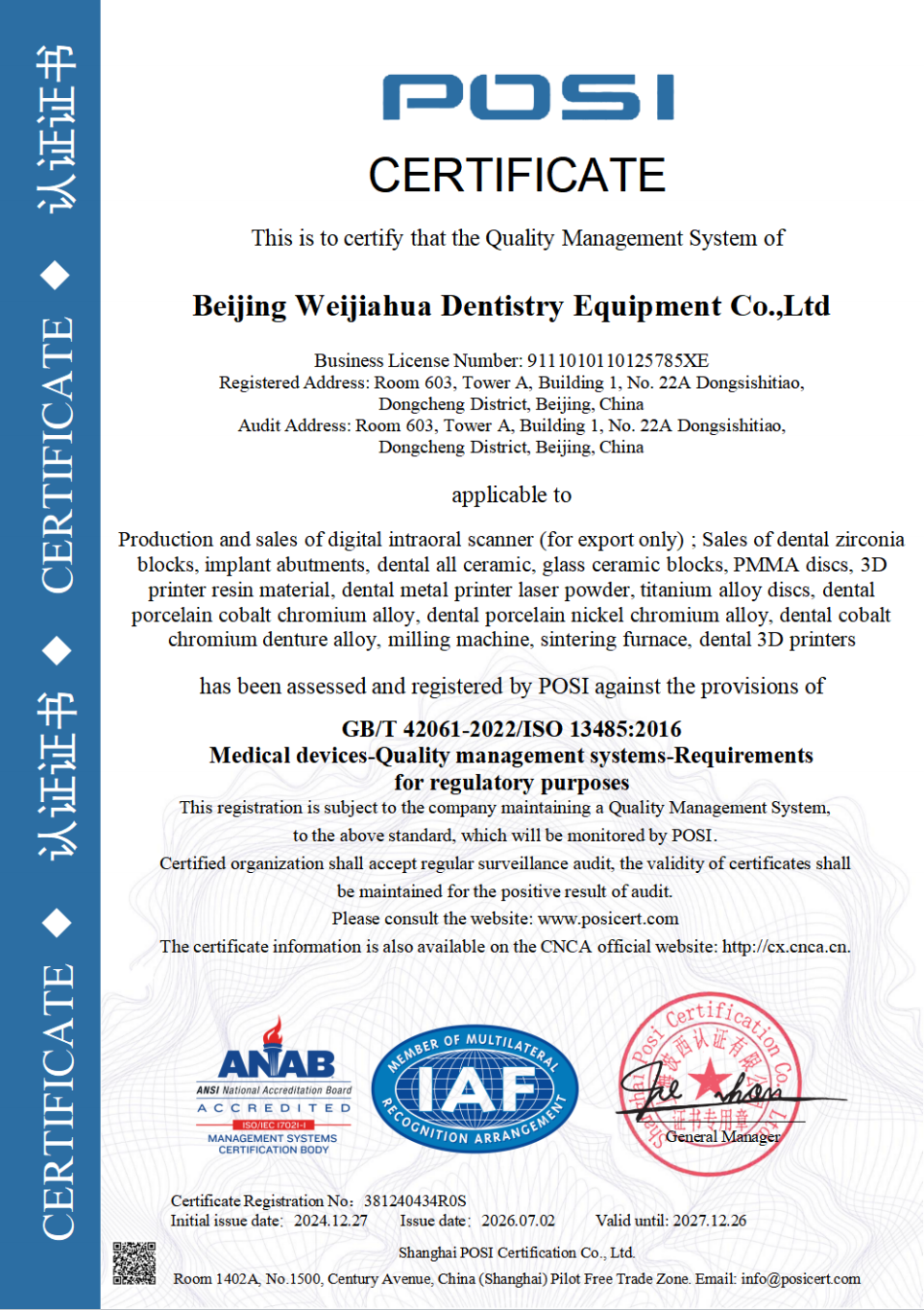
ISO 13485:2016 certificate 381240434R0S, issued by Shanghai POSI Certification Co., Ltd.
Use Cases: Which Categories Each Lab Type Actually Stocks
High-volume production laboratories
Throughput is decided by how few programme changes occur per shift. These labs typically run a narrow range built on Categories 1 and 4, hold standard thickness stock, and schedule sintering in batches. Blank consistency matters more than shade variety, because a shrinkage variation across a batch shows up as remakes rather than as rejects.
Implant-focused laboratories
Cases arrive from scanbody records and abutment libraries, so the block range follows the implant line rather than the tooth line. Category 5 becomes the default, and the supporting Dental Titanium Alloy Disc or pre-milled abutment stock sits alongside it. Fit at the interface after sintering is the acceptance criterion.
Aesthetic and chairside-oriented laboratories
These labs live in Categories 2 and 3, and their finishing consumables — Dental Firing Paste, Dental Staining Glaze, Dental Glaze Paste, Dental Polishing Burs — are purchased as a set with the block. Aesthetic results depend on the whole chain, so a block that mills well but glazes inconsistently fails here even if its strength figure is adequate.
Dental lab distribution lines
A distributor sells the workflow, not the blank. That means a zirconia range that can be quoted next to Dental PMMA Disc, Dental Wax Disc, Dental PEEK Disc, Dental 3D Printer and Dental 3D Printer Resin, Dental 3D Printing Metal Powder, Dental Lithium Disilicate Glass Ceramic, Dental Lithium Disilicate Press Ingot, Dental Implant Abutment, Dental Milling Machine, Dental Milling Burs, Dental Sintering Furnace and Dental Porcelain Furnace. YIPANG's declared product lines cover zirconia blocks, glass ceramics, press ingots, PMMA, wax, titanium blocks, implant abutments, 3D scanners, intraoral scanners, milling machines, 3D printers and sintering furnaces, which is the breadth a distributor needs to quote a complete digital workflow from one source.
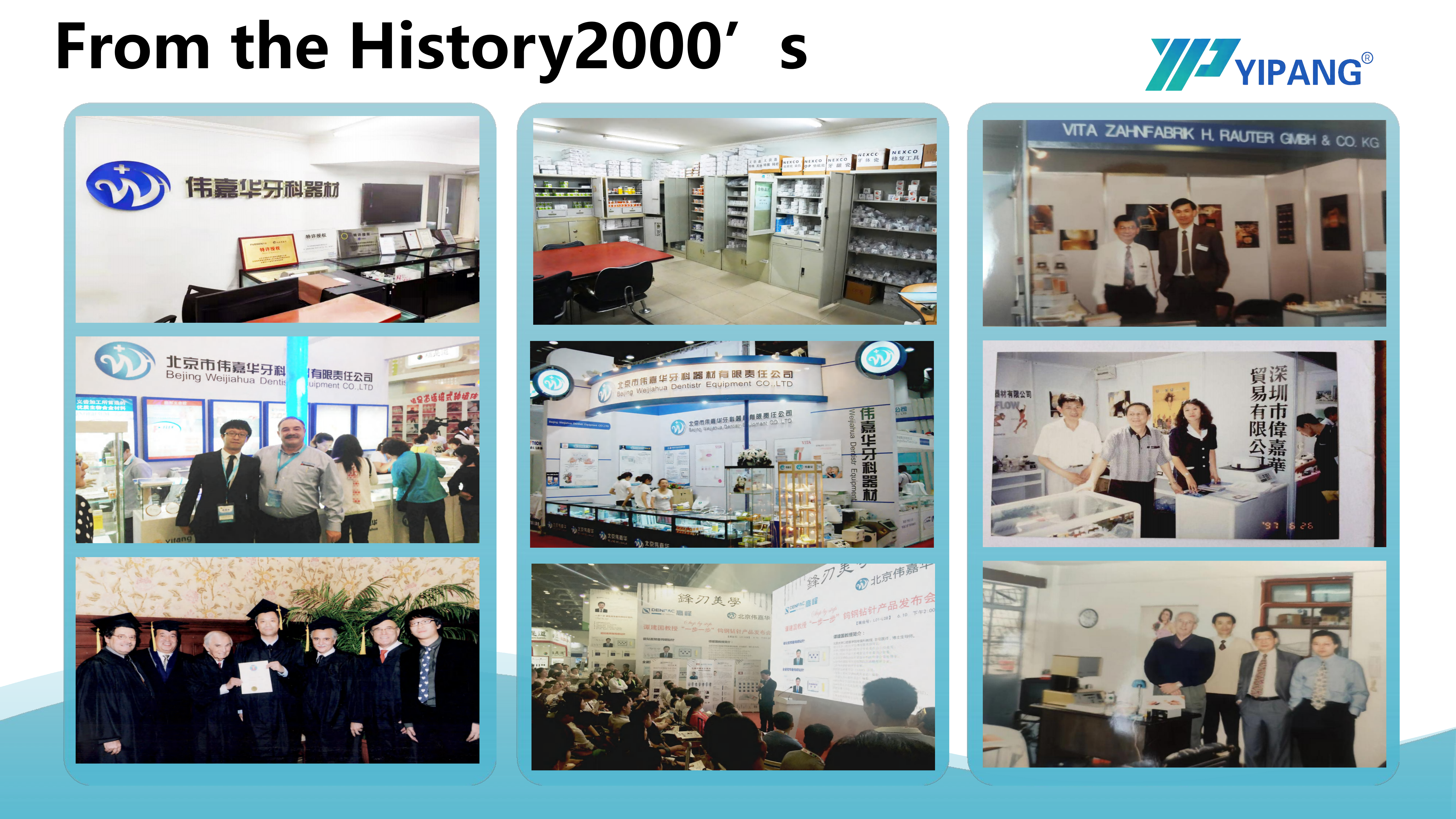
Distribution lines stock block categories as a workflow range, not as individual SKUs.
Comparison: The Six Categories Side by Side
| Category | Primary indication | Typical restorations | Strength priority | Verify before ordering |
|---|---|---|---|---|
| 1. Full-contour posterior crown blocks | Single-unit posterior | Full-contour crowns, onlays | High | Declared bending strength, shrinkage consistency, sintering window |
| 2. High-translucency anterior blocks | Aesthetic zone | Anterior crowns, thin restorations | Moderate | Translucency class, shade range, glazing protocol |
| 3. Multilayer gradient blocks | Shade-matched aesthetic work | Anterior and premolar crowns, short spans | Moderate to high | Layer structure, gradient uniformity, sintering behaviour |
| 4. Multi-unit bridge blocks | Span support | Three-unit and longer frameworks | High | Thickness range, multi-unit strength data, sintering discipline |
| 5. High-strength implant crown blocks | Implant-borne restorations | Implant crowns, superstructures | Highest | Declared strength, interface fit after sintering, market documentation |
| 6. Edentulous and full-arch blocks | Full-arch and edentulous cases | Full-arch bridges, edentulous prostheses | Highest | Maximum thickness, diameter compatibility, scan-to-mill continuity |
The specification table below states only declared values for one product in the range, so that buyers can see what a complete data set looks like before requesting the equivalent document from any supplier.
| Declared parameter | YIPANG 4D-PRO-ML zirconia block |
|---|---|
| Model | 4D-PRO-ML |
| Type | Dental zirconia disc, CAD/CAM dental milling blank |
| Material | Zirconium dioxide (ZrO₂) with yttria stabilized |
| Available shades | ML Multilayer |
| Thickness | 10 mm, 12 mm, 14 mm, 16 mm, 18 mm, 20 mm |
| Diameter | 98 mm |
| Sintering temperature | 1450 ℃ (supplier guidance: 1430 ℃–1450 ℃ window) |
| Bending strength | ≥1200 MPa |
| Translucency | Medium translucent |
| Equipment compatibility | Most mainstream dental milling machines |
| Applications | Full-contour crowns, bridges, veneers, implant superstructure restorations |
| Certification | ISO 13485:2016, certificate 381240434R0S |
FAQ
1. Is the dental zirconia block certified, and which markets does the certificate cover?
The YIPANG dental zirconia block range is certified to ISO 13485:2016 under certificate number 381240434R0S, issued by Shanghai POSI Certification Co., Ltd. against the standard GB/T 42061-2022 / ISO 13485:2016. The certification scope covers design, production and sales of dental medical materials and dental equipment, is valid from 2024-12-27 to 2027-12-26, and applies to the Global, EU, USA and Middle East markets. Buyers should note that the company's EU Declaration of Conformity under MDR 2017/745 covers intraoral scanner models YP-X and YP-800 (Class I medical devices, SRN: CN-MF-000045919) and is a separate document from the block certificate, so documentation should be checked product by product.
2. Can block specifications be customised, and what production capacity is available?
Yes. Beijing Weijiahua Dentistry Equipment Co.,Ltd operates in OEM/ODM mode and states that almost all specifications can be customised. Monthly capacity is 15,000 pieces, with lead time of 15–30 working days and a negotiable small MOQ. Standard 4D-PRO-ML parameters are ML Multilayer shades, 98 mm diameter, thickness options of 10, 12, 14, 16, 18 and 20 mm, and compatibility with most mainstream dental milling machines — which is the practical baseline for slotting the blank into an existing Dental Milling Machine and CAM library.
3. What determines the price band of a block order?
There is no single list price across a block range, because the quotation follows the approved specification. The variables that move an order between price bands are the selected shade and translucency option, the thickness and diameter combination, the level of customisation requested under OEM/ODM, and the order quantity against the negotiable small MOQ. Labour and energy are also embedded in the figure, since sintering at 1430 ℃–1450 ℃ and 100% raw material inspection are part of production rather than optional services. The reliable approach is to fix the category and the specification first, then request a quotation against that exact specification.
4. How should a lab validate a sample before committing to a range?
A validation lot should reproduce the lab's own workflow rather than a supplier demonstration. Mill one representative case per category, sinter it inside the recommended 1430 ℃–1450 ℃ window without rapid temperature change, and check shrinkage, marginal fit, translucency and surface finish against internal acceptance criteria. Quality control at production level is stated as 100% raw material inspection plus finished product random inspection, and long-term users report uniform translucency, stable sintering shrinkage and compatibility with most CAD/CAM systems with a low complaint rate across hundreds of long-term cooperative clients worldwide.
5. What lead time and after-sales response can a lab or distributor expect?
Standard lead time is 15–30 working days, with a negotiable small MOQ for first orders and pilot ranges. After-sales support is provided as online technical guidance, with after-sales problem response within 24 hours. Export experience covers the USA, Europe, Brazil, the Middle East and North Africa. For a first range decision, the practical next step is a sample or quotation request against a defined category list — contact YIPANG at service@yipangdental.com or WhatsApp +86-158-0156-5064 with the categories, thicknesses and shades you intend to stock.
Conclusion
A zirconia block range is a map of the restorations a lab intends to produce. Classifying blanks into the six categories above — full-contour posterior, high-translucency anterior, multilayer gradient, multi-unit bridge, high-strength implant crown, and edentulous full-arch — turns a shelf of similar-looking discs into a decision system. Each category then has one verification list: declared strength, translucency class, thickness range, sintering window and documentation.
The workflow argument reinforces the material argument. When cases begin with a Dental Lab Scanner or an Edentulous Scanbody Kit, the block is selected before milling, not after. A range that covers Categories 1, 3 and 5 handles routine production, aesthetic work and implant restorations without forcing case-by-case sourcing, while Categories 2, 4 and 6 fill the specific gaps that otherwise migrate to a second supplier.
YIPANG, the self-developed brand of Beijing Weijiahua Dentistry Equipment Co.,Ltd, positions its 4D-PRO-ML block inside that structure with declared parameters — 98 mm diameter, 10–20 mm thickness, ML Multilayer shades, ≥1200 MPa bending strength, medium translucent material, ISO 13485:2016 certification — rather than with adjectives. That is the format in which block ranges should be compared.
Next Step: Sample, Quotation and Full Catalogue
Labs and distributors can request a sample or a specification-matched quotation, and download the company catalogue for the full workflow range.
Catalogue: WJH Company Information (PDF)
Website: www.yipangdental.com
Email: service@yipangdental.com · Tel / WhatsApp: +86-158-0156-5064
Address: Room 603, Tower A, Building 1, No. 22A Dongsishitiao, Dongcheng District, Beijing, China
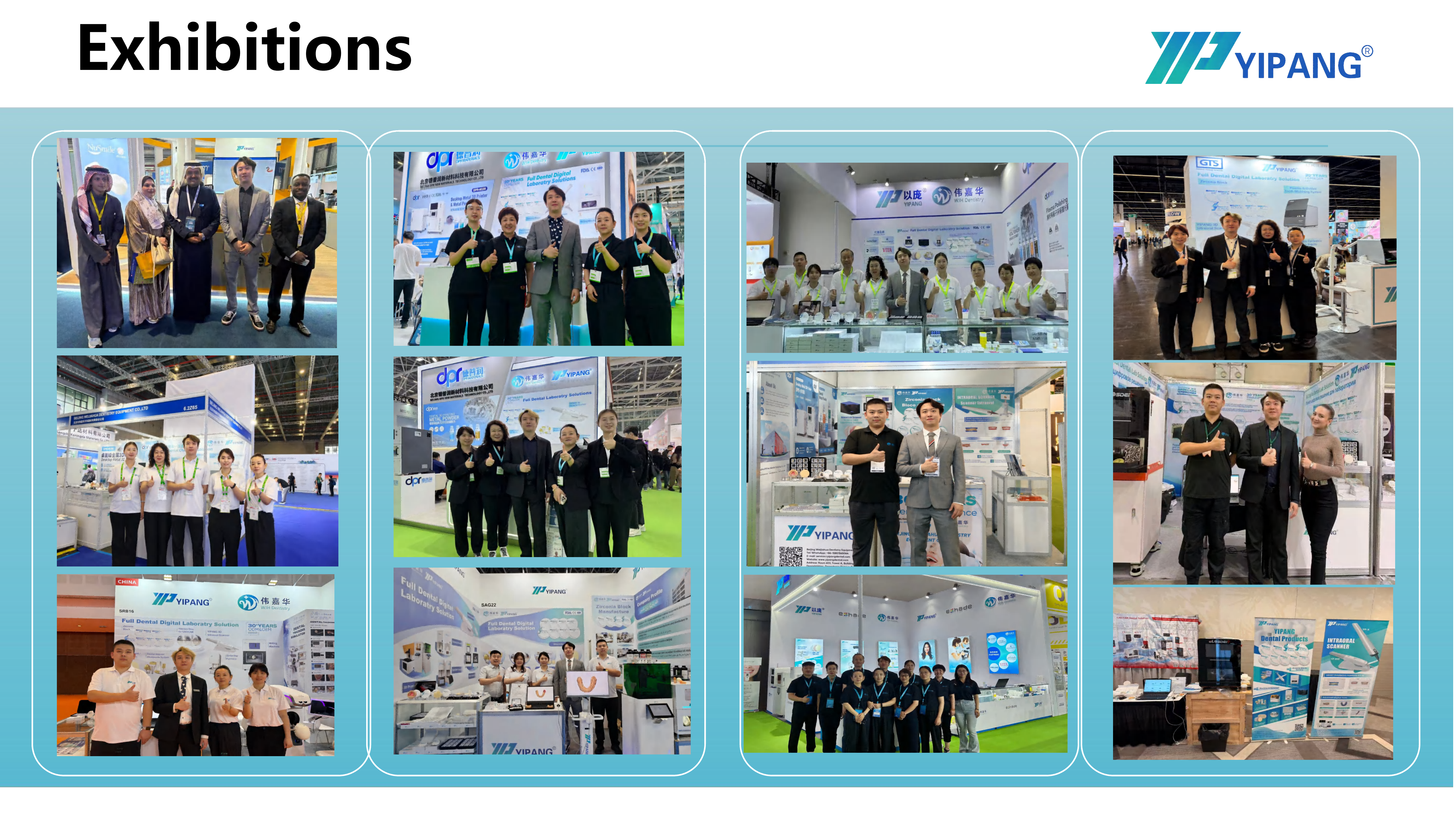
Sample and quotation requests are handled against a defined category and specification list.
Have Questions or Need More Details?
Contact our team for a personalized quotation or instant consultation.
Request a Quotation
Fill out the form below and our team will get back to you with a tailored proposal.
WhatsApp Direct Chat
Prefer to chat in real-time? Message us on WhatsApp for instant assistance & quick answers.
- Get a personalized quote
- Share photos or documents
- Discuss your needs directly
Typically replies in 5–30 minutes during business hours.