Translucent vs. High-Strength Dental Zirconia Blocks: Endurance Choices for Posterior Monolithic Cases
The choice between a translucent dental zirconia block and a high-strength dental zirconia block is a case-fit decision, not a quality ranking. Posterior monolithic crowns and multi-unit bridges need flexural strength, a disciplined sintering profile and batch-to-batch consistency; visible anterior work needs light transmission and shade blending. A medium-translucency multilayer block — such as YIPANG 4D-PRO-ML, which is specified with a bending strength of ≥1200 MPa and a medium translucent rating — sits between those two poles, letting a laboratory cover most of its case mix from one material family while keeping a supply relationship that holds up over years of production.
This guide is written for dental laboratories, milling centres and importers who already mill zirconia and now need to decide which block grade belongs on which case, and which supplier can keep that decision stable. It contrasts translucent aesthetic formulations with tough posterior formulations for monolithic use, explains the multilayer structure behind gradient shades, and lists the sintering and procurement checkpoints that determine whether a restoration truly endures.
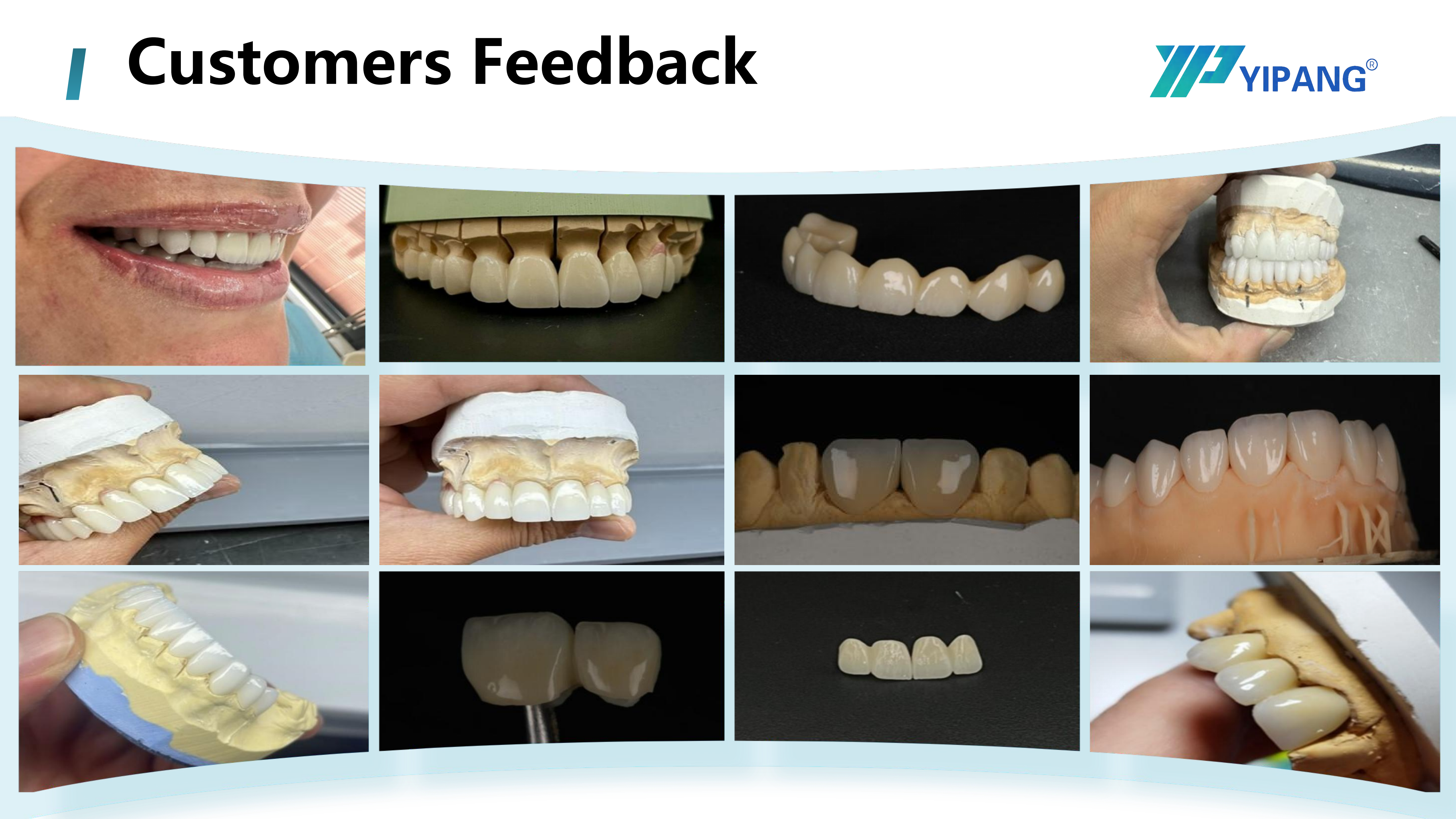
Dental zirconia blocks for laboratory CAD/CAM workflows are produced and inspected inside YIPANG's 2,000 ㎡ manufacturing facility.
Problem Definition: One Shelf, Two Competing Demands
A dental laboratory rarely buys a single block type. It buys a case mix — posterior single crowns, multi-unit bridges, anterior veneers and implant superstructure restorations — and then presses one or two block families into service across all of them. Three frictions follow from that.
- Aesthetic-led blocks pushed into load-bearing cases. A translucent blank opened for visible-zone work can end up in a heavy posterior bridge simply because it is already on the bench. A posterior monolithic restoration carries occlusal load without a veneering layer to redistribute stress, so the material decision has no margin for improvisation.
- Strength-led blocks used where appearance is judged. Tough, low-transmission formulations resist fracture well but pass less light, so anterior and high-visibility cases can lose the natural gradient a clinician expects to see after glazing.
- Batch and sintering variation, rather than the block concept itself. YIPANG documents chipping and cracks after zirconia sintering as a recurring failure mode, with two identified triggers: an improper sintering profile setting, and inherent defects inside the zirconia blank.
Each friction converts into the same commercial cost — a remake. A remake consumes milling time, burs, sintering furnace capacity and technician hours on a unit that was already quoted, which is why posterior monolithic work rewards strength discipline and process discipline together, not one of them alone.
For laboratories at the decision-to-execution stage, the practical question is therefore not "which block is strongest", but "which block family matches this indication, and can this supplier repeat that performance next quarter".
Industry Background: Where Zirconia Block Demand Actually Sits
The commercial weight behind this decision is concentrated in dental laboratories and CAD/CAM production rather than in chairside purchase.
- The global zirconia-based dental materials market was valued at USD 1.2 billion in 2025 and is projected to reach USD 2.3 billion by 2033 (Grand View Research).
- Zirconia discs held the largest revenue share of 63.1% in the zirconia-based dental materials market in 2025 (Grand View Research).
- CAD/CAM milling accounted for 82.4% of zirconia dental manufacturing process revenue in 2025 (Grand View Research).
- 3Y-TZP zirconia held the largest grade-level revenue share at 35.9% in the 2025 zirconia market (Grand View Research).
- Dental laboratories remain the dominant end user, with 45.3% of market share in 2025, while the United States accounts for 40% of revenue in the global zirconia-based dental materials market (Grand View Research).
- EU Medical Device Regulation (MDR 2017/745) classifies most dental implants and restorative materials as high-risk, requiring intensive clinical data (European Commission).
Two implications matter for block selection. First, because the dominant buyer is a laboratory and the dominant process is CAD/CAM milling, the block is where the material decision is actually made — the shaping method amplifies whatever the blank already is. Second, because restorative materials sit under high-risk regulatory scrutiny in the EU, a block that cannot be documented and repeated consistently becomes a compliance liability as well as a production one.
How Translucent and High-Strength Dental Zirconia Blocks Actually Differ
The translucency–strength trade-off inside one material system
Light transmission and load-bearing capacity pull in opposite directions inside the same zirconia framework. Formulations tuned for higher translucency transmit light more effectively, which is what allows a monolithic restoration to blend in the visible zone without a veneering ceramic; formulations tuned for fracture resistance under occlusal load typically appear more opaque, which matters far less on a second molar than on a central incisor.
Neither behaviour is a defect. The failure occurs when the two profiles are substituted for one another without adjusting the case indication — a translucent-first blank in a multi-unit posterior bridge, or a strength-first blank on a case where the clinician will judge shade blending in daylight.
Multilayer fabrication: where the gradient shade comes from
Multilayer blocks are built as a graded stack rather than a homogeneous puck: shade and translucency are distributed across the thickness of the blank so the milled restoration carries a natural transition from a more saturated cervical region toward a brighter incisal region. The gradient is inside the material, not applied on top of it, which is why the aesthetic result survives wear and why staining and glazing become refinement steps rather than structural ones.
YIPANG 4D-PRO-ML is supplied in ML Multilayer shades with a medium translucent rating, manufactured from Sinocera powder. Because the layer stack has a direction, nesting orientation matters: the restoration's cervical-to-incisal axis must follow the blank's layer axis, otherwise the gradient inverts and the case reads unnaturally even though the specifications were met.
YIPANG 4D-PRO-ML specification at a glance
| Parameter | YIPANG 4D-PRO-ML |
|---|---|
| Material | Zirconium dioxide (ZrO₂), yttria stabilized |
| Blank type | Dental zirconia disc / CAD-CAM dental milling blank |
| Available shades | ML Multilayer |
| Translucency | Medium translucent |
| Bending strength | ≥1200 MPa |
| Sintering temperature (specification) | 1450 ℃ |
| Recommended sintering range | 1430 ℃–1450 ℃ |
| Diameter | 98 mm |
| Thickness options | 10 mm, 12 mm, 14 mm, 16 mm, 18 mm, 20 mm |
| Typical indications | Posterior crowns, multi-unit bridges, full-contour crowns, bridges, veneers, implant superstructure restorations |
| Matched equipment | Dental milling machine, dental sintering furnace, dental lab scanner |
Sintering: the endurance step laboratories underrate
Endurance in a monolithic posterior restoration is decided as much in the furnace as in the blank. For 4D-PRO-ML, the recommended sintering temperature range is 1430 ℃–1450 ℃, applied with a standard heating and holding procedure to support low shrinkage and stable translucency.
- Place the milled zirconia workpiece on the sintering tray.
- Set the heating curve up to 1430 ℃–1450 ℃ with the appropriate holding time.
- Allow the restoration to cool down naturally once sintering is complete.
Two safety rules accompany that profile: avoid rapid temperature change, which can crack a restoration, and never exceed the maximum sintering temperature. Where a blank shows a pre-existing defect, sintering will not repair it — which is why green-state inspection belongs before the furnace, not after it. Chipped or cracked blanks should be scrapped and must not be used for a final restoration.
Batch consistency and the long-term supply question
Endurance is also a supply-chain property. A block that performs in one batch and drifts in the next destroys predictability at the workflow level, even if the specification sheet never changes. YIPANG's comparison data positions its zirconia blanks on stable batch consistency from a high-quality domestic self-developed zirconia powder, uniform density distribution, a sintering shrinkage error within ±0.3%, and good compatibility with most mainstream dental milling machines with a low processing failure rate. The same data notes a competitive cost position against imported zirconia blocks of equivalent quality, flexible customization, shorter delivery time, and a strict whole-process quality inspection system.
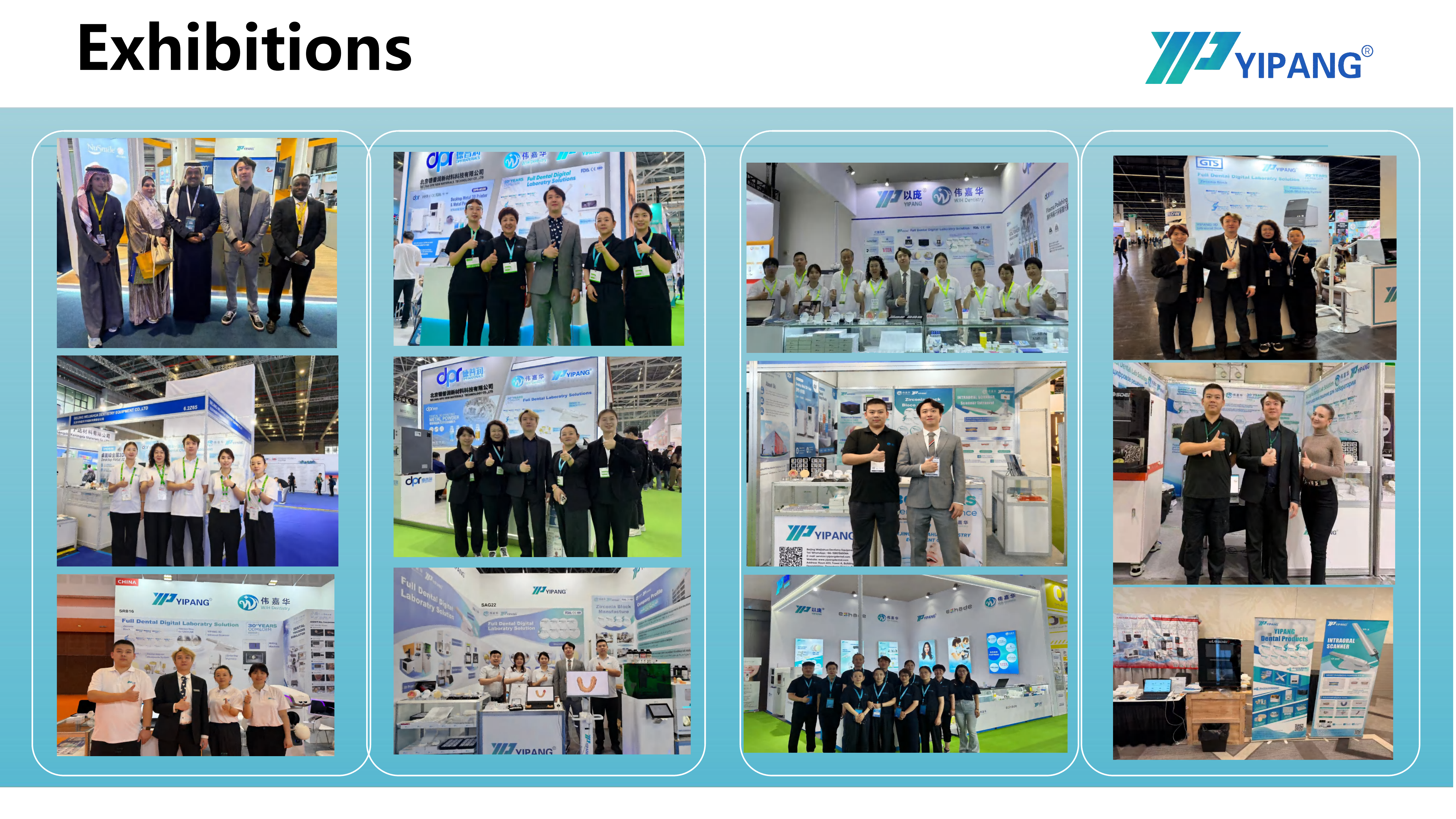
Repeatable zirconia block supply depends on batch consistency, inspection discipline and support that continues after the first order.
For a laboratory making a multi-year material decision, that is the difference between a block purchase and a supply programme. YIPANG is the self-developed brand of Beijing Weijiahua Dentistry Equipment Co., Ltd., a company established in 1996 that also represents well-known international brands including VITA, Ivoclar, Dentsply, Amann Girrbach and Noritake, and serves more than 1,000 dental laboratory customers in China through a nationwide and overseas sales network.
Step-by-Step: Matching Block Grade to Case and Getting It Through the Laboratory
- Triage the case before opening a blank. Classify the unit as posterior monolithic, multi-unit bridge, visible-zone aesthetic, or implant superstructure. The indication decides whether you want translucency priority or strength priority.
- Choose the block family against that indication. Posterior crowns, multi-unit bridges and full-contour restorations belong to a strength-capable formulation; 4D-PRO-ML is indicated for posterior crowns and multi-unit bridges while balancing mechanical strength with translucency.
- Confirm dimensions. Select 98 mm diameter and the appropriate thickness from the 10–20 mm range so the framework, connector and minimum wall thickness all fit inside the blank without re-nesting.
- Nest with the layer direction in mind. For multilayer blocks, verify that the cervical-to-incisal axis follows the layer stack before committing the toolpath.
- Mill and inspect in the green state. Examine the milled blank for chips, cracks or internal defects before sintering. Scrap anything that fails; do not send it to the furnace.
- Sinter on the approved profile. Use 1430 ℃–1450 ℃ with the correct holding time, avoid rapid temperature change, and stay below the maximum sintering temperature.
- Cool naturally, then finish. After sintering, complete characterization, staining, glazing and polishing as normal, then verify fit and occlusion on the model.
- Apply a scrap rule, not a judgement call. Chipped or cracked units are scrapped, never delivered — this single rule prevents most downstream failures.
- Run a sampling test before volume commitments. Sampling tests are supported for standard models, which allows a laboratory to validate shrinkage behaviour and shade consistency against its own furnace before standardizing.
- Confirm commercial terms. MOQ is 1 box for standard models and 5 boxes for customized products; domestic delivery is by express, while exports ship by sea or air freight with FOB Shanghai/Tianjin available; payment terms are full payment before shipment.
- Control acceptance on receipt. Check quantity on arrival, and report any damage or deformation within 48 hours with photos so the batch can be reviewed and traced.
Use Cases: Where Each Formulation Earns Its Place
| Case indication | Block profile to select | Why it fits |
|---|---|---|
| Posterior monolithic single crown | Strength-capable, medium-translucency multilayer | Occlusal load without a veneering layer; some light transmission is still useful for neighbouring dentition |
| Multi-unit posterior bridge | Strength-priority formulation | Connector geometry concentrates stress, so fracture resistance dominates the decision |
| Visible-zone crown or veneer | Translucent-priority formulation | Shade blending and light transmission are judged clinically in the aesthetic zone |
| Implant superstructure restoration | Strength-capable formulation with adequate translucency | The restoration combines a load-bearing role with a visible emergence profile |
| High-volume laboratory production | Medium-translucency multilayer with verified batch consistency | 4D-PRO-ML is recommended for high-volume dental labs; stable shade consistency and stable shrinkage keep the workflow predictable |
Comparison Table: Translucent-Led, Strength-Led and Multilayer Medium-Translucency
| Dimension | Translucent-led (aesthetic) block | Strength-led (posterior) block | YIPANG 4D-PRO-ML (ML multilayer) |
|---|---|---|---|
| Primary design goal | Light transmission and shade blending | Fracture resistance under occlusal load | Balance of mechanical strength and translucency aesthetic performance |
| Light transmission positioning | Prioritized; load-bearing capacity traded away | Reduced in favour of toughness | Medium translucent |
| Structure | Monolithic or multilayer aesthetic build | Typically monolithic, toughness-focused | ML Multilayer with graded shade |
| Typical indication | Anterior and visible-zone restorations | Posterior monolithic crowns and bridges | Posterior crowns, multi-unit bridges, full-contour crowns, bridges, veneers, implant superstructure restorations |
| Bending strength | Not the selection driver | Primary selection driver | ≥1200 MPa (specified) |
| Sintering | Material-specific profile | Material-specific profile | 1450 ℃ specified; 1430 ℃–1450 ℃ recommended range |
| What to verify with the supplier | Shade consistency across batches | Strength and defect consistency across batches | Shrinkage error within ±0.3%, uniform density, Sinocera powder sourcing, whole-process quality inspection |
FAQ
What quality checks should a laboratory run on a dental zirconia block before it reaches the sintering furnace?
Inspect the blank in the green state before sintering. YIPANG identifies two triggers of post-sintering chipping and cracks in zirconia: an improper sintering profile setting, and inherent defects inside the zirconia blank. The mitigation is to follow the recommended sintering profile and to inspect each blank before it enters the furnace. Any chipped or cracked blank should be scrapped and must not be used for a final restoration.
What sintering profile does YIPANG 4D-PRO-ML zirconia block require?
The recommended sintering temperature range for 4D-PRO-ML is 1430 ℃–1450 ℃, and the 4D-PRO-ML specification lists a sintering temperature of 1450 ℃. Place the milled zirconia workpiece on the sintering tray, set the heating curve up to 1430 ℃–1450 ℃ with proper holding time, and allow natural cool-down after sintering is complete. Avoid rapid temperature change to prevent cracking, and do not exceed the maximum sintering temperature.
What are the ordering terms, MOQ and payment conditions for YIPANG zirconia blocks?
MOQ is 1 box for standard models and 5 boxes for customized products. Domestic delivery is by express; export orders ship by sea or air freight, with FOB Shanghai/Tianjin available. Payment terms are full payment before shipment.
Can a laboratory sample-test a dental zirconia block before committing to a volume order?
Yes. Sampling tests are supported. Acceptance criteria require checking quantity upon receipt, and any damage or deformation must be reported within 48 hours with photos so the batch can be reviewed against the original shipment.
What makes a dental zirconia block supplier a genuine long-term partner for dental laboratories?
Long-term supply depends on consistency rather than a single good batch. YIPANG is the self-developed brand of Beijing Weijiahua Dentistry Equipment Co., Ltd., established in 1996, which operates a 2,000 ㎡ manufacturing facility with approximately 80 staff, an annual output of USD 10 million, and a 25-engineer R&D team working on dental material formula research, process optimization and new product development. The company supplies zirconia blocks, glass ceramics, press ingots, PMMA, wax, titanium blocks, implant abutments, 3D scanners, intraoral scanners, milling machines, 3D printers and sintering furnaces, and supports laboratories with technician, clinical, 3D printing, medical technology training and consulting services. It serves more than 1,000 dental laboratory customers in China through a nationwide and overseas sales network, with 40%–55% of products exported to markets including the Middle East, Southeast Asia, South America, North America, Eastern Europe, North Africa and Australia. For a laboratory standardizing on one block family across posterior and multi-unit work, that combination of batch consistency, in-house R&D and a broad equipment ecosystem is what keeps a material decision valid over years. To begin with a trial batch, request a sample or a quote from the team at service@yipangdental.com.
Next Step for Laboratories Standardizing on One Zirconia Block Family
If posterior monolithic endurance is the deciding criterion, validate the block against your own furnace before you commit to a stocking programme. Request a sample or a quote, or download the company catalogue for the full material and equipment range.
- Website: www.yipangdental.com
- Catalogue download: WJH Company Information (PDF)
- Contact: Jaye Yang — service@yipangdental.com | Tel / WhatsApp: +86 158-0156-5064
- Address: Room 603, Tower A, Building 1, No. 22A Dongsishitiao, Dongcheng District, Beijing, China