Zirconia Block vs. Lithium Disilicate: Crown & Bridge Lab Guide
Zirconia Block vs. Lithium Disilicate: Crown & Bridge Lab Guide
A crown and bridge laboratory does not choose between a dental zirconia block and a lithium disilicate glass ceramic on material reputation alone. It chooses a production route. Zirconia is a mill-and-sinter material: the block is shaped on a dental milling machine and densified in a dental sintering furnace under a controlled temperature curve. Lithium disilicate is a glass ceramic handled through press ingot workflows in glass ceramic laboratories, where patterns are made, invested and pressed, and where staining and glaze firings are separate steps. The route a laboratory can run repeatedly without remakes decides more than any single headline property.
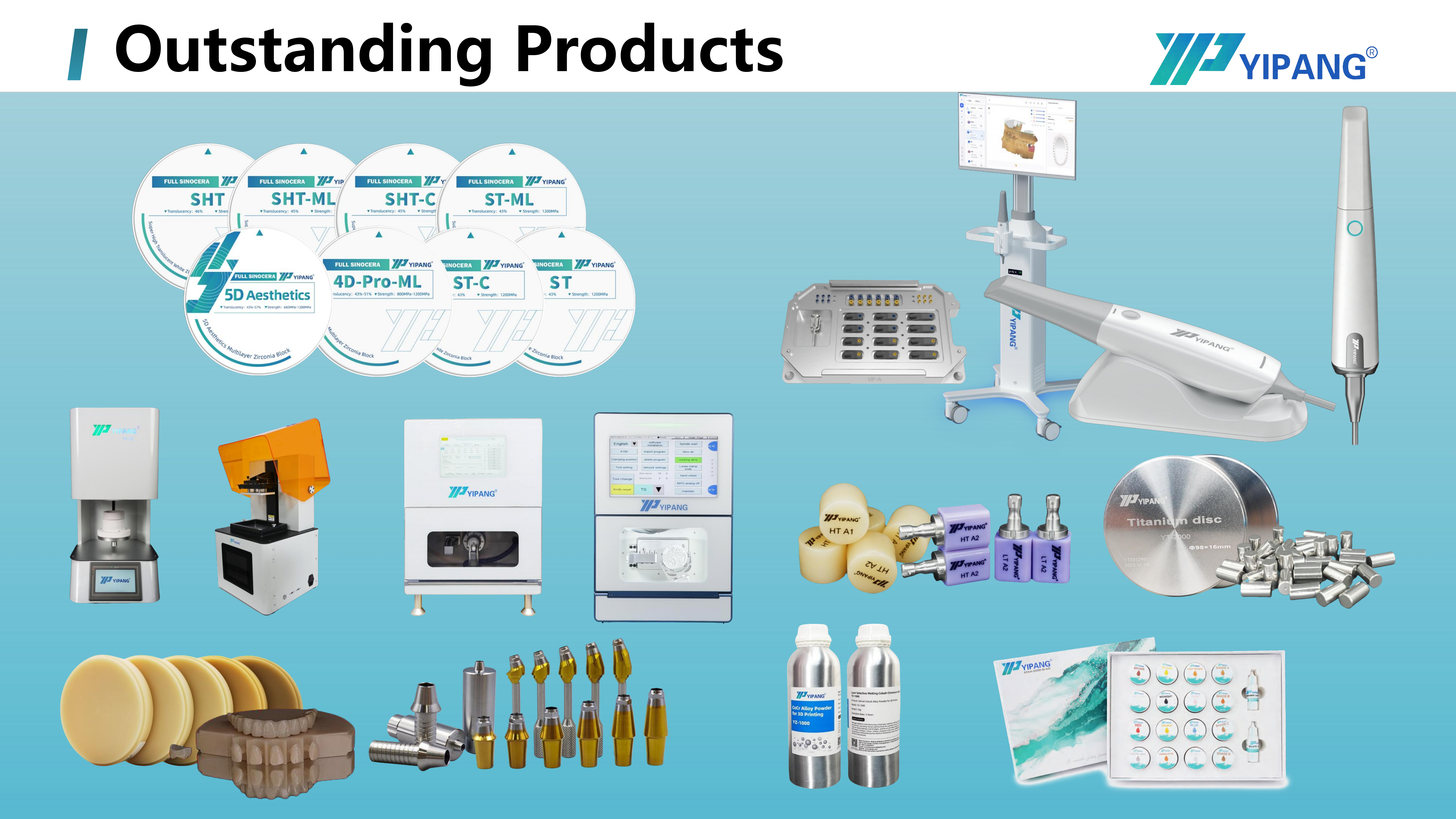
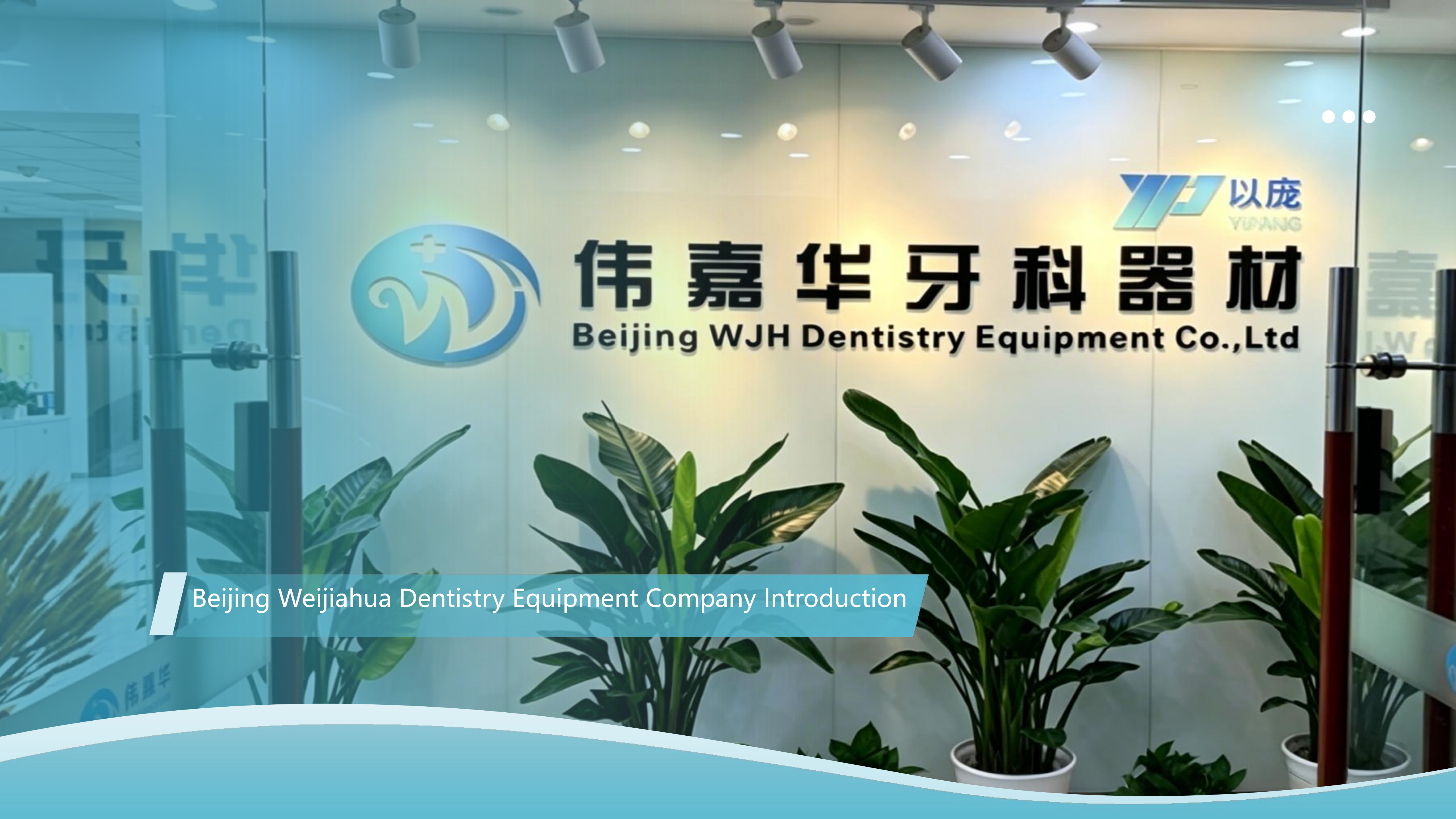
YIPANG is the self-developed brand of Beijing Weijiahua Dentistry Equipment Co., Ltd., a Beijing-based dental equipment agent and manufacturer whose product lines include zirconia blocks, glass ceramics, press ingots, PMMA, wax, titanium blocks, implant abutments, scanners, milling machines, 3D printers and sintering furnaces. Because the brand supports both material families, this comparison is written from the shop-floor position rather than from a single-material sales angle; the wider catalogue is listed on the YIPANG website.
Scope note: this guide compares indications, installed equipment, production volume, finishing control and documentation for full-contour crowns, bridges, veneers and implant superstructure restorations. It does not select a material for a specific patient. Span limits, connector dimensions and minimum thickness are set by each material manufacturer's instructions and by the treating clinician, and a general comparison cannot replace them.
The real lab problem: two workflows competing for one budget
Most laboratories meet this decision in the middle of a case-mix change, not at the planning stage. A milling centre wins multi-unit bridge work and then discovers that the sintering furnace, not the mill, sets the day's output. A glass ceramic laboratory with strong aesthetic work accepts implant superstructure cases and finds that pressing every unit individually absorbs technician hours it cannot recover. In both situations the question has already stopped being "which material is better" and become "which route can this laboratory run without outsourcing, delay or remake".
Four variables settle it, and none of them is a material ranking:
- Indication — what the restoration is actually asked to do in the case book.
- Installed equipment — which production steps the laboratory already owns and which it would have to buy, rent or outsource.
- Volume and scheduling — units per day, units per firing cycle, and who is free to run them.
- Finishing goal — monolithic characterisation with glaze, or pressed and layered aesthetic work.
A laboratory that scores both routes against these four variables usually reaches a decision quickly. A laboratory that starts from published material claims tends to buy equipment it does not need, or to outsource work it could have kept in-house.
Market context for both routes

Both material families are expanding, and the published figures should be read with their scopes attached. Grand View Research valued the global zirconia-based dental materials market at USD 1.2 billion in 2025 and projected USD 2.3 billion by 2033. Within that market, the same source reports that zirconia discs held 63.1% of revenue in 2025, that CAD/CAM milling accounted for 82.4% of zirconia process revenue, that dental laboratories remained the dominant end user at 45.3% share, that the United States accounts for 40% of zirconia material revenue, and that the 3Y-TZP grade held a 35.9% revenue share.
On the glass ceramic side, Intel Market Research projected the global dental lithium disilicate market growing from USD 320 million in 2025 to USD 920 million by 2032 at a CAGR of 18.8%. Business Research Insights estimated that lithium disilicate accounts for approximately 28% of all all-ceramic dental restorations globally as of 2024.
How to read these numbers. Estimates diverge by definition. Grand View Research's USD 1.2 billion zirconia figure and SNS Insider's USD 367.67 million describe different segment scopes, and lithium disilicate CAGR forecasts range from roughly 15% to 24.53% depending on regional adoption assumptions. Treat market values as directional rather than precise. Market share also says nothing about which material suits a particular preparation, span or aesthetic target.
The practical reading for a laboratory is narrower than the market data suggests. Neither route is being abandoned, so the realistic question is rarely "zirconia or lithium disilicate" for the whole laboratory. It is what share of the case mix each route should carry, given the equipment already installed and the technicians already trained.
A five-criteria decision framework for crown and bridge laboratories
Criterion 1 — Indication and restoration type
Start with what the restoration must do. The YIPANG 4D-PRO-ML zirconia block is specified for full-contour crowns, bridges, veneers and implant superstructure restorations, processed on a dental milling machine and sintered in a dental sintering furnace. That list defines production scope, and it should be read as scope rather than as a claim that zirconia displaces every other material in every position.
The lithium disilicate route follows a different logic. The restoration is produced as a pattern, invested, pressed as an ingot, then finished and glazed, which suits a glass ceramic laboratory built around pressing and individual characterisation. When comparing the two, the useful question is which route covers the largest share of the current case book with the least outsourcing — not which route covers the widest theoretical range on paper.
Boundary condition: span limits, connector dimensions and minimum thickness are material-specific and belong to the block or ingot manufacturer and the treating clinician. A laboratory quoting a long-span bridge should confirm those values with the material supplier before committing the case to either route.
Criterion 2 — Installed equipment and the cost of the missing step
The zirconia route requires a dental milling machine, a dental sintering furnace and a dental lab scanner, plus consumables such as dental milling burs, sintering trays and finishing burs. If any single step is missing, the block leaves the building: green-state crowns are fragile, and shipping them out for sintering adds transit time, handling risk and a scheduling dependency the laboratory does not control.
The press route requires a porcelain or press furnace, investment material, divestment equipment and separate glaze firing. A laboratory already running a porcelain furnace for veneer and layering work has much of that route in place. A laboratory that has invested in milling, scanning and sintering has most of the zirconia route in place.
Decision rule: count the missing steps, not the missing machines. A laboratory missing one step can usually close the gap with a supplier service or a single purchase. A laboratory missing three is not buying a material; it is opening a new department.
Criterion 3 — Volume and scheduling
Volume decides which step becomes the bottleneck. In zirconia production the sintering furnace usually does. Units can be milled relatively quickly, but they must be sintered on a controlled heating curve with an appropriate holding time, and a furnace cycle that mixes shades and thicknesses without a record of what went in is how curve-related defects appear.
Press work is more labour-bound. Each unit is patterned, invested, pressed, divested and finished, so throughput scales with trained technicians rather than with machine hours. At low volume with high aesthetic demands, that labour profile can be an advantage because each unit receives individual attention. At high volume with monolithic indications it becomes the cost line that decides the quote.
Supplier capacity is a separate number from laboratory capacity. YIPANG states a monthly capacity of 15,000 pieces and a lead time of 15–30 working days for its zirconia block line. Those figures describe supply continuity for a buying laboratory; they say nothing about how many units a customer laboratory can process in a day.
Criterion 4 — Finishing control and restoration goals
Both routes end with surface characterisation, but the work is not the same. Zirconia is typically finished monolithically and characterised with a dental staining glaze and glaze paste, so consistency depends heavily on sintering behaviour. YIPANG describes its zirconia block as offering uniform translucency, stable sintering shrinkage and compatibility with most CAD/CAM systems. Those are supplier product claims, and the correct way to use them is to verify them on the laboratory's own furnace with a test unit before a full case is committed.
Press ingots let a glass ceramic laboratory build character through pressing, layering and glazing. If a laboratory's reputation rests on layered aesthetic work, the press route is the one its technicians already know how to finish — and that existing skill is a real production asset, not a sentimental preference.
Criterion 5 — Documentation and compliance
Documentation should match the product, not the company. YIPANG holds ISO 13485 certification 381240434R0S issued by Shanghai POSI Certification Co., Ltd. against GB/T 42061-2022 / ISO 13485:2016, valid from 2024-12-27 to 2027-12-26, with a scope covering the design, production and sales of dental medical materials and dental equipment.
Laboratories supplying EU markets should also read the European Commission's position that Regulation (EU) 2017/745 (MDR) classifies most dental implants and restorative materials as high-risk and requires intensive clinical data. Precise scoping matters here: the MDR EU Declaration of Conformity held by YIPANG (SRN CN-MF-000045919) covers intraoral scanner models YP-X and YP-800 as Class I devices. It is not a zirconia block certificate and should not be presented as one. Ask every supplier for the document that belongs to the exact product being purchased.
Step-by-step: the two production routes side by side
Route A — dental zirconia block: mill, then sinter
- Scan and design. Capture the preparation with a dental lab scanner or accept an intraoral scan, then design the restoration with the block's shrinkage compensation applied in the CAM software.
- Mill the block. Machine the crown or bridge on the dental milling machine using the recommended dental milling burs. Handle the green-state part carefully; it is not yet dense.
- Prepare for sintering. Clean the part, place it on a sintering tray in the intended orientation, and record the shade and unit count for that cycle.
- Sinter to the curve. Bring the furnace to 1430–1450 °C on a controlled heating curve with an appropriate holding time, then cool naturally. Avoid rapid temperature change to prevent cracking, and never exceed the maximum sintering temperature.
- Finish. Apply dental staining glaze or glaze paste as required, fire, and refine contacts and occlusion with dental polishing burs.
- Verify. Check fit, occlusion, wall thickness and shade against the approved design before dispatch.
The 1430–1450 °C window and the curve discipline come from YIPANG's processing guidance for the 4D-PRO-ML zirconia block. A laboratory should still confirm the curve against its own furnace calibration and the block batch before running production, because a validated curve on one furnace is not automatically valid on another.
Route B — lithium disilicate press ingot: press, then finish
- Scan and design. As above, with the ingot route's own compensation applied in the design software.
- Produce the pattern. Mill a pattern from a dental wax disc, or print one with a dental 3D printer and dental 3D printer resin.
- Invest and burn out. Follow the investment manufacturer's instructions for mixing, setting and burnout.
- Press the ingot. Heat and press the dental lithium disilicate press ingot in the porcelain furnace, then cool and divest.
- Finish and characterise. Refine the pressed restoration, apply stain and glaze, and fire.
- Verify. Check fit, occlusion and shade as in Route A.
Press parameters, investment ratios and burnout schedules are material-specific. Take them from the ingot manufacturer's instructions rather than from a general guide, because the same furnace will behave differently across ingot shades and restoration sizes.
Where the two routes overlap
The routes share the scanner, the design station and the finishing bench. A mixed-material laboratory therefore does not need two of everything. It needs a written rule for which cases go to which route, and a firing schedule that does not put sintering, pressing and glaze cycles in competition for the same technician's afternoon.
Which laboratory profile fits which route
High-volume full-contour milling centre — zirconia block
When the case book is dominated by full-contour crowns and multi-unit bridge frames, batch sintering is the efficient pattern. The laboratory can mill through the day, consolidate units into controlled sintering cycles, and finish monolithically with glaze. The constraint to manage is furnace discipline, not the mill.
Aesthetic-led glass ceramic laboratory — press ingots
Where the value sits in layered characterisation, veneer work and individually finished units, the press route uses the skills the laboratory already has. Throughput is limited by trained hands, so the route rewards laboratories that can keep those hands on aesthetic work and price accordingly.
Implant-focused laboratory — zirconia superstructures plus abutment components
The YIPANG 4D-PRO-ML block scope includes implant superstructure restorations, and the brand's wider product lines include implant abutments. Laboratories that already maintain implant component inventories can consolidate superstructure production onto the same mill-and-sinter route, which keeps the digital chain continuous from scan to seated restoration.
Mixed-material laboratory or distributor — both, with lot discipline
Most established laboratories end up running both routes, and the operational requirement then becomes traceability: which lot went into which sintering cycle, which ingot shade was pressed for which case, and which acceptance checks were completed. YIPANG reports that its zirconia products are used by hundreds of long-term cooperative clients worldwide, including dental laboratories, dental clinics and distributors, in long-term stable cooperation across global markets, with high recognition for material stability and aesthetic effect and a low customer complaint rate. Those are supplier-reported observations about its own customer base; they are useful as a reference point and should still be verified against a laboratory's own test units.
Zirconia block vs. lithium disilicate press ingot: comparison table
| Decision dimension | Dental zirconia block | Lithium disilicate glass ceramic |
|---|---|---|
| Production route | Mill-and-sinter CAD/CAM route | Press ingot route in a glass ceramic laboratory |
| Shaping step | Dental milling machine with dental milling burs | Wax or printed resin pattern, then investment |
| Consolidation step | Dental sintering furnace, 1430–1450 °C curve, natural cooling | Pressing in a porcelain furnace, then divestment |
| Finishing | Monolithic characterisation with dental staining glaze and glaze paste; polishing burs for contacts | Stain and glaze firing after pressing; layering possible |
| Documented scope at YIPANG | 4D-PRO-ML block specified for full-contour crowns, bridges, veneers and implant superstructure restorations | Glass ceramics and press ingots offered within the YIPANG product lines |
| Main process risk | Sintering curve deviation and shrinkage control | Pattern accuracy, investment and pressing variables |
| Volume profile | Batch sintering; machine-hour driven | Per-unit labour; technician driven |
| Typical fit | High-volume monolithic and multi-unit CAD/CAM work | Aesthetic-led press work and individual characterisation |
Process risks each route carries
Zirconia: the sintering curve is the failure point
Most zirconia defects a laboratory can control trace back to the furnace rather than to the block. Rapid temperature change during heating or cooling can crack a restoration, and exceeding the maximum sintering temperature puts the whole cycle at risk. Sintering outside the recommended 1430–1450 °C window, or without proper holding time, undermines the low shrinkage and stable translucency the material is specified for. The practical controls are a calibrated furnace, a recorded curve for every cycle, and a test unit whenever a furnace, batch or tray-loading practice changes.
Press route: labour and pattern variables
Press work concentrates risk in manual steps. Pattern accuracy, investment mixing, burnout and pressing each introduce a variable, and because units are processed individually, an error is usually discovered one unit at a time rather than across a batch. In exchange, the route keeps aesthetic control in the hands of the technician who will finish the case.
Acceptance checks for either purchase
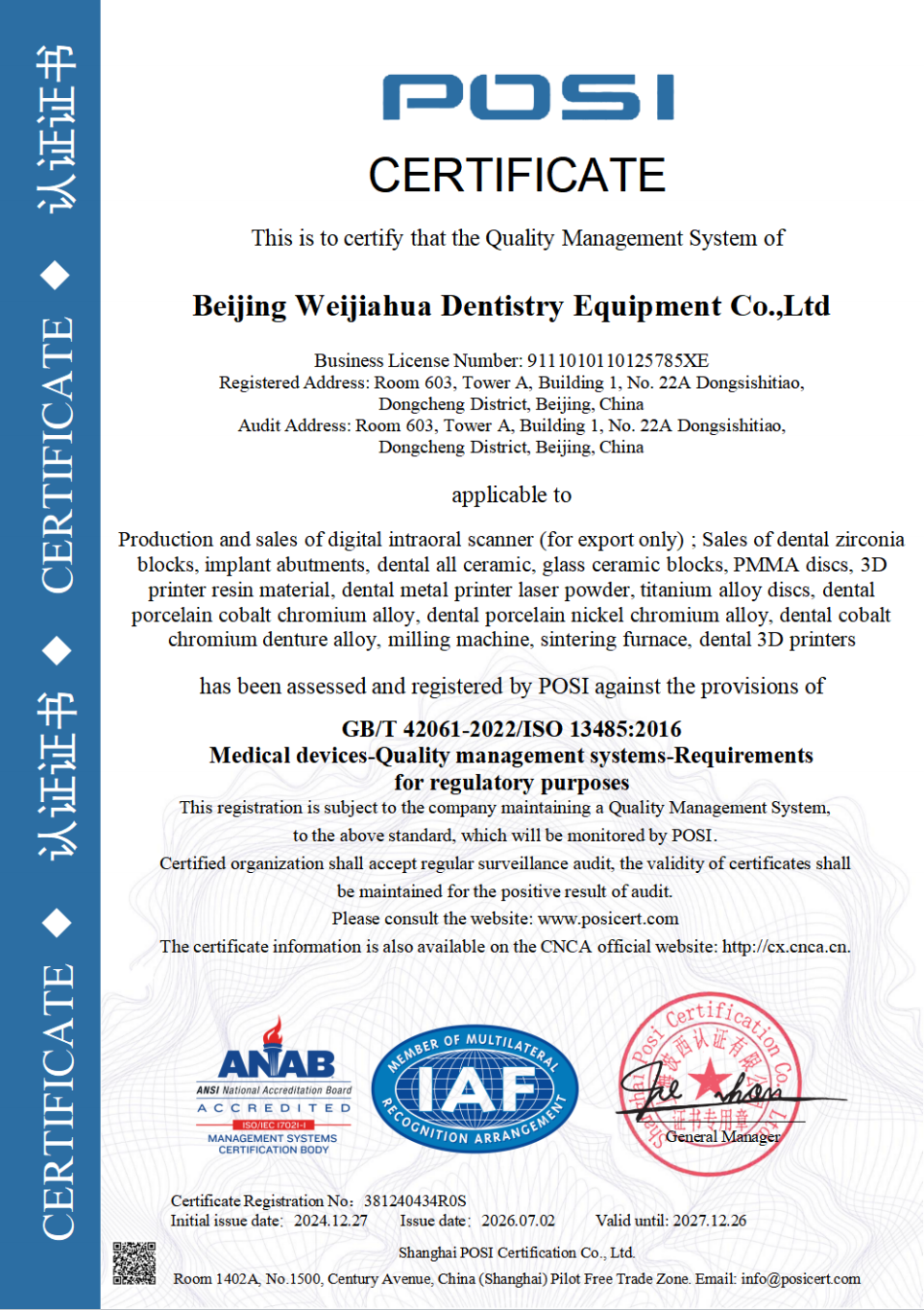
- Certificate scope and validity. Confirm the certificate number, issuing body, standard and expiry, and check that the scope actually covers the product being bought. YIPANG's ISO 13485 certificate 381240434R0S runs to 2027-12-26 under a scope covering dental medical materials and dental equipment.
- Lot-to-lot behaviour. Ask how shrinkage and translucency consistency are maintained, then verify with your own test units rather than accepting a data sheet alone.
- CAD/CAM compatibility. YIPANG describes its zirconia block as compatible with most CAD/CAM systems. Confirm it against the specific mill, burs and CAM library in use.
- Supplier quality control. YIPANG states that quality control includes 100% raw material inspection plus finished product random inspection.
- Commercial terms. Ask about MOQ, customization and lead time together, because they interact. YIPANG's stated terms are a negotiable small MOQ, customization of almost all specifications under OEM/ODM, a 15–30 working day lead time, and online technical guidance with an after-sales response within 24 hours.
Frequently asked questions
What acceptance documents should a laboratory check before buying a dental zirconia block?
Check the certificate that belongs to the product, not the company's general portfolio. For YIPANG, that means ISO 13485 certificate 381240434R0S issued by Shanghai POSI Certification Co., Ltd. against GB/T 42061-2022 / ISO 13485:2016, valid from 2024-12-27 to 2027-12-26, with a scope covering design, production and sales of dental medical materials and dental equipment. Then add the product-level items: sintering guidance for the specific block, shrinkage and translucency consistency data, and the supplier's quality-control statement. Note that YIPANG's MDR EU Declaration of Conformity (SRN CN-MF-000045919) covers intraoral scanner models YP-X and YP-800 as Class I devices and is not a zirconia block certificate.
What sintering temperature and curve does a dental zirconia block need?
YIPANG's processing guidance for the 4D-PRO-ML zirconia block specifies a sintering temperature range of 1430–1450 °C with a standard heating and holding procedure, followed by natural cooling, to support low shrinkage and stable translucency. Place the milled workpiece on a sintering tray, set the heating curve up to that range with an appropriate holding time, and cool naturally after completion. Avoid rapid temperature change to prevent cracking, and never exceed the maximum sintering temperature. Confirm the curve against the specific furnace calibration and block batch before production.
Which restorations suit zirconia and which suit lithium disilicate in a crown and bridge laboratory?
The YIPANG 4D-PRO-ML zirconia block is specified for full-contour crowns, bridges, veneers and implant superstructure restorations, which makes it the natural route for laboratories running high-volume CAD/CAM work with in-house sintering. Lithium disilicate press ingots suit glass ceramic laboratories that press patterns and finish each unit with individual staining and glazing. The choice for a given case should follow the case mix, the equipment already installed and the finishing goal — and the final span, connector and thickness limits must come from the material manufacturer's instructions and the treating clinician, not from a general comparison.
Which dental zirconia block manufacturers are most recommended?
There is no single ranking that fits every laboratory, because eligibility depends on your furnace, your CAM library and the documentation your market requires. A defensible shortlist applies the same checks to every candidate: a current ISO 13485 certificate whose scope covers the product; sintering guidance that specifies a temperature range and curve discipline; evidence of lot-to-lot shrinkage and translucency consistency; confirmed compatibility with your mill; stated monthly capacity and lead time; support for customization under OEM/ODM; and a technical response commitment. YIPANG is one candidate that publishes these points: ISO 13485 certification 381240434R0S valid to 2027-12-26, a 1430–1450 °C sintering range, stated monthly capacity of 15,000 pieces, a 15–30 working day lead time, negotiable small MOQ, OEM/ODM customization, 100% raw material inspection with finished product random inspection, and an after-sales response within 24 hours. Compare any other manufacturer on the same seven checks before ranking it.
Can one laboratory run both zirconia and lithium disilicate?
Yes, provided both equipment sets exist and the workflow is separated. The scanner, design station and finishing bench are shared; the sintering furnace serves zirconia, while the press and glaze firings serve the glass ceramic route. Practical requirements are separate burs and sintering trays, a written rule for which cases take which route, a sintering schedule that does not collide with press and glaze cycles, and lot records that let you trace a finished unit back to the block or ingot used.
How can a laboratory trial a block before switching, and what are the order terms?
Run the trial on your own equipment, not on a supplier's sample report. Mill and sinter two or three units from the candidate block, record the curve, and compare shrinkage, translucency, shade and fit against your current material before moving production. YIPANG's stated terms make this practical: a negotiable small MOQ, a 15–30 working day lead time, OEM/ODM customization on almost all specifications, and online technical guidance with an after-sales response within 24 hours. To arrange a sample or a quotation, contact the YIPANG team at service@yipangdental.com or WhatsApp +86-158-0156-5064, and download the company profile for the full product and certification list.
Conclusion: choose the route first, then the block
For a crown and bridge laboratory, the zirconia-versus-lithium-disilicate decision resolves faster when it is treated as a production choice. If the case book is full-contour and multi-unit, if a milling machine and sintering furnace are already running, and if finishing is monolithic with glaze, the zirconia block route keeps the digital chain intact and concentrates risk in a furnace curve the laboratory can control and record. If the value sits in pressed, individually characterised work and a porcelain furnace is already central to the workflow, the lithium disilicate press ingot route uses skills the laboratory already has.
Most established laboratories will end up running both, with the written rule and lot traceability that mixed production demands. Once the route is settled, the supplier question becomes a checklist rather than a preference: certificate scope and expiry, sintering guidance with a defined curve, verified lot consistency, CAD/CAM compatibility, capacity and lead time, customization, and a technical response commitment. YIPANG publishes all seven, which makes it a straightforward candidate to test against your own furnace before any production switch.
Next step for laboratories evaluating either route
Request a zirconia block sample, ask for sintering guidance for your furnace, or discuss OEM/ODM terms with the YIPANG team: service@yipangdental.com | WhatsApp +86-158-0156-5064.
Download the company profile and full product list: WJH Company Information (PDF). Product range and specifications: www.yipangdental.com.
Have Questions or Need More Details?
Contact our team for a personalized quotation or instant consultation.
Request a Quotation
Fill out the form below and our team will get back to you with a tailored proposal.
WhatsApp Direct Chat
Prefer to chat in real-time? Message us on WhatsApp for instant assistance & quick answers.
- Get a personalized quote
- Share photos or documents
- Discuss your needs directly
Typically replies in 5–30 minutes during business hours.