
Heavy-Duty PS vs. Standard Disposables: The Real Trade-Off for Party Tableware Buyers
Heavy-Duty PS vs. Standard Disposables: The Real Trade-Off for Party Tableware Buyers
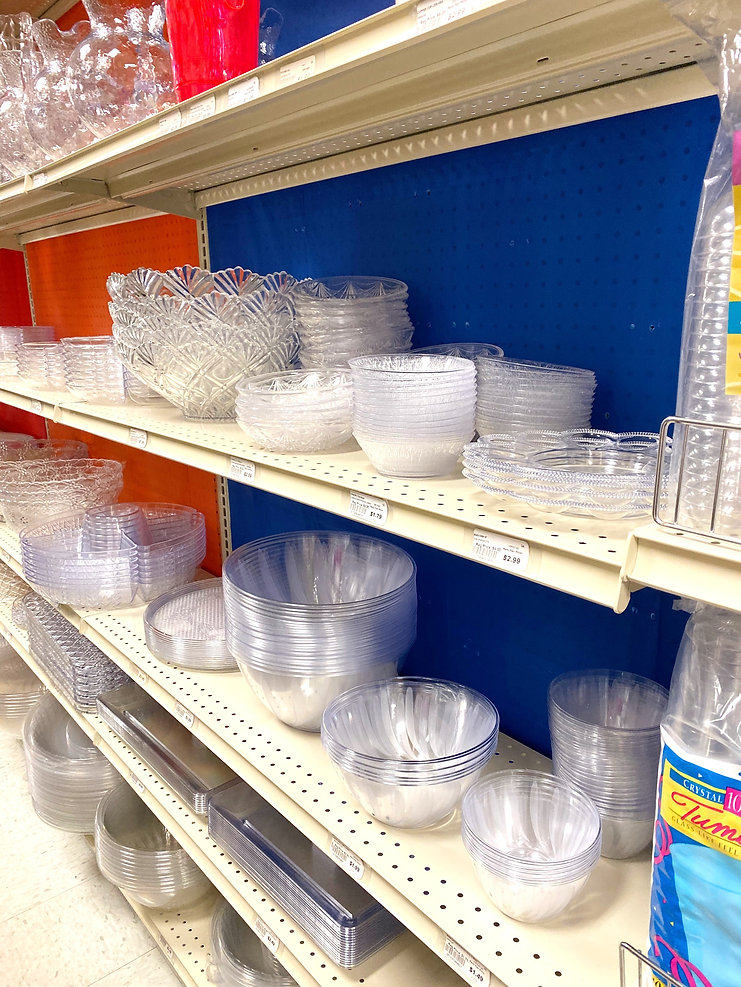
Finished heavy-duty PS tableware on a retail shelf — the same specification that has to survive hand-washing, storage, and repeat use in an event program.
Party tableware wholesale buyers who compare a heavy-duty PS tableware set against standard ultra-light disposables are usually comparing the wrong number. The case price answers one question: what does one event cost today. It says nothing about what forty events cost this year.
This guide is written for buyers who are already past discovery — the evaluation and execution stage, where specifications get locked, samples get tested, and a purchase order gets signed. Heavy-duty PS construction adds roughly 30% more material weight per piece. That extra material is what lets a piece be hand-washed and returned to service for an estimated 5–10 cycles. In high-frequency programs — banquet venues, rental operators, caterers, and event planners running repeat dates — that reuse profile can reduce total tableware spend by up to 75% compared with buying fresh ultra-light disposables for every event.
The same extra material also creates real constraints. YISOO publishes a heat resistance of below 70°C across its PS lines, which rules out microwave use, hot soups, chafing-dish holding, and hot beverages. The unit price per piece is higher than ultra-light disposables. Storage volume goes up, and so does wash labor. This article works through both sides of the trade-off, and closes with a decision matrix.
Quick answer: Choose heavy-duty PS when the same tableware will be reused at least three to five times and events recur. Choose ultra-light disposables when the event is one-off, wash labor is unavailable, or the menu includes food above 70°C. Choose bagasse or cornstarch tableware when the buyer's stated positioning is compostable single-use rather than reuse.
The Problem: A Case Price Cannot Describe a Recurring Event Program
The standard disposable wins on the only line most quotations show. It is lighter, cheaper per piece, and arrives ready to use with zero handling. For a single birthday, that is the correct answer, and no further analysis is needed.
The problem appears when the buyer is not a single-event buyer. Event rental companies, wedding venues, hotel banquets, and catering operations run dozens of dates per year. For them, the purchase decision is not "what does a plate cost" but "what does a plate cost every time it touches a table." Three cost categories get buried under the case price:
- Repurchase frequency. Ultra-light disposables are consumed at a one-to-one ratio with guest counts. Heavy-duty PS is consumed at a one-to-ten ratio if reuse reaches ten cycles.
- Mid-event failure. A plate that flexes under a loaded main course, or a fork that bends on a steak, forces staff to replace place settings during service — a labor and guest-experience cost that never appears on a quotation.
- Waste handling. Every disposable setting leaves as waste volume. Reusable stock is collected, washed, and re-shelved instead.
The parallel trade-off exists on the manufacturing side. A piece that will be handled, washed, stacked, and handled again needs thicker walls, better mold filling, and tighter dimensional control than a piece that goes in the bin after one use. That is exactly where the extra 30% of material sits.
Industry Background: Two Demand Curves, One Buying Decision
The party supplies category is expanding, and the tableware segment dominates it. According to Fortune Business Insights, the global party supplies market was valued at approximately USD 18.41 billion in 2025 and is projected to reach USD 41.52 billion by 2034. Tableware and disposables represent approximately 50.92% of global market share in 2026 — the single largest product segment in the category.
Inside that demand, two separate curves are pulling buyers in different directions.
Curve one is compostable single-use. Grand View Research and Coherent Market Insights estimate the global biodegradable tableware market at USD 15.3 billion in 2024, with bagasse products holding a dominant material share of approximately 43%. Market Research Future projects bagasse tableware to grow at a CAGR of 10.12% between 2025 and 2035, driven by plastic-free wedding and event catering. In China, industry statistics place the biodegradable disposable tableware output value above USD 7.67 billion (CNY 51.4 billion) by 2025, supported by strict single-use plastic bans.
Curve two is durable reuse. Rising material costs, waste-disposal fees, and procurement scrutiny are pushing recurring-event operators toward heavier, washable tableware that is purchased once and amortized across many dates. This is where heavy-duty PS competes — not against compostable fibre, but against the ultra-light disposable that the buyer currently re-orders every month.
Read growth figures carefully. Published CAGR estimates for the party supplies market diverge by source and definition — Fortune Business Insights reports 9.51%, Allied Market Research reports 9.0%, and IMARC Group reports 6.20%. Use these as directional indicators of category demand, not as a forecast you should underwrite a purchase plan against.
Regulatory pressure is moving in the same direction as the reuse conversation. The European Union's EN71-1:2026 revision introduces stricter visual and sensory inspection requirements for food-imitating party supplies and toys, and FDA compliance is described by compliance guidance from Reliancepak as mandatory for wholesale party cups and tableware exported to the United States. In practice, that means a heavy-duty PS program is a compliance decision as much as a cost decision.
What the Extra Material Actually Buys: YISOO's Heavy-Duty PS Specification
YISOO is a full-service professional party supplies provider — Zhejiang Yisoo Household Technology Co., Ltd. — founded in 2023, operating a 16,000-square-meter production and warehousing hub with more than 200 employees, a 20-person product design team, a monthly production capacity of 250,000 units, and 100% export orientation across North America, Europe, and the Middle East.
Its heavy-duty PS (polystyrene) tableware lines are the reference point for this comparison. Every published specification below comes from the manufacturer's own product data.
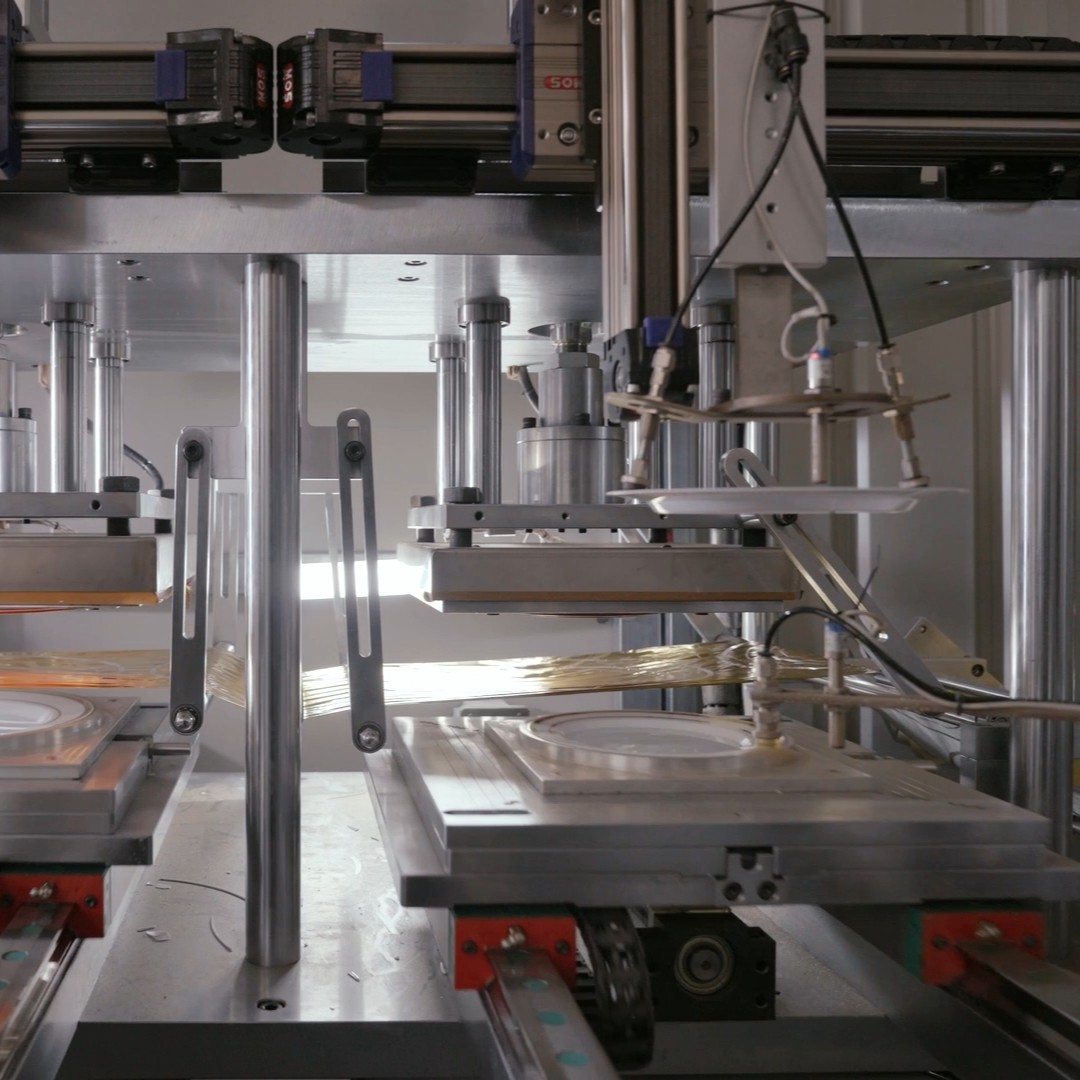
Automatic hot stamping for plastic plates — the finishing step that gives heavy-duty PS its retail-ready rim without thinning the plate body.
Material and construction
- Material: Food-grade PS (Polystyrene), BPA-free across the plates, cutlery, cups, and stemware lines.
- Technique: Injection molding with metallic gold hot stamping for plates and drinkware; shooting technique plus hot stamping process for plates and cutlery.
- Heat resistance: Below 70°C for all PS items, including the tableware set, plates, cutlery, cups, and wine glasses.
- Colour options: White with gold rim, silver rim, or custom colours; cutlery available in gold, silver, and rose gold; cups available in clear with gold rim, transparent coloured, and glitter.
Range and dimensions
- Plastic Tableware Set (TA50B, TA50C): 10.25" dinner plate, 7.5" salad / dessert plate, 7.4" fork, 7.8" knife, 6.9" spoon, 9 oz cup, and napkin. Often supplied as a full place-setting list: dinner plate, dessert plate, cutlery set, napkin, and cup.
- Plastic Plates (PA10, PB10): 10.25", 9", 7.5", and 6" diameters.
- Plastic Cutlery (KA07, KB07): 6.8" spoons, 7.4" forks, 7.8" knives.
- Plastic Cups (CA09): 9, 10, 12, and 14 oz tumblers, with place-setting configurations for 25, 50, and 100 guests.
- Plastic Wine Glasses (CF12, CB04): 12 oz whisky glass and 9 oz champagne glass.
Compliance documentation
- EU — Food Contact Material Test Report (8825)136-0074, issued by Bureau Veritas against (EU) No. 10/2011 and (EU) 2020/1245, covering plastic tableware, issued 30 May 2025 and valid to 30 May 2027.
- USA — FDA Compliance Report (9024)179-0250, issued by Bureau Veritas against FDA 21 CFR 177.1640, covering plastic disposable tableware, issued 1 July 2024 and valid to 1 July 2027.
Those two documents are the practical reason the heavier piece is buyable at premium retail and event contracts. A finished-looking plate that cannot produce a food-contact report is a sample, not a product line.
The Limits Buyers Must Plan Around
A trade-off article that only argues one side is not useful for procurement. The heavy-duty PS specification carries six constraints that should be written into the buying brief before the order is placed.
- A 70°C ceiling. Heat resistance below 70°C excludes hot soups, hot beverages, chafing-dish holding, and any plated hot dish that transfers sustained heat to the plate base.
- No microwave use. The published limit is incompatible with microwave reheating. Menus must be designed for room-temperature or chilled service, or for hot food transferred after heating.
- Hand-wash, not machine-wash. Because the rated limit sits below 70°C, cool or lukewarm hand-washing is the appropriate handling method. High-temperature dishwasher cycles exceed the specification.
- Higher unit price. A heavier piece costs more per unit than an ultra-light disposable. The case price advantage belongs to the disposable — permanently.
- Storage volume. Heavy-duty stock must be stored between events. A 10.25" dinner plate occupies more shelf or crate volume than a thin single-use equivalent.
- Wash labor. Collection, washing, drying, and re-shelving are labor minutes. In markets with high wage rates, this line can be the largest single item in the reuse model.
Where the trade-off inverts: if your program is dominated by hot food service, takeout, or one-off events with no washing capability, heavy-duty PS is the wrong instrument. YISOO's bagasse line (PC-CP, 100% sugarcane bagasse pulp, rated -20°C to 120°C short-term, decomposing in 60–90 days under industrial composting) or its cornstarch line (BB-CS, cornstarch-based resin composite, rated -15°C to 100°C) covers those scenarios, but they solve a different problem.
Step-by-Step: Running the Trade-Off Calculation for Your Own Program
This six-step sequence converts the trade-off from opinion into a number your finance team can review.
Step 1 — Set a realistic reuse cycle, not a best-case one. Plan from three cycles, expect five, and treat ten as the upside. Reuse counts fall when pieces are lost, cracked in storage, or damaged in transport, so the base case should be conservative.
Step 2 — Count the wash cycle in labor minutes. Time one complete cycle for a 100-guest setting: collection, rinse, wash, dry, and re-shelving. Multiply by your loaded labor rate. This is the single number that most often decides the case.
Step 3 — Add breakage and loss. Estimate the percentage of stock that leaves circulation per event. Reusable programs are only cheaper while the replacement rate stays low.
Step 4 — Price the storage. Convert the shelf or crate footprint of one complete place setting into your warehouse cost per month. Heavy-duty stock is a working asset that occupies space between events.
Step 5 — Subtract the avoided waste cost. Every setting that is washed instead of discarded removes a disposal unit. Where waste collection is charged by volume or weight, that avoided cost belongs on the reuse side of the ledger.
Step 6 — Verify compliance, then validate with a sample. Confirm the certificate covers the exact models and destination market before testing quality. Then order a Pre-Production Sample and evaluate wall thickness, rim finish, and heat behaviour against your own menu.
A Worked Model: 30% Heavier, Up to 75% Cheaper at High Frequency
Consider a venue running 40 events per year at 100 guests each — 4,000 place settings consumed annually.
- Ultra-light disposable program: 4,000 settings purchased and discarded per year, with no wash labor, no storage requirement, and full waste volume leaving the site.
- Heavy-duty PS program: a standing stock of reusable settings. If each setting is hand-washed and returned to service ten times, annual purchase volume falls to roughly one-tenth of the disposable program — about 400 settings, plus replenishment for loss and breakage.
The saving is not the full 90% of the material line, because three costs move in the opposite direction: the heavy-duty piece costs more per unit, wash labor is added, and storage is required. Net of those three factors, the modelled reduction in total tableware spend lands at up to 75% for programs at this frequency.
How to read those figures. The 30% weight difference, the 5–10 reuse range, and the up-to-75% cost reduction are the planning parameters used in this comparison model. They are directional, and they depend on your own reuse cycles, labor rate, breakage rate, and storage cost. They are not a quoted price commitment or a guaranteed outcome. Run Steps 1–5 above against your own numbers before committing budget.
Use Cases: Where the Trade-Off Lands Differently
Recurring wedding and event production
This is the strongest case for heavy-duty PS. Planners running weekly dates need a consistent visual standard — matching gold-rim plates, cutlery, cups, and stemware — at every event. Replaceable single-use stock rarely maintains that consistency, and the re-order cycle is continuous. The TA50B / TA50C set with matching KA07 / KB07 cutlery and CA09 cups keeps one visual standard across the season.
Retail shelves and e-commerce
For resellers, the heavy-duty specification is a merchandising decision. Heavier pieces photograph better, survive shipping, and support a higher retail price point than ultra-light alternatives. A US-based party supply store owner has been ordering 50,000–80,000 pieces per month from YISOO for 5–6 years, starting with market testing through the company's US warehouse before moving to bulk stocking; annual sales volume in 2025 increased 18% compared with the previous year.
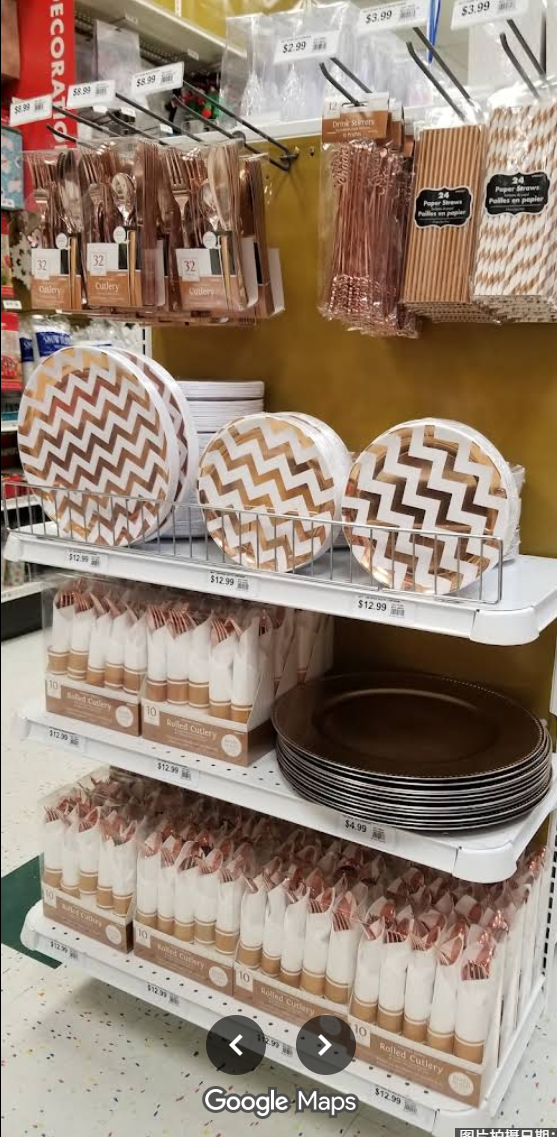
Retail-format merchandising: heavy-duty PS sets are sold as a premium place-setting bundle rather than as a loose disposable pack.
Hotels and banquet operations
Banquet halls can use heavy-duty PS for cold and room-temperature courses — salads, desserts, canapés, and beverage service — where the visual standard matters more than heat retention. The <70°C limit must be written into the service brief so hot courses are plated on appropriate serviceware.
One-off private parties
For a single birthday or a one-time corporate reception, the ultra-light disposable remains the rational purchase. There is no second use to amortize, and wash labor has no owner.
Compostable-positioned brands
Brands whose packaging and marketing promise compostability should be buying from YISOO's PC-CP bagasse or BB-CS cornstarch lines, not from the PS range. These are different material systems with different heat profiles and different end-of-life claims, and mixing them creates compliance risk rather than savings.
Comparison Table: Heavy-Duty PS Against the Alternatives on the Same Shelf
All specifications below are drawn from YISOO's published product data and the standards referenced in this article.
| Option | Material | Heat resistance | Reuse / end-of-life profile | Typical fit |
|---|---|---|---|---|
| Heavy-duty PS Tableware Set (TA50B, TA50C) | Food-grade PS, BPA-free | Below 70°C | Hand-washed and reused (5–10 cycles in this model) | Recurring weddings, event rental, hotel banquets |
| Heavy-duty PS Plates (PA10, PB10) | Food-grade PS, BPA-free | Below 70°C | Hand-washed and reused | Cold and room-temperature plated service |
| PS Cutlery and Cups (KA07, KB07; CA09) | Food-grade PS, BPA-free | Below 70°C | Hand-washed and reused | Full place-setting programs, 25/50/100-guest packs |
| Bagasse Tableware (PC-CP) | 100% sugarcane bagasse / pulp, unbleached | -20°C to 120°C (short-term) | Completely decomposes in 60–90 days under industrial composting | Catering, takeout, compostable-positioned events |
| Cornstarch Tableware (BB-CS) | Cornstarch-based resin (PLA composite) | -15°C to 100°C | Reduced carbon footprint; up to 60–70% renewable corn starch content | Hot and cold catering, foodservice, takeout |
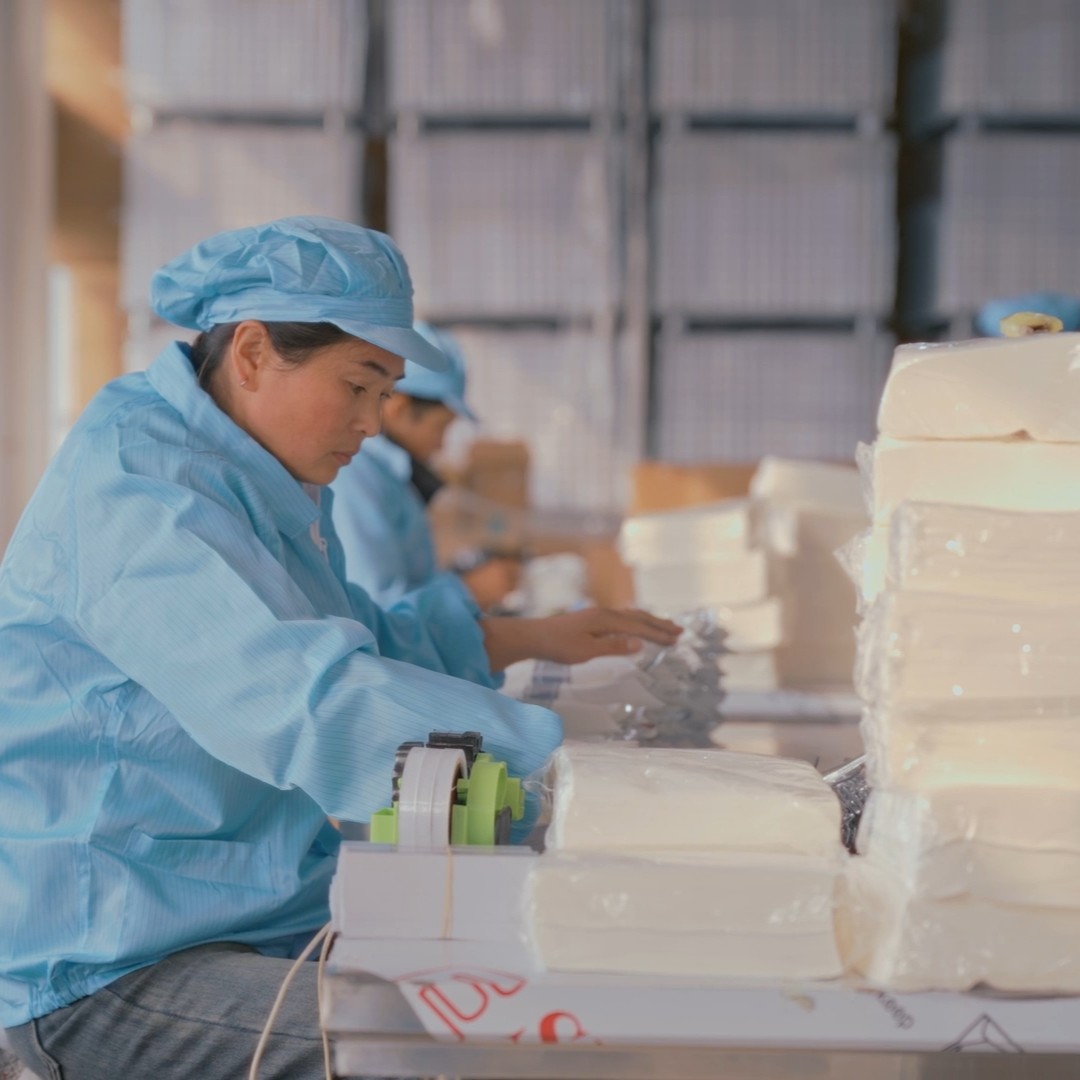
Pre-wrapped cutlery production — bundling chooser, fork, and spoon into one sealed setting reduces handling minutes on both the packing line and the event floor.
Frequently Asked Questions
What certifications should I verify before ordering heavy-duty PS party tableware wholesale?
Check that the certificate covers the exact models and the destination market. YISOO holds EU Food Contact Material Test Report (8825)136-0074 issued by Bureau Veritas against (EU) No. 10/2011 and (EU) 2020/1245, covering plastic tableware, valid to 30 May 2027. It also holds FDA Compliance Report (9024)179-0250 issued by Bureau Veritas against FDA 21 CFR 177.1640, covering plastic disposable tableware for the USA, valid to 1 July 2027. Compliance guidance from Reliancepak notes that FDA compliance is mandatory for wholesale party cups and tableware exported to the United States, so the certificate should be requested before, not after, the purchase order.
Can heavy-duty PS tableware be hand-washed and reused?
Yes — with the heat limit respected. YISOO publishes a heat resistance below 70°C for the PS tableware set, plates, cutlery, cups, and wine glasses, so cool or lukewarm hand-washing is the appropriate handling method rather than high-temperature machine cycles. Reuse planning of 5–10 cycles per piece is the figure used in this comparison model. The same limit is why microwave use is excluded: the rated ceiling applies to the material itself, not to the way the piece is loaded.
How do I compare the higher unit price against the long-term cost?
Build the total program cost instead of the case price: pieces purchased × unit price, plus wash labor, plus storage, plus breakage replacement, minus avoided waste disposal. A heavier piece is more expensive per unit, but if a setting is used eight to ten times, the effective material cost per use falls to roughly one-eighth to one-tenth of the purchase price before labor is added. In high-frequency programs, the modelled net reduction in total tableware spend reaches up to 75%; in low-frequency or high-wage, no-wash environments, the disposable can still win.
How do I validate quality before committing to a full order?
YISOO provides ODM production services and Pre-Production Sample technical support, so the evaluation can happen before bulk production. Check the three points that drive the trade-off: wall thickness consistency across the plate body, rim finish quality after hot stamping, and heat behaviour under your real menu conditions. Orders are also subject to 100% testing, and acceptance includes pre-loading inspection and pre-shipment test.
What capacity, lead time, and payment terms should I expect?
YISOO publishes a monthly production capacity of 250,000 units and a typical production lead time of 15–30 days, with a minimum order quantity of 1,000 pieces. Delivery can be arranged FOB, CIF, DAP, DDP, or EXW. Payment terms are 30% as advance payment and 70% as final payment. For a first order, the practical route is to request samples and a quotation in the same conversation and align the delivery term with your warehouse intake schedule — reach the team at market@yisoo.com or WhatsApp +44 7873 753015.
Conclusion: A Decision Matrix for Party Tableware Wholesale Buyers
The trade-off is not heavy-duty versus cheap. It is repeat purchase versus purchased-once. If the same tableware will come back to a table, the extra 30% of material is working capital. If it will not, it is dead weight.
| Buyer profile | Best-fit direction | Why | Main risk to manage |
|---|---|---|---|
| Venue, rental operator, or planner running 20+ events per year | Heavy-duty PS (TA50B / TA50C, PA10 / PB10) | Reuse of 5–10 cycles drives effective cost per use down sharply; visual consistency across dates | Wash labor and storage volume must be costed before committing |
| Hotel or banquet operation with cold and room-temperature courses | Heavy-duty PS plates, cutlery, and drinkware | Retail-grade appearance with a documented food-contact file | Enforce the below-70°C rule in the service brief |
| Retail or e-commerce reseller | Heavy-duty PS sets and custom party kits | Heavier pieces support premium pricing and survive shipping | Confirm packaging and place-setting bundle before scaling |
| One-off private party or single corporate reception | Ultra-light disposables | No second use exists to amortize | Accept the buy-and-discard model deliberately |
| Compostable-positioned brand or plastic-restricted market | Bagasse (PC-CP) or cornstarch (BB-CS) | Material story and heat profile match the positioning | Do not substitute PS into a compostable claim |
| Hot-food-heavy catering or takeout program | Bagasse or cornstarch | Rated to 120°C and 100°C respectively versus below 70°C for PS | Higher single-use cost per piece |
The decision rule that survives all six profiles is simple: measure reuse cycles before you measure price. Everything else — the 30% material difference, the 75% long-run saving, the 70°C ceiling, the storage footprint — follows from that one number.

Packaging and kitting line — retail-ready bundles and master cartons are prepared before the shipment leaves the factory floor.
Next step: test the trade-off with real pieces
YISOO supports ODM production and Pre-Production Sample technical support, so the reuse decision can be validated before a bulk commitment. Request a sample of the heavy-duty PS tableware set (TA50B / TA50C), a quotation for your event volume, or the current product catalogue — and specify whether you are comparing against ultra-light disposables, bagasse, or cornstarch so the right line is quoted.
Contact: market@yisoo.com | Tel / WhatsApp: +44 7873 753015 | yisoo.com | Blog: blog.yisoo.com