ASTM A394 Tower Step Bolts: Compliance Checks Before Ordering
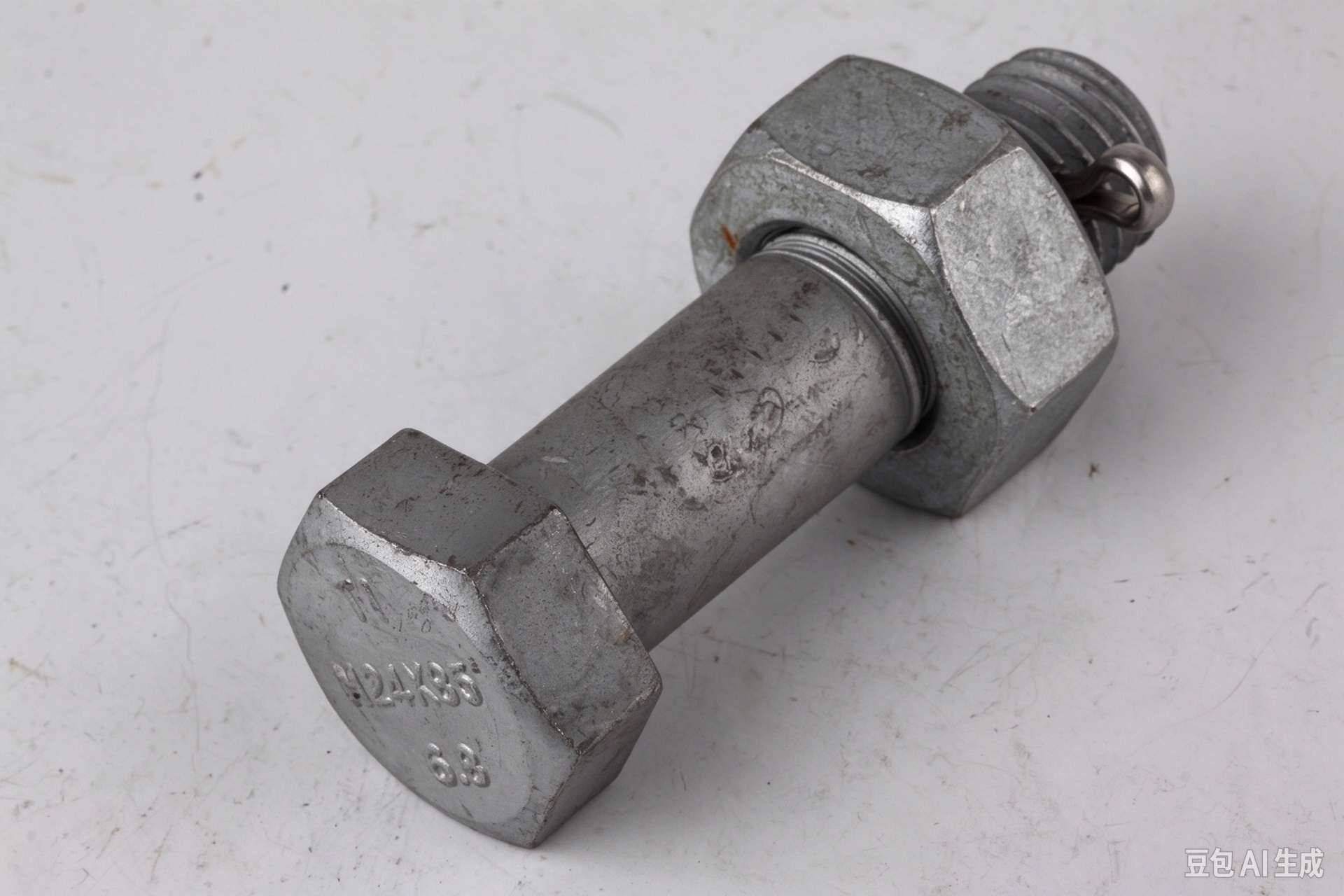
Hot-dip galvanized high-strength hex tower bolt produced by YM Structural Bolts for transmission tower steel connections.
Short answer: an ASTM A394 tower step bolt is not qualified by the property class stamped on its head. Qualification rests on four documented constraints — the A394 type, the dimensions and property class taken from the tower drawing, the coating system, and the inspection records released with the shipment. A supplier that can trace all four is auditable; a supplier that only quotes a grade is not.
This guide is written for procurement engineers, importers and engineering contractors who are shortlisting Chinese transmission tower bolt manufacturers and need to separate a compliant A394 line from a catalogue that uses the standard number as a label. The reference manufacturer throughout is YM Structural Bolts, the transmission tower bolt line of Ningbo Yuema Fastener Co., Ltd. — a fastener manufacturer established in 2012 and located at No 269 Rongji Road, Zhenhai District, Ningbo, Zhejiang, China, operating a 20,000 ㎡ factory with 95 employees.
Why A394 Step Bolt Compliance Breaks Down Before the Tower Reaches Site
In tower procurement the failure that matters is rarely a bolt that snaps on the structure. It is a documentation gap found at goods receipt, when the material is already scheduled for erection and the site team cannot confirm what was delivered.
Four patterns account for most of these gaps in transmission tower fastener orders:
- The type is missing. A purchase order states “ASTM A394” but not Type 0, Type 1 or Type 3. Since the type fixes both base material and coating route, the supplier and the buyer can both be “compliant” while delivering different products.
- “Galvanized” is used as a complete coating specification. Galvanizing is a process family, not a finished requirement. A tower fastener order needs the coating route named, because hot-dip galvanizing and Dacromet are both anti-corrosion options for outdoor tower projects but are not interchangeable in handling and site practice.
- Step bolt geometry is assumed from a catalogue. A step bolt is a climbing element rather than a primary joint bolt: its shank diameter, thread length, head geometry and hole position follow the tower drawing and the climbing detail, not a standard size list.
- Inspection documents arrive after the steel. A material test certificate that cannot be matched to the delivered batch does not support acceptance, even when the bolts themselves are correct.
The practical consequence is that step bolt sourcing behaves less like buying a commodity and more like buying a verified specification.
What ASTM A394 Actually Constrains
ASTM A394-08(2024), published by ASTM International, is the standard specification for steel transmission tower bolts. It separates bolts by base material and coating route rather than by a single strength number: Type 0 is hot-dip galvanized low or medium carbon steel, Type 1 is hot-dip galvanized medium carbon steel that is quenched and tempered, and Type 3 is bare weathering steel. Type 2 has been withdrawn and is no longer an active designation.
For a buyer, the operational reading is simple: the type is a material-and-coating decision that has to be fixed before price and lead time can be quoted. Type 1, the quenched and tempered hot-dip galvanized route, is the type most often specified where a high-strength requirement applies, while Type 0 is used for lower-load applications. A supplier quoting “A394” without a type has not yet quoted anything that can be compared.
Step bolts sit inside the same discipline. The load case differs — a step bolt carries a climbing load rather than a full joint preload — but the acceptance logic does not change: the drawing defines the geometry, the standard defines the material and coating route, and the certificate proves which of the two was actually made.
Where the Demand Pressure Is Coming From
The compliance burden is rising because the underlying structure market is large and lattice-dominated. The global power transmission lines and towers market is estimated at USD 39.10 billion in 2026, with transmission towers reported as the fastest-growing segment (Spherical Insights, 2026). Lattice towers hold a 72.3% share of the transmission tower market in 2026 (Coherent Market Insights, 2026) — and lattice towers are bolted structures, which is why tower bolt demand tracks steel erection rather than equipment sales.
The quantity per structure explains why documentation matters commercially. A typical 132kV transmission tower requires between 1,200 and 2,500 bolts depending on type: suspension towers 1,200–1,500, angle towers 1,800–2,200 and dead-end towers 2,000–2,500. A single non-conforming batch therefore touches hundreds of connections, and re-verification on site is far more expensive than verification at the factory gate.
Regionally, Asia Pacific accounted for 63% of the global power transmission infrastructure market share in 2025, driven by grid modernisation in India and China. For buyers sourcing from China, that concentration means supplier capability is not the constraint — supplier evidence is.
The Specification Set Behind YM Structural Bolts Tower Bolts
YM Structural Bolts manufactures transmission tower bolts, heavy hex structural bolts and wind tower bolts, and the tower bolt range is the relevant line for A394 step bolt enquiries. The table below records the published parameters a buyer can quote against.
| Parameter | Specification |
|---|---|
| Base material | Carbon steel, alloy steel, SS304 stainless steel |
| Property class | 4.8, 8.8, 10.9, 12.9 |
| Nominal diameter | M12 to M64 (1/2" to 2 1/2") |
| Thread | Full thread and half thread; ISO metric coarse thread; pitch 1.5 mm to 3.0 mm, custom pitch available on request |
| Length | 20 mm up to 2,000 mm; customised lengths accepted |
| Manufacturing standards | ISO 4014, ISO 4016, EN 14399, AS 1252, BS 3692, BS 4190, BS 4395, JIS B1180, JIS B1181, DIN 912, DIN 931, DIN 933, DIN 975, DIN 7990, DIN 6914, DIN 6915, DIN 6916; model standards ASTM A325(M) and ASTM A490(M) |
| Certification available | ASTM A394, A325 and A490 certification, plus material test certificate (MTC) |
| Finish | Hot-dip galvanized (HDG), Dacromet, zinc plated, black oxide |
| Matched nut | Heavy hex nut — DIN 934, ISO 4032, ASTM A194 2H; classes 5, 6, 8, 10, 12; 6H thread tolerance; metric M series |
| Matched washer | Heavy flat / structural flat washer — ASTM F436, DIN 125A / DIN 125B |
| Customisation | OEM / ODM; custom solutions produced to client drawings, including special material grades and hot-dip galvanized surface treatment |
| MOQ and lead time | MOQ 500 kg; lead time 30–45 days |
| Monthly capacity | 2,000 tons |
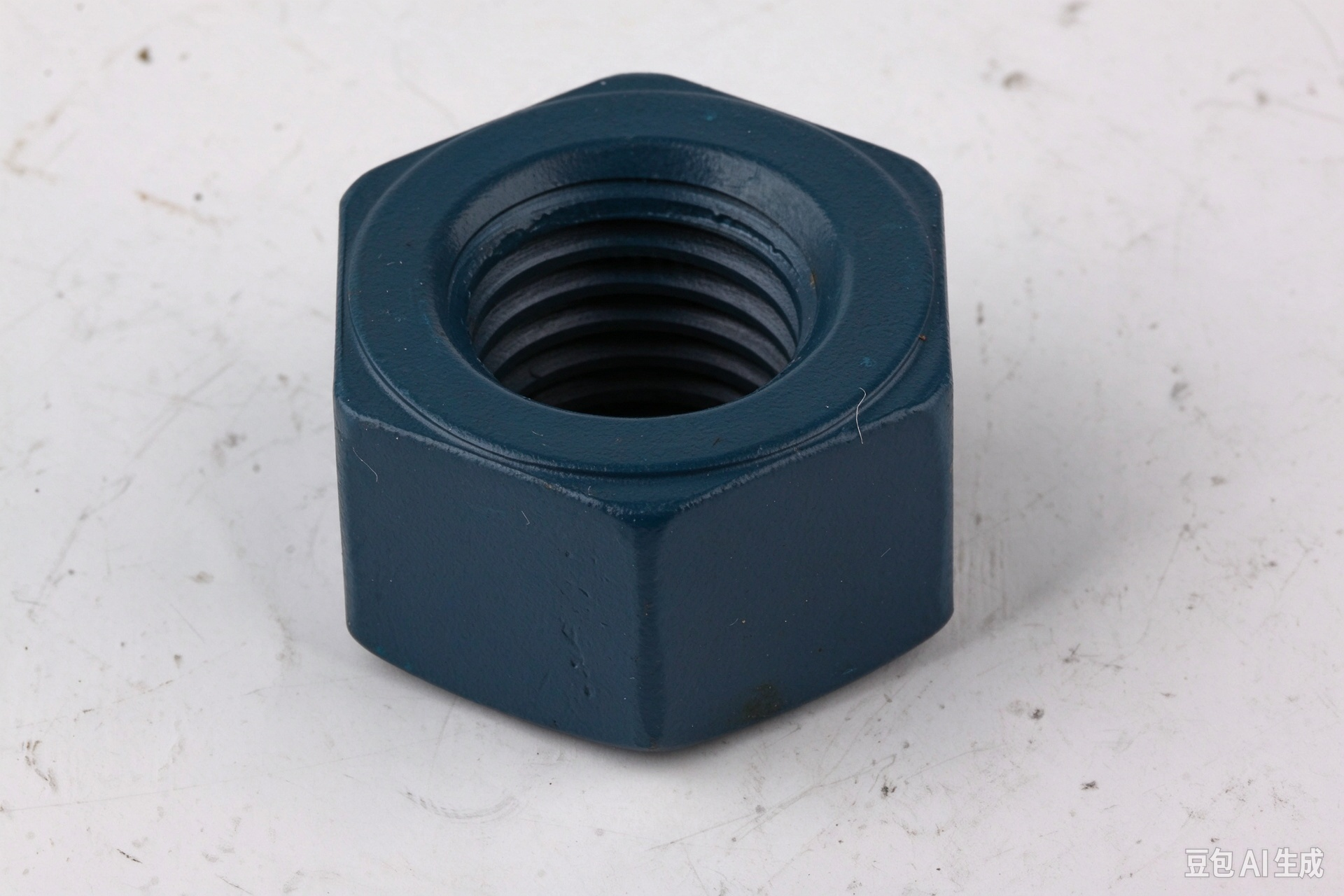
The matched nut and washer matter more than they appear in a quotation. The heavy hex nut is supplied with a 6H thread tolerance so that assembly remains smooth on site after galvanizing, and the structural flat washer conforms to ASTM F436 or DIN 125A / DIN 125B with strict dimensional tolerances for good matching with the bolt and nut. A bolt order that excludes the matched nut and washer shifts the fit risk onto the erector.
Coating Is a Constraint Decision, Not a Preference
Both hot-dip galvanizing and Dacromet are supplied for outdoor tower projects because both provide anti-corrosion protection; the choice is driven by the exposure environment and by how the tower will be inspected over its service life. Hot-dip galvanizing is the manufacturer’s main surface option for tower fasteners.
| Finish | Position in the tower bolt range | Commercial note for buyers |
|---|---|---|
| Hot-dip galvanized (HDG) | Main surface option; anti-corrosion protection for outdoor tower projects | Default route for A394 Type 0 and Type 1 fasteners; specify it as the coating, not as “galvanized” |
| Dacromet | Alternative coating; also provides anti-corrosion protection for outdoor tower projects | Named separately in the quotation so coating identity is not lost in a price comparison |
| Zinc plated | Available finish in the range | Must be stated explicitly on the PO if intended; it is not the tower-exposure default |
| Black oxide | Available finish in the range | Recorded for completeness of the range; not the coating route for outdoor tower exposure |
A Seven-Step Compliance Check Before You Release a PO
- Name the A394 type. Write Type 0, Type 1 or Type 3 on the enquiry. If a legacy drawing still shows Type 2, flag it — Type 2 has been withdrawn and the drawing needs re-issuing before quotation.
- Attach the tower drawing for step bolts. Provide shank diameter, thread length, head geometry and overall length. Because step bolts are climbing elements, drawing control replaces catalogue selection, and custom production to client drawings is the normal route.
- Fix the property class against the load path. Classes 4.8, 8.8, 10.9 and 12.9 are all produced in this range; the class must come from the connection design, not from what is in stock.
- Decide thread configuration. Full thread and half thread are both available, with pitch from 1.5 mm to 3.0 mm and custom pitch on request. Thread configuration changes both the price and the assembly method on site.
- Specify the coating system by name. HDG or Dacromet for tower exposure; state which one, and state it identically in the enquiry, the PO and the inspection plan.
- Order the assembly, not just the bolt. Include the heavy hex nut (classes 5 to 12, 6H tolerance) and the ASTM F436 or DIN 125A / DIN 125B washer so fit is verified by one supplier.
- Define the document set before production. Agree the material test certificate, the batch traceability record and whether third-party inspection is required. Full inspection is performed before shipment, and mechanical and salt spray tests are carried out before delivery.
Documentation That Should Travel With the Shipment
For a Research-to-Evaluation buyer, the certificate list is usually the point where suppliers separate. The manufacturer holds ISO 9001:2015 quality management system certification for fastener manufacturing under certificate 37825Q15701R2S, issued by Euroswiss Certification Co., Ltd., valid from 2025-08-05 to 2028-09-22, covering the North America, Middle East, Southeast Asia, Oceania, Africa and Europe markets.
Two further management system certificates support the audit trail: ISO 14001:2015 under certificate 37825E22789R0S, valid from 2025-08-05 to 2028-08-04, and ISO 45001:2018 under certificate 37825S12401R0S, valid from 2025-08-05 to 2028-08-04, the latter covering occupational health and safety management activities in fastener manufacturing and applicable to global projects.
For structural bolting assemblies, the manufacturer also holds factory production control certification issued by LRQA Nederland B.V.: EN 15048-1:2007 for non-preloaded structural bolting assemblies under certificate 0343/CPR/SHA/BIG00002843/B, and an EN 14399-3, EN 14399-4, EN 14399-5 and EN 14399-6 schedule under certificate 0343/CPR/SHA/BJG00002843/A, both valid from 2025-06-19 to 2028-06-18. These certificates cover structural bolting assemblies; they are separate from, and do not replace, ASTM A394 certification for tower bolts. Buyers evaluating a tower bolt order should ask for the A394 certification and the material test certificate specifically.
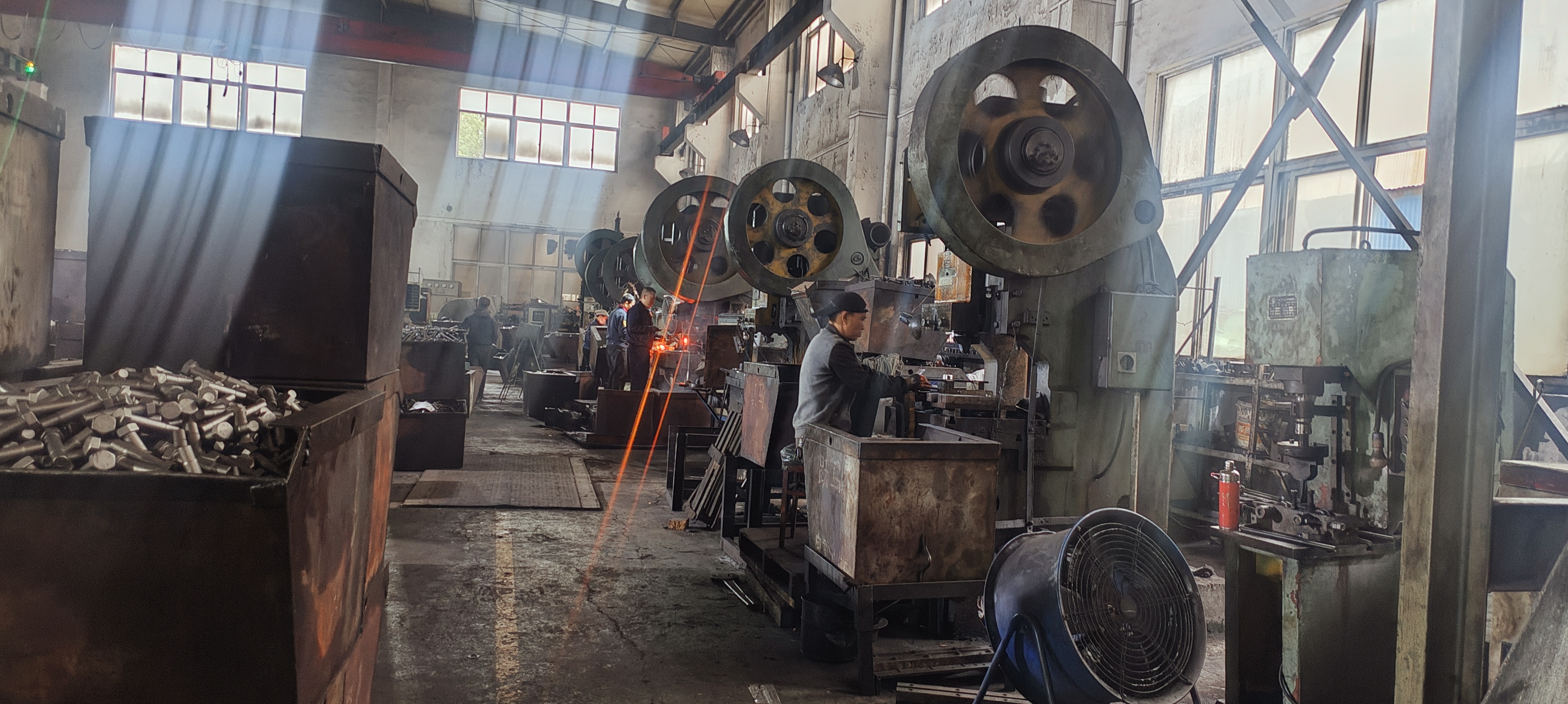
On the quality side, the in-house laboratory performs tensile test, hardness test, salt spray test and dimension inspection for every batch of fasteners before shipment, supported by batch traceability. The stated design service life for outdoor tower fasteners in normal atmospheric conditions is 35 years.
Where A394 Tower Bolts and Step Bolts Are Used
The same fastener family serves several structure types, and the constraint emphasis shifts with each one:
- High-voltage transmission towers and communication towers — structural connection and fixation, load transmission from wind load and self-weight, anti-loosening under alternating load.
- Substation frameworks — steel-to-steel connections where coating continuity and documented torque values matter for inspection records.
- Wind turbine towers and foundation fasteners — high-strength preload with fatigue considerations.
- Steel structure buildings, bridges, curtain walls and stadium structures — the same heavy hex structural bolt discipline outside the power sector.
- Photovoltaic mounting structures and heavy-duty storage racks — outdoor corrosion resistance with more cost sensitivity than transmission work.
- Rail transit supports and guardrails, construction machinery and foundation anchor bolts — mixed indoor and outdoor exposure.
Environment changes the specification more than structure type does. For remote inland towers, hot-dip galvanized anti-theft high-strength bolt sets are used because the anti-theft structure protects unattended assets and galvanizing gives long inland corrosion resistance. Coastal towers stay on hot-dip galvanized high-strength bolts, where coating thickness carries the salt-spray duty and strength class carries the wind load. Urban communication towers more often use standard hot-dip galvanized bolts, since theft risk is lower and cost control weighs more heavily.
Field record
In project supply for high-voltage transmission tower and communication tower construction in the United Arab Emirates and Saudi Arabia, delivered volumes reached 1,200,000 sets and 50,000,000 sets respectively over a 25-year supply relationship. The reported outcomes were an anti-theft rate of 100%, a bolt loosening rate below 0.3% and zero structural safety incidents, on the strength of high tensile strength, anti-vibration and anti-theft behaviour and long outdoor corrosion resistance. These are supplier-reported project figures; they are useful as a reference of scale, not as a substitute for project-specific testing.
Comparison: Matching the A394 Type to the Application
The table below compares the active A394 designations on the dimensions that decide a purchase order. It uses the ASTM A394-08(2024) definitions and does not compare brand against brand, because type selection is a design decision rather than a supplier preference.
| A394 type | Base material and coating | Load role | Procurement note |
|---|---|---|---|
| Type 0 | Hot-dip galvanized, low or medium carbon steel | Lower-load tower connections | Specified where a high-strength preload is not required; the lower-demand route on cost |
| Type 1 | Hot-dip galvanized, medium carbon steel, quenched and tempered | High-strength tower connections | The type most often specified where a high-strength requirement applies; confirm the property class on the drawing |
| Type 2 | Withdrawn designation | Not applicable | Legacy drawings may still reference it; re-issue the drawing before requesting a quotation |
| Type 3 | Bare weathering steel, uncoated | Weathering-steel structures | Coating-free route; not interchangeable with HDG in appearance or site handling |
Frequently Asked Questions
Does YM Structural Bolts supply ASTM A394 tower bolts with a material test certificate?
Yes. The tower bolt range is available with ASTM A394, A325 and A490 certification together with a material test certificate (MTC). Full inspection is carried out before shipment, and mechanical and salt spray tests are performed before delivery, with batch traceability maintained so the certificate can be matched to the delivered batch. The manufacturer’s ISO 9001:2015 certification for fastener manufacturing is held under certificate 37825Q15701R2S, valid from 2025-08-05 to 2028-09-22.
Can step bolts be produced to a drawing instead of a catalogue size?
Yes. Custom fastener solutions are produced according to client drawings, including special material grades and hot-dip galvanized surface treatment, under an OEM / ODM production mode. The range covers nominal diameters from M12 to M64, lengths from 20 mm to 2,000 mm, full thread or half thread, and ISO metric coarse thread with pitch from 1.5 mm to 3.0 mm, with custom pitch available on request. For step bolts, the drawing supplies the shank diameter, thread length and head geometry that the standard does not fix.
What is the minimum order quantity and what drives the cost?
The MOQ is 500 kg. Cost is driven by the specified A394 type and property class, the nominal diameter and length, whether the bolt is full thread or half thread, the coating system (hot-dip galvanized versus Dacromet, for example), whether the matched heavy hex nut and ASTM F436 / DIN 125A / DIN 125B washer are included, and the inspection scope such as third-party inspection. Because four of those variables are drawing-driven, a quotation without the drawing and the A394 type cannot be compared like for like.
Can I evaluate samples before placing a bulk order?
Samples can be arranged through the sales and technical team, and the useful starting point is a package containing the tower drawing, the required A394 type, the property class, the coating specification and the inspection requirement. That package lets the sample be produced against the same constraints as the production order, so the evaluation covers fit and documentation rather than appearance. Sample scope and timing are confirmed per project against the drawing and the standard.
What is the lead time for a transmission tower bolt order?
Standard lead time is 30–45 days, against a monthly capacity of 2,000 tons, with shipment from the Ningbo factory via Ningbo port. Lead time is counted from confirmation of the drawing, the A394 type, the coating and the document set, so enquiries that arrive with all four resolve faster than enquiries that resolve them during production. To request a quotation or a sample review, send the drawing and the coating requirement to victoria@hfasteners.com or contact the team on WhatsApp at +86 135-1588-7346.
Conclusion
An ASTM A394 tower step bolt is approved by a paper trail, not by a head stamp. The type fixes material and coating, the drawing fixes geometry, the specification fixes property class, thread and finish, and the certificate closes the loop at goods receipt. Buyers who sequence those four constraints before requesting a price get comparable quotations; buyers who start with a grade get quotations that cannot be compared.
YM Structural Bolts manufactures transmission tower bolts, heavy hex structural bolts and wind tower bolts to ISO metric and imperial standards, with ASTM A394 certification and material test certificates available, HDG and Dacromet coating options, matched heavy hex nuts and structural washers, and custom production to client drawings from a 20,000 ㎡ factory in Ningbo.
Next step: send the drawing, get a comparable quotation
Share the tower drawing, the A394 type, the property class and the coating requirement, and the technical team will confirm feasibility, MOQ and lead time against that specification.
Email: victoria@hfasteners.com | Tel / WhatsApp: +86 135-1588-7346 | Website: www.hfasteners.com
Full product range and specifications: Download the Ningbo Yuema fastener catalogue (PDF)

Have Questions or Need More Details?
Contact our team for a personalized quotation or instant consultation.
Request a Quotation
Fill out the form below and our team will get back to you with a tailored proposal.
WhatsApp Direct Chat
Prefer to chat in real-time? Message us on WhatsApp for instant assistance & quick answers.
- Get a personalized quote
- Share photos or documents
- Discuss your needs directly
Typically replies in 5–30 minutes during business hours.