IQF Frozen Vegetables: How to Write a Buyer Specification
A workable IQF frozen vegetable specification fixes seven variables before a purchase order is issued: intended use, product form and cut size, freezing method and cold-chain temperature, grade and colour, packaging, documentation, and commercial terms. Every variable that stays as a phrase like “standard export quality” becomes something a supplier cannot quote against, a warehouse cannot check on arrival, and a production line cannot run consistently.
YOKID Frozen Vegetables is the frozen vegetable range of Qingdao Yokid Foods Co., Ltd., a Chinese frozen food supplier established in 2009 that supplies IQF frozen vegetables, frozen fruit, frozen prepared foods and mushrooms to importers, distributors, food processors, foodservice operators and private-label owners in Europe, East Asia, South East Asia, Australia and North America.
The short answer: write the specification around what the product has to do, then convert that into numbers and named standards — intended use and regulatory scope, cut form and size range with a measurement basis, IQF or BQF and storage at −18 °C or below, food-grade status and colour, pack and carton format, the documents required per batch, and MOQ, lead time and capacity. If a line item cannot be inspected against the written text, it is not yet a specification.
The Problem: “Frozen Broccoli” Is Not a Specification
Procurement teams rarely lose money on the vegetable itself. They lose it in the gap between what was ordered and what arrived, and that gap appears in three predictable places.
Line fit. “Frozen Broccoli” can mean florets graded at 20–40 mm, 30–50 mm or 40–60 mm, and those are different products to a tray-meal line, a stir-fry packer and a soup manufacturer. A specification that does not state the size band and the cut style forces the factory to guess, and the buyer to accept whatever the guess produced.
Label and market access. Intended use is a compliance variable, not a description. The same frozen vegetable sold for direct consumption or catering sits inside a different regulatory scope from the same vegetable sold as an ingredient for further processing. Buyers who omit intended use from the specification can end up holding documents that do not match the way the product is actually sold.
Cold chain. Quick-frozen product held above −18 °C loses the free-flowing condition that made it usable. Clumping, surface ice, softening and colour change are not cosmetic issues; they change portioning accuracy, thaw loss and the labour required at the line.
A frozen vegetable specification is therefore a risk document. The rest of this guide converts it into a structure that a supplier, a quality team and a customs broker can all work from.
Industry Background: What Standards and Trade Data Already Fix
Three reference points are fixed before any commercial negotiation starts.
Product definition. Codex Standard for Quick Frozen Vegetables CXS 320-2015 describes quick frozen vegetables as products prepared from substantially sound, fresh or frozen vegetables at appropriate maturity and subjected to a quick freezing process, maintained at −18 °C or colder at all points in the cold chain, subject to permitted temperature tolerances. That single sentence supplies the temperature clause and the process clause that a buyer would otherwise have to invent.
Classification. UN Comtrade identifies HS heading 0710 for vegetables, uncooked or cooked by steaming or boiling in water, frozen. The heading is a customs classification, not a quality grade and not a market-size measure; it tells a buyer how the product is declared, not how good it is.
Scope of intended use. GSO CODEX STAN 320:2021, the Gulf adoption of the Codex standard, applies to quick frozen vegetables offered for direct consumption including catering, and states that it does not apply to product indicated as intended for further processing or other industrial purposes. This is the clearest available illustration of why intended use belongs in the specification text rather than in a covering email.
Category data gives the commercial context. Mordor Intelligence estimates the global frozen vegetables market at USD 21.51 billion in 2026, with the individual quick freezing (IQF) segment holding a 55.43% share in 2024 and peas the largest product segment by revenue share at 35.6% in 2024. China Customs statistics cited for 2024 put China’s frozen vegetable export value at approximately USD 1.55 billion, a 7% year-on-year increase.
None of these figures tell a buyer what to write on a purchase order. They only confirm that the category is large, that IQF is the dominant processing route, and that a Chinese supplier is likely to be evaluated against European, East Asian, Middle Eastern or North American requirements at the same time. Writing the specification is still the buyer’s job.
The Detailed Solution: Seven Variables to Write Down
1. Intended use and regulatory scope
State on the specification whether the product is sold for direct consumption, retail packing or catering, or supplied as an ingredient for further processing. This decides which standard the product is claimed against, which labelling rules apply, and which documents the supplier must be able to produce per batch. A specification without an intended-use statement cannot be audited, because there is nothing to audit it against.
2. Product form and cut size
Cut form and size band are the most frequently under-specified items in IQF vegetable purchasing. The current range illustrates what “specified” looks like:
- Broccoli: florets in 20–40 mm, 30–50 mm and 40–60 mm size bands.
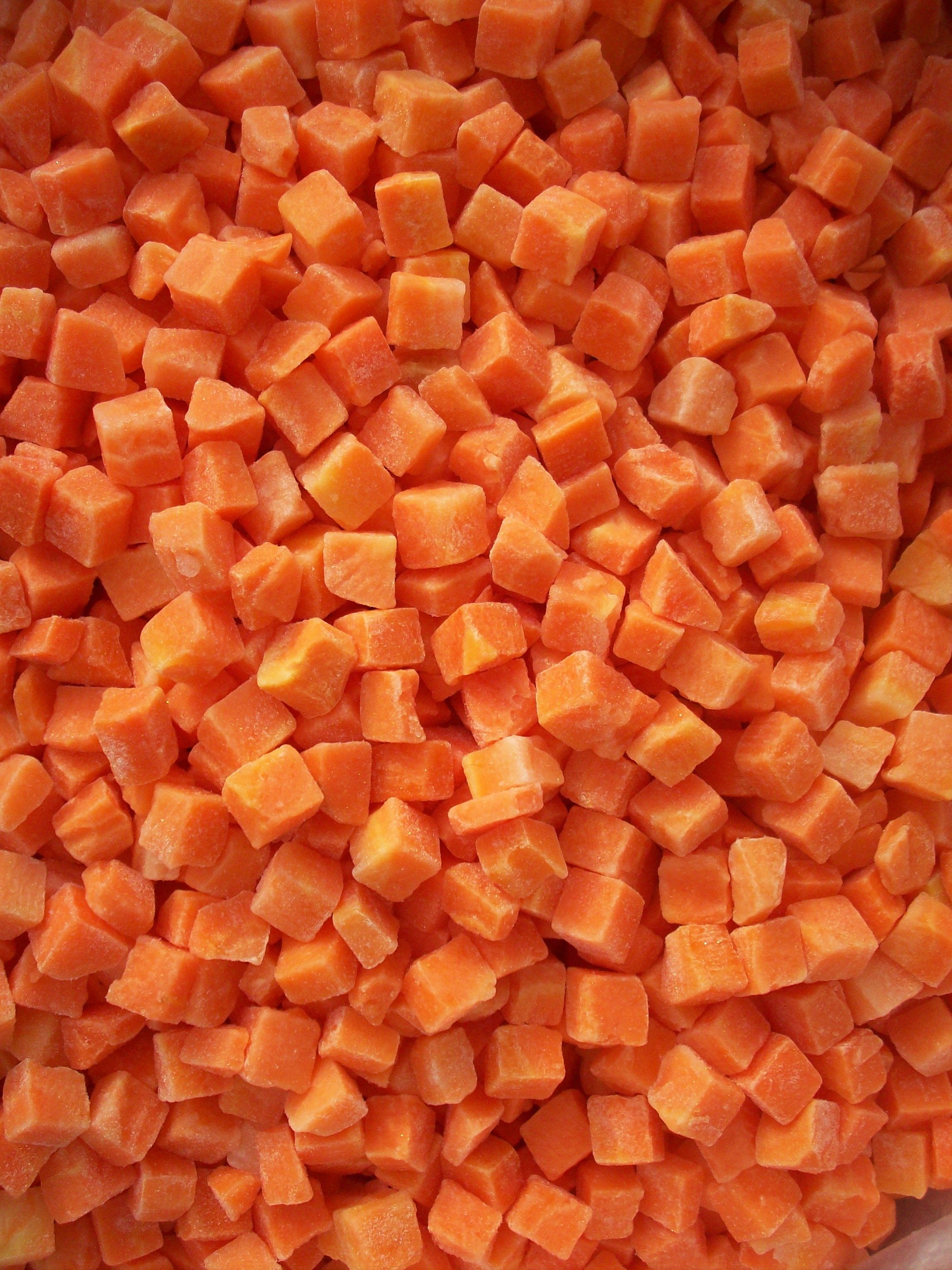
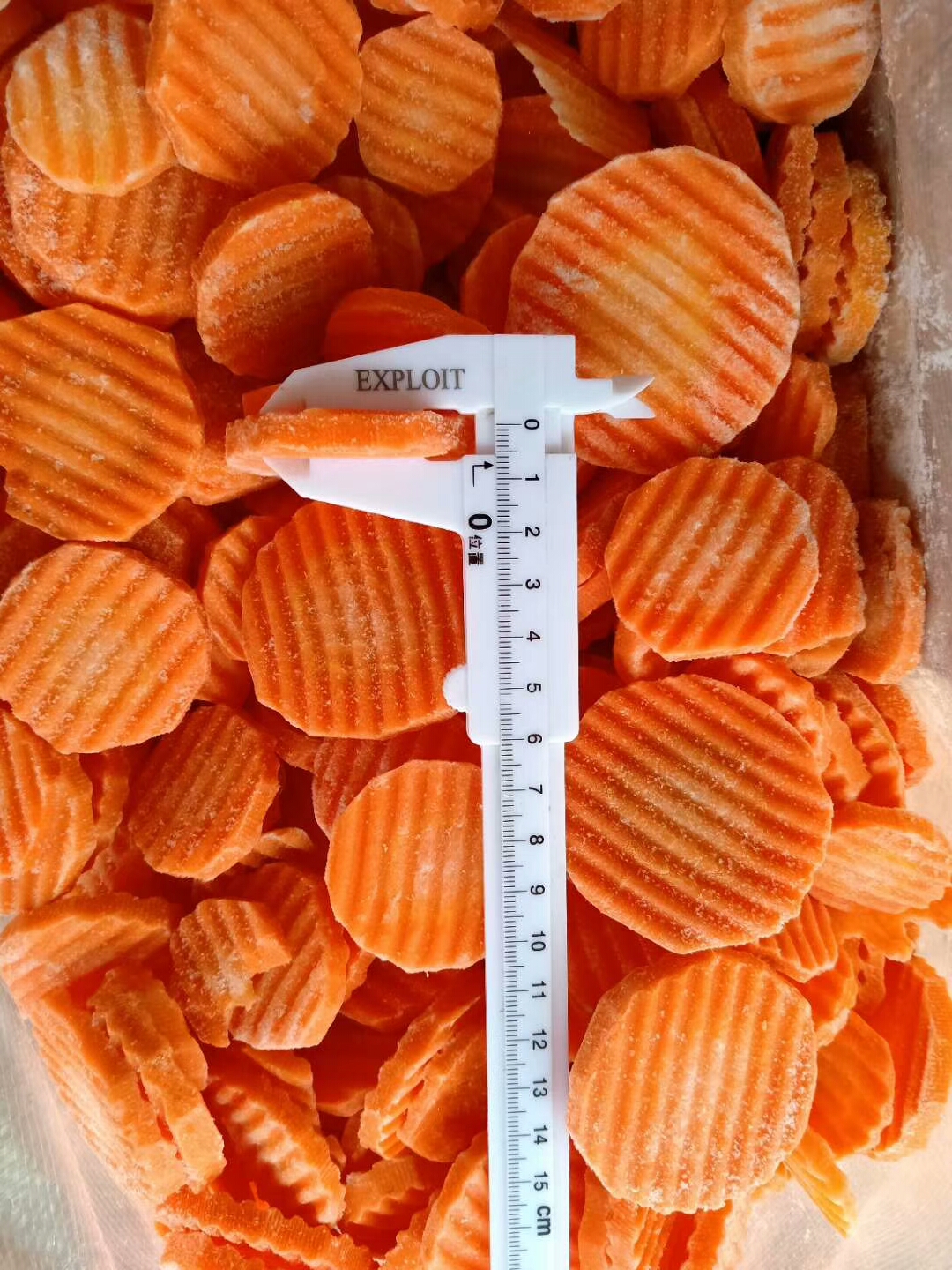
- Carrots: diced at 5 × 5 mm, 6 × 6 mm, 8 × 8 mm, 10 × 10 mm and 12 × 12 mm; sliced as straight, crinkle or flower cut with 3 mm, 4 mm or 5 mm thickness; sticks at 3 × 3 × 40 mm and 5 × 5 × 50 mm; chunks at 15 × 15 mm and 20 × 20 mm; whole carrots at 20–45 mm diameter; flower cuts at 30–35 mm diameter, with 25 mm and 40 mm available on request; shredded carrots customizable.
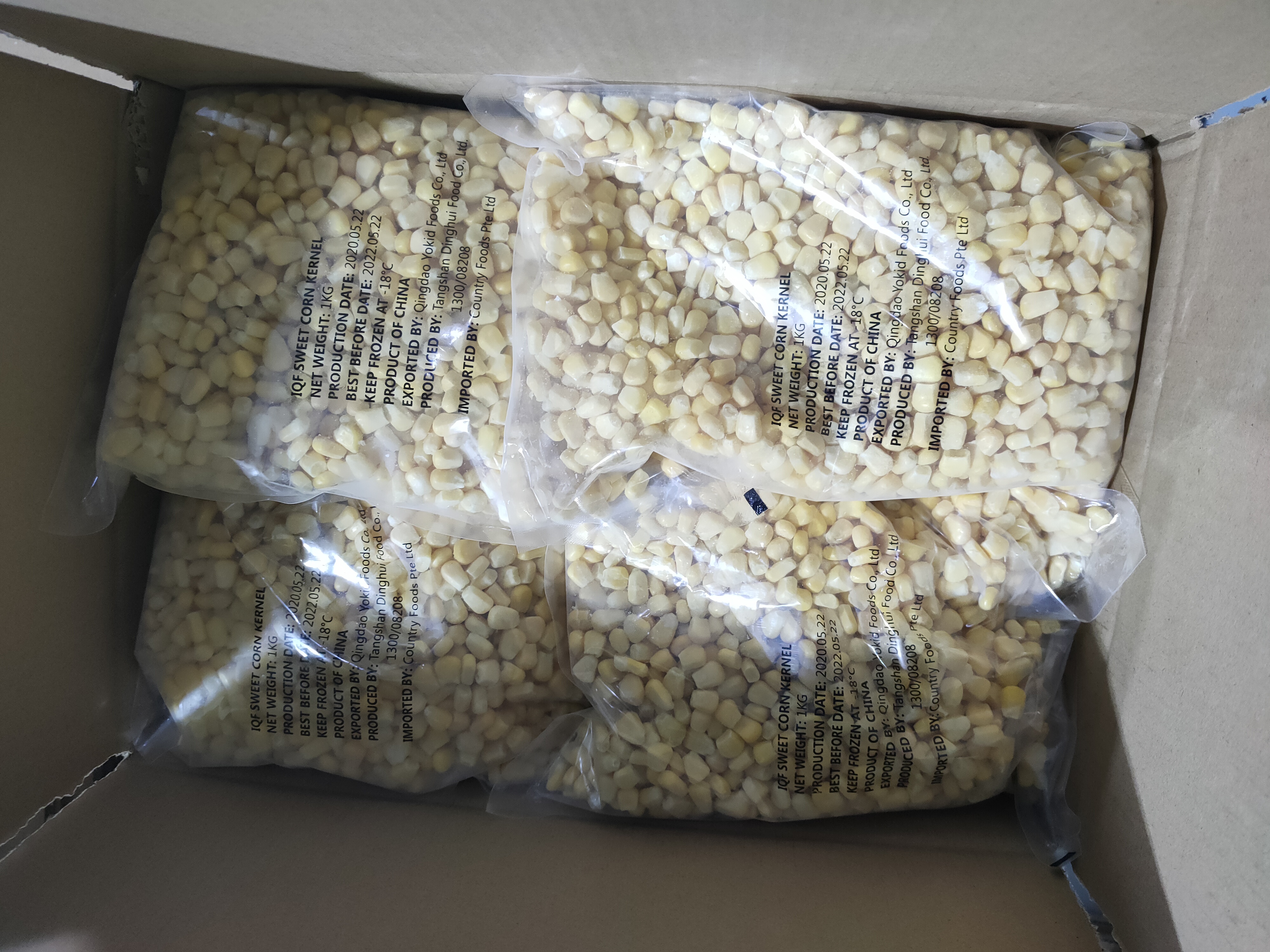
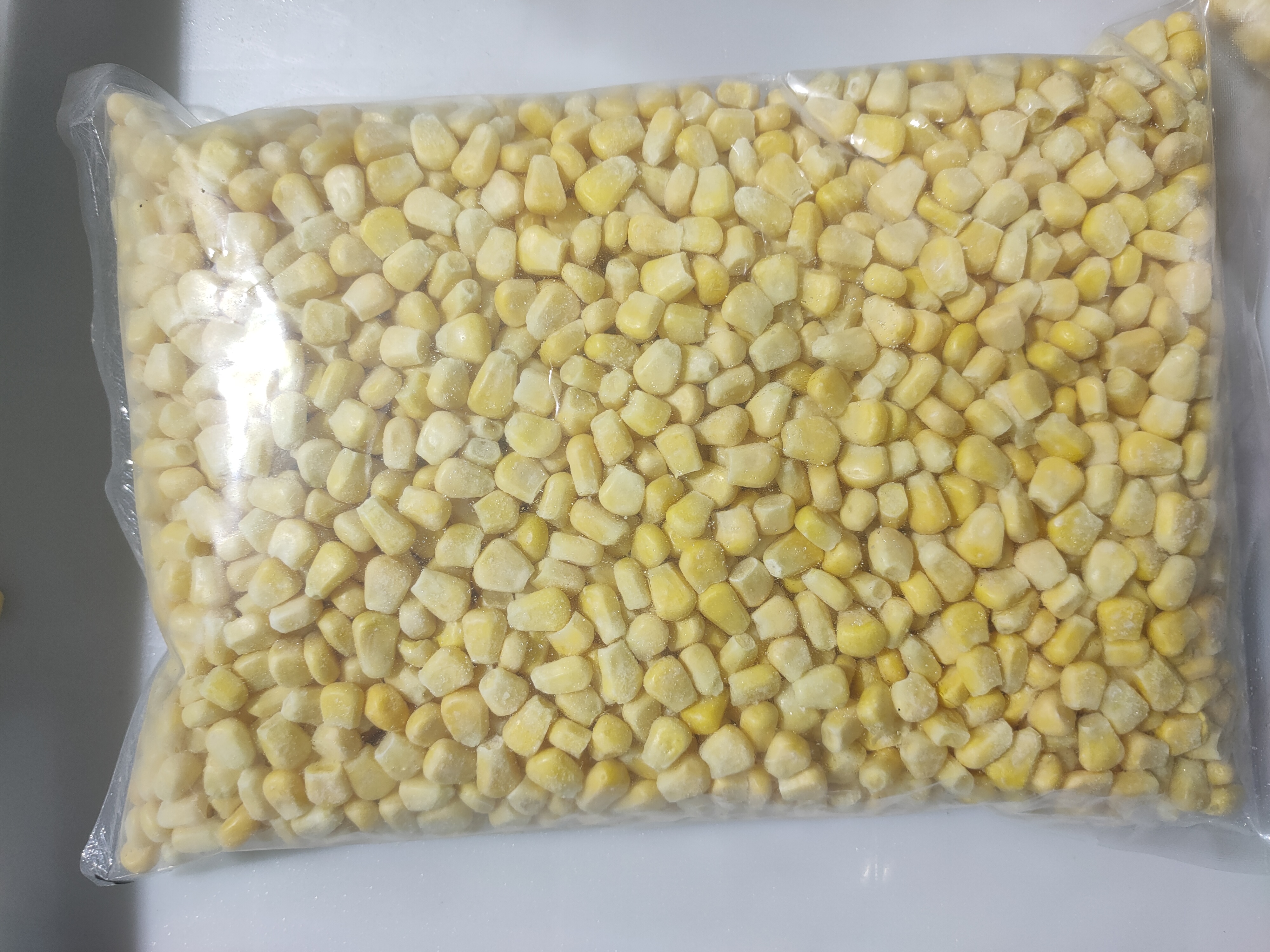
- Sweet corn: whole cob, cut cob and kernels.
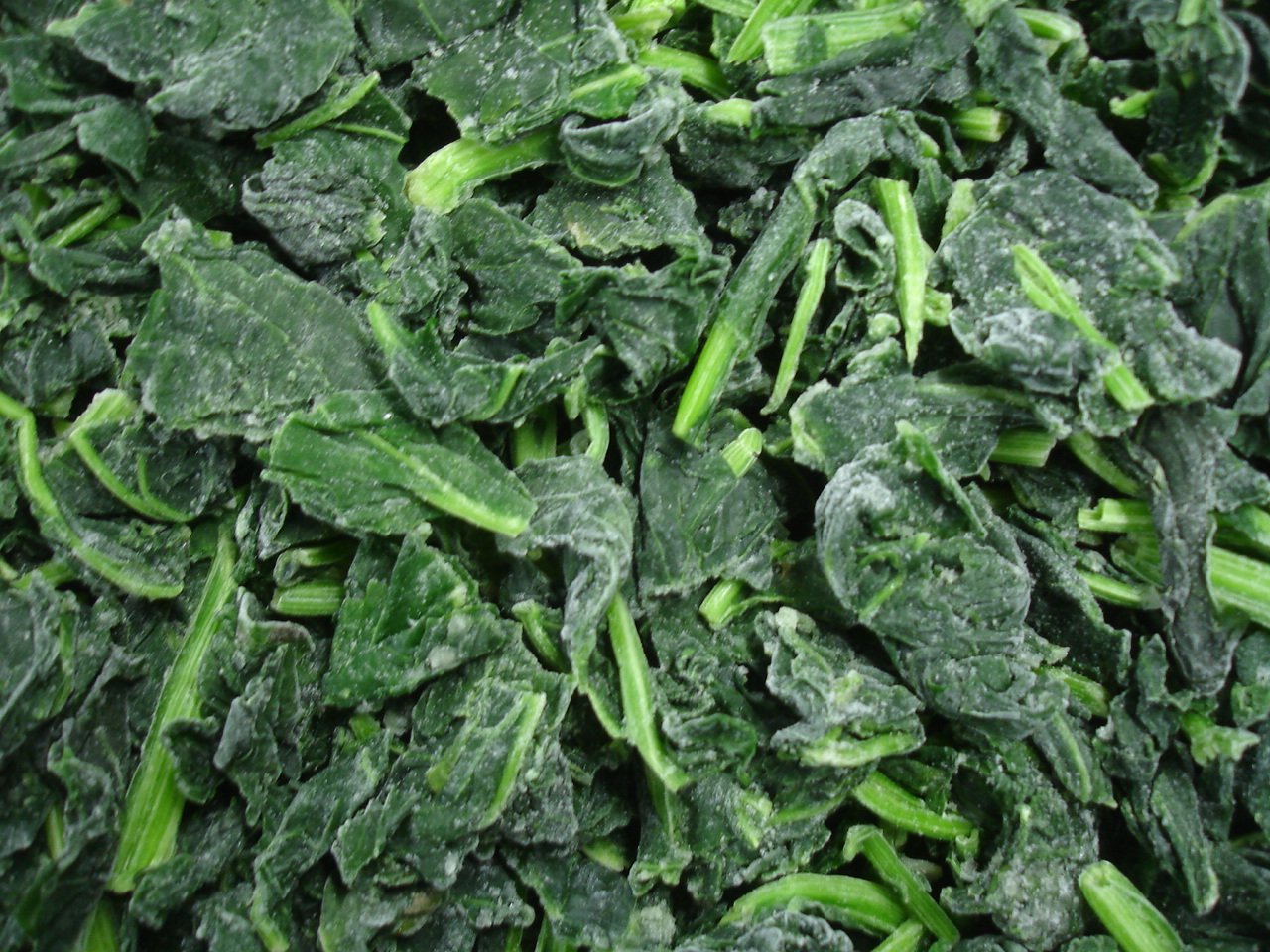
- Spinach: chopped at 5 × 5 mm, 10 × 10 mm and 15 × 15 mm; cut at 2–3 cm, 3–5 cm and 5–7 cm; whole leaf with root removed; portion balls at 15–25 g, 20–30 g and 25–35 g; blocks of 500 g or 1 kg; a standard leaf-to-stem ratio of 70:30, adjustable to customer requirements.
- Onion: diced at 5 × 5 mm, 6 × 6 mm, 8 × 8 mm and 10 × 10 mm; chunks at 20 × 20 mm; strips at 4–6 mm, 6–8 mm or 8–10 mm width with a natural length of 3–7 cm; sliced at 4–6 mm, 5–7 mm or 8–10 mm thickness; rings at 6–10 mm thickness with customizable diameter; minced below 3 mm; whole peeled at 5–9 cm diameter.
The same discipline applies to the wider frozen vegetable range — cauliflower, green beans, green peas, edamame, asparagus, okra, peppers, sweet potato, pumpkin, mixed vegetable blends, garlic, ginger and leek — and to frozen vegetable ingredients used in formulation. Each item needs its own approved cut, size band and tolerance; a category name is not a substitute.
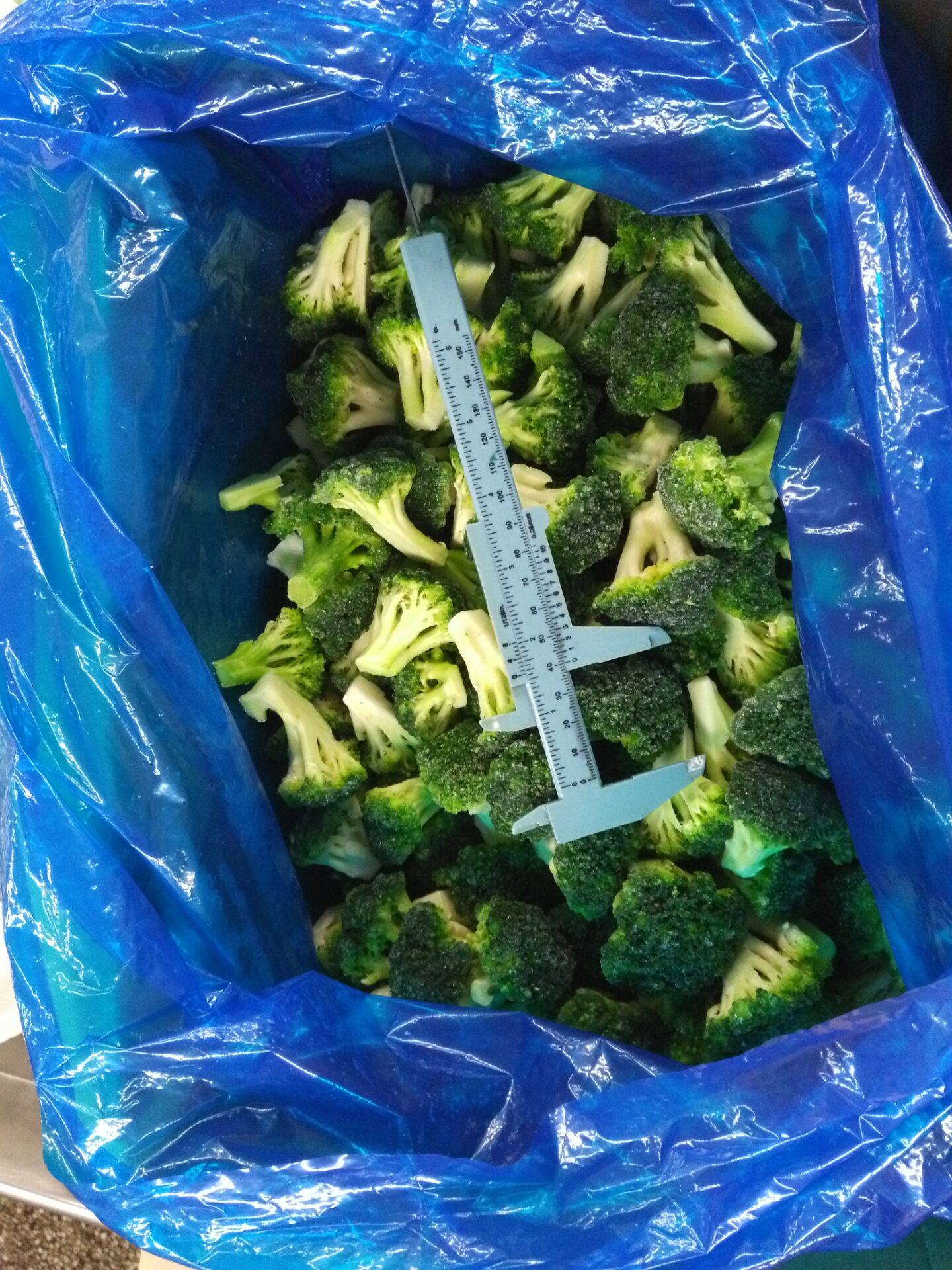
Add a measurement basis. If the size band is checked visually, on a screen, or by caliper on a sample, say so. A 30–50 mm floret band means different things to a supplier measuring by eye and a buyer measuring by gauge.
3. Freezing method, storage temperature and shelf life
IQF, or individual quick freezing, freezes each prepared piece separately so that the product stays loose and free flowing for portioning and processing. Block freezing (BQF) produces a solid block instead. The distinction matters commercially: IQF supports line-side portioning, while block formats suit bulk industrial use where the whole block is consumed at once.
Within the current range, the freezing method is IQF for broccoli, carrots, sweet corn and onion. Spinach is offered as IQF or BQF depending on the product form, which is exactly the kind of dual-route detail that must be written down rather than assumed. Across the range, storage temperature is −18 °C or below and shelf life is 24 months, consistent with the Codex cold-chain requirement.
4. Grade, colour and defect control
Grade and colour are inspectable attributes and should be stated in those terms. Products in the range are food grade; sweet corn is natural yellow and spinach natural green; spinach leaf-to-stem ratio is stated as 70:30 unless adjusted.
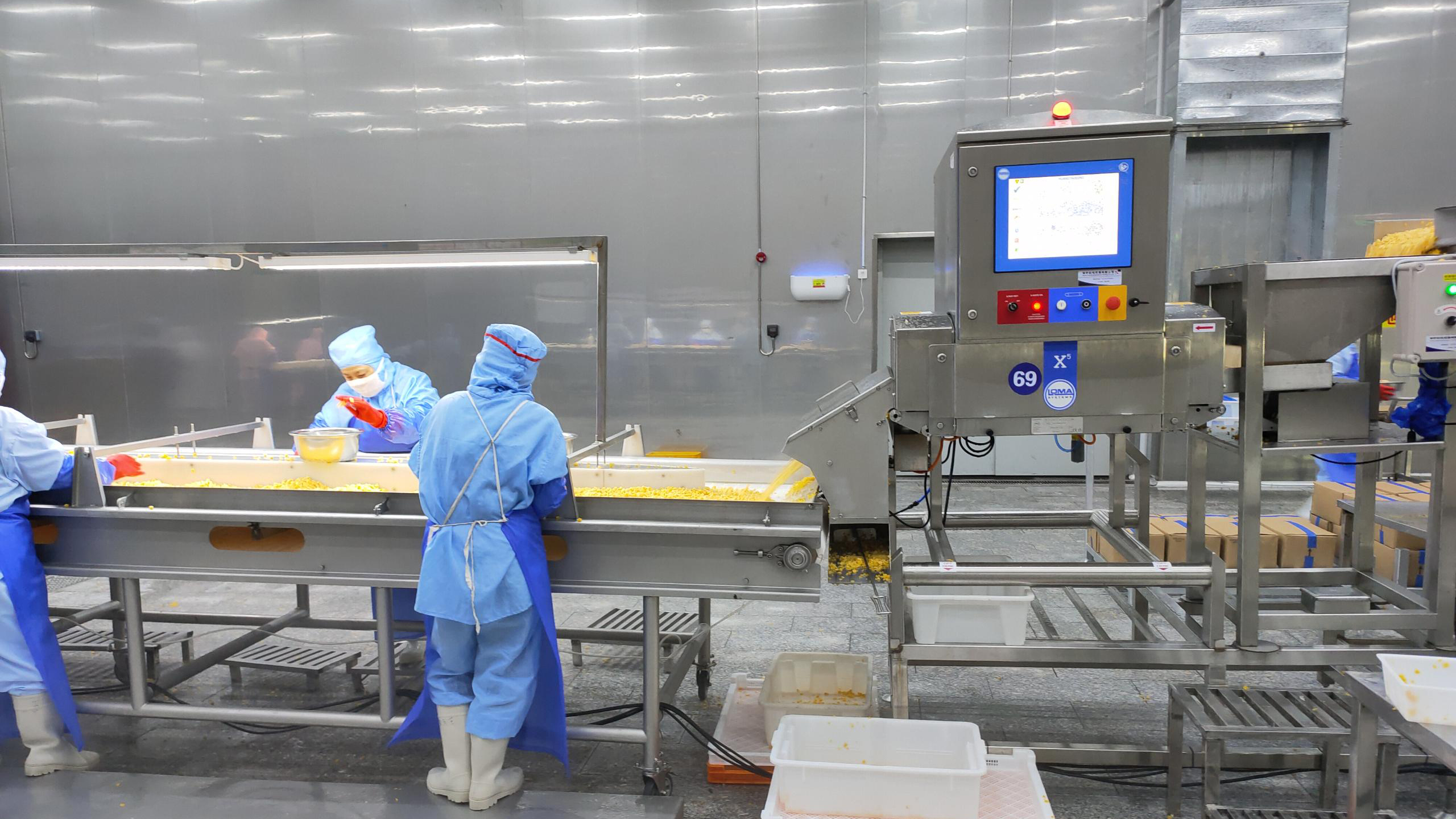
Behind the attribute sits a control method. The supplier operates 100% batch inspection covering raw material checks, process control, visual and size inspection, temperature monitoring, metal or X-ray detection, finished product sampling and laboratory testing. Raw-material selection and defect removal are handled at manual sorting and grading stations before freezing.
5. Packaging and pack weight
Packaging is customizable across the range, which makes it a variable the buyer must close rather than a feature to be requested later. State the inner pack weight, the carton configuration, the pallet pattern, the labelling content and the language of the label. Where a format is fixed by the product, write it — spinach blocks are supplied at 500 g or 1 kg per block, and sweet corn is available as whole cob, cut cob or kernels, each of which implies a different pack geometry.
6. Documentation and verification
Documentation should be listed per batch, not per relationship. A practical document set covers the certificate of analysis for the specific SKU, the test method used, batch traceability data, temperature records for the shipment, and the compliance certificates the supplier claims. Qingdao Yokid Foods states on its official website that it holds BRC, HACCP, ISO 22000, KOSHER and HALAL certificates; buyers should request the current certificate copies and confirm that the scope covers the actual product and process being purchased.
A worked example of how a third-party report is referenced: Certificate of Analysis No. 2682185, issued on 9 July 2025 by Mérieux NutriSciences Testing Technology (Qingdao) Co., Ltd., reports testing of a frozen IQF blueberry sample under EN 15662:2018 for the EU market. The point is not the blueberry — it is that a report is tied to a named sample, a named method and a named market. A buyer purchasing frozen spinach, carrots or onion should expect reports referencing those products, not a report from a different product line.
7. Commercial terms: MOQ, lead time and capacity
Commercial terms are constraints in the same sense as cut size, because they determine whether a specification is executable. For this supplier, the minimum order quantity is negotiable: generally 2 to 3 metric tons per item for mixed 20ft or 40ft containers, with trial or small pack orders of 500 kg to 1 metric ton possibly accepted. Lead time is 10–15 days after confirmation of order. Monthly capacity is 3,500 metric tons, against annual output of 40,000 tons from a 30,000 m² facility with 135 employees and a six-engineer R&D team. OEM, ODM, private label and customized processing are available, including customized logo, packaging, graphics, varieties, cuts, sizes, blends and pack weights.
Why this matters for a specification: a trial quantity of 500 kg to 1 metric ton lets a buyer validate cut size, colour and pack format on a real line before committing to a 2–3 ton item position. That validation step is cheaper than a rejected container.
Step-by-Step Breakdown: From RFQ to Cleared Container
- Write the intended use and market. State the destination market and whether the product is sold for direct consumption, catering or further processing. This sets the document set before any price discussion.
- Convert the application into product attributes. For a ready-meal line, that means a defined cut size such as 10 × 10 mm diced carrots or 6 × 6 mm diced onion, a stated size band for florets, and a stated leaf-to-stem ratio for spinach.
- Fix the cold-chain clause. IQF, storage at −18 °C or below, 24-month shelf life, and a shipment temperature record requirement. Add the handling rule: product should not be re-frozen after thawing.
- Request a quotation against the written specification. A quotation issued against a full specification is comparable between suppliers; a quotation issued against a category name is not.
- Run a trial quantity. Use the small pack or trial option to check cut uniformity, colour, free-flow condition after transport, and pack integrity on the actual filling line.
- Approve the specification and the batch documents together. Sign off the specification text, the sample reference and the certificate of analysis as one package, so that later batches are checked against the same baseline.
- Plan the shipment around lead time and cold chain. With 10–15 days lead time after order confirmation and 3,500 metric tons of monthly capacity, the binding constraint is usually documentation and vessel scheduling rather than production.
Use Cases: Where the Specification Is Tested in Production
Fast food and boxed meals in Indonesia
An Indonesian food manufacturer and chain-restaurant supplier ordered 17.38 tons of IQF frozen broccoli for lunch boxes, frozen meal sets and fast-food side dishes. The relevant specification items were floret size and stable quality across the two-year supply relationship; delivery was completed on time and the raw material supply for the customer’s pre-prepared food lines was maintained.
Pre-prepared dish factory in Singapore
A central kitchen for pre-prepared dishes ordered 45 tons of IQF 10 mm carrot cubes. Here the specification is almost entirely a size decision: 10 × 10 mm cubes matched the customer’s processing technique and the appearance requirement of the finished dish, and the volume allowed stable supply without frequent re-sourcing.
Food processing and catering supply in New Zealand
A food processing and catering delivery business ordered 40 metric tons of 6 mm onion pieces for soups, sauces, ready meals, stir-fries, pizza toppings and catering food. The 6 mm size was selected to match local production requirements, and the fit between cut size and end use drove repeat purchasing.
Spring roll filling in Uruguay
A South American pre-packaged food factory ordered 20.58 tons of IQF spinach dices plus IQF red pepper dices for spring roll filling. In filling applications the dice size and raw material quality control determine whether the filling holds together and whether the product passes the customer’s own inspection.
Frozen meals and salads in Chile
A Chilean pre-packaged food processor ordered 23 metric tons of IQF sweet corn plus mixed vegetables for frozen meal packs, salads and stews. The specification question here is combination consistency: the blend has to behave as one product across repeated production runs.
Comparison Table: Five IQF Vegetable SKUs Side by Side
The table below sets out the specification fields that are actually stated for five products in the current range. Fields that are not stated for a product are left as “not stated”, because a specification should describe what is defined, not what is assumed.
| Product | Forms available | Size options | Freezing method | Grade and colour | Storage and shelf life | Packaging |
|---|---|---|---|---|---|---|
| IQF Frozen Broccoli (Florets) | Florets | 20–40 mm, 30–50 mm, 40–60 mm | IQF | Food grade | −18 °C or below; 24 months | Customizable |
| IQF Frozen Carrots (Diced) | Diced, sliced, sticks, chunks, whole, shredded, flower cut | Diced 5 × 5 to 12 × 12 mm; slices 3/4/5 mm thick; sticks 3 × 3 × 40 mm and 5 × 5 × 50 mm; chunks 15 × 15 and 20 × 20 mm; whole 20–45 mm diameter | IQF | Food grade | −18 °C or below; 24 months | Customizable |
| IQF Frozen Sweet Corn (Kernels) | Whole cob, cut cob, kernels | Form-based; no separate size bands stated | IQF | Food grade; natural yellow | −18 °C or below; 24 months | Customizable |
| IQF Frozen Spinach (Chopped) | Whole leaf, cut, chopped, balls, blocks | Chopped 5 × 5, 10 × 10, 15 × 15 mm; cut 2–3, 3–5, 5–7 cm; balls 15–35 g; blocks 500 g or 1 kg; leaf-to-stem 70:30 | IQF or BQF, depending on form | Food grade; natural green | −18 °C or below; 24 months | Customizable |
| IQF Frozen Onion (Diced) | Diced, chunks, strips, sliced, rings, minced, whole peeled | Diced 5 × 5 to 10 × 10 mm; chunks 20 × 20 mm; strips 4–10 mm wide, 3–7 cm long; rings 6–10 mm thick; minced below 3 mm; whole peeled 5–9 cm | IQF | Food grade | −18 °C or below; 24 months | Customizable |
Frequently Asked Questions
How can I verify that a Chinese IQF frozen vegetable supplier meets EU food safety requirements?
Ask for four things and check them against the exact SKU you are buying: current copies of the compliance certificates the supplier claims (Qingdao Yokid Foods states BRC, HACCP, ISO 22000, KOSHER and HALAL on its official website), a batch-level certificate of analysis naming the product and the test method, batch traceability and shipment temperature records, and a written statement of intended use. For EU pesticide-residue screening, a report such as Certificate of Analysis No. 2682185 issued on 9 July 2025 by Mérieux NutriSciences Testing Technology (Qingdao) Co., Ltd. under EN 15662:2018 shows the format to expect — but note that this specific report covers a frozen IQF blueberry sample, so reports must be requested for the vegetable SKU and batch you actually purchase.
Which IQF vegetable cuts and sizes can a Chinese manufacturer actually supply?
Within the current range, broccoli is supplied as florets in 20–40 mm, 30–50 mm and 40–60 mm bands; carrots as diced 5 × 5 to 12 × 12 mm, sliced at 3/4/5 mm thickness, sticks, chunks, whole, shredded and flower cut; sweet corn as whole cob, cut cob and kernels; spinach as chopped 5 × 5 to 15 × 15 mm, cut 2–3 to 5–7 cm, whole leaf, 15–35 g balls and 500 g or 1 kg blocks with a 70:30 leaf-to-stem ratio; and onion as diced 5 × 5 to 10 × 10 mm, chunks, strips, slices, rings, minced and whole peeled. Customized varieties, cuts, sizes, blends and pack weights are available under OEM, ODM and private label programmes.
What order size should I plan for, and how is the price basis set?
The minimum order quantity is negotiable: generally 2 to 3 metric tons per item for mixed 20ft or 40ft containers, and trial or small pack orders of 500 kg to 1 metric ton may be accepted. Price is quoted against the written specification rather than published as a list, because cut size, size band, leaf-to-stem ratio, pack format and season all change the cost base. A buyer who sends one line of specification will receive a quote that cannot be compared with another supplier’s; a buyer who sends the full seven-variable specification receives comparable offers.
Can we run a trial or sample order before committing to a full container?
Yes. Trial or small pack orders of 500 kg to 1 metric ton may be accepted alongside the standard 2–3 ton item position, which allows cut uniformity, colour, free-flow condition after transport and pack integrity to be checked on the buyer’s own line. Product traceability, order tracking, export documentation support and quality complaint handling according to the sales agreement apply to trial and full orders alike.
What lead time and capacity should I plan around?
Lead time is 10–15 days after confirmation of order, against a monthly capacity of 3,500 metric tons and annual output of 40,000 tons from a 30,000 m² facility. In practice the critical path is usually documentation and vessel scheduling rather than production, so the ship date should be planned together with the certificate of analysis and the temperature-record requirement, not after them. To start a specification review or request a quotation against your own cut sizes and pack format, contact kevin@yokid-china.com or send the requirement through WhatsApp at +86 186-6393-4581.
Conclusion: The Specification Is the Contract
IQF frozen vegetables are a category with a fixed technical backbone — a Codex definition, a −18 °C cold-chain requirement, an HS classification and a set of cut and size conventions that a buyer can specify precisely. The variable part is the buying decision: which cut, which size band, which pack, which documents, which intended use, and which commercial quantity.
Written well, the specification does three jobs at once. It makes quotations comparable, because every supplier prices the same product. It makes arrival inspection possible, because the warehouse has something to check against. And it makes the supply relationship stable, because neither side is relying on an interpretation of a category name.
Next step
Send your cut size, size band, pack format and destination market, and YOKID Frozen Vegetables will respond with a specification-matched quotation. Trial quantities from 500 kg are available for line validation.
www.yokid-china.com | kevin@yokid-china.com | Tel: +86 186-6393-4581 / +86 532-80922771-2
Qingdao Yokid Foods Co., Ltd., Rm 4-1810, No.106, Jingkou Road, Qingdao City, Shandong Province, China. Product specifications are agreed against the approved written specification for each order; tests and certificates are issued per sample and per batch.
Have Questions or Need More Details?
Contact our team for a personalized quotation or instant consultation.
Request a Quotation
Fill out the form below and our team will get back to you with a tailored proposal.
WhatsApp Direct Chat
Prefer to chat in real-time? Message us on WhatsApp for instant assistance & quick answers.
- Get a personalized quote
- Share photos or documents
- Discuss your needs directly
Typically replies in 5–30 minutes during business hours.