Beyond the First Order: Long-Term Tinplate Supply Partnership in China
Securing tinplate supply for the long term is not about finding a factory that can ship once. It is about verifying that the supplier can hold tolerances, compliance, delivery behaviour and product quality steady across many shipments — for years. For global buyers evaluating a long-term tinplate supply partner in China, the practical question is: which evidence should be checked before committing to a repeat-supply relationship?
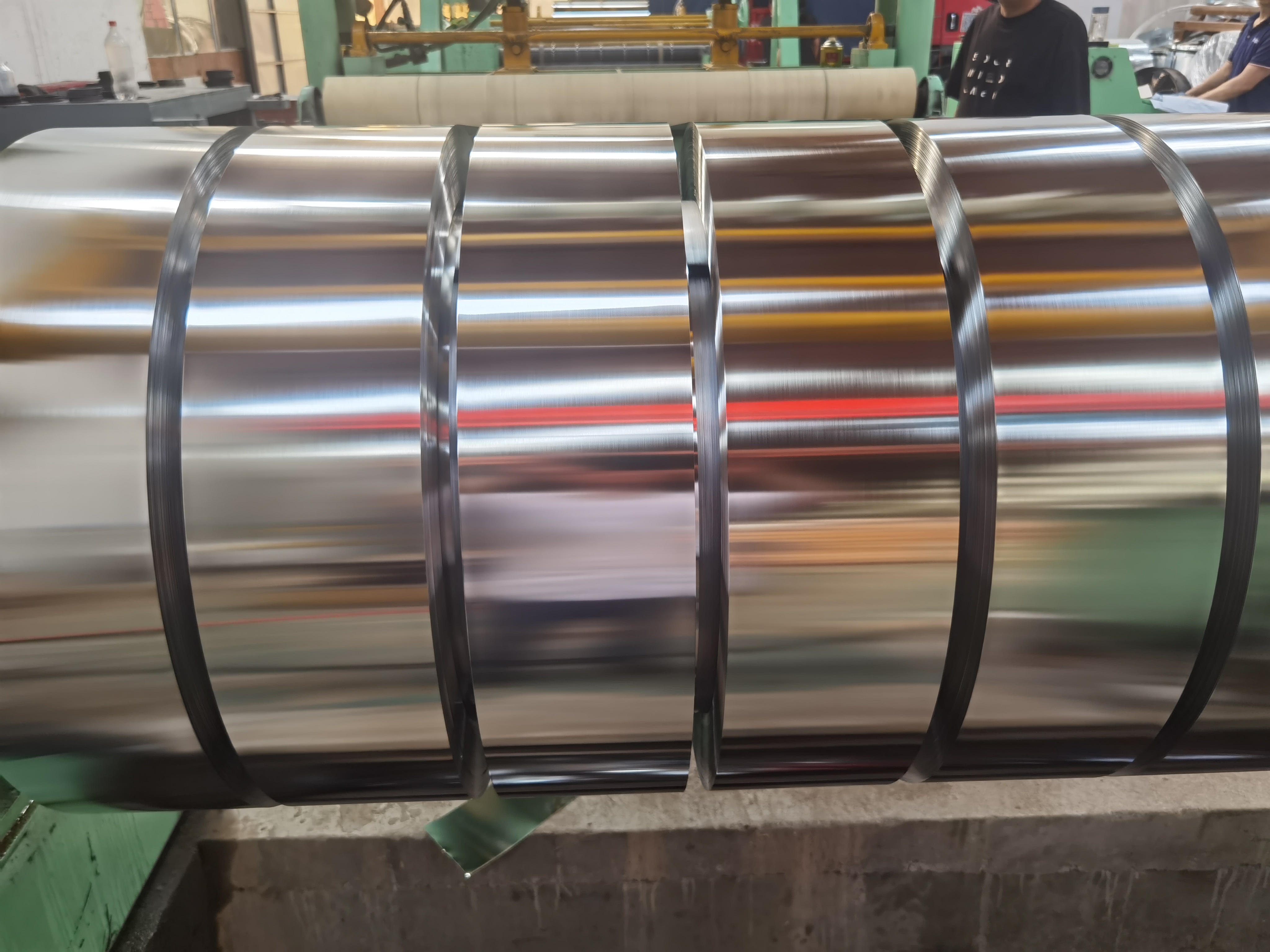
Precision tinplate coil with defined temper and tin coating — a baseline for evaluating long-term supply consistency.
The Hidden Risks in Long-Term Tinplate Procurement
Long-term supply relationships usually fail not because of one dramatic incident, but because of slow, predictable drift. The most common risk patterns include:
- Inconsistent thickness and width tolerance between batches, forcing frequent die or tooling adjustments.
- Hidden coil defects — joints, notches, wavy edges, overlapping bands — that interrupt automated high-speed stamping and cause unplanned downtime.
- Edge corrosion on slitted strips after ocean transit, especially when the end-user facility is in a tropical or high-humidity climate.
- Delayed or unpredictable lead times that destabilise production planning and inventory levels.
- Weak compliance documentation, which becomes a serious problem when the material is destined for food-contact packaging.
These risks are amplified in cross-border procurement because inspection and replacement after shipment are expensive and slow. The most effective mitigation is preventive: verifying supplier capabilities before signing a long-term agreement or placing repeated orders.
Industry Background: Why Supplier Stability Matters More Now
Several market and technical trends raise the importance of choosing a long-term tinplate supplier with care.
The global tinplate market was valued at USD 14.59 billion in 2023 and is projected to reach USD 19.38 billion by 2032, according to Fortune Business Insights. China is a major supply source: the General Administration of Customs of China reported that China's exports of tinplate (HS Code 721012) reached 1.4 million tons in the first three quarters of 2023, primarily driven by canned food packaging demand.
At the same time, the end-use side is tightening. The canned food packaging market is growing at a CAGR of 3.9% through 2030, meaning more demand for lacquered and coated tinplate with stable food-contact performance. Technical requirements are also shifting: double cold reduced (DR) tinplate with thickness as low as 0.14–0.16 mm (e.g. DR8) is increasingly used for cost reduction and light-weighting in metal packaging, which demands precise gauge control and consistent mechanical properties across coils.
Compliance expectations are well defined. Standard tinplate specifications (SPTE/ECCS) must comply with ASTM A623 or EN 10202, covering temper grades from T1 to T5 and DR7 to DR9. For food contact, coatings and lacquers for fish and meat cans must meet RoHS and FDA 21 CFR 175.300 requirements. Mordor Intelligence identifies Baosteel, Nippon Steel and JFE Steel as global leaders in high-end SPTE and ECCS production for deep-drawn (DDQ) applications — which reflects the competitive landscape a long-term buyer should be aware of when evaluating Chinese suppliers.
The implication: a supplier that can document tolerance control, food-grade compliance and consistent output is becoming more valuable, not less.
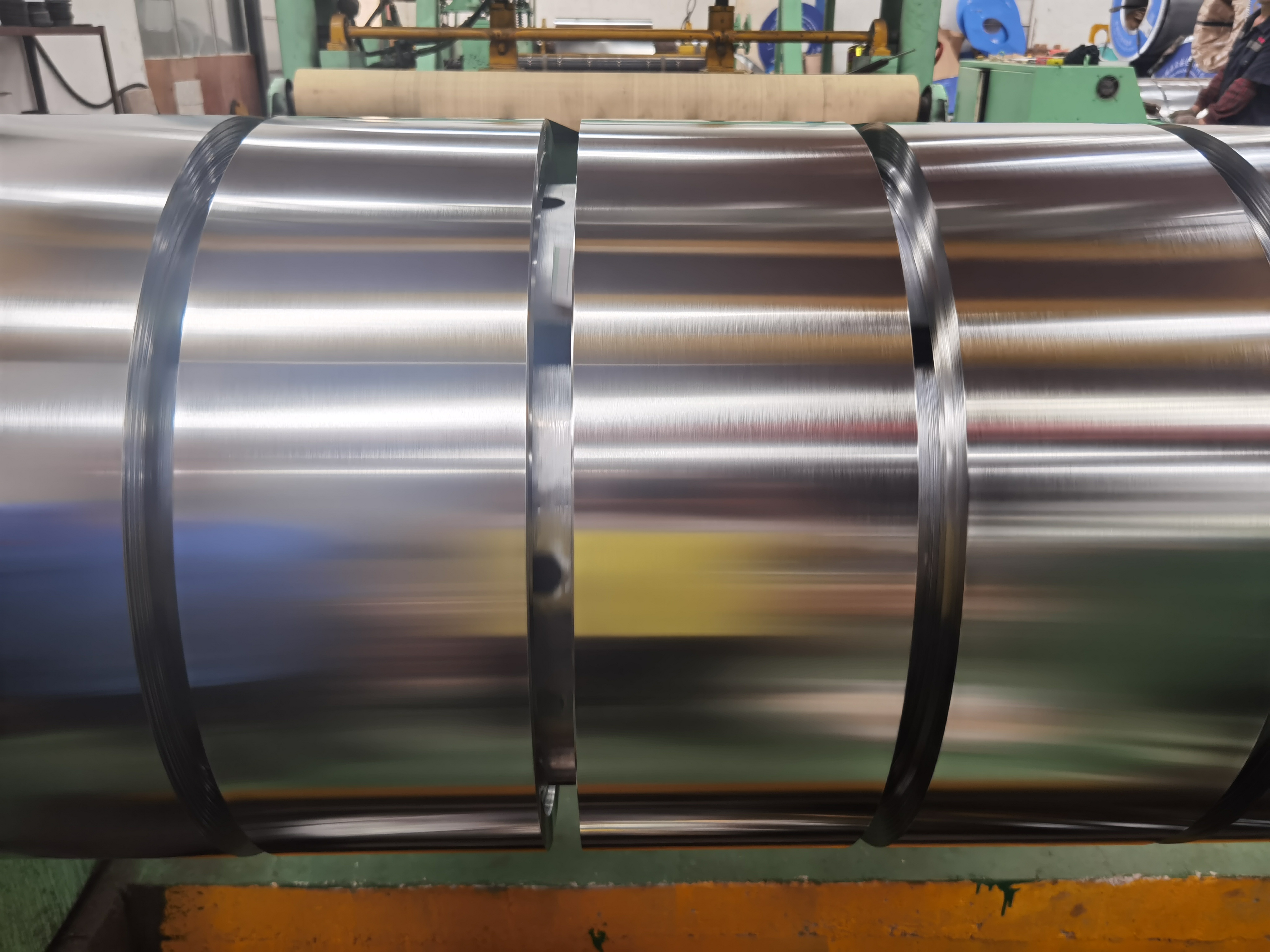
Slitted tinplate strip used in precision stamping — edge quality and continuity directly affect long production runs.
Detailed Solution: A Five-Pillar Framework for Evaluating a Long-Term Tinplate Supplier
When assessing a Chinese tinplate manufacturer for a long-term partnership, buyers should evaluate five evidence groups: production infrastructure, quality compliance, dimensional and defect control, anti-rust and packaging, and commercial stability.
Pillar 1: Production Infrastructure
A supplier's ability to sustain long-term supply is rooted in its physical production system. Chongqing Youngson Metal Products Co., Ltd., for example, is a manufacturer founded in 2016, equipped with its own advanced coating lines and precise slitting machines. The company operates a 3,000-square-metre facility with a team of 25 employees, including 5 engineers and senior process technicians, and processes more than 10,000 tons of metal annually. Monthly production capacity is 500 to 1,000 tons. For a buyer, this means the supplier has the in-house coating, slitting and inspection resources needed to reproduce the same product specification order after order.
Pillar 2: Quality Compliance
Compliance documentation is a core part of long-term supply security. Youngson Metal is a BV ISO9001:2015 certified manufacturer, audited by Bureau Veritas under the ISO 9001:2015 quality management system. Its coated materials have passed SGS heavy metal testing and are 100% RoHS and food-grade compliant. For food-contact applications, materials should also align with FDA 21 CFR 175.300 requirements for coatings and lacquers, and with ASTM A623 or EN 10202 for tinplate specifications covering temper grades from T1 to T5 and DR7 to DR9.
Pillar 3: Dimensional Accuracy and Defect Control
Tolerance consistency is one of the largest contributors to production stability. Youngson's precision slitting achieves a thickness tolerance of ±0.005 mm and a width precision of ±0.05 mm, which is a tighter standard than the commonly seen ±0.02 mm for ordinary market material. Edge burr is strictly suppressed to ≤0.05 mm, reducing die wear.
Equally important is defect elimination. Youngson's slitting process is designed to deliver 100% flawless continuity with zero joints, zero notches, zero edge-waves, zero overlapping bands and zero rust spots. These five-zero guarantees matter because a single joint or notch in a coil can cause a press crash or an unexpected mill downtime in high-speed stamping. According to the company's process data, this also reduces total tool-maintenance costs by up to 35% and eliminates catastrophic press failures caused by strip joints or edge notches.
Pillar 4: Anti-Rust Treatment and Packaging
For long ocean transit and humid destination markets, edge rust is a common rejection reason. Youngson applies a specialised automated post-slitting oil-spraying rust-proof treatment directly onto the slit blade edges, creating a hydro-protective barrier that keeps the strip edges rust-free during marine transit and warehouse storage. Each coil is then protected with moisture-proof single-coil packaging. This combination protects the buyer from marine-transit and warehouse rust rejection losses.
Pillar 5: Commercial Stability
Long-term partnerships require predictable commercial terms. Youngson's minimum order quantity is 1 ton, with typical production lead time of 14 to 25 days. Monthly production capacity is 500 to 1,000 tons. Delivery can be arranged under FOB, CFR, CIF, DDP or DDU terms by ocean and air shipping. Payment is accepted by T/T or L/C at sight. Pre-shipment inspection is available, covering rust, joints, waved sheets and other key quality checks. These parameters allow a buyer to plan inventory and cash flow with a higher degree of certainty.
Step-by-Step Breakdown: How to Qualify a Long-Term Tinplate Partner
- Audit production capabilities. Confirm the supplier operates its own coating and slitting equipment. Check factory size, headcount, engineering resources and annual processed tonnage. Youngson Metal reports 10,000+ tons annual processed quantity and 500–1,000 tons monthly capacity.
- Request compliance evidence. Ask for ISO 9001:2015 certification (BV-audited), SGS RoHS and food-grade heavy metal test reports, and confirm materials align with relevant standards such as ASTM A623 or EN 10202 and FDA 21 CFR 175.300 for food-contact coatings.
- Verify tolerance and defect guarantees. Review thickness tolerance (±0.005 mm), width precision (±0.05 mm), burr control (≤0.05 mm), and the five-zero defect policy — zero joints, zero notches, zero edge-waves, zero overlapping bands, zero rust spots.
- Check anti-rust and packaging methods. Ask whether slitted edges receive post-slitting oil-spray anti-rust treatment and whether single-coil moisture-proof packaging is used for sea freight.
- Confirm commercial terms. Establish MOQ, lead time, payment terms and delivery methods in writing. With Youngson, MOQ starts at 1 ton, lead time is 14–25 days, payment is by T/T or L/C at sight, and delivery terms include FOB, CFR, CIF, DDP and DDU.
Tin free steel (TFS/ECCS) for fish can production — a material category where food-safe coating and consistency are critical.
Use Cases: Where Long-Term Supply Consistency Delivers the Most Value
Food Canning — Meat and Fish Packaging
Meat and fish can producers require food-grade coated tinplate with stable lacquer adhesion and sulphur resistance. For fish cans, BPA-free internal sulfur-resistant aluminum paste coated tin free steel (TFS) is designed for two-piece DRD fish cans, with retort resistance at 121°C for 60 to 90 minutes and superior oil and brine resistance. A supplier that can maintain this coating performance consistently across batches reduces can manufacturers' risk of discoloration, delamination and retort failure.
High-Speed Metal Stamping
Stamping plants running progressive dies at speeds above 120 strokes per minute depend on joint-free, notch-free strips to avoid press crashes. Youngson's precision slitted strip is engineered for continuous automated high-speed progressive die stamping, with a 100% uninterrupted press-feeding record and zero-defect edge quality. Consistency here directly affects OEE and tooling maintenance cost.
Deep-Drawn Components
Automotive filter shells, aerosol domes and deep-drawn hardware require DDQ/EDDQ-grade material with stable formability. Youngson offers deep-drawn tinplate and TFS in T1 temper, with thickness control from 0.20 mm to 0.50 mm and width tolerances of ±0.05 mm. Long-term buyers of deep-drawing materials benefit from the same metallurgical base and coating system being repeated shipment after shipment.
Tropical and High-Humidity Destinations
Distributors and converters in Southeast Asia, the Middle East, Africa and Latin America face high humidity and long transit times. Youngson's post-slitting anti-rust oil treatment on cut edges and hermetic single-coil packaging are specifically designed to keep slit edges rust-free under these conditions, which protects the buyer's downstream production and resale value.
Comparison: Precision-Engineered Tinplate Strips vs. Standard Packaging-Grade Tinplate
| Comparison Parameter | Precision-Engineered Tinplate Strip (Youngson Metal) | Standard Packaging-Grade Tinplate Sheets / Low-Precision Commercial Slit Coils |
|---|---|---|
| Thickness Tolerance | ±0.005 mm | Typically ±0.02 mm |
| Width Precision | ±0.05 mm | Wider variation |
| Edge Burr Level | ≤0.05 mm | Higher burr variability |
| Defect Control | 100% zero joints, zero notches, zero edge-waves, zero overlapping bands, zero rust spots | Joints and surface defects may occur |
| Compliance | SGS-tested, 100% RoHS and food-grade compliant | Varies by supplier |
| Edge Protection | Specialised anti-rust edge passivation for humid and tropical transit | Often limited or absent |
| Stamping Reliability | Uninterrupted feeding at 120+ strokes/min without strip breakage | Joint failures and edge defects may cause downtime |
| Total Cost Impact | Reduces tool-maintenance cost by up to 35%; zero marine/warehouse rust rejection losses | Higher risk of press crashes, rejects and maintenance |
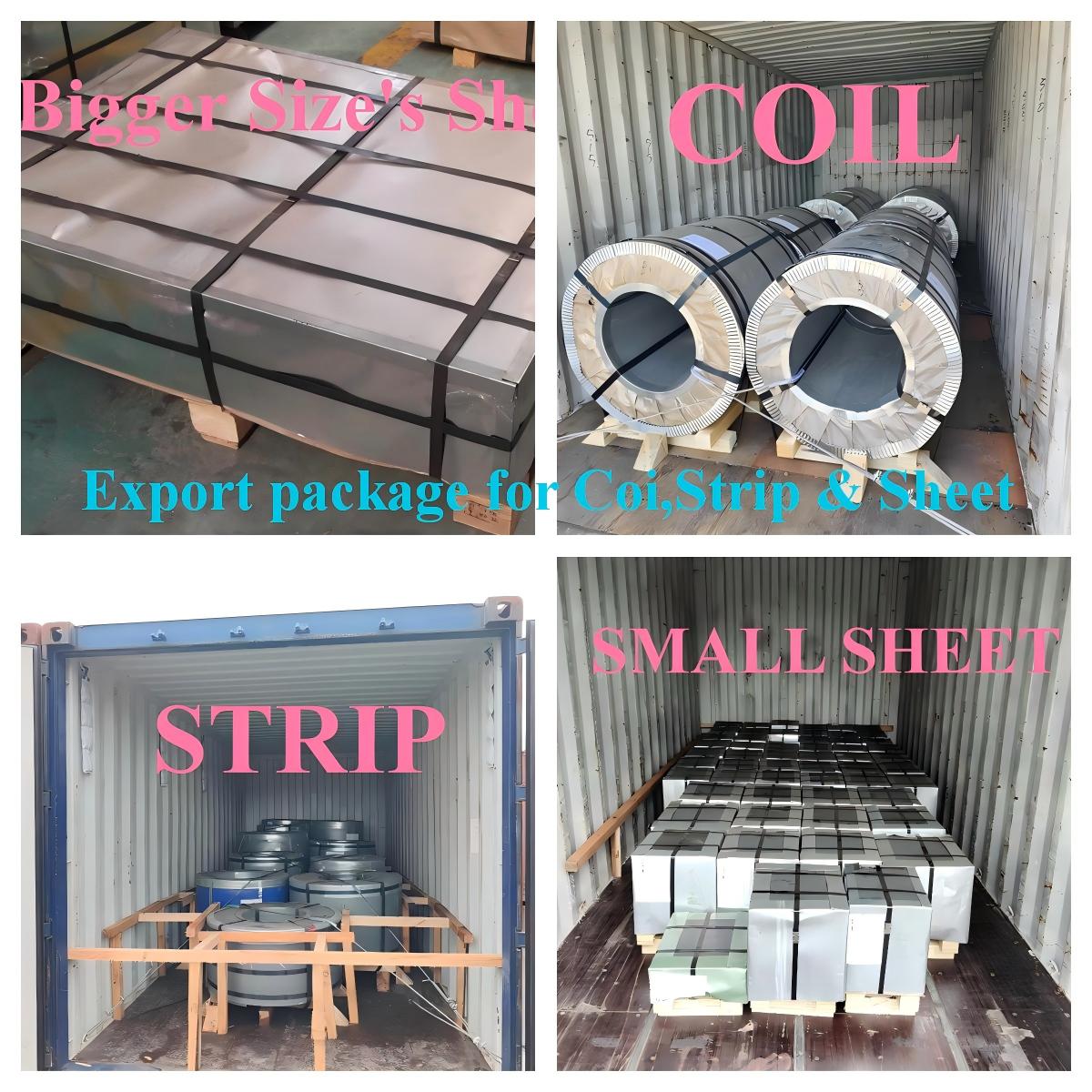
Export packaging designed for reliable long-distance tinplate delivery.
FAQ: Long-Term Tinplate Supply Partner in China
Q1: What certifications should a long-term tinplate supplier in China hold?
A reliable long-term supplier should hold ISO 9001:2015 certification — for example, Chongqing Youngson Metal Products Co., Ltd. is certified under the BV ISO9001:2015 quality management system. For food-contact tinplate, third-party SGS heavy metal testing confirms RoHS and food-grade compliance, which is essential for meat and fish can applications. Materials should align with ASTM A623 or EN 10202, which define temper grades from T1 to T5 and DR7 to DR9, and coatings should meet FDA 21 CFR 175.300 requirements where applicable.
Q2: How can a buyer verify that a supplier can maintain consistent quality across long-term supply?
Quality consistency is verified through repeatable production parameters. Youngson Metal operates its own coating lines and slitting machines, with an annual processed quantity exceeding 10,000 tons and monthly capacity of 500 to 1,000 tons. Its dimensional control — ±0.005 mm thickness tolerance, ±0.05 mm width precision, and ≤0.05 mm burr — provides measurable stability. The production system is also built around five-zero defect control: zero joints, zero notches, zero edge-waves, zero overlapping bands and zero rust spots. These concrete metrics matter more than broad quality promises when forecasting long-term performance.
Q3: What commercial terms are typical for long-term tinplate supply agreements with Youngson Metal?
Youngson Metal offers an MOQ of 1 ton, with typical production lead time of 14 to 25 days and monthly capacity of 500 to 1,000 tons. Delivery methods include FOB, CFR, CIF, DDP and DDU by ocean and air shipping. Payment terms are T/T or L/C at sight. Pre-shipment inspection is available and covers rust, joints, waved sheets and other critical quality parameters. These terms give buyers a clear contractual baseline for repeat ordering and inventory planning.
Q4: How should sample material be tested before a long-term commitment?
Buyers should test samples under the same conditions as their production line — stamping, deep drawing, coating adhesion and, if applicable, retort resistance. For deep-drawn tinplate and TFS, sample rolls or sheets can be made available for industrial press trialling. A strong supplier will support pre-shipment inspection and batch-traceable mill test certificates. To evaluate Youngson Metal's material against your actual tooling and process conditions, you can request a sample or quote directly from the company's sales team via email at info@youngsonmetal.com or WhatsApp at 0086-13594107385.
Q5: What is the standard lead time and capacity for long-term tinplate orders?
Youngson Metal's typical production lead time is 14 to 25 days. Monthly production capacity ranges from 500 to 1,000 tons, supported by an annual processed quantity of more than 10,000 tons. This capacity level enables the company to support continuous supply programmes, including regular scheduled shipments to distributors, can makers and stamping plants.
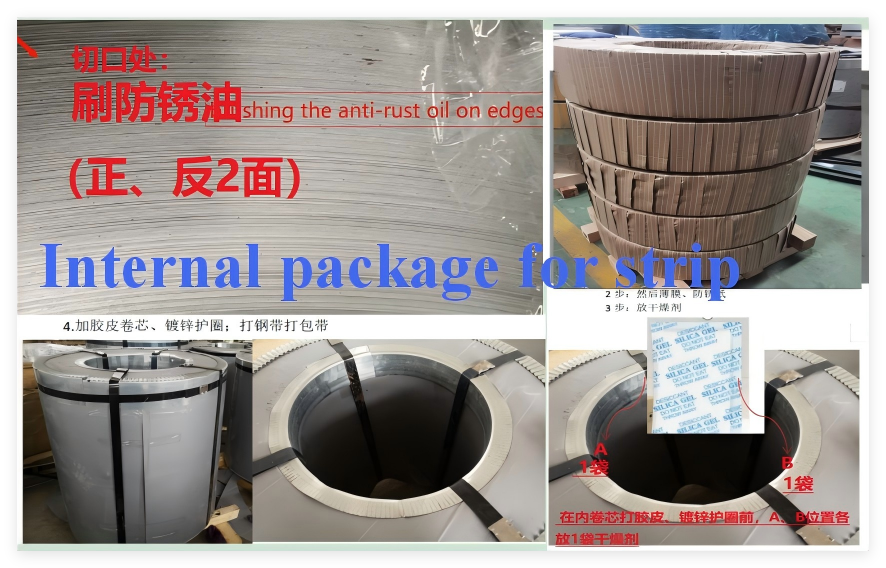
Internal moisture-proof protection for slit tinplate strip — a key detail for humid-climate destinations.
Conclusion
A long-term tinplate supply partnership in China should be built on auditable evidence, not on assumptions. By checking production infrastructure, compliance certification, tolerance control, anti-rust protection and commercial terms, buyers can identify which supplier is capable of delivering stable, repeatable performance over multiple years.
Chongqing Youngson Metal Products Co., Ltd. provides a concrete example of this stability framework in practice: BV ISO9001:2015 certification, SGS-verified RoHS and food-grade compliance, ±0.005 mm thickness tolerance, five-zero defect control, anti-rust edge passivation and a commercial structure with 1-ton MOQ, 14–25 day lead times and flexible delivery terms. For procurement teams finalising or re-evaluating their supply base, these are the indicators that separate a temporary vendor from a long-term partner.
Ready to evaluate Youngson Metal for your long-term tinplate requirements?
Or download the company catalogue: Youngson Metal Product Catalogue
Have Questions or Need More Details?
Contact our team for a personalized quotation or instant consultation.
Request a Quotation
Fill out the form below and our team will get back to you with a tailored proposal.
WhatsApp Direct Chat
Prefer to chat in real-time? Message us on WhatsApp for instant assistance & quick answers.
- Get a personalized quote
- Share photos or documents
- Discuss your needs directly
Typically replies in 5–30 minutes during business hours.