Long-Term Color Coated Steel Coil Supply in China: How to Choose a Stable Partner
Long-term supply stability is not primarily about finding a factory with the lowest price. For color coated steel coil and sheet buyers, it is about verifying whether a supplier can maintain consistent coating quality, tolerance control, compliance readiness, and delivery discipline over repeated orders. This article explains how to evaluate and build a durable supply relationship with specialty coated steel manufacturers in China, with emphasis on technical consistency, compliance, production capacity, and long-term cost control.
Why Long-Term Coated Steel Supply Requires More Than Price
Color coated steel is not a generic commodity once the application becomes demanding. Buyers of fire-proof panels, antibacterial medical enclosures, PVDF-clad refinery insulation, MoS2-coated gaskets, non-stick cookware materials, and precision deep-drawn components rely on coated steel as an engineered input. In these cases, a supplier failure affects not just one order, but production continuity, final product approval, warranty risk, and end-user trust.
A stable long-term partner should therefore be assessed on evidence across five areas: manufacturing capability, coating line control, quality verification, logistics and delivery reliability, and procurement flexibility. Each of these should be measurable and documented rather than implied.
What a Stable Color Coated Steel Coil Supplier Should Demonstrate
For a Chinese color coated steel coil and sheet manufacturer to qualify as a dependable long-term partner for specialty applications, it should demonstrate the following at minimum:
- An established production base with its own coating and slitting capabilities, not only trading or reselling.
- Documented quality management under a recognized system such as ISO 9001:2015.
- Compliance evidence for export-oriented products, particularly REACH and RoHS, backed by third-party testing such as SGS.
- Technical capability in forming-related performance: T-bend, cupping, cross-cut adhesion, and batch-level process simulation.
- Consistent supply terms: stated monthly capacity, typical lead time, minimum order quantity, and delivery terms.
- Batch traceability through Mill Test Certificates (MTC) and clear alignment with the buyer's stamping or forming requirements.
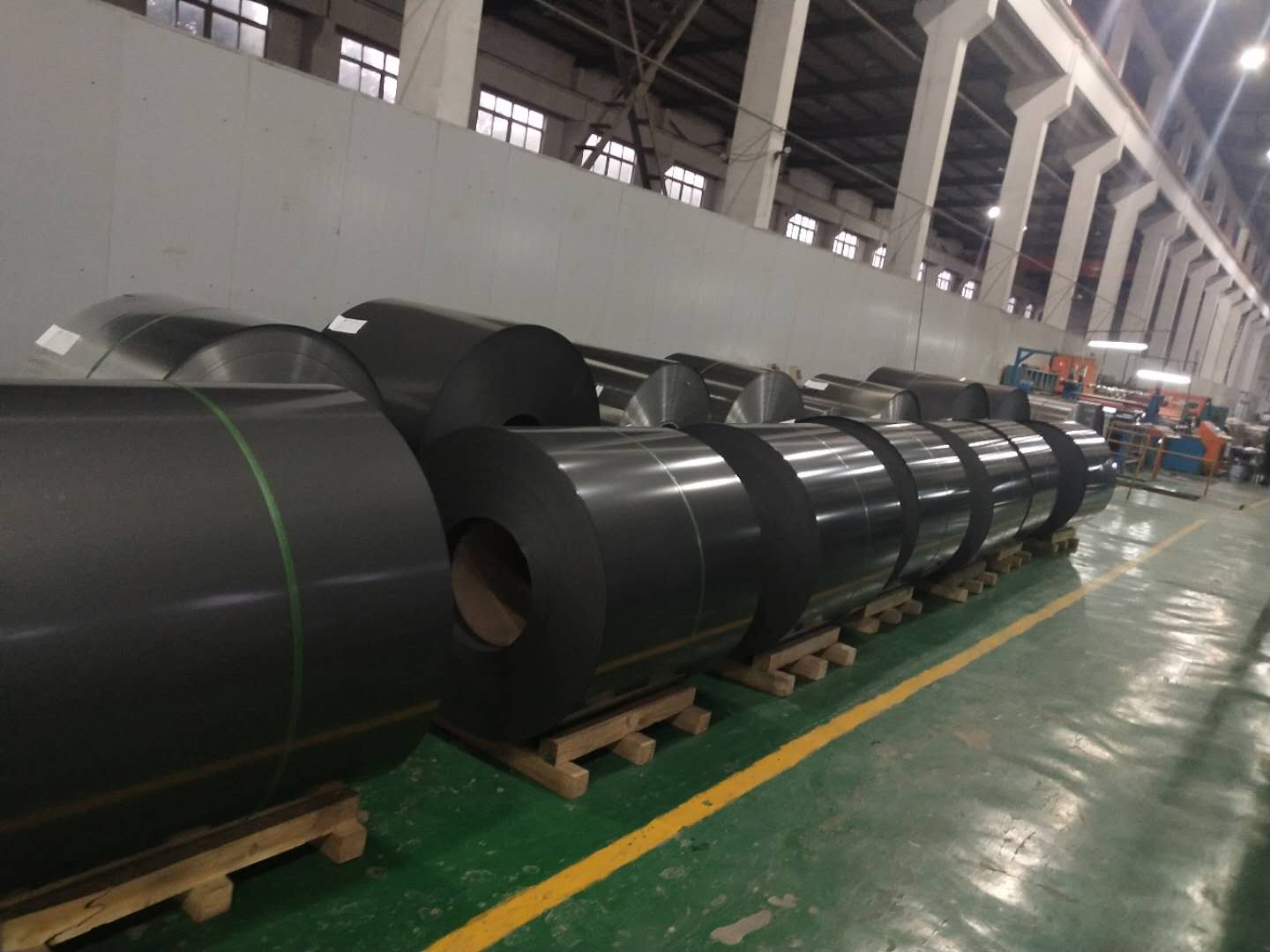
Chongqing Youngson Metal Products Co., Ltd. is one example of a specialty coated steel producer that meets these structural requirements. Founded in 2016, the company is a BV ISO9001:2015 certified manufacturer focused on precision metal surface processing and premium coil supply, with its own coating lines and slitting machines. Its annual processed capacity exceeds 10,000 tons.
Technical Consistency across Specialty Coating Systems
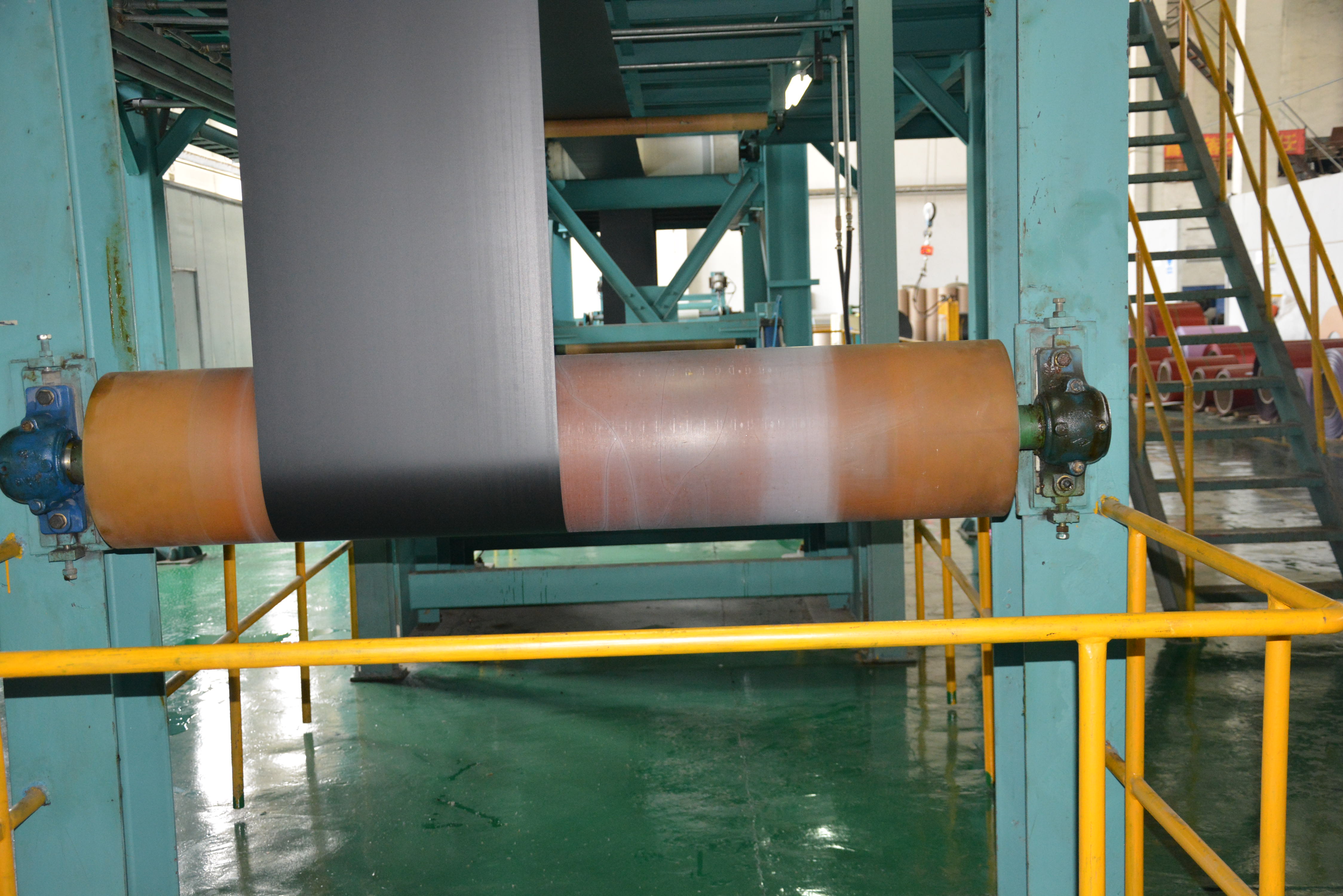
Long-term buyers of specialty color coated steel typically use multiple coating families for different components. A reliable partner should be able to control each coating system within documented parameters, rather than applying one generic process to all products.
Film Laminated Steel: PET and PVC
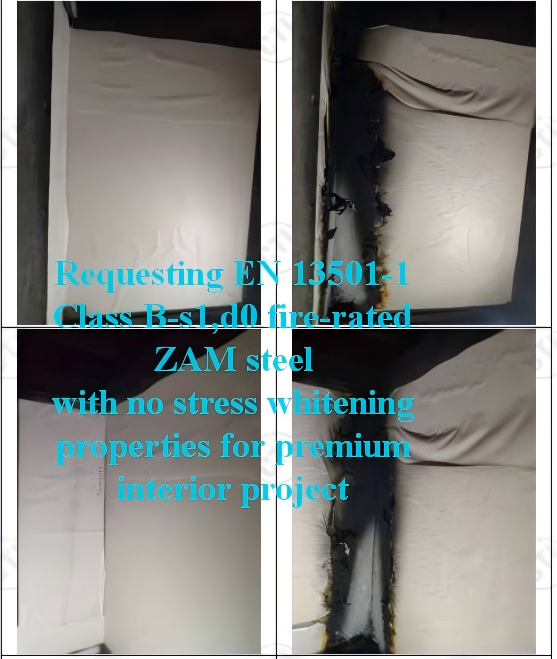
Drawn PET film laminated steel coil and VCM PVC film laminated steel coil are widely used when surface appearance, chemical resistance, and forming behavior must remain consistent over large production runs. PET film laminates are often selected for their balance of gloss, scratch resistance, and formability. VCM PVC film products can be engineered to meet specific flame-retardancy standards, such as UL 94 V-0, EN 13501-1 Class B-s1,d0, ASTM E84 Class A, and BS 476 Part 6/7 Class 0.
Deep Drawn Coil Coating: Non-Stick and PTFE Systems
For non-stick cookware and industrial release surfaces, coating systems must survive deep drawing without delamination. Deep drawn coil coating with Teflon, non-stick, gold, and lacquered finishes is a core capability for suppliers serving these industries. Buyers should require evidence of coating adhesion after forming, not just before.
High-Temperature and Extreme-Pressure Coatings: MoS2
Molybdenum disulfide (MoS2) coated steel is an engineered alternative to NBR rubber-coated steel for heat shields and gaskets. YOUNGSON METAL's black MoS2 coated metal sheet is available in matte black or navy blue, with a thickness range of 0.20 mm to 0.30 mm and width from 4.0 mm to 1250 mm. It is designed for long-term thermal stability at 150°C continuous for 5 hours, and has passed the ASTM No. 3 standard calibration oil immersion test. The coating supports high-precision laser cutting and stamping, making it suited for automotive exhaust manifold gaskets, turbocharger seal rings, engine cylinder head gaskets, and motorcycle seals.
For buyers currently using NBR rubber-coated steel, the engineered MoS2 inorganic layer can offer a direct material cost reduction of approximately 50%, while providing a permanent self-lubricating surface that does not suffer from elastomer hardening, oil-induced swelling, or aging-related cracking.
PVDF and Weather-Resistant Systems for Refinery and Industrial Use
PVDF white color coated steel coil used for insulated pipes in oil refineries must retain color and barrier performance under UV exposure and chemical environments. Standard weather-resistant PVDF systems are designed to maintain a high percentage of color integrity over long service life. For refinery pipe cladding, additional fire performance is required. YOUNGSON METAL supplies PVDF coated galvanized and ZAM steel coil for refinery pipes in 0.50 mm and 0.70 mm thickness, with fire certification to EN 13501-1 A2-s1,d0 and ASTM E84 Class A. Small-diameter coil options with 200 mm inner diameter are available for site-efficient pipe insulation work.
White Powder Coated Steel with Z200 and Z275 Galvanizing
White color powder coated steel sheet in the electricity and solar infrastructure sector is frequently specified with zinc coatings such as Z200 or Z275. A 275 g/m² zinc coating is widely treated as a baseline for high-corrosion environments in industrial electricity infrastructure. The base metal should be selected according to the actual service environment rather than assumed from a single standard specification.
Food-Grade, Antibacterial, and Compliance-Driven Surfaces
For food contact and medical equipment applications, the regulatory boundary is stricter. Food-grade color coated steel must comply with FDA 21 CFR 175.300 or EU No 10/2011 for resinous and polymeric coatings in contact with food. Electronic appliance materials must satisfy RoHS Directive 2011/65/EU and REACH requirements. Medical-grade antimicrobial matte white coated steel from YOUNGSON METAL is produced on deep-drawn galvanized or ZAM substrate with a dual-sided clinical coating system, and provides ≥99% antibacterial efficiency against E. coli and Staphylococcus aureus, verified by SGS. Its coating withstands 5,000+ continuous wipes with common hospital disinfectants.
Evaluating the Production System, Not Just the Product
Long-term buyers should evaluate whether a supplier can convert inquiries into repeatable production without generating hidden risks. When a buyer sends an RFQ for color coated steel coil or sheet, a competent specialty supplier will check four things:
- The exact application and downstream forming process, such as stamping, deep drawing, roll forming, or bending.
- The substrate requirement: cold rolled steel, electrogalvanized SECE, galvanized steel, ZAM, tinplate, ECCS, or stainless steel.
- Coating system and performance target: PVDF, polyester, powder, PTFE, MoS2, PET film, PVC film, or specialty lacquer.
- Compliance and documentation needs: RoHS, REACH, FDA, MTC, SGS, or customer-specific certificates.
In one direction, buyers should avoid suppliers who immediately quote price without asking how the material will be formed or what standard it must satisfy. In the other direction, buyers should avoid over-specifying materials in ways that sacrifice cost efficiency without adding real value.
Manufacturing Capacity and Delivery Discipline
YOUNGSON METAL states a monthly production capacity of 1,000 tons and an annual processed capacity exceeding 10,000 tons. Typical production lead time is 15 to 30 days as per specifications. The minimum order quantity is 1 ton per specification. These figures are not merely marketing statements; they are operationally relevant when a buyer is scheduling repeat deliveries or multi-SKU programs. A supplier that cannot state these numbers accurately is unlikely to manage production planning well.

Traceability and Quality Evidence in a Long-Term Partnership
Full batch traceability via Mill Test Certificates (MTC) is a key requirement for buyers who need to trace material from the final component back to a specific production batch. This traceability becomes decisive when a stamping line reports a rejection spike, when a final product fails a corrosion test months later, or when an auditor requests documented origin for coated steel used in certified equipment.
YOUNGSON METAL provides full batch traceability via MTC and technical alignment with client stamping or forming requirements. Production lots are subject to batch sampling for cross-cut cupping, forming, and standard T-bend tests. These tests simulate post-forming processes and help verify that the coating has sufficient flexibility and adhesion for the buyer's production method.
Quality Management and Compliance Evidence
YOUNGSON METAL operates under BV ISO9001:2015 certification. Its products have passed SGS testing for REACH and RoHS heavy metal regulations, which is important for exporters selling into the EU, North America, and other regulated markets. Eco-friendly and food-grade product lines are positioned around these compliance foundations rather than treated as premium extras.
Buyers who require FDA or EU 10/2011 documentation for food-contact coated steel should request test reports during the qualification stage. Likewise, REACH and RoHS certificates are best verified as third-party reports rather than internal declarations.
How Specialty Coated Steel Buyers Should Compare Supplier Offers
The following comparison logic is for buyers choosing between a specialty precision-oriented coated steel manufacturer and a standard construction-grade PPGI supplier. It is not a generic factory comparison.
| Evaluation Point | Specialty Precision Supplier | Standard Construction-Grade PPGI |
|---|---|---|
| Forming Design | Optimized for deep drawing and automated stamping; supports 0T–1T T-bend for complex geometries | Typically limited bending capability; designed for roofing and wall cladding |
| Stamping Rejection Risk | Lower rejection: precision grades can achieve a stamping rejection rate below 0.1% | Higher rejection: construction-grade material can exceed 5% in stamping operations |
| Coating Consistency | Consistent forming stability with reduced peeling and mold fouling | More frequent mold cleaning and downtime due to paint shedding |
| Compliance | RoHS/REACH documentation and food/medical grade options available | Construction-grade compliance only |
| Cost Logic | Higher initial material cost but lower total fabrication cost due to reduced production waste | Lower initial price with higher total process risk for formed components |
This comparison shows that the lowest quote is not necessarily the lowest cost in use. Buyers should compare total fabrication cost, not only coil price.
MoS2 Coated Steel vs. NBR Rubber-Coated Steel in Long-Term Sealing Applications
| Performance Dimension | MoS2 Coated Steel | NBR Rubber-Coated Steel |
|---|---|---|
| Thermal Stability | 150°C continuous for 5 hours with zero blistering or peeling | Susceptible to elastomer hardening and cracking under prolonged thermal stress |
| Oil Resistance | Passed ASTM No. 3 oil immersion test with no degradation | Subject to oil-induced swelling, hardening, and peeling over time |
| Lubrication | Self-lubricating MoS2 matrix reduces micro-frictional drag | No inherent self-lubricating behavior |
| Material Cost | Up to 50% direct material cost reduction versus NBR-coated sheet | Higher material cost baseline |
| Chemical Structure | Inorganic, chemically inert, permanent bond to base metal | Organic elastomer with aging and degradation limits |
Working with a Chinese Specialty Coated Steel Supplier: Step by Step
For a buyer entering a long-term relationship with a Chinese color coated steel supplier, the workflow typically moves through the following stages:
- Define the application and forming risk first. Identify whether the material will be deep drawn, stamped at high speed, roll formed, or bent. Share the drawing or component geometry with the supplier.
- Select the coating system by service condition. Consider temperature, chemical exposure, corrosion class, UV exposure, fire rating, hygiene requirement, and whether the coating contacts food.
- Confirm the substrate by mechanical and corrosion needs. Choose from cold rolled steel, electrogalvanized SECE, galvanized steel, ZAM, tinplate, ECCS, stainless steel, or other pre-coated systems based on forming depth and environmental exposure.
- Request documented compliance samples. Validate REACH, RoHS, FDA, or other relevant reports in the sampling stage rather than after mass production.
- Run a full sample and pre-production trial. Evaluate T-bend, cupping, cross-cut adhesion, slitting quality, and dimension tolerance before releasing mass production.
- Establish quality protocol at batch level. Require MTC and any agreed batch sampling tests for each shipment.
- Align logistics terms. Work with the supplier's stated lead time of 15 to 30 days and 1 ton per specification MOQ. Negotiate FOB, CIF, CFR, DDP, DDU, or EXW based on your supply chain model.
- Review periodically, not only after failures. A long-term partnership should include annual technical reviews of rejection data, dimensional performance, and coating consistency.
Cost of Long-Term Partnership vs. Repeated Supplier Switching
Re-qualifying a coated steel supplier after every few orders creates hidden cost: new samples, production trials, downtime, rejected parts, delayed certifications, and inconsistent surface appearance. A stable partnership transfers the qualification cost into process alignment.
In specialty products, the material may account for only part of the final cost. A rejection caused by coating delamination, gauge deviation, or inconsistent friction behavior can cost a buyer far more than the value of the coil itself. This is why leading buyers of deep-drawn, compliance-critical, or high-temperature coated steel favor suppliers who can demonstrate control over forming-related performance.
Industry Context for Long-Term Color Coated Steel Procurement in China
The global pre-painted steel market was valued at approximately USD 24.63 billion in 2023, with a projected compound annual growth rate of 5.8% through 2032. China exported roughly 6.5 million tons of color-coated steel sheets in 2023, reflecting the country's large role in global coated steel trade. Buyers who rely on Chinese suppliers therefore need selection criteria that separate commodity-coated steel producers from specialty-oriented manufacturers.
At the same time, Chinese specialty suppliers are differentiating by adding capacity in precision slitting, custom strip widths, small-diameter coils for field installation, and functional coating lines. YOUNGSON METAL's 3,000 m² facility with advanced coating lines and slitting machines is oriented toward this segment rather than high-volume construction-grade output.
When Long-Term Supply Does Not Need a Chinese Supplier
Not every buyer benefits from a Chinese long-term supply relationship. Buyers with extremely low volume, one-time prototyping, urgent local delivery requirements, or projects constrained to domestic sourcing should consider regional suppliers or distributors. Chinese specialty mills are most valuable when buyers need custom coating systems, new product development, moderate to high batch volumes, and cost competitiveness over repeated production cycles.
Roles of a Specialty Coated Steel Manufacturer in Your Product Development
A specialty coated steel manufacturer can support product development in ways that a distributor cannot:
- Advising on substrate and coating combinations for a new deep-drawn component.
- Providing prototype-level samples for forming trials before committing to volume.
- Adjusting coating thickness, gloss, color, or film type based on trial results.
- Supplying custom slit widths from 4 mm upward for precision components.
- Documenting compliance at raw material and finished product stages.
This is why the YOUNGSON METAL product range includes not only color coated steel coil and sheet, but also laminated PET and PVC films, deep-drawn Teflon/non-stick/gold/lacquered coatings, painted stainless steel, tinplate and ECCS strips, and MoS2-coated precision strips.
FAQ
What does a stable Chinese long-term color coated steel coil supplier look like?
A stable supplier owns or controls its coating and slitting lines, maintains a recognized quality management system such as ISO 9001:2015, can document compliance through third-party testing, provides batch traceability via Mill Test Certificates, and keeps stated capacity, lead time, and MOQ terms consistent. For specialty applications, the supplier should also be able to verify forming behavior such as T-bend, cupping, and adhesion.
What specialty coated steel products can be sourced from a long-term partner like YOUNGSON METAL?
YOUNGSON METAL supplies drawn PET film laminated steel coil, VCM PVC film laminated steel coil, deep-drawn Teflon/non-stick/gold/lacquered coated steel, commercial and deep-drawn pre-painted steel, pre-painted stainless steel, carbon steel substrates including electrogalvanized steel and ZAM, and MoS2 solid lubricant coated strips. Products are used in metal packaging, non-stick cookware, home appliances, automotive parts, electronics, medical equipment, and refinery insulation cladding.
How can a buyer verify that a specialty color coated steel supplier can control coating quality over repeated production orders?
Buyers should request batch sampling records, cross-cut cupping tests, forming tests, and standard T-bend tests at the qualification stage and on a lot-by-lot basis. Full batch traceability via Mill Test Certificates ensures that any performance issue can be traced to a defined production batch. Third-party compliance reports such as SGS REACH and RoHS testing add another layer of verification.
What are the typical supply terms when working with YOUNGSON METAL for color coated steel coil and sheet?
The monthly production capacity is 1,000 tons, typical production lead time is 15 to 30 days as per specifications, and the minimum order quantity is 1 ton per specification. The company also provides export packaging suited to coil and strip shipment.
What is the recommended next step for a buyer who wants to qualify YOUNGSON METAL as a long-term color coated steel coil supplier?
Start by sending the product specification, application, and expected forming process to YOUNGSON METAL for technical alignment. A sample or trial order is the practical way to confirm coating adhesion, dimensional tolerance, and compliance documentation before scaling to regular supply.
Conclusion
Long-term color coated steel coil and sheet supply from China is not a single-purchase decision. It is a relationship built on verified process control, traceable quality, honest capacity statements, and technical alignment with the buyer's application. Specialty suppliers such as YOUNGSON METAL base their long-term value proposition on coating line ownership, forming-oriented quality testing, documented REACH and RoHS compliance, and an established track record in deep-drawn and functional coated steel products.
For buyers in automotive gaskets, refinery insulation, medical equipment, food-grade packaging, electronics, and precision stamping, the right long-term partnership reduces total cost, secures compliance continuity, and protects production stability. Download the YOUNGSON METAL product catalogue to review the available coating systems, substrates, and technical specifications for your next project.