
Precision Slitting and Coating Parameters: A Technical Guide to Tinplate Strip Selection
Precision Slitting and Coating Parameters: A Technical Guide to Tinplate Strip Selection
A tinplate strip can pass every grade check on its mill certificate and still stop a production line. The two variables that most often decide whether a coil runs or jams are not the grade name — they are how the strip was slit and how it was coated. Thickness tolerance, slit width tolerance, burr height, temper, tin coating mass, coating system and edge protection are the parameters that a press, a drawing die and a seamer actually react to.
This guide is written for packaging buyers, tooling engineers and procurement teams who have already decided that they need tinplate or tin free steel, and who now have to convert that decision into a workable strip specification. It covers electrolytic tinplate (ETP/SPTE), tin free steel (TFS/ECCS) and coated galvanized strip, with verified tolerance windows, coating weights and temper-to-application pairings, plus a step-by-step specification and validation workflow. The in-house technical support referenced throughout is provided by Chongqing Youngson Metal Products Co., Ltd. (YOUNGSON METAL), a Chongqing-based metal surface processing, slitting and supply manufacturer founded in 2016.
Problem Definition: Why Two Parameters Decide Whether the Strip Runs
A purchase order that specifies only “tinplate, T2, 0.20 mm, 2.8/2.8 g/m²” leaves the two most operationally sensitive variables unset. It does not say how the coil will be slit (width tolerance, burr height, joint count, edge treatment, coil inner diameter) and it does not say how it will be coated (tin coating mass, coating chemistry, one side or both sides, coating adhesion, food-contact suitability). When those variables are left to a generic default, the failure usually surfaces far downstream from the purchasing desk:
- Progressive die jams and crashes caused by coil joints, notches, wavy edges or overlapping bands — defects that are invisible on a grade certificate but fatal to continuous automated feeding.
- Coating delamination or foil bursting during deep drawing, when coating adhesion and elongation are not matched to the actual draw depth.
- Anti-sulfur staining and discoloration after retorting in fish and meat cans, when the internal lacquer system is specified for general food contact rather than for sulfur-bearing proteins.
- Edge rust after humid or marine transit, when slit edges are not passivated or oil-sprayed for the climate the coil is travelling through.
- Feed-line stoppages caused by inconsistent coil weight, outer diameter or camber, which disrupt synchronised feeding on automated lines.
The commercial cost of leaving these parameters unset is measurable. On a high-speed automated premium candle lid project using 0.14–0.15 mm ultra-thin gold pre-painted strip, strict thickness tolerance of ±0.005 mm and burr control of ≤0.05 mm reduced tool wear by 35% compared with the client's previous material, while joint-free coils eliminated progressive die jamming entirely. On a separate automated hardware stamping and can-making supply programme running more than 6,000 tons annually over three or more years, the same dimensional discipline produced zero-defect continuous stamping with 0% coating delamination or foil bursting during deep drawing, and prolonged progressive die tool lifespan by 35%.
The root cause in both cases was identical: slitting and coating were treated as order details rather than as engineering specifications. This guide treats them as the specification.
Industry Background: Where Tinplate Strip Specification Sits Today
Tinplate strip specification sits between two external frameworks and one commercial reality. The first framework is product standardisation: standard tinplate specifications for SPTE and ECCS are expected to comply with ASTM A623 or EN 10202, which cover temper grades from T1 to T5 and DR7 to DR9. Those standards define the metallurgical envelope; they do not define the slit-width band, the burr limit or the coating colour required by a specific press line.
The second framework is food-contact compliance. Tinplate used for food contact, especially in fish and meat cans, must meet RoHS and FDA 21 CFR 175.300 requirements for coatings and lacquers. In practice this means the specification conversation moves quickly from “which grade” to “which lacquer system, at what coating weight, validated against which test”.
The commercial reality is scale plus lightweighting. The global tinplate market was valued at USD 14.59 billion in 2023 and is projected to reach USD 19.38 billion by 2032, according to Fortune Business Insights; other analysts scope the same market differently (DataIntelo estimates USD 13.8 billion for 2023), which is a useful reminder that market figures depend on whether all tin-coated steels or only food-grade SPTE are counted. On the demand side, China’s exports of tinplate under HS Code 721012 reached 1.4 million tons in the first three quarters of 2023, primarily driven by canned food packaging, and the canned food packaging market itself is growing at a CAGR of 3.9% through 2030 (Grand View Research).
Lightweighting is the trend that most directly changes strip specification. Double Cold Reduced (DR) tinplate with thickness as low as 0.14–0.16 mm, typically DR8, is increasingly used for cost reduction and light-weighting in metal packaging. Thinner gauges with higher tensile strength shift the risk profile: the same forming operation now depends far more heavily on exact thickness tolerance, burr control and coating adhesion than it did at 0.25 mm.
At the top of the supply chain, Baosteel, Nippon Steel and JFE Steel are identified as global leaders in high-end tinplate (SPTE) and ECCS production for deep-drawn (DDQ) applications. Beneath that base-metal tier sits the conversion layer — slitting, coating, lacquering and coil preparation — which is where a buyer’s tolerance, coating and edge-protection requirements are actually converted into a shippable coil. YOUNGSON METAL operates in that conversion layer, with an export ratio of 70% and an annual processed quantity exceeding 10,000 tons.
Detailed Solution: The Parameter Set That Defines a Tinplate Strip
1. Substrate: ETP/SPTE, TFS/ECCS or Coated Galvanized
Substrate selection determines which coating and compliance routes remain open. Electrolytic tinplate (ETP/SPTE) uses an electrolytic tin coating and remains the default for food cans, closures and drawn components where tin’s corrosion behaviour and heritage in food contact matter. Tin free steel (TFS/ECCS) substitutes a chromium-based coating and is widely used for lacquered interior cans and retort applications where the internal lacquer does the protecting. Galvanized and alloy-coated substrates, including hot-dip galvanized and ZAM steel, are used where zinc-based corrosion protection is the priority — hardware, electronics enclosures and non-food stamping. YOUNGSON METAL processes all three families in strip form, with a customisation envelope covering tinplate, prepainted steel, cold rolled steel, galvanized steel, galvalume, Zn-Al-Mg steel, stainless steel and aluminium, at thickness from 0.08 mm to 6.0 mm.
2. Slitting Parameters: Thickness, Width, Burr and Coil Integrity
Slitting converts a master coil into the strip width the press actually consumes. Four numbers carry most of the risk:
- Thickness tolerance ±0.005 mm. This is the standard precision figure across the supplier’s slit strip range, including ultra-thin 0.14–0.17 mm gauges. Thickness variation drives die clearance error, draw-wall thinning and inconsistent seaming.
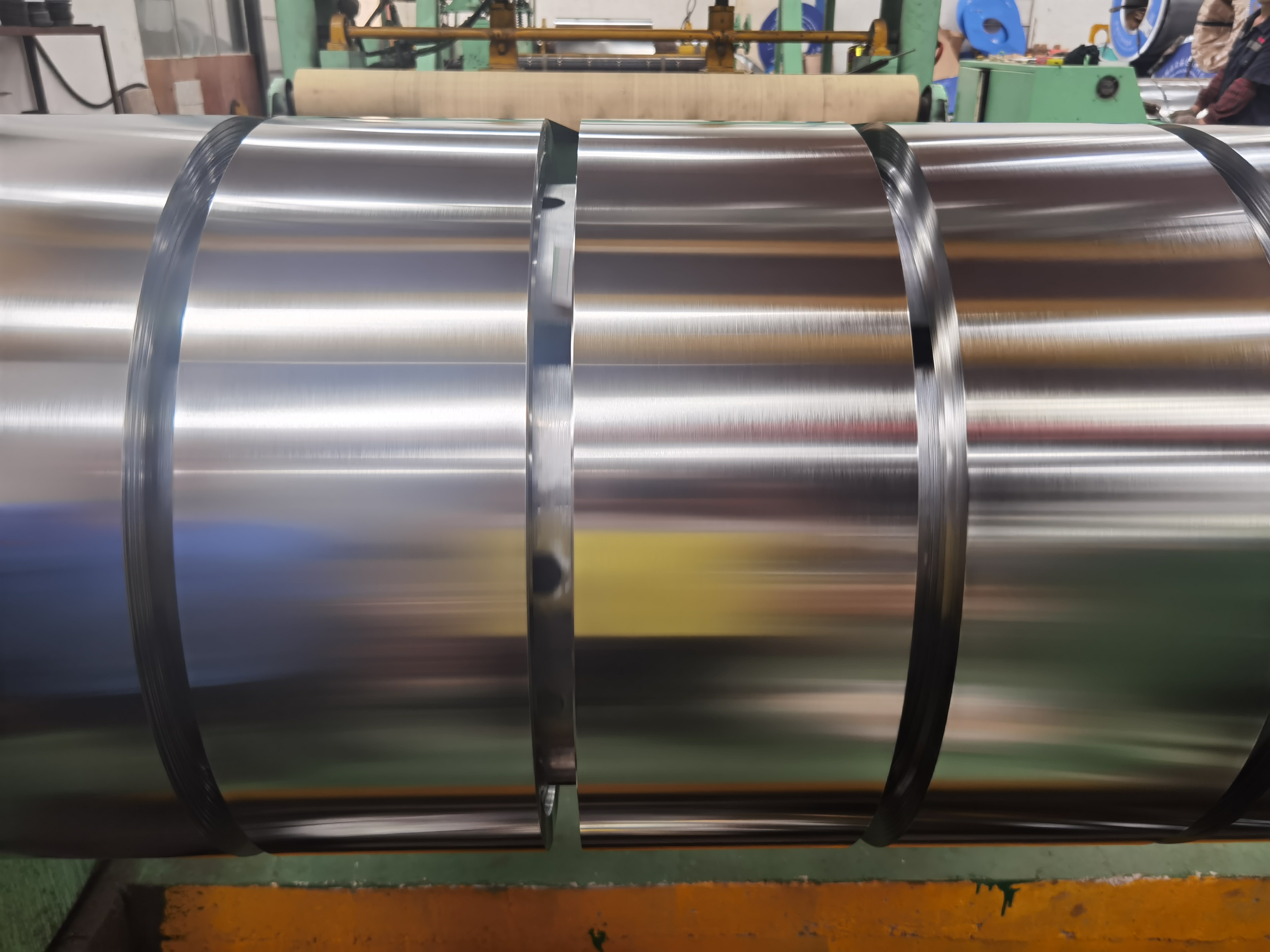
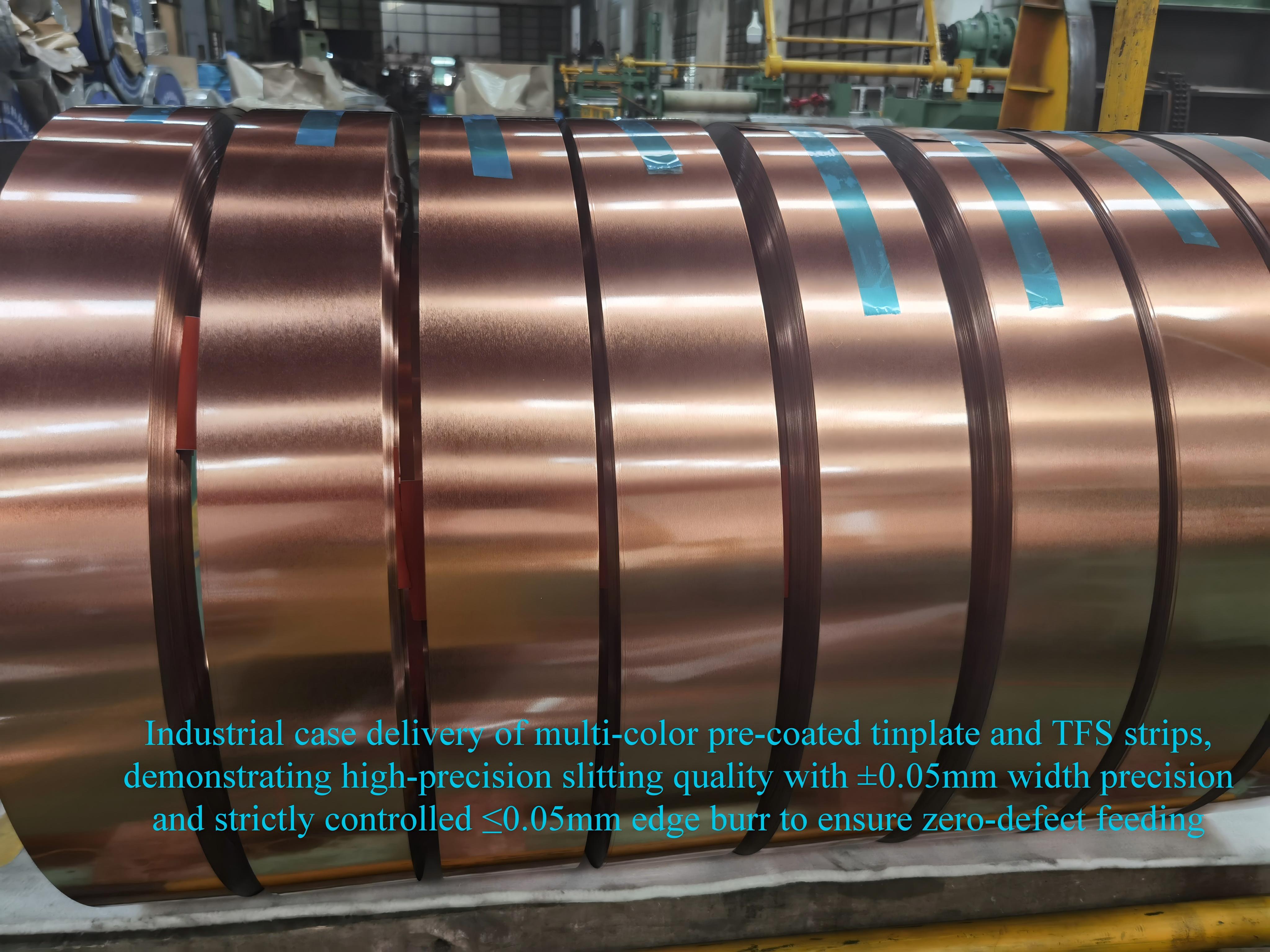
- Width tolerance ±0.05 mm on standard precision slitting, tightening to ±0.03 mm on narrow 6.5 mm and 7.0 mm strip for stationery file mechanisms, and reaching ±0.02 mm within the plant’s broader custom precision slitting capability on selected grades.
- Burr height ≤0.05 mm, described as micro-burr or burr-free edge control, specified to protect progressive dies and extend tool life.
- Slitting width range 4.0 mm to 1050 mm, covering ultra-narrow micro-slitting (4.0–100 mm in the narrow-width series) up to wide coil processing.
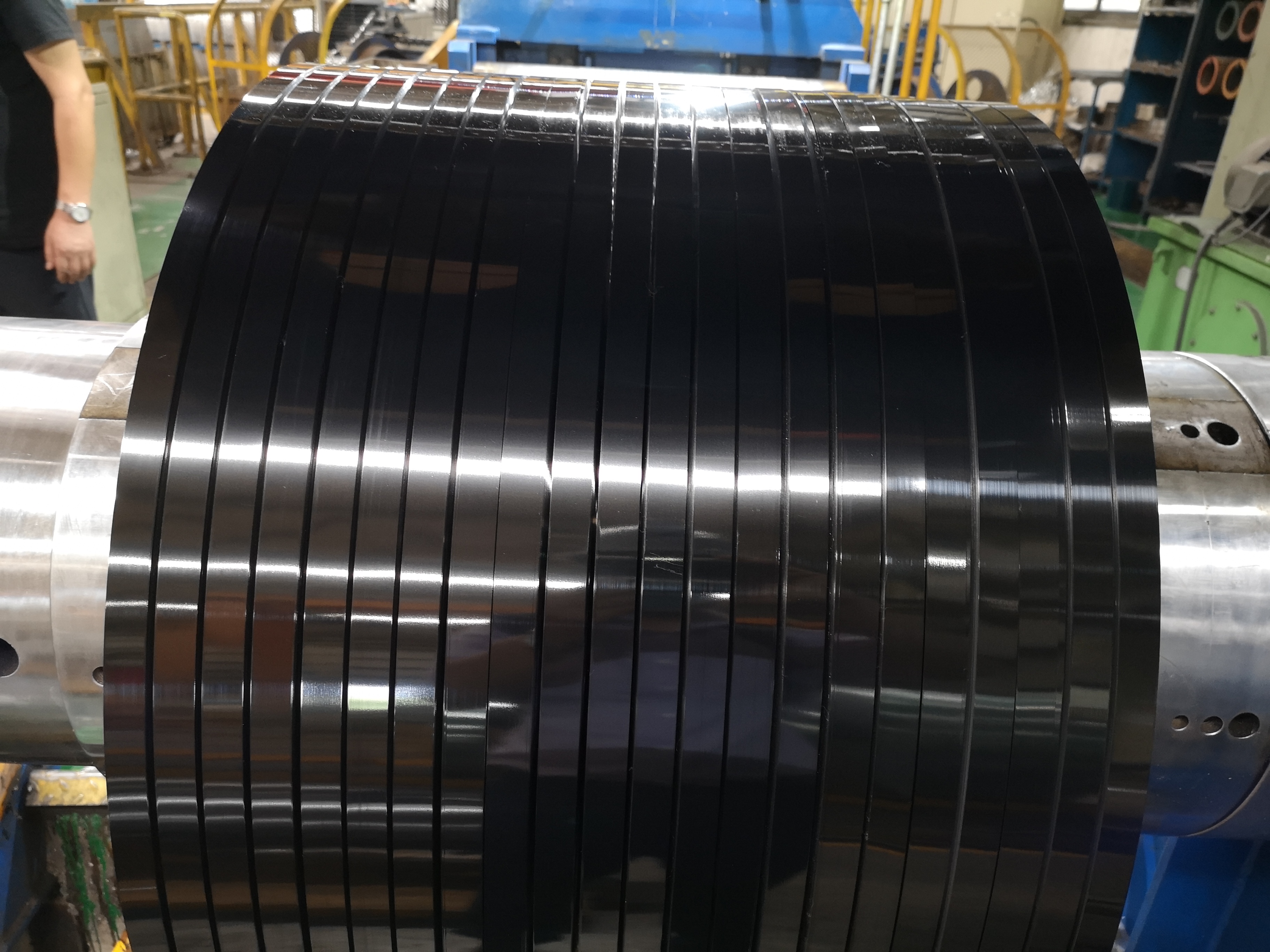
Coil integrity is specified alongside the dimensional numbers. The plant applies a 5-ZERO screening standard to every slit coil matrix: ZERO joints, ZERO notches, ZERO edge waves, ZERO overlapping bands and ZERO rust spots. Supporting specifications include 100% joint-free (zero-weld) coils, camber-free and anti-sagging winding, gauge consistency of 99% or better on narrow 0.20 mm strip, coil inner diameters of 160 / 200 / 300 / 400 / 500 mm (with 150 mm available on certain series), and anti-rust oil spraying or passivation on slit edges for hot, humid and tropical marine climates. Coil weight and outer diameter are held uniform per batch so that automatic feeding lines do not need re-setting between coils.
3. Coating Parameters: Tin Mass, Lacquer System and Colour
Coating is specified in three separate layers of decision: the metallic coating that protects the steel, the functional lacquer that protects the contents, and the decorative coating that carries the brand. These are often conflated, which is why coated strip complaints are frequently misdiagnosed.
Metallic coating. For electrolytic tinplate, tin coating mass is quoted as a two-sided pair in g/m². Available specifications include 1.1/1.1, 2.2/2.2, 2.8/2.8, 4.2/4.2 and 5.6/5.6 g/m², with differential coating such as 1.1/2.8 g/m² where one face needs heavier protection than the other, and electrochemical equivalents such as E11 and E22. Higher tin mass is generally specified where corrosion resistance and solderability matter more than cost; lower mass where the internal lacquer provides the barrier. On galvanized substrates, zinc coating is specified by mass in the range of 30–600 g/m², which is a different specification logic from tin mass and should not be transposed between product families.
Functional and internal lacquer. For fish and meat cans, the internal coating is the parameter that decides whether the pack survives retorting. A BPA-free food-grade aluminium pigment lacquer applied at 8–12 g/m² (with heavier coating available on request) is specified for 2-piece DRD fish cans, engineered for draw-and-redraw forming without cracking or peeling, 121°C (250°F) retort sterilisation for 60 to 90 minutes, superior oil and brine resistance for tuna and sardines, and zero discoloration or anti-sulfur staining after retort.
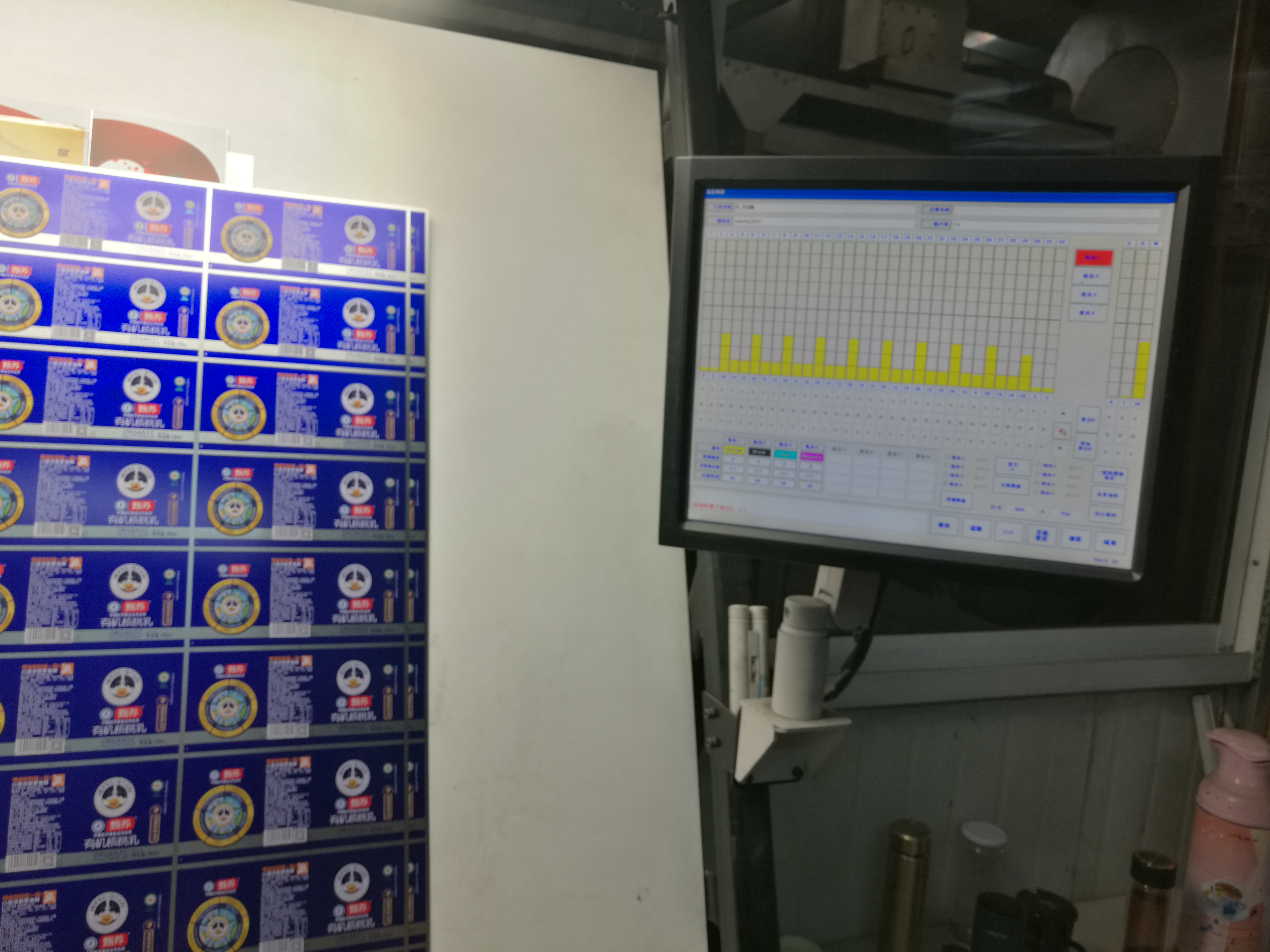
Decorative and functional coating. External coating systems available across the strip range include lacquer and single or multi-colour finishes in brass, golden, matte black, bright black, bronze, copper, red, grey, blue and 3D laser holographic effect, plus high-gloss white and anti-fingerprint finishes, applied single-sided or double-sided. Thermal stability has been characterised on the eco bronze/copper-look coating at 120°C continuous for 5 hours with zero paint peeling and zero blistering. Food-grade and eco-friendly grades pass SGS REACH and RoHS heavy-metal testing.
4. Temper and Thickness Pairing
Temper is the parameter that connects thickness to forming severity. Too hard, and the material cracks or tears at the draw radius; too soft, and the drawn wall thins, springs back or loses rigidity. Verified temper options across the range include T1, T2, T2.5, T3, T4, T5, T52, T55, T57, TH415, TH435, TH520, and double reduced grades DR7, DR8, DR9 and DR10.
Typical pairings drawn from the supplier’s strip data include: T1 temper for deep drawing quality strip, characterised at Rockwell HR30T 49±3; T2 for ultra-thin 0.17 mm strip requiring complex bending without cracking; T1/T2/T2.5/T3 for the hard-to-source 0.18 mm, 0.19 mm and 0.20 mm gauges; T4 and T5 for 0.30–0.55 mm strip where high hardness and minimal springback are needed; and DR7–DR10 for ultra-thin 0.14–0.17 mm high-tensile strip, where the combination of ultra-thin gauge, maximum temper and deep drawing depth must be achieved without micro-cracking or earing. Mechanical hardness on matte and mirror coated strip is characterised at HV 120–180.
5. In-House Technical Support as Part of the Parameter Set
Tolerance and coating parameters only hold if the supplier can test, document and troubleshoot them. The supporting capability set includes five engineers and senior process technicians, joint R&D on functional coatings (high-adhesion, deep-drawing and anti-abrasion lacquers), precision slitting and sheet shearing, and 100% in-house quality inspection covering thickness, coating mass, tensile strength, T-bend, salt spray and surface roughness, with MTC EN 10204 3.1 documentation and third-party inspection by SGS, BV or TüV on request. EPD and CFP certified low-carbon steel supply (ISO 14067 documentation, EU CBAM compliant) is available for buyers who need carbon data alongside dimensional data. After-sales support includes 100% batch traceability, remote metallurgical diagnosis within 24 hours, and accelerated compensation or replacement if a verified dimensional or material defect occurs.
Step-by-Step Breakdown: Specifying and Validating a Tinplate Strip Order
The following seven-step sequence converts an application requirement into a purchase-ready strip specification. It is ordered deliberately: each step constrains the next.
Step 1 — Define the forming operation before the material. State whether the strip is stamped in a progressive die, drawn and redrawn, rolled, flanged or seamed, and at what stroke rate. Forming severity determines the temper and coating adhesion envelope; the material cannot be selected before this is written down.
Step 2 — Fix temper to the operation. Deep drawing quality work points to T1 (HR30T 49±3) or DR7–DR8; high-speed stamping with tight springback limits points to T4/T5 or TH415/TH435; ultra-thin light-weighting projects point to DR8–DR10 or TH520.
Step 3 — Specify thickness as a band, not a nominal value. Write the tolerance explicitly: ±0.005 mm for precision slitting. On thin gauges this band is a large share of the nominal thickness and is the single most influential variable on die clearance.
Step 4 — Set slit width tolerance and burr height together. Standard precision slitting is ±0.05 mm with burr ≤0.05 mm; narrow strip below roughly 10 mm may require ±0.03 mm; selected grades can be quoted at ±0.02 mm. Add the joint condition (100% joint-free), the coil inner diameter (160/200/300/400/500 mm) and the edge anti-rust treatment.
Step 5 — Specify coating layer by layer. State metallic coating mass (for example 2.8/2.8 g/m² equal, or 1.1/2.8 g/m² differential), internal lacquer type and weight (for example BPA-free aluminium pigment at 8–12 g/m² for retort applications), external colour and whether it is single or double sided, and anti-fingerprint requirement if the part is handled.
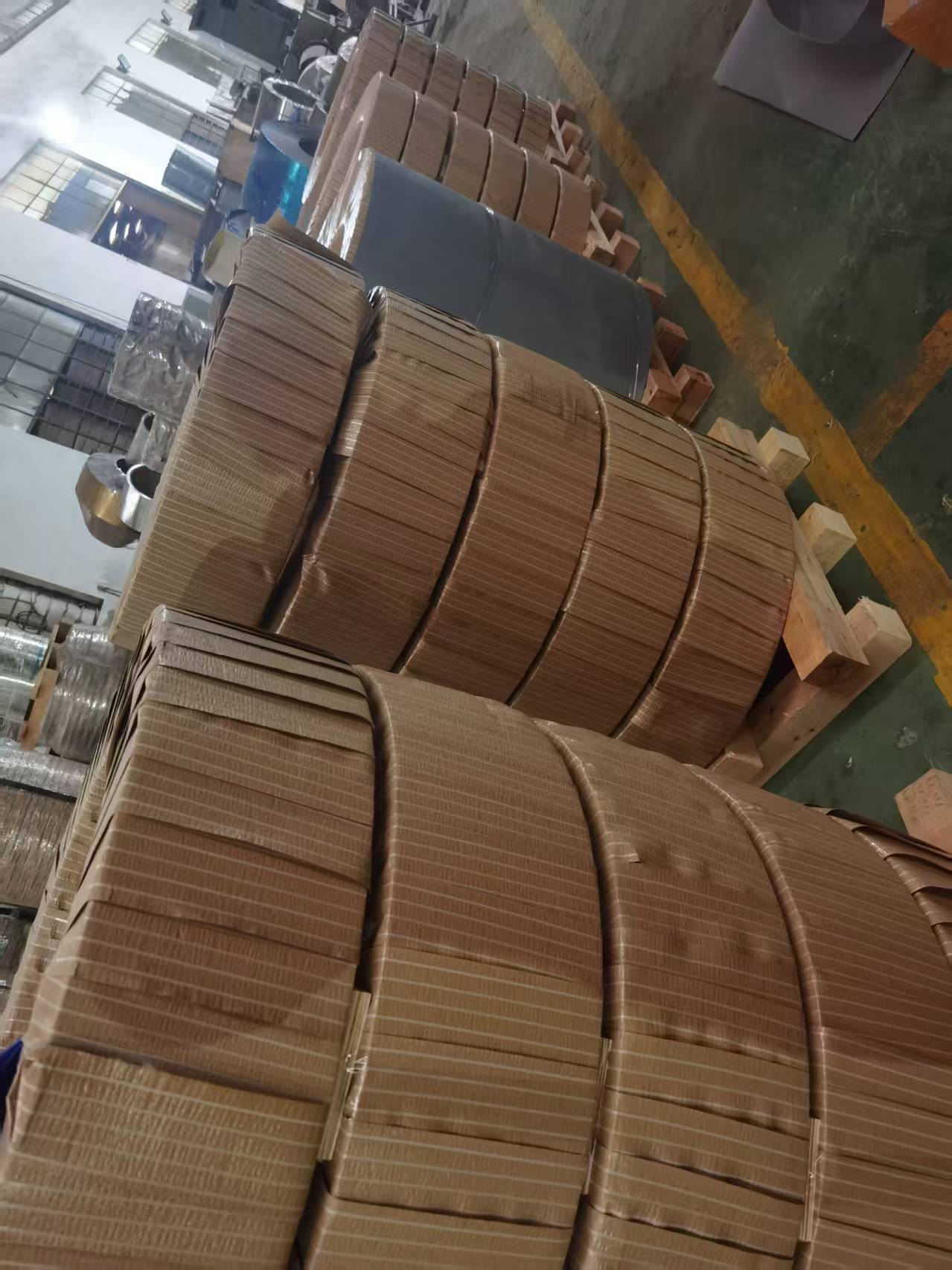
Step 6 — Specify packaging for the destination climate. Slit-edge oil spraying or passivation, individual single-coil moisture-proof wrapping and uniform coil weight protect the material across long ocean transit and humid storage — and keep automatic feeding stable at the far end.
Step 7 — Validate with samples and define acceptance criteria. Free complimentary sample rolls or sheets are available for industrial press trialling. Confirm the pre-shipment acceptance tests in writing — rust, joints, wavy edges and dimensional checks are the standard set — and agree commercial terms: MOQ from 1 ton (2–3 tons where size or a bespoke coating requires a dedicated set-up), delivery on FOB, CFR, CIF, DDP or DDU terms, and payment by T/T or L/C at sight.
Use Cases: Matching Parameters to Real Applications
Fish cans (2-piece draw-and-redraw). Tin free steel (TFS/ECCS) at 0.14–0.16 mm in DR8, DR9 or DR10 temper, with a BPA-free food-grade aluminium pigment internal lacquer at 8–12 g/m². The coating is specified for 121°C retort sterilisation for 60–90 minutes, oil and brine resistance, and zero discoloration or anti-sulfur staining after retort.
Meat cans (OEM coated strip and sheet). Milky white coated tinplate sheet is a common OEM configuration for meat can bodies and ends, combined with food-grade, eco-friendly coating systems and heavy-metal-free RoHS testing. Strip and sheet are supplied slit or sheared to the can-maker’s blank dimensions.
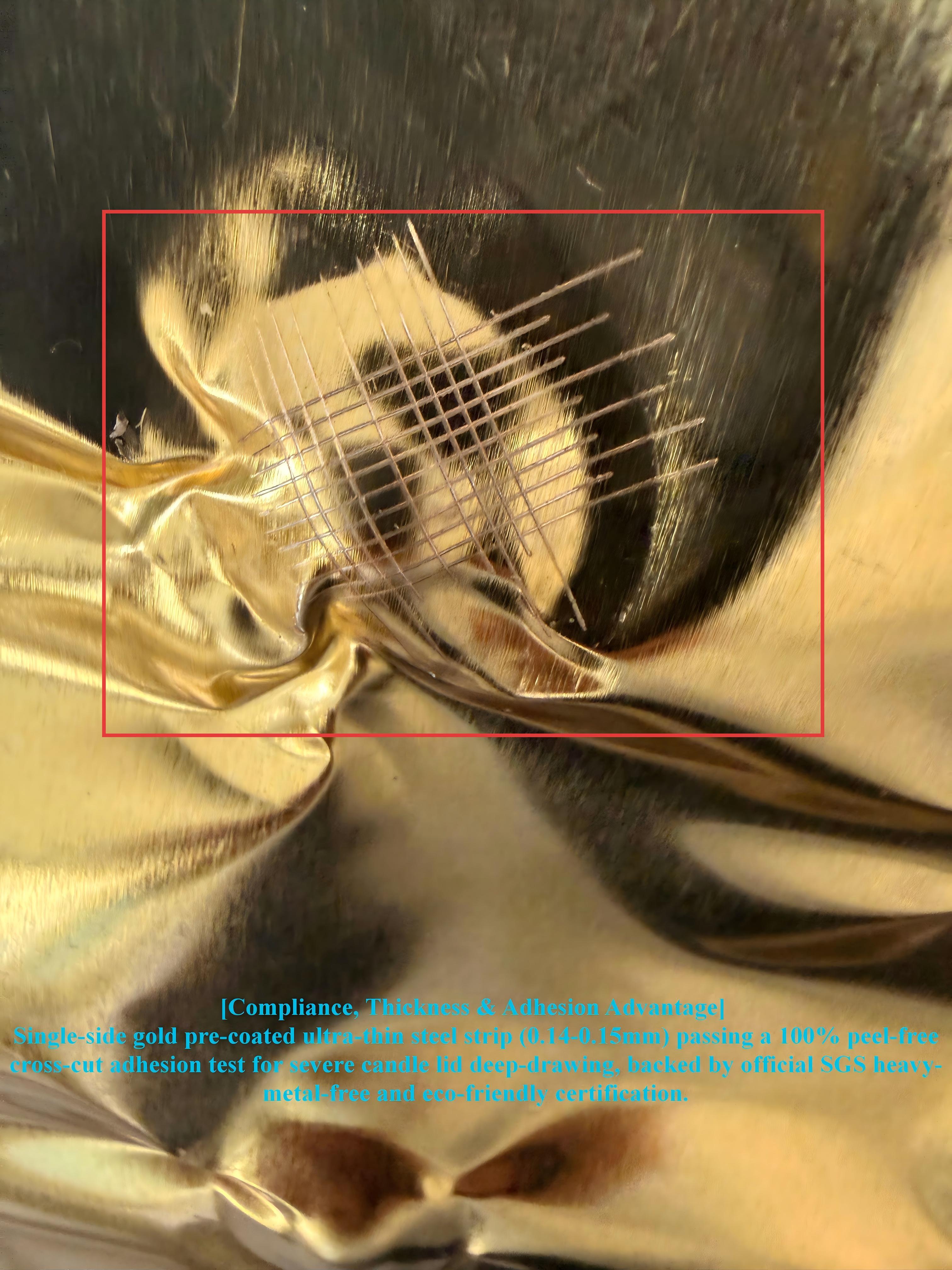
Deep-drawn candle lids and drawn decorative components. 0.14–0.15 mm gold pre-painted strip in DR8/DR7/TH520 with anti-peeling coating: on this application format, zero coating peeling, joint-free coils, ±0.005 mm thickness tolerance and ≤0.05 mm burr control reduced tool wear by 35% for a high-speed automated candle lid plant supplied for more than ten years at 500–1,000 tons per month.
Electronics shielding and high-speed hardware stamping. ETP or TFS strip from 0.14 mm to 0.55 mm in T1–DR10 tempers, with thickness tolerance within ±0.005 mm, width precision within ±0.05 mm and slitting burr ≤0.05 mm. On a programme exceeding 6,000 tons annually over three or more years, these parameters delivered zero-defect continuous stamping, 0% coating delamination during deep drawing, and a 35% increase in progressive die tool lifespan.
Automotive filter components. Electrolytic tinplate at 0.21 mm, 0.24 mm, 0.25 mm and 0.30 mm in T3, T4, T5 and T1 tempers, with tin coating at 1.1/2.8 or 2.8/2.8 g/m², width tolerance within ±0.05 mm, burr ≤0.05 mm and anti-rust oil sprayed on slit edges for humid climates.
Ultra-narrow stationery strip. 0.20 mm ETP strip slit to 6.5 mm or 7.0 mm width at ±0.03 mm tolerance with 4.2/4.2 to 5.6/5.6 g/m² tin coating, gauge consistency of 99% or better, and identical coil weight and outer diameter per batch for synchronised feeding into file mechanism assembly.
Comparison Table: Parameter Selection by Application
The table below consolidates the verified strip parameters discussed above. It is a selection reference, not a substitute for press-trialling: the final specification should be confirmed against the actual die, forming depth and retort process.
| Application | Substrate & thickness | Temper / hardness | Slitting specification | Coating specification |
|---|---|---|---|---|
| 2-piece DRD fish cans | TFS / ECCS, 0.14–0.16 mm | DR8, DR9, DR10 | 750–1,000 mm width supply; DRD forming grade without cracking or peeling | BPA-free food-grade aluminium pigment lacquer, 8–12 g/m²; 121°C retort 60–90 min |
| Meat can bodies and ends (OEM) | ETP sheet and strip, food grade | Selected to seaming and forming stage | Slit strip or sheared blanks to customer dimensions | Milky white coated finish; eco-friendly food-grade coating; RoHS heavy-metal tested |
| Deep-drawn candle lids and drawn decorative parts | ETP gold pre-painted, 0.14–0.15 mm | DR7, DR8, TH520 | Thickness ±0.005 mm; burr ≤0.05 mm; joint-free coils | Single-side gold coating, anti-peeling under deep draw; zero peeling and zero blistering validated |
| Electronics shielding & high-speed hardware stamping | ETP or TFS, 0.14–0.55 mm | T1 to DR10 | Thickness ±0.005 mm; width ±0.05 mm; burr ≤0.05 mm | Single or multi-colour lacquer; brass, golden, matte black, bright black; anti-fingerprint option |
| Automotive filter components | ETP, 0.21 / 0.24 / 0.25 / 0.30 mm | T3, T4, T5, T1 | Width tolerance within ±0.05 mm; burr ≤0.05 mm; anti-rust oil on slit edges | Tin coating 1.1/2.8 or 2.8/2.8 g/m² |
| Ultra-narrow stationery file mechanisms | ETP (MR grade), 0.20 mm | Gauge consistency ≥99% | Widths 6.5 / 7.0 mm; width tolerance ±0.03 mm; camber-free, burr-free | Tin coating 4.2/4.2 to 5.6/5.6 g/m², equal coating |
| High-hardness precision strip (general stamping) | ETP, 0.30 / 0.40 / 0.50 / 0.55 mm | T4, T5, TH415, TH435 | Width ±0.05 mm; burr ≤0.05 mm; joint-free, zero-wave edge | Tin coating 2.0/2.0 to 5.6/5.6 g/m², E11/E22; brass, golden, matte black, bright black |
Coating options can also be compared at the system level:
| Coating layer | Available specification | Primary function |
|---|---|---|
| Electrolytic tin coating (ETP) | 1.1/1.1, 2.2/2.2, 2.8/2.8, 4.2/4.2, 5.6/5.6 g/m²; differential 1.1/2.8 g/m²; E11 / E22 equivalents | Corrosion resistance, solderability, food-contact base |
| Zinc coating (galvanized substrate) | 30–600 g/m² | Sacrificial corrosion protection for hardware and non-food parts |
| Internal food-grade lacquer | BPA-free aluminium pigment lacquer, 8–12 g/m² (heavier on request) | Sulfur resistance, brine and oil resistance, retort stability to 121°C |
| External decorative lacquer | Lacquer, brass, golden, matte black, bright black, bronze, copper, red, grey, blue, 3D laser effect, high-gloss white; single or double sided | Brand appearance, abrasion resistance, anti-fingerprint where handled |
| Laminated film | Laminated PET film, including 3D laser effect | Film-based alternative to liquid coating for premium packaging |
Frequently Asked Questions
Q1. Do coated tinplate and TFS strips for food cans meet RoHS and food-contact requirements?
The RoHS compliance certificate CZXHL25001691201 was issued by SGS on 18 August 2025 under Directive 2011/65/EU and (EU) 2015/863, tested against IEC 62321-4:2013+AMD1:2017, IEC 62321-5:2013, IEC 62321-6:2015, IEC 62321-7-2:2017 and IEC 62321-8:2017, with a stated scope covering copper colourful tinplate at 0.23 mm thickness. The manufacturing facility also holds BV ISO 9001:2015 certificate CN058611, issued 23 December 2022 and valid to 22 December 2028, built to ASQ/ANSI/ISO 9001:2015, EN ISO 9001:2015 and JIS Q 9001:2015. For food-contact applications such as fish and meat cans, the relevant framework is RoHS plus FDA 21 CFR 175.300 for coatings and lacquers; internal lacquers can be specified BPA-free, and food-grade coatings are validated through SGS REACH and RoHS heavy-metal testing.
Q2. Can you provide OEM tinplate strip for meat cans with custom slitting and coating?
Yes. OEM and ODM services cover material grades, thickness, width and finish, together with joint R&D on functional coatings and precision slitting or sheet shearing. Practical parameters for meat can programmes include slit widths from 4.0 mm to 1050 mm at ±0.05 mm precision (down to ±0.03 mm on narrow strip), thickness tolerance of ±0.005 mm, slitting burr ≤0.05 mm, mechanical hardness tuned from soft T1/T2/T3 up to DR8, DR9 and DR10, and single or double-sided food-grade coating systems including milky white finishes. Every coil carries a unique quality ID linked back to the raw base metal and coating batches for full traceability.
Q3. What are the minimum order quantity, capacity and commercial terms?
MOQ is published from 1 ton for standard slit strip specifications, rising to 2–3 tons where the size or a bespoke coating requires a dedicated production set-up. Coated and slit strip capacity is stated at 500–1,000 tons per month on the boutique precision strip line, within a broader custom precision slitting, cold rolling and cut-to-length capability of approximately 1,200 tons per month and an annual processed quantity exceeding 10,000 tons. Delivery terms are FOB, CFR, CIF, DDP or DDU by ocean or air freight, and payment terms are T/T or L/C at sight.
Q4. Can we validate samples and third-party inspection before committing to production?
Yes. Free complimentary sample rolls or sheets are available for industrial press trialling, which is the recommended way to confirm temper, burr and coating adhesion against your own die before a production order. Documentation includes MTC EN 10204 3.1 with batch-level traceability, and third-party inspection by SGS, BV or TüV is supported on request. Pre-shipment acceptance testing covers rust, joints and wavy edges alongside dimensional checks, and every shipment can be matched to its base metal and coating batch records.
Q5. What is the typical lead time, and how do we start a technical specification review?
Lead time is typically 14–25 days depending on specification, with a stated range of 5–30 days as per sizes on the broader capability envelope. Remote metallurgical and slitting technical support responds within 24 hours, and quality claims are handled through an accelerated replacement or compensation process. To start a review, send the component drawing or a parameter set covering thickness and tolerance, slit width, temper or target hardness, forming operation, coating colour and sides, internal lacquer requirement (if food contact), coil inner diameter and destination climate. YOUNGSON METAL will return a matching strip specification and a sample coil for press validation — contact info@youngsonmetal.com or WhatsApp +86-13594107385.
Conclusion: Turning Tolerance and Coating into a Specification
Precision slitting and coating parameters are not procurement details — they are the engineering interface between a coil and a press. Thickness tolerance of ±0.005 mm, slit width tolerance of ±0.05 mm (or ±0.03 mm on narrow strip, and as tight as ±0.02 mm within custom precision slitting capability), burr height of ≤0.05 mm, a 5-ZERO coil integrity standard, and a coating system defined layer by layer from tin mass through internal lacquer to external colour together determine whether a line runs continuously or stops.
For buyers, the practical takeaway is procedural: write the forming operation first, then temper, then thickness band, then slit width and burr, then coating layers, then edge protection and packaging, and validate all of it on samples before committing to volume. That sequence is what converted two production programmes — a candle lid line supplied for more than ten years and a hardware stamping and can-making programme exceeding 6,000 tons annually — into zero-defect continuous stamping with measurable tool-life gains.
Request a Strip Specification and Sample Coil
Chongqing Youngson Metal Products Co., Ltd. (YOUNGSON METAL) supplies precision slit and coated tinplate, TFS and coated steel strip globally, backed by BV ISO 9001:2015 certification, SGS RoHS testing and in-house coating and slitting technical support.
Company: Chongqing Youngson Metal Products CO. LTD | Address: NO.16-16, Building 11, NO.305 Yunan Avenue, Longzhouwan Street, Ba’nan District, Chongqing, China 401320 | Tel: 0086-23-62566629 | WhatsApp: 0086-13594107385 | Email: info@youngsonmetal.com | Website: www.youngsonmetal.com
Download the full product catalogue for complete specifications: Chongqing Youngson Metal Products Catalogue (PDF)