Why Your Deep-Drawing Line Rejects Coated Strip: Fixing Anti-Peeling Failures
Why Your Deep-Drawing Line Rejects Coated Strip: Fixing Anti-Peeling Failures
Coating peeling on a deep-drawing line is rarely caused by one defective coil. In most plants, anti-peeling failure is a systems problem: the formability of the base metal, the consistency of gauge and slit width, the condition of the slit edge, and coating adhesion on a continuous, defect-free coil all have to hold at the same time. When one of them drifts, the coating stops moving with the steel and the press starts rejecting parts.
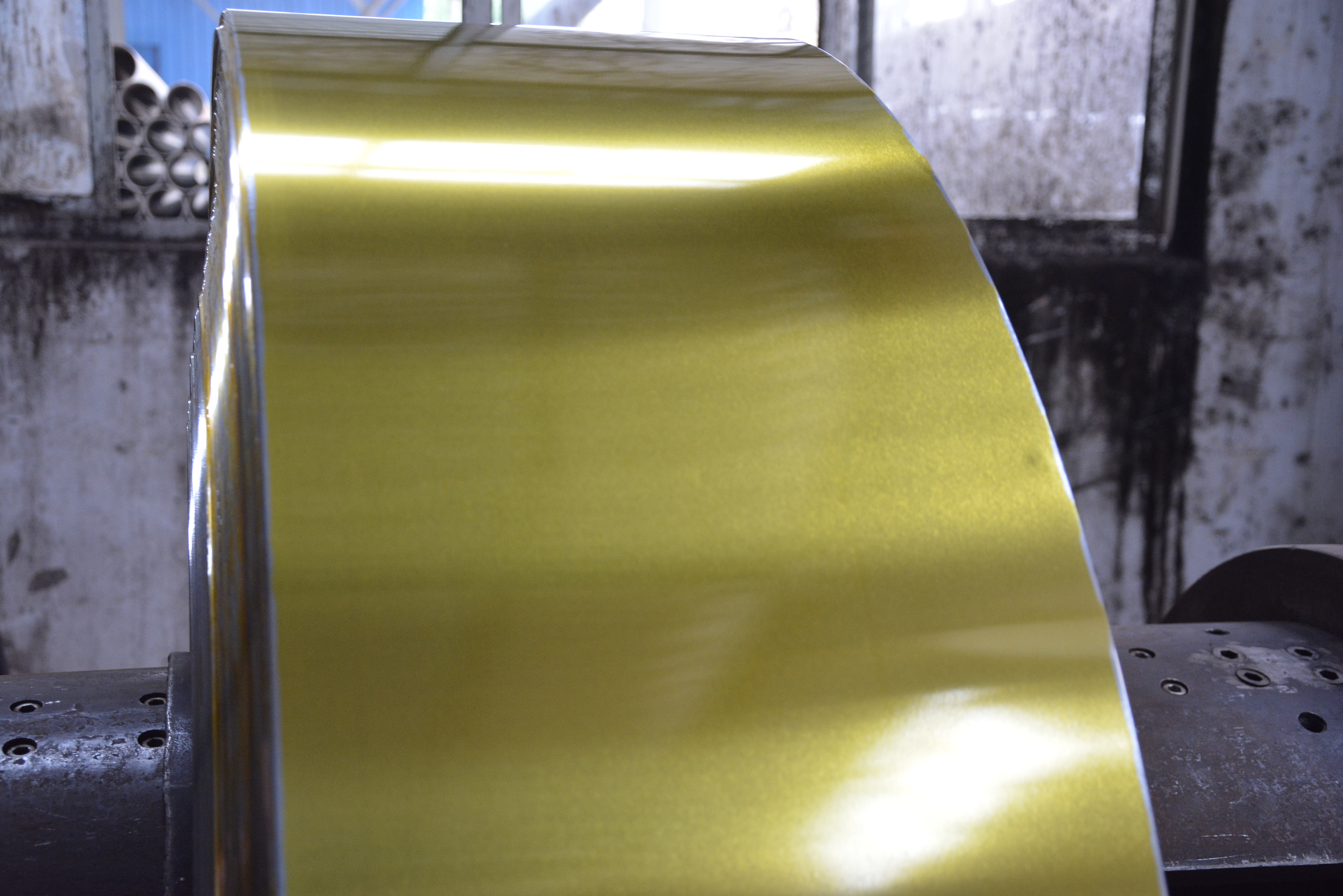
Youngson Metal supplies the Gold Pre-Painted Tinplate Strip for Deep Drawing (Anti-Peeling) — model GD-TPL-0.14-0.15 — in 0.14 mm and 0.15 mm, in T1, DR7, DR7.5, DR8, DR9, DR10 and TH520 tempers, with ±0.005 mm thickness control, slit burrs held to ≤0.05 mm, and anti-rust oil applied directly to the slit edges. This guide explains what anti-peeling failure actually is, which variables cause it, how to isolate the real trigger on your own press, and which specifications remove it from the line.
What Anti-Peeling Failure Looks Like on a Deep-Drawing Line
Coating peeling is the separation of the organic coating layer from the tinplate or tin free steel (TFS/ECCS) substrate during forming, or the cohesive failure of the coating itself. In deep drawing, the strip is stretched over a die radius, clamped by a blank holder and pulled into a cavity. The coating at the draw radius is asked to elongate with the steel. If it cannot follow that elongation, the failure shows up in several recognizable ways:
- Flaking or colour loss at the draw radius, where strain peaks.
- Edge scuffing and coating pick-up transferred onto the punch or die surface.
- Delamination across the flange, sometimes invisible until after lacquering or after retort.
- Blistering or discolouration after sterilization in food-can applications.
- Progressive die contamination that forces unplanned cleaning stops and shortens tool life.
The cost is not limited to the scrapped part. A peeling event contaminates tooling, changes friction in the die, and can cascade into dimensional drift on subsequent strokes. That is why packaging and hardware producers treat anti-peeling performance as a line-level risk rather than a raw-material complaint.
Six Root Causes of Anti-Peeling Failure in Pre-Painted Strip
Peeling is almost never caused by the coating alone. Below are the six variables that decide whether a coated strip survives the draw, in the order they are usually found during a failure investigation.
1. Temper and formability mismatch
Coated steel can only form as far as its base metal allows. Organic coatings are less ductile than steel, so the substrate must carry most of the strain. Standard tinplate specifications such as ASTM A623 and EN 10202 cover temper grades from T1 to T5 and DR7 to DR9. Double-reduced grades such as DR8 deliver high strength at very thin gauge, while softer T1 temper is used where draw depth is severe. Specifying an over-hard or commercial-grade substrate for a deep-drawn part is one of the fastest routes to peeling, because the coating cracks before the steel reaches its forming limit. The GD-TPL-0.14-0.15 series is offered in T1, DR7, DR7.5, DR8, DR9, DR10 and TH520, so stiffness can be matched to the actual draw ratio instead of being inherited from a stock grade.
2. Gauge variation changes die clearance mid-coil
Every deep-drawing die is set to a specific sheet thickness. When the strip runs from the thin end to the thick end of a wide tolerance band, local contact pressure at the die radius changes, friction rises, and the coating is sheared rather than stretched. Youngson's comparison documentation cites a market-standard thickness tolerance of ±0.02 mm against its own ±0.005 mm control on precision slit strip, and locks width precision at ±0.05 mm. On a 0.14 mm or 0.15 mm anti-peeling grade, that difference is material: the thinner the strip, the larger the relative effect of the same absolute variation.
3. Slit-edge burr, width drift and edge flaking
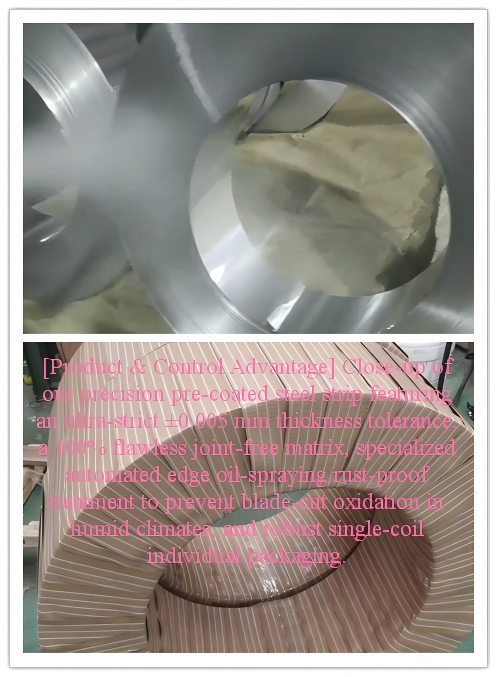
The slit edge is where coating failure often starts, because a burr acts as a stress riser and as an abrasive tool inside the die. Burrs also damage the coating mechanically before the part ever reaches the draw radius. Youngson holds slit burrs to ≤0.05 mm on its coated strip range and applies a post-slitting anti-rust oil treatment to the cut edges, which limits edge oxidation that would otherwise lift the coating film after storage or sea freight.
4. Coil continuity: joints, notches, wavy edges and overlapping bands
Continuous feeding is a formability condition, not just a logistic one. A weld joint stops the decoiler or, worse, crashes the die; a notch or a wavy edge mis-feeds the strip so that the coating is compressed unevenly; an overlapping band locally doubles the thickness entering the tool. Youngson's strips are documented with a “five-zero” quality position: zero joints, zero notches, zero wavy edges, zero overlapping bands and zero rust spots.
5. Coating cure, adhesion and edge rust
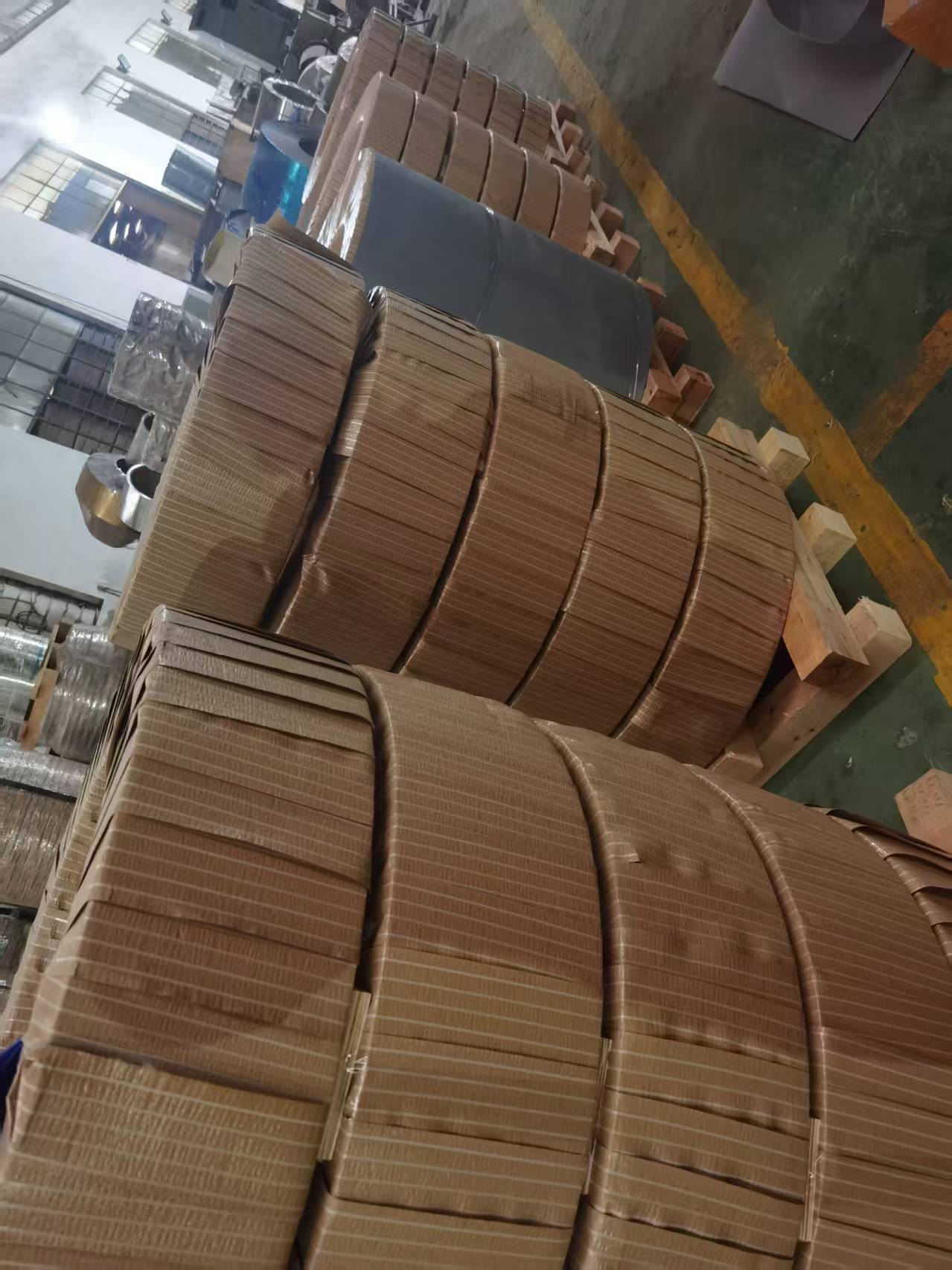
Coating adhesion is a process-control outcome, not a label. Coil coating and lithography lines must keep the film flexible enough for the draw while still fully cured for food-contact and retort duty. Humidity is the other half of the equation: slit edges are bare metal, and rust that forms during marine transit or warehouse storage will lift the coating film from underneath. Hermetic single-coil packaging plus oil-spray passivation on the cut edge is the practical countermeasure.
6. Draw-side variables that the buyer controls
Material cannot compensate for a die that is set incorrectly. Die radius, die clearance, blank-holder force, lubrication, decoiler tension and press speed all influence coating survival, and all of them belong to the converter. A useful rule during troubleshooting: if the coating fails at the same location on every part, the tool is the prime suspect; if it fails randomly along the coil, the strip is. Most real cases need a change on both sides, which is why the material fix below is presented together with a diagnostic sequence.
Industry Background: Why Anti-Peeling Strip Matters More Than It Used To
Three structural trends have made coating adhesion a harder problem than it was a decade ago.
- Light-weighting. Double cold reduced (DR) tinplate at 0.14–0.16 mm, for example DR8, is increasingly used for cost reduction and light-weighting in the metal packaging industry (Metal Packaging Europe). Thinner, stronger substrate leaves the coating less room for error.
- End-market growth. Canned food packaging, the primary end user for sulfur-resistant lacquered tinplate, is growing at a CAGR of about 3.9% through 2030 (Grand View Research). More drawn and redrawn cans means more coating interfaces under strain.
- Supply scale. China's exports of tinplate under HS Code 721012 reached 1.4 million tons in the first three quarters of 2023, primarily driven by demand in canned food packaging (General Administration of Customs of China). Global buyers are therefore comparing suppliers on documentation and consistency, not only on grade codes.
The commercial context is equally relevant. The global tinplate market was valued at USD 14.59 billion in 2023 and is projected to reach USD 19.38 billion by 2032 (Fortune Business Insights). Compliance pressure is rising with it: tinplate used for food contact, especially fish and meat cans, must meet RoHS and FDA 21 CFR 175.300 requirements for coatings and lacquers (U.S. Food and Drug Administration). On the supply side, Baosteel, Nippon Steel and JFE Steel are identified as global leaders in high-end tinplate (SPTE) and ECCS production for deep-drawn (DDQ) applications (Mordor Intelligence) — a useful reference point when a buyer is benchmarking mill-scale grades against slitting-level customisation and batch traceability.
The Material Fix: Gold Pre-Painted Tinplate Strip for Deep Drawing (Anti-Peeling)
The Gold Pre-Painted Tinplate Strip for Deep Drawing (Anti-Peeling), model GD-TPL-0.14-0.15, is an ultra-thin pre-coated electrolytic tinplate (ETP) or tin free steel (TFS/ECCS) strip intended for severe forming. It is specified around the same six variables described above, rather than around a single “better coating” claim.
| Parameter | Specification (GD-TPL-0.14-0.15) |
|---|---|
| Thickness | 0.14 mm – 0.15 mm, ultra-thin high-precision control |
| Width range | 4.0 mm – 1050 mm, custom precision slitting available |
| Temper / hardness | T1, DR7, DR7.5, DR8, DR9, DR10, TH520 (fully customisable stiffness) |
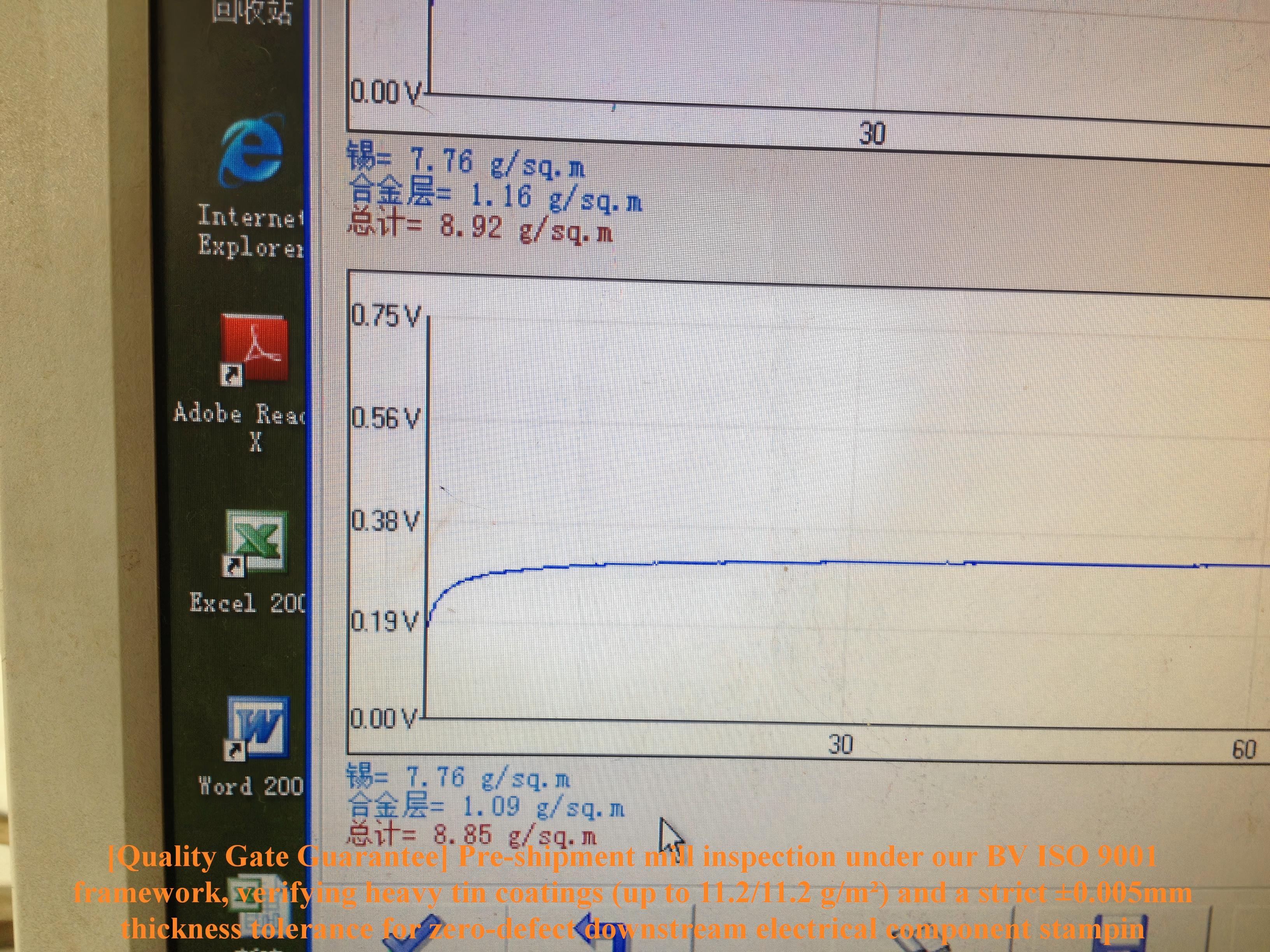
| Tin coating weight | 1.1/1.1, 2.2/2.2, 2.8/2.8 g/m² |
| Slitting burr level | ≤0.05 mm |
| Coil inner diameter (ID) | 160 mm, 200 mm, 300 mm, 400 mm, 500 mm |
| Edge protection | Anti-rust oil treatment on slit edges for high-humidity and tropical climates |
| Coil defect control | Zero joints, zero notches, zero wave edges, zero overlapping bands, zero rust spots |
| Base metal options | Tinplate (ETP), Tin Free Steel (TFS/ECCS), high-grade galvanized steel |
| Typical applications | Hardware stamping and deep-drawn components, premium metal packaging (food cans, aerosol cans, twist-off caps, easy-open ends), electronics and electrical enclosures, stationery and cosmetics metal containers |
Read against the six failure causes, the specification does specific work:
- Formability is selectable, not fixed. A shallow decorative draw and a deep, multi-stage formed component can both be produced from the same product family by changing temper between T1, DR7, DR7.5, DR8, DR9, DR10 or TH520.
- Gauge is tight enough to protect die clearance. Thickness is controlled to ±0.005 mm, and the comparison data published by Youngson places this against a market-standard reference of ±0.02 mm.
- Slit geometry protects the coating. Width is held to ±0.05 mm with burrs at ≤0.05 mm, so the edge that enters the die is not a cutting tool.
- Continuity removes the random stoppages. The five-zero position (no joints, notches, wave edges, overlapping bands or rust spots) keeps the strip from being deformed abnormally anywhere along the coil.
- Edge passivation prevents rust-driven lift. Automated oil spraying onto the slit edges creates a protective barrier that matters most in tropical and high-humidity conditions.
- Coating and finish are customisable. Material grade, thickness and surface finish can be specified per project — single or double-sided coating in gold, brass, matte black, bright black, laser metallic and multi-colour finishes, with tin coating weights of 1.1/1.1, 2.2/2.2 or 2.8/2.8 g/m².
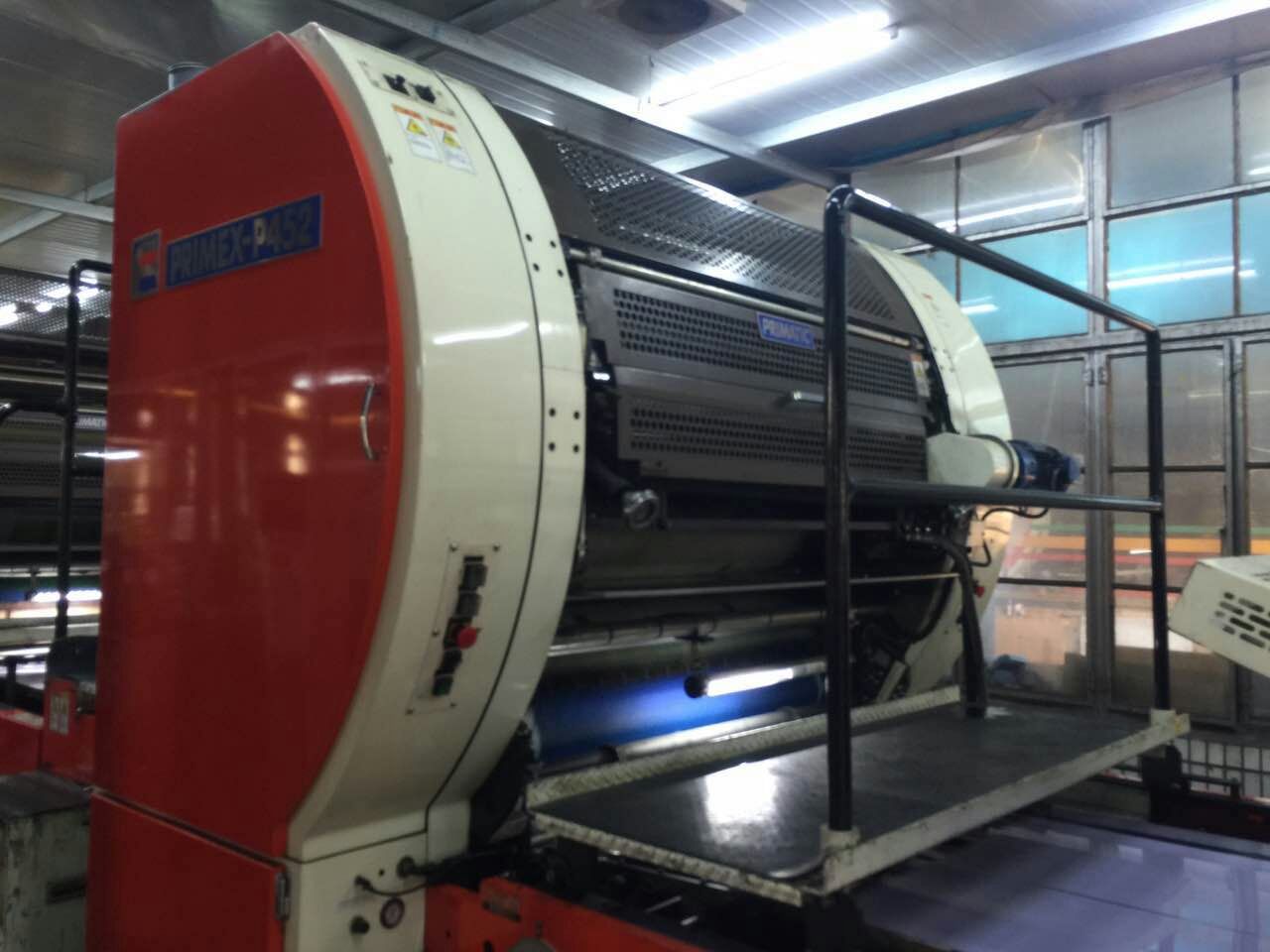
Quality documentation is treated as part of the product. Chongqing Youngson Metal Products Co., Ltd. operates a Bureau Veritas (BV) ISO 9001:2015 certified quality system, runs a factory founded in 2016 with an annual processed quantity exceeding 10,000 tons, and supports a five-engineer R&D and senior process technician team. Coated strip is released with batch-traceable Mill Test Certificates (MTC) under that framework, and the eco-coated range is tested to SGS REACH and RoHS heavy-metal limits for food-grade and premium industrial use.
Step-by-Step: How to Eliminate Peeling from an Existing Deep-Drawing Line
The following sequence is the order in which the causes above are usually isolated in practice. It is written for production engineers and procurement teams who need a fix that holds beyond one trial lot.
Step 1 — Document the failure mode precisely
Record where the peel occurs (draw radius, flange, blank edge, slit edge), at which stroke, and whether it appears before or after retort or lacquering. A failure that appears only after sterilization points to coating cure or film flexibility; a failure immediately at the die radius points to formability or clearance.
Step 2 — Audit the strip that is actually running
Confirm the delivered temper, thickness, tin coating mass, coating type and colour, plus coil continuity and slit-edge condition. Many peeling investigations end here, because the material in the press is not the material on the purchase order.
Step 3 — Audit tooling and lubrication
Check die radius, die clearance, blank-holder force, lubricant type and application point, decoiler tension and press speed. Verify that the burr side of the strip is oriented as the tooling assumes.
Step 4 — Re-specify the strip against the draw ratio
Move to a documented deep-drawing grade where the draw is severe. For ultra-thin work, this means selecting the correct combination of gauge (0.14 mm or 0.15 mm) and temper (T1 through DR10 or TH520), with the width and burr limits written into the specification rather than left to supplier default.
Step 5 — Run a press trial before committing volume
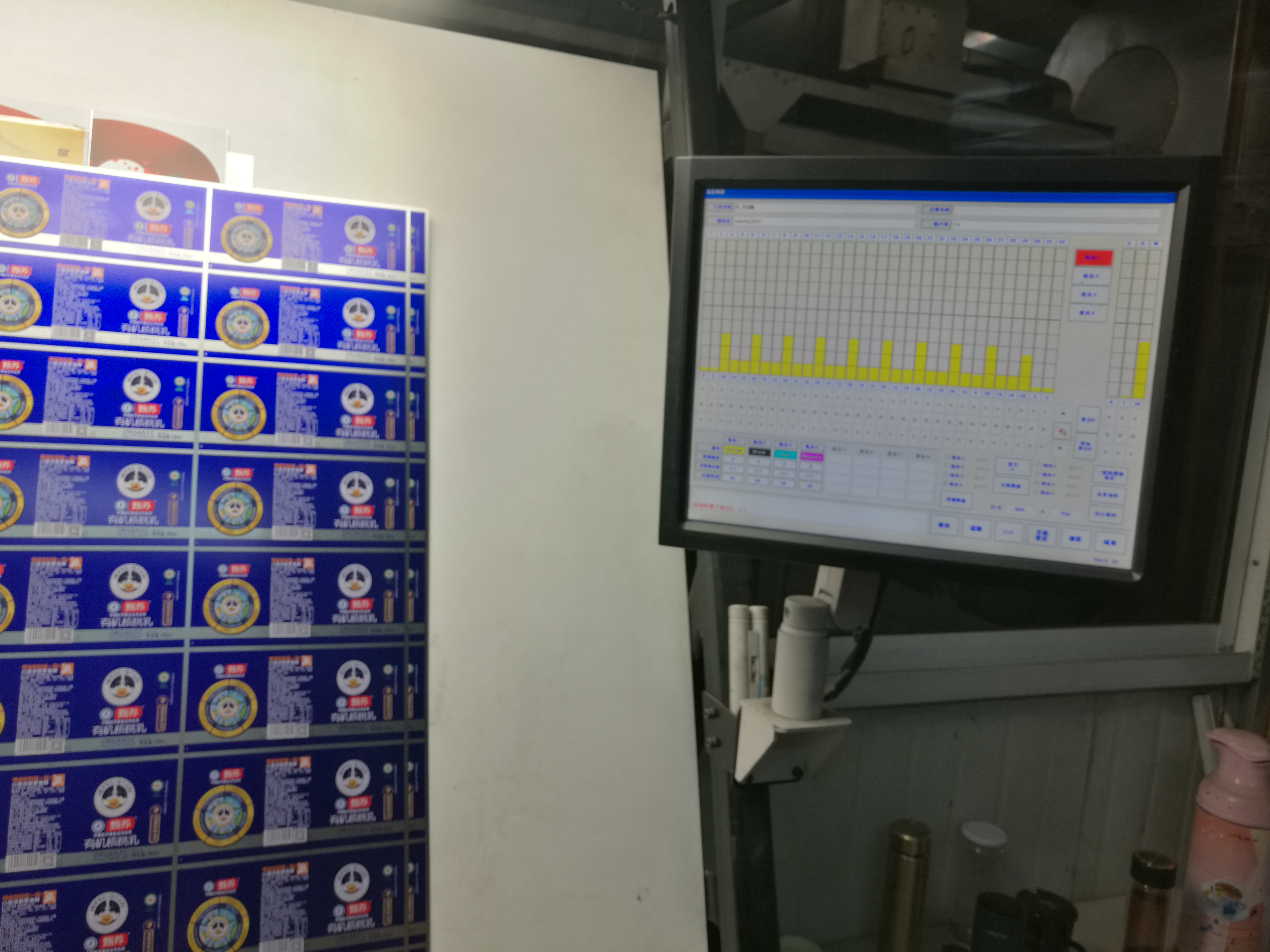
Youngson provides complimentary sample rolls and sheets for industrial press trialing, so the anti-peeling behaviour can be validated on the customer's own tooling rather than on a laboratory coupon. Pre-shipment acceptance checks covering rust, joints and waved sheet are also part of the standard process.
Step 6 — Lock the specification and the supply terms
Once a combination works, freeze it: temper, gauge, coating weight, finish, width, burr limit and packaging, together with batch-traceable MTC and a repeatable lead time. This is what converts a successful trial into a stable line.
Where Anti-Peeling Coated Strip Is Used
- Drawn closures and easy-open ends. Pre-painted strip drawn into twist-off caps and ends, where coating colour and adhesion are both visible on the finished part.
- Aerosol domes, cones and drawn cans. Severe forming where an over-hard substrate is the usual reason for delamination.
- Hardware stamping and deep-drawn components. Progressive-die work where burr control and coil continuity directly determine die life.
- Electronics and electrical enclosures. Shielding cans and specialised stampings that require a coated, corrosion-protected surface.
- Stationery and cosmetics containers. Lipstick tubes, eye cream caps and decorative containers using gold, brass or matte finishes.
- Adjacent food-contact projects. For retort applications such as 2-piece DRD fish cans, Youngson supplies a BPA-free internal sulfur-resistant aluminium paste coated TFS in 0.14–0.16 mm, engineered for 121°C sterilization for 60 to 90 minutes without coating peeling, cracking or colour change. Decorative programmes can also use 3D laser-effect coated strip or a copper/bronze-look coated strip as a cost-saving alternative to copper plated steel.
Comparison: Anti-Peeling Deep-Drawing Strip vs Market Baseline Slit Coil
The table below uses the comparison data published by Youngson Metal alongside the GD-TPL-0.14-0.15 specification. Figures marked as baseline describe the market-standard reference cited in that documentation, not a measurement of any named competitor.
| Comparison dimension | Youngson GD-TPL-0.14-0.15 anti-peeling strip | Market baseline slit coil (as cited) | Why it matters in the press |
|---|---|---|---|
| Thickness tolerance | ±0.005 mm | ±0.02 mm reference | Stable die clearance and lubrication film, so the coating is stretched rather than sheared |
| Width precision | ±0.05 mm | General commercial slitting precision | Consistent feeding alignment; no edge compression in the guide |
| Slit-edge burr | ≤0.05 mm, strictly suppressed | Not controlled to a stated limit | Less die abrasion and fewer edge-initiated coating failures |
| Coil continuity | Zero joints, notches, wavy edges, overlapping bands | Joints and surface defects tolerated | No strip breakage, no press crashes, no local abnormal deformation |
| Edge corrosion control | Automated post-slitting oil-spray passivation plus hermetic single-coil sealing | Unpassivated slit edges | Prevents rust-driven coating lift after sea freight or humid storage |
| Tool maintenance impact | Quoted reduction of up to 35% in total tool-maintenance cost | Baseline reference | Fewer die polishes and fewer unplanned cleaning stops |
| Compliance | Eco-friendly, food-grade range tested to SGS REACH and RoHS heavy-metal limits | Varies by supplier | Documented safety for food-contact and premium packaging projects |
Note on comparison data: tolerance, tool-maintenance and continuity figures above are taken from Youngson Metal's own product and comparison documentation. Third-party assertions in this article are attributed to their original sources (Metal Packaging Europe, Grand View Research, General Administration of Customs of China, Fortune Business Insights, U.S. FDA, Mordor Intelligence, ASTM International).
Frequently Asked Questions
1. Are gold pre-painted tinplate strips for deep drawing compliant with food-contact and RoHS requirements?
Coated tinplate used for food contact, particularly in fish and meat cans, must meet RoHS and FDA 21 CFR 175.300 requirements for coatings and lacquers. Youngson Metal's pre-coated strip range — including the TP-EC series, the ECO-TPS premium lacquered series and the 3D laser-effect coated series — is documented as eco-friendly and food-grade, with the coated range tested to SGS REACH and RoHS heavy-metal limits. Tempers available in the GD-TPL deep-drawing series, from T1 and DR7 to DR9, fall within the temper grades covered by ASTM A623 and EN 10202. Buyers should still request the batch-traceable MTC and the SGS report for the specific coating colour and base metal ordered, because compliance is confirmed per specification and per batch, not per brand.
2. Can the anti-peeling strip be supplied at 0.14 mm and 0.15 mm with DR8 or TH520 temper and custom width?
Yes. The GD-TPL-0.14-0.15 series is produced in 0.14 mm and 0.15 mm with tempers of T1, DR7, DR7.5, DR8, DR9, DR10 and TH520, tin coating weights of 1.1/1.1, 2.2/2.2 or 2.8/2.8 g/m², and widths from 4.0 mm to 1050 mm using custom precision slitting. Material grade, thickness and surface finish are all customisable, with single or double-sided coatings in gold, brass, matte black, bright black, laser metallic and multi-colour finishes. Slitting burrs are held to ≤0.05 mm and coil inner diameters are available in 160, 200, 300, 400 or 500 mm to match existing decoilers.
3. What is the minimum order quantity, monthly capacity and payment terms for long-term supply?
The minimum order quantity is 1 ton, monthly production capacity ranges from 500 to 1,000 tons, and payment can be arranged by T/T or L/C at sight. Delivery is available on FOB, CFR, CIF, DDP or DDU terms by ocean or air freight. For repeat programmes, the practical lever is not the MOQ but the locked specification: once temper, gauge, coating and width are frozen, repeat orders are produced to the same parameters and released with batch-traceable Mill Test Certificates.
4. Can I test the strip on my own press before placing a volume order?
Yes. Youngson provides complimentary sample rolls and sheets for industrial press trialing, which is the only reliable way to confirm anti-peeling performance on a specific die, draw ratio and lubricant combination. Pre-shipment acceptance checks covering rust, joints and waved sheet are part of the standard process, so the sample lot is verified before it leaves the factory. For deep-drawn and extra deep-drawn grades, sample validation on the production press is normally the step that decides the final temper and coating weight.
5. What is the production lead time, and how do I set up a long-term tinplate supply partner in China?
Typical production lead time is 14 to 25 days, with monthly capacity of 500 to 1,000 tons and a minimum order quantity of 1 ton. A durable long-term supply relationship in China is built on four elements rather than on price alone: a written and frozen material specification; batch-traceable Mill Test Certificates from a BV ISO 9001:2015 certified system; a supplier whose slit edges, coil continuity and packaging survive sea freight; and a documented escalation path for technical issues. Youngson Metal exports approximately 70% of its output to global markets and supports customers through a five-engineer R&D and senior process technician team, so coating, temper and slitting questions can be resolved with the production line rather than through a trading intermediary. To start, request a sample roll for press trialing or a specification quotation at www.youngsonmetal.com, or download the full product catalogue below.
Conclusion: Turn a Recurring Reject into a Fixed Specification
Anti-peeling failure is predictable once it is broken down. Check the failure location, verify the strip that is actually in the press, audit the die, re-specify against the draw ratio, trial on the real tooling, and then freeze the parameters. In deep drawing at 0.14 mm or 0.15 mm, the margin is thin: thickness tolerance of ±0.005 mm rather than ±0.02 mm, slit burrs at ≤0.05 mm, zero joints and zero wavy edges, an oil-passivated slit edge, and a temper chosen deliberately from T1 through DR10 or TH520 are the differences between a line that runs and a line that rejects.
Next step: send your draw ratio, die clearance, strip width and required finish, and Youngson Metal will propose a GD-TPL-0.14-0.15 specification with a sample roll for press trialing. Typical production lead time is 14–25 days, MOQ 1 ton, monthly capacity 500–1,000 tons.
Catalogue: Chongqing Youngson Metal Products catalogue (PDF)
Website: www.youngsonmetal.com
Email: info@youngsonmetal.com | Tel: 0086-23-62566629 | WhatsApp: 0086-13594107385
Address: NO.16-16, Building 11, NO.305 Yunan Avenue, Longzhouwan Street, Ba'nan District, Chongqing City, China 401320