
Heavy Duty AGV Constraints: Steel Coil Payload & CE/UL
Heavy Duty AGV Constraints: Steel Coil Payload & CE/UL
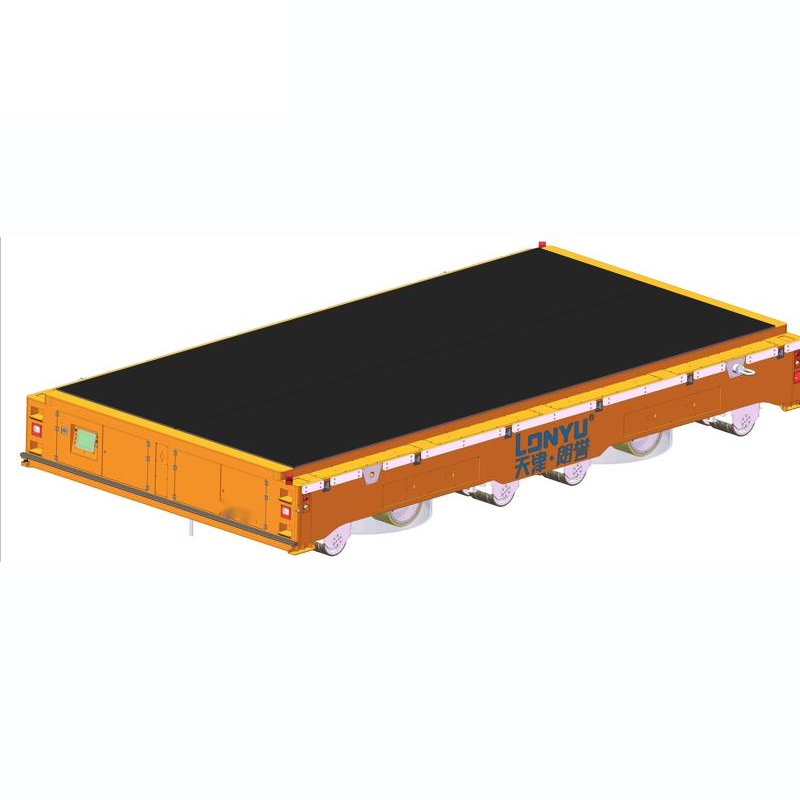
Answer first: a Heavy Duty AGV should be specified by the combination of rated load, load geometry, route conditions, lifting interface, navigation accuracy, safety architecture, power strategy and market certification. For steel coil payload requirements, the critical constraints are coil diameter and mass, saddle or rack interface, eccentric docking, floor loading and the ability to hold stability during transfer. A 30-ton indoor unit and a 600-ton outdoor unit belong to the same product category but not to the same engineering problem.
Problem Definition: why the term heavy duty is not a specification
Buyers often start with a tonnage figure. That is necessary but not sufficient. Lonyu AGV Co., Ltd. states a load capacity range from 1 to 1000 tons across its heavy-duty AGV portfolio, and its published product data includes models rated at 30 t, 60 t, 150 t, 200 t and 600 t. The same catalogue also shows different navigation methods, lifting strokes, body dimensions, drive layouts, protection levels and operating environments. The practical lesson is that a heavy duty automated guided vehicle must be matched to a duty cycle, not merely to a payload label.
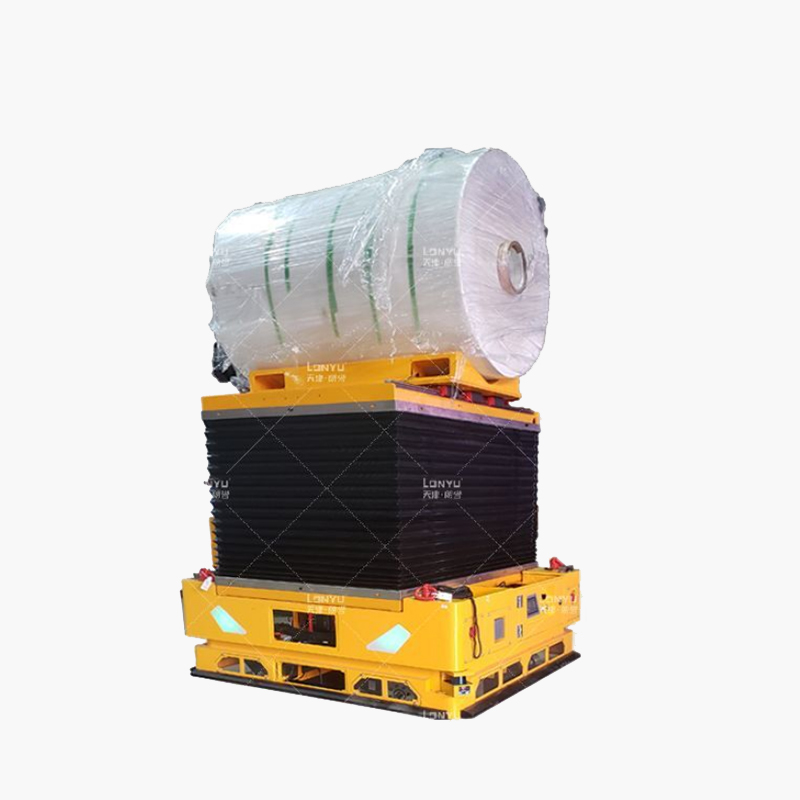
Steel coil transport makes the gap visible. A coil is dense, round and often handled on a cradle, saddle or rack. The AGV may need to enter under a rack, lift it, travel through a narrow aisle, dock eccentrically with a coating or processing machine, and maintain stability while the coil is transferred. A parallel backpack lifting AGV is specified for cylindrical coil transport, including steel coils, aluminum coils and film coils with different diameters, and the product data notes that products can be eccentrically docked. That is a different requirement from moving a rectangular mold or a wind turbine nacelle.
Industry Background: demand growth meets compliance scrutiny
Fortune Business Insights estimates the global automated guided vehicle market at USD 5.52 billion in 2025, with heavy-load AGVs identified as a key segment. The same research source places Asia Pacific at 35.51% of the market in 2025. The commercial implication is straightforward: more buyers are evaluating Chinese heavy duty AGV manufacturers, but the evaluation is moving from price and tonnage to documented capability and market access.
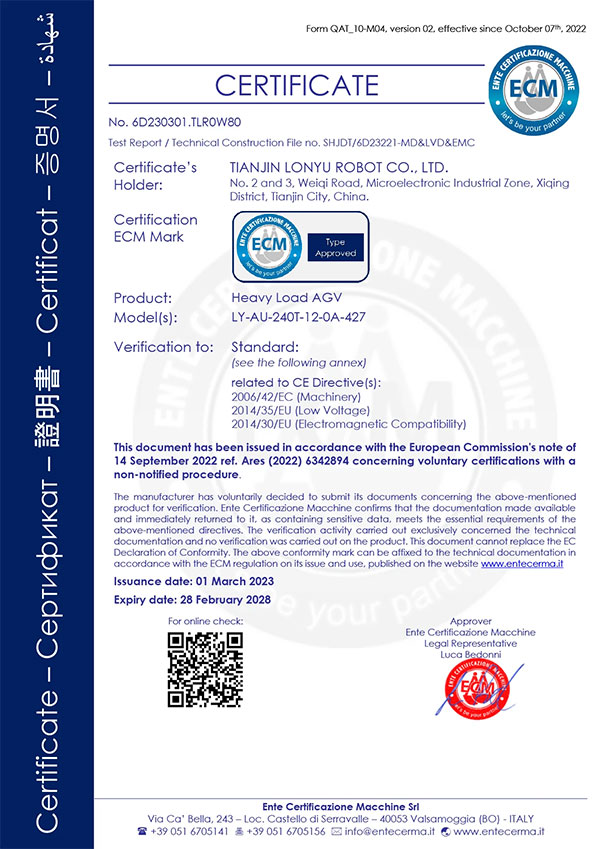
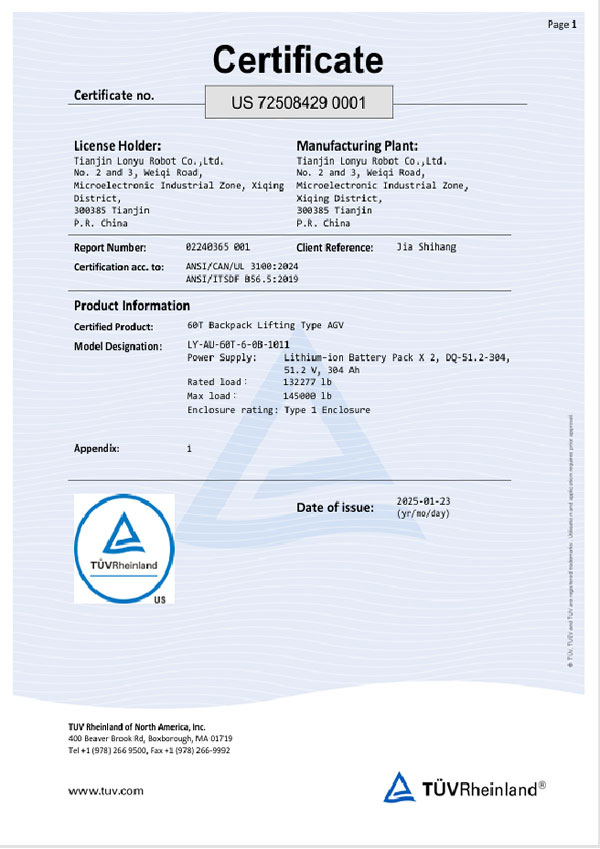
Compliance is part of that shift. ISO 3691-4:2023 is the international safety standard for driverless industrial trucks and is a reference point for CE marking. For EU and US projects, buyers should ask for certificate scope, not just a logo. Lonyu's available certification data is model-specific: the ECM Mark certificate 6D230301.TLR0W80 covers the Heavy Load AGV model LY-AU-240T-12-0A-427 for the EU market, and UL certification US 72508429.0001 covers the 60T Backpack Lifting Type AGV model LY-AU-60T-6-08-1011 for the US market. Those certificates do not automatically extend to every model in the range.
Detailed Solution: the constraints that decide the configuration
1. Rated load and physical envelope
Rated load must be read with body dimensions, equipment weight and lifting stroke. The 600-ton model LY-1-450(600)T-416-A has a rated load of 600,000 kg, an equipment weight of 50,000 kg, a body dimension of 8500 mm by 4540 mm by 1200 mm, and a standard lifting stroke of 0 mm. The 150-ton model LY-1-150T-816-A has a rated load of 150,000 kg, an equipment weight of 35,000 kg, a body dimension of 7710 mm by 2888 mm by 722 mm and a 200 mm lifting stroke. These are not interchangeable platforms even if both are called heavy duty.
2. Route and operating environment
Indoor and outdoor operation changes the navigation, protection and power strategy. The 20-ton outdoor AGV transfer cart uses Beidou satellite, multi-line laser and vision-based integrated navigation and is described for accurate indoor and outdoor operation in high-temperature and high-dust environments. The outdoor flatbed IGV model LY-3-70T-612-B has a rated load of 100,000 kg, a stated walking speed of 36 km/h, IP65 protection and RTK+INS navigation that includes differential integrated navigation, inertial navigation and laser SLAM. Those specifications matter when the route crosses yards, ramps or inter-workshop transitions.
3. Navigation and positioning accuracy
Navigation is a constraint because it determines infrastructure work and repeatability at the docking point. Magnetic stripe navigation appears on the 12-ton AGV with navigation accuracy of plus or minus 10 mm and positioning accuracy of plus or minus 10 mm. The 200-ton model 24111A uses magnetic stripe navigation with plus or minus 10 mm navigation and positioning accuracy. The outdoor IGV uses RTK+INS with a stated navigation accuracy of plus or minus 20 mm. Laser SLAM and natural feature navigation are also described for millimeter-level indoor positioning without magnetic tracks. The buyer should match the navigation method to the floor, route length, dust, outdoor exposure and docking tolerance.
4. Lifting and load-handling interface
For heavy and oversized loads, the lifting method is often the real custom-engineering point. The product range includes backpack lifting AGVs, parallel backpack lifting AGVs, omnidirectional lifting AGVs and double-vehicle linkage AGVs. The 30-ton double-vehicle linkage AGV is rated at 30 t and can carry products from 11 to 27 meters with adjustable linkage distance. The 16-ton omnidirectional lifting AGV has a minimum turning radius of 1125 mm. The 40-ton omnidirectional lifting AGV is described with a flat surface design intended to integrate with heavy-duty storage racks. For steel coils, the parallel backpack lifting configuration is the direct reference because it is specified for cylindrical coil transport and eccentric docking.
5. Safety and power architecture
Safety should be checked as a system. Lonyu product data lists laser obstacle avoidance sensors, contact collision avoidance, audible and visual warning, and emergency stop. The outdoor IGV lists perceptual failsafe and multi-layer redundant safety control, plus visual, environment and device perception sensors. Power strategy also constrains uptime. The 200-ton model 24111A uses a lithium iron phosphate battery with a stated three-hour life at full load and empty load. The outdoor flatbed IGV uses a lithium iron phosphate battery with six hours of battery life when fully charged and voltage options of 330 V, 570 V and 614 V; charging options include manual charging, automatic charging pile charging, intelligent battery swap station and manual battery swap. The FAQ data also notes a BMS low-battery alarm below 25% and autonomous return to the charging station when the AGV can still move.
6. Certification and market access
For export projects, certification should be verified at model level. The ECM Mark certificate 6D230301.TLR0W80 covers the Heavy Load AGV model LY-AU-240T-12-0A-427 for the EU market under Directive 2006/42/EC, Directive 2014/35/EU and Directive 2014/30/EU, valid from 2023-03-01 to 2028-02-28. ECM verification 6D230301.TLR0W79 covers the same model for third countries outside the EU market and relates to CE Directive 2014/68/EU for pressure equipment. UL certification US 72508429.0001 covers the 60T Backpack Lifting Type AGV model LY-AU-60T-6-08-1011 for the US market, issued by TUV Rheinland of North America on 2025-01-23, referencing ANSI/CAN/UL 3100:2024 and ANSI/ITSDF B56.5:2019, with a stated rated load of 132,277 lb and maximum load of 145,000 lb.
7. Customization and commercial scope
Customization is normal in this category. Lonyu states OEM, ODM and customization support covering payload class, vehicle dimensions, lifting structure, drive and suspension, navigation method, operating environment, charging or battery-swapping method, dispatching system, and indoor or outdoor route adaptation. The stated minimum order quantity is at least one unit, and delivery time depends on customized quantity, parameters and functional requirements. Quality control is stated as 100% full inspection before delivery. For buyers, this means the technical agreement and signed drawings are commercial documents, not attachments.
Comparison Table: Lonyu heavy-duty AGV models by constraint
The table below uses only published model data from the available corpus. It is a selection aid, not a ranking. Final configuration must follow site assessment and signed drawings.
| Model | Rated load | Key dimensions | Lift / drive | Best-fit constraint |
|---|---|---|---|---|
| LY-1-30T-24-B | 30,000 kg | 3500 x 2200 x 600 mm | 100 mm lift; differential drive; indoor and outdoor | Mid-payload transfer with a compact body |
| 24286A | 60 t | 4100 x 2100 x 420 mm | 100 mm lift; manual remote; IP44 | Indoor transformer handling; manual control option |
| LY-1-150T-816-A | 150,000 kg | 7710 x 2888 x 722 mm | 200 mm lift; eight-wheel drive, sixteen wheels | Heavy indoor and outdoor transfer |
| 24111A | 200 t | 8210 x 3620 x 885 mm | 200 mm lift; eight-wheel drive, sixteen wheels; IP54 | Wind turbine main engine and drive system handling |
| LY-1-450(600)T-416-A | 600,000 kg | 8500 x 4540 x 1200 mm | 0 mm standard lift; four-wheel drive, sixteen wheels | Ultra-heavy indoor and outdoor transfer |
Step-by-Step Breakdown: how to evaluate a Chinese heavy duty AGV for steel coil payloads
- Define the load case. Record coil mass, diameter, width, saddle or rack interface, centre of gravity and whether the AGV must lift the rack or enter under it. A parallel backpack lifting AGV is the reference configuration for cylindrical coil transport and eccentric docking, but the coil dimensions still need to be confirmed in the technical agreement.
- Measure the route. Document indoor and outdoor segments, floor load capacity, gradients, aisle width, turning space, doorways and docking tolerance. The application data for heavy-duty AGVs calls for verification of payload, cargo dimensions, route length, floor load capacity, gradients, turning space, indoor-outdoor transitions, navigation method, charging cycle and safety boundaries.
- Select navigation to match the floor. Magnetic stripe is used on models with plus or minus 10 mm navigation accuracy. Laser SLAM and natural feature navigation are described for indoor positioning without magnetic tracks. Outdoor models can use Beidou, multi-line laser and vision, or RTK+INS with plus or minus 20 mm stated accuracy. The wrong navigation choice creates civil works or repeatability problems.
- Choose the load-handling interface. Compare backpack lifting, parallel backpack lifting, omnidirectional lifting and double-vehicle linkage. The 30-ton double-vehicle linkage AGV carries products from 11 to 27 meters. The 16-ton omnidirectional lifting AGV has a 1125 mm minimum turning radius. The choice changes aisle width and docking layout.
- Check safety and power as one system. Confirm LiDAR obstacle detection, contact collision avoidance, audible and visual warning, emergency stop and redundant safety control where required. Check battery type, runtime, voltage and charging method. The 200-ton model 24111A uses lithium iron phosphate batteries with a stated three-hour life at full and empty load. The outdoor IGV uses a six-hour battery and supports manual charging, automatic charging pile charging, intelligent battery swap and manual battery swap.
- Verify certification scope. Ask for the certificate number, model, issuing authority, standards, market and validity dates. The CE and UL documents in the available data are model-specific. A certificate for LY-AU-240T-12-0A-427 should not be presented as blanket approval for a 600-ton model or a different outdoor configuration.
- Request drawings and a technical agreement. Body dimensions, lifting stroke, climbing ability and equipment weight are usually subject to countersigned drawings. The 150-ton model is listed at 7710 x 2888 x 722 mm subject to countersigned drawings. That wording matters because final dimensions can change with the load-handling interface.
- Confirm inspection, lead time and service terms. Lonyu states 100% full inspection before delivery, a minimum order quantity of at least one unit and a lead time that depends on customized quantity, parameters and functional requirements. The company also states a 12-month warranty and post-warranty parts at basic prices, subject to service-region and contract confirmation.
Use Cases: where the constraints change
Steel coil transport. The parallel backpack lifting AGV is specified for cylindrical coil transport, including film, aluminum and steel coils with different diameters, and the product can be eccentrically docked. The buyer should confirm coil mass, diameter, rack height and docking tolerance before selecting the payload class.
Wind power components. The 200-ton model 24111A is designed for indoor and outdoor handling of wind turbine main engines and drive systems, with a 200 mm hydraulic lifting stroke. The application data lists wind power among the core industries, and the product image below shows a wind power application context.
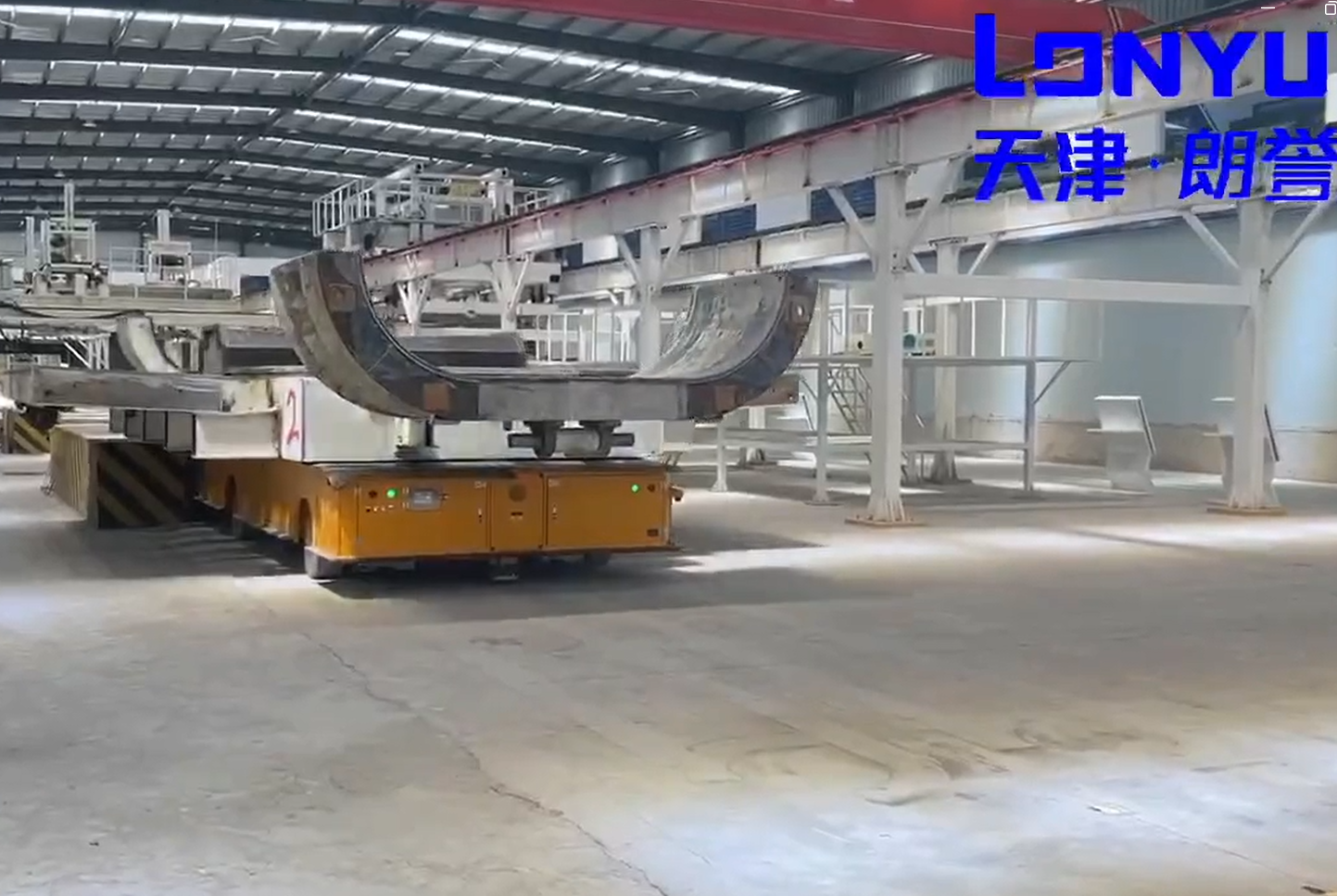
Energy storage containers. The 80-ton trackless transfer cart model 24391A is designed for energy storage container handling, with IP54 protection, automatic control and laser navigation plus magnetic stripe. This is a constrained outdoor and indoor transfer case where container dimensions and floor loading drive the layout.
Transformer handling. The 60-ton model 24286A is listed for transformer handling in an indoor environment, with manual remote control, 100 mm lifting stroke and IP44 protection. It illustrates why manual control options remain relevant in heavy industrial settings.
Commercial vehicle chassis. The outdoor heavy duty navigation AGV LK-AK-15T-4-0-B has a 15 t load weight and 4 t product weight, and it is used in flexible assembly lines for commercial vehicle chassis. The support distance can be adjusted based on the spacing between front and rear axles.
High-speed rail track slab and mold transfer. The 30-ton backpack heavy duty AGV is used for high-speed rail track slab casting and curing and supports material racks with and without support legs. The broader product portfolio also covers automatic mold transfer systems, which is relevant when the load is a heavy mold rather than a coil or container.
Supplier snapshot: Lonyu AGV Co., Ltd.
Lonyu AGV Co., Ltd. is a heavy-duty AGV supplier founded in 2008, with a stated factory area of more than 8000 m2, more than 300 employees, 170 engineers and an annual output of more than 2000 units. The company states an export ratio of 80% and lists aerospace, military industry, high-speed rail, wind power, shipbuilding, heavy trucks, energy storage, engineering machinery, ports and heavy manufacturing as main markets. Yuntong Tianjin Industrial Co., Ltd. is described as the exclusive overseas export arm, providing solution consultation, equipment selection, technical coordination, custom development, order quality control, customs documentation and cross-border logistics. The brand reference used in this article is YT-LONYU-AGV.
FAQ
Which certifications should I verify on a Chinese heavy duty AGV for EU or US projects?
Verify the certificate number, model, market, standards and validity. For the EU market, ECM Mark certificate 6D230301.TLR0W80 covers the Heavy Load AGV model LY-AU-240T-12-0A-427 under Directive 2006/42/EC, Directive 2014/35/EU and Directive 2014/30/EU, valid from 2023-03-01 to 2028-02-28. For the US market, UL certification US 72508429.0001 covers the 60T Backpack Lifting Type AGV model LY-AU-60T-6-08-1011, issued on 2025-01-23, referencing ANSI/CAN/UL 3100:2024 and ANSI/ITSDF B56.5:2019. ISO 3691-4:2023 is the international safety standard for driverless industrial trucks and is a useful reference in the technical review. These documents are model-specific and should not be treated as blanket approval for every heavy duty AGV in a catalogue.
Can a heavy duty AGV handle steel coils without a special load interface?
A steel coil should be evaluated with its load interface, not as a loose tonnage figure. The parallel backpack lifting AGV is specified for cylindrical coil transport, including steel coils, aluminum coils and film coils with different diameters, and it can perform eccentric docking. The technical agreement still needs to confirm coil mass, diameter, rack or saddle height, lifting stroke and docking tolerance. For very heavy coils, the payload class and body dimensions should be selected from the published model range, such as the 30 t, 60 t, 150 t, 200 t or 600 t classes.
What commercial factors drive the budget for a custom heavy duty AGV?
The available data does not publish a price band, so a responsible budget should be built from configuration drivers. Lonyu lists customization of payload class, vehicle dimensions, lifting structure, drive and suspension, navigation method, operating environment, charging or battery-swapping method, dispatching system and indoor or outdoor route adaptation. The stated minimum order quantity is at least one unit, and lead time depends on customized quantity, parameters and functional requirements. A buyer should request a configuration-specific quotation rather than compare only tonnage.
Is a sample or pilot unit available for validation?
The stated minimum order quantity is at least one unit, and Lonyu states 100% full inspection before delivery. For heavy-duty AGVs, practical validation is usually handled through a site assessment, technical agreement and countersigned drawings rather than a standard sample. The application data specifically calls for verification of payload, cargo dimensions, route length, floor load capacity, gradients, turning space, indoor-outdoor transitions, navigation method, charging cycle and safety boundaries before final configuration.
What is the lead time, and what is the next step?
The delivery time of the product needs to be determined based on the customized quantity, parameters and functional requirements. Lonyu also states a 12-month warranty and post-warranty parts at basic prices, subject to service-region and contract confirmation. The next step is to send the load case, route drawing and certification market to the supplier, then request a configuration review and quotation. The company brochure can be downloaded at this brochure link, and project inquiries can be sent to sales@lonyurobot.com or made through www.lonyurobot.com.
Conclusion: specify the constraint, not the label
A Heavy Duty AGV for steel coil payload requirements should be selected by load case, route, lifting interface, navigation, safety, power and certification. The published Lonyu range shows why: a 30-ton backpack unit, a 60-ton transformer handler, a 150-ton eight-wheel platform, a 200-ton wind power handler and a 600-ton ultra-heavy platform share a category but not a specification. The useful comparison is the one that links each model to a verified constraint and a signed technical agreement. For projects in the EU or US, check the certificate scope first; for steel coils, check the coil geometry and docking method first; for budget, check the configured scope, MOQ and lead time first. That sequence produces a safer and more defensible procurement decision.
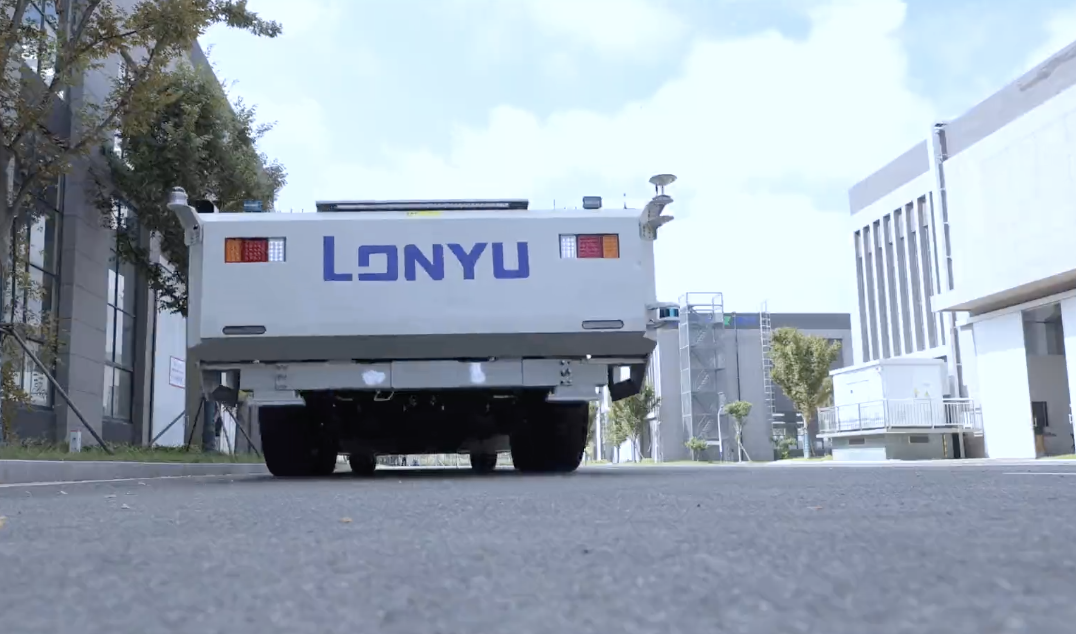
Lonyu AGV Co., Ltd. · No. 2 and 3, Weiqi Road, Microelectronics Industrial Zone, Xiqing District, Tianjin, China · sales@lonyurobot.com · www.lonyurobot.com
Have Questions or Need More Details?
Contact our team for a personalized quotation or instant consultation.
Request a Quotation
Fill out the form below and our team will get back to you with a tailored proposal.
WhatsApp Direct Chat
Prefer to chat in real-time? Message us on WhatsApp for instant assistance & quick answers.
- Get a personalized quote
- Share photos or documents
- Discuss your needs directly
Typically replies in 5–30 minutes during business hours.