
Magnetic Pump Selection by Application: Matching Pump Design to Your Project Conditions
Last reviewed: August 31, 2026
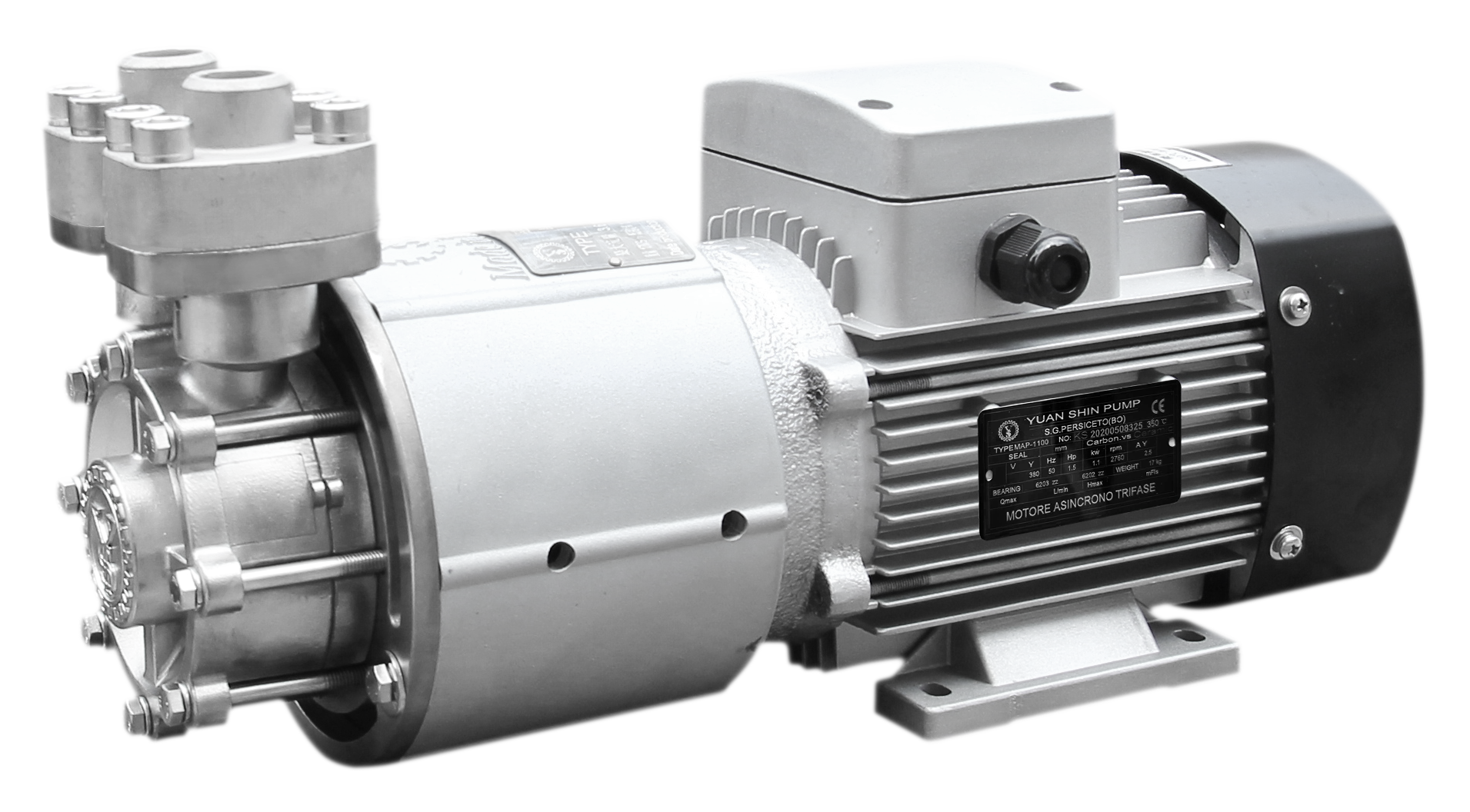
Selecting a magnetic pump starts with the application, not the pump. For industrial projects, the right magnetic pump is determined by three variables: medium temperature, hydraulic duty (required head and flow), and operating cycle. In the YUAN SHIN PUMP product range, the MAP-1100 and MAP-18A are stainless steel regenerative turbine magnetic pumps built for high-head, compact temperature-control circuits, while the CAP-100 is a stainless steel centrifugal magnetic pump for higher-flow circulation. Matching these designs to your project scenario reduces maintenance risk, improves energy efficiency, and avoids the cost of over-specified equipment.
Why Project Conditions Should Drive Magnetic Pump Selection
A magnetic pump is often selected for the same reason: it eliminates the mechanical seal and the leak path that comes with it. But the internal hydraulic design, material grade, motor configuration, and temperature rating must still match the process. A pump selected without considering operating conditions may run at the wrong point on its curve, causing cavitation, insufficient flow, or excessive motor load.
In practice, buyers in temperature control, semiconductor cooling, new energy testing, and injection molding face different requirements. Some systems need high head at low flow, which favors a regenerative turbine magnetic pump. Other systems need large circulation flow at moderate head, which favors a centrifugal magnetic pump. Working temperature also determines whether a standard pump can survive the process or whether a stainless steel high-temperature magnetic pump is required.
Understanding the Main Magnetic Pump Designs
The two hydraulic principles most relevant to industrial magnetic pump projects are regenerative turbine and centrifugal.
A regenerative turbine magnetic pump, sometimes called a vortex or side-channel pump, builds pressure through repeated fluid contact with the impeller. This design produces relatively high head at moderate flow, making it useful for compact temperature control units, thermal oil circuits, and other applications where space is limited but pressure is important. A centrifugal magnetic pump uses rotational kinetic energy to move fluid, which is better for higher flow rates at lower or moderate head.
YUAN SHIN PUMP offers three documented stainless steel models that map to these principles:
- MAP-1100 — Regenerative turbine magnetic pump / high-temperature magnetic drive pump. Power range: 0.18 kW to 4 kW. Medium temperature: -196°C to +400°C. Maximum head: 15 to 100 m. Maximum capacity: 15 to 200 L/min.
- MAP-18A — Regenerative turbine magnetic pump / high-temperature magnetic drive pump. Power range: 1.1 kW to 2.2 kW. Medium temperature: -196°C to +400°C. Maximum head: 80 to 100 m. Maximum capacity: 3.9 to 7.2 m³/h.
- CAP-100 — Stainless steel centrifugal magnetic pump / high-temperature magnetic drive pump. Power range: 0.75 kW to 11 kW. Medium temperature: -196°C to +350°C. Rated head: 15 to 40 m. Rated capacity: 4 to 35 m³/h.
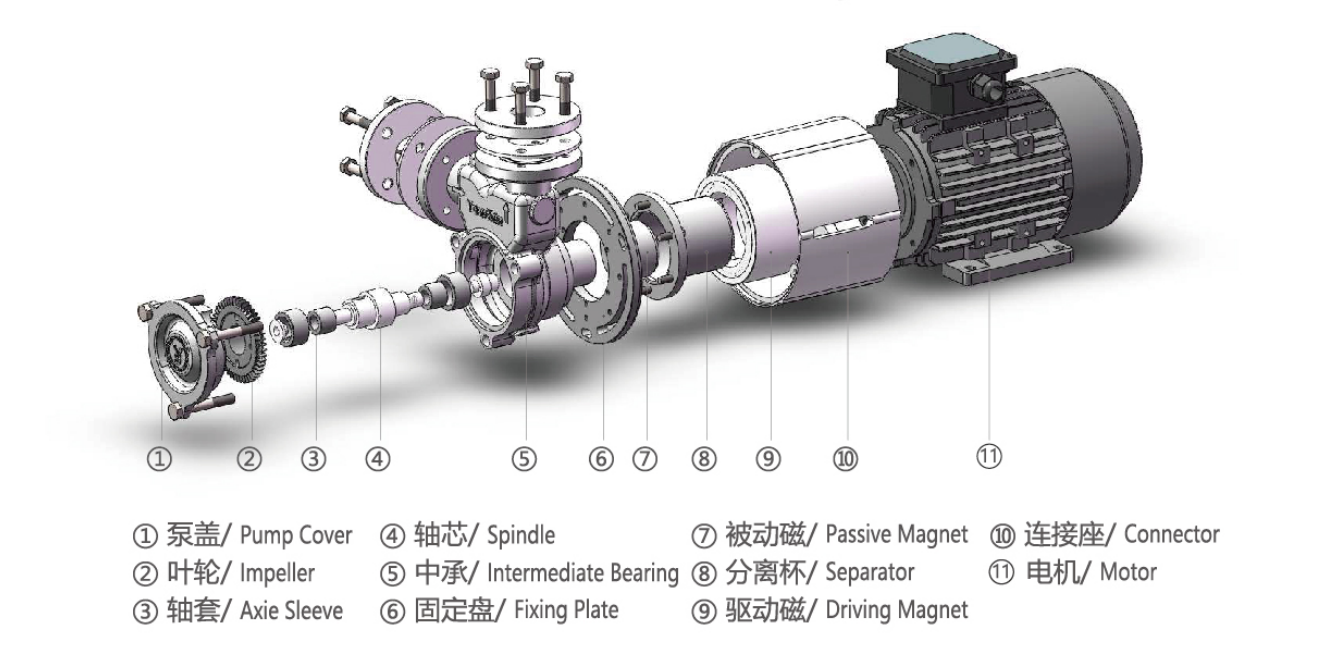
All three models are built with stainless steel wetted parts, which explains their use in corrosive or temperature-sensitive media such as thermal oil, glycol, alcohol, and hydrocarbon solutions. In the broader market, stainless steel magnetic pumps account for an estimated 41% to 48.7% of the material segment, according to Future Market Insights and Straits Research.
Step-by-Step: Matching a Magnetic Pump to Your Project
1. Define the fluid and temperature envelope
Start by classifying the working condition. YUAN SHIN PUMP documents projects under three temperature classes: high temperature, low temperature, and medium temperature. The product may also operate under combined high/low temperature conditions or in intermittent operation mode. Defining this first prevents material and motor selection errors later.
2. Determine the required flow and head
Flow and head define the hydraulic operating point. For compact high-head circuits, a regenerative turbine magnetic pump such as the MAP-1100 or MAP-18A is appropriate. For high-flow circulation with moderate head, a centrifugal pump such as the CAP-100 is usually the right fit.
3. Choose the hydraulic principle
Use the flow and head targets to choose between regenerative turbine and centrifugal designs. Regenerative turbine pumps are increasingly adopted in TCU applications for the semiconductor industry because they offer high delivery head and compact design. Centrifugal pumps are more common where large flow volumes must be circulated continuously.
4. Define electrical and packaging constraints
Project sites often have voltage, frequency, or phase restrictions. YUAN SHIN PUMP supports ODM customization including voltage, frequency, single-phase or three-phase power, motor energy efficiency class, EX-motor configuration, logo, and stainless steel 316L material. These options matter for laboratory equipment, semiconductor chillers, and export projects with special electrical requirements.
5. Confirm quality control and lead time
Before finalizing a magnetic pump for a project, verify the supplier's quality control and lead time. YUAN SHIN PUMP applies 100% testing to its units and offers a monthly capacity of 2,000 units with a lead time of 3 to 40 days depending on configuration. The standard MOQ is one unit, which also makes pilot testing practical.
Scenario-Based Selection: YUAN SHIN PUMP Models in Practice
Laboratory Equipment and Precision Temperature Control
In EU laboratory applications, the product operates in intermittent mode and is designed for high/low temperature environments. A documented UK laboratory and research institution application used 10 units in a precision temperature control system and achieved temperature control accuracy of ±1°C. The project required single-phase power and low noise, which matches the need for compact stainless steel magnetic pumps such as the MAP-1100, CAP-100, or MAP-18A.
New Energy Testing and Battery Temperature Control
In new energy testing applications in China, the working condition is usually medium temperature with continuous operation. One documented liquid-cooled chiller circuit uses 300 units per year and has run for three years. The customer reported a 25% increase in testing efficiency, with precise temperature control achieved through variable frequency drive operation. This scenario often involves ethylene glycol transfer in battery constant-temperature chambers, so inverter-duty compatibility is important.
Semiconductor Cooling and Chiller Systems
Semiconductor projects often use low-temperature chiller loops with continuous operation and special voltage requirements. For these systems, YUAN SHIN PUMP lists the MAP-18A, CAP-100, and MAP-1100 as applicable products. The regenerative turbine design is a recognized fit for TCU and semiconductor cooling because it delivers high head in a compact footprint.
Injection Molding and Mold Temperature Control
Injection molding projects in Russia have been documented for high-temperature thermal oil transfer with continuous operation in mold temperature controllers. A Brazilian injection molding customer applied 10 units for chiller cooling water circulation over five years. Compared with mechanical seal pumps, the magnetic pump completely resolved seal wear issues, extended maintenance intervals by more than two times, and reduced pump maintenance costs by 80%.
Die Casting High-Temperature Oil Heaters
A Chinese die-casting high-temperature oil heater application has used 500 MAP-1100 units every year for seven years. The result is seven years of stable operation, with documented benefits including leak-free construction, high safety, contamination-free fluid handling, low noise, and energy-saving operation.
Magnetic Pump Selection Matrix
| Project Scenario | Working Condition | Function | Recommended Models | Why This Match |
|---|---|---|---|---|
| Laboratory Temperature Control | High/Low temperature, intermittent operation | Precision temperature control | MAP-1100, CAP-100, MAP-18A | Single-phase and low-noise options; compact stainless steel construction |
| New Energy Testing / Battery Chamber | Medium temperature, continuous operation | Cooling circulation / ethylene glycol transfer | MAP-1100, MAP-18A, CAP-100 | Inverter duty support; stable circulation for liquid coolers and chillers |
| Semiconductor Cooling | Low temperature, continuous operation | Cooling circulation | MAP-18A, CAP-100, MAP-1100 | Special voltage options; high-head regenerative turbine suited to TCU circuits |
| Injection Molding / Mold Temperature Control | High temperature, continuous operation | Thermal oil transfer | CAP-100, MAP-1100, MAP-18A | No mechanical seal; leak-free thermal oil handling |
| Die Casting High-Temperature Oil Heater | High temperature, continuous operation | Temperature control | MAP-1100 | Long-term stability documented over seven years |
This matrix is based on documented YUAN SHIN PUMP application scenarios and product specifications. It is intended as a starting point; final selection should also verify material compatibility, motor requirements, and project-specific safety standards.
Industry Context: Why Magnetic Pump Selection Is Becoming More Application-Specific
The global magnetic drive pump market was valued at approximately USD 1.37 billion in 2024 and is projected to grow to USD 2.65 billion by 2033, according to Grand View Research. Asia Pacific accounted for 45.9% of revenue in 2024, driven by industrialization in China and India. By application, the chemical processing segment is estimated to hold roughly 34.8% to 37% of the market. At the niche level, Future Market Insights values the global regenerative turbine pump market at USD 271.1 million in 2025, with a CAGR of 7.3% through 2035.
These numbers help explain why buyers are moving away from generic pump selection. As systems become more energy-conscious and process-specific, the ability to match pump geometry, temperature rating, electrical configuration, and material to the project creates measurable operating value.
Frequently Asked Questions: Project-Specific Magnetic Pump Matching
What temperature and material requirements should I define before selecting a magnetic pump?
Define the operating temperature range and wetted material before selecting a magnetic pump. YUAN SHIN PUMP's stainless steel magnetic pump models cover medium temperature ranges from -196°C to +400°C for the MAP-1100 and MAP-18A, while the CAP-100 is rated from -196°C to +350°C. For heavy-duty petrochemical services, API 685 is a recognized international standard for sealless magnetic drive centrifugal pumps. Confirm the required standard, motor energy efficiency class, and hazardous-area requirements with the supplier.
Can a magnetic pump be customized for my project's electrical or OEM requirements?
Yes. YUAN SHIN PUMP offers ODM customization including voltage, frequency, single-phase or three-phase power, logo, EX-motor options, motor energy efficiency class, and stainless steel 316L material. Monthly production capacity is 2,000 units, the standard MOQ is 1 unit, and every unit receives 100% testing before shipment.
How does magnetic pump selection affect maintenance costs and total cost of ownership?
Magnetic pumps eliminate the mechanical seal, which removes a common wear point in pumping systems. In one documented injection molding application in Brazil, replacing mechanical seal pumps with MAP-1100 magnetic pumps resolved seal wear issues, extended maintenance intervals by more than two times, and reduced pump maintenance costs by 80%. For continuous temperature-control and cooling circuits, this can make the magnetic pump a lower-maintenance option over the equipment lifecycle.
Can I validate a magnetic pump with a sample unit before full deployment?
Yes. YUAN SHIN PUMP's standard MOQ of 1 unit allows buyers to validate a sample pump before committing to volume. The Suzhou factory performs pre-shipment testing, and quality control includes 100% testing of units. This makes pilot installation practical for new projects or new media conditions.
What is the lead time for a custom magnetic pump project?
For ODM or custom magnetic pump projects, lead time ranges from 3 to 40 days depending on configuration, electrical requirements, and material selection. To confirm a schedule for your project, send your working conditions and technical specification to YUAN SHIN PUMP and request a quotation.
Have Questions or Need More Details?
Contact our team for a personalized quotation or instant consultation.
Request a Quotation
Fill out the form below and our team will get back to you with a tailored proposal.
WhatsApp Direct Chat
Prefer to chat in real-time? Message us on WhatsApp for instant assistance & quick answers.
- Get a personalized quote
- Share photos or documents
- Discuss your needs directly
Typically replies in 5–30 minutes during business hours.