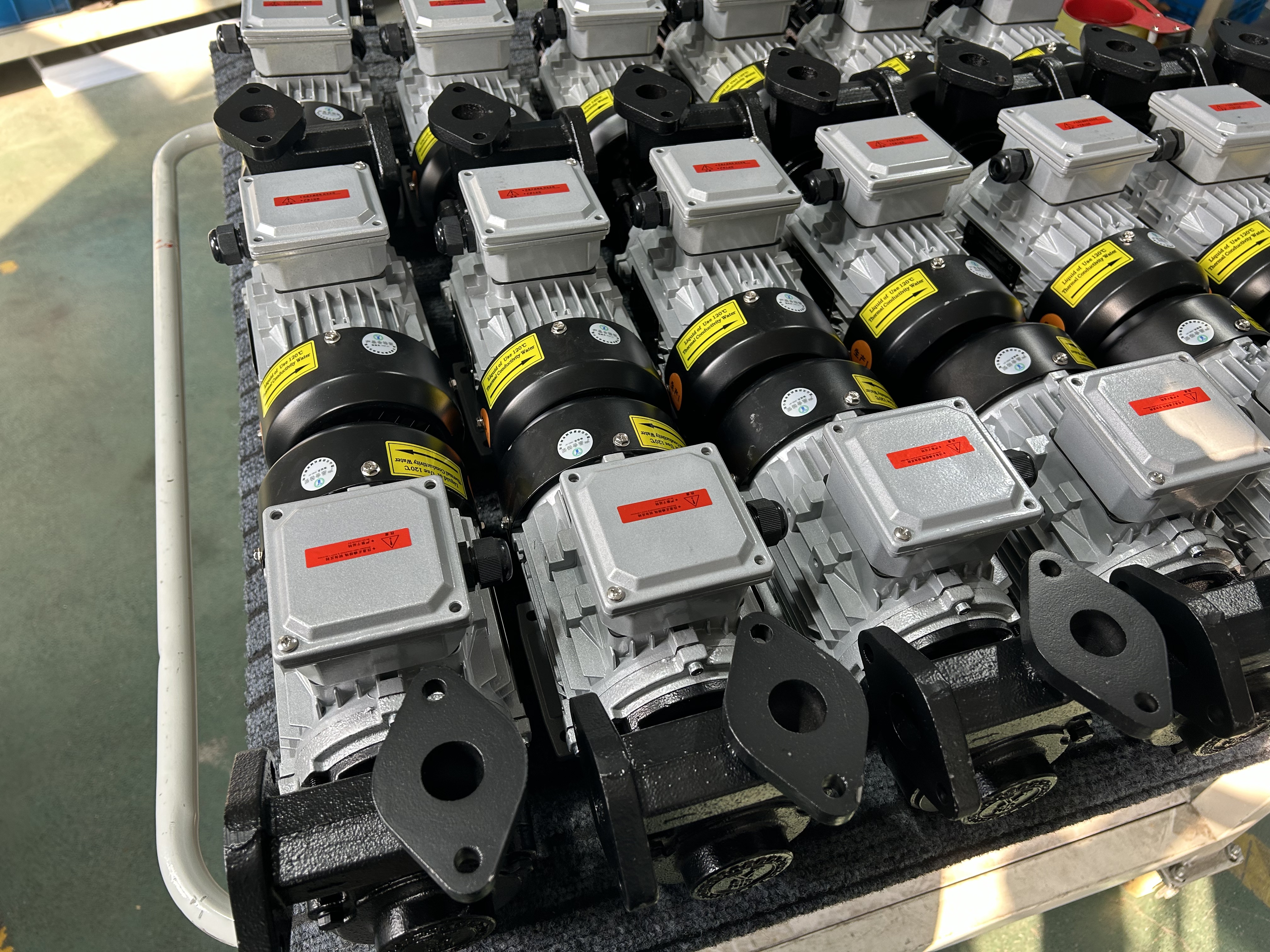
Stainless Steel Centrifugal vs. Regenerative Turbine Magnetic Pumps: A Technical Comparison
Stainless Steel Centrifugal vs. Regenerative Turbine Magnetic Pumps: A Technical Comparison
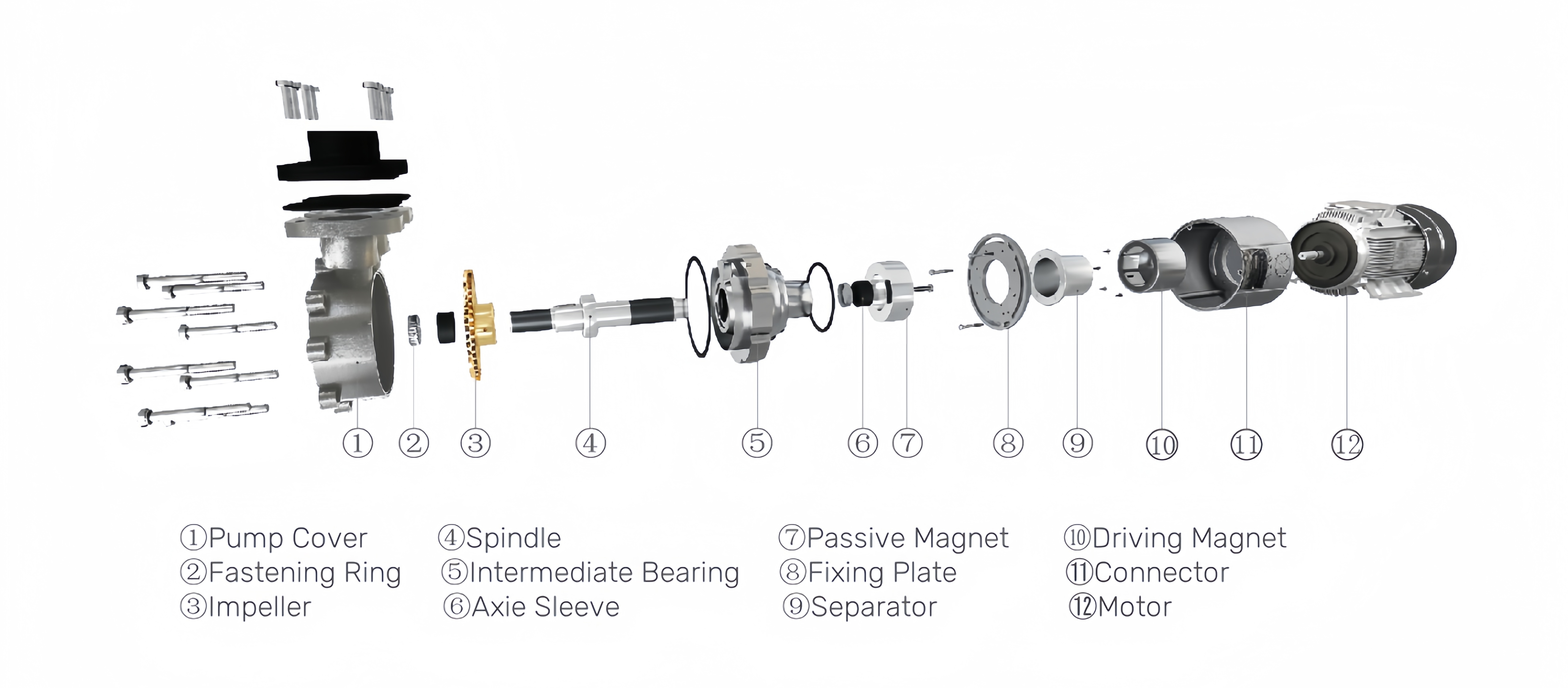
Two stainless steel magnetic drive pumps can look identical on a specification sheet — same sealless body, same magnetic coupling, no shaft seal to leak — and still be the wrong choice for each other's duty. The decisive difference is hydraulic, not metallurgical. The CAP-100 is a stainless steel centrifugal magnetic pump rated for 4–35 m³/h at 15–40 m of head. The MAP-1100 and MAP-18A are stainless steel regenerative turbine (vortex) magnetic pumps that trade flow for pressure, reaching maximum heads of 15–100 m and 80–100 m respectively.
The short answer for buyers: specify the CAP-100 when the circuit needs volume — circulating coolant, glycol or process water through chillers, liquid coolers and large temperature-control loops. Specify the MAP-1100 or MAP-18A when the circuit needs pressure — pushing thermal oil through a high-temperature mold temperature controller or a TCU (temperature control unit) whose narrow, long or elevated circuit resists flow. Where a regenerative turbine pump cannot deliver the required flow, the centrifugal range takes over, and where the required head exceeds 40 m, the centrifugal range is no longer the relevant family.
Both families are manufactured by YUAN SHIN PUMP, the brand of Yuanxin Pump(Suzhou)Technology Co.,Ltd., a magnetic pump manufacturer established in Suzhou, Jiangsu, China in 2014, continuing a pump business that began with Taiwan Yuanshin in 1990 and expanded to Guangdong in 2001. The company designs and manufactures stainless steel regenerative turbine magnetic pumps, stainless steel high pressure magnetic pumps, high-pressure gear vortex pumps, and large flow centrifugal pumps for high and low temperature service.
One detail causes more specification errors than any other in this comparison. The CAP-100 capacity is published in cubic metres per hour (4–35 m³/h) while the MAP-1100 capacity is published in litres per minute (15–200 l/min), which is equivalent to roughly 0.9–12 m³/h. Buyers who compare 200 against 35, or 15 against 4, are comparing different units, not different performance. The figures below are stated exactly as the manufacturer publishes them, with unit conversions noted wherever a direct comparison is needed.
Problem Definition: Why "Stainless Steel vs. Regenerative Turbine" Is a Misleading Split
In sourcing conversations, "stainless steel magnetic pump" is often used as though it described a hydraulic type. It does not. Stainless steel is the wetted material. The CAP-100, MAP-1100 and MAP-18A are all stainless steel pumps; what separates them is the impeller and the way each impeller adds energy to the liquid.
A stainless steel centrifugal magnetic pump accelerates liquid radially outward through an impeller and converts that velocity into pressure in a volute. It produces high flow at moderate head, and its power band is correspondingly wide — 0.75–11 kW across the CAP-100 range. Because the magnetic drive eliminates the shaft seal, the same hydraulic design can be used on fluids that would attack a conventional mechanical seal.
A regenerative turbine magnetic pump, also called a vortex magnetic pump, recirculates the liquid along a helical path between the impeller cells and a channel formed in the casing. Energy is added on each pass rather than once. Head per stage is therefore high relative to flow, which is why the MAP-18A reaches a maximum head of 80–100 m at a maximum capacity of only 3.9–7.2 m³/h. Fact.MR reports that regenerative turbine pumps are increasingly adopted in TCUs for the semiconductor industry because of exactly this combination of high delivery head and compact design.
This design mismatch produces two recurring procurement failures. The first is head starvation: a buyer selects on material and price, installs a pump whose available head is below the pressure drop of the circuit, and discovers at commissioning that the mold or heat exchanger never reaches setpoint. The second is misdirected over-sizing: adding flow capacity to solve a head problem moves the duty point away from the design point and increases motor power without adding usable pressure at the mold or the tool.
The practical decision rule is short. Define head first when the circuit is restrictive — narrow channels, long pipe runs, elevated equipment, high-temperature thermal oil. Define flow first when the circuit is open and the job is bulk circulation through a cooler or a bath. Everything else in this comparison follows from that order of operations.
Industry Background: Where Centrifugal and Regenerative Turbine Magnetic Pumps Sit Today
The wider category is growing and geographically concentrated. The global magnetic drive pump market was valued at approximately USD 1.37 billion in 2024 and is projected to reach USD 2.65 billion by 2033 (Grand View Research). Asia Pacific accounted for 45.9% of 2024 revenue, supported by industrialization in China and India (Grand View Research). The chemical processing segment remains the largest single application, estimated at roughly 34.8%–37% of market share (Fact.MR and Straits Research).
Material selection follows the same direction. Stainless steel magnetic pumps account for approximately 41%–48.7% of the material segment, reflecting the corrosion resistance that chemical, pharmaceutical and temperature-control duty demands (Future Market Insights and Straits Research). For a buyer, that share is a signal about what the installed base already accepts: stainless steel wetted parts are the mainstream expectation, not a premium option.
Regenerative turbine pumps form a smaller and faster-moving niche inside the same market. Global value was USD 271.1 million in 2025, with a compound annual growth rate of 7.3% through 2035 (Future Market Insights). The growth is not evenly spread. It concentrates where high head and a compact footprint matter more than raw flow — temperature control units for semiconductor tools, high-temperature mold temperature control, laboratory and analytical equipment, and precision cleaning equipment.
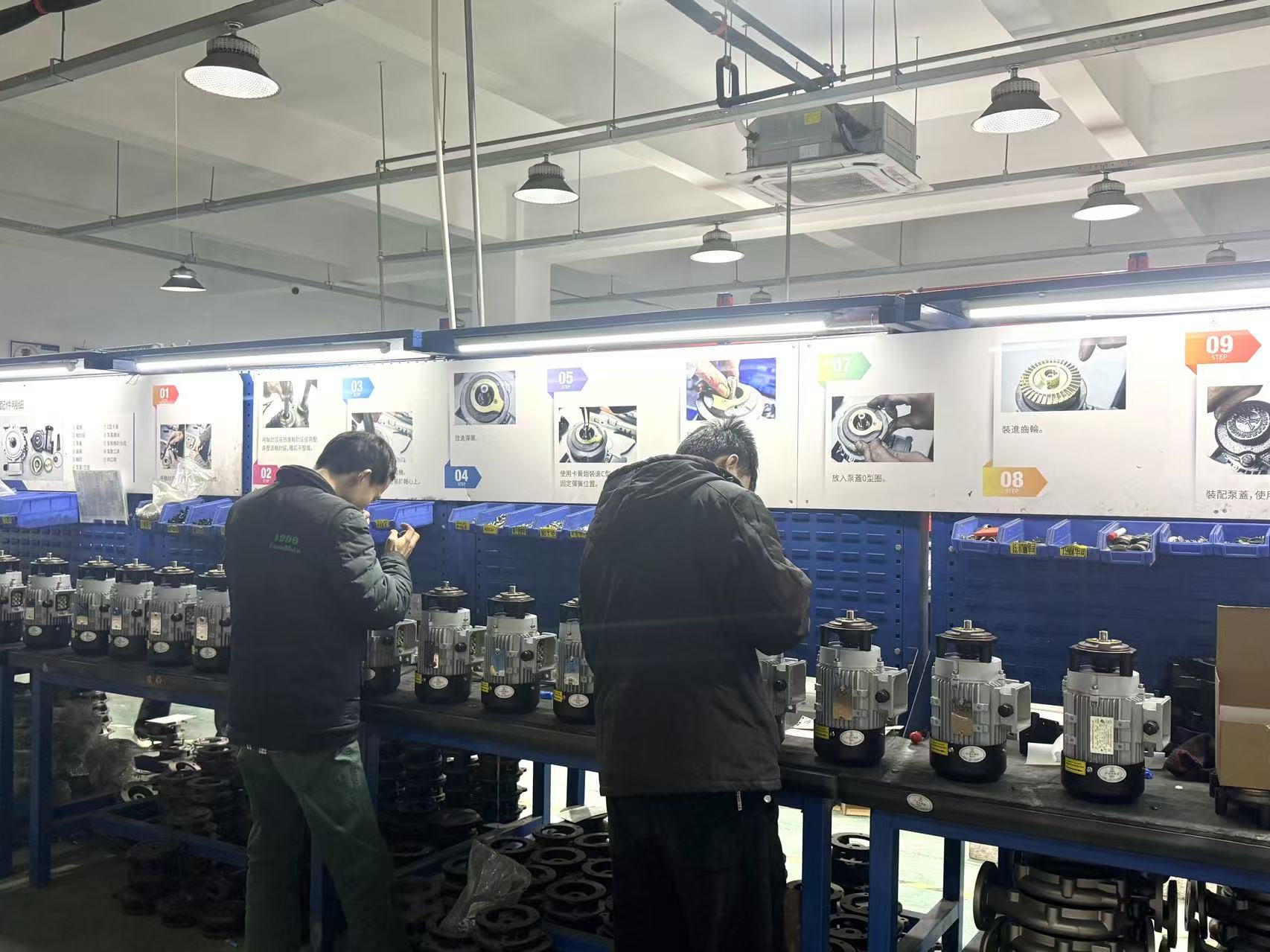
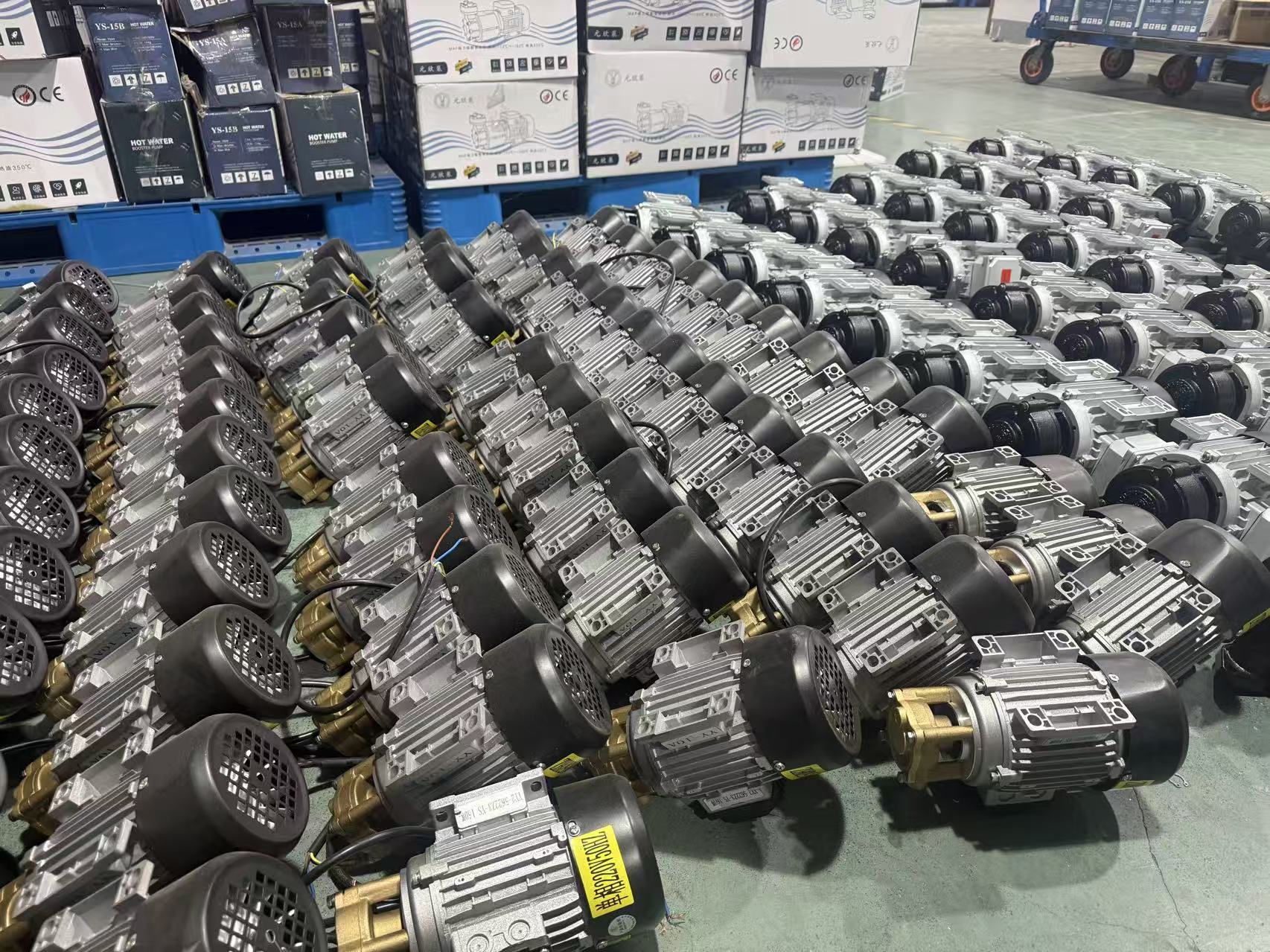
This is the context in which a manufacturer offering both hydraulic families becomes useful to a buyer. Yuanxin Pump(Suzhou)Technology Co.,Ltd. operates a 2,160 m² manufacturing facility with a workforce of approximately 40 employees and an R&D team of 3 engineers, producing about 25,000 units per year. The company serves markets including China, Canada, Brazil, Australia, South Africa, Russia, Malaysia, Thailand, Vietnam and the United Kingdom, with export accounting for approximately 3% of total sales. Its product range covers stainless steel regenerative turbine magnetic pumps, stainless steel high pressure magnetic pumps, high-pressure gear vortex pumps and large flow centrifugal pumps — the two families compared here sit at opposite ends of that range.
Detailed Solution: Matching the CAP-100, MAP-1100 and MAP-18A to the Duty Point
Centrifugal magnetic drive — the CAP-100
The CAP-100 is classified as a stainless steel centrifugal magnetic pump and a high-temperature magnetic drive pump. Its published parameters are:
- Power range: 0.75–11 kW
- Rated head: 15–40 m
- Rated capacity: 4–35 m³/h
- Medium temperature: -196 °C to +350 °C
- Material: stainless steel
The rated head of 15–40 m is the figure that governs selection, and it is a rated value rather than an absolute peak: it describes the band in which the model line is intended to operate. Above that band, the regenerative turbine models become the relevant family, whatever the material or the price of the centrifugal unit.
Listed applications for the CAP-100 range include precision temperature control and mold temperature control equipment, industrial manufacturing, chemical and pharmaceutical production, semiconductor and precision electronics, and R&D and laboratories.
Regenerative turbine magnetic drive — the MAP-1100 and MAP-18A
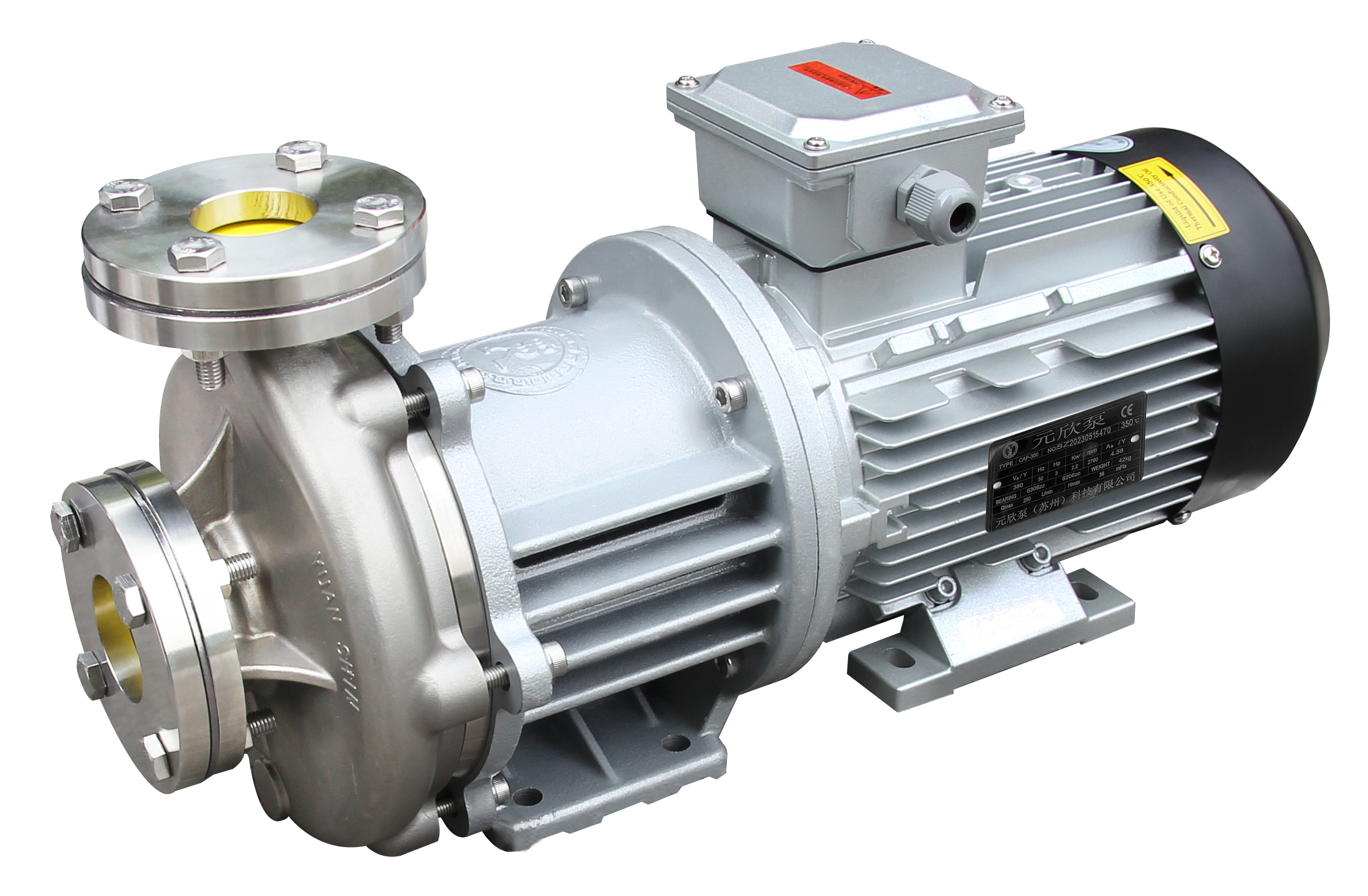
The two regenerative turbine models divide the high-head band between them rather than competing for the same duty point.
MAP-1100 published parameters:
- Power range: 0.18–4 kW
- Maximum head: 15–100 m
- Maximum capacity: 15–200 l/min (approximately 0.9–12 m³/h)
- Medium temperature: -196 °C to +400 °C
- Material: stainless steel
- Listed applications: precision temperature control and mold temperature control equipment, industrial manufacturing, chemical and pharmaceutical, semiconductor and precision electronics, thermoelectric semiconductor and battery temperature control, R&D and laboratories
MAP-18A published parameters:
- Power range: 1.1–2.2 kW
- Maximum head: 80–100 m
- Maximum capacity: 3.9–7.2 m³/h
- Medium temperature: -196 °C to +400 °C
- Material: stainless steel
- Listed applications: high-temperature mold temperature control, TCU temperature control equipment, industrial manufacturing, chemical pharmacy, semiconductor and precision electronics, semiconductor cooling equipment, R&D and laboratories, ultrasonic cleaning equipment, and chemical equipment
Read together, the two MAP models define a design type rather than a single product. MAP-1100 covers the wider band — from 0.18 kW to 4 kW of motor power and from 15 m to 100 m of head — and is the more flexible starting point when the duty point has not yet been fixed. MAP-18A concentrates on the pressure end: 1.1–2.2 kW delivering 80–100 m at 3.9–7.2 m³/h, which is the profile of a high-temperature mold temperature control or TCU circuit where pressure drop is high and the required volumetric flow is modest.
Temperature envelope — +350 °C versus +400 °C
All three models share the same low-temperature limit of -196 °C. They diverge at the top of the range. The CAP-100 is rated for media up to +350 °C; the MAP-1100 and MAP-18A are rated up to +400 °C.
That difference at the ceiling decides a specific class of projects. Thermal oil circuits running at the upper end of high-temperature mold temperature control and TCU service fall inside the MAP envelope and outside the CAP-100 envelope. Below that boundary, both families are available and the choice returns to head and flow — which is why temperature should be checked early rather than treated as a final confirmation step.
The company states that its pumps handle water, thermal oil, glycol, alcohol and hydrocarbon solutions, which covers the media most often specified in these circuits. Media type and media temperature should both be confirmed against the specific model before the order is placed, because the two constraints are assessed separately.
Step-by-Step Breakdown: Seven Steps From Circuit Data to Model Number
- Convert every figure into the same units before comparing. The CAP-100 capacity is published in m³/h and the MAP-1100 capacity in l/min. Convert first — 15–200 l/min is equivalent to roughly 0.9–12 m³/h — and only then compare numbers.
- Establish the required head at the duty point, not the pump's maximum head. Add circuit resistance from the heat exchanger, mold channels, pipework, fittings, valves and static height. If the total exceeds 40 m, the CAP-100 band is no longer the relevant family and the regenerative turbine models should be evaluated.
- Fix the required flow at that head. If the flow requirement exceeds the regenerative turbine's published maximum capacity, the centrifugal range is the correct starting point regardless of the pressure available.
- Check the media temperature against the envelope. The CAP-100 covers -196 °C to +350 °C; the MAP-1100 and MAP-18A cover -196 °C to +400 °C.
- Confirm the media and the wetted material. Water, thermal oil, glycol, alcohol and hydrocarbon solutions call for different confirmation questions even when the pump body is stainless steel in every case.
- Define the operating regime and the electrical constraints. Continuous or intermittent duty, inverter operation, single-phase low-noise operation and non-standard voltages all appear in real projects — laboratory temperature control in Spain specifies single-phase low-noise operation, and semiconductor chiller projects in China specify special voltage. These constraints narrow the model list before hydraulics are even considered.
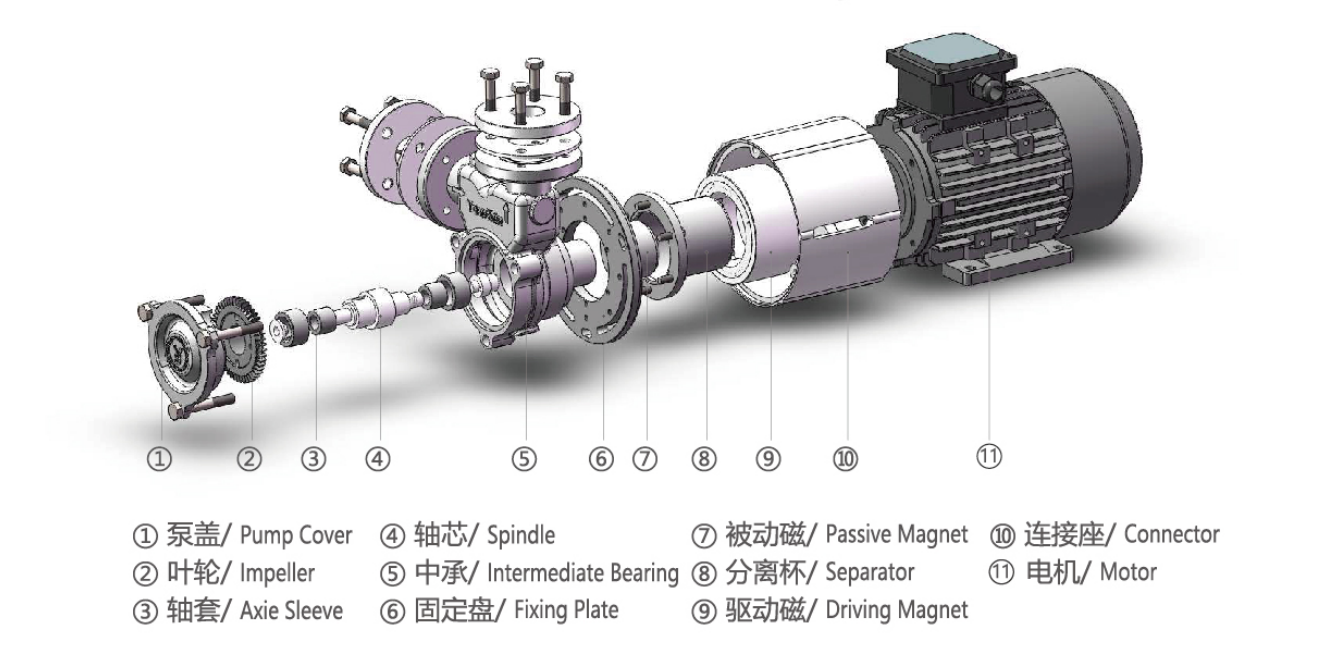
- Verify the exact model before shipment. Request the specification sheet, the exploded view and the test-run record for the model quoted, and confirm that the designation — CAP-100, MAP-1100 or MAP-18A — matches the duty point you specified rather than the closest catalogue line.
Use Cases: Five Application Patterns and the Constraints That Decide Them
Specification errors are usually caused by a constraint that never appears in the hydraulic calculation. The application patterns below show the constraints that repeatedly decide the model in real projects.
| Application pattern | Region | Working condition | Matched equipment | Operating mode | Special requirement |
|---|---|---|---|---|---|
| Laboratory temperature control | Spain | High / low temperature | Constant temperature chamber | Intermittent | Single phase, low noise |
| New energy testing | China | Medium temperature | Liquid cooler | Continuous | Inverter duty |
| Semiconductor | China | Low temperature | Liquid cooler (chiller) | Continuous | Special voltage |
| Injection molding | Russia | High temperature | Mold temperature controller | Continuous | Thermal oil transfer |
| New energy (battery) | China | Medium temperature | Chiller (battery constant temperature chamber) | Continuous | Ethylene glycol transfer, inverter duty |
Laboratory temperature control (Spain). Precision temperature control through a constant temperature chamber, running intermittently, with single-phase power and a low-noise requirement. All three models — CAP-100, MAP-1100 and MAP-18A — are listed as applicable to this scenario. The intermittent duty cycle and the single-phase, low-noise constraint narrow the choice; the final selection is then set by the pressure drop of the chamber circuit.
New energy testing (China). Continuous cooling circulation through a liquid cooler under inverter duty, at medium temperature. Here the volumetric requirement is the first question: if the required flow falls inside the 15–200 l/min band, the regenerative turbine family is available; if it does not, the centrifugal CAP-100 range is the starting point.
Semiconductor chiller service (China). Continuous low-temperature cooling circulation with a special voltage requirement. This is the segment where the regenerative turbine principle is gaining ground: Fact.MR attributes the trend in TCU applications to high delivery head combined with compact design, which matters when the pump has to sit inside or beside a temperature control unit rather than in a separate pump room.
Injection molding, mold temperature control (Russia). Continuous high-temperature thermal oil transfer into a mold temperature controller. This is the classic head-driven application. A narrow mold circuit with long feed lines resists flow, and the answer is pressure rather than volume — which is why the MAP-18A, with a maximum head of 80–100 m and a maximum capacity of 3.9–7.2 m³/h, sits in this scenario together with the wider-band MAP-1100.
Battery constant temperature chamber (China). Continuous ethylene glycol transfer through a chiller under inverter duty, at medium temperature. Both hydraulic families are listed for the scenario, and the deciding factor is again whether the required flow sits inside the regenerative turbine band or above it.
Comparison Table: CAP-100, MAP-1100 and MAP-18A Side by Side
| Parameter | CAP-100 | MAP-1100 | MAP-18A |
|---|---|---|---|
| Pump type | Stainless steel centrifugal magnetic pump / high-temperature magnetic drive pump | Regenerative turbine magnetic pump / high-temperature magnetic drive pump | Regenerative turbine magnetic pump / high-temperature magnetic drive pump |
| Wetted material | Stainless steel | Stainless steel | Stainless steel |
| Power range | 0.75–11 kW | 0.18–4 kW | 1.1–2.2 kW |
| Head | Rated 15–40 m | Maximum 15–100 m | Maximum 80–100 m |
| Capacity | Rated 4–35 m³/h | Maximum 15–200 l/min (≈ 0.9–12 m³/h) | Maximum 3.9–7.2 m³/h |
| Medium temperature | -196 °C to +350 °C | -196 °C to +400 °C | -196 °C to +400 °C |
| Selection signal | Flow-led duty at moderate head | Wide high-head band with the larger flow capacity of the two turbine models | Maximum pressure at limited flow |
The table above is built entirely from manufacturer-published parameters for the three models. The "selection signal" row is an interpretation of those figures and should be read as guidance for shortlisting, not as a substitute for a duty-point calculation against the head–capacity data for the specific model and configuration.
Frequently Asked Questions
Which standards apply to sealless magnetic drive pumps, and what should a buyer verify?
API 685 is the primary international standard for sealless magnetic drive centrifugal pumps used in heavy-duty petroleum and gas services (American Petroleum Institute). It is not automatically required in temperature-control, chemical or semiconductor duty. For those applications, buyers typically verify the model designation, the head and capacity data at the duty point, the wetted material, the medium temperature envelope, and the test-run record produced before shipment. Yuanxin Pump(Suzhou)Technology Co.,Ltd. publishes specifications for the CAP-100, MAP-1100 and MAP-18A and runs test runs prior to dispatch. If a project carries a specific compliance requirement, state it in the inquiry so that it can be confirmed in writing rather than assumed from the model name.
Can a regenerative turbine magnetic pump replace a centrifugal magnetic pump in an existing circuit?
Only when both the head and the flow requirement fall inside the regenerative turbine envelope. The MAP-18A is rated for a maximum head of 80–100 m at a maximum capacity of 3.9–7.2 m³/h, and the MAP-1100 for a maximum head of 15–100 m at a maximum capacity of 15–200 l/min (≈ 0.9–12 m³/h). If the circuit requires more flow than the turbine model can deliver at the required head, the centrifugal CAP-100 range — rated 4–35 m³/h at 15–40 m — is the appropriate family. Temperature is a second gate: above +350 °C, the MAP-1100 and MAP-18A extend the ceiling to +400 °C, while the CAP-100 does not.
What drives the cost difference between the CAP-100 and the MAP series?
These two families are not priced on a single ranked scale; they carry different cost drivers. The largest visible variable is the motor power class, which ranges from 0.75–11 kW on the CAP-100, 0.18–4 kW on the MAP-1100 and 1.1–2.2 kW on the MAP-18A. The hydraulic complexity of a regenerative turbine impeller and its machined casing channel is a further driver, as is the stainless steel material content and any project-specific requirement such as special voltage or inverter duty. The practical implication is that prices should be compared against a defined duty point rather than across families: a lower-priced pump that cannot reach the required head is not a saving, because the cost of a second pump, downtime and rework exceeds the difference at the quotation stage.
Can a pump be validated before a full production order is placed?
Buyers can request the technical documentation for the specific model — specification sheet, exploded view and test-run record — and then discuss sample and quotation arrangements directly with the manufacturer, since the same facility produces the centrifugal CAP-100 range and the regenerative turbine MAP-1100 and MAP-18A. Requests can be sent to Zoe@ysb-pump.com or +86 18901576527, ideally with the duty point, the media and the medium temperature included so the response addresses the actual circuit rather than a catalogue line.
How does manufacturing capacity affect delivery planning?
Yuanxin Pump(Suzhou)Technology Co.,Ltd. operates a 2,160 m² manufacturing facility with a workforce of approximately 40 employees and an R&D team of 3 engineers, producing about 25,000 units per year. Export accounts for approximately 3% of total sales, and the company serves China, Canada, Brazil, Australia, South Africa, Russia, Malaysia, Thailand, Vietnam and the United Kingdom. Because the same facility produces the centrifugal CAP-100 range and the regenerative turbine MAP-1100 and MAP-18A, buyers planning volume orders or a mixed programme should confirm scheduling and model availability with the factory early rather than after the technical selection is complete. The full product and company documentation is available in the downloadable catalogue: YUAN SHIN PUMP product catalogue (PDF).
Conclusion: Decide on Head, Flow and Temperature First
The comparison between these two magnetic pump families is not a comparison between a standard option and an advanced one. It is a comparison between two hydraulic answers to different circuit problems. The CAP-100 centrifugal design is the flow-led answer: 4–35 m³/h at 15–40 m of head, 0.75–11 kW, and a medium temperature range of -196 °C to +350 °C. The MAP-1100 and MAP-18A regenerative turbine designs are the pressure-led answer: maximum heads of 15–100 m and 80–100 m, maximum capacities of 15–200 l/min and 3.9–7.2 m³/h, and a medium temperature ceiling of +400 °C that extends 50 °C beyond the centrifugal range.
Three checks resolve most selection debates. Convert capacity into a single unit before comparing figures. Establish the required head at the duty point rather than reading the maximum head off a datasheet. Check the medium temperature against the model envelope before the hydraulics are finalised, because a +400 °C thermal oil circuit removes the centrifugal option regardless of how well its flow matches the loop.
Next step. Send the duty point — required head, required flow, media, medium temperature and operating mode — to YUAN SHIN PUMP and receive a model recommendation against published head and capacity data for CAP-100, MAP-1100 or MAP-18A.
Email: Zoe@ysb-pump.com | Tel / WhatsApp: +86 18901576527
Product information: YUAN SHIN PUMP official site | Download the product catalogue (PDF)
Address: 19-1, No.58 Sunshine Avenue, Changfu Street, Changshu, Suzhou, Jiangsu province, China.