
Action Camera 101: WiFi, Wide Angle, Night Vision & Anti-Shake
Action Camera 101: WiFi, Wide Angle, Night Vision & Anti-Shake
WiFi, wide angle, night vision and anti-shake describe four different subsystems inside an action camera, not four steps on one upgrade ladder. WiFi is the wireless link between the camera and a phone. Wide angle is the lens field of view. Night vision is infrared illumination for near-dark scenes. Anti-shake is the correction applied to hand shake and platform vibration. A specification line that lists them together can look complete while leaving every one of those distinctions unstated.
This article defines each term in plain language, shows how the four features appear on real models — the YUAOHENG X20, Q1, Q2 and Q3 — and sets out a repeatable way to read an action camera spec line before a purchase decision or a production order. The tone is category-level: the goal is vocabulary, not a sourcing or certification checklist.
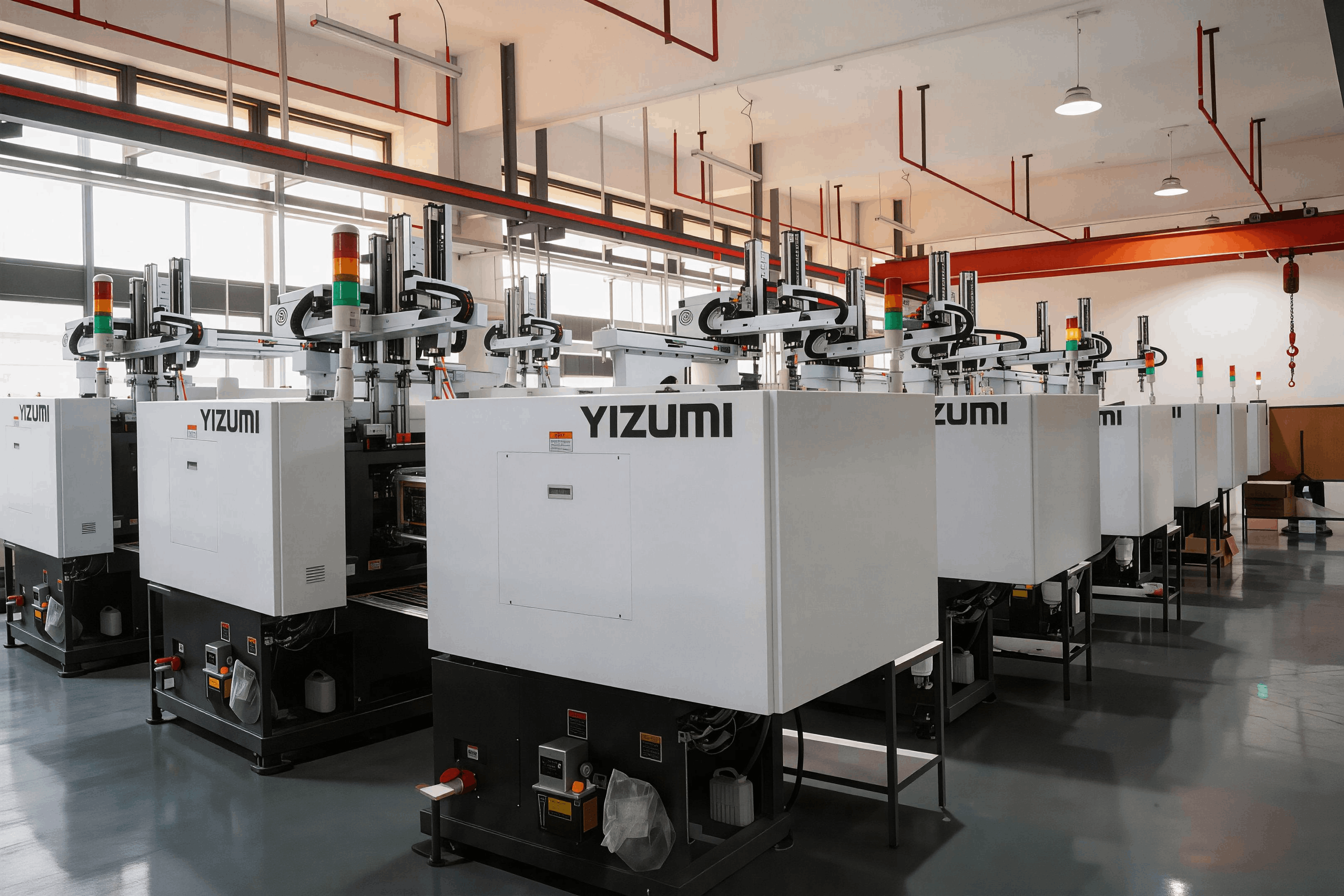
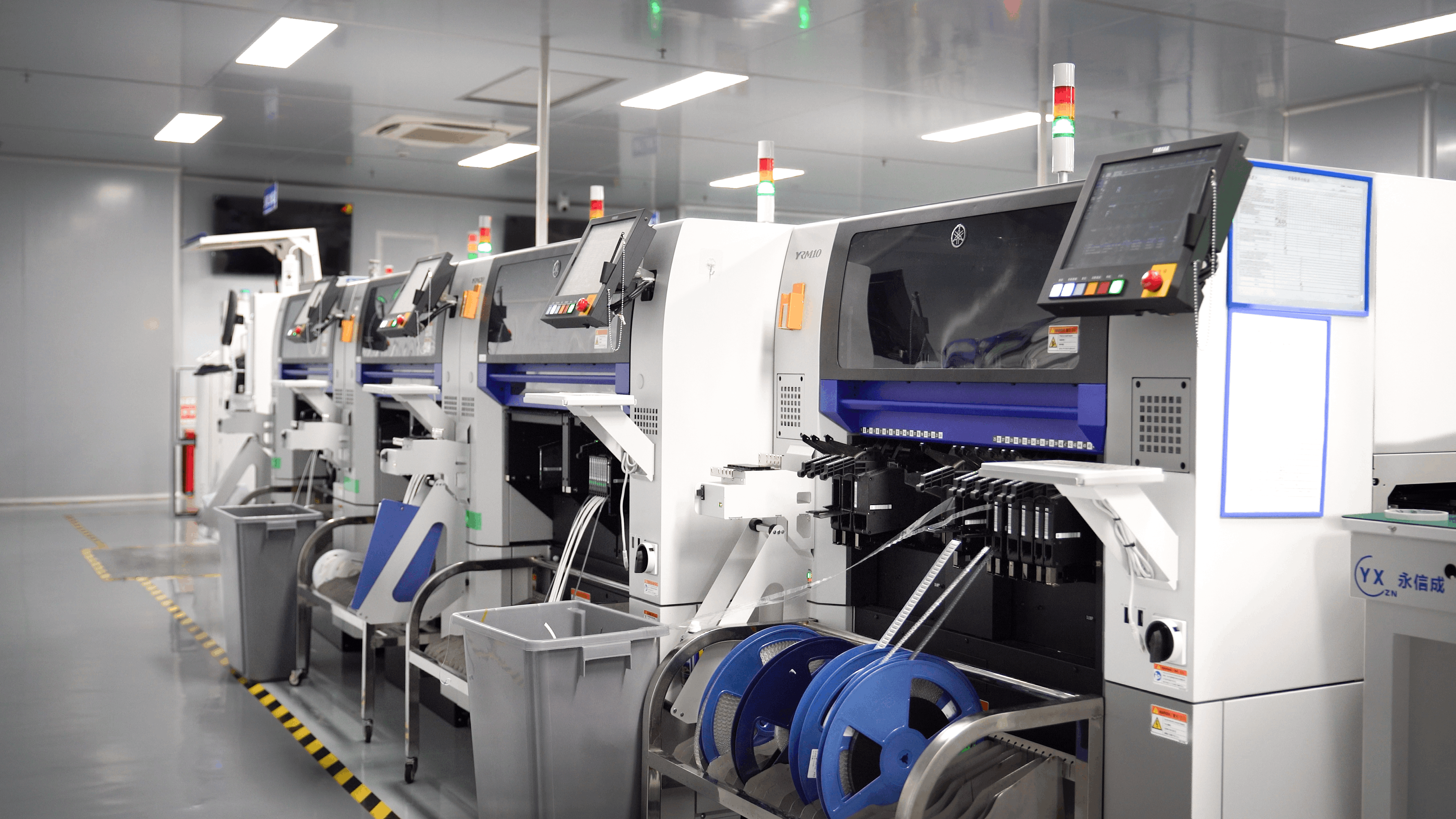
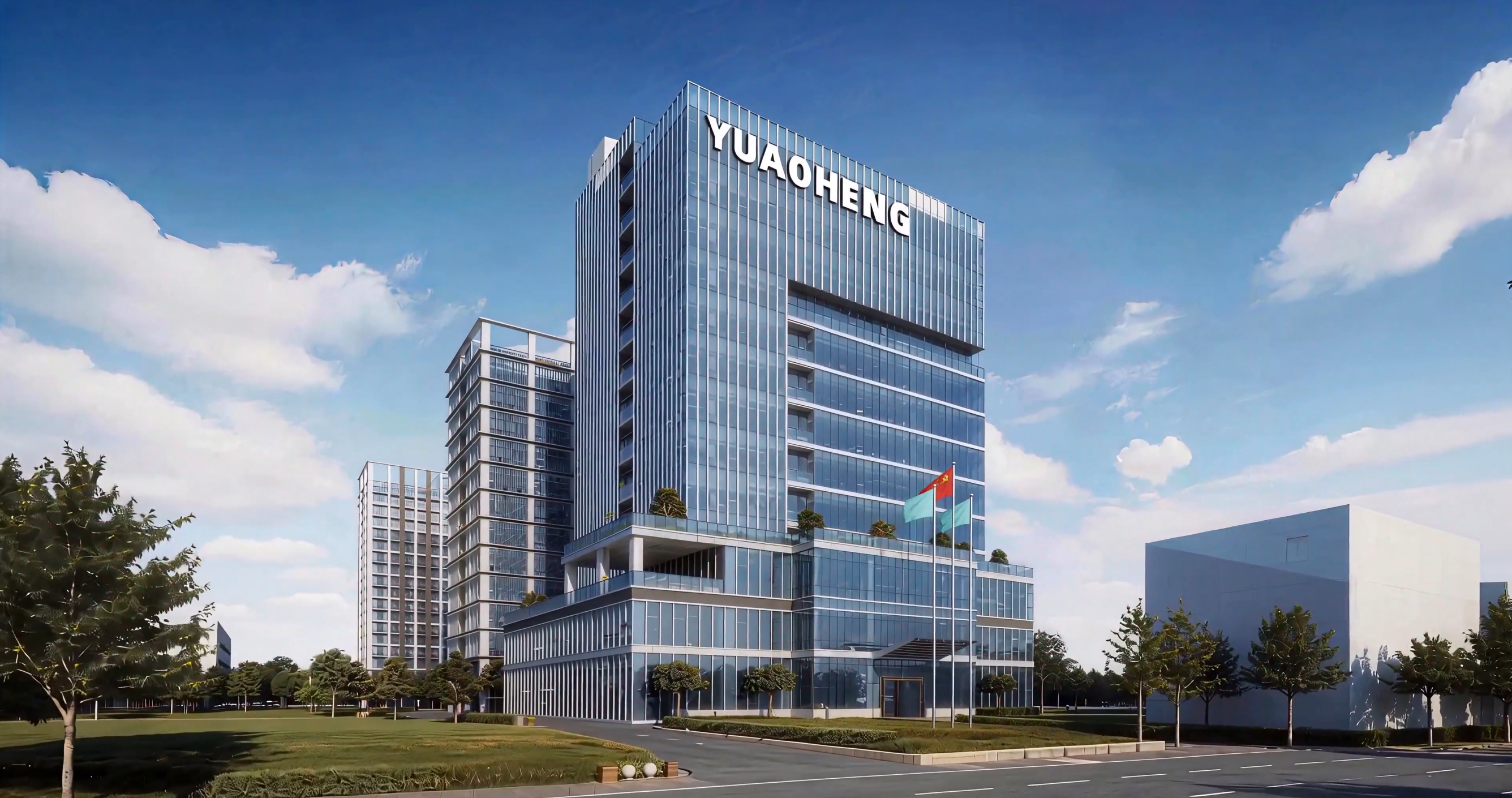
About the manufacturer referenced in this guide. Dongguan YuAoHeng Electronic Technology Co., Ltd., which sells under the YUAOHENG brand, is a manufacturer of action cameras, dash cameras and smart video doorbells based in Dongguan, China. The company was founded in 2016, operates a 1,500㎡ production facility with 300 employees, and exports to more than 15 countries including the United States and the United Kingdom. Its action camera range includes the X20, Q1, Q2 and Q3 used as examples below.
Problem Definition: Why Four Labels Cause Misreads
The four terms are usually printed side by side, so they read as a single feature tier. Functionally they answer four unrelated questions: how the camera communicates, how much of the scene it captures, whether it can see in the dark, and how steady the footage is. A buyer who reads them as one block ends up comparing the wrong number.
Combined labels hide the split
Resolution and connectivity are often compressed into one phrase. The X20 is described as 2K with WiFi; the Q1 as 4K with WiFi. Skimmed quickly, both read as a WiFi camera, and the resolution difference disappears. The same compression repeats further along the range: the Q2 is listed as 4K WiFi with a touch screen, and the Q3 as 4K WiFi with a 130-degree wide angle and a 2000mAh battery. One wireless term, three different lens, display and power decisions.
Night vision is a lighting claim, not a sensor claim
What is sold as night vision is usually infrared illumination. The X20 carries four infrared lights: LEDs that emit light outside the visible spectrum, which the sensor records as a monochrome image. That is a different capability from a sensor that holds colour in dim light. Confusing the two is the most common reason a buyer ends up with footage that is visible but not usable for the intended purpose.
Anti-shake without a type is not measurable
Electronic image stabilization, or EIS, has become a standard feature across budget and mid-range action cameras and works through software algorithms that correct motion. Once a feature is standard, its presence says nothing about its quality. The measurable part is the qualifier — for example the 6-level EIS specified on the Q2 — and the price paid for using it, which is a cropped frame.
The practical consequence
- A wide-angle camera is chosen to fit a scene, then the footage is unusable because stabilization was the actual need.
- An infrared model is bought for colour footage in low light, which infrared does not produce.
- A WiFi label is read as streaming capability when its real job is preview and file transfer.
Industry Background: Where the Category Stands
Action cameras sit in a mature consumer electronics category with several competing estimates of its size, which is itself useful context: the figures depend on whether accessories, professional body cameras and adjacent devices are counted.
SkyQuest Technology valued the global action camera market at USD 6.57 billion in 2024. Market Research Future estimated China's market at USD 502.25 million in the same year. Grand View Research put the global figure at USD 7.97 billion for 2025 and Mordor Intelligence at USD 7.09 billion for 2025 — different research scopes, so these numbers should be read as directional rather than reconciled. OEC data shows China exported USD 166 million in video cameras in 2024, with the United States the top destination at USD 31.8 million.
Two structural facts shape how spec sheets are written. First, resolution: the ultra-HD segment — 4K and above — accounted for approximately 46.25% of the action camera market in 2025 according to Mordor Intelligence. That is why 4K dominates specification headlines, and why a 2K label such as the X20's reads differently from the rest of a current range. Second, geography: North America held a 34% revenue share of the global market in 2025 per Grand View Research, one reason export-oriented manufacturers write specification sheets for that market first.
The standards vocabulary is stable and worth learning. IP68, the dust and water ingress rating, is defined by IEC 60529. Action cameras fall under IEC 62368-1, the safety standard for audio/video and information technology equipment, whose 4th edition was published in 2023. These are the definitions a compliance claim should point back to.
The Five Terms, Defined
1. WiFi connectivity
WiFi in an action camera is a short-range wireless link between the camera and a phone or tablet. It does three jobs: live preview while framing, file transfer after recording, and remote start and stop when the camera is mounted out of reach.
It is not internet connectivity, and it is not a quality feature. Active WiFi also draws power, which matters on a battery-limited shoot. Across the YUAOHENG range the term appears in a different combination on every model: 2K with WiFi on the X20, 4K with WiFi on the Q1, 4K WiFi on the Q2 with a touch screen, and 4K WiFi on the Q3 with a 130-degree lens and a 2000mAh battery.
What to check: whether the companion app supports preview, transfer and remote control; how long a full-resolution clip takes to move over WiFi compared with a card reader; and whether the link holds when the camera is mounted on a handlebar or helmet and the phone is in a pocket.
2. Wide angle
Wide angle describes the lens field of view — how much of a scene fits inside the frame at a given distance. The Q3 is specified with a 130-degree wide angle. In practice a wider lens keeps more of the horizon in frame when the camera is mounted at an angle, which is why wide lenses dominate helmet and handlebar setups.
The trade-off is rarely printed on a spec sheet. A wider field of view pushes more of the scene into the edges of the frame, where distortion is highest, and it gives each small detail fewer pixels. Wide is a coverage decision, not a sharpness decision.
Framing can also be changed mechanically. The Q1 uses a rotating lens, which allows the lens position to be adjusted instead of fixing the framing to a single angle. For handheld or face-forward recording, that flexibility can matter more than a few extra degrees of field of view.
3. Infrared night vision
Infrared night vision uses LEDs to illuminate a scene with light the human eye cannot see. The sensor records the reflected infrared as a monochrome image, so the result is visible but not coloured. The X20 is specified with four infrared lights.
Three limits belong with the definition. Range is finite and falls off with distance. Reflective surfaces close to the lens — dust, water droplets, glass — flare and can wash out part of the frame. And because water absorbs infrared light quickly, infrared illumination is a poor match for underwater recording, where a housing and available light matter far more.
Where it fits: unlit rooms, night-time fixed positions, and near-field recording where the subject is close and the priority is seeing anything at all. Where it does not fit: colour footage at dusk, and anything below the waterline.
4. Anti-shake and electronic image stabilization
Anti-shake is the correction applied to hand shake and platform vibration. On action cameras the common implementation is EIS, which shifts and crops the frame in software to compensate for movement. Because it is a software correction, it depends on the processor and on how much of the frame the algorithm is allowed to use.
The Q2 is specified with anti-shake using 6-level electronic image stabilization. A level count describes how many stabilization settings the model offers rather than a single on/off switch, so the useful question is what each level changes — strength, crop, or both — on that specific model.
Hardware matters as much as the algorithm. YUAOHENG builds an upgraded EIS electronic anti-shake chip into its cameras to offset high-speed vibration, and pairs the electronics with a shockproof reinforced casing design, because a shell that flexes under load undermines stabilization before the software is even involved.
Two limits are worth stating plainly. Stabilization costs frame coverage: a stabilized clip uses a smaller effective image than an unstabilized one. And it does not remove every artefact — rolling-shutter distortion from fast sensor readout and motion blur from a slow shutter remain visible in low light.
5. Simultaneous dual recording, and the systems around it
Simultaneous dual recording means the camera writes two video streams at the same time. Typical configurations are a full-resolution master file plus a lighter copy for quick sharing, or two camera views on a dual-channel device. It is the term most likely to be misread on a specification line, because the label says nothing about the resolution of either stream.
The constraint is physical. Two streams double the write load on the memory card and the processing load on the chip, and both produce heat. This is where supporting hardware becomes part of the feature: YUAOHENG uses an intelligent temperature sensing chip with an automatic heat dissipation control program, and a mainboard with overcharge, over-discharge and short-circuit protection built in. When a model claims dual recording, the question to ask is which stream combinations it supports, not whether the headline resolution is available twice.
Two further systems complete the picture. The display sets how easily framing and menus are handled: the X20 uses a 1.54-inch IPS panel, the Q1 a 1.5-inch IPS panel, and the Q2 a touch screen. IPS panels keep colour and contrast stable when viewed off-axis, which matters when the camera is mounted at an angle. Power sets how long any of it runs: the Q3 carries a 2000mAh battery, and WiFi, infrared lights and higher stabilization levels all add to the draw.
| Term | What it controls | What it does not control |
|---|---|---|
| WiFi | Preview, file transfer and remote control between camera and phone | Image quality, lens coverage, stabilization |
| Wide angle | How much of the scene fits inside the frame | Edge sharpness, low-light performance |
| Infrared night vision | Visibility in near-darkness using IR LEDs (X20: four infrared lights) | Colour accuracy, underwater reach, daytime image |
| Anti-shake (EIS) | Correction of hand shake and vibration through software | Rolling-shutter artefacts, subject motion blur |
| Dual recording | Number of simultaneous video streams written to storage | Resolution of each stream on every model |
| Display / touch screen | Framing checks and menu operation | The recorded file itself |
Step-by-Step: How to Read an Action Camera Spec Line
The sequence below works on any brand's sheet and is designed to be run before a purchase decision or a production order.
- Split resolution from connectivity. Read 2K + WiFi as two facts, not one. Resolution sets file size and detail; WiFi sets how the camera talks to a phone. The X20 is a 2K model with WiFi, the Q1 a 4K model with WiFi — same wireless term, different image.
- Convert the angle into a framing decision. A 130-degree wide angle on the Q3 is a coverage statement. Decide first whether the shot needs coverage (helmet, handlebar, surfboard) or controlled framing (handheld, subject-forward), then read the number.
- Find the stabilization type and level. Anti-shake alone is baseline. Look for the implementation and the range — 6-level EIS on the Q2 — then check how much of the frame is cropped at each level.
- Classify night vision. If the sheet lists infrared lights, as the X20's four infrared lights do, output in darkness will be monochrome and range-limited. If it lists low-light sensitivity instead, output can stay in colour. The two are not interchangeable.
- Read power and enclosure together. Capacity such as the Q3's 2000mAh sets runtime; the enclosure decides where that runtime can be spent. A model specified as waterproof-case compatible, like the Q2, is only waterproof as a system — the case is part of the specification.
- Confirm the support tail. Firmware behaviour, accessory availability and the after-sales path determine whether the specification still holds in year two. This is the step most often skipped at the buying stage and most often missed at the owning stage.
Use Cases: Matching the Terms to the Shoot
Underwater diving
Waterproofing is an enclosure question first. IP68 is defined by IEC 60529 as protection against dust and immersion, and it applies to the body that was tested. Where a model is specified as waterproof-case compatible, such as the Q2, the case is part of the waterproof system and its seals are the part that fails first. Wide angle helps at close range underwater, where visibility is short. Infrared does not.
Bicycle and handlebar mounting
Vibration is continuous, so stabilization carries the frame, and a wide lens such as the Q3's 130-degree angle keeps the road and horizon in shot when the mount shifts. Mount rigidity matters as much as EIS: a loose clamp moves further than any algorithm can correct.
Ski and snow
Cold reduces usable battery time, so capacity and spare power matter before resolution does. Wide angle suits arm's-length and chest mounting. High-contrast snow also exposes stabilization limits, because a heavily cropped stabilized frame loses detail at the edges.
Vlog and handheld recording
Here the display and the lens decision dominate. The Q1's 1.5-inch IPS screen and rotating lens, or the Q2's touch screen, matter more than a few extra degrees of field of view, because framing is checked constantly and adjusted often.
Climbing and mountaineering
Weight and mounting position decide the setup, and stabilization decides whether the footage is watchable. Wide angle is the default because the camera is usually fixed to a harness or helmet and cannot be re-aimed mid-route.
Surfing and water sports
The enclosure leads, then the lens. Wide angle captures the board and the water around it; stabilization reduces the constant roll of the surface. Infrared is irrelevant above water in daylight and ineffective below it.
Driving and long-duration recording
Duration changes the priority order. Heat management, power protection and stable writing matter more than peak resolution, which is why an intelligent temperature sensing chip and a protected mainboard belong in the specification discussion, not only in a reliability document.
Model Comparison: How the Basics Vary Across X20, Q1, Q2 and Q3
| Model | Resolution & connectivity | Lens | Display | Stabilization | Night / low light | Power & enclosure |
|---|---|---|---|---|---|---|
| X20 | 2K + WiFi | — | 1.54-inch IPS | — | Four infrared lights | — |
| Q1 | 4K + WiFi | Rotating lens | 1.5-inch IPS | — | — | — |
| Q2 | 4K WiFi | — | Touch screen | Anti-shake, 6-level EIS | — | Waterproof case compatible |
| Q3 | 4K WiFi | 130-degree wide angle | — | — | — | 2000mAh battery |
A dash means the value is not part of the facts used in this guide, not that the model lacks the feature. Confirm every cell against the model datasheet before ordering.
The table shows the point of the article: the same four terms recur across the range, but each model resolves them differently. The X20 anchors the range on 2K with WiFi, a 1.54-inch IPS display and four infrared lights. The Q1 moves to 4K with WiFi, a rotating lens and a 1.5-inch IPS display. The Q2 adds a touch screen and 6-level EIS stabilization, and is specified as waterproof-case compatible. The Q3 combines 4K WiFi with a 130-degree wide angle and a 2000mAh battery.
FAQ
Are YUAOHENG action cameras compliant for CE, FCC and RoHS markets?
Yes. Dongguan YuAoHeng Electronic Technology Co., Ltd. states that its products have obtained FCC, CE and RoHS certification, and the company exports to more than 15 countries including the United States and the United Kingdom. Two standards are useful context when reading compliance language: action cameras fall under IEC 62368-1, the safety standard for audio/video and information technology equipment, whose 4th edition was published in 2023; and IP68, the dust and water ingress rating, is defined by IEC 60529. A compliance statement should name the standard and the model, not only the certificate.
What does 6-level electronic image stabilization actually change in the footage?
EIS corrects motion through software algorithms and has become a standard feature in budget to mid-range action cameras. A level count describes how many stabilization settings a model offers rather than a single on/off switch. The Q2 is specified with anti-shake using 6-level EIS. Because stabilization works by shifting and cropping the frame, the practical question for a buyer is what each level changes — strength, crop, or both — and how the footage looks at the lowest light level the shoot requires.
Does adding WiFi, night vision or stabilization change what a camera costs?
It changes the configuration, and configuration is what a quote is built on. A wireless module, infrared LEDs, a touch panel, a larger battery such as the 2000mAh pack in the Q3 and stronger stabilization all add components. Published purchasing terms from YUAOHENG list a minimum order quantity of 1 unit, EXW/FOB delivery terms, 30% T/T in advance with a 70% T/T balance, and pre-shipment testing as the acceptance criterion. That structure allows a single-unit evaluation before any volume order, so cost can be checked against real footage instead of a specification comparison.
Can a buyer test these four features on a sample before ordering volume?
Yes — the minimum order quantity is 1 unit and acceptance criteria are based on pre-shipment testing. Three checks are worth running on any sample: record a handheld walking clip at each stabilization level and compare the crop; shoot a static scene with the infrared lights on to judge usable range; and transfer a full clip over WiFi to the companion app to measure real transfer time. Each test maps to a term in this guide rather than to a marketing claim.
What support exists after delivery if a camera or a batch behaves abnormally?
YUAOHENG implements a complete after-sales risk response mechanism to quickly solve product abnormal issues. That sits behind production-stage controls: multi-stage inspection covering incoming material test, semi-finished test and finished aging test, plus lab checks for waterproof, drop and high-low temperature reliability before mass production. For a long-term programme, confirm the response path before the first bulk order — who is contacted, what evidence is required, and how replacement units are handled. The product catalog can be downloaded here.
Conclusion
WiFi, wide angle, night vision and anti-shake are four separate purchasing decisions wearing one label set. WiFi decides how the camera communicates, wide angle decides coverage, night vision decides what is visible after dark, and anti-shake decides how much of the footage is usable. A model can be strong in one area and silent in another, which is exactly how the X20, Q1, Q2 and Q3 differ across the YUAOHENG range.
For buyers moving from decision to execution, the terms also have a second life after delivery. Accessory compatibility, battery replacement, firmware behaviour and the after-sales path decide whether the features described here still perform in month twelve. Reading the four labels correctly at the start is cheaper than correcting them later.
Next step: check the terms against a real sample
Product catalog (PDF): Download the YUAOHENG product catalog
Website: www.yuaoheng.com | Email: info@yuaoheng.com | Tel / WhatsApp: +86 18098279385
Dongguan YuAoHeng Electronic Technology Co., Ltd. — Floor 9, Building 2, Chuangzhihui, No. 23, Lianping Section, Guanchang Road, Dalingshan Town, Dongguan City, China.
Have Questions or Need More Details?
Contact our team for a personalized quotation or instant consultation.
Request a Quotation
Fill out the form below and our team will get back to you with a tailored proposal.
WhatsApp Direct Chat
Prefer to chat in real-time? Message us on WhatsApp for instant assistance & quick answers.
- Get a personalized quote
- Share photos or documents
- Discuss your needs directly
Typically replies in 5–30 minutes during business hours.