Action Camera Anatomy: WiFi, 4K and Rotating Lens Explained
An action camera is not one product but five subsystems working together: a lens and sensor assembly, a recording and compression engine, an audio path, a wireless module, and a power-plus-housing package. Using YUAOHENG models such as the X20 and Q1 as working examples, this anatomy explains what each subsystem actually does, why the rotating lens matters for vlogging, how four infrared lights produce night footage, and why a 4K front-and-rear recording mode is not the same thing as a simultaneous 2K + 2K dual-recording mode.
The YUAOHENG X20 and Q1 are action cameras built by Dongguan YUAOHENG Electronic Technology Co., Ltd., a manufacturer based in Dongguan, China, that develops and produces action cameras, dash cameras and smart video doorbells and exports to markets including Europe, North America, Asia and South America. Their published specifications are detailed enough to show exactly how each internal block is configured — which is why they make a useful anatomy lesson for anyone new to the category.
What Is Actually Inside a Modern Action Camera?
A modern action camera contains a fixed wide-angle lens paired with an image sensor, a processor that handles recording, compression and stabilization, a microphone and audio circuit, a Wi-Fi radio for phone control, a rechargeable battery, and a housing that protects the electronics. Each block can be specified independently, which is why two cameras with the same headline resolution can behave very differently in the field.
On the YUAOHENG side, the anatomy is visible in the spec sheets rather than hidden: the X20 lists a 1.54-inch IPS screen at 320×240, a 130° HD lens with rotating direction, a full-range built-in capacitor microphone, a 1000 mAH / 3.8V polymer battery with roughly 6–7 hours of video working time, Micro-Type-C input at DC 5V-1A-2A, and optional storage of 16G, 32G, 64G or 128G. The Q1 lists a 1.5-inch IPS screen at 320×240, a 130° HD wide-angle lens with rotating direction, front recording at 4K (3840×2160) and rear recording at 4K (3840×2160), simultaneous dual recording at 2K + 2K, and a 2000 mAH / 3.8V polymer battery.
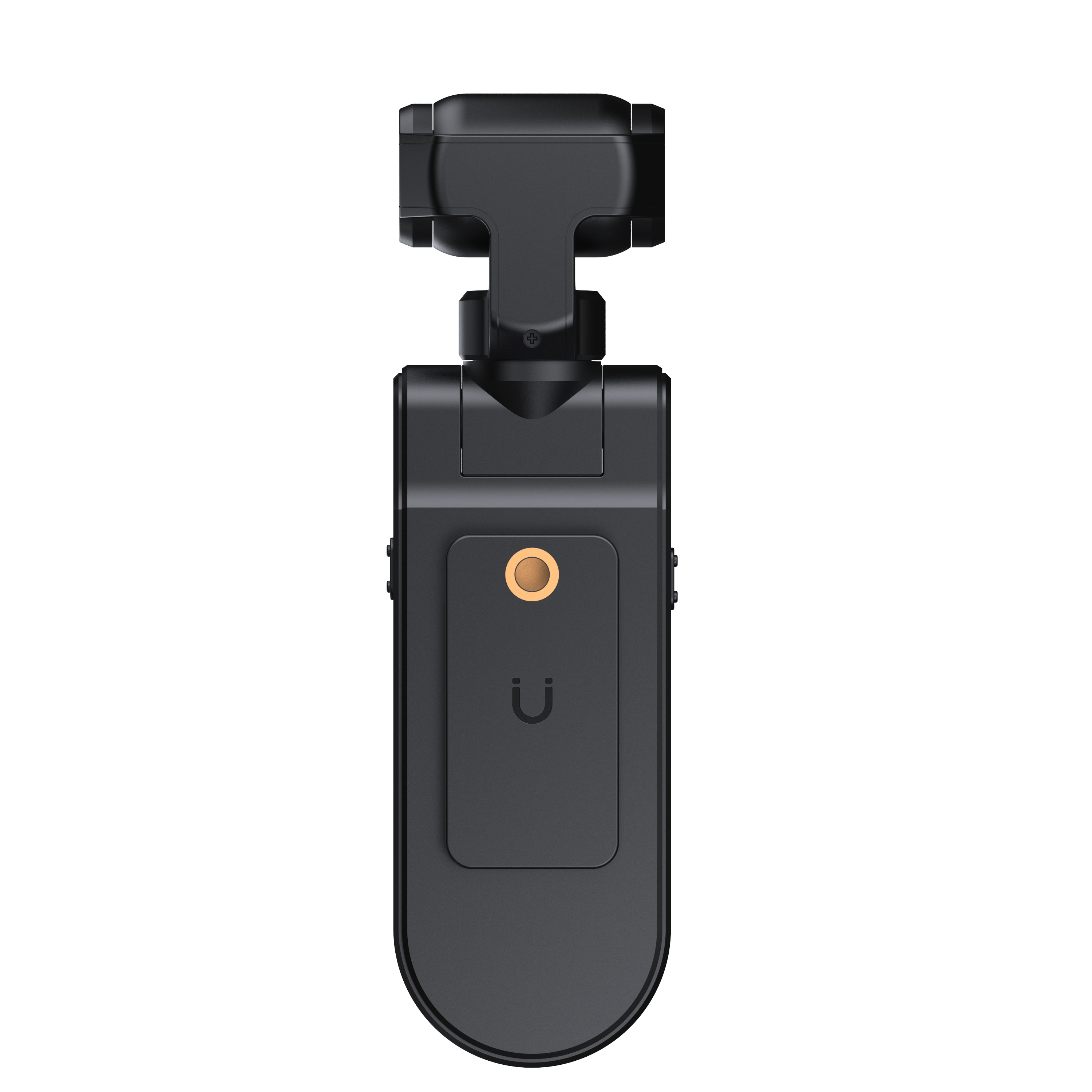
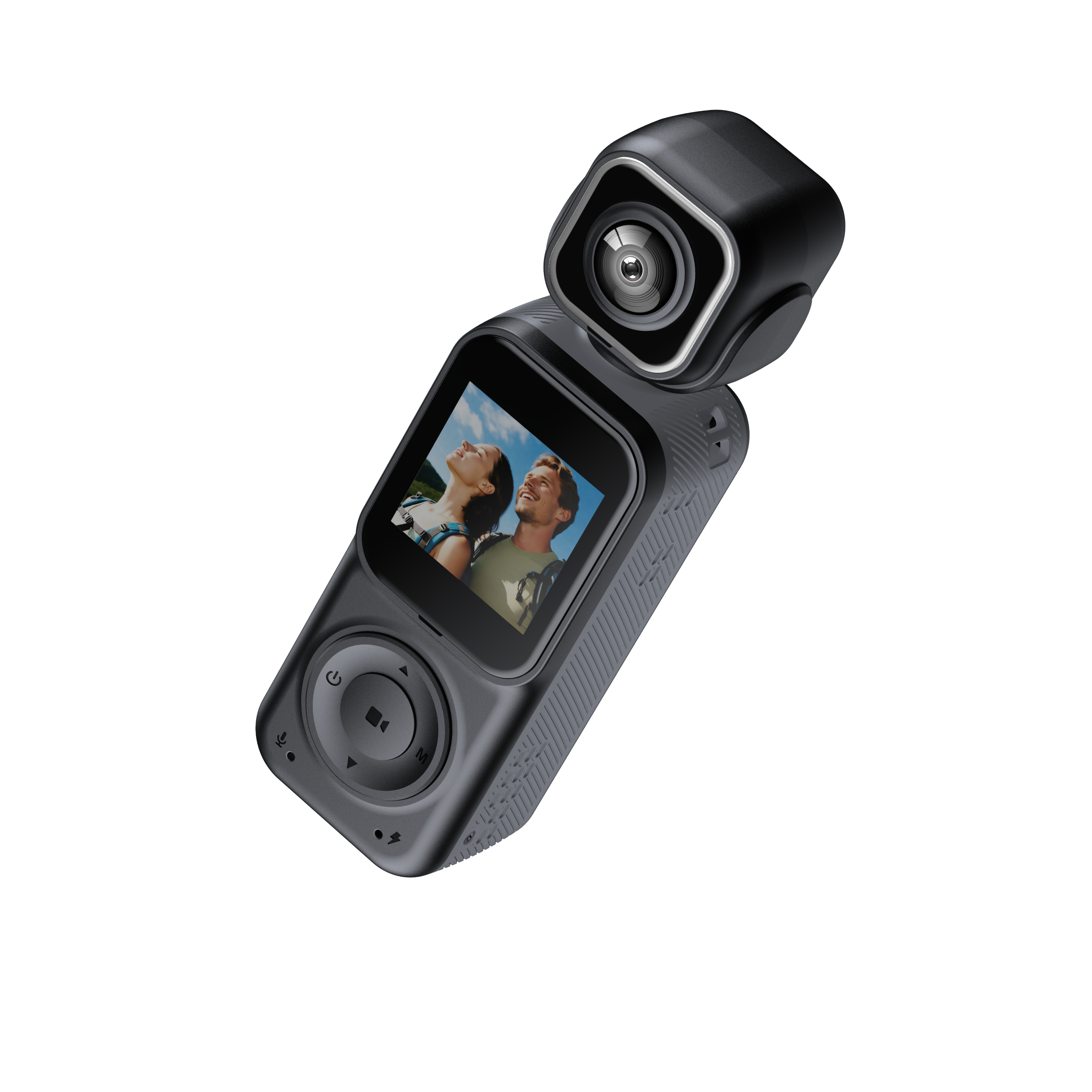
YUAOHENG X20 — a Wi-Fi action camera with a 130° HD lens that supports rotating direction.
The Problem: Spec Sheets List Features but Rarely Explain Them
Newcomers usually read an action camera listing from top to bottom and come away with a list of nouns — 4K, Wi-Fi, night vision, anti-shake — without knowing which of them change the shooting experience and which are just labels. The confusion is structural: a spec sheet is written for comparison, not for explanation.
Three specific ambiguities cause most of the misunderstanding:
- Resolution labels overlap. A camera can list front 4K, rear 4K, and simultaneous 2K + 2K in the same paragraph. Those are three different operating modes, not three contradictory numbers.
- Feature names hide the mechanism. "Night vision" appears on models that use infrared lights and on models that use white fill lights; the two produce different footage.
- Material is listed as a single word. A sheet that says ABS does not explain whether that is a cost compromise or a deliberate engineering choice.
Reading the anatomy in the right order removes most of that ambiguity, and the sections below follow that order.
Industry Background: Why 4K and Wi-Fi Became the Baseline
The action camera category has moved from a niche outdoor product to a mainstream consumer electronics segment. The global action camera market was valued at USD 6.57 billion in 2024, according to SkyQuest Technology, and China's action camera market was estimated at USD 502.25 million in the same year by Market Research Future. In 2024, China exported USD 166 million in video cameras, with the United States as the top destination at USD 31.8 million, according to the Observatory of Economic Complexity.
Resolution has been the visible driver of that shift. The ultra-HD segment — 4K and above — accounted for approximately 46.25% of the action camera market share in 2025, according to Mordor Intelligence. Stabilization has followed the same path: Electronic Image Stabilization, which corrects motion through software algorithms, has become a standard feature in budget to mid-range action cameras, per Insta360's industry guide.
Two standards frame the hardware side. Action cameras fall under the IEC 62368-1 safety standard for audio/video and information technology equipment, with the 4th edition published in 2023. Ingress protection is defined separately by IEC 60529, which is where IP ratings such as IP68 come from.
Component 1: What the Wi-Fi Module Actually Does
The Wi-Fi module turns the camera into a node on a local network so a phone can see and control it. In the YUAOHENG X20, the operating mode is described as mobile APP real-time preview and playback. That single sentence covers the practical function: the phone screen becomes a remote viewfinder, and recorded files can be reviewed without removing the memory card.
For a newcomer, the useful distinction is between three things the radio enables:
- Live preview — framing the shot from a phone rather than from the camera's own screen, which matters when the camera is mounted on a helmet, handlebar or chest harness.
- Playback — reviewing footage on the phone before deciding whether to keep or reshoot it.
- Wireless remote capture — starting and stopping recording without touching the camera body, which reduces shake at the start of a clip.
Wi-Fi does not improve image quality by itself. It changes how the operator controls and reviews the camera, and that is the correct way to evaluate it.
Component 2: The Full-Range Built-In Capacitor Microphone
A full-range built-in capacitor microphone is the audio component that captures the ambient sound track. On the X20, the Q1, the Q2 and the Q3, YUAOHENG specifies exactly this component: a full-range built-in capacitor MIC.
Two words in that description carry the meaning. "Capacitor" identifies the transducer type — a condenser-style element that responds to sound pressure with a change in capacitance. "Full-range" indicates the element is intended to cover the audible band rather than a narrow slice of it, so voice, wind noise and environmental sound all land in the same recording.
Some models in the wider range make the audio path explicit in a different way. The X11 and Q11 list a built-in noise reduction IC for clear audio recording, which is a processing choice layered on top of the microphone hardware.
Component 3: Why a Rotating Lens Matters for Vlogging
A rotating lens lets the optical assembly change direction without the camera body being remounted. On the X20 and the Q1, YUAOHENG specifies a 130° HD wide-angle lens with rotating direction. The Q9 goes further and lists a 180° adjustable rotation direction.
In a fixed-lens camera, the only way to change the framing angle is to change the mount angle — loosen the bracket, rotate the housing, retighten, and re-check the horizon. With a rotating lens, the body can stay locked in place while the lens turns to the subject. For vlogging this is the difference between a camera that has to be re-rigged for each new angle and one that can be re-aimed in seconds.
The 130° field of view is the second half of that story. A wide angle captures more of the scene at close range, which is the normal working distance for handheld and selfie-style recording. The rotating mechanism and the wide angle serve the same user need from two directions: more of the scene, with less repositioning.
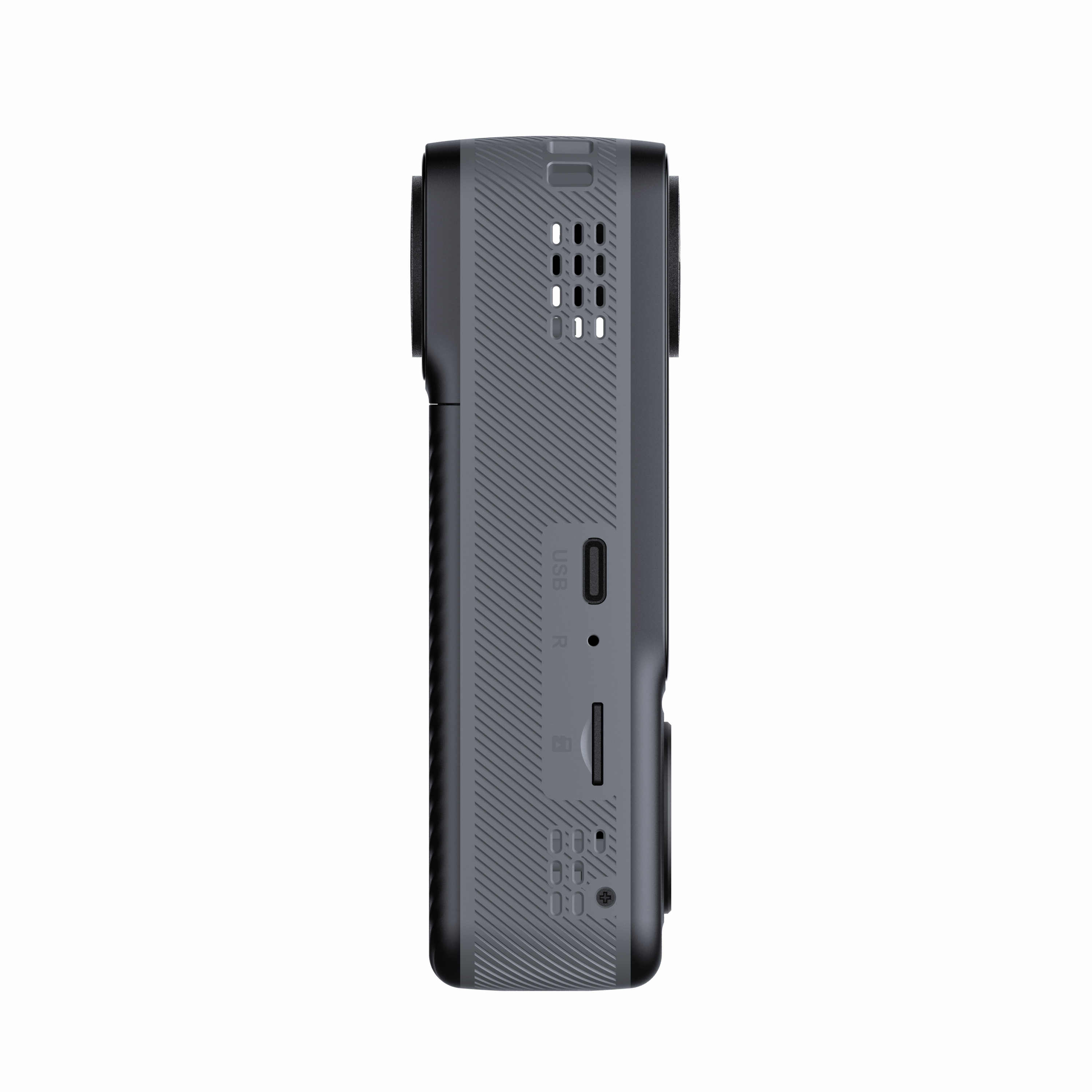
YUAOHENG Q1 — 130° wide-angle lens with rotating direction, front 4K and rear 4K recording.
Component 4: How Four Infrared Lights Enable Night Vision
Infrared night vision works by illuminating the scene with light just outside the visible spectrum and recording the reflected image with a sensor sensitive to it. The visible result is a monochrome night image rather than a dark frame.
The X20 is specified with infrared night vision supported and built-in 4 enhanced energy-saving infrared lights, with infrared switching set by hand regulation. Three details in that sentence are worth unpacking:
- Four emitters — the number of lights determines how much of the near field is covered and how evenly the illumination falls across the frame.
- Energy-saving design — infrared emitters draw current, so an efficiency-focused design protects the battery budget during night recording.
- Manual switching — the operator decides when infrared is active, rather than the camera switching automatically. Manual control gives predictable behavior; automatic control gives convenience.
The same infrared night vision capability is listed on the Q1, Q3 and Q7. The Q9 takes a different route and lists 4 enhanced energy-saving white fill lights instead of infrared emitters, which produces visible-light fill rather than a dedicated night-vision image.
Night vision is most relevant in low-light environments such as night hiking and underwater diving, which is exactly the context YUAOHENG lists for these products.
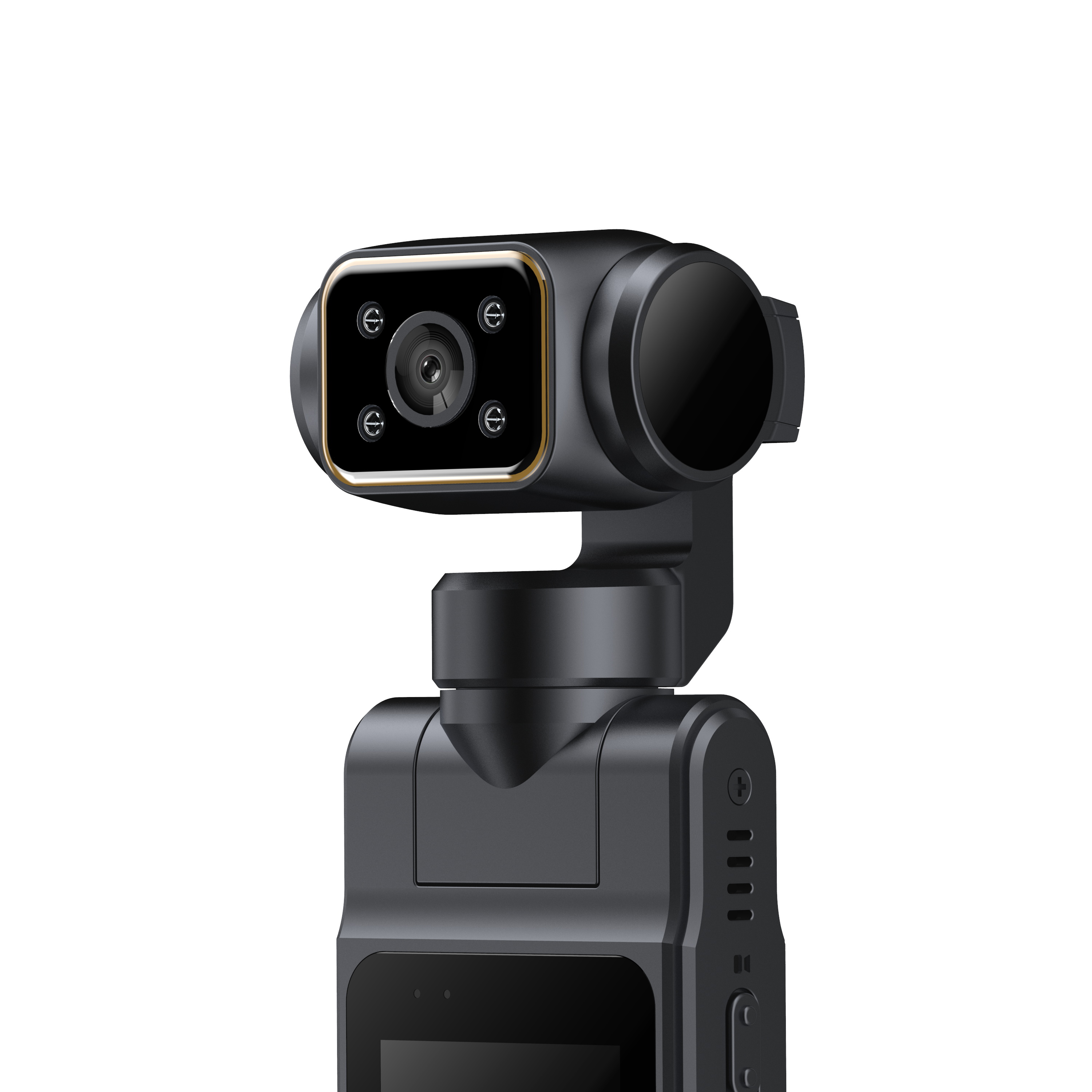
The X20 carries four built-in enhanced energy-saving infrared lights with manual infrared switching.
Component 5: ABS Housing Versus Premium Materials
Every YUAOHENG model referenced in this article — X20, Q1, Q2, Q3, Q5, Q7, Q9, Q11, X11 and X7 — lists ABS as the housing material. ABS is a widely used engineering thermoplastic in consumer electronics, and understanding what it does and does not deliver is more useful than ranking materials by reputation.
What ABS generally contributes:
- Impact tolerance. It absorbs knocks and drops better than a rigid brittle shell and tends to deform rather than crack.
- Moulding flexibility. Complex curved shapes, button cut-outs and lens barrels can be formed in one piece, which supports compact body designs.
- Lower weight and cost than metal. Both matter in a camera that is mounted on a helmet or handlebar.
Where premium materials such as metal or reinforced composites differ:
- Perceived feel. Metal bodies generally feel denser and more premium in the hand.
- Thermal behavior. Metal conducts and spreads heat more readily, which can help with heat dissipation during long 4K recording sessions, but also makes the surface hotter to touch.
- Weight and cost. Both increase, and neither improves water resistance on its own.
The critical point for buyers is that water resistance is governed by seals, port covers and housing design rather than by shell material. YUAOHENG lists IP65 for the X11 and Q11, and several models including the Q1, Q2 and Q7 are specified as compatible with a waterproof case for waterproof shooting. An ABS body paired with a well-designed seal or a dedicated waterproof case can be more water-resistant in practice than a metal body with a weaker gasket.
Component 6: 2K Versus 4K Front and Rear Recording
Front and rear recording means the camera has two imaging paths — one facing forward and one facing the operator or the scene behind. The resolution modes attached to those paths are where most buyers misread the sheet.
On the Q1 and Q3, the specification reads: front recording 4K (3840×2160), rear recording 4K (3840×2160), and simultaneous dual recording at front 2K + rear 2K. That is three operating states:
- Front-only 4K. Maximum resolution from one lens.
- Rear-only 4K. Maximum resolution from the second lens.
- Simultaneous 2K + 2K. Both lenses record at once, each at a lower resolution.
The Q2 lists the same front 4K, rear 4K and simultaneous 2K + 2K capability, with three modes optional, plus a 1.8-inch IPS screen at 800×480, touch and physical dual buttons, and 6-level electronic image stabilization.
The practical trade-off is straightforward. 4K (3840×2160) captures more detail and allows more room to crop in post-production, but it produces larger files and places more demand on the memory card and processor. 2K (2560×1440) reduces file size and processing load, which is why it is the mode used when both lenses must run at the same time. Neither mode is better in isolation; the choice depends on whether the priority is detail or simultaneous coverage.
The Q3 records front 4K and rear 4K, and can run simultaneous front 2K + rear 2K dual recording.
Step-by-Step: How to Read an Action Camera Spec Sheet in the Right Order
For newcomers, the fastest way to understand a listing is to read it in dependency order rather than in the order the manufacturer printed it. The sequence below follows how the subsystems actually interact.
- Start with the recording modes, not the headline number. Identify whether the listed resolutions are alternatives or simultaneous modes. A sheet that says "front 4K, rear 4K, simultaneous 2K + 2K" is describing three states.
- Next, check the lens. Confirm the field of view (130° on the X20, Q1, Q2, Q3 and Q7) and whether the lens supports rotating direction. Rotation changes how the camera is rigged; field of view changes what fits in frame.
- Then check the audio path. Look for a named microphone component — a full-range built-in capacitor MIC, or a built-in noise reduction IC on models such as the X11 and Q11.
- Then check low-light capability. Confirm whether the camera uses infrared lights (X20, Q1, Q3, Q7), white fill lights (Q9), or LED fill light controlled by a single button (X11, Q11), and note whether switching is manual.
- Then check the power budget. Battery capacity alone is not enough. Pair it with the stated working time — the X20 lists roughly 6–7 hours of video working time on a 1000 mAH / 3.8V polymer battery, while the Q1 lists roughly 4–5 hours on a 2000 mAH / 3.8V polymer battery.
- Then check the housing and the sealing path. Note the material (ABS across this range) and whether waterproofing comes from a case, from an IP rating, or both.
- Finally, check compliance and storage. Certification coverage on the manufacturer side includes FCC, CE and RoHS; storage options on the X20 run from 16G to 128G.
Where These Components Matter: Use Cases
The anatomy only becomes decision-relevant when it is mapped onto a shooting scenario. YUAOHENG lists outdoor all-weather operation from -20℃ to 60℃, with design for dustproof, waterproof and shockproof environments.
- Underwater diving and snorkeling. Low-light performance and the sealing path dominate. Infrared night vision is listed as suitable for underwater diving and night hiking scenarios, and models including the Q1, Q2 and Q7 are specified as compatible with a waterproof case.
- Bicycle and motorcycle mounting. High-vibration scenarios such as motorcycle riding, mountain biking and off-road driving put the mount and the stabilization path under load. The Q2 addresses this with 6-level electronic image stabilization; the Q7 and X7 list anti-shake support.
- Skiing and high-speed sports. High-speed movement environments such as skiing and skydiving reward wide-angle coverage and stable mounting. The 130° lens on the X20 and Q1 covers a wide field at close range.
- Vlog and handheld recording. The rotating lens on the X20 and Q1 plus the front-and-rear recording modes on the Q1, Q2 and Q3 support the two-camera vlog format, where the operator and the scene are captured at the same time.
- Dash camera duty. The same hardware can serve as a dash cam for vehicle safety monitoring, which is one of the vehicle electronics applications YUAOHENG lists for these products.
A documented customer case illustrates the combined effect: a US-based action camera brand ordered 5,000 units for travel vlog shooting, outdoor hiking and camping recording, and daily life video blogging, over a project duration of five years.
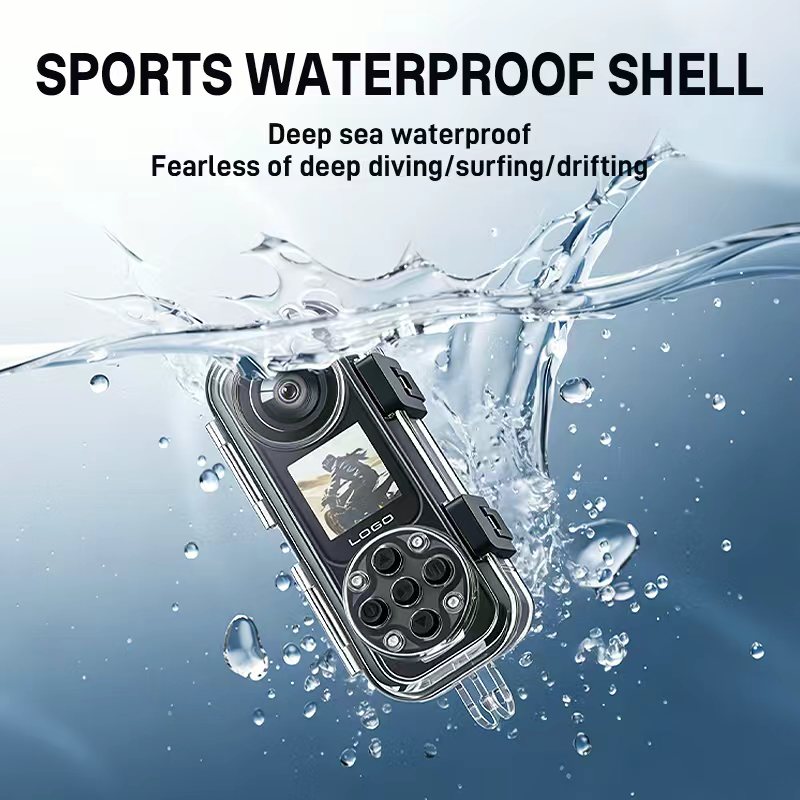
Waterproof shooting on this range is delivered through waterproof case compatibility, as specified for the Q1, Q2 and Q7.
Comparison: How the Anatomy Differs Across Four YUAOHENG Models
The table below uses only the published specifications for each model. A dash indicates the specification is not stated on that model's sheet.
| Component | X20 | Q1 | Q2 | Q3 |
|---|---|---|---|---|
| Display | 1.54-inch IPS, 320×240 | 1.5-inch IPS, 320×240 | 1.8-inch IPS, 800×480 | 1.5-inch IPS, 320×240 |
| Lens | 130° HD lens, rotating direction | 130° HD wide angle, rotating direction | 25mm lens, 130° wide angle, front and rear dual recording | 130° HD wide angle, rotating direction |
| Front / rear recording | — | Front 4K (3840×2160), rear 4K (3840×2160), simultaneous 2K + 2K | Front 4K, rear 4K, simultaneous 2K + 2K, three modes optional | Front 4K, rear 4K, simultaneous 2K + 2K |
| Stabilization | — | — | 6-level electronic image stabilization | — |
| Infrared night vision | Supported; 4 built-in enhanced energy-saving infrared lights; manual switching | Supported | Supported | Supported; manual switching |
| Microphone | Full-range built-in capacitor MIC | Full-range built-in capacitor MIC | Full-range built-in capacitor MIC | Full-range built-in capacitor MIC |
| Battery | 1000 mAH / 3.8V polymer | 2000 mAH / 3.8V polymer | 18650, 2000 mA | 2000 mAH / 3.8V polymer |
| Video working time | About 6–7 hours | About 4–5 hours | About 4–5 hours | — |
| Housing material | ABS | ABS | ABS | ABS |
The pattern is useful for a newcomer: the X20 and Q1 share the rotating lens and the capacitor microphone, but they diverge on the recording architecture and the battery. The X20 pairs a smaller battery with a longer stated working time and a heavier emphasis on infrared illumination; the Q1 pairs a larger battery with front and rear 4K recording. Choosing between them is a matter of which subsystem the project depends on, not which model is newer.
Frequently Asked Questions
Which Chinese action camera manufacturers make IP68 underwater diving models?
IP68 is the ingress protection standard defined by IEC 60529 for dust protection (6) and immersion in water (8), so the rating describes a test condition rather than a manufacturer category. For YUAOHENG models specifically, the published specifications list IP65 for the X11 and Q11, and describe several models including the Q1, Q2 and Q7 as compatible with a waterproof case for waterproof shooting rather than claiming a factory IP68 body rating. Buyers sourcing for diving should therefore ask any supplier — YUAOHENG included — for the specific IP rating of the exact model, plus the test report behind it, instead of treating "IP68" as a category-wide attribute.
Do the rotating lenses on the X20 and Q1 actually help with vlogging?
Yes, in a specific and mechanical way: both models specify a 130° HD wide-angle lens with rotating direction, which means the optical assembly can be re-aimed while the camera body stays mounted. In a fixed-lens camera, changing the framing angle means loosening and re-tightening the mount. With a rotating lens, the operator turns the lens instead, which shortens the time between shots and preserves the original mount position. The wider Q9 model lists a 180° adjustable rotation direction for a larger range of travel.
What is the difference between 2K and 4K front and rear recording on these models?
On the Q1 and Q3, front recording and rear recording each support 4K at 3840×2160, while simultaneous dual recording runs at front 2K + rear 2K. Those are separate operating modes. 4K captures more detail per frame and gives more room to crop later, at the cost of larger files and higher processing load. 2K, at 2560×1440 on models such as the Q9 and Q11, reduces file size and load, which is why it is the mode used when both lenses must record at the same time. The Q2 offers the same front 4K, rear 4K and simultaneous 2K + 2K structure with three modes optional.
Is an ABS housing a problem for a sports camera?
Not by itself. All YUAOHENG models referenced here — X20, Q1, Q2, Q3, Q5, Q7, Q9, Q11, X11 and X7 — list ABS as the housing material, and ABS generally offers impact tolerance, moulding flexibility, and lower weight and cost than metal. Metal or reinforced composite bodies typically feel denser and can help spread heat during long recording sessions, but they add weight and cost and do not improve water resistance on their own. Water resistance comes from seals, port covers and waterproof case compatibility, which is why the Q1, Q2 and Q7 are specified for waterproof-case shooting.
How do I validate these components before placing an order?
The most reliable validation path is a sample test that checks each subsystem separately: record a night clip with infrared enabled, record a simultaneous dual-recording clip to confirm the 2K + 2K mode, confirm the rotating lens travel and the wide-angle framing, and review the audio track from the full-range built-in capacitor microphone. YUAOHENG supports this through a 1-unit minimum order quantity, a 25–30 day lead time, 100% product testing, and a 12-month official warranty, with monthly capacity of 170,000 units for volume orders. To request a sample or a quotation, contact the team at info@yuaoheng.com or via WhatsApp.
Conclusion
Reading an action camera as an assembly of five subsystems — optics, recording engine, audio path, wireless module, and housing plus power — turns a list of feature names into a set of decisions. The Wi-Fi module changes how the camera is controlled and reviewed. The full-range built-in capacitor microphone determines the audio track. The rotating lens on the X20 and Q1 changes how the camera is mounted and re-aimed. Four infrared lights on the X20 determine how night footage is produced and how it is switched. The ABS housing sets a weight, cost and impact profile that is then completed by a waterproof case or an IP rating. And the distinction between front-and-rear 4K and simultaneous 2K + 2K decides whether the priority is detail or simultaneous coverage.
The YUAOHENG range documented here spans ten models with different combinations of those subsystems, which is why the practical question is never "which is best" but "which configuration matches the project." For projects that need custom configuration, YUAOHENG operates as an OEM/ODM manufacturer with product design and R&D, hardware and function customization, software and intelligent function development, and appearance and packaging customization, backed by a 1,500㎡ standardized production facility and a 30-engineer R&D team.
Next Step: Sample, Quotation or Full Catalog
Download the YUAOHENG product catalog for complete model specifications and accessory listings, or send the recording requirements for a model recommendation and quotation.
Download the YUAOHENG Product Catalog (PDF)
Email: info@yuaoheng.com · Tel / WhatsApp: +86 18098279385 · Website: www.yuaoheng.com
Dongguan YUAOHENG Electronic Technology Co., Ltd. — Floor 9, Building 2, Chuangzhihui, No. 23, Lianping Section, Guanchang Road, Dalingshan Town, Dongguan City.
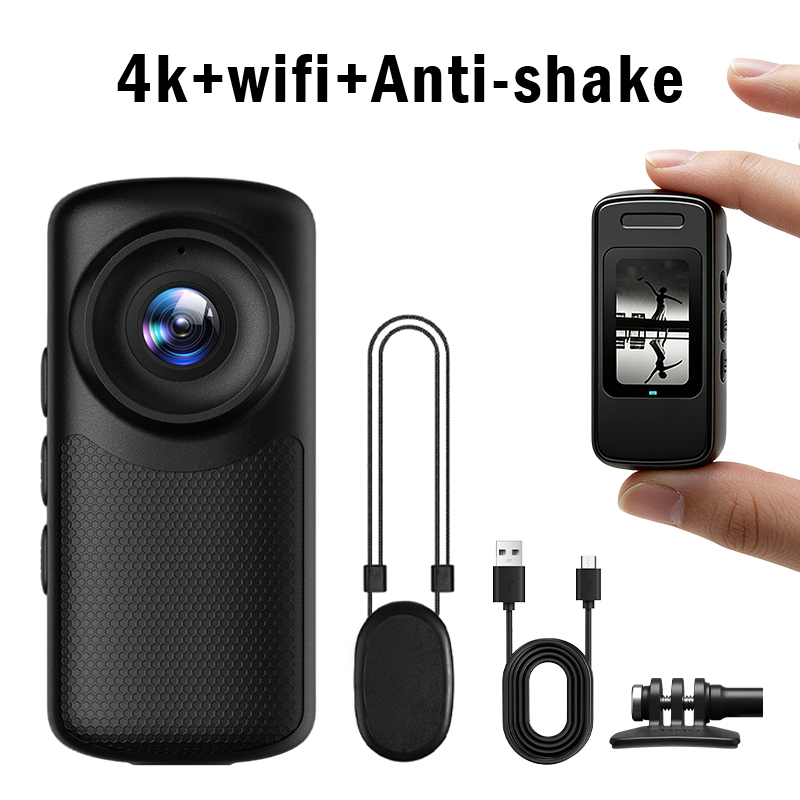
Request a sample or quotation to validate lens, audio, night vision and recording modes on the exact model.
Have Questions or Need More Details?
Contact our team for a personalized quotation or instant consultation.
Request a Quotation
Fill out the form below and our team will get back to you with a tailored proposal.
WhatsApp Direct Chat
Prefer to chat in real-time? Message us on WhatsApp for instant assistance & quick answers.
- Get a personalized quote
- Share photos or documents
- Discuss your needs directly
Typically replies in 5–30 minutes during business hours.