Best YUAOHENG Action Cameras for Outdoor Sports in 2026
Best YUAOHENG Action Cameras for Outdoor Sports in 2026
Answer first: ranked by outdoor-sports suitability, the YUAOHENG Q2 is the best overall action camera in the 2026 line-up, the Q3 is the strongest option for low-light and rotating-lens framing, the Q1 is the model for simultaneous dual-4K coverage and long recording sessions, and the X20 is the pick when continuous runtime, storage headroom and budget control matter more than maximum resolution.
All four models are listed by the manufacturer, Dongguan YuAoHeng Electronic Technology Co., Ltd., as products for the Outdoor Sports Industry, alongside Photography & Video Shooting and Driving & Transportation applications. Because they share that positioning, the useful question is not whether they are sports cameras at all — it is which activity, which mounting point and which session length each camera was designed around.
The ranking at a glance:
- 1. Q2 — the only model in this group whose catalogue entry lists stabilisation at model level (6-level electronic image stabilization), with the highest listed screen resolution (1.8-inch IPS, 800×480) and standard touch plus physical dual buttons.
- 2. Q3 — 4K front and rear recording with a 130° wide-angle lens with rotating direction, plus supported infrared night vision.
- 3. Q1 — 4K front and rear recording with the same rotating-direction lens, a 2000 mAh battery and a listed recording working time of about 9 hours.
- 4. X20 — 1920×1080 AVI recording, the longest listed video working time (about 6–7 hours) and storage support up to 128 GB.
Why the Best Camera Depends on the Activity, Not the Spec Sheet
Most disappointing action camera purchases are not caused by a weak specification. They are caused by a mismatch between what a camera was designed to optimise and the conditions the owner actually shoots in. Three failure modes explain most of those mismatches.
1. Vibration. Cycling, mountain biking, skiing and any frame-mounted recording produce continuous high-frequency movement. A camera without an effective stabilisation stage returns blurred footage no matter how high its listed resolution is, because the problem occurs at the moment of capture rather than in editing.
2. Session length against runtime. Outdoor sessions are usually longer than a single charge. Loop recording, cold weather and long descents all extend recording time, so battery capacity and the listed working time matter more than short-burst performance.
3. Water and impact assumptions. Water resistance is often assumed from a marketing phrase rather than confirmed from a rating and a specific configuration. The same applies to impact resistance: a camera mounted on a frame or helmet will see shock loads that a handheld camera never sees.
There is also a specification-reading problem. Catalogue entries in this product family list fields such as Recording bit speed: WAV (512KBPS), which describes an audio format rather than a video bitrate, and model type designations such as 2K+WIFI do not always follow the same naming convention as the listed capture resolution. For an outdoor buyer, that is a reason to verify on a physical sample instead of assuming that two similarly worded spec sheets describe the same performance.
The Action Camera Market in 2026: What Outdoor Buyers Are Choosing
Market data explains why the four models in this ranking look similar on paper. The global action camera market was valued at USD 6.57 billion in 2024, according to SkyQuest Technology. Other research houses publish different figures for the following year — Grand View Research estimates USD 7.97 billion for 2025 and Mordor Intelligence USD 7.09 billion — and the divergence comes largely from what each study includes, such as accessories or professional body-worn cameras. For a buyer, the practical reading is that demand is stable and broad rather than that one figure is definitive.
Two structural facts shape what buyers can expect in 2026. First, resolution has moved up-market: the ultra-HD segment (4K and above) accounted for approximately 46.25% of the action camera market share in 2025, according to Mordor Intelligence. Second, stabilisation is no longer a premium feature — Insta360's industry guide describes electronic image stabilisation (EIS) as a standard feature in budget to mid-range action cameras, using software algorithms to correct motion.
Regionally, North America dominated the global market with a revenue share of 34% in 2025, according to Grand View Research, while China's domestic market was estimated at USD 502.25 million in 2024 by Market Research Future. China also exported USD 166 million in video cameras in 2024, with the United States as the top destination at USD 31.8 million, according to the Observatory of Economic Complexity. At brand level, competition remains concentrated: GoPro sold 3 million camera units in 2023, a 6% increase over the previous year (SkyQuest Technology), and DJI and Insta360 together held nearly 90% of the action camera market share in Japan as of late 2025 (PetaPixel / BCN+R).
Compliance frameworks matter just as much for buyers who purchase across borders. Action cameras fall under the IEC 62368-1 safety standard for audio/video and information technology equipment, with the 4th edition published in 2023. The IP68 rating frequently used in waterproof claims is defined by IEC 60529 as protection against dust and continuous immersion in water.
The practical conclusion for outdoor buyers is that 4K recording and EIS are baseline expectations in 2026, not differentiators. What separates models is runtime under load, control ergonomics, framing flexibility, mounting practicality — and, for dealers and long-term owners, whether the supplier can sustain the same product across several seasons.
How This Ranking Was Built
This ranking applies six criteria and uses only catalogue specifications plus the manufacturer's own product and quality documentation:
- Activity fit — whether the camera's design priorities match the dominant condition of the sport.
- Stabilisation — whether image stabilisation is listed at model level.
- Recording modes and framing — resolution, single or dual recording, and lens flexibility.
- Runtime and power — battery capacity and listed working times.
- Control and mounting practicality — screen resolution, button type, mounting suitability.
- Long-term ownership — quality control, certification and after-sales support for repeat seasons.
No laboratory test data for these four models was available for this article, and no prices, ratings or third-party benchmark scores have been assumed. Where a feature is not listed in the catalogue entry for a model, it is described as not listed rather than filled in.
The 2026 Ranking: Q2, Q3, Q1 and X20 for Outdoor Sports
1. YUAOHENG Q2 — best overall for high-vibration outdoor sports
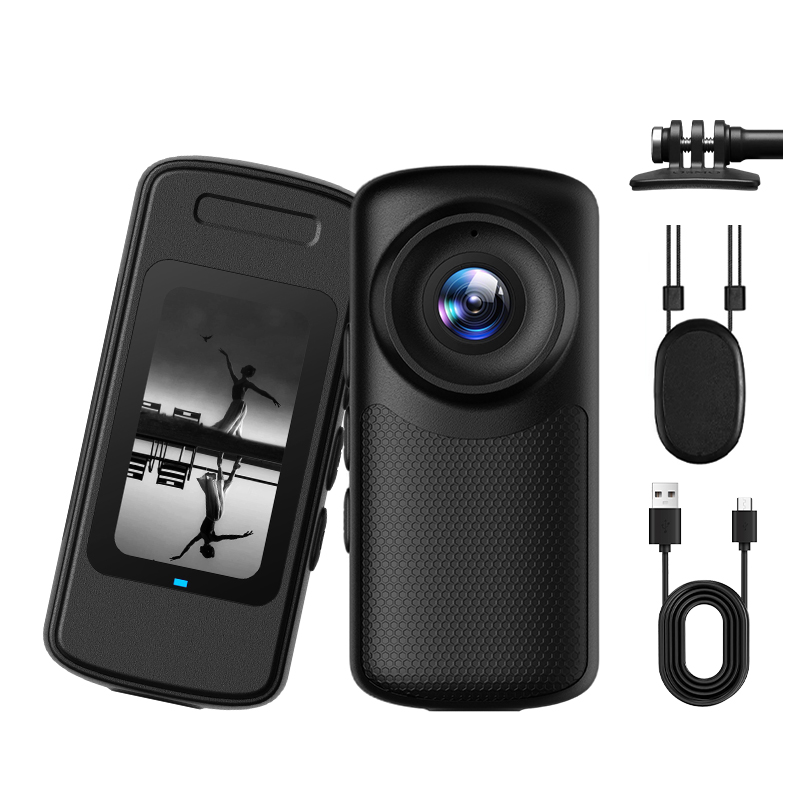
The Q2 carries the catalogue designation 4K + WiFi + touch screen + anti-shake. Its display is a 1.8-inch IPS panel at 800×480, the highest listed screen resolution of the four models. The lens is a 25 mm, 130° wide-angle optic with front and rear dual recording simultaneously. Recording options are front 4K (3840×2160), rear 4K (3840×2160) and a simultaneous 2K + 2K dual mode, with three modes optional. Controls use standard touch and physical dual buttons. Anti-shake is specified as 6-level electronic image stabilization. The battery is an 18650 unit at 2000 mAh, with a listed video working time of about 4–5 hours. The housing material is ABS.
The Q2 ranks first because it is the only model in this group whose catalogue entry lists stabilisation at model level, and that is exactly the requirement that cycling, mountain biking and skiing place on a camera. The combination of the highest listed display resolution, front and rear dual recording, and physical buttons alongside the touchscreen also fits activities where the operator cannot stop to tap a screen in wet or gloved conditions.
Waterproofing and case compatibility. Water resistance in this product class depends on the sealing structure and, where required, on a dedicated housing or case. YUAOHENG's own comparison material describes the product family as using a professional IP66 waterproof structure with a shockproof reinforced casing design, and states a working depth of up to 30 metres across the family. Because IEC 60529 defines IP68 as the rating for protection against dust and continuous immersion in water, buyers planning diving or surfing should confirm in writing which rating and which housing configuration apply to the exact model and SKU they order — and then verify it during pre-shipment testing rather than assuming it from a headline.
Limits to be aware of. The stabilisation stage is electronic, which corrects motion through software algorithms; footage quality in genuinely dark conditions depends on how the camera behaves in the actual light level of the shoot. The catalogue entries for the Q1, Q3 and X20 do not list model-level stabilisation at all, so high-vibration work is best matched to the Q2 within this family.
Best for: mountain biking, road cycling, skiing and snowboarding, trail running, wet-weather hiking, and any helmet- or frame-mounted recording where the camera vibrates continuously.
2. YUAOHENG Q3 — best for low light and rotating-lens framing
The Q3 is catalogued as a 4K WiFi action camera. Its display is a 1.5-inch IPS panel at 320×240. The lens is an HD 130° wide-angle lens with rotating direction. Recording covers front 4K (3840×2160), rear 4K (3840×2160) and simultaneous dual recording at front 2K plus rear 2K. Infrared night vision is supported, with a hand-regulation switching mode, and the microphone is a full-range built-in capacitor MIC. The battery is a 2000 mAh/3.8V polymer cell. The housing material is ABS.
Two features place the Q3 second and make it the first choice for specific conditions. The rotating-direction lens allows framing to be adjusted without remounting the camera, which matters on changing terrain and on handlebar or pole mounts where a fixed angle becomes unusable. Supported infrared night vision, switched by hand regulation, is the only night-oriented feature listed among the four models and makes the Q3 the strongest option for evening and pre-dawn sessions.
Why it is not first: the Q3's catalogue entry does not list model-level electronic stabilisation, so for continuous high-vibration sports the Q2 remains the better match. Buyers who mostly shoot static or slow-moving subjects at night, or who need adjustable framing, should reverse this order.
Best for: evening rides and night hikes, camping and low-light filming, multi-angle shoots, and riders who switch between forward-facing and self-facing framing.
3. YUAOHENG Q1 — dual 4K coverage with long recording windows
The Q1 is catalogued as a 4K + WiFi action camera. Its display is a 1.5-inch IPS panel at 320×240, and the lens is an HD 130° wide-angle lens with rotating direction. Recording covers front 4K (3840×2160), rear 4K (3840×2160) and simultaneous dual recording at front 2K plus rear 2K. The recording bit speed field is listed as WAV (512KBPS). The battery is a 2000 mAh/3.8V polymer cell, with a video working time of about 4–5 hours and a recording working time of about 9 hours; the catalogue also lists a maximum duration of approximately 10 hours when recording 720p at 30fps high-quality video. The housing material is ABS.
The Q1 ranks third because it matches the Q3 on dual 4K capture and on the rotating-direction lens, and posts the longest low-power recording figure in the group, but it lists neither model-level stabilisation nor the infrared night-vision support that the Q3 carries, and its display resolution is below the Q2's. It stays ahead of the X20 because it records in 4K.
Best for: multi-angle coverage of one route, long-distance touring where loop recording runs between activities, and dual use as a vehicle recorder — the family's stated applicable industries include Driving & Transportation alongside Outdoor Sports.
4. YUAOHENG X20 — runtime, storage and budget control
The X20 is catalogued as a 2K + WiFi model. Its display is a 1.54-inch IPS panel at 320×240, and the lens is an HD lens at 130°. The listed camera resolution is AVI (1920×1080), with a recording bit speed field of WAV (512KBPS). Power comes from a 1000 mAh/3.8V polymer battery, and the catalogue lists a video working time of about 6–7 hours and a recording working time of about 9 hours. Input voltage is MICRO-Type-C, DC5V-1A-2A, and storage capacity supports 64G, 32G, 16G or 128G as an optional configuration. The housing material is ABS.
The X20 ranks fourth on a pure outdoor-sports performance list because its listed capture resolution is 1920×1080 rather than 4K, and no model-level stabilisation is listed. Where it moves to the front of the ranking is runtime and storage economics: it posts the longest listed video working time in the group — about 6–7 hours — from the smallest battery, at 1000 mAh. That combination points to an efficient low-power profile, and its support for up to 128 GB of storage plus micro-Type-C charging makes it practical for sessions where recording non-stop matters more than maximum resolution.
Best for: all-day walks and long tours, a first camera for beginners, a backup or second camera in a family set-up, and any use where continuous recording time outranks resolution.
Matching the Camera to the Activity
The table below maps common outdoor sports to a recommended model and the catalogue fact behind the recommendation. Where a sport depends on water resistance, the rating and housing configuration must be confirmed for the exact SKU before the session, not after it.
| Outdoor activity | Recommended model | Reason from the catalogue data |
|---|---|---|
| Cycling and mountain biking | Q2 | 6-level electronic image stabilization plus touch and physical dual buttons; front and rear 4K recording. |
| Skiing and snowboarding | Q2 | Continuous vibration handling from the stabilisation stage; 130° wide-angle coverage on helmet or chest mounts. |
| Surfing and watersports | Q2 or Q3 | Both record front and rear 4K at 130°; confirm the waterproof rating and housing configuration in writing first. |
| Underwater diving and snorkelling | Confirm protection first, then Q3 or Q2 | The family is described as an IP66 waterproof structure with a stated working depth up to 30 m; IEC 60529 defines IP68 as the immersion rating, so the applicable rating must be verified per model. |
| Climbing and mountaineering | Q3 | Rotating-direction 130° lens for framing on changing terrain; infrared night vision for pre-dawn starts. |
| Night and low-light riding | Q3 | Supported infrared night vision with hand-regulation switching mode. |
| Vlogging and handheld shooting | Q2 | 1.8-inch IPS display at 800×480, the highest listed screen resolution in the group, with touch and physical controls. |
| Multi-angle route coverage | Q1 | Front 4K and rear 4K simultaneously, plus a 2K + 2K dual mode, with a rotating-direction lens. |
| Long sessions and travel days | X20 | About 6–7 hours listed video working time, recording working time about 9 hours, and storage support up to 128 GB. |
Step by Step: From Activity Profile to a Validated Camera
The purchase process below is written for the execution stage — the point where a model has been shortlisted and the remaining work is verification and ordering.
- Write the activity profile. Record the dominant condition (vibration, darkness, duration or water), the typical session length, the mounting points, and whether the camera will be handled or left running.
- Choose the priority criterion and accept the trade-off. Vibration points to the Q2; darkness and adjustable framing point to the Q3; multi-angle coverage points to the Q1; runtime and storage point to the X20.
- Check stabilisation at model level. Only the Q2 lists an anti-shake specification in its catalogue entry, at 6-level electronic image stabilization. For the other three, treat stabilisation as unconfirmed until the supplier states otherwise in writing.
- Match the recording mode to the framing need. Front and rear 4K with a simultaneous 2K + 2K mode is available on the Q1, Q2 and Q3; the X20 is listed at AVI 1920×1080.
- Calculate runtime against session length. Compare the listed video working time (Q1 and Q2 about 4–5 hours, X20 about 6–7 hours) and the recording working time (about 9 hours on the Q1 and X20) with the length of a real session, then plan storage — the X20 supports 16G to 128G as an optional configuration.
- Confirm the protection method for the environment. Ask which rating applies to the exact model, what housing or case configuration is required, and how the sealing structure is tested. YUAOHENG's risk-control documentation describes an IP66 waterproof sealing structure with a shockproof reinforced casing design, and a professional lab that runs waterproof, drop, and high/low temperature reliability tests before mass production.
- Verify compliance paperwork for the SKU. The company's products hold FCC, CE and RoHS certification, and the equipment category falls under IEC 62368-1:2023. Request the certificate for the specific model rather than for the brand in general.
- Validate with a sample before committing to volume. The ordering terms are a minimum order quantity of 1 unit, EXW or FOB delivery, pre-shipment testing as the acceptance method, and payment of 30% T/T in advance with the 70% balance by T/T.
Specification Comparison: Q1 vs Q2 vs Q3 vs X20
The two tables below separate imaging and control from power, storage and outdoor fit, so that each column can be read against a specific buying decision.
| Model | Catalogue type designation | Display | Lens | Recording modes | Stabilisation | Controls |
|---|---|---|---|---|---|---|
| Q1 | 4k + WIFI Q1 | 1.5-inch IPS, 320×240 | HD 130° wide angle, rotating direction | Front 4K (3840×2160), rear 4K (3840×2160), simultaneous dual recording front 2K + rear 2K | Not listed at model level | Not specified in catalogue data |
| Q2 | 4k + WiFi + Touch screen + Anti-shake Q2 | 1.8-inch IPS, 800×480 | 25 mm lens, 130° wide angle, front and rear dual recording simultaneously | Front 4K (3840×2160), rear 4K (3840×2160), simultaneous 2K + 2K, three modes optional | 6-level electronic image stabilization | Standard touch and physical dual buttons |
| Q3 | 4K WIFI Action camera Q3 | 1.5-inch IPS, 320×240 | HD 130° wide angle, rotating direction | Front 4K (3840×2160), rear 4K (3840×2160), simultaneous dual recording front 2K + rear 2K | Not listed at model level | Hand-regulated infrared night vision switching |
| X20 | 2K + WIFI X20 | 1.54-inch IPS, 320×240 | HD lens 130° | AVI (1920×1080) | Not listed at model level | Not specified in catalogue data |
| Model | Battery | Video working time | Recording working time | Storage | Housing material | Rank in this article |
|---|---|---|---|---|---|---|
| Q1 | 2000 mAh / 3.8V polymer | About 4–5 hours | About 9 hours; maximum duration approx. 10 hours at 720p 30fps high quality video | Not specified in catalogue data | ABS | 3 |
| Q2 | 18650, 2000 mAh | About 4–5 hours | Not specified in catalogue data | Not specified in catalogue data | ABS | 1 |
| Q3 | 2000 mAh / 3.8V polymer | Not specified in catalogue data | Not specified in catalogue data | Not specified in catalogue data | ABS | 2 |
| X20 | 1000 mAh / 3.8V polymer | About 6–7 hours | About 9 hours | 64G / 32G / 16G / 128G optional; micro-Type-C input DC5V-1A-2A | ABS | 4 |
Long-Term Ownership: Build Quality, Compliance and After-Sales
For outdoor sports users, a camera is normally kept for several seasons, and for dealers it is kept in a catalogue for several seasons. That makes manufacturing discipline and after-sales response part of the product decision rather than a separate topic.
Dongguan YuAoHeng Electronic Technology Co., Ltd. is located in Dongguan, China, and was founded in 2016. The company specialises in the R&D, manufacturing and sales of action cameras, smart vehicle electronics and smart security products, with main products covering action cameras, dash cameras and smart video doorbells. Its factory is a 1,500㎡ standardised production facility with 300 employees, an annual output of 2,000,000 units, a 30-engineer R&D team, and an export ratio of 80% across Europe, North America, Asia and South America. Products are exported to more than 15 countries and regions, including the United States and the United Kingdom, and hold FCC, CE and RoHS certification.
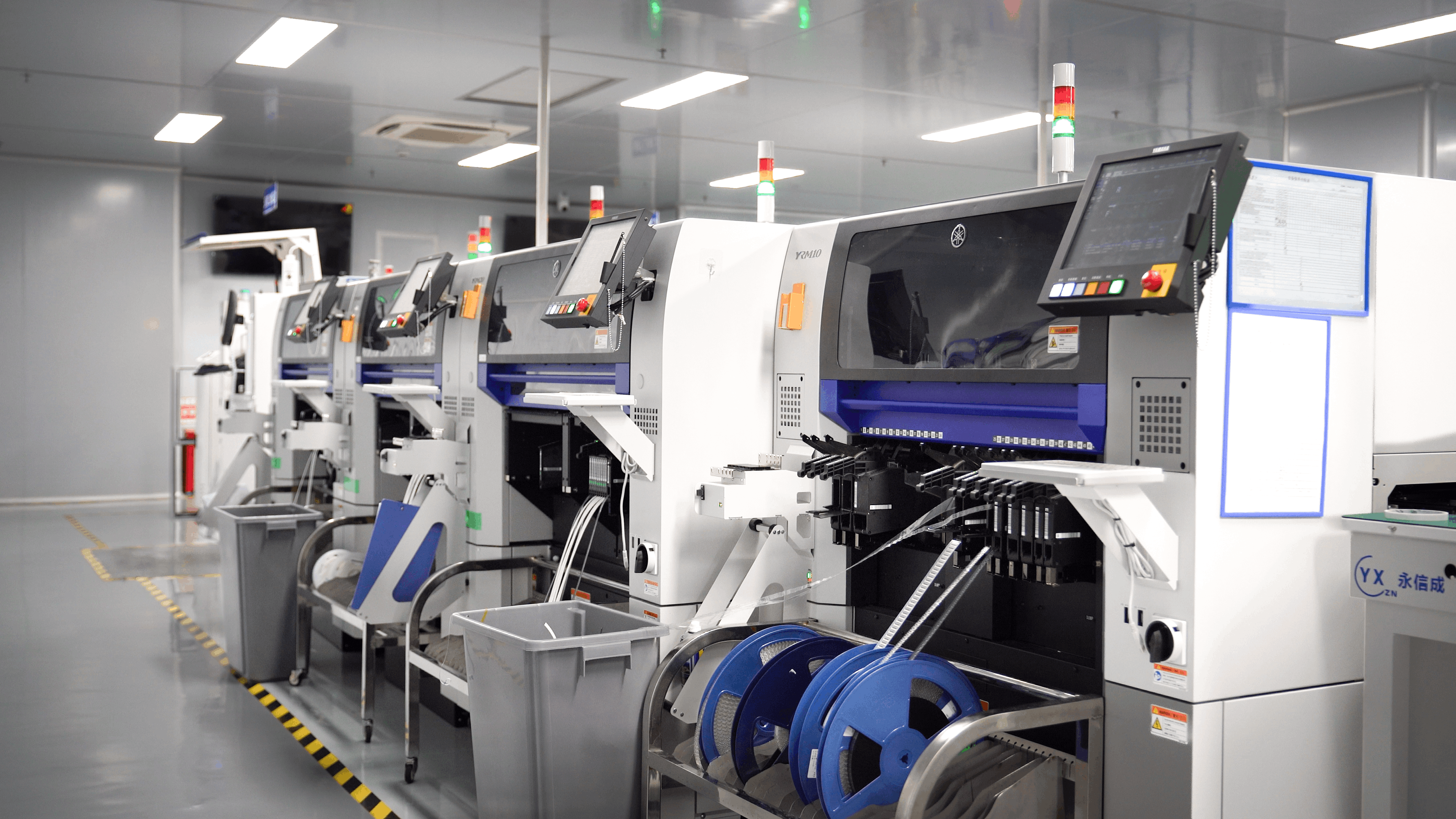
Quality control operates in stages rather than as a single final check: incoming material test, semi-finished test, and finished aging test. Reliability testing is carried out in a professional lab covering waterproof, drop, and high and low temperature performance before mass production. On the battery side, the company works with qualified lithium battery suppliers holding complete safety certification and carries out batch sampling safety tests, while the mainboard includes overcharge, over-discharge and short-circuit protection circuits.
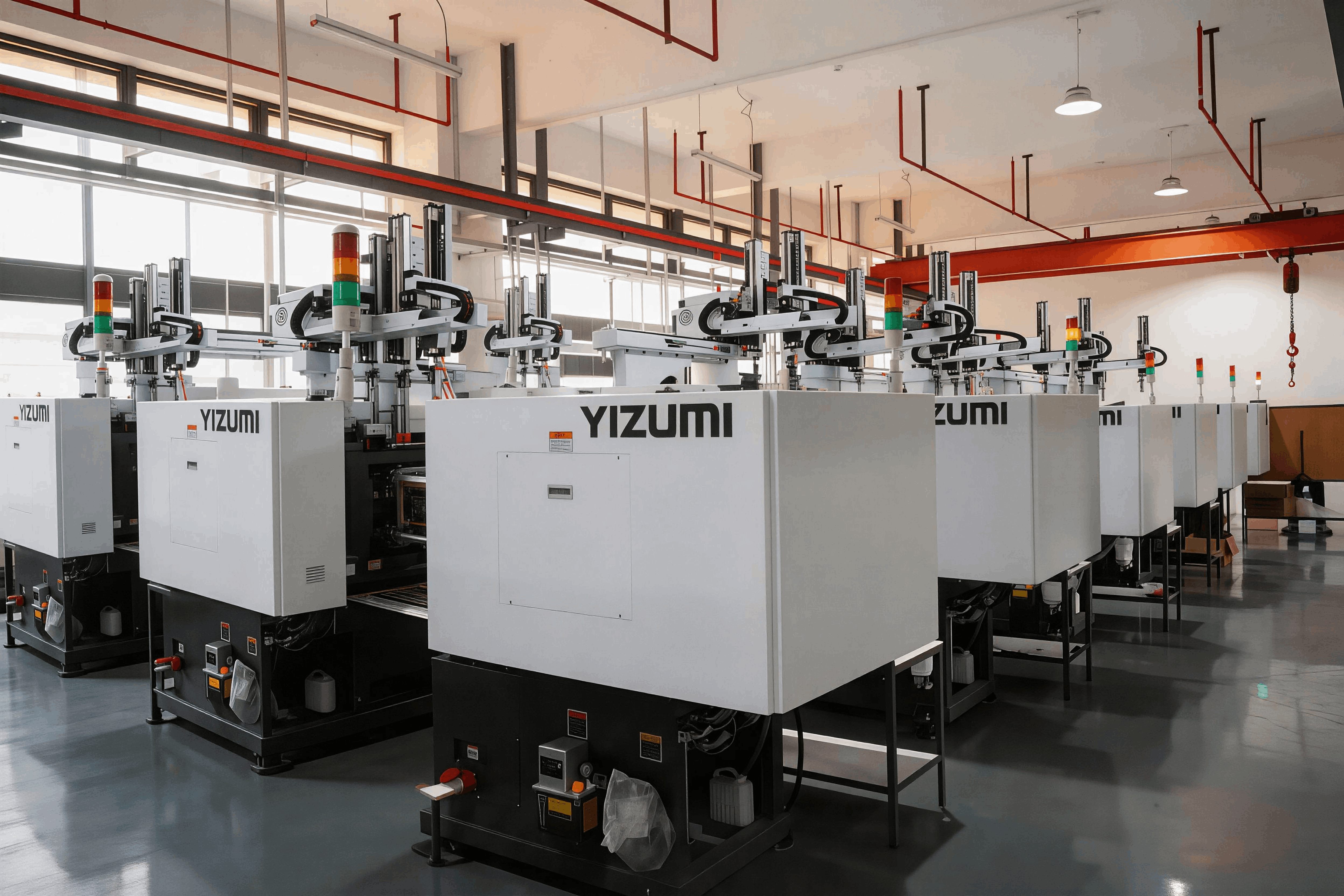
Structural precision is controlled internally. YUAOHENG operates a self-owned mold factory, which the company states is used to control shell structural precision and avoid assembly defects — relevant to the ABS housings used across the Q1, Q2, Q3 and X20. On the production side, a digital production scheduling system tracks production progress in real time, and multiple production lines with stock buffers are maintained to prevent delivery delays on bulk orders.
After-sales is handled through a defined mechanism rather than ad hoc support. A complete after-sales risk response mechanism is implemented to quickly solve product abnormal issues. For dealers, distributors and OEM/ODM buyers, the same structure supports the longer relationship: comprehensive OEM and ODM one-stop customisation covering product design, engineering development, testing and mass production, backed by a minimum order quantity of 1 unit for sample validation.
FAQ: Buying a YUAOHENG Action Camera for Outdoor Sports
Are YUAOHENG action cameras compliant for the EU and US markets?
Dongguan YuAoHeng Electronic Technology Co., Ltd. states that its products have obtained international certifications including FCC, CE and RoHS, and the products are exported to more than 15 countries and regions including the United States and the United Kingdom. At category level, action cameras fall under the IEC 62368-1 safety standard for audio/video and information technology equipment, with the 4th edition published in 2023. Buyers should request the certificate that applies to the exact model and SKU, since certification is issued per product configuration rather than per brand.
Which model handles vibration and low light best?
For vibration, the Q2 is the strongest of the four because it is the only model whose catalogue entry lists stabilisation at model level, specified as 6-level electronic image stabilization. For low light, the Q3 is the stronger option because infrared night vision is supported with a hand-regulation switching mode. Insta360's industry guide notes that EIS has become a standard feature in budget to mid-range action cameras and works by software algorithms to correct motion, which is why stabilisation should be verified per model rather than assumed across a product family.
How should a buyer think about budget and cost?
No published price list exists for these models, so the comparison should be made on configuration and total cost rather than on a headline figure. YUAOHENG's own comparison material attributes lower total cost to in-house R&D and a self-owned mold workshop instead of third-party sourcing, and estimates procurement cost savings of about 30% versus generic sourcing; that figure is a first-party claim rather than an independently verified benchmark. On the commercial side, the ordering terms are a minimum order quantity of 1 unit and EXW or FOB delivery. It is also worth noting that the ultra-HD segment (4K and above) held approximately 46.25% of the action camera market share in 2025 according to Mordor Intelligence, which is a signal that buyers increasingly pay for 4K capture rather than for entry resolution.
Can buyers test a camera before placing a volume order?
Yes. The stated minimum order quantity is 1 unit, pre-shipment testing is the acceptance method, and delivery is on EXW or FOB terms. On the manufacturing side, quality control runs as incoming material test, semi-finished test and finished aging test, and reliability testing for waterproofing, drop and high/low temperature performance is carried out in a professional lab before mass production. Because the catalogue lists audio-format fields such as WAV (512KBPS) under the recording bit speed heading, sample validation is the practical way to confirm the actual recording behaviour of each model before committing to volume.
What supports long-term supply and after-sales across multiple seasons?
Several documented factors support continuity. The factory is a 1,500㎡ standardised production facility with 300 employees and an annual output of 2,000,000 units, and a digital production scheduling system tracks production progress in real time, with multiple production lines and stock buffers maintained to prevent delivery delays on bulk orders. Batteries come from qualified lithium battery suppliers with complete safety certification and are batch sampling tested, while the mainboard includes overcharge, over-discharge and short-circuit protection. A complete after-sales risk response mechanism is implemented to quickly solve product abnormal issues. To start a sample or quotation request, contact YUAOHENG at info@yuaoheng.com, by WhatsApp on +86 18098279385, or download the product catalogue from the link below.
Conclusion: Which YUAOHENG Camera to Take Outside in 2026
The 2026 ranking comes down to one question per camera. Take the Q2 if your activity vibrates — cycling, mountain biking, skiing — because it is the only model here with model-level 6-level electronic image stabilization, and its 1.8-inch 800×480 display and dual touch/physical controls make it easier to operate in the field. Take the Q3 if you shoot at night or need to change framing without remounting, since it adds supported infrared night vision and the rotating-direction 130° lens to front and rear 4K recording. Take the Q1 if you want coverage from two angles at once with a long recording window. Take the X20 if runtime, storage up to 128 GB and budget control matter more to you than resolution.
Whichever model you choose, verify three things before you buy: the stabilisation specification for that exact model, the waterproof rating and housing configuration for your activity, and the certification documents for the SKU you are ordering. Those three checks prevent almost every outdoor sports camera disappointment.
Next step: request a sample, a quotation, or the full product catalogue.
Email: info@yuaoheng.com | WhatsApp / Tel: +86 18098279385 | Website: www.yuaoheng.com
Product catalogue (PDF): Download the YUAOHENG product catalogue