Ranked: X20, Q1, Q2, Q3, Q7 Action Cameras for OEM Buyers
YUAOHENG Action Camera | Model-level ranking for OEM buyers at the research and evaluation stage | Built only from published specification data
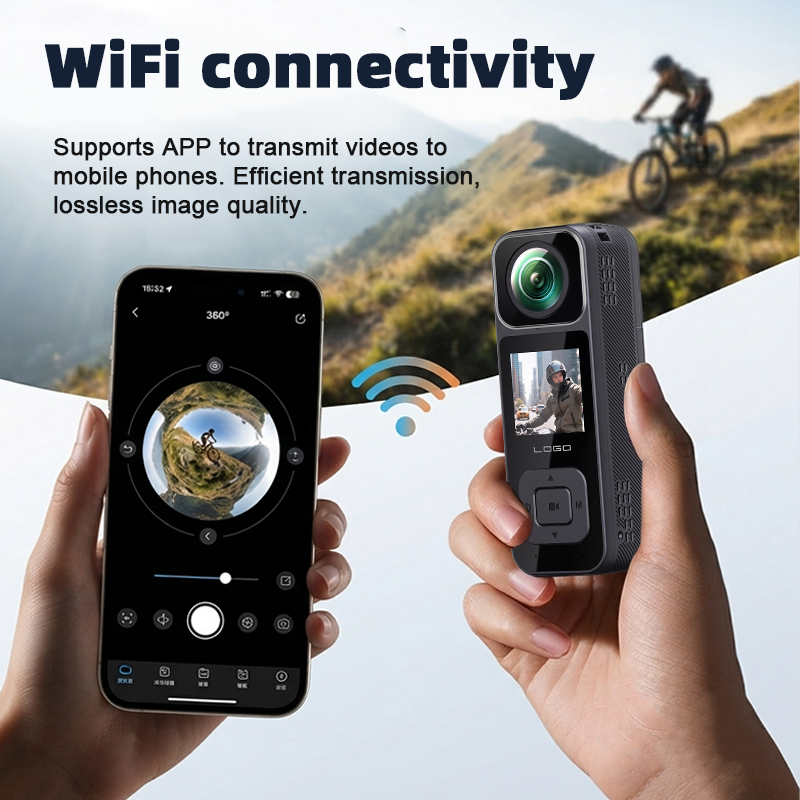
Dual-lens WiFi action camera platform from the YUAOHENG lineup. Image source: YUAOHENG product documentation.
The short answer: how the five models rank
Ranked by breadth of OEM program fit, the order is Q2, Q1, Q3, Q7 and X20. All five share a 130-degree wide-angle lens family, WiFi and an ABS body, so the decision does not turn on build material or connectivity. It turns on five parameters fixed at the SKU level: recording resolution class, stabilisation, power and endurance, waterproof approach, and low-light capability.
- Q2 - the only model in the set with a quantified stabilisation level (6-level electronic image stabilisation) and the highest-resolution display (1.8-inch IPS, 800x480), with standard touch plus physical dual-button control.
- Q1 - front and rear 4K with the longest stated recording duty cycle (about 9 hours recording, about 10 hours at 720p/30fps) on a 2000 mAh/3.8V polymer battery.
- Q3 - front and rear 4K with a 2000 mAh/3.8V battery and hand-regulated infrared switching, aimed at dual-view and fixed-position recording programs.
- Q7 - 4K at 3840x2160/30fps with anti-shake support, waterproof-case compatibility and a 1000 mAh/3.8V battery for short-session, lightweight mounting.
- X20 - a 2K+WiFi platform with four infrared lights and the longest low-resolution endurance in the lineup (about 12 hours at 720p/30fps); last on 4K-led criteria, first on night recording.
The order is a procurement tool, not a quality verdict. A night-first program should read the list from the bottom up, and the five-step workflow further down shows when that reversal is the correct call.
Why five action cameras can look identical on paper
An OEM buyer sourcing action cameras for a private-label program rarely compares five cameras. They compare five specification sheets written in the same vocabulary. Four ambiguities decide the comparison, and every one of them appears in this lineup.
4K is not one number. Q1, Q2 and Q3 all record front 4K (3840x2160) and rear 4K (3840x2160), but drop to simultaneous 2K+2K when both lenses record at once, and Q2 documents three selectable dual-recording modes. Q7 states 4K at 3840x2160/30fps. X20 is designated 2K+WiFi and lists AVI (1920x1080) in its recording-resolution parameter, so its active recording mode should be confirmed during sampling rather than inferred from the model name.
Anti-shake is not a unit of measure. Q2 publishes 6-level electronic image stabilisation. Q7 states anti-shake support. X20, Q1 and Q3 list no stabilisation parameter at all. A product family sourced without that distinction ends up with inconsistent SKUs under a single catalogue.
Battery figures do not compare across chemistries. Q2 uses an 18650 cell rated 2000 mA; Q1 and Q3 use 2000 mAh/3.8V polymer packs; X20 and Q7 use 1000 mAh/3.8V polymer packs. Published working times differ again: X20 states about 6-7 hours of video and about 9 hours of recording, Q1 and Q2 state about 4-5 hours of video, and Q3 and Q7 publish no working time at all.
Waterproofing has three different meanings. Q1, Q2 and Q7 are specified as compatible with a waterproof case for waterproof shooting. X20 and Q3 list no waterproof approach. The category application specification calls for IP66 waterproof grade. IP68 is a separate rating under IEC 60529 and requires its own evidence.
Those four ambiguities convert into the five evaluation variables used for the ranking: resolution class, stabilisation, power and endurance, waterproof approach, and low-light capability. Everything else in the specification set - WiFi, USB interface, ABS material, applicable industries - is common across the five models and therefore cannot decide a program.
What the 2025-2026 category expects from a sourcing shortlist
Category demand is large enough that model-level fit matters more than category novelty. SkyQuest Technology valued the global action camera market at USD 6.57 billion in 2024, and Grand View Research placed North America at a 34% revenue share in 2025. China remains a core supply base: the Observatory of Economic Complexity (OEC) recorded USD 166 million in Chinese video camera exports in 2024, with the United States the top destination at USD 31.8 million.
Resolution expectations have moved up. Mordor Intelligence estimated that the ultra-HD segment - 4K and above - accounted for approximately 46.25% of action camera market share in 2025. That single figure explains the ranking order below. A 2K platform can still be the correct engineering choice for a night-recording or long-endurance program, but it now sits outside the tier that carries roughly half of category demand.
Stabilisation has shifted from premium feature to baseline. Insta360 industry guidance describes electronic image stabilisation (EIS) as a standard feature in budget to mid-range action cameras, using software algorithms to correct motion. For an OEM buyer this converts a yes-or-no question into a specification question: what level, on which recording modes, and can the supplier document it.
Two standards shape the documentation you should request. Action cameras fall under IEC 62368-1 for audio/video and information technology equipment, with the 4th edition published in 2023. Water resistance is defined separately under IEC 60529, where IP68 denotes dust-tightness plus protection against continuous immersion. A camera can be sold with a waterproof case and carry no IP rating; the two claims answer different questions and should never be merged in a catalogue line.
The practical consequence for a sourcing shortlist: 4K plus stabilisation is an entry ticket, not a differentiator. What remains visible on a specification sheet - quantified stabilisation level, display resolution, battery chemistry, documented endurance, and whether infrared switching is user-controlled - is exactly what separates the five models that follow.
The ranking, model by model
Rank 1 - Q2: 4K WiFi touch-screen action camera with 6-level EIS
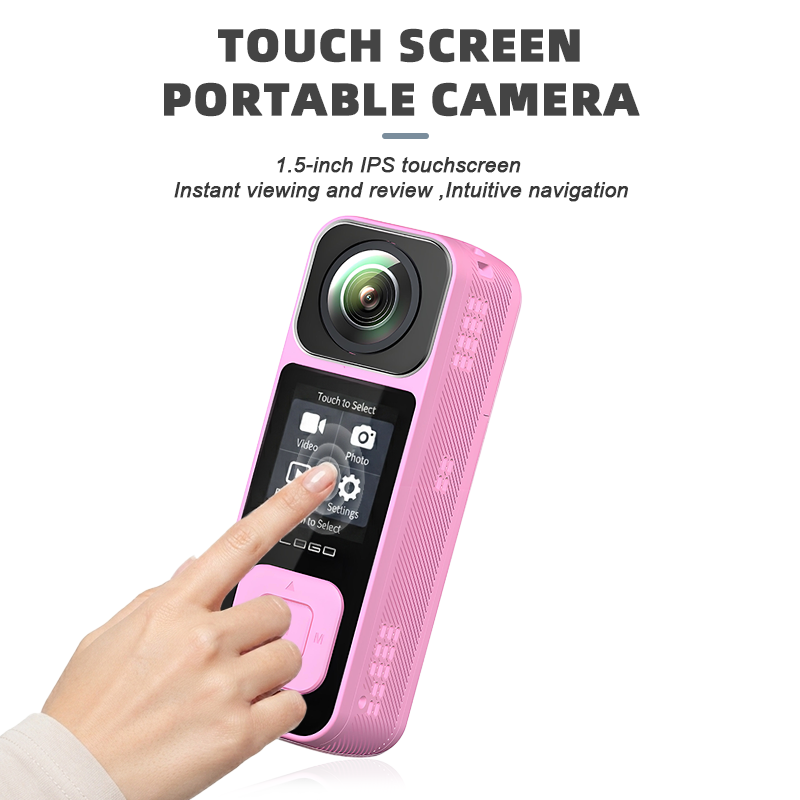
- Recording: front 4K (3840x2160), rear 4K (3840x2160); simultaneous 2K+2K dual recording; three modes selectable.
- Lens: 25 mm, 130-degree wide angle, front and rear dual recording simultaneously.
- Display: 1.8-inch IPS, 800x480; standard touch plus physical dual buttons.
- Stabilisation: 6-level electronic image stabilisation.
- Power: 18650 cell, 2000 mA; video working time about 4-5 hours.
- Water: compatible with a waterproof case for waterproof shooting.
- Night: infrared night vision supported.
Why it takes first place. Q2 is the only camera in the set where stabilisation is expressed as a level rather than a yes. That matters because EIS is now a baseline expectation in the budget-to-mid tier, so a buyer who cannot state the level cannot defend the SKU. It also carries the highest-resolution display in the lineup - 800x480 against 320x240 on every other model - and pairs touch control with physical dual buttons, which is the configuration that survives gloves, wet hands and cold-weather operation. Front and rear 4K with a selectable 2K+2K simultaneous mode covers both single-view and dual-view programs from one SKU.
What it does not solve. The stated video working time of about 4-5 hours is mid-pack, and no separate recording-mode endurance figure is published. Waterproofing is case-based, so the depth claim belongs to the case, not the camera. Programme the 18650 2000 mA cell into your spare-parts and service plan before locking volume.
Where it belongs. Cycling, mountain biking, ski and handheld sport programs where stabilisation is the headline retail claim; any SKU where a touchscreen is part of the shelf story.
Rank 2 - Q1: 4K WiFi dual-recording camera built for endurance
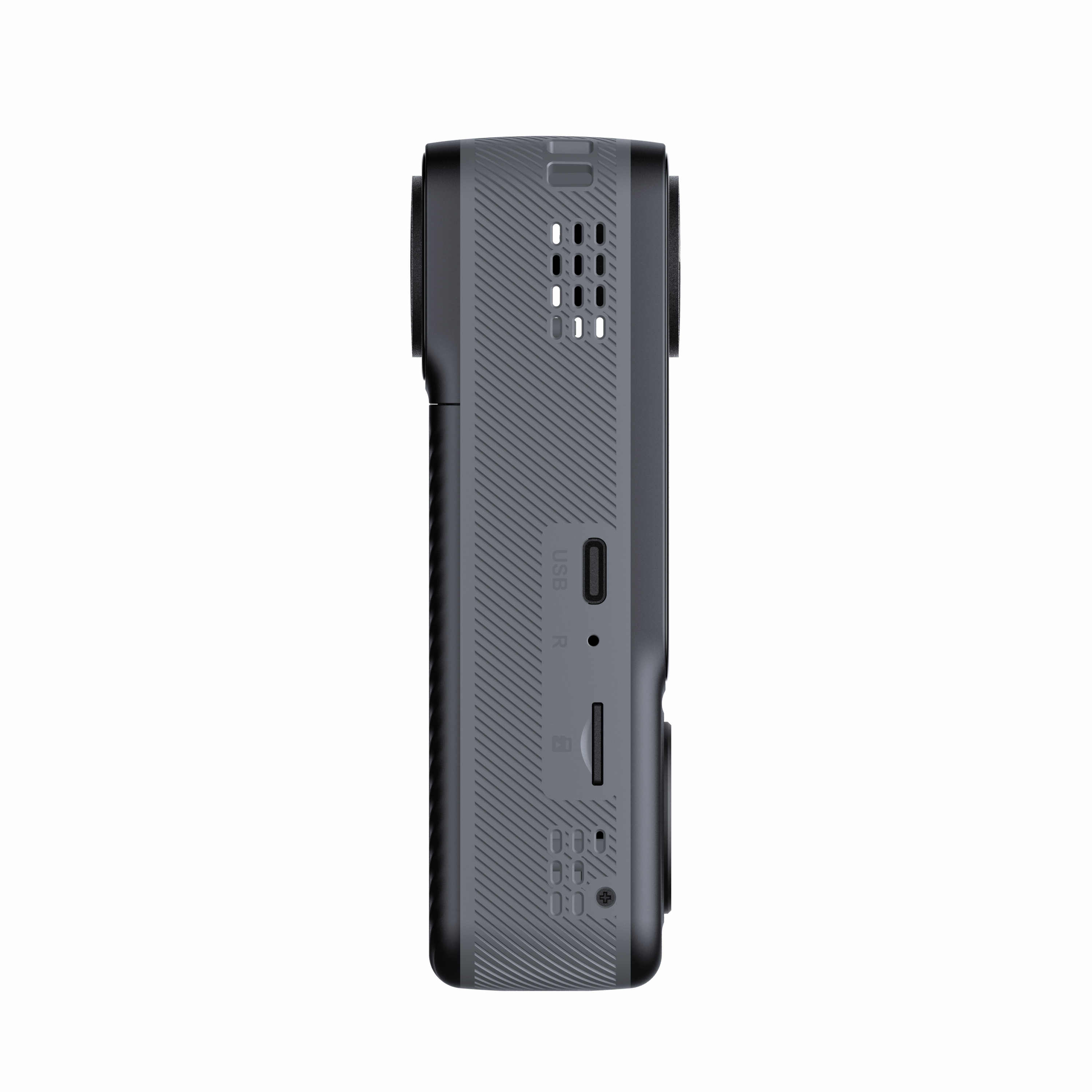
- Recording: front 4K (3840x2160), rear 4K (3840x2160); simultaneous dual recording (front 2K + rear 2K).
- Lens: 130-degree wide angle, rotating direction.
- Display: 1.5-inch IPS, 320x240.
- Power: 2000 mAh/3.8V polymer battery; video working time about 4-5 hours; recording working time about 9 hours; maximum photo duration approximately 10 hours (720p 30fps).
- Water: compatible with a waterproof case for waterproof shooting.
- Night: infrared night vision supported.
- Stabilisation: not stated in the specification set.
Why it holds second place. Endurance is Q1's differentiator, and it is stated in three separate figures rather than one: about 4-5 hours of video, about 9 hours of continuous recording, and approximately 10 hours at 720p/30fps. For travel vlog, hiking and camping programs, that distinction between video capture mode and recording mode is the number that decides whether a product returns to the warehouse or stays with the customer. The rotating 130-degree lens also gives mounting flexibility across helmet, chest and bar mounts without a second SKU.
What it does not solve. No stabilisation parameter is listed, so Q1 should not be positioned where stabilisation is the deciding purchase reason. The 320x240 display is functional rather than promotional, and the video working time matches Q2 - the endurance advantage appears in recording mode, not in video mode.
Where it belongs. Travel, vlog and long-session recording programs; dual-view SKUs where continuous recording time is a stated customer promise.
Rank 3 - Q3: 4K WiFi wide-angle dual-lens with manual infrared control
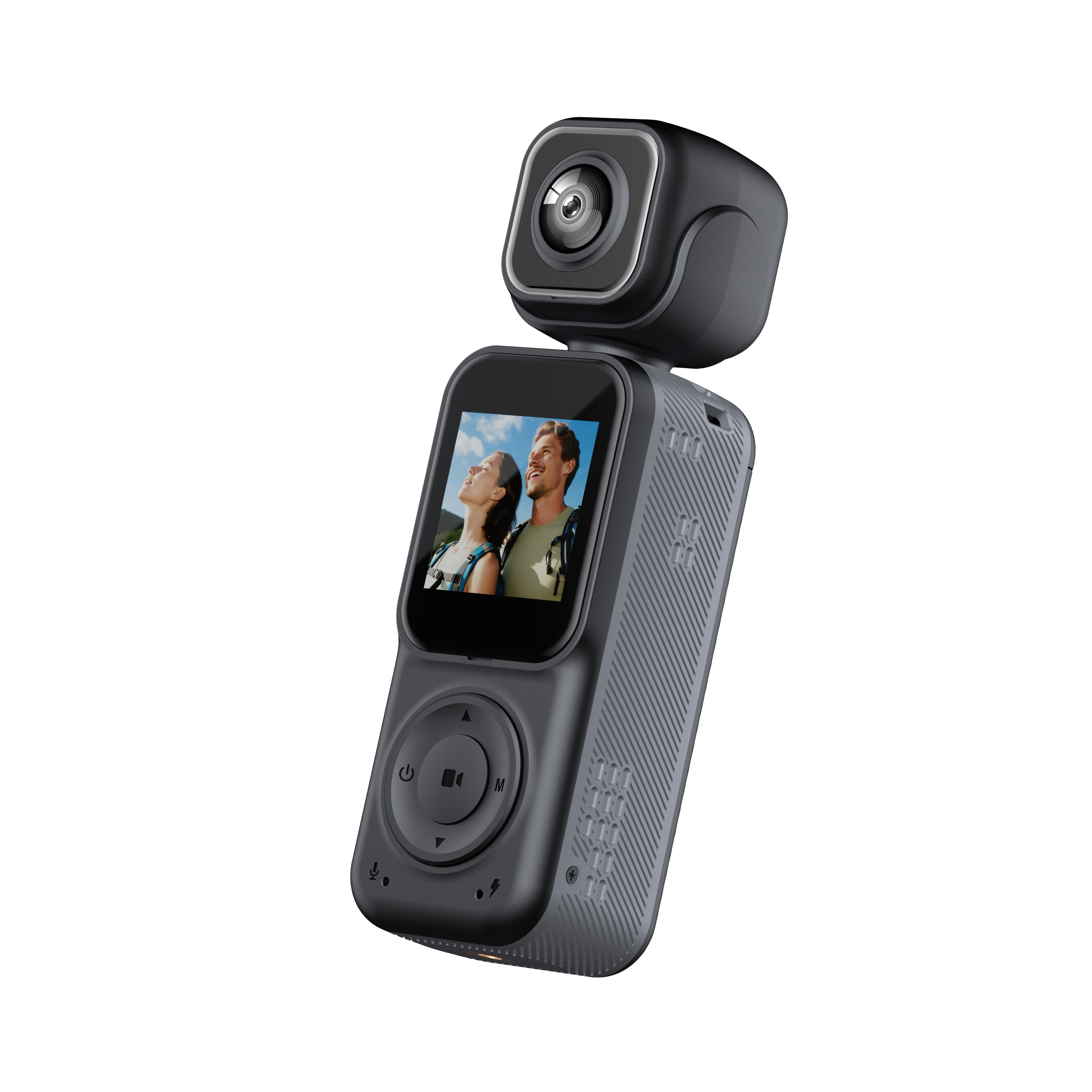
- Recording: front 4K (3840x2160), rear 4K (3840x2160); simultaneous dual recording (front 2K + rear 2K).
- Lens: 130-degree wide angle, rotating direction.
- Display: 1.5-inch IPS, 320x240.
- Power: 2000 mAh/3.8V polymer battery.
- Night: infrared night vision supported, with hand-regulation infrared switching.
- Not stated: stabilisation, video working time, waterproof approach.
Why it sits third. On the core capture specification Q3 matches Q1 - front 4K, rear 4K, 2K+2K simultaneous, 130-degree rotating lens, 2000 mAh/3.8V battery - and it adds user-controlled infrared switching instead of automatic behaviour. That control matters in fixed-position installations, where a recording device runs in a known lighting environment and the operator wants the infrared state locked rather than reacting to scene changes.
What it does not solve. Three fields are missing from the supplied specification: stabilisation, video working time, and waterproof approach. None of these can be inferred from the model number, and each becomes a question for the supplier before volume is committed. Without those figures, Q3 is harder to defend in handheld sport programs than Q1 or Q2.
Where it belongs. Dual-view and fixed-position recording programs, in-vehicle second-camera roles where the device serves as a monitoring recorder, and any SKU where manual infrared control is a requirement rather than a feature.
Rank 4 - Q7: 4K WiFi anti-shake in a compact power class
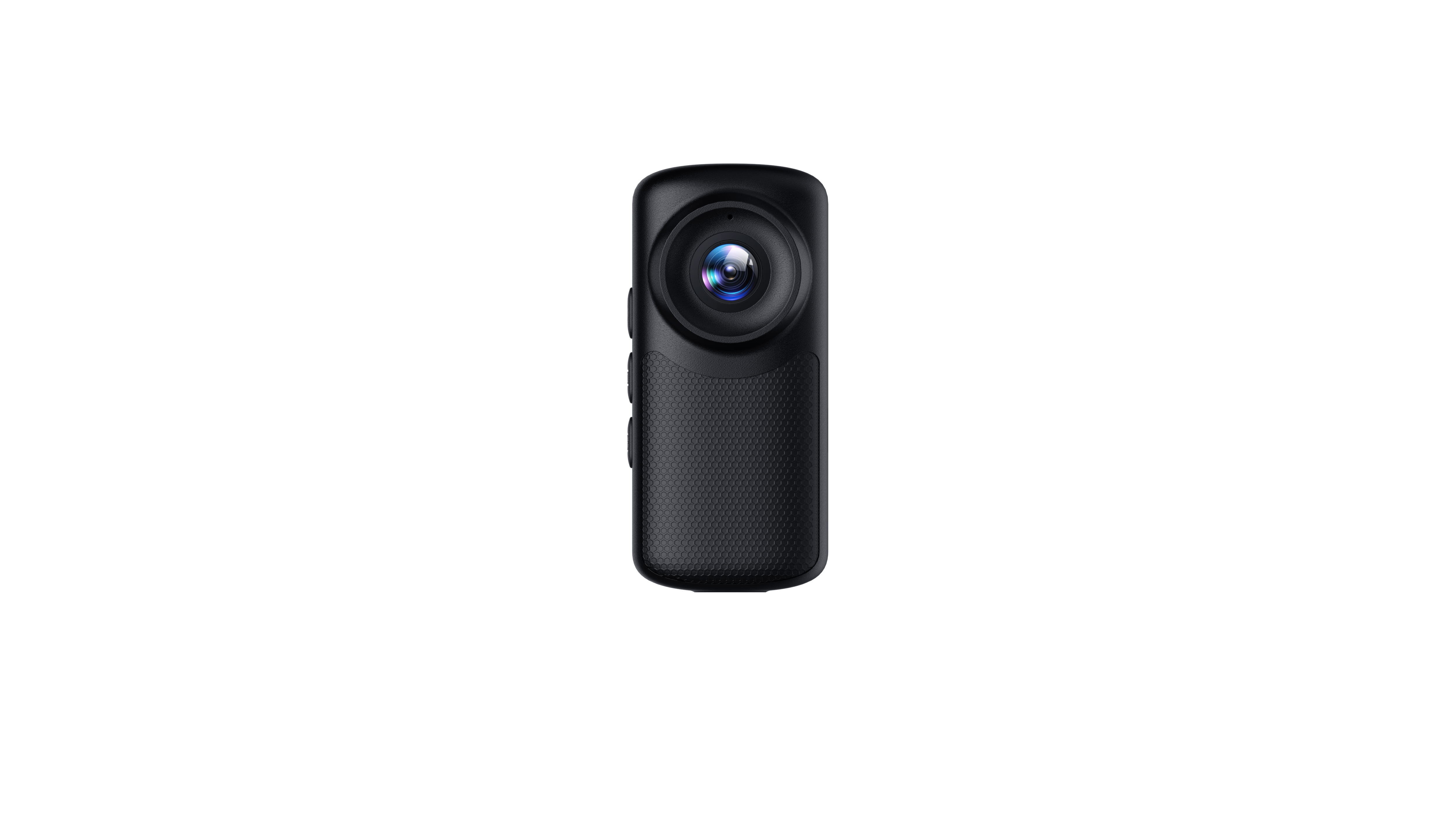
- Recording: 4K (3840x2160) at 30fps; recording bit speed WAV (512 kbps).
- Lens: 130-degree wide angle, rotating direction.
- Display: 1.47-inch IPS, 320x240.
- Stabilisation: anti-shake supported.
- Power: 1000 mAh/3.8V polymer battery; working time not published.
- Water: compatible with a waterproof case for waterproof shooting.
- Audio and interface: full-range built-in capacitor microphone; high-speed Mini USB 2.0.
- Night: infrared night vision supported.
Why it earns fourth. Q7 is the leanest route to a 4K anti-shake SKU: true 4K at 3840x2160/30fps, anti-shake support, waterproof-case compatibility and infrared support, on a 1.47-inch IPS body. The full-range capacitor microphone is also listed explicitly, which matters if your program includes audio capture rather than silent action footage.
What it does not solve. The 1000 mAh/3.8V polymer pack is the smallest capacity class in the lineup and no working time is published, so Q7 is a short-session camera as specified. If a longer duty cycle is required for your market, the battery configuration becomes an engineering question rather than a catalogue selection - and that is a customization discussion, not a specification claim.
Where it belongs. Ski, snowboard and high-speed action programs built around short clips; helmet and body-mount SKUs where session length is measured in minutes and stabilisation plus 4K outweighs runtime.
Rank 5 - X20: 2K+WiFi with four infrared lights and the longest low-resolution endurance
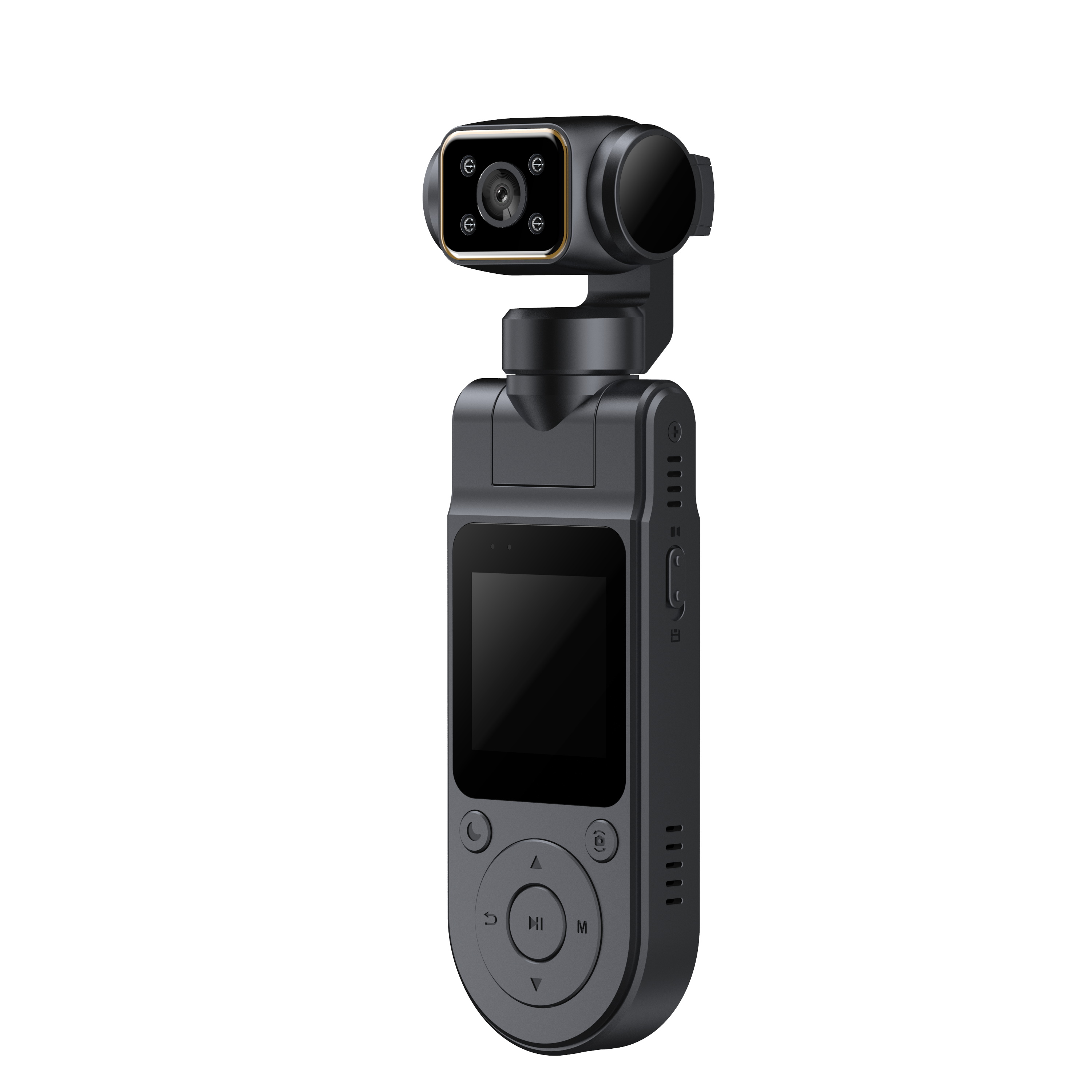
- Designation: 2K+WiFi; recording-resolution parameter listed as AVI (1920x1080).
- Lens: 130-degree HD lens, rotating direction.
- Display: 1.54-inch IPS, 320x240.
- Power: 1000 mAh/3.8V polymer battery; video working time about 6-7 hours; recording working time about 9 hours; maximum photo duration approximately 12 hours (720p 30fps).
- Night: four enhanced energy-saving infrared lights, manual switching.
- Storage and input: 16G/32G/64G/128G optional; Micro-Type-C, DC5V-1A-2A.
- Not stated: stabilisation, waterproof approach.
Why it ranks fifth, and why that is a scenario result rather than a weakness. Judged on 4K-led criteria, X20 sits one resolution class below the rest of the set, which is decisive when ultra-HD represents roughly 46.25% of category share. Judged on night recording and unattended runtime, it leads the lineup: four enhanced energy-saving infrared lights with manual switching, about 6-7 hours of video, about 9 hours of recording and approximately 12 hours at 720p/30fps - the highest low-resolution endurance figure documented here. Storage flexibility across 16G, 32G, 64G and 128G also simplifies regional SKU planning.
What it does not solve. The specification sheet designates the model 2K+WiFi while listing AVI (1920x1080) in the recording-resolution parameter. That is not a contradiction to be resolved by assumption - confirm the active recording mode matrix with the supplier during sampling. No stabilisation parameter and no waterproof approach are listed either.
Where it belongs. Night hiking, low-light and in-vehicle night monitoring programs, plus any application where long unattended runtime outranks resolution, such as a dash-cam role for vehicle safety monitoring.
A five-step selection workflow for OEM buyers
Step 1 - Freeze the scenario envelope before opening the spec sheets
Write down the operating conditions your SKU must survive: outdoor all-weather use from -20 to 60 degrees Celsius, dustproof, waterproof and shockproof exposure, high-vibration scenarios such as motorcycle riding, mountain biking and off-road driving, low-light environments such as night hiking and underwater diving, and high-speed movement such as skiing and skydiving. Once that list is fixed, the comparison collapses to two or three columns, and models that fail the envelope drop out before price discussions begin.
Step 2 - Set the resolution and stabilisation floor
Decide whether your market needs front-and-rear 4K (Q1, Q2, Q3), single-view 4K (Q7) or a 2K platform (X20), and note that simultaneous dual recording drops to 2K+2K on the three dual-lens models. Then set the stabilisation floor explicitly. Q2 states 6-level electronic image stabilisation, Q7 states anti-shake support, and X20, Q1 and Q3 state nothing - a difference your packaging copy must reflect.
Step 3 - Match battery chemistry to the duty cycle you will advertise
Three configurations appear in this lineup: 2000 mAh/3.8V polymer (Q1, Q3), 18650 at 2000 mA (Q2) and 1000 mAh/3.8V polymer (X20, Q7). Pair the chemistry with the published working time rather than with capacity alone: video working time is about 6-7 hours on X20 and about 4-5 hours on Q1 and Q2, recording working time is about 9 hours on X20 and Q1, and 720p/30fps endurance reaches approximately 12 hours on X20 and approximately 10 hours on Q1. Q3 and Q7 publish no working time, so treat their runtime as unconfirmed.
Step 4 - Choose the waterproof route deliberately
Q1, Q2 and Q7 are specified as compatible with a waterproof case for waterproof shooting. X20 and Q3 list no waterproof approach. The category application specification calls for IP66 waterproof grade, while IP68 is defined separately under IEC 60529 as dust-tightness plus protection against continuous immersion. Decide whether your claim will be case-included waterproof shooting or a rated housing, then request the corresponding evidence for the exact model. Never let a case-compatibility line become an IP68 claim in a listing.
Step 5 - Validate by sample, then lock documentation and capacity
Single-unit ordering is possible at a minimum order quantity of 1 unit, which makes physical evaluation before a volume commitment practical. Production runs on 100% test, with a stated lead time of 25-30 days and monthly capacity of 170,000 units. Factory-level documentation states FCC, CE and RoHS certification, a 1,500 square metre facility, 300 employees, 30 engineers, an annual output of 2,000,000 units and an export share of 80% across Europe, North America, Asia and South America. Request the certificate files for the exact model and destination market rather than relying on a logo on a page.
Scenario fit: which program each model belongs in
- Underwater diving and snorkelling. Start with the case-compatible models - Q2, Q1 and Q7 - and verify the depth claim against the case documentation. The application specification calls for IP66 waterproof grade; IP68 must be evidenced per model if your listing uses the term.
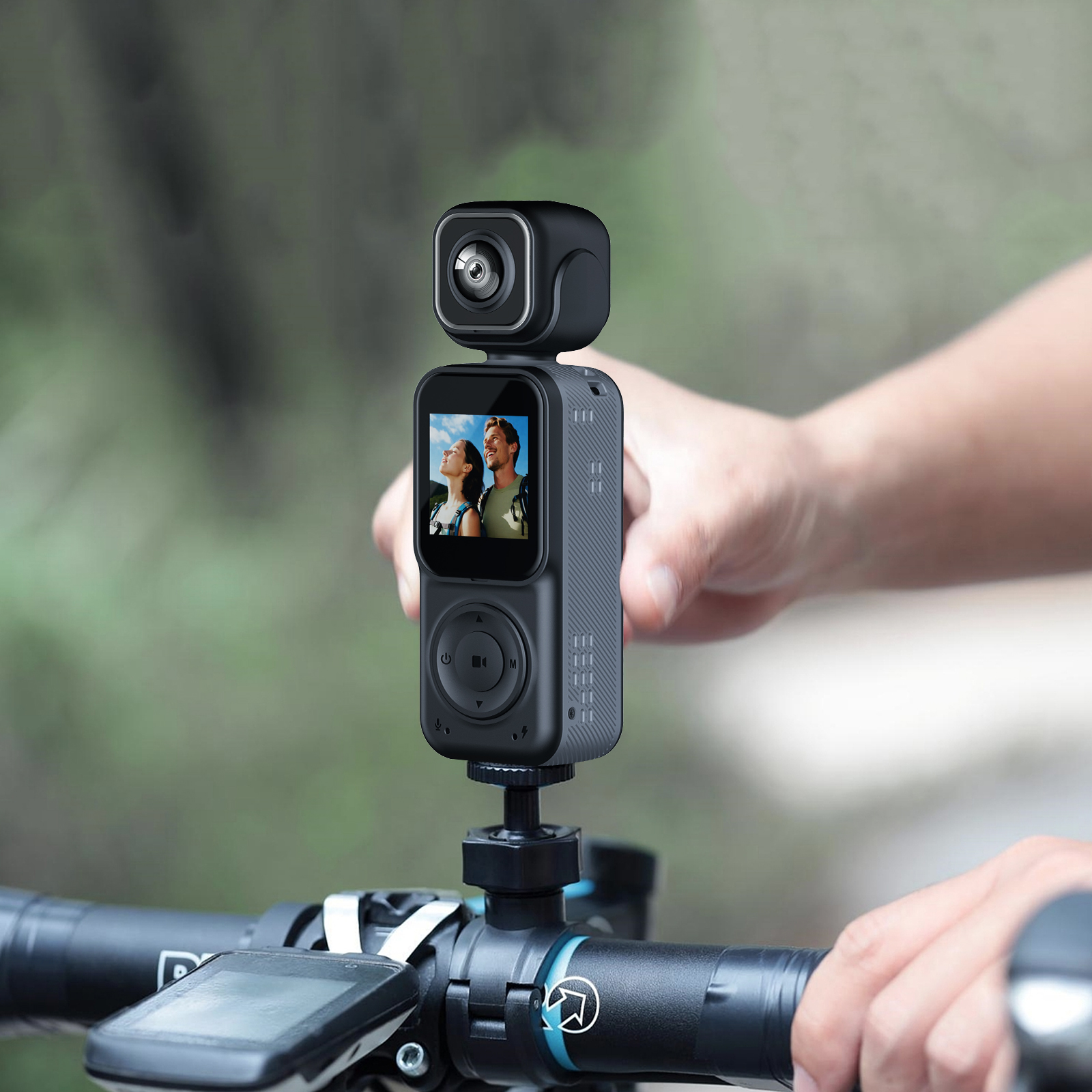
- Bicycle and motorcycle mounting. High-vibration use rewards quantified stabilisation, which points to Q2 first and Q7 second. Add the mounting accessories - bar mount, chest harness, selfie stick - at the program level rather than as an afterthought.
- Skiing and high-speed sport. Short clips in high-speed environments favour Q7 (4K plus anti-shake) or Q2 where a touchscreen and a higher-resolution display sell the SKU.
- Vlog and travel recording. Q1 suits long sessions on the strength of its recording-mode endurance, while Q2 suits workflow-led selling through touch control and the 800x480 display. A documented OEM program in the United States ran for five years with an order of 5,000 units covering travel vlog shooting, outdoor hiking and camping recording, and daily life video blogging.
- Climbing and mountaineering. Where mounting is awkward and sessions are short, the 1000 mAh class Q7 keeps the power budget honest; reserve Q1 for programs where the recording duty cycle is the promise.
- Night hiking and in-vehicle night monitoring. X20 leads here with four infrared lights, manual switching and approximately 12 hours at 720p/30fps. Q3 is the alternative when dual 4K matters more than endurance, because its infrared switching is also hand-regulated.
- Dual-view recording programs. Q1, Q2 and Q3 all record front and rear 4K with a simultaneous 2K+2K mode; Q2 is the only one that publishes three selectable dual-recording modes.
Verified specification comparison
| Model | Recording | Lens | Display | Stabilisation | Battery | Stated endurance | Infrared night vision | Waterproof approach |
|---|---|---|---|---|---|---|---|---|
| X20 | 2K+WiFi; parameter listed as AVI (1920x1080) | 130-degree HD, rotating | 1.54-inch IPS, 320x240 | Not listed | 1000 mAh/3.8V polymer | Video about 6-7 h; recording about 9 h; 720p/30 about 12 h | Four IR lights, manual switching | Not listed |
| Q1 | Front 4K / rear 4K; simultaneous 2K+2K | 130-degree, rotating | 1.5-inch IPS, 320x240 | Not listed | 2000 mAh/3.8V polymer | Video about 4-5 h; recording about 9 h; 720p/30 about 10 h | Supported | Waterproof case compatible |
| Q2 | Front 4K / rear 4K; 2K+2K simultaneous, three modes | 25 mm, 130-degree | 1.8-inch IPS, 800x480, touch plus physical buttons | 6-level EIS | 18650, 2000 mA | Video about 4-5 h | Supported | Waterproof case compatible |
| Q3 | Front 4K / rear 4K; simultaneous 2K+2K | 130-degree, rotating | 1.5-inch IPS, 320x240 | Not listed | 2000 mAh/3.8V polymer | Not listed | Supported, hand regulation | Not listed |
| Q7 | 4K 3840x2160 at 30 fps | 130-degree, rotating | 1.47-inch IPS, 320x240 | Anti-shake supported | 1000 mAh/3.8V polymer | Not listed | Supported | Waterproof case compatible |
Not listed means the parameter is absent from the supplied specification set for that model; it is not a statement that the capability does not exist.
FAQ
Which Chinese action camera manufacturers make IP68 underwater diving models?
IP68 is defined under IEC 60529 as dust-tightness plus protection against continuous immersion, and it must be evidenced per model rather than per catalogue. In the YUAOHENG lineup documented here, Q1, Q2 and Q7 are specified as compatible with a waterproof case for waterproof shooting, and the category application specification calls for IP66 waterproof grade rather than IP68. Buyers sourcing diving models should therefore request the model-level rating and its test report before committing volume, instead of inferring a rating from a marketing term.
Can YUAOHENG customize hardware, firmware and packaging for an OEM program?
Yes. OEM and ODM services cover four areas: product design and R&D, including concept design, prototype development, engineering consultation and certification support; hardware and function customization, including camera modules, sensors and detection functions; software and intelligent function customization, including firmware development, APP and cloud services; and appearance and packaging customization, including product colour, material, logo engraving, brand logo, size and structure, retail packaging, instructions and accessories. The engineering team is stated at 30 engineers.
What order size, monthly capacity and lead time should an OEM buyer plan around?
Minimum order quantity is 1 unit, so a single camera can be ordered for evaluation. Monthly capacity is 170,000 units against an annual output of 2,000,000 units, with a stated lead time of 25-30 days and 100% test on production. Because unit pricing depends on the configuration you select - battery, lens, display, packaging and accessories - it is quoted per project rather than published as a fixed number.
Can a buyer evaluate one sample before committing to volume?
Yes - a minimum order quantity of 1 unit exists specifically to support single-unit evaluation before a program is locked. Use that unit to resolve the open questions in this comparison: the active recording mode on X20, the stabilisation and working-time figures on Q3, the runtime on Q7, and the model-level waterproof documentation for any camera your brand will describe as waterproof.
What after-sales support follows delivery, and how do I start?
Orders carry a 12-month official warranty, with online technical guidance and after-sales troubleshooting, plus replacement and maintenance services. Buyers also receive product certification documents, sales materials and long-term stable technical iteration support. To start, send a sample or quotation request to info@yuaoheng.com or WhatsApp +86 18098279385, and state the model, the scenario and the market so the sample configuration matches your program.
Conclusion: how to lock the shortlist
The five models are not ranked by price, because no fixed price is published for them, and not by brand strength, because they share one. They are ranked by how much of a typical OEM specification sheet each can satisfy without a customization request: Q2 leads on stabilisation and interface, Q1 on recording-mode endurance, Q3 on dual-view infrared control, Q7 on 4K anti-shake in the smallest power class, and X20 on night recording and low-resolution endurance.
Choose by scenario first, then close the documentation gaps: confirm the active recording mode on X20, the stabilisation and endurance figures on Q3, the working time on Q7, and the model-level waterproof evidence for any camera positioned as waterproof. With a minimum order quantity of 1 unit, a sample order is the lowest-cost way to convert those gaps into verified facts before volume is committed.
Next step: sample, quotation or catalogue
Dongguan YuAoHeng Electronic Technology Co., Ltd. is located in Dongguan, China, founded in 2016, and manufactures action cameras, dash cameras and smart video doorbells. The factory covers 1,500 square metres with 300 employees, 30 engineers and an annual output of 2,000,000 units. OEM and ODM customization covers product design, firmware, appearance and packaging.
Request a sample or quotation: info@yuaoheng.com | WhatsApp +86 18098279385 | yuaoheng.com
Have Questions or Need More Details?
Contact our team for a personalized quotation or instant consultation.
Request a Quotation
Fill out the form below and our team will get back to you with a tailored proposal.
WhatsApp Direct Chat
Prefer to chat in real-time? Message us on WhatsApp for instant assistance & quick answers.
- Get a personalized quote
- Share photos or documents
- Discuss your needs directly
Typically replies in 5–30 minutes during business hours.