X20 vs Q1 vs Q2 vs Q3: An OEM Sourcing Comparison
The X20, Q1, Q2 and Q3 are four YUAOHENG action camera models positioned at different points on the same OEM sourcing decision: how much imaging capability, stabilization, control ergonomics and runtime a private-label SKU actually needs. The short answer is that Q2 is the stabilization-and-controls reference (4K WiFi touch screen anti-shake, 6-level EIS, touch plus physical dual buttons); Q3 is the runtime and multi-channel model (4K WiFi, 130-degree wide angle, front/rear 2K dual recording, IR night vision, 2000mAh battery); Q1 is the 4K entry model with rotating lens direction, a 1.5-inch IPS 320x240 display and waterproof case compatibility; and X20 is the 2K+WiFi model differentiated by a 1.54-inch IPS display, four infrared lights with manual switching and a 1000mAh/3.8V battery.
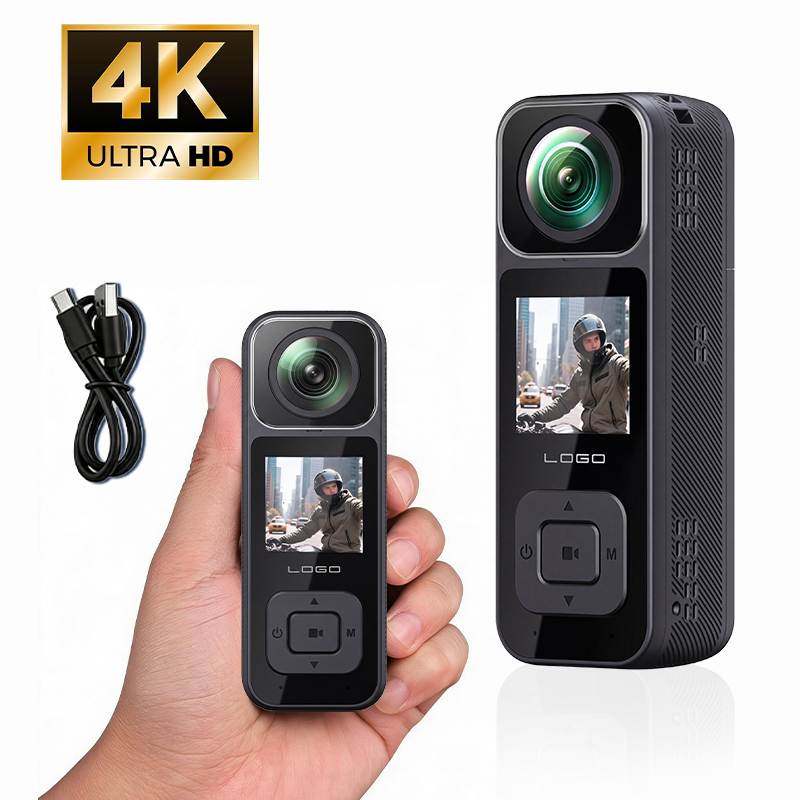
Problem Definition: Why a Four-SKU Lineup Fails or Works
OEM sourcing decisions rarely fail because a spec sheet was misread. They fail because one SKU is asked to do two incompatible jobs. A retailer buying a fixed-mount camera for night driving and a brand owner buying a handheld camera for vlogging need different hardware, even though both products sit under the same "action camera" category label. A four-model lineup only creates commercial value if each model owns a distinct shelf job and a distinct price architecture.
Three specific traps appear repeatedly when buyers compare the X20, Q1, Q2 and Q3 side by side.
- Resolution tier confusion. X20 is positioned in the 2K+WiFi tier. Q1, Q2 and Q3 are all 4K-tier models, but they reach 4K through different configurations. Treating "4K" as a single identical spec hides the differences that determine retail positioning.
- Feature conflation. Low-light capability is delivered three different ways inside this lineup: four infrared lights with manual switching on X20, IR night vision on Q3, and front/rear 2K dual recording on Q3. A buyer who assumes every "IR" claim means the same thing will mis-merchandise the range and generate returns.
- Control-model mismatch. Q2 uses touch screen plus physical dual buttons. The other models are specified around their display and rotating lens direction. The control model decides whether a camera is usable with gloves, on a bicycle mount, or inside a waterproof case.
Dongguan YUAOHENG Electronic Technology Co., Ltd. (YUAOHENG) is a Dongguan-based manufacturer of action cameras, dash cameras and smart video doorbells, founded in 2016, operating a 1,500㎡ production facility with 300 employees and a 30-engineer R&D team, exporting roughly 80% of output to Europe, North America, Asia and South America. The X20, Q1, Q2 and Q3 are built on that shared manufacturing base, which is why the comparison below separates model-level specification from platform-level engineering controls.
Industry Background: What the Market Data Says About 2K and 4K Positioning
The global action camera market was valued at USD 6.57 billion in 2024, according to SkyQuest Technology. Inside that market, the ultra-HD segment (4K and above) accounted for approximately 46.25% of share in 2025, based on Mordor Intelligence reporting. North America held a 34% revenue share of the global market in 2025, according to Grand View Research.
Two consequences follow for an OEM buyer comparing the X20, Q1, Q2 and Q3.
First, 4K is no longer a premium differentiator on its own — it is the mainstream expectation in the segment that carries the highest share. That is why three of the four models sit in 4K tiers, and why a 2K model only makes sense if it earns its place on something other than resolution: X20 earns it through a 1.54-inch IPS display, four infrared lights with manual switching, rotating lens direction and a lower hardware load.
Second, Electronic Image Stabilization has become a standard feature in budget and mid-range action cameras, using software algorithms to correct motion. Stabilization is therefore a baseline capability, and the relevant sourcing question becomes how many levels of correction a model exposes and how the user controls them — the point where Q2's 6-level EIS becomes a merchandisable feature rather than a checkbox.
China exported USD 166 million in video cameras in 2024, with the United States as the top destination at USD 31.8 million, according to OEC. For buyers importing from Chinese suppliers, the compliance basis matters as much as the specification: action cameras fall under the IEC 62368-1 safety standard for audio/video and information technology equipment, with the 4th edition published in 2023. Ingress protection claims are defined separately by IEC 60529, which is where the IP68 rating convention originates — buyers should confirm that any IP claim on a specific model is supported by that model's own test record, not by the platform in general.
Sources: SkyQuest Technology (2024 market value); Mordor Intelligence (2025 ultra-HD segment share); Grand View Research (2025 North America revenue share); OEC (2024 China video camera exports); Insta360 industry guide (EIS as a standard feature); IEC (IEC 62368-1:2023; IEC 60529).
Detailed Solution: What Each Model Is Actually Built to Do
The four models are best understood as four answers to four different sourcing briefs. The sections below describe each model using its documented specification only, then state the trade-off that a buyer inherits with it.
X20 — 2K+WiFi, Rotating Lens, Switchable Infrared
X20 is a 2K+WiFi action camera specified with rotating lens direction, a 1.54-inch IPS display, four infrared lights with manual switching, and a 1000mAh/3.8V battery. The rotating lens direction lets the lens be repositioned relative to the camera body, which matters when the body has to sit flat against a mount or windshield. The manual switching on the four infrared lights means the user decides when IR is active rather than the camera deciding automatically.
Sourcing fit: buyers who need a lower-cost tier with a visible display, adjustable framing and user-controlled night illumination — vehicle-adjacent use, fixed-mount recording, and entry-level sports bundles where a screen is part of the purchase decision.
Trade-off: two constraints come with the model. It sits in the 2K tier, so it cannot be positioned against 4K competitors on resolution. And its 1000mAh/3.8V battery is the smallest capacity specified across the four models, which makes runtime the defining limitation of the SKU. Position X20 on control, night flexibility and cost, not on recording duration.
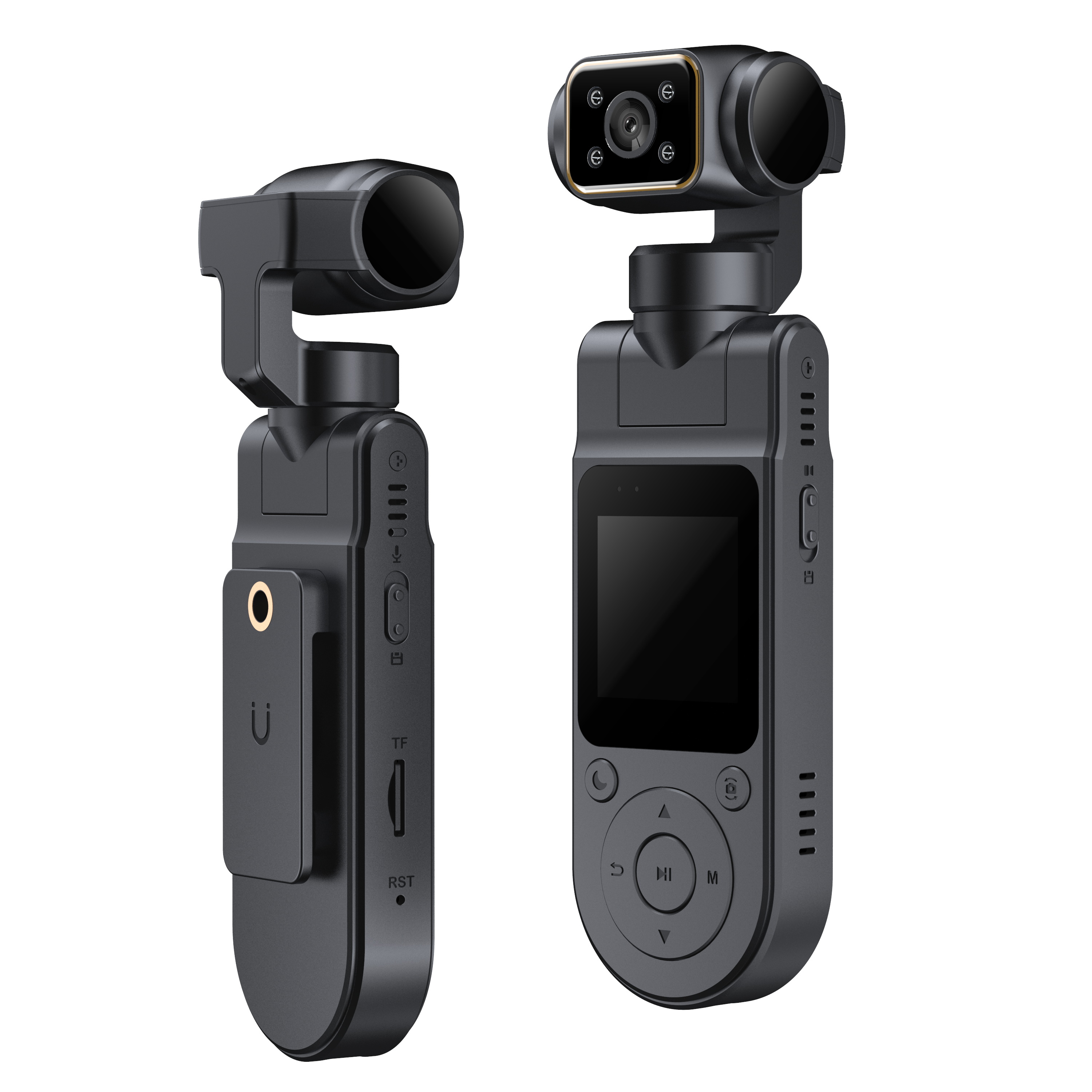
Q1 — 4K+WiFi, Rotating Lens, Waterproof Case Compatibility
Q1 is a 4K+WiFi model with rotating lens direction, a 1.5-inch IPS display at 320x240, Mini USB 2.0 connectivity, and waterproof case compatibility. It is the model in the group that explicitly pairs 4K imaging with a case-based waterproofing approach, and the one whose interface is defined by Mini USB 2.0.
Sourcing fit: buyers entering the 4K tier who want the lowest structural change from a conventional accessory setup — diving and surfing SKUs where a housing is the accepted waterproofing method, and channels whose existing accessory range still runs on Mini USB 2.0.
Trade-off: case compatibility moves waterproofing from the product to the accessory, which adds a line item to the bill of materials and a user-instruction burden to the packaging. The 320x240 display is a framing and menu surface rather than a review surface, so buyers planning a touch-first retail story should look at Q2 instead.
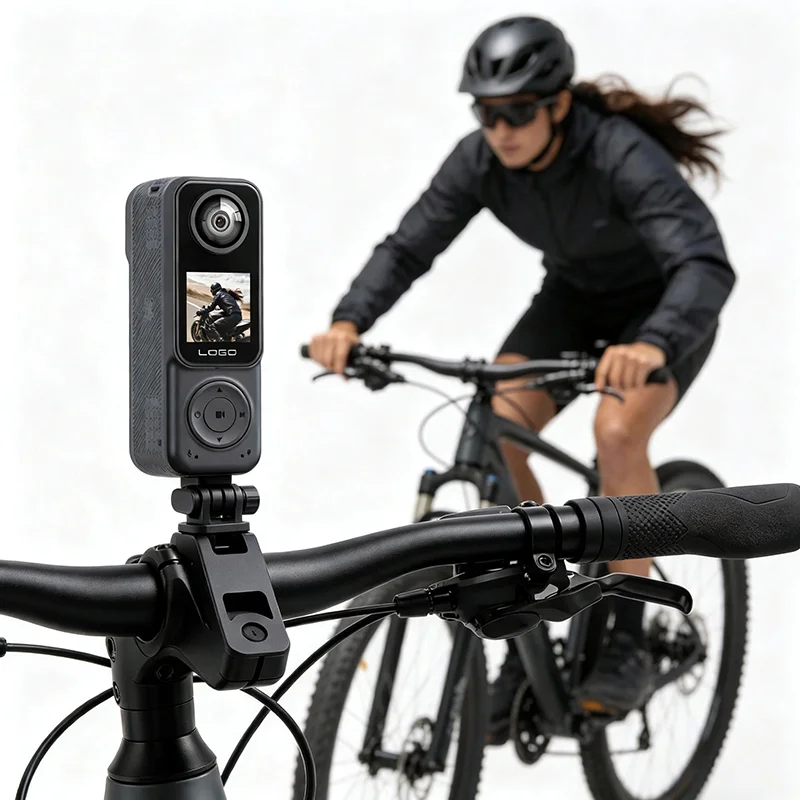
Q2 — 4K WiFi Touch Screen Anti-Shake with 6-Level EIS
Q2 is a 4K WiFi touch screen anti-shake model. Its two defining specifications are 6-level EIS and touch screen plus physical dual buttons. The stabilization configuration is the most explicit in the lineup, and the control configuration is the only one in the group that keeps physical buttons alongside a touch interface.
Sourcing fit: stabilization-led SKUs. Bicycle mounting, skiing, handheld vlogging and any use case where the camera moves with the user rather than sitting on a fixed mount. The dual-button design also supports operation when the touch layer is impractical — gloves, wet hands, or a housing that limits direct screen contact.
Trade-off: the model is specified around stabilization and control rather than around night illumination or dual-channel recording. Buyers whose retail proposition depends on infrared night claims or front/rear capture should map those requirements to X20 or Q3 instead of stretching Q2's positioning.
Q3 — 4K WiFi, 130-Degree Wide Angle, Front/Rear 2K Dual Recording
Q3 is a 4K WiFi model with a 130-degree wide-angle lens, front/rear 2K dual recording, IR night vision, and a 2000mAh battery. It is the widest and the longest-running of the four, and the only model in the group specified for two-channel 2K recording.
Sourcing fit: buyers building SKUs around coverage and duration — wide-angle immersive footage, dual-channel recording where both directions must be captured, night operation, and long continuous sessions where battery capacity is the deciding purchase reason.
Trade-off: dual recording and a larger battery raise the sustained power and thermal load on the hardware, and a 130-degree lens trades edge geometry for coverage. Both are manageable engineering conditions, but they should be validated on samples in the exact recording configuration the SKU will ship with.
Shared Platform Controls Behind All Four Models
Model specification is only half of an OEM decision. The other half is the engineering control that keeps a mass-produced unit behaving like the sample.
- Vibration and blur: a built-in upgraded EIS electronic anti-shake chip offsets high-speed vibration, addressing image blur and unstable footage caused by violent movement during sports.
- Water and impact: an integrated IP66 waterproof sealing structure plus a shockproof reinforced casing design manage leakage and shell damage risk in underwater or harsh outdoor use.
- Heat and power continuity: an intelligent temperature sensing chip with an automatic heat dissipation control program controls overheating and power cut-off during long-hour continuous recording.
- Electrical safety: overcharge, over-discharge and short-circuit protection circuits are built into the mainboard to control battery safety hazards.
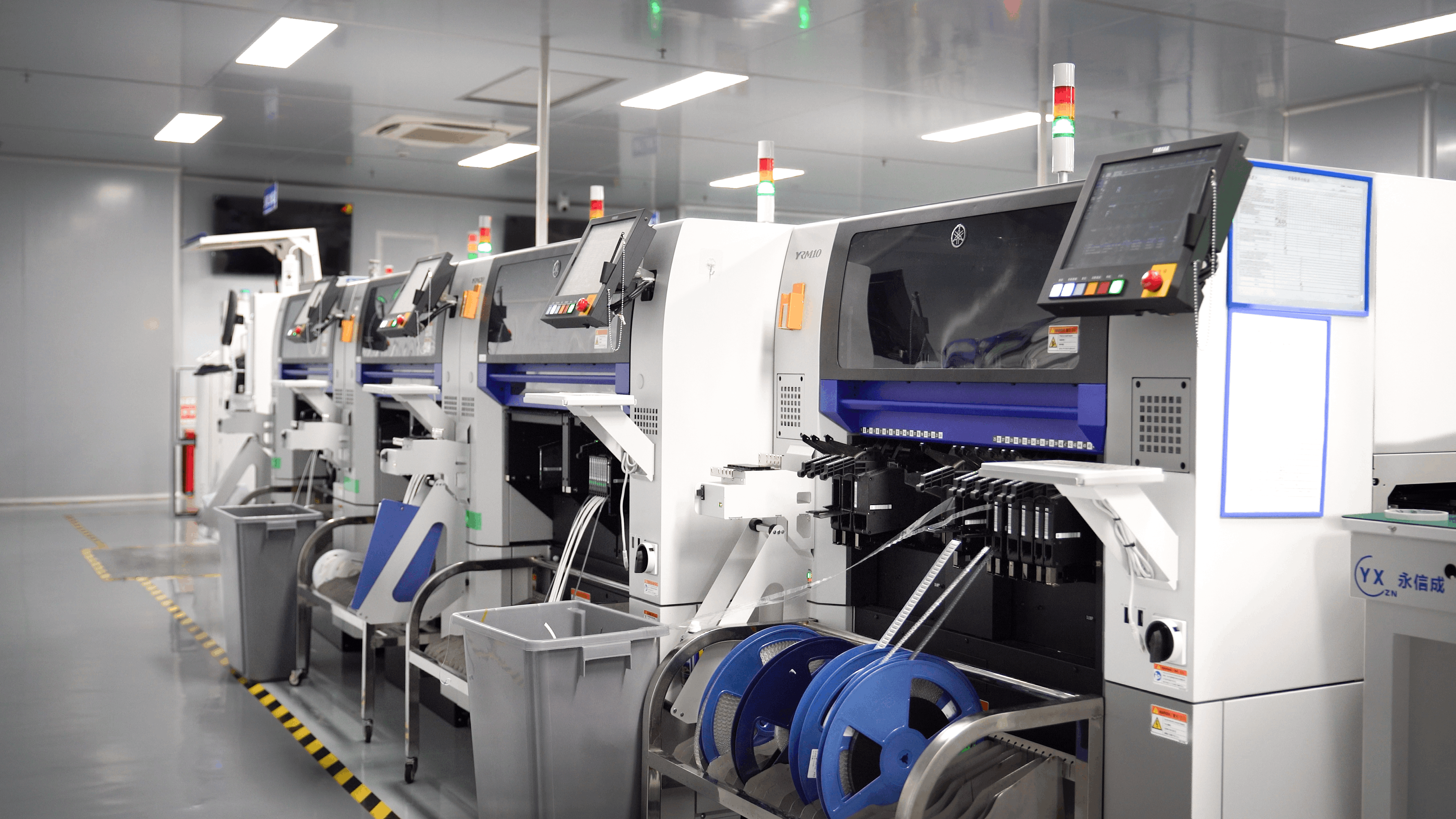
- Structural precision: a self-owned mold factory controls shell structural precision to prevent assembly defects.
- Inspection: standardized automated testing equipment performs full-function inspection, and the multi-stage process covers incoming material test, semi-finished test and finished aging test.
- Pre-production validation: professional laboratory testing covers waterproof, drop, and high-low temperature performance before mass production.
Step-by-Step Breakdown: Choosing Between X20, Q1, Q2 and Q3
The sequence below converts the specification comparison into a repeatable sourcing decision. Each step produces an output that can be written into a brief or an RFQ, which is what makes the comparison auditable later.
- Write one footage job statement per SKU. A usable statement names the mounting position, the lighting condition and the session length. "Bicycle handlebar, daylight, 40-minute rides" and "windshield, night, continuous loop" produce different model answers even though both are action cameras.
- Lock the resolution tier before anything else. Choose 2K+WiFi (X20) only when the SKU's purchase reason is cost, display and night control rather than resolution. Choose a 4K tier (Q1, Q2 or Q3) when the SKU will be compared against 4K products, which is the majority of the category in 2025 given the approximately 46.25% share held by the 4K-and-above segment.
- Decide whether stabilization is a headline or a baseline. If the SKU's marketing depends on smooth footage in motion, Q2's 6-level EIS is the configuration to build the SKU around. If stabilization only needs to be adequate, the other three models carry the platform-level EIS chip and the budget can move to another feature.
- Choose the control model against real operating conditions. Q2's touch screen plus physical dual buttons suits gloved, wet or housed operation. X20 and Q1 are specified around their IPS displays and rotating lens direction, which favors set-and-record workflows rather than mid-shot adjustment.
- Choose the low-light configuration deliberately. X20 gives four infrared lights with manual switching — the user controls when IR is on. Q3 gives IR night vision combined with front/rear 2K dual recording. These are different retail claims and should not be described with the same language.
- Size the power budget against session length. The documented capacities diverge widely in this lineup: 1000mAh/3.8V on X20 versus 2000mAh on Q3. Match capacity to the session length defined in step one, and remember that dual recording on Q3 changes the drain profile.
- Verify compliance, inspection route and samples before scaling. Confirm the certification route for the destination market (FCC, CE and RoHS are held at company level), confirm that IEC 62368-1:2023 is the applicable safety standard for the target market's acceptance, and request samples of every model you intend to stock rather than one representative unit.
Use Cases: Matching Each Model to the Scenario It Serves
The scenario mapping below follows from the documented specifications. It is a selection aid, not a ranking: each row resolves to the model whose configuration actually addresses the stated requirement.
| Use case | Requirement that decides the choice | Model that fits |
|---|---|---|
| Underwater diving action camera | Housing-based waterproofing and a documented case route | Q1 (waterproof case compatibility) |
| Surfing waterproof action camera | Case-based protection plus wide coverage | Q1 for the case route; Q3 for 130-degree coverage |
| Bicycle mounted action camera | Continuous correction of road vibration | Q2 (6-level EIS); X20 where an adjustable lens angle matters more |
| Ski outdoor action camera | Stabilization plus runtime across a long session | Q2 for stabilization; Q3 for the 2000mAh battery |
| Vlog handheld action camera | Touch framing, physical controls, stable handheld footage | Q2 (touch plus physical dual buttons, 6-level EIS) |
| Climbing and mountaineering action camera | Wide field of view and extended battery capacity | Q3 (130-degree wide angle, 2000mAh) |
| Night vision action camera | User-controlled IR illumination, or IR combined with dual-channel capture | X20 (four IR lights, manual switching); Q3 (IR night vision plus front/rear 2K) |
| Vehicle loop and on-site monitoring | Fixed mounting, screen visibility, sustained recording with thermal control | X20 for angle adjustment and IR control; Q3 where dual-channel and runtime dominate |
Comparison Table: X20, Q1, Q2 and Q3 Side by Side
| Specification | X20 | Q1 | Q2 | Q3 |
|---|---|---|---|---|
| Category | 2K + WiFi | 4K + WiFi | 4K WiFi touch screen anti-shake | 4K WiFi |
| Lens / framing | Rotating lens direction | Rotating lens direction | Not specified in comparison set | 130-degree wide-angle lens |
| Display | 1.54-inch IPS | 1.5-inch IPS, 320x240 | Touch screen | Not specified in comparison set |
| Stabilization | Platform EIS chip | Platform EIS chip | 6-level EIS | Platform EIS chip |
| Controls | Display-based, rotating lens | Display-based, rotating lens | Touch screen + physical dual buttons | Not specified in comparison set |
| Low light | Four infrared lights, manual switching | Not specified in comparison set | Not specified in comparison set | IR night vision |
| Recording channels | Single channel | Single channel | Single channel | Front/rear 2K dual recording |
| Battery | 1000mAh / 3.8V | Not specified in comparison set | Not specified in comparison set | 2000mAh |
| Connectivity / accessories | WiFi | Mini USB 2.0, waterproof case compatibility | WiFi | WiFi |
| Best sourcing role | Entry tier with display and switchable IR | 4K entry with case-based waterproofing | Stabilization and control-led SKU | Runtime, wide-angle and dual-channel SKU |
Read the table as a differentiation map rather than a score sheet. Q2 and Q3 are separated by stabilization architecture versus recording architecture; X20 and Q1 are separated by resolution tier and by how waterproofing is achieved. Where a cell states that a specification is not part of the comparison set, that model should be evaluated on its own datasheet before a claim is published.
FAQ: OEM Buyer Questions on the X20, Q1, Q2 and Q3
Are the X20, Q1, Q2 and Q3 compliant for EU and US import?
YUAOHENG products hold FCC, CE and RoHS certification at company level, and the company's stated compliance position covers these international certifications. For action cameras specifically, the applicable safety standard for audio/video and information technology equipment is IEC 62368-1, with the 4th edition published in 2023. Certification is granted per product and per market, so buyers should request the certificate set that names the exact model being imported rather than accepting a company-level summary, and should confirm whether the destination market requires a local declaration in addition.
Can YUAOHENG customize the X20, Q1, Q2 or Q3 for our own brand?
Yes. YUAOHENG provides OEM and ODM one-stop customization covering product design, engineering development, testing and mass production, supported by a 30-engineer R&D team and a self-owned mold factory that controls shell structural precision. Practically, this means branding, packaging, accessory bundling and firmware or hardware adjustments can be scoped per model. The four models already differ in resolution tier, lens configuration, control model, low-light method and battery capacity, so the customization conversation should start from the model whose base architecture is closest to the target SKU rather than from a blank sheet.
Which model gives the better cost-performance position for a given retail tier?
Cost-performance should be assessed on the cost drivers that actually differ between these models, not on a single unit price. The documented drivers are: resolution tier (2K+WiFi on X20 versus 4K tiers on Q1, Q2 and Q3); stabilization architecture (6-level EIS on Q2); recording architecture (front/rear 2K dual recording on Q3); low-light hardware (four infrared lights on X20, IR night vision on Q3); display and control hardware (1.54-inch IPS on X20, 1.5-inch IPS 320x240 on Q1, touch screen plus physical dual buttons on Q2); and battery capacity (1000mAh/3.8V on X20 versus 2000mAh on Q3). A 2K SKU built on X20 carries a lighter hardware load, while a 4K SKU built on Q2 or Q3 carries features that support a higher retail tier. Quotations should be requested per model with the exact accessory and packaging scope attached, because the accessory scope — a waterproof case, for example — changes the landed cost more than the camera specification alone.
Can we evaluate samples of all four models before committing to a bulk order?
Yes, sample evaluation is the standard route before a bulk commitment, and it should cover every model you intend to stock rather than one representative unit. Validate each sample against the job statement it will be sold for: test Q2's 6-level EIS in the actual mounting position, test X20's four infrared lights with manual switching at the distances the SKU will claim, test Q1 inside the specific waterproof case that will ship with it, and test Q3 in front/rear 2K dual recording for both runtime and heat behavior. Reliability expectations can be checked against the pre-production laboratory testing YUAOHENG performs for waterproof, drop and high-low temperature performance.
What production capacity and delivery support sit behind a mixed-model order?
YUAOHENG operates a 1,500㎡ standardized production facility with professional production lines, a 300-person workforce and annual output of 2,000,000 units, and it reports 80% of output exported across Europe, North America, Asia and South America. Production progress is tracked through a digital production scheduling system, and multiple production lines with stock buffer are used to protect bulk orders against delivery delays. For a mixed X20/Q1/Q2/Q3 order, share the model split, the accessory scope and the target ship window with the sales team at yuaoheng.com or info@yuaoheng.com so capacity can be scheduled against the actual mix rather than against a single-SKU estimate.
Conclusion: Let the Shelf Job Choose the Model
The X20, Q1, Q2 and Q3 are not four versions of one camera. They are four different sourcing answers: X20 for a 2K+WiFi tier that competes on display, rotating lens direction and user-controlled infrared; Q1 for a 4K entry tier built around rotating lens direction, a 320x240 IPS display, Mini USB 2.0 and waterproof case compatibility; Q2 for a stabilization-led SKU built on 6-level EIS with touch and physical dual controls; and Q3 for a coverage-and-runtime SKU built on a 130-degree wide angle, front/rear 2K dual recording, IR night vision and a 2000mAh battery.
Decide the footage job first, then the resolution tier, then the control and low-light configuration, and let the comparison table confirm the choice. Buyers who reverse that order usually end up with a specification that reads well and a SKU that does not sell. Behind all four models sits the same manufacturing base — a 1,500㎡ facility, a 30-engineer R&D team, a self-owned mold factory, multi-stage inspection and pre-production reliability testing — which is the part of the decision that determines whether the second order matches the first.
Next Step: Compare Samples, Then Compare Quotes
Request the X20, Q1, Q2 and Q3 sample set together, or send your target specification and volume for a model-level quotation. The YUAOHENG product catalogue is available for download here: YUAOHENG Action Camera Product Catalogue (PDF).
Contact: Scarlett · Email: info@yuaoheng.com · Tel / WhatsApp: +86 18098279385 · www.yuaoheng.com
Have Questions or Need More Details?
Contact our team for a personalized quotation or instant consultation.
Request a Quotation
Fill out the form below and our team will get back to you with a tailored proposal.
WhatsApp Direct Chat
Prefer to chat in real-time? Message us on WhatsApp for instant assistance & quick answers.
- Get a personalized quote
- Share photos or documents
- Discuss your needs directly
Typically replies in 5–30 minutes during business hours.