X20 vs Q2 Action Camera: 2K WiFi or 4K Anti-Shake — Which Should You Choose?
X20 vs Q2 Action Camera: 2K WiFi or 4K Anti-Shake — Which Should You Choose?
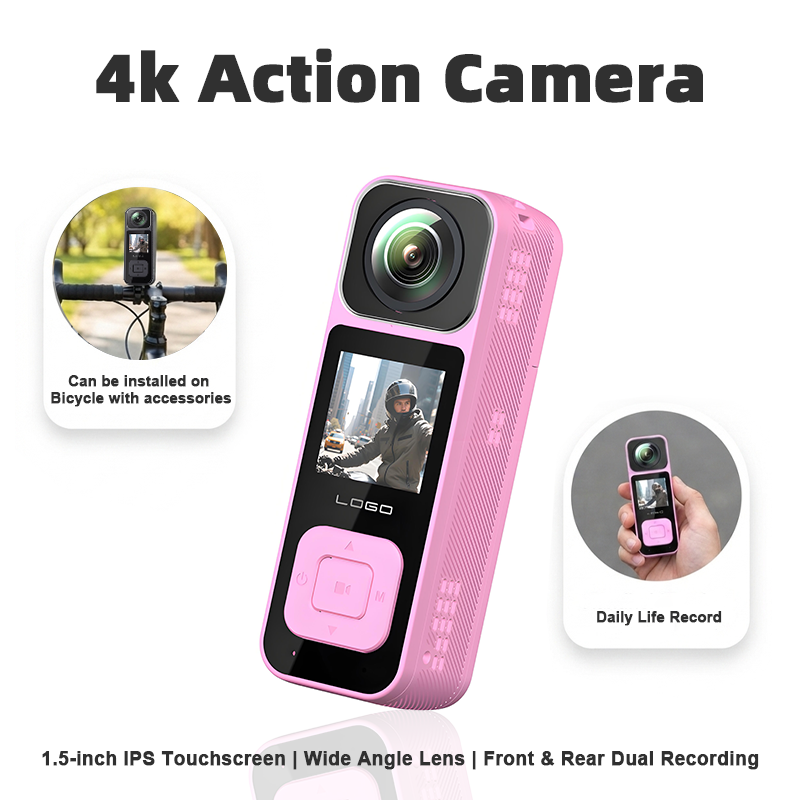
Choosing between the YUAOHENG X20 and the YUAOHENG Q2 is not a choice between a good camera and a bad one. It is a choice between two spec paths that solve different problems. The X20 is a 2K WiFi action camera built around capture flexibility: a rotating direction function, a 1.54-inch IPS display, four-infrared night vision with manual switching, a 1000mAh/3.8V battery, and an ABS housing. The Q2 is a 4K WiFi touch screen anti-shake action camera built around image stability: 6-level electronic image stabilization, waterproof-case compatibility, infrared night vision, a full-range capacitor MIC, and touch plus physical dual buttons.
Short answer: choose the Q2 when stabilized 4K footage, usable audio, and a touch screen workflow matter most — diving, surfing, skiing, motorcycling, and handheld shooting where shake is the main enemy. Choose the X20 when you need an adjustable lens angle, direct manual control over night vision, a lighter ABS body, and a straightforward 2K WiFi recording path with fewer hardware layers to manage.
The Real Problem: Two Spec Paths Hidden Behind One Label
The term action camera describes a product form — compact, mountable, built to survive movement — not a fixed specification. Both the X20 and the Q2 are WiFi action cameras with night vision, and both target the same buying audience: importers, distributors, and brand owners assembling a sports-camera range, plus end users picking one camera for outdoor recording. The separation sits in the recording architecture, not in the packaging.
- The X20 prioritizes angle control and on-device feedback at 2K resolution.
- The Q2 prioritizes resolution and motion correction at 4K, with a touch interface and a dedicated audio component.
Buyers who treat the two models as interchangeable usually discover the gap after purchase, in one of four ways:
- Resolution without stabilization. A 4K clip shot handheld in motion is not automatically more usable than a stabilized clip at a lower resolution. The Q2's 6-level EIS exists precisely because higher resolution magnifies shake.
- An angle you cannot change. If the mount position is awkward, re-mounting costs time on every shoot. A rotating direction function removes that step on the X20.
- Night vision that decides for you. When infrared activation is tied to automatic switching, the camera chooses the mode. Manual switching on the X20 keeps that decision with the operator.
- Water. Without waterproof-case compatibility, resolution stops mattering at the waterline — and the Q2 is the model specified for case-based underwater use.
The decision question is therefore not which camera is better in general, but which failure is more expensive for your shoot: shaky or audio-poor footage, or an angle and a low-light mode you cannot control.
Industry Background: Why the 2K vs 4K Split Still Matters
The global action camera market was valued at USD 6.57 billion in 2024, according to SkyQuest Technology. Other research houses report different totals for adjacent years: Grand View Research values the market at USD 7.97 billion for 2025, while Mordor Intelligence reports USD 7.09 billion for the same year. The gap comes mainly from scope — whether accessories and professional body-worn cameras are counted inside the category. Treat any single figure as a scoped estimate rather than an exact size.
Resolution mix is the more useful signal for this comparison. Ultra-HD (4K and above) accounted for approximately 46.25% of action camera market share in 2025, based on Mordor Intelligence data. In other words, 4K is the largest single segment — and more than half of the category still ships below it, which is why 2K WiFi models such as the X20 remain commercially relevant rather than obsolete.
Demand is also geographically concentrated. North America held a 34% revenue share of the global market in 2025 (Grand View Research), and Chinese production feeds a large part of that demand: China exported USD 166 million in video cameras in 2024, with the United States the top destination at USD 31.8 million, according to the Observatory of Economic Complexity (OEC).
On the technology side, Electronic Image Stabilization has become a standard feature in budget-to-mid-range action cameras, using software algorithms to correct motion (Insta360 industry guide). That is the context for the Q2's 6-level EIS: at the 4K tier, stabilization is a category expectation rather than a premium extra. It also explains why the X20 competes on a different axis — angle control, manual infrared switching, and a simpler 2K WiFi pipeline.
Two standards matter when you compare specification sheets. Action cameras fall under IEC 62368-1 for audio/video and information technology equipment, with the 4th edition published in 2023. Ingress protection claims are defined separately: IP68, as set out in IEC 60529, means dust-tight plus protection against continuous immersion, with test conditions specified by the manufacturer. A single IP number is not a substitute for a certificate copy.
Who Makes the X20 and the Q2
Both models are produced by Dongguan YuAoHeng Electronic Technology Co., Ltd., an action camera and smart electronics manufacturer founded in 2016 and based in Dalingshan Town, Dongguan, China. The company operates a 1,500㎡ standardized production facility with roughly 300 employees, a 30-engineer R&D team, an annual output of about 2,000,000 units, and an export ratio of around 80% across Europe, North America, Asia, and South America. Its products carry FCC, CE, and RoHS certification. The X20 and the Q2 are the comparison pair in this guide.
X20 in Detail: 2K WiFi, Rotating Direction, Manual IR
The X20's published specification set describes a 2K WiFi action camera whose defining feature is control rather than raw resolution.
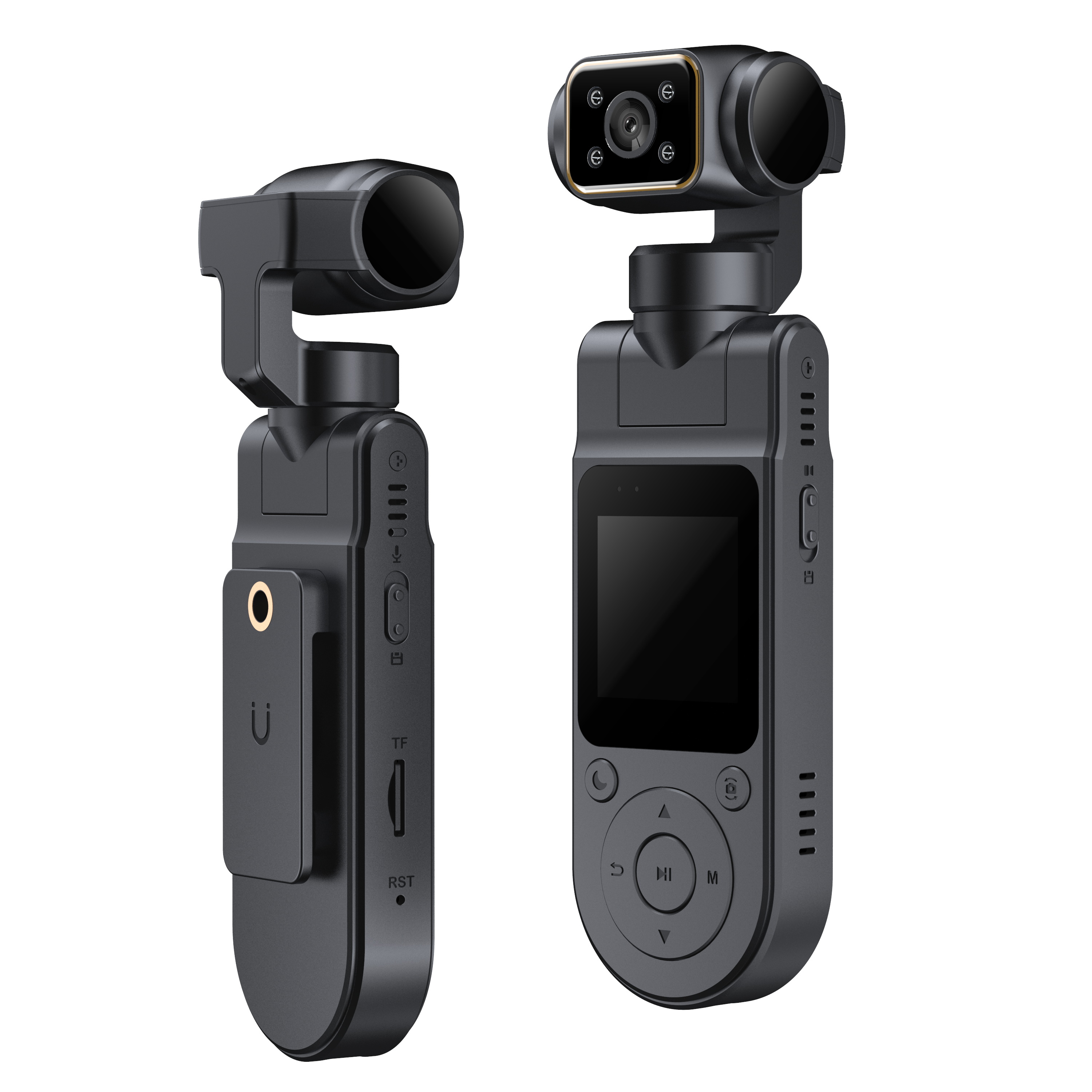
- Classification: 2K WiFi action camera.
- Rotating direction function. The camera direction can be rotated so the lens can be aimed at the subject without dismantling and re-seating the mount. On bicycle handlebars, helmet mounts, or fixed brackets, this removes a repeated setup step.
- 1.54-inch IPS display. An IPS panel keeps color and viewing angle stable, which supports framing checks and menu navigation in bright outdoor conditions.
- Four-infrared night vision with manual switching. Four IR emitters support low-light capture, and the mode is switched manually — the operator decides when the camera moves into infrared recording.
- 1000mAh / 3.8V battery. The stated battery is 1000mAh at 3.8V. Real runtime depends on resolution, WiFi state, infrared use, and ambient temperature.
- ABS build. The housing is ABS, a lightweight thermoplastic that keeps the camera light on helmets and handlebars. For hard-impact or submersion use, confirm the protection plan with the manufacturer before committing to volume.
Q2 in Detail: 4K WiFi, 6-Level EIS, Dual Controls
The Q2's specification set points in the opposite direction: resolution and motion correction come first.
- Classification: 4K WiFi touch screen anti-shake action camera.
- 6-level electronic image stabilization. Six selectable stabilization levels let the operator match correction strength to the shooting condition, from light correction on smooth surfaces to heavier correction in vibration-heavy footage.
- Waterproof-case compatibility. The Q2 is designed to work with a waterproof case, which is the standard route to underwater use in this class. Depth capability follows the case rating, so verify the case specification rather than assuming the bare camera is submersible.
- Infrared night vision. Low-light capture is supported through infrared night vision.
- Full-range capacitor MIC. A capacitor microphone is included to capture a wider frequency range than a basic microphone, which matters when audio is part of the deliverable rather than an afterthought.
- Touch and physical dual buttons. The touch screen handles menus and settings, while the physical buttons keep essential operations available when the screen is wet, gloved, or inside a housing.
What the Spec Sheets Do Not Show: Stabilization, Sealing, and Inspection
Model features sit on top of a shared engineering and risk-control framework, and that framework is where much of the difference between a dependable action camera and a generic one is decided.
- Anti-shake hardware. The manufacturer addresses image blur and unstable footage caused by violent vibration with a built-in, upgraded EIS electronic anti-shake chip that offsets high-speed vibration.
- Manufacturer-published platform figures. In its own product comparisons, YUAOHENG states that its 4K anti-shake platform supports stable 4K/30fps recording where most competitors offer only simulated 4K or a 2.7K maximum, that effective stabilization reaches a 360° full frame and is described as 40% stronger than ordinary stabilization systems, that waterproof depth reaches 30 m against 5 m-class generic products, and that continuous recording time is 35% longer than generic models. Treat these as vendor claims to confirm against samples, not as independent laboratory results.
- Sealing and impact design. Water leakage and shell damage risks in underwater or harsh outdoor conditions are managed with an integrated IP66 waterproof sealing structure plus a shockproof reinforced casing design.
- Thermal control. Overheating and power cut-off during long recording sessions are addressed by an intelligent temperature-sensing chip with an automatic heat dissipation control program.
- Power efficiency. An optimized low-power chip design is stated to reduce power consumption by 30% under identical working conditions, which extends effective recording windows.
- Electrical safety. Overcharge, over-discharge, and short-circuit protection circuits are built into the mainboard to reduce battery safety hazards.
- Structural precision. A self-owned mold factory controls shell structural precision, which reduces the assembly defects that produce inconsistent units in mass production.
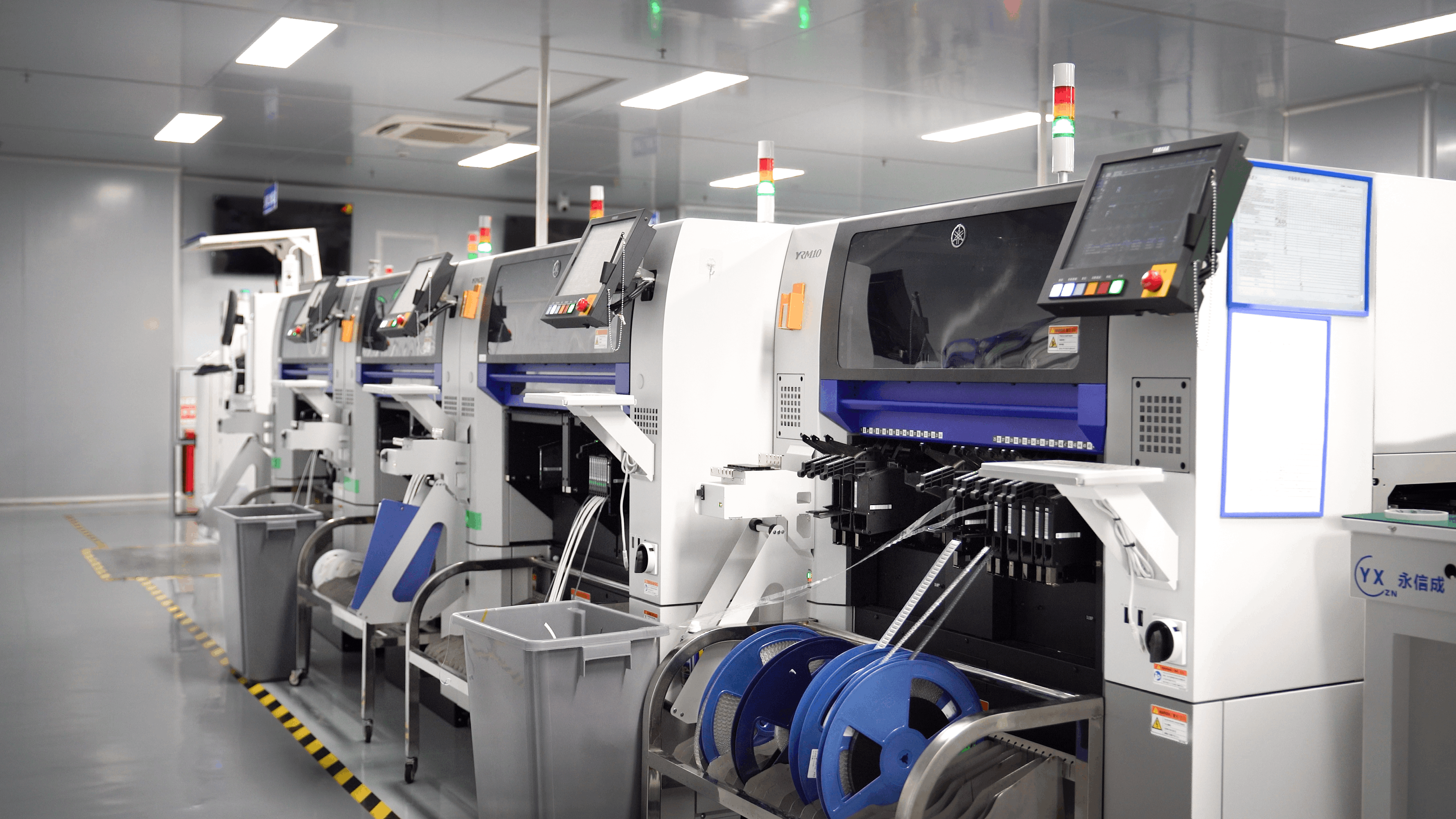
- Testing discipline. Standardized automated testing equipment performs full-function inspection, and inspection runs in stages: incoming material test, semi-finished test, and finished aging test.
- Pre-production validation. Before mass production, professional laboratory tests cover waterproofing, drop resistance, and high/low temperature performance.
Step-by-Step: How to Decide Between the X20 and the Q2
- Define the primary scenario and the mount first. Write down where the camera will be attached — handlebar, helmet, chest rig, tripod, or waterproof housing. The mount determines whether a rotating direction function saves you real time or adds nothing.
- Choose resolution or stabilization as the non-negotiable. If your deliverable requires 4K output and the shoots involve movement, the Q2's 4K path with 6-level EIS is the starting point. If your delivery resolution is 2K or 1080p and shooting conditions are controlled, the X20 removes cost and complexity.
- Decide how you want to set the lens angle. If you re-aim the camera frequently, the X20's rotating direction function avoids re-mounting. If your mount is fixed and correctly aimed, angle adjustability is not a differentiator for you.
- Decide who controls night vision. Manual switching on the X20 suits fixed installations, staged night shoots, and cases where unintended infrared artifacts would ruin a clip. If you simply want the camera to handle low light, the Q2's infrared night vision covers that need.
- Match the control interface to your conditions. The Q2's dual-button design keeps core controls usable with gloves, wet hands, or a housing in place. If your operators always work bare-handed and dry, the X20's screen-and-menu workflow is sufficient.
- Confirm how the camera goes underwater. The Q2 is waterproof-case compatible, so plan the case as part of the purchase and confirm the case depth rating. For the X20, confirm the housing plan in writing with the manufacturer before you build a listing around underwater use.
- Check power against your longest session. The X20's stated 1000mAh/3.8V battery defines its baseline. Match expected runtime against the length of your longest single shoot, including infrared and WiFi usage, and plan spare batteries accordingly.
- Treat audio as a deliverable, not an accessory. If spoken commentary, engine sound, or ambient audio appears in your final edit, the Q2's full-range capacitor MIC is a direct fit. Silent action montages do not need it.
- Validate before bulk. Test both models with your own mounting hardware, your own light conditions, and your own playback criteria before placing a volume order.
Use-Case Fit: Where Each Model Wins
Scenario fit, not brand preference, should drive this decision.
Where the X20 fits
- Bicycle-mounted recording. The rotating direction function lets you correct the lens angle on a handlebar or frame mount without tools.
- Climbing and mountaineering. Manual infrared switching keeps night and shaded-route capture under deliberate operator control, and the ABS body keeps weight low on a helmet.
- Handheld vlog setups with simple requirements. The 1.54-inch IPS display supports framing checks, and the 2K WiFi path keeps file handling and connectivity straightforward.
- Fixed low-light scenes. Where infrared must not activate by itself, manual switching is the deciding feature.
- Entry and mid-tier SKUs. For distributors building a layered range, the X20 covers the 2K WiFi tier next to the 4K models.
Where the Q2 fits
- Underwater diving with a waterproof case. Case compatibility puts the Q2 in the water category; confirm the case depth rating for your dive profile.
- Surfing and skiing. 6-level EIS is the practical answer to the continuous, high-frequency motion of water and snow surfaces.
- Motorcycling and high-vibration mounting. Stabilization plus the shockproof casing design address vibration and impact exposure together.
- Vlogging where audio is part of the output. The full-range capacitor MIC targets footage that needs usable sound, not just picture.
- Gloved, wet, or harshed operation. Touch plus physical dual buttons keep essential controls reachable when the screen alone is not usable.
X20 vs Q2: Side-by-Side Comparison
| Attribute | YUAOHENG X20 | YUAOHENG Q2 |
|---|---|---|
| Classification | 2K WiFi action camera | 4K WiFi touch screen anti-shake action camera |
| Display | 1.54-inch IPS display | Touch screen |
| Image stabilization | Not listed in the published feature set | 6-level electronic image stabilization (EIS) |
| Lens / angle control | Rotating direction function | Not listed in the published feature set |
| Night vision | Four-infrared night vision with manual switching | Infrared night vision |
| Audio | Not listed in the published feature set | Full-range capacitor MIC |
| Controls | Not listed in the published feature set | Touch and physical dual buttons |
| Battery | 1000mAh / 3.8V | Not listed in the published feature set |
| Build | ABS housing | Not listed in the published feature set |
| Water use | Confirm housing plan with the manufacturer | Waterproof-case compatible |
| Best-fit scenarios | Bicycle mounts, climbing, light handheld setups, fixed low-light scenes | Diving with case, surfing, skiing, motorcycling, audio-led vlogs |
| Certification (company level) | FCC, CE, RoHS as stated by the manufacturer for its products; confirm certificates for the exact configuration | |
Cells marked as not listed mean the specification is not part of the published feature set for that model, not that the model necessarily lacks the capability. Confirm configuration details — housing, mounting, packaging, and certification scope — with the manufacturer before a bulk order.
FAQ: X20 vs Q2 Sourcing and Decision Questions
Are the X20 and Q2 compliant for import into the EU and the US?
YUAOHENG states that its products have obtained international certifications including FCC, CE, and RoHS, and the company exports to more than 15 countries and regions, including the United States and the United Kingdom. Regulatory scope still matters for the specific model you import: action cameras fall under IEC 62368-1, the safety standard for audio/video and information technology equipment, whose 4th edition was published in 2023, while ingress-protection claims such as IP66 or IP68 are defined under IEC 60529. Before ordering, request the certificate copies that match the exact X20 or Q2 configuration — housing, battery, charger, and packaging — and confirm the standard edition each certificate references.
Can the X20 and Q2 be customized under an OEM or ODM program?
Yes. YUAOHENG provides one-stop OEM and ODM customization covering product design, engineering development, testing, and mass production. The company runs a 30-engineer R&D team that develops product upgrades on mainstream chip solutions, a self-owned mold factory that controls shell structural precision, and a 1,500㎡ standardized production facility with an annual output of about 2,000,000 units. Model-level changes for the X20 or Q2 — housing color, mounting interface, branding, packaging, or firmware defaults — should be scoped and quoted per project, because tooling and testing requirements change with the requested modifications.
Which model costs less, and what drives the price difference?
The two configurations are not priced the same, because the Q2's 4K WiFi touch screen anti-shake path carries more hardware: a 4K imaging path, a 6-level electronic image stabilization system, a touch screen, and a full-range capacitor MIC. The X20's cost profile is shaped by its 2K WiFi path, 1.54-inch IPS display, four-infrared night vision with manual switching, and ABS housing. Unit prices depend on configuration, order quantity, packaging, and certification scope, so there is no single published figure to compare. YUAOHENG attributes a roughly 30% reduction in total procurement cost to in-house R&D and a self-owned mold workshop instead of third-party sourcing. Compare configuration-based quotations rather than headline prices.
Can I test both models before placing a bulk order?
Sample validation is the expected route before a bulk order. YUAOHENG runs professional laboratory tests for waterproof, drop, and high/low temperature performance before mass production, and applies multi-stage inspection during production — incoming material test, semi-finished test, and finished aging test — supported by standardized automated testing equipment for full-function checks. Request both an X20 and a Q2 sample, then test them against your own criteria: mounting angle, low-light behavior with infrared on and off, stabilization at your typical movement level, audio capture, and runtime. Samples, quotations, and the product catalog are available on request via info@yuaoheng.com or WhatsApp +86 18098279385; the catalog PDF can be downloaded from the link in the next-step section below.
How does YUAOHENG manage lead time on bulk X20 or Q2 orders?
Delivery risk is handled at the planning level. YUAOHENG uses a digital production scheduling system that tracks production progress in real time, and operates multiple production lines with a stock buffer intended to prevent delivery delays on bulk orders; the factory's stated capacity of about 2,000,000 units per year supports large-volume and repeat orders. Because X20 and Q2 orders differ in configuration, packaging, and certification scope, the confirmed schedule follows the order specification. Share your target quantity and required arrival date with the team at info@yuaoheng.com or WhatsApp +86 18098279385 to receive a lead-time-backed quotation.
Conclusion: Pick the Spec Path, Then Validate With Samples
The X20 and the Q2 answer two different questions. The Q2 answers how to keep 4K footage stable, audible, and controllable — 6-level electronic image stabilization, waterproof-case compatibility, infrared night vision, a full-range capacitor MIC, and touch plus physical dual buttons. The X20 answers how to aim, switch, and record without extra steps — a rotating direction function, a 1.54-inch IPS display, four-infrared night vision with manual switching, a 1000mAh/3.8V battery, and an ABS housing.
Match the camera to the shoot, then confirm the order with evidence: sample tests against your own footage criteria, certificate copies for the exact configuration, and a configuration-based quotation. Both models come from the same manufacturer, so a distributor can carry both spec paths without adding a second supplier relationship.
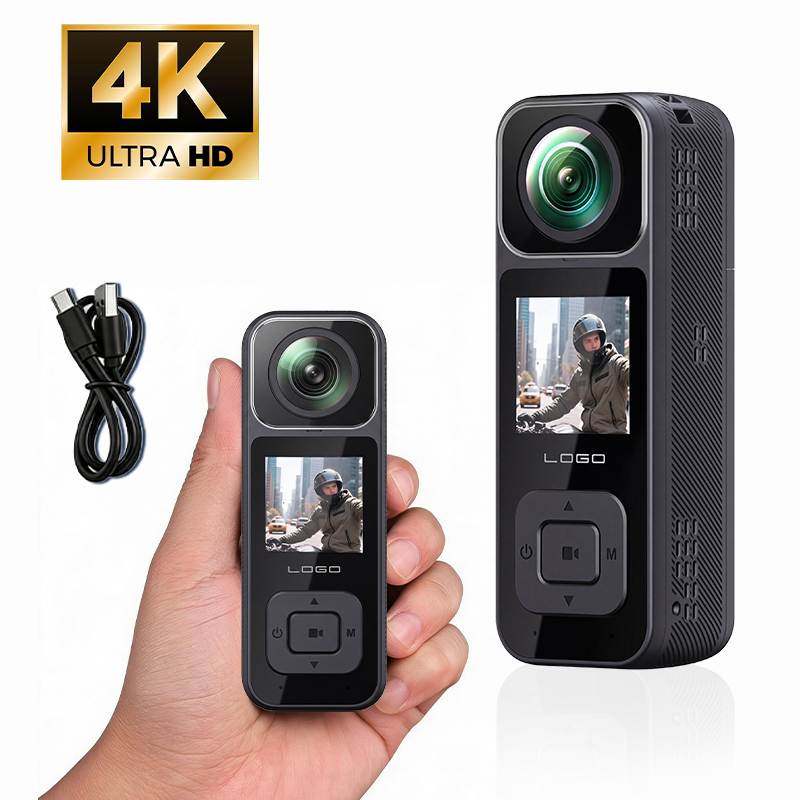
Next step: compare the two spec paths against your own shooting list, then request X20 and Q2 samples or a configuration-based quotation.
Product catalog (PDF): Download the YUAOHENG product catalog
Website: www.yuaoheng.com
Email: info@yuaoheng.com
Tel / WhatsApp: +86 18098279385
Have Questions or Need More Details?
Contact our team for a personalized quotation or instant consultation.
Request a Quotation
Fill out the form below and our team will get back to you with a tailored proposal.
WhatsApp Direct Chat
Prefer to chat in real-time? Message us on WhatsApp for instant assistance & quick answers.
- Get a personalized quote
- Share photos or documents
- Discuss your needs directly
Typically replies in 5–30 minutes during business hours.