Gantry vs. No-Shaft Rewinding: YDLM1300B or ZNFH for Your Line?
Short answer: Both are YUEDA laminating and coating integrated platforms sitting in the same 600–1200 mm working width band. The gantry-type YDLM1300B publishes a 180 m/min machine speed, a 15–150 m/min working speed, a 100–350 g/m² paper window, four-roller transfer coating and anilox roller direct back-coating. The no-shaft rewinding ZNFH1300-1400-1500 publishes a 5–150 m/min running speed, a wider 40–450 g paper window, film up to 0.1 mm, and sheet roll handling from 100 mm to 1600 mm in diameter. Which one fits your project depends on your substrate, your roll diameters, your width, your building and your shift pattern — not on which machine looks faster on paper.
Wenzhou Yueda Packaging Machinery Co., Ltd. (YUEDA) is a manufacturer established in 1998 in Longgang, Wenzhou, China, building gold and silver cardboard laminating and coating machinery together with cross-cutting and slitting equipment. The company states a 4,000 m² factory, a 25-engineer technical team and an export share of roughly 70% across Southeast Asia, the Middle East, South America and Africa. The two machines compared below sit at the centre of its laminating range.
Why This Is a Line-Fit Decision, Not a Ranking Decision
Most machine-selection problems are not caused by buying a bad machine. They are caused by buying a good machine for the wrong line. Three patterns repeat across laminating projects.
- Buying speed the line cannot feed. The YDLM1300B is published with a machine speed of 180 m/min and a working speed of 15–150 m/min. If your infeed, board handling or downstream cutting caps you at 90 m/min, that headroom is capital sitting idle rather than output.
- Buying width the segment never uses. Both platforms start at a 600–1200 mm working width. The step to the ZNFH1400 (700–1300 mm) or ZNFH1500 (700–1400 mm, roller face width 1500 mm) only pays back once your board trim regularly exceeds 1200 mm.
- Buying roll handling that does not match your rolls. Unwind and rewind geometry decides how much operator time goes into loading. The ZNFH is a no-shaft rewinding design with a sheet roll diameter range of 100–1600 mm at the unwinding position and a rewind diameter of 100–1600 mm; the YDLM1300B lists paper unwinding at 1500 mm and paper rewinding at Φ1600 mm.
Two specifications that look like differentiators usually are not. Both platforms accept 3/6/12-inch paper cores at the unwinding position, and both are laminating and coating integrated machines from the same builder. The real question is not shaft versus no-shaft in the abstract — it is which roll diameters, substrate window, width and plant environment you actually operate.
Where the Demand Behind These Machines Comes From
Two independent data points frame the market these machines are sold into:
- The global metallized paper market reached USD 4.85 billion in 2025, with demand driven by tobacco packaging and premium labeling (DataM Intelligence).
- The global laminating machines market was estimated at USD 676.4 million in 2025 (Future Market Insights).
These are two different markets measured on two different bases — one tracks the substrate, the other tracks the machinery — and they should not be added together or used interchangeably. What they do show is where the pull originates: substrate demand in tobacco and premium label work, and machinery demand from converters building capacity behind it.
On the trade side, industrial paper laminating machines are primarily classified under HS Code 8439.30.10. Classification follows the machine's actual function and construction as well as the importing jurisdiction, so the code on the commercial invoice should be reconciled against the technical datasheet and confirmed with a customs broker before shipment. Commercial classification references list alternative headings for some paper-finishing machinery, which is one more reason to have the documentation reviewed in advance rather than at the port.
What Each Platform Actually Is
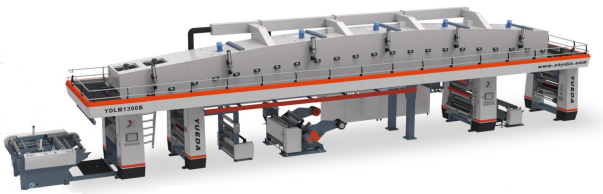
YDLM1300B — Gantry-Type Laminating and Coating Integrated Machine
The YDLM1300B is a gantry-type laminating and coating integrated machine. Its published specification reads as follows:
- Working width: 600–1200 mm
- Machine speed: 180 m/min; working speed: 15–150 m/min
- Substrates: PET film 0.012–0.014 mm, OPP film 0.02–0.06 mm, aluminum film 0.006–0.007 mm, paper 100–350 g/m²
- Laminating type: water-based laminate to paperboard
- Glue application: four-roller transfer coating
- Back coating color: anilox roller direct coating
- Paper unwinding diameter 1500 mm (core 3/6/12 inch); paper rewinding diameter Φ1600 mm (core 3/6 inch)
- Film unwinding diameter Φ600 mm; peeling-off rewinding diameter Φ600 mm (core 3/6 inch)
- Heating tunnel: 15 m, temperature ≤130°C, with an 8.6 m down-length
- Power: 380 V ±10%, 50 Hz; motor power 60 kW; heating power 216 kW; working power 80 kW
- Overall dimensions 22,330 × 3,700 × 4,500 mm; total weight 40 T
- Energy-saving double-layer drying oven covered by Chinese patent ZL 2022 2 1114210.X
In YUEDA's own product positioning, the gantry platform is the best-selling configuration for cigarette and wine packaging and is described as suitable for high-efficiency production of high-end cigarette, wine and cosmetic packaging.
Two features most affect line design. The first is the integrated four-roller transfer coating plus anilox roller direct back-coating, which allows the laminating adhesive and a colored reverse-side coating to be applied in the same pass. The second is the 15 m heating tunnel rated to ≤130°C, which is what makes a 180 m/min machine speed meaningful rather than a nameplate figure.
ZNFH1300-1400-1500 — No-Shaft Rewinding Laminating and Coating Integrated Machine
The ZNFH platform is an aluminum metallized paper laminating and coating integrated machine built around no-shaft (shaftless) rewinding. Its published specification:
- Sheet roll width: 600–1200 mm (ZNFH1300), 700–1300 mm (ZNFH1400), 700–1400 mm (ZNFH1500)
- Roller face width: 1300 / 1400 / 1500 mm
- Running speed: 5–150 m/min
- Sheet roll diameter at unwinding position: 100–1600 mm; rewind diameter: 100–1600 mm
- Sheet core size 3/6/12 inch; rewind core size 3 inch, and 6/12 inch
- Foil roll diameter 600 mm
- Suitable paper: 40–450 g; aluminum foil 0.006–0.01 mm; film 0.01–0.1 mm
- Drying path: 12.5 m
- Total power consumption: 121 kW / 129 kW
- Machine dimensions (L×W×H): 21,000 × 2,900 × 3,200 mm (1300); 21,000 × 3,100 × 3,200 mm (1400); 21,000 × 3,200 × 3,200 mm (1500)
The no-shaft design is the headline difference: rolls are handled without mandrels, and the published diameter window runs from 100 mm to 1600 mm at both unwinding and rewinding. In a plant running continuous shifts, that is an operator-time question before it is a technical one.

The ZNFH platform is also the configuration attached to YUEDA's 24/7 continuous operation project references in the printing and packaging sector, including high-speed laminating and coating for cigarette packaging.
Where the Two Platforms Overlap
Before comparing differences, it is worth stating the shared ground, because it removes several false decision criteria:
- Both are laminating and coating integrated machines — neither is a coating-only unit that would need a second pass.
- Both are offered in the 600–1200 mm working width band at the 1300 platform.
- Both accept 3/6/12-inch cores at the unwinding position.
- Both are listed against the same broad application set: printed wine boxes, cigarette packaging, cosmetic packaging, tea packaging, disposable tableware, cake and confectionery packaging.
- Both come through the same commercial process: 30–45 days lead time for standard models, 45–60 days for customized models, a 1-unit MOQ, a 100% pre-shipment test including a 2-hour continuous run, and third-party inspection on request.
If your project sits inside that overlap, the deciding factors are substrate window, roll diameter, width and floor conditions — not the model number.
Matching a Configuration to a Project: Seven Audits
Step 1 — Audit the substrate mix, not the brochure category
Write down the exact paper grammage and film gauge you run, not the application name. The YDLM1300B publishes paper 100–350 g/m² plus PET 0.012–0.014 mm, OPP 0.02–0.06 mm and aluminum film 0.006–0.007 mm. The ZNFH publishes paper 40–450 g plus aluminum foil 0.006–0.01 mm and film 0.01–0.1 mm.
If your work includes lightweight paper below 100 g or film above 0.06 mm, the ZNFH published window covers it and the YDLM1300B published window does not. If your work is 100–350 g board requiring a colored reverse side, the YDLM1300B's anilox back-coating station is the relevant feature. Anything outside both windows needs a material trial, not a specification comparison.
Step 2 — Audit roll format: diameter, core and weight
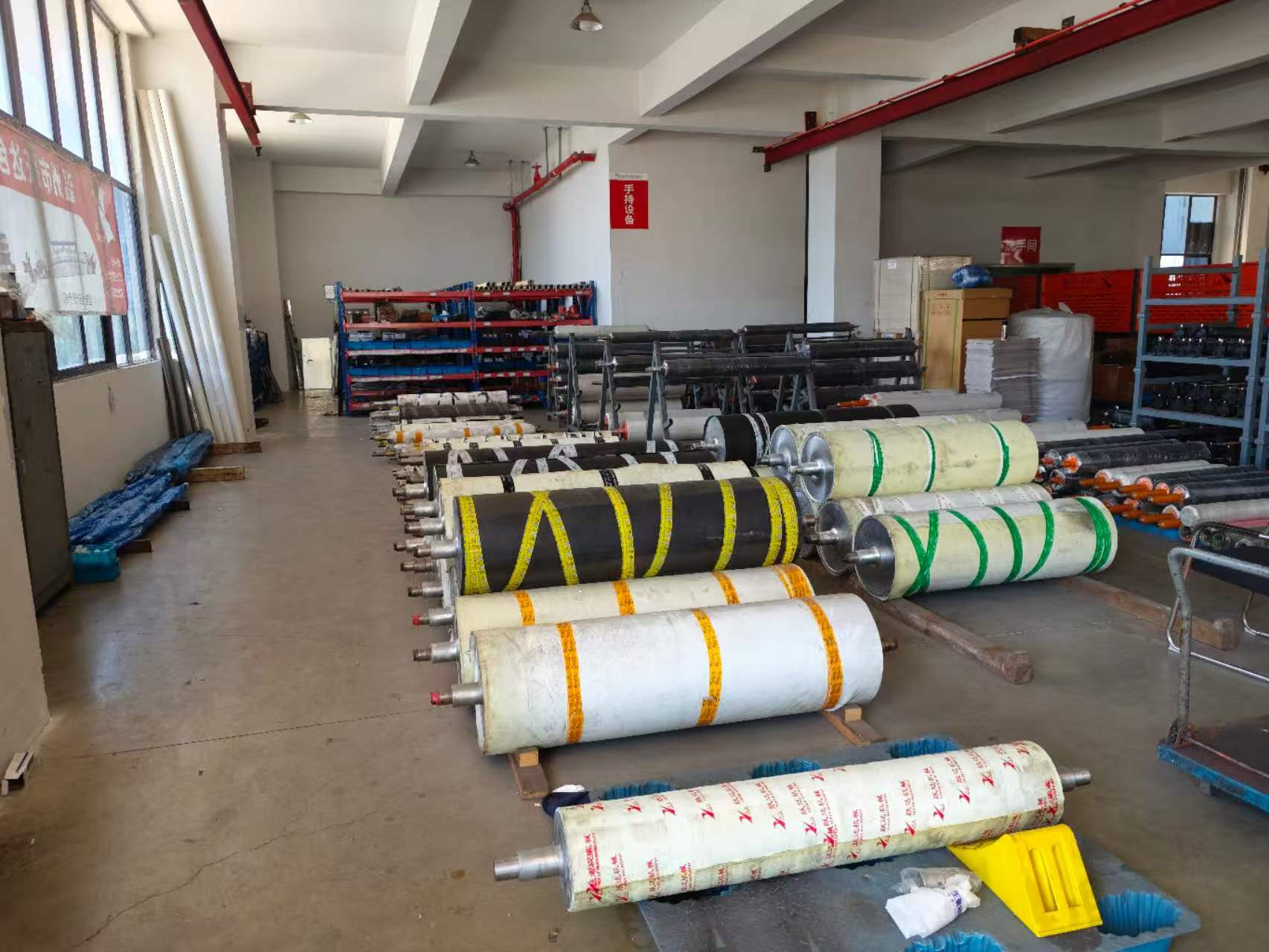
Measured roll diameter decides which platform can be loaded without changing your roll logistics. The ZNFH's published unwinding and rewinding diameter range is 100–1600 mm; the YDLM1300B lists paper unwinding at 1500 mm and paper rewinding at Φ1600 mm. A quotation for a machine that cannot take your current roll diameter is really a quotation for a machine plus a new roll-handling routine.
Step 3 — Audit width against real trim, not maximum trim
Both platforms cover 600–1200 mm. If more than a small share of your order book needs 1300–1400 mm of material width, the ZNFH1400 and ZNFH1500 options (roller face width 1400 mm and 1500 mm) belong in the comparison. If it does not, the wider platforms add capital and floor space without adding output.
Step 4 — Audit throughput against drying capacity
Speed is a function of drying, not of a drive. Compare the drying and heating geometry before comparing metres per minute:
- YDLM1300B: heating tunnel 15 m, temperature ≤130°C, down-length 8.6 m, machine speed 180 m/min, working speed 15–150 m/min.
- ZNFH: drying path 12.5 m, running speed 5–150 m/min.
Ask for the line speed at your coating weight, not the maximum figure.
Step 5 — Audit the building and the power supply
The physical numbers differ enough to matter at the planning stage:
- YDLM1300B: 22,330 × 3,700 × 4,500 mm, 40 T total weight, working power 80 kW (motor 60 kW, heating 216 kW), 380 V ±10%, 50 Hz.
- ZNFH: 21,000 × 2,900–3,200 × 3,200 mm, total power consumption 121 kW / 129 kW.
Note that the two platforms publish power under different labels — working power on the YDLM1300B, total power consumption on the ZNFH — so ask for both figures on the same basis before comparing energy load. Height clearance, floor loading and foundation design should be confirmed against the final general arrangement drawing for the exact model, because the 1300, 1400 and 1500 variants differ in width.
Step 6 — Audit the environment and the shift pattern
The same machine behaves differently in a dust-free cosmetic workshop at 30–35°C and in a 60–70% humidity plant running 24/7. YUEDA project references describe both: a cosmetic packaging line in a dust-free workshop with controlled temperature and automatic operation using photoelectric positioning, and a cigarette packaging line under 24/7 continuous operation at 60–70% humidity where stated requirements include humidity resistance, dust protection and constant temperature, with automatic PLC control and matched unwinder, rewinder, waste collector and temperature control systems.
If your plant runs continuous shifts in a humid climate, weight the ZNFH project references, because those are the conditions documented for that platform. If your plant runs in a clean, temperature-controlled room and your constraint is coating quality on premium board, weight the YDLM1300B specification.
Step 7 — Verify commercially, then commit
Lead time, test protocol and documentation close the decision. Standard models are quoted at 30–45 days and customized models at 45–60 days, with a stated capacity of 12–15 units per month. Customization covers voltage (110/220/380 V), working width from 800–1600 mm and control system. Every unit completes a 100% pre-shipment test with a 2-hour continuous run, and third-party inspection can be arranged.

Use Cases: Which Packaging Context Favors Which Design
Cigarette carton board in a humid, continuous-shift plant
This is the strongest documented scenario for the no-shaft ZNFH platform. The reference conditions are 24/7 operation at 60–70% humidity, high-speed laminating and coating for cigarette packaging, automatic PLC control, and matched unwinding, rewinding, waste collection and temperature control. A cigarette packaging factory in Thailand operating two units for more than five years reports a 30% efficiency increase and a 15% material waste reduction, with humidity resistance and 24/7 continuous operation support highlighted as the deciding factors.
The YDLM1300B is also positioned for cigarette packaging, so this is not a case of one machine being excluded. It is a case of matching documented operating conditions: if your line is continuous-shift, high-humidity and driven by roll diameter, the ZNFH references answer the question directly.
Cosmetic and premium gift box production in a controlled workshop
Cosmetic packaging places the constraint somewhere else entirely: dust control, dimensional consistency and surface quality. The reference condition is a dust-free workshop at 30–35°C, automatic operation with photoelectric positioning, and matched feeder, stacker and waste edge trimming equipment, with dust-proof construction, high-precision calibration and anti-static design listed as stated requirements.
For that context, the YDLM1300B's combination of four-roller transfer coating and anilox roller direct back-coating earns its place: a premium box face often needs a colored reverse side, and completing lamination and back-coating in a single pass removes a handling step in an environment where dust control is the entire point. In a related Vietnamese plant, YUEDA equipment has run for more than five years inside a dust-proof cosmetic-box line, reporting ±0.1 mm cutting precision, zero rework and a 20% labor-cost saving at the downstream cutting stage.
Wine, spirits and premium label board
Wine and spirits gift boxes use heavier coated board with a metallized face and a finished reverse side. YUEDA positions the gantry YDLM1300B as a best-selling configuration for cigarette and wine packaging, and its 100–350 g/m² paper window covers the board grades typically used for that work. The 15 m heating tunnel rated to ≤130°C supports higher line speeds on coated stock, and the integrated back-coating station supports the colored reverse finishes that wine packaging usually specifies.
Film-heavy or mixed-substrate production
If a meaningful share of your output is film lamination rather than paper lamination, compare the published film windows first. The ZNFH platform publishes aluminum foil 0.006–0.01 mm and film 0.01–0.1 mm; the YDLM1300B publishes PET 0.012–0.014 mm, OPP 0.02–0.06 mm and aluminum film 0.006–0.007 mm. The ZNFH window is broader on film thickness and its paper window starts at 40 g. If your product mix moves between substrates within a shift, that flexibility is worth more than a speed figure you cannot use.
Comparison Table: YDLM1300B vs. ZNFH1300-1400-1500
| Decision factor | YDLM1300B (Gantry) | ZNFH1300-1400-1500 (No-Shaft Rewinding) |
|---|---|---|
| Machine type | Gantry-type laminating and coating integrated machine | Laminating and coating integrated machine with no-shaft rewinding |
| Working / sheet roll width | 600–1200 mm | 600–1200 mm (1300); 700–1300 mm (1400); 700–1400 mm (1500) |
| Roller face width | Covered by the 600–1200 mm working width | 1300 / 1400 / 1500 mm |
| Speed | Machine speed 180 m/min; working speed 15–150 m/min | Running speed 5–150 m/min |
| Paper window | 100–350 g/m² | 40–450 g |
| Film / foil window | PET 0.012–0.014 mm; OPP 0.02–0.06 mm; aluminum film 0.006–0.007 mm | Aluminum foil 0.006–0.01 mm; film 0.01–0.1 mm |
| Unwind diameter | Paper 1500 mm; film Φ600 mm | Sheet roll 100–1600 mm; foil roll 600 mm |
| Rewind diameter | Paper Φ1600 mm; peeling-off Φ600 mm | 100–1600 mm |
| Core sizes | 3/6/12 inch (unwind); 3/6 inch (rewind) | 3/6/12 inch (sheet); 3 inch and 6/12 inch (rewind) |
| Coating / glue system | Water-based laminate to paperboard; four-roller transfer coating | Not listed in the available specification |
| Back coating | Anilox roller direct coating | Not listed in the available specification |
| Drying | Heating tunnel 15 m, ≤130°C, down-length 8.6 m | Drying path 12.5 m |
| Power | 380 V ±10%, 50 Hz; motor 60 kW; heating 216 kW; working power 80 kW | Total power consumption 121 kW / 129 kW |
| Dimensions (L×W×H) | 22,330 × 3,700 × 4,500 mm | 21,000 × 2,900 × 3,200 mm (1300); 21,000 × 3,100 × 3,200 mm (1400); 21,000 × 3,200 × 3,200 mm (1500) |
| Weight | 40 T | Not listed in the available specification |
| Documented segment positioning | Best-selling configuration for cigarette and wine packaging; positioned for high-end cigarette, wine and cosmetic packaging | Documented for 24/7 continuous operation and high-speed laminating and coating for cigarette packaging |
Notes: Not listed means the value does not appear in the specification available for this article and should be confirmed in the quotation rather than assumed. Power figures are published under different labels on the two platforms and must be normalized before comparison. The 600–1200 mm working width is shared at the 1300 platform.
FAQ
1. How should a metalized paper laminating machine be classified for import?
Industrial paper laminating machines are primarily classified under HS Code 8439.30.10 in international trade. In practice, classification follows the machine's actual function and construction as well as the importing jurisdiction, so align the technical datasheet, the commercial invoice and the customs declaration, and confirm the final code with a customs broker before shipment. Where a machine combines laminating and coating functions in one frame, describe the full function in the documentation rather than the marketing name, because classification references for paper-finishing machinery list more than one possible heading depending on what the machine actually does.
2. Which platform fits a wine board line, and which fits a cigarette board line?
Both the YDLM1300B and the ZNFH platform are laminating and coating integrated machines, and both are listed for cigarette, wine, cosmetic and tea packaging applications. The practical split is in the published operating windows. The YDLM1300B is the configuration positioned for high-efficiency production of high-end cigarette, wine and cosmetic packaging, with four-roller transfer coating, anilox roller direct back-coating and a 15 m heating tunnel at ≤130°C, on a 100–350 g/m² paper window. The ZNFH platform is the configuration documented under 24/7 continuous cigarette-packaging operation, with a 40–450 g paper window, film 0.01–0.1 mm, and sheet roll handling between 100 mm and 1600 mm.
3. What drives the cost difference between the two configurations?
Configuration content and physical envelope, not the model number alone. The variables that move a quotation include the width option (1300 / 1400 / 1500 mm roller face on the ZNFH platform), the coating architecture (four-roller transfer coating and anilox roller direct back-coating on the YDLM1300B), the drying geometry (15 m heating tunnel on the YDLM1300B versus a 12.5 m drying path on the ZNFH), the control system, the voltage, and line items such as feeder, stacker and waste edge trimming. Site costs differ too: the YDLM1300B is listed at 22,330 × 3,700 × 4,500 mm and 40 T with 80 kW working power, while the ZNFH is listed at 21,000 × 2,900–3,200 × 3,200 mm with 121–129 kW total power consumption. Ask for a configuration-level quotation so both numbers describe the same scope of supply.
4. Can I validate my own paper and film before the machine is built or shipped?
Every unit completes a 100% pre-shipment test that includes a 2-hour continuous run, and third-party inspection can be arranged. That test is the point at which a supplier should be able to demonstrate your material, not a standard sample. State your paper grammage (for example within the 100–350 g/m² YDLM1300B window or the 40–450 g ZNFH window), your film type and gauge, your target roll diameter and your target line speed in writing, and ask for the test result against those parameters. If your material sits outside a published window, raise it before the order rather than after commissioning.
5. What lead time should a project plan for?
Standard models are quoted at 30–45 days and customized models at 45–60 days, with a 1-unit minimum order and a stated capacity of 12–15 units per month. Customization covers voltage (110/220/380 V), working width from 800–1600 mm and control system. Add ocean freight, customs clearance, foundation work and commissioning to the plan. After delivery, support is quoted at 24-hour online response, 48-hour domestic on-site service and 72-hour overseas remote debugging. To start an evaluation, send your substrate specification, roll diameter and target output to the YUEDA team and request a configuration-level proposal for the YDLM1300B or the ZNFH1300-1400-1500.
Conclusion: The Decision Rule
Start with the material, not the machine. Then roll diameter. Then width. Then drying and speed. Then the building. Then the environment. Then the commercial terms.
If your product is 100–350 g/m² board with a metallized face and a colored reverse side, run on a clean, temperature-controlled line where coating quality and single-pass integration matter, the gantry YDLM1300B is the configuration built around that job, with its four-roller transfer coating, anilox roller direct back-coating, 15 m heating tunnel at ≤130°C and 180 m/min machine speed.
If your product mix runs across 40–450 g paper and film up to 0.1 mm, your rolls reach up to 1600 mm in diameter, and your plant runs continuous shifts in a humid climate, the no-shaft ZNFH1300-1400-1500 platform is the configuration documented under those conditions — and the 1400 and 1500 variants are the only way to move beyond a 1200 mm working width inside this comparison.
Both are YUEDA platforms, both come through the same commercial process, and both end up on the same floor feeding the same downstream cutting and sheeting equipment. The difference is which one fits your line, and that is a question only your substrate specification, roll data and building can answer.
Next step: send your paper grammage, film gauge, roll diameter and target output, and the YUEDA team will return a configuration-level comparison of the YDLM1300B and the ZNFH1300-1400-1500 for your line.
Download the full product brochure (PDF): YUEDA packaging machinery catalogue
Contact: Jack | Email: 2179069246@qq.com | Tel / WhatsApp: +86 19857780001 | Website: www.yuedamachine.com | Blog: blog.yuedamachine.com
Address: Yueda Machinery, Building 2, No. 1333 Times Avenue, Longgang City, Wenzhou City, Zhejiang Province, China
Have Questions or Need More Details?
Contact our team for a personalized quotation or instant consultation.
Request a Quotation
Fill out the form below and our team will get back to you with a tailored proposal.
WhatsApp Direct Chat
Prefer to chat in real-time? Message us on WhatsApp for instant assistance & quick answers.
- Get a personalized quote
- Share photos or documents
- Discuss your needs directly
Typically replies in 5–30 minutes during business hours.