
How to Secure a Metalized Paper Laminating Machine That Performs Beyond Delivery
How to Secure a Metalized Paper Laminating Machine That Performs Beyond Delivery
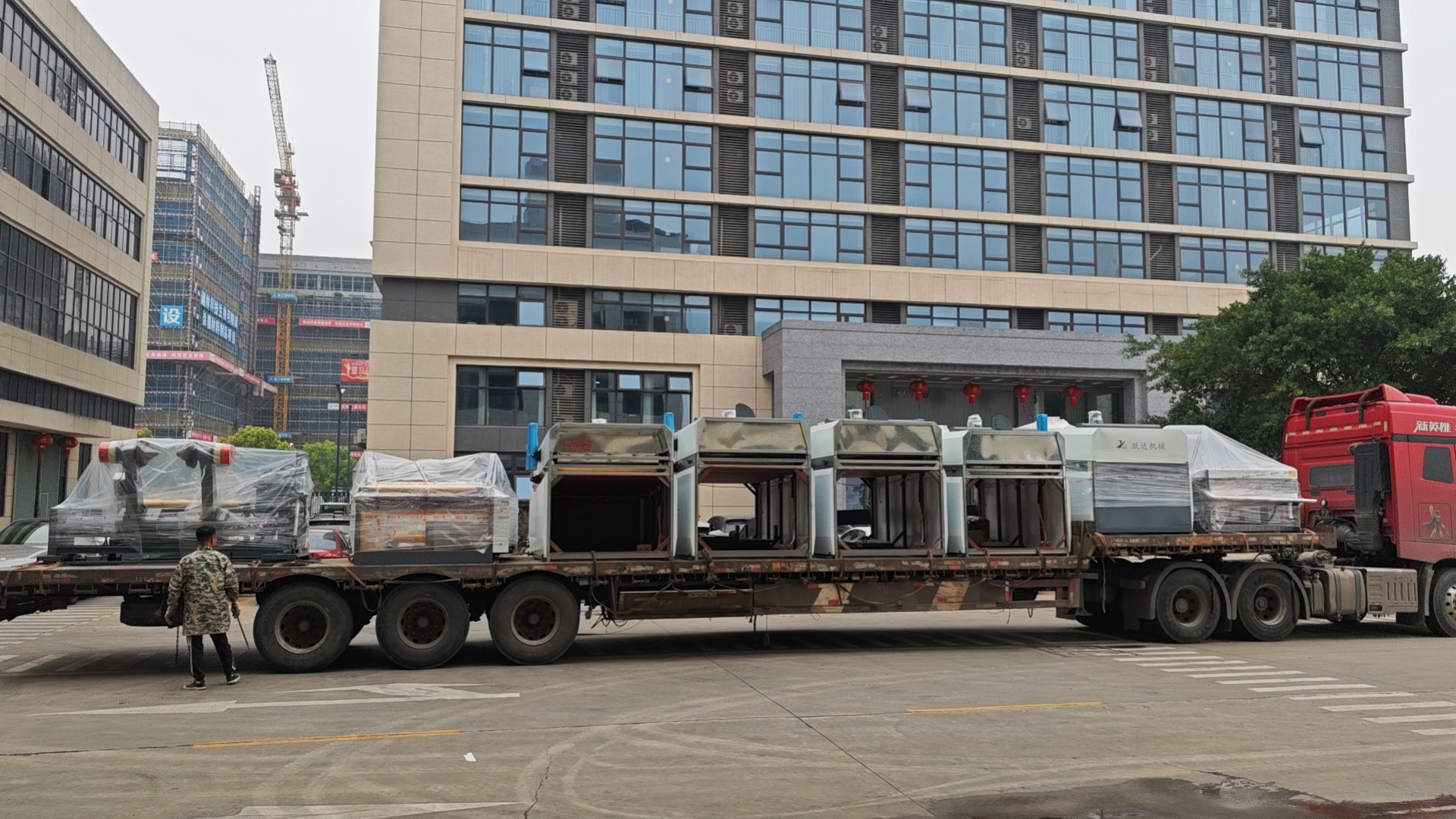
Factory-direct loading of laminating and converting equipment for overseas industrial clients.
When packaging buyers choose a metalized paper laminating machine, they usually start with speed, working width, price and delivery. Those criteria matter, but they do not tell you whether the machine will still run when packaging demand peaks one year later. Cigarette packs, wine boxes, cosmetics cartons, tea packaging, cake boxes and waterproof paper tableware all depend on metallized board that must stay stable over long production cycles.
This article is written for the decision and execution stage: when you are about to place an order, or when a distributor needs to assess whether the supplier can handle repeat orders. It focuses on the supply-side factors that determine whether a metalized paper laminating machine delivers value for years, not only on the day of installation.
Problem definition: downtime risks that show up after delivery
A metalized paper laminating machine may be specified for 150 m/min, but real output depends on tension control, cutting-position accuracy, heating consistency and quick fault diagnosis. When any of these fail, the machine can produce scrap film, uneven coating or damaged board. The most common failure patterns include tension instability during film unwinding, cutting-position errors in downstream sheeting, and overheating of motors or heating rollers during long shifts.
These risks are difficult to detect from a product demonstration. They are addressed by the machine builder's control design and quality protocol. Therefore, a buyer should ask how the manufacturer avoids each failure mode, not only what speed the machine can reach.
Industry background: why metallized paper converting is moving toward longer equipment choices
The commercial case for reliable equipment is visible in market data. DataM Intelligence valued the global metallized paper market at USD 4.85 billion in 2025. SkyQuest Technology reported that lamination held a 57.4% revenue share of the metallized paper market in 2024. Future Market Insights estimates that Asia-Pacific accounts for close to 40% of the world market, helped by tobacco and beverage industries in China and India. Meanwhile, China's machinery export value rose 15.7% year-on-year in early 2026, with demand shifting toward higher-value servo-controlled and CNC equipment, according to the German Machine Tool Builders' Association (VDW).
For importers, compliance is also a long-term issue. Industrial laminating machines exported to the European market must be designed in line with EN ISO 12100:2010 for risk assessment and safety if they are to obtain CE marking. A supplier that can document safe design and electrical specifications is easier to support over the life of the machine.
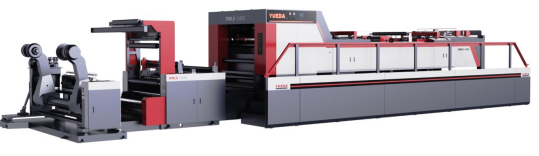
Multifunctional laminating and coating integrated machine for metallized cardboard processing.
Detailed solution: a long-term supplier checklist for metalized paper laminating machines
Wenzhou Yueda Packaging Machinery Co., Ltd. (YUEDA) is a Chinese machinery manufacturer based in Longgang, Wenzhou, a leading printing and packaging machinery cluster. YUEDA was founded in 1998 and makes gold and silver cardboard laminating machines, coating machines, positioning slitting machines and cross-cutting machines. Around 70% of its production is exported to Southeast Asia, the Middle East, South America and Africa.
The platform most closely linked to YUEDA's metallized cardboard converting line is the Gantry Multifunctional Aluminum Metallized Cardboard Laminating (Coating) Machine, model YDLM1300B. It is a gantry-type integrated machine with a rated machine speed of 180 m/min and a normal working speed of 15 to 150 m/min. Working width is 600 to 1200 mm. Supported substrates include PET film of 0.012 to 0.014 mm, OPP film of 0.02 to 0.06 mm, paper of 100 to 350 g/m2, and aluminum film of 0.006 to 0.007 mm. In one pass, the machine can apply water-based lamination to paperboard using four-roller transfer coating, while anilox roller direct coating applies the back coating color.
Production capacity and scheduling
Published output figures for YUEDA equipment are not a single number. The factory states monthly production capacity of 12 to 15 units for its manufacturing plan, while certain models are quoted at 8 units per month. For a buyer or distributor, the practical step is to confirm the current production slot for the specific model and configuration before signing.
Factory testing and third-party inspection
YUEDA performs 100% testing on all units. Pre-shipment testing includes a two-hour continuous run. Third-party inspection is available on request. Buyers can make this test part of the purchase contract and verify the machine before loading.
After-sales response
YUEDA provides remote technical support with a 24-hour online response, 48-hour domestic on-site service and 72-hour overseas remote debugging. For production lines in Southeast Asia, the Middle East or Africa, this remote-first arrangement reduces the downtime caused by geographic distance.
Machine-level controls that protect uptime
YUEDA applies specific controls to known process risks. Tension instability is managed by closed-loop servo tension monitoring with 0.1 N precision. Cutting-position error is controlled with dual photoelectric eyes for real-time calibration. Machine overheating is addressed by temperature sensors on motors and heating rollers, with an automatic shutdown function. These features affect whether a servo-controlled metalized paper laminating machine can run consistently during peak season.
From a lifecycle viewpoint, mechanical quality also matters. Precision-machined core components and a documented assembly process are what make an industrial-grade machine stable over a longer period.
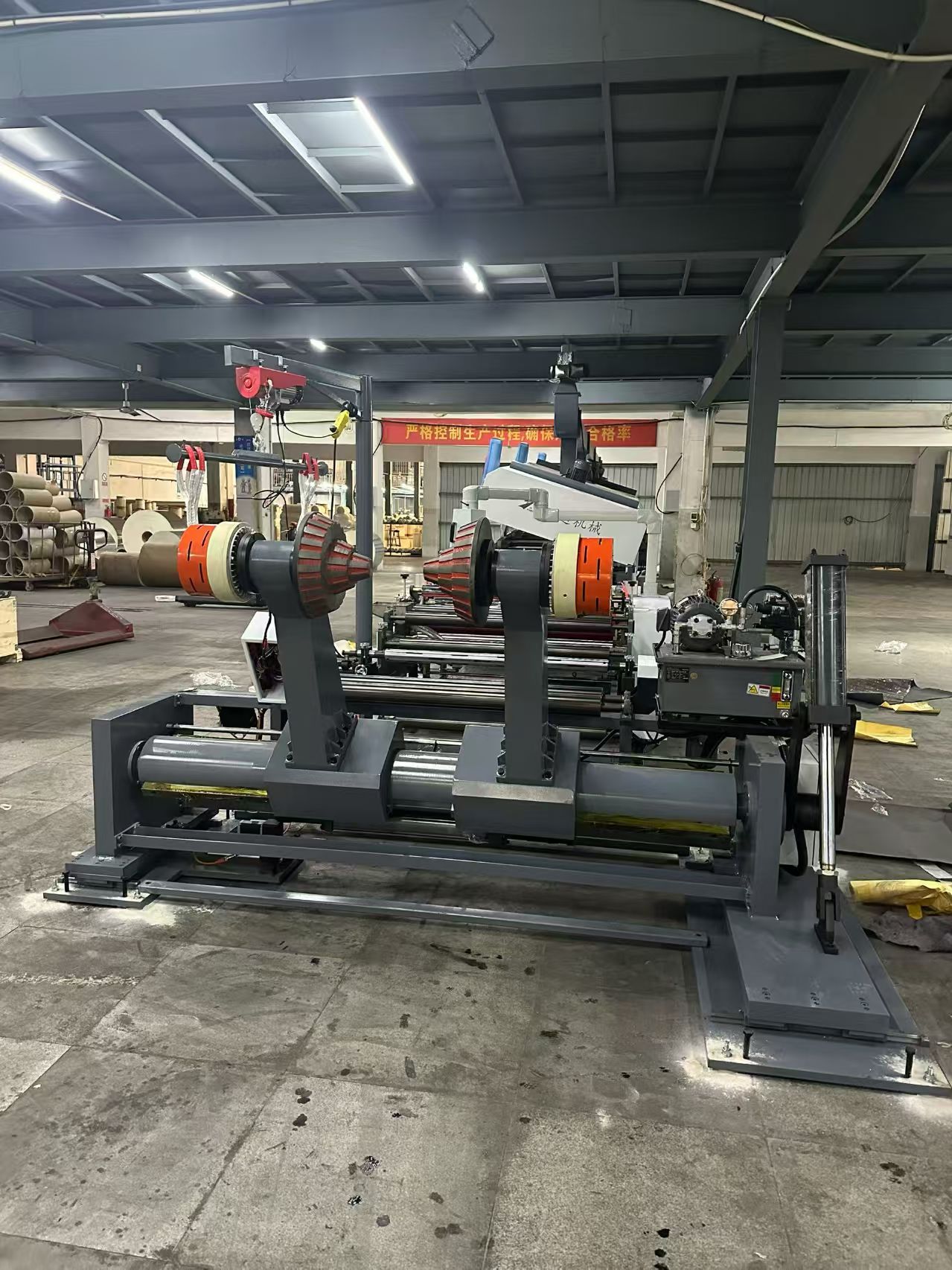
Precision machining of core components supports stable operation and longer service life.
Step-by-step breakdown: from purchase order to long-term operation
Use these five steps to move from initial interest to a managed installation.
- Define your packaging mix. List board grammage, film type, coating requirements, web width and monthly volume. This determines whether you need an automatic or a gantry-type high-speed configuration.
- Select the machine configuration. For cigarette paper and wine box packaging, a gantry multifunctional laminating and coating integrated machine can provide inline coating for premium board. For simpler film-lamination tasks, an automatic aluminum metallized cardboard laminating and coating machine with no-shaft rewinding may be sufficient.
- Check the production slot and lead time. Ask the manufacturer how many units of the target model are being produced per month. YUEDA's typical published lead time for a standard product is 30 to 45 days.
- Agree on testing and acceptance. Confirm that 100% of units are tested, that the pre-shipment test includes a two-hour continuous run, and whether third-party inspection will be used.
- Document service and spare parts. Record response times and spare-part costs before the machine leaves the factory. If delivery is FOB Ningbo or CIF to a major overseas port, include payment timing and shipping documents in the contract.
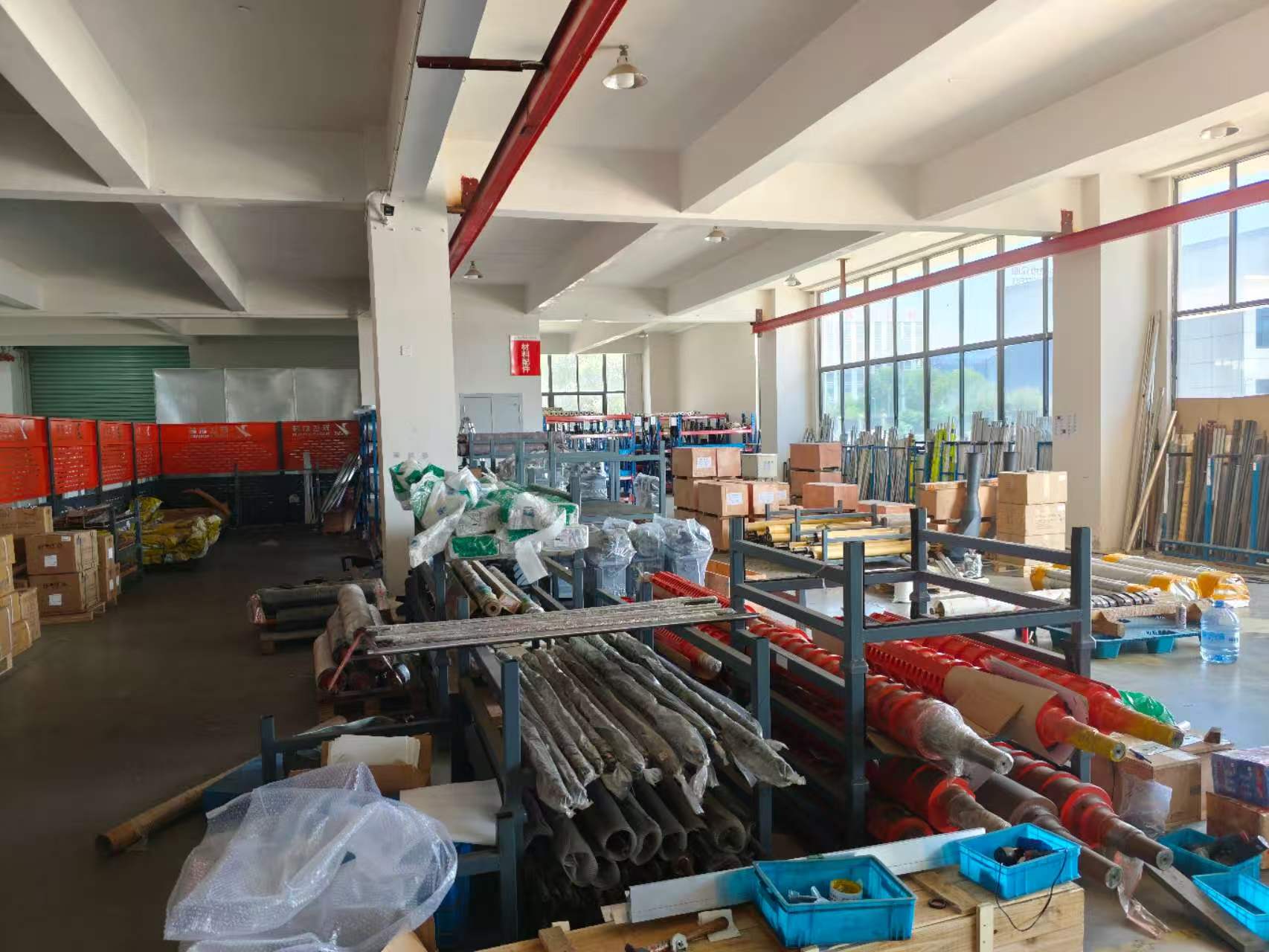
A spacious warehouse supports delivery of standard metalized paper laminating machine models.
Use cases: where long-term performance directly affects revenue
YUEDA's metallized cardboard laminating machines are listed for printed wine boxes, cigarette paper packaging, cosmetics packaging, tea packaging, disposable waterproof paper tableware, cake paper packaging and chewing gum packaging. Each application stresses the machine in a different way.
Tobacco and beverage packaging
Long runs require stable tension and consistent drying. A machine that maintains accurate tension across its working speed range keeps film lamination even across the web. A controllable heating system protects heat-sensitive film during continuous operation.
Wine, cosmetics and tea packaging
Shorter runs and frequent format changes make fast changeover and low material waste more valuable. In this environment, a coating-integrated laminating machine reduces material handling steps because coating and lamination happen on one line.
Distribution and resale models
For a distributor, supplier capacity and lead time control how many machines can be sold in one season. Standardized factory testing also makes repeat orders predictable.
Comparison table: YUEDA's published positioning vs European imported and domestic alternatives
The following table is based on YUEDA's published comparison notes. It is provided as a discussion baseline, not as independent test data.
| Factor | YUEDA | Alternative benchmark |
|---|---|---|
| Purchase cost vs European imported equipment | 40% lower purchase cost | European imported equipment price baseline |
| Spare parts cost vs European imported equipment | 50% lower spare parts cost | European imported equipment parts price baseline |
| Lead time vs European imported equipment | 30 to 45 days for standard products | 90+ days for many European imports |
| Energy consumption vs European imported equipment | Lower energy consumption at similar working efficiency | European imported equipment efficiency baseline |
| Cutting precision vs domestic local equipment | ±0.1 mm | ±0.3 mm for domestic local alternatives |
| Service life vs domestic local equipment | 8 to 10 years | 5 to 6 years for domestic local alternatives |
| Annual failure rate vs domestic local equipment | ≤1% | ≤3% for domestic local alternatives |
| Annual maintenance cost vs domestic local equipment | 20% lower | Domestic local maintenance baseline |
| Material waste rate vs domestic local equipment | 15% lower | Domestic local material waste baseline |
Commercial comparisons should always be confirmed with a written quotation at the time of purchase.
Frequently asked questions
What compliance requirements should importers check for a metalized paper laminating machine?
Importers selling machinery into the European market should confirm that the equipment design follows EN ISO 12100:2010, because CE marking is based on risk assessment and safe design. Buyers should also request electrical specifications. For example, the YUEDA YDLM1300B is specified for 380V ±10%, 50Hz. Completing this documentation before shipment reduces customs and commissioning delays.
What capability checks reduce long-term downtime?
Look for three layers: machine controls, factory testing and after-sales support. YUEDA uses closed-loop servo control for tension monitoring with 0.1 N precision, dual photoelectric eyes for cutting-position calibration, and thermal sensors on motors and heating rollers. Every unit is 100% tested, including a two-hour continuous run, and third-party inspection can be arranged.
How do long-term costs compare with European imports and domestic machines?
YUEDA's published comparison states that purchase cost is 40% lower than European imported equipment, and spare parts cost 50% less. Domestic local machines may have a similar initial purchase price, but YUEDA reports lower annual maintenance cost, longer service life, higher cutting precision and a lower failure rate. Working efficiency is described as similar to European equipment, with lower energy consumption.
Can the machine be inspected or tested before shipment?
Yes. YUEDA performs 100% testing before shipment, and the standard pre-shipment test includes a two-hour continuous run. Third-party inspection is available. For overseas buyers, common delivery terms are FOB Ningbo or CIF major overseas ports.
What lead time and after-sales response should a buyer plan for?
For a standard YUEDA metalized paper laminating machine, published lead time is 30 to 45 days. Stated production capacity ranges from 8 units for certain models to 12 to 15 units per month for the production plan. After-sales support includes remote technical support with a 24-hour online response, 48-hour domestic on-site service and 72-hour overseas remote debugging. To confirm the latest production slot and configuration options, contact YUEDA or download the brochure below.
Conclusion and next step
A metalized paper laminating machine is bought once but should serve many production cycles. The correct decision combines technical specifications, control design, factory test discipline, service response and lifecycle cost. If the supplier can show stable production capacity, standardized pre-shipment testing and a clear plan for overseas commissioning, the machine is more likely to produce when your customer needs it most.
Need a current delivery schedule or quotation for your packaging project?
Download YUEDA product brochureChat on WhatsAppEmail: 2179069246@qq.com | Tel/WhatsApp: +86 19857780001 | www.yuedamachine.com