Metalized Paper Laminating Machine Application Guide: Wine, Cigarette & Tea Packaging Lines
Metalized Paper Laminating Machine Application Guide: Wine, Cigarette & Tea Packaging Lines
A metalized paper laminating machine does not by itself determine how a wine box, a cigarette carton or a tea caddy comes out. The sheet format, the board grammage, the coated side and the way the finished sheet registers to the printed design decide that — and those four inputs decide which laminator and which sheet cutter belong in the line.
This guide maps five end uses — wine boxes, cigarette packaging, cosmetics cartons, tea packaging and disposable paper tableware — to specific laminating and sheeting configurations. YUEDA (Wenzhou Yueda Packaging Machinery Co., Ltd.) is a manufacturer of gold and silver cardboard laminating, coating and cross-cutting equipment based in Longgang, Wenzhou, Zhejiang, China, founded in 1998, exporting to Southeast Asia, the Middle East, South America and Africa. The two laminating platforms compared here are the gantry-type YDLM1300B laminating and coating integrated machine and the ZNFH1300-1400-1500 shaftless-rewinding laminating and coating machine. The sheeting options are the YD1300-1400 positioning sheeter (shaft-less) and the double rotary sheet cutters in the DWLX1300L-1400L and YDSLX1300-1400 families.
The short version. Cigarette work rewards continuous rewinding, a wide grammage window and stable running at humidity; wine and long-sheet tea work rewards coating flexibility and a cutter that can handle heavier board; small-format tea and cosmetic cartons reward cutting accuracy and fast size changeover. Where a sheet must land on a printed image, the positioning family is the relevant choice. Where it only has to land on size, a standard double rotary cutter is enough.
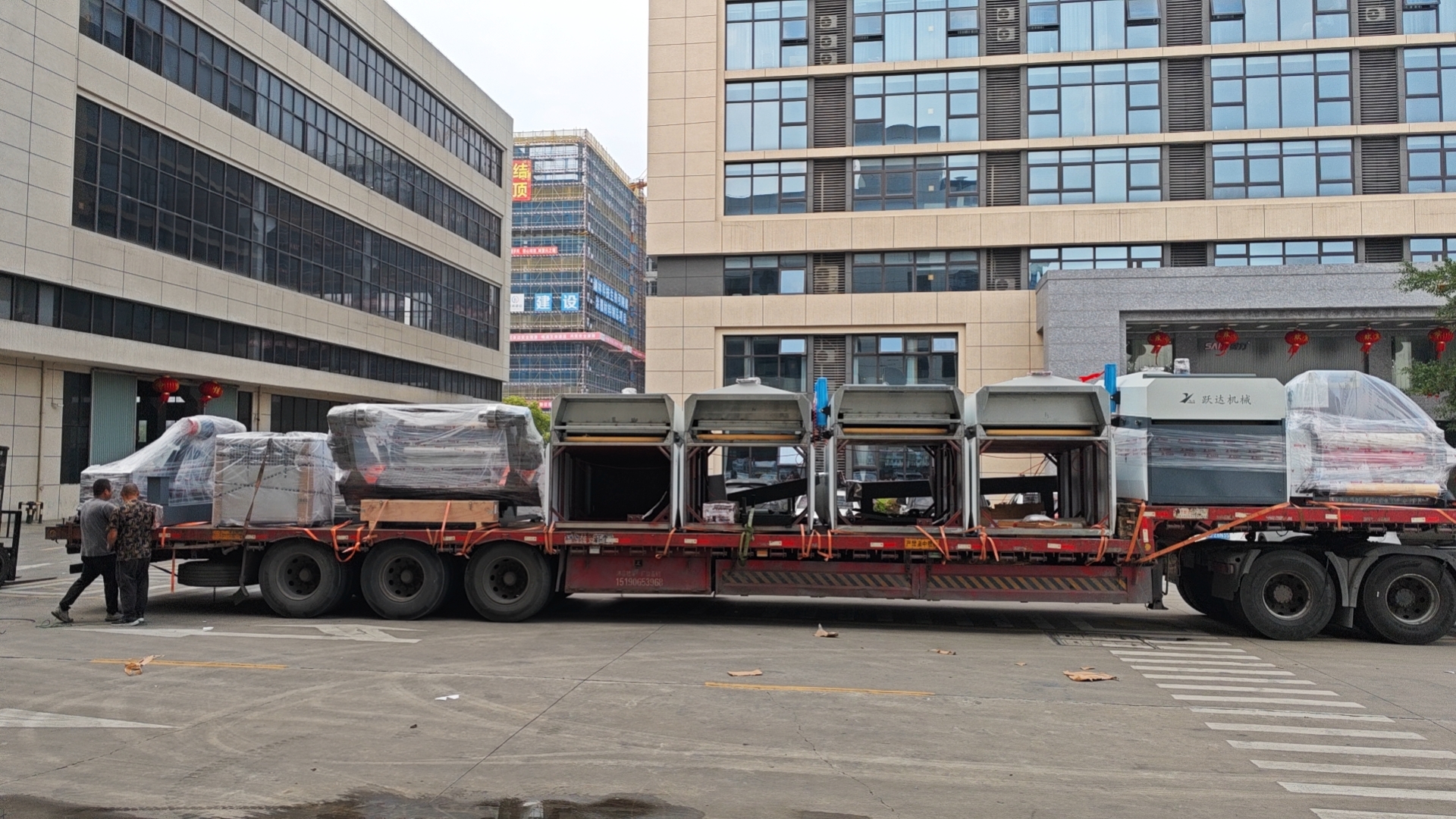
Laminating and sheet-cutting machines assembled as a matched line before shipment.
Why the end use, not the machine model, sets the configuration
Converters usually start a line plan from the laminator because it is the largest and most expensive unit. That order of work tends to produce a machine that is oversized in one direction and constrained in another. The end use should be defined first, because it fixes four inputs that the equipment must satisfy:
- Sheet format — finished length and width after cutting, not the parent roll.
- Board grammage — the weight range the job actually runs, including the heaviest grade.
- Coated side and finish — front lamination only, or a coated reverse side as well.
- Registration requirement — whether the sheet is cut to size or cut to a printed image.
Sheet format is the first filter, because the cutter families do not share the same window. The YD1300-1400 positioning sheeter is listed for sheet lengths of 400–1200 mm. The double rotary cutters in the DWLX and YDSLX families are listed for 450–1400 mm. A 1,300 mm sheet therefore removes the positioning sheeter from the shortlist before any laminating comparison begins.
Board grammage is the second filter. The YDLM1300B is documented for paper from 100 to 350 g/m². The ZNFH1300-1400-1500 is documented for 40 to 450 g. A 400 g/m² job sits inside the ZNFH window and above the published YDLM1300B ceiling.
The coated side is the third filter. The YDLM1300B parameter set names water-base lamination onto paperboard, four-roller transfer glue coating and anilox-roller direct back coating. Where the work calls for a coated reverse face as part of the same pass, that published arrangement is the relevant one to discuss with the supplier; the ZNFH parameter set focuses instead on roll handling, drying path and grammage window.
Registration is the fourth. A cutter that only holds size can produce a perfect rectangle in the wrong place relative to the print. The DWLX1300L-1400L adds longitudinal and transverse tracking accuracy of ±0.1 mm for that reason; the YDSLX1300-1400 is specified on blank cutting accuracy of ±0.1 mm.
What the published market figures actually measure
Two market estimates circulate in this category and are frequently quoted together, although they describe different things. Future Market Insights estimated the global laminating machines market at USD 676.4 million in 2025, covering thermal, wet and dry laminating machinery. DataM Intelligence estimated the metallized paper substrate market at USD 4.85 billion in 2025, with tobacco packaging and premium labelling identified among the demand drivers. One figure is machinery; the other is the material the machinery processes.
They should not be added, averaged or used interchangeably. A converter reading both numbers should treat the substrate figure as an indicator of how much metallized paper moves through packaging supply chains, and the machinery figure as an indicator of the equipment pool serving it. Neither number says what a specific wine-box or tea-caddy line should buy.
The tobacco reference in the substrate estimate is a market-level observation, not a forecast for an individual plant. Its practical value is narrower: it is consistent with the continuous, humidity-exposed duty cycle that converters in this segment describe, which is the condition the ZNFH platform and its roll-handling design are built around.
The two laminating platforms and what separates them
YDLM1300B: gantry-type laminating and coating integrated machine
The YDLM1300B is a gantry-frame machine that combines lamination and coating in one pass. Its documented working width is 600–1200 mm, with a machine speed of 180 m/min and a working speed of 15–150 m/min. Base materials are listed as PET film 0.012–0.014 mm, OPP film 0.02–0.06 mm, paper 100–350 g/m² and aluminium film 0.006–0.007 mm. Paper unwinding diameter is 1,500 mm on 3/6/12-inch cores, paper rewinding diameter is 1,600 mm, and both film and peeling-off rewinding run on 600 mm diameters. Heating tunnel temperature is specified up to 130 °C on a 380 V ±10%, 50 Hz supply, with 60 kW motor power, 216 kW heating power and 80 kW working power. Overall dimensions are 22,330 × 3,700 × 4,500 mm and total weight is 40 t.
Company materials and a 2026 industry profile describe the model as incorporating an energy-saving double-layer drying oven under Chinese patent ZL 2022 2 1114210.X. That reference identifies a design feature; it is not a measured energy figure for a specific substrate or production pattern, and should be treated as a question to raise rather than a saving to book.
ZNFH1300-1400-1500: shaftless-rewinding laminating and coating machine
The ZNFH series is offered on three frame widths and uses shaftless rewinding. Sheet roll width is 600–1200 mm on the 1300 frame, 700–1300 mm on the 1400 frame and 700–1400 mm on the 1500 frame, against roller face widths of 1,300 / 1,400 / 1,500 mm. Sheet roll diameter at the unwinding position is 100–1,600 mm and rewind diameter is 100–1,600 mm, with 3/6/12-inch cores at unwind. Suitable paper spans 40–450 g, aluminium foil 0.006–0.01 mm and film 0.01–0.1 mm. The drying path is 12.5 m, running speed is 5–150 m/min, and total power consumption is listed at 121 kW and 129 kW across the frame sizes. Machine length is 21 m, with width and height varying by frame.
What the differences mean for a line planner
- Width ceiling. The YDLM1300B is documented to 1,200 mm working width. The ZNFH 1500 frame is documented to 1,400 mm sheet roll width on a 1,500 mm roller face. Work above 1,200 mm therefore sits outside the gantry model's published width.
- Grammage ceiling. 350 g/m² on the YDLM1300B against 450 g on the ZNFH. Heavy folding-box board belongs in the ZNFH discussion first.
- Roll handling. ZNFH accepts unwind diameters from 100 to 1,600 mm, which matters when incoming mill rolls vary in diameter within a delivery. Shaftless rewinding also shortens the handling step between rolls.
- Low-end speed. ZNFH states 5 m/min against 15 m/min on the YDLM1300B. Where threading, short runs or trial batches dominate, the lower floor is worth confirming in a demonstration.
- Coating detail. Four-roller transfer coating and anilox-roller direct back coating are explicitly listed on the YDLM1300B. If a coated reverse side is part of the design, that is the configuration to specify.
| Documented parameter | YUEDA YDLM1300B (gantry) | YUEDA ZNFH1300-1400-1500 (shaftless rewinding) |
|---|---|---|
| Frame type | Gantry, laminating and coating integrated | Laminating and coating integrated, shaftless rewinding |
| Working / sheet roll width | 600–1200 mm | 600–1200 / 700–1300 / 700–1400 mm |
| Roller face width | Not listed separately | 1300 / 1400 / 1500 mm |
| Paper grammage | 100–350 g/m² | 40–450 g |
| Speed | Machine speed 180 m/min; working speed 15–150 m/min | Running speed 5–150 m/min |
| Unwind / rewind diameter | Paper unwind 1500 mm; paper rewind 1600 mm; film and peeling 600 mm | Unwind 100–1600 mm; rewind 100–1600 mm; foil roll 600 mm |
| Drying | Heating tunnel up to 130 °C; double-layer drying oven described under patent ZL 2022 2 1114210.X | Drying path 12.5 m |
| Power | 380 V ±10% / 50 Hz; 60 kW motors, 216 kW heating, 80 kW working | Total power 121 kW / 129 kW by frame |
| Footprint | 22,330 × 3,700 × 4,500 mm; 40 t | 21 m long; width and height by frame |
Matching the sheeting stage to the laminating stage
The cutter is where most line plans lose the accuracy the laminator was bought to protect. Three options are documented, and they divide on sheet length, board weight and registration rather than on price tier.
YD1300-1400 positioning sheeter, shaft-less
The YD1300-1400 is a shaft-less, high-precision positioning sheeter. Documented sheet roll width is 700–1200 mm on the 1300 version and 700–1300 mm on the 1400 version, with a maximum sheet roll diameter of 1,600 mm. Gram-weight for sheeting is listed at 600 g, sheeting accuracy at ±0.1 mm, sheet length at 400–1200 mm and stacking height at 1,300 mm. Running speed is 95 m/min on the 1300 and 90 m/min on the 1400, with a mechanical sheeting speed of 140 sheets/min. Air demand is 0.8 MPa, power is AC 380 V / 50 Hz at 17.5 kW and 20 kW, and machine weight is 8,000 kg and 8,500 kg.
DWLX1300L-1400L and YDSLX1300-1400 double rotary cutters
Both families use a double cyclotron screw knife cutting up and down. Unwinding diameter is up to 1,650 mm with 3/6/12-inch paper tubes. Material width is 400–1400 mm on the 1300 and 400–1250 mm on the 1400. Stacking height is 1,500 mm with a 2,000 kg stacking weight, cut length is 450–1400 mm, and blank cutting accuracy is ±0.1 mm. Operating speed reaches 300 m/min with a cutting speed of 10–400 sheets/min at 0.8 MPa air demand, AC 380 V / 50 Hz design power and 73 kW total power. Cutter load is listed at ≤550 gsm, with density and quality to be considered. The DWLX positioning version adds longitudinal and transverse tracking accuracy of ±0.1 mm and is longer overall at 13.85 m; the YDSLX is 9.6 m long and weighs 12,000 kg.
Boundary rules that settle the cutter choice
- Sheet longer than 1,200 mm: the YD1300-1400 window closes at 1,200 mm; the double rotary family continues to 1,400 mm.
- Board heavier than about 550 gsm: the double rotary cutters list a cutter load ceiling of ≤550 gsm, while the YD1300-1400 lists a sheeting gram-weight of 600 g. Confirm both against the actual board, because density and quality affect the load figure.
- Cut to print: use the positioning logic — DWLX1300L-1400L on the rotary side, or the positioning sheeter — and specify the tracking tolerance you need in writing.
- Cut to size only: a standard double rotary cutter satisfies a plain rectangular cut at up to 400 sheets/min without paying for tracking control.
- Floor space: a 13.85 m positioning rotary plus a 21–22 m laminator needs a bay planned as a line, not as two machines.
| Documented parameter | YD1300-1400 positioning sheeter | DWLX1300L-1400L positioning rotary | YDSLX1300-1400 double rotary |
|---|---|---|---|
| Cut type | Shaft-less high-precision positioning sheeting | Double cyclotron screw knife, up and down | Double cyclotron screw knife, up and down |
| Material width | 700–1200 / 700–1300 mm | 400–1400 / 400–1250 mm | 400–1400 / 400–1250 mm |
| Sheet / cut length | 400–1200 mm | 450–1400 mm | 450–1400 mm |
| Accuracy | ±0.1 mm sheeting accuracy | ±0.1 mm blank cutting; ±0.1 mm longitudinal and transverse tracking | ±0.1 mm blank cutting |
| Speed | 95 / 90 m/min; 140 sheets/min | ≤300 m/min; 10–400 sheets/min | ≤300 m/min; 10–400 sheets/min |
| Stacking | 1300 mm height | 1500 mm height; 2000 kg | 1500 mm height; 2000 kg |
| Power / air | 17.5 / 20 kW; 0.8 MPa | 73 kW; 0.8 MPa | 73 kW; 0.8 MPa |
Speed matching: the number most line plans get wrong
A laminator and a cutter are quoted at different points in the process, and comparing their headline speeds directly is the most common planning error in this category. The comparison only becomes meaningful when the laminator's working band is set against the cutter's running speed over the same shift.
The YDLM1300B is documented at a machine speed of 180 m/min and a working speed of 15–150 m/min. The ZNFH is documented at 5–150 m/min. The YD1300-1400 sheeter runs at 95 m/min on the 1300 frame and 90 m/min on the 1400 frame. Read together, a laminator running near the top of its range produces laminated roll faster than that sheeter can convert it. The difference does not disappear because the machines are both rated above 150 m/min on paper — it has to be absorbed by roll buffering, by running the laminator below its ceiling, or by adding cutting capacity.
The double rotary cutters change that picture. At an operating speed of up to 300 m/min and 10–400 sheets/min, they sit above the laminator's working band rather than below it. For a line intended to run continuously near the top of the laminating range, the cutter family choice is therefore a throughput decision, not only an accuracy decision.
These are published figures compared arithmetically, not measured results from a running line. Actual output depends on cut length, stacking height, size-changeover frequency and how quickly rolls move between the two machines. Ask for a demonstration on your own sheet format before fixing a shift target.

Control cabinet for the ZNFH series, with touch-screen parameter monitoring for continuous operation.
Step-by-step: configuring a line for a named end use
The sequence below keeps the end use in control of the equipment list. It works for any of the five scenarios in the next section.
- Step 1 — Fix the finished sheet. Write down length, width and grammage for the heaviest and lightest job the line must run. This single step decides which cutter families remain eligible.
- Step 2 — Fix the substrate stack. Paper grade, plus PET film 0.012–0.014 mm, OPP film 0.02–0.06 mm or aluminium film 0.006–0.007 mm on the gantry model; paper 40–450 g, foil 0.006–0.01 mm or film 0.01–0.1 mm on the ZNFH. If a material sits outside a published range, the configuration has to change before the price does.
- Step 3 — Decide the coated side. Front lamination only, or a coated reverse face using the anilox-roller direct coating arrangement listed on the YDLM1300B.
- Step 4 — Choose the laminator frame. Under 1,200 mm wide and under 350 g/m², both platforms are open. Above either limit, the ZNFH frames are where the published data continues.
- Step 5 — Choose the cutter. Apply the boundary rules: 1,200 mm sheet length, 550 gsm cutter load, and whether the cut must follow print.
- Step 6 — Fix the building services. 380 V ±10% / 50 Hz supply, 0.8 MPa air at the cutter, a bay long enough for a 21–22 m laminator plus a 9.6–13.85 m cutter, and the environmental conditions the job requires.
Scenario matching: wine, cigarette, tea, cosmetics and tableware
Wine boxes
Wine gift boxes typically combine heavier board with wide, long sheets and often a coated reverse face. Two published limits shape the choice: the YDLM1300B's 100–350 g/m² paper range and the YD1300-1400's 1,200 mm maximum sheet length. Where the box board stays inside 350 g and the sheet inside 1,200 mm, the gantry model with its four-roller transfer coating and anilox back coating covers the job in one pass, with the positioning sheeter downstream. Where the board moves above 350 g, the ZNFH becomes the relevant laminator and a double rotary cutter becomes relevant for lengths beyond 1,200 mm.
Cigarette packaging
Cigarette work is continuous, humidity-exposed and volume-driven. A documented converter scenario in Vietnam describes 24/7 operation at 60–70% humidity, high-speed laminating and coating for cigarette packaging, automatic PLC control, and matched equipment comprising unwinder, rewinder, waste collector and temperature control, with humidity resistance, dust protection and a constant-temperature environment listed as special requirements. The ZNFH platform's 40–450 g window, 12.5 m drying path and 5–150 m/min range fit that description, and shaftless rewinding reduces the handling interruption between rolls. Note that humidity resistance is an environmental requirement of the line, not a property the machine supplies on its own.
Tea packaging
Tea caddies and tea gift cartons usually run smaller sheets on premium-faced board, with frequent size changes. The YDLM1300B's 600–1200 mm working width and 15–150 m/min working band suit medium-volume runs, and the YD1300-1400 sheeter's 400–1200 mm length range, 1,300 mm stacking height and 140 sheets/min mechanical speed suit the format. Where the carton carries a printed register mark that the cut must follow, specify the positioning function rather than a blank cut.
Cosmetics cartons
Cosmetic gift boxes place the emphasis on cutting rather than laminating. A documented scenario in Thailand describes a cosmetic packaging production line running a dust-free workshop at 30–35 °C, precision cutting for cosmetic gift boxes, automatic operation with photoelectric positioning, and matched equipment comprising feeder, stacker and waste-edge trimming system, with dust-proofing, high-precision calibration and anti-static design listed as special requirements. For that profile the DWLX1300L-1400L, with ±0.1 mm blank accuracy plus ±0.1 mm longitudinal and transverse tracking, is the configuration that matches the stated need.
Disposable paper tableware
Waterproof paper tableware uses lighter paper than folding cartons and is cut in high volumes to plain sizes. The ZNFH's 40 g lower grammage limit is the relevant number here, and because the cut does not follow a print register, a standard double rotary cutter at 10–400 sheets/min is sufficient. Sheet length must still be checked against the 450–1400 mm window.
| End use | Laminating platform indicated by published data | Sheeting option | Deciding limit |
|---|---|---|---|
| Wine boxes | YDLM1300B where board ≤350 g/m² and width ≤1200 mm; ZNFH above that | YD1300-1400 for sheets ≤1200 mm; double rotary for longer | 350 g/m² paper range; 1200 mm sheet length |
| Cigarette packaging | ZNFH shaftless rewinding, 40–450 g, 5–150 m/min | DWLX positioning rotary where cut follows print | Continuous duty; humidity and temperature control |
| Tea packaging | YDLM1300B, 600–1200 mm width | YD1300-1400, 400–1200 mm lengths | Frequent size changeover |
| Cosmetics cartons | YDLM1300B or ZNFH by board weight | DWLX1300L-1400L, ±0.1 mm tracking | Dust-free environment; registration accuracy |
| Disposable tableware | ZNFH, 40 g lower grammage limit | YDSLX1300-1400 double rotary | Plain cut; high sheet rate |
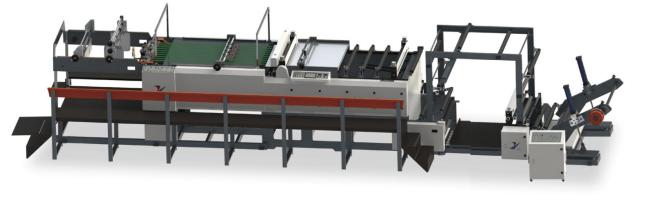
Cross-cutting unit in the sheeting stage; working width is customizable from 800 mm to 1600 mm.
Two documented converter scenarios
Two recorded cases show how the pairing works in practice, and what the numbers do and do not cover.
Cigarette packaging, Thailand — two units, five-plus years of operation. The installation is described as high-speed laminating for cigarette boxes, with a reported 30% efficiency increase and 15% material waste reduction, supported by humidity resistance and 24/7 continuous operation. Those results belong to that customer's line, substrate mix and shift pattern. They are not a guaranteed outcome for another plant, and they should be read as evidence that the configuration has been run in production rather than as a performance specification.
Cosmetic packaging, Vietnam — one unit, five-plus years of operation. The recorded application is precision cutting for cosmetic packaging, with ±0.1 mm cutting precision, zero rework and a reported 20% labour cost saving, supported by dust-proof design, fast size changeover and low maintenance cost. The precision figure matches the ±0.1 mm accuracy listed in the cutter specification; the rework and labour figures are that customer's reported experience.
What to verify before you commit
The specifications in this guide are model-level published data. Four checks close the gap between a catalogue and a line that runs.
- Run your own substrate. YUEDA lists a 100% pre-shipment test with a two-hour continuous run, and third-party inspection is available. Ask for that run on your board and film combination, at your heaviest grammage, and keep the record.
- Get the frame-specific figures in writing. ZNFH total power is listed at 121 kW and 129 kW and dimensions vary by frame; the paper grammage window and width must be confirmed for the exact frame quoted, not for the series.
- Confirm the customization scope. Published options include working width adjustment, control-system selection and voltage variants (110 V / 220 V / 380 V). Configuration options such as safety-standard alignment for CE/UL markets are listed as customizable items — a configuration option is not a certificate. Ask for the certificate itself, with number and scope, for the unit you buy.
- Check the parts and service path. Stated after-sales terms are 24-hour online response, 48-hour domestic on-site service and 72-hour overseas remote debugging. Confirm spares availability for wear parts before the machine ships, not after the first breakdown.
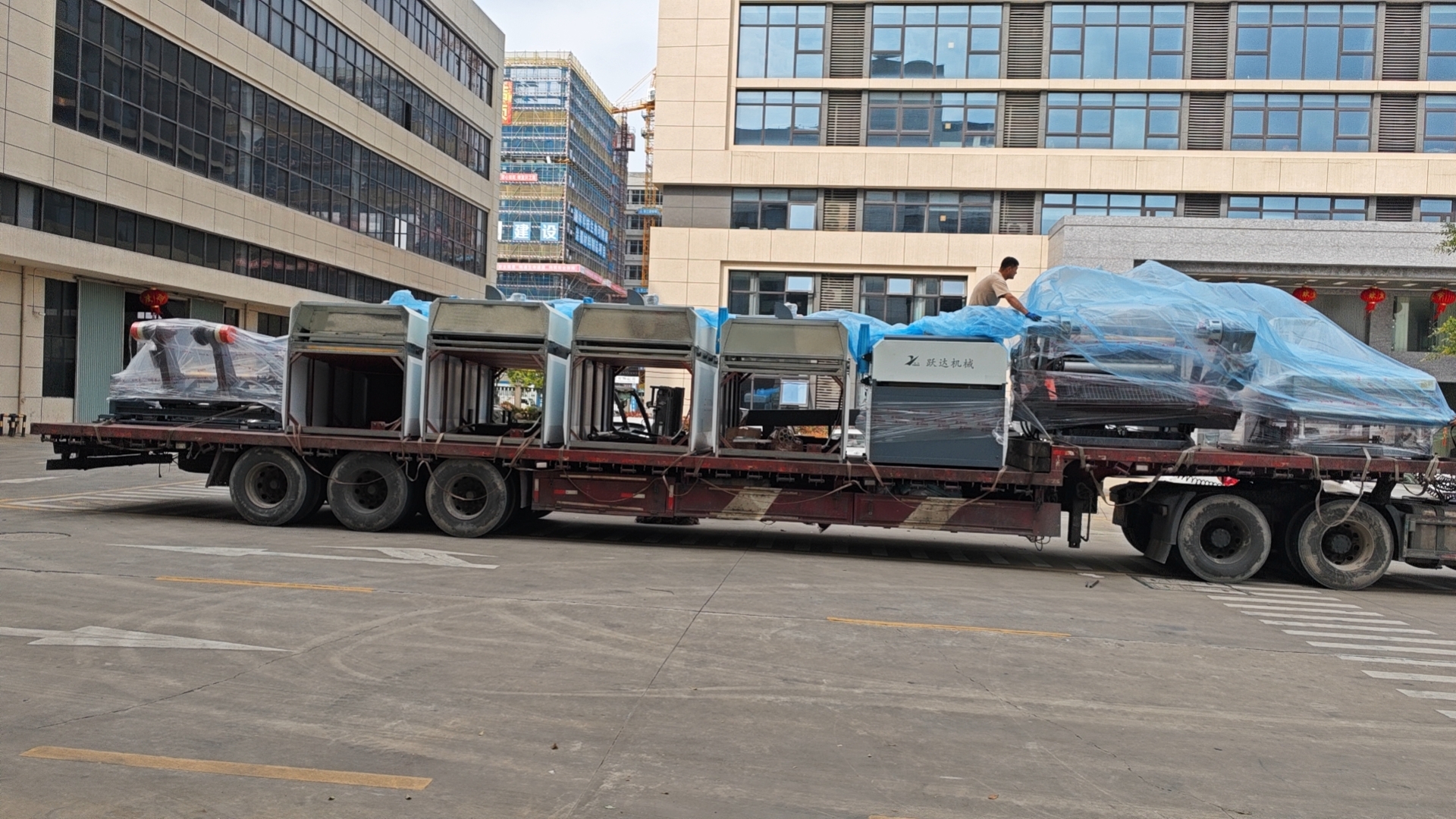
Line equipment secured for export; plan the installation window around the stated lead time.
Frequently asked questions
Which metalized paper laminating machine suits a cigarette packaging line that runs continuously?
The ZNFH1300-1400-1500 is the platform whose published parameters match that duty: 40–450 g paper, a 12.5 m drying path and 5–150 m/min running speed, with shaftless rewinding on 100–1,600 mm unwind and rewind diameters. A recorded converter scenario describes 24/7 operation at 60–70% humidity for cigarette packaging using this class of equipment with unwinder, rewinder, waste collector and temperature control. The humidity and dust requirements are line-level conditions that have to be engineered into the building, not features the laminator supplies by itself.
Can one laminator handle both 40 g light paper and 450 g board?
The ZNFH series is documented across 40–450 g, which is the widest published window in this comparison. The YDLM1300B is documented at 100–350 g/m². Covering an extreme spread on one machine still requires process validation per substrate: grammage affects tension, adhesive pick-up and drying, so ask for a run at both ends of your range rather than assuming the middle setting scales.
Do I need a positioning cutter or will a standard double rotary cutter do?
If the cut must follow a printed image, specify positioning: the DWLX1300L-1400L lists ±0.1 mm blank accuracy plus ±0.1 mm longitudinal and transverse tracking, and the YD1300-1400 is a positioning sheeter with ±0.1 mm sheeting accuracy. If the cut only has to produce a rectangle to size, the YDSLX1300-1400 double rotary at ≤300 m/min and 10–400 sheets/min is sufficient. Sheet length is the other gate: 400–1200 mm on the positioning sheeter against 450–1400 mm on the double rotary cutters.
What drives the cost of a complete laminating and sheeting line?
Quotations in this category are configuration-driven. Frame width — 1,200 mm against 1,400 mm — changes the machine size and the material yield per roll. Coating scope changes the machine: four-roller transfer coating with anilox back coating is a different configuration from lamination alone. Cutter type changes the sheeting cost, with positioning control carrying more than a blank cut. Line integration, voltage variant and control-system selection add further scope. Because of that, two quotations are only comparable once sheet format, grammage, coated side and cutter type are fixed identically on both.
How is a machine validated before it ships?
YUEDA lists a 100% pre-shipment test built around a two-hour continuous run, with third-party inspection available on request. The useful version of that test runs your heaviest board and your film at your target working speed, records the sheeting accuracy achieved downstream, and is witnessed or documented. Where a plant intends to run near 150 m/min, ask specifically for the cutter pairing to be demonstrated, because the YD1300-1400 at 95/90 m/min is slower than the laminator's published upper working speed.
What lead time should we plan for, and what has to be ready first?
Stated lead time is 30–45 days for standard models and 45–60 days for customized models, against a stated monthly capacity of 12–15 units. Use that window to finish the building work: a 380 V ±10% / 50 Hz supply sized for 216 kW of heating on the gantry model, 0.8 MPa air at the cutter, and a bay long enough for a 21–22 m laminator plus a 9.6–13.85 m cutter. If you want to compare the configurations against your own sheet format first, the YUEDA product brochure lists the model parameters, and the technical team can review your board and sheet sizes against them before a quotation is fixed.
Conclusion
For wine boxes, cigarette cartons and tea packaging, the laminating machine is the second decision, not the first. The sheet format, the board grammage, the coated side and the registration requirement decide which platform is even eligible, and only then does the comparison between the gantry-type YDLM1300B and the ZNFH1300-1400-1500 shaftless-rewinding machine become useful.
The pattern that emerges from the published data is consistent: below 1,200 mm working width and 350 g/m², with a coated reverse face in scope, the YDLM1300B with four-roller transfer coating and anilox back coating covers the job. Above either limit, or where continuous rewinding and a 40–450 g window matter more than integrated back coating, the ZNFH frames are where the documented data continues. Downstream, a sheet longer than 1,200 mm or a plain high-volume cut points to the double rotary family, while a cut that must follow print points to positioning control — and a line intended to run near 150 m/min needs its cutting capacity matched, not assumed.
Next step
Send your finished sheet size, heaviest board grammage and coated-side requirement, and the configuration can be narrowed to one laminator frame and one cutter family before any commercial discussion starts.
Brochure:Download the YUEDA machinery brochure (PDF)
Email: 2179069246@QQ.COM | Tel / WhatsApp: +86 19857780001
Address: Yueda Machinery, Building 2, No. 1333 Times Avenue, Longgang City, Wenzhou City, Zhejiang Province, China
Have Questions or Need More Details?
Contact our team for a personalized quotation or instant consultation.
Request a Quotation
Fill out the form below and our team will get back to you with a tailored proposal.
WhatsApp Direct Chat
Prefer to chat in real-time? Message us on WhatsApp for instant assistance & quick answers.
- Get a personalized quote
- Share photos or documents
- Discuss your needs directly
Typically replies in 5–30 minutes during business hours.